Service Activity in The South Atlantic: April
From the Federal Reserve Bank of Richmond’s latest survey of service-sector activity in the South Atlantic (District of Columbia, Maryland, North Carolina, South Carolina, Virginia and West Virginia):
Service sector activity picked up in April, according to the latest survey by the Federal Reserve Bank of Richmond. Retail sales rebounded and shopper traffic increased compared to a month earlier, although big-ticket sales remained down. Revenues also strengthened at non-retail services firms. In addition, survey respondents at retail and non-retail service sector businesses were upbeat in their outlook for business in the six months ahead.
…
On the labor front, the number of employees grew more rapidly at services-providing firms in April, while retail merchants made more payroll cuts. Average retail wages were nearly flat; at services firms, average wages picked up this month.
…
Price change was moderate, with the overall rate of increase slightly quicker in April than in March. Separately, retailers’ prices slowed, while services providers indicated prices rose more rapidly. Survey participants looked for a small uptick in the pace of price increases during the next six months.
Around The Dial – 4/28/11
Economic policy reports, blog postings, and media stories of interest:
- TaxVox looks at the logic (or lack thereof) of spending caps.
- The Baseline Scenario points out “bond market blackmail.”
- Economist’s View isn’t a fan of health care vouchers.
- Citizen Cohn doesn’t buy criticisms of the Food Stamp program.
- Fed Watch breaks down the latest Federal Reserve meeting.
NC Unemployment Claims: Week of 4/9
For the benefit week ending on April 9th, 11,272 North Carolinians filed initial claims for state unemployment insurance benefits, and 114,208 individuals applied for state-funded continuing benefits. Compared to the prior week, there were fewer initial and continuing claims. These figures come from data released by the U.S. Department of Labor.
Averaging new and continuing claims over a four-week period — a process that helps adjust for seasonal fluctuations and better illustrates trends — shows that an average of 12,698 initial claims were filed over the previous four weeks, along with an average of 118,693 continuing claims. Compared to the previous four-week period, there were fewer initial and continuing claims.
One year ago, the four-week average for initial claims stood at 13,463 and the four-week average of continuing claims equaled 185,618.
While the number of claims has dropped over the past year so has covered employment. Last week, covered employment totaled 3.7 million, down from 3.8 million a year ago.
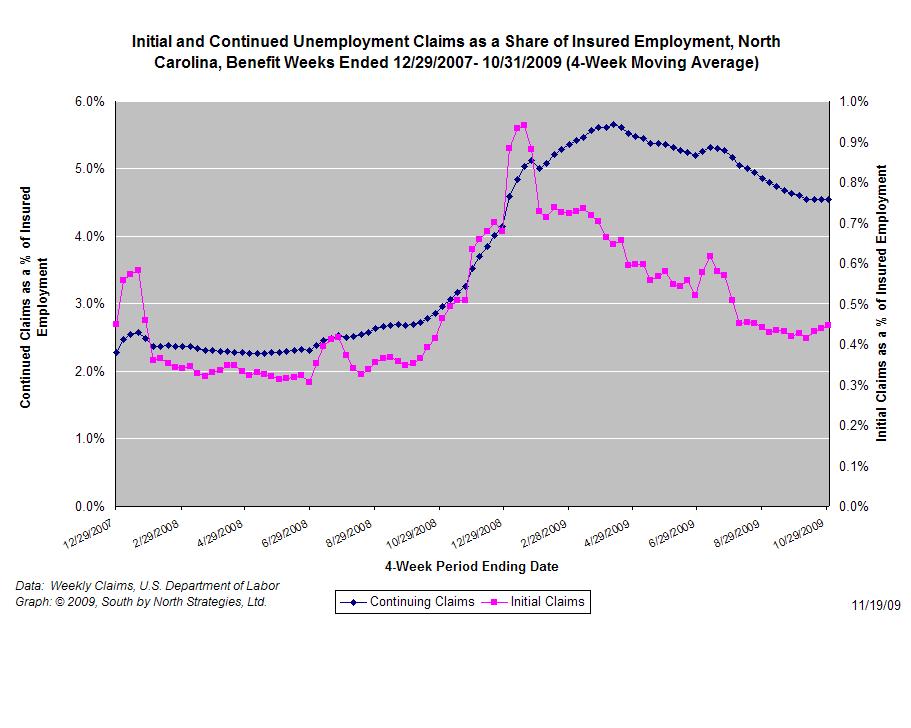
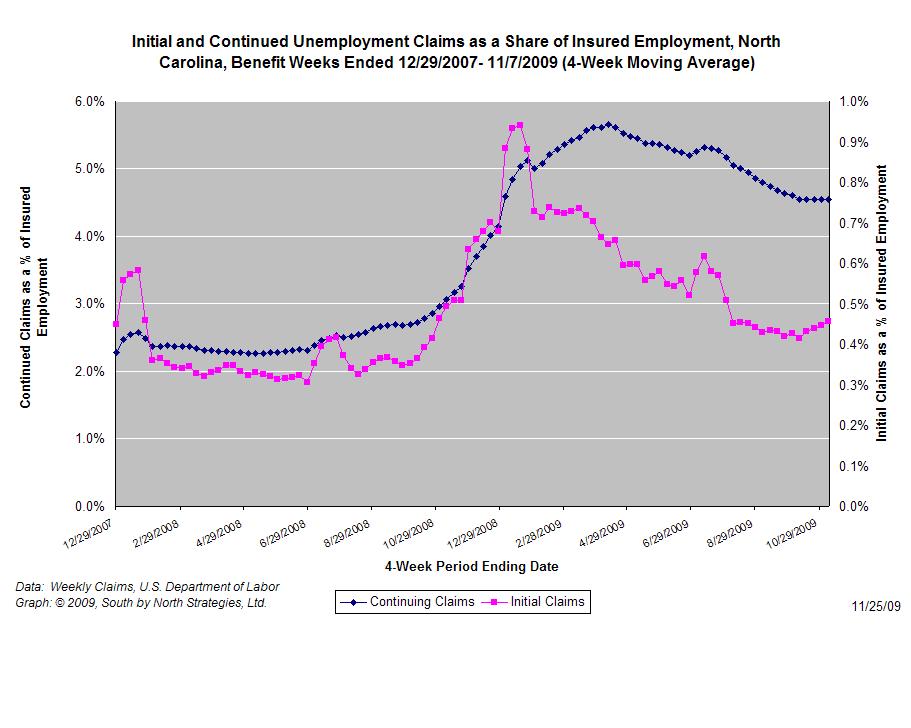
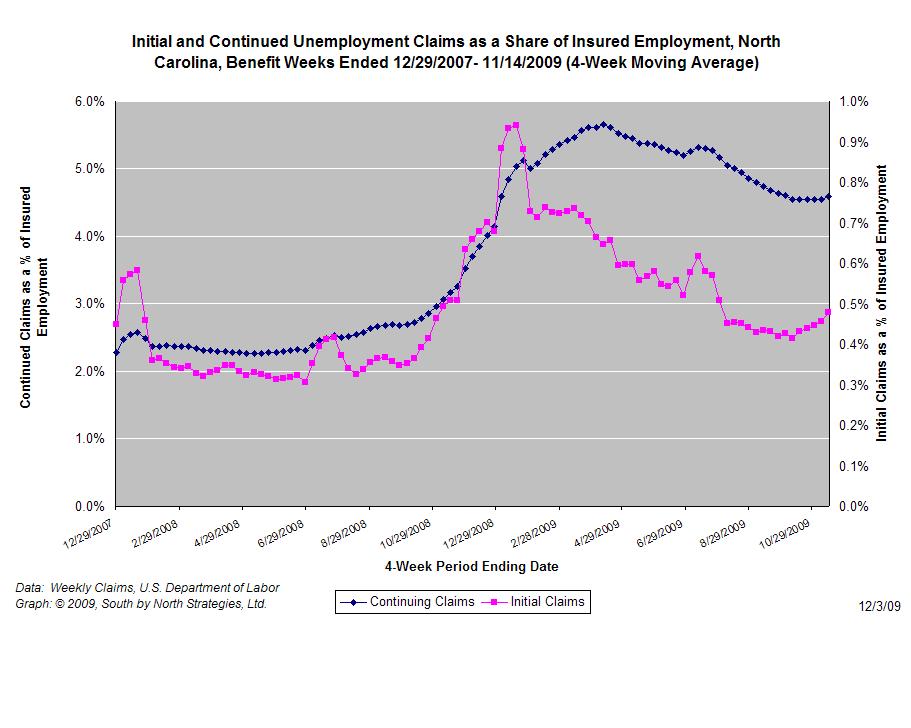
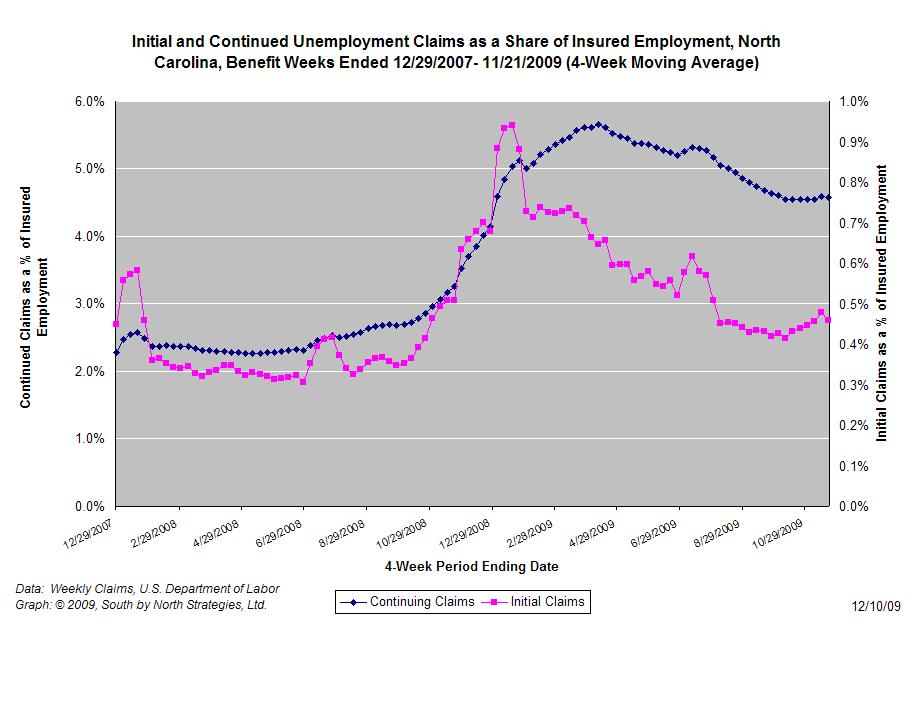
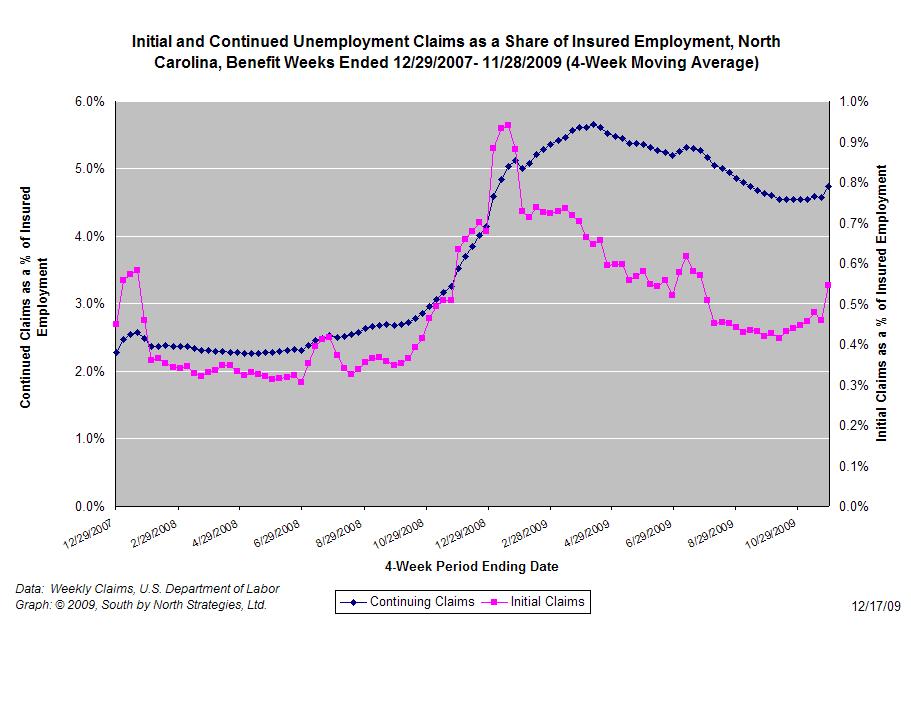
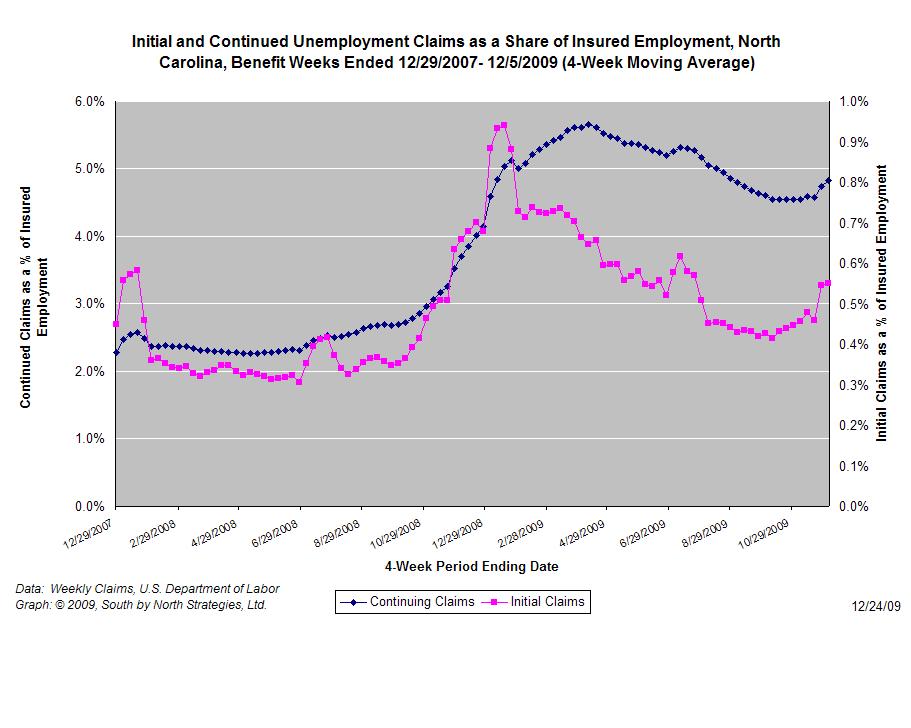
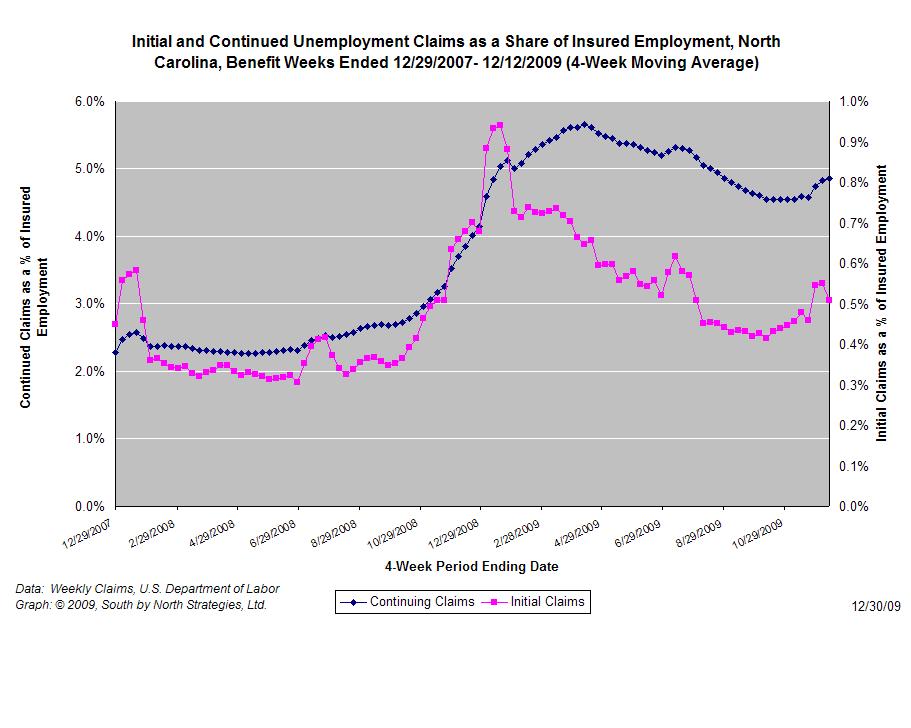
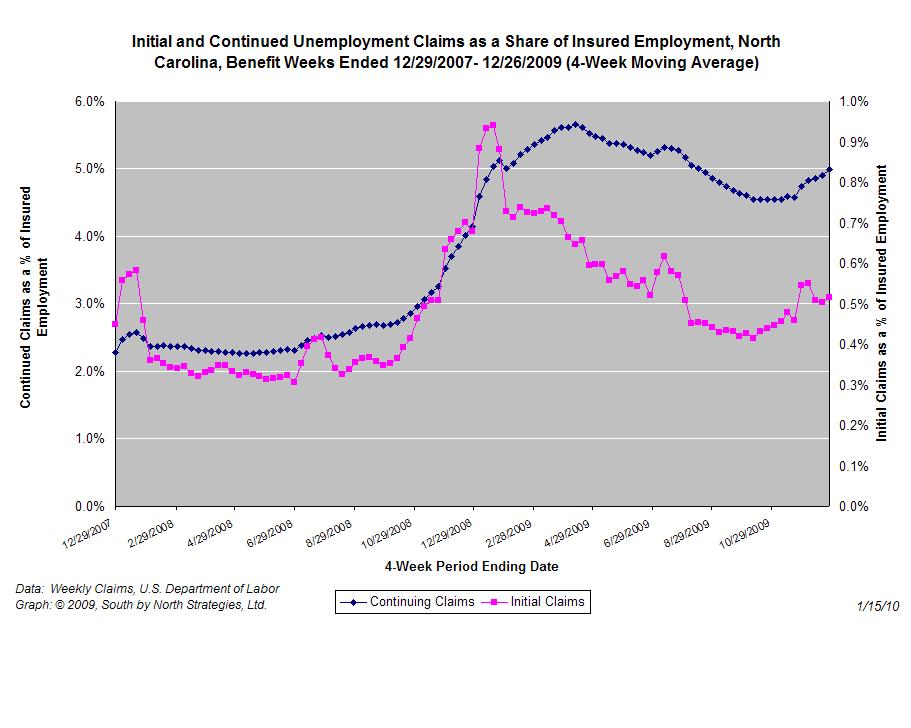
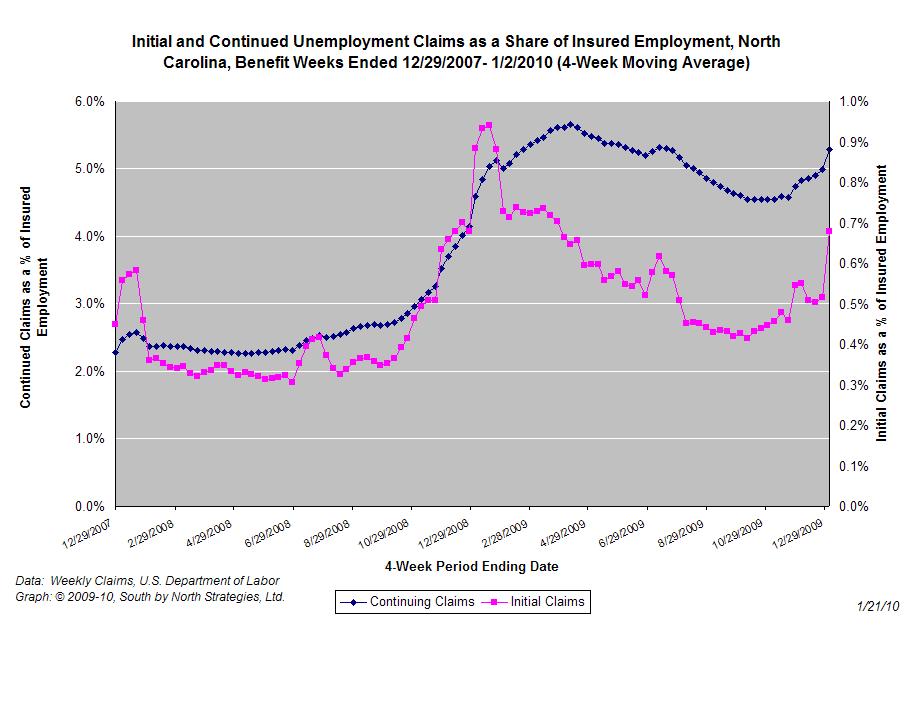
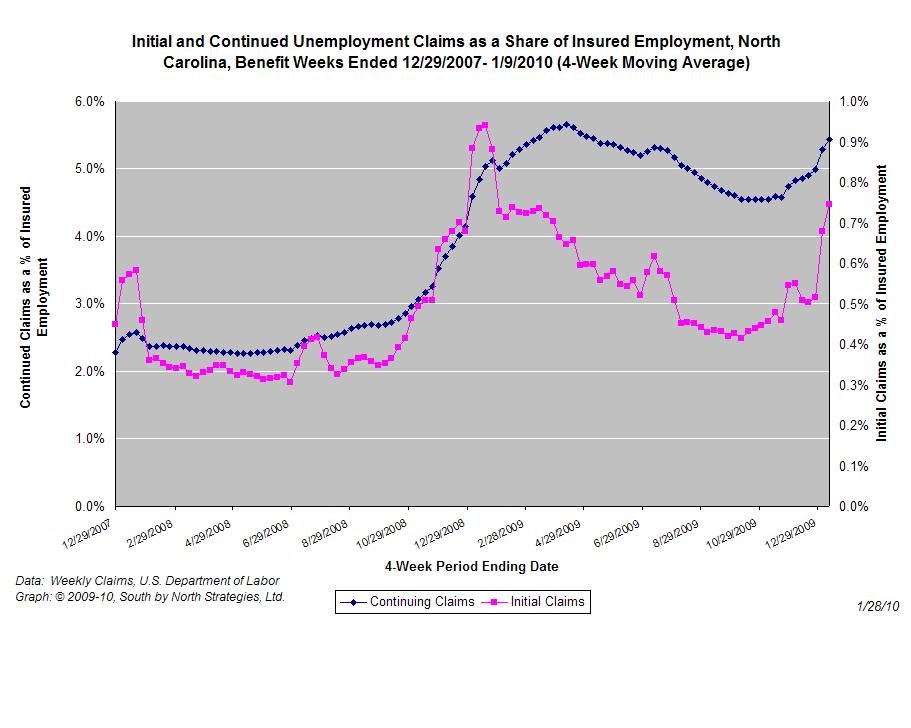
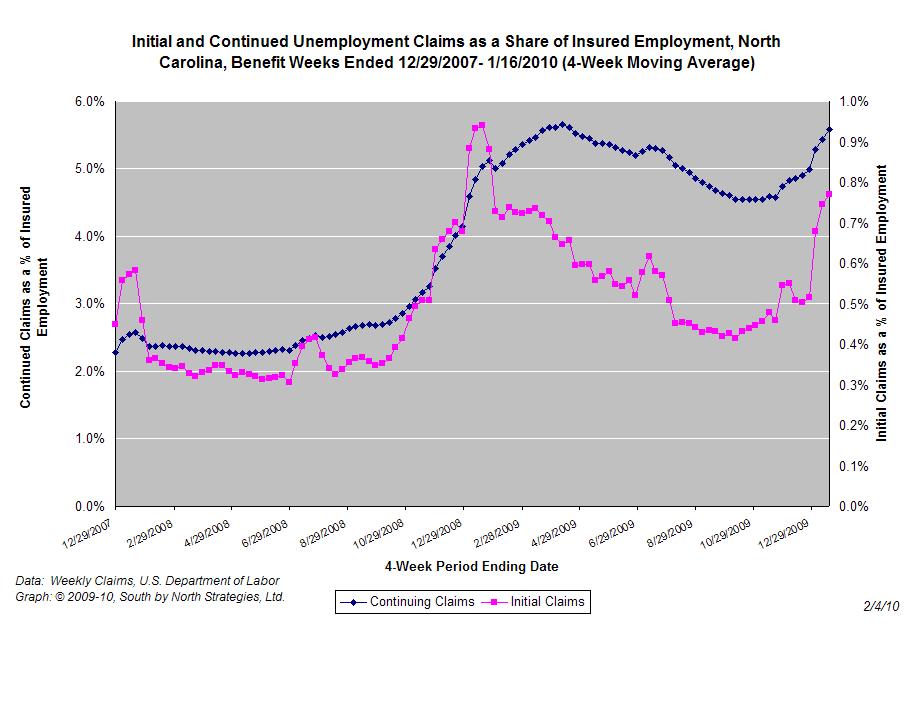
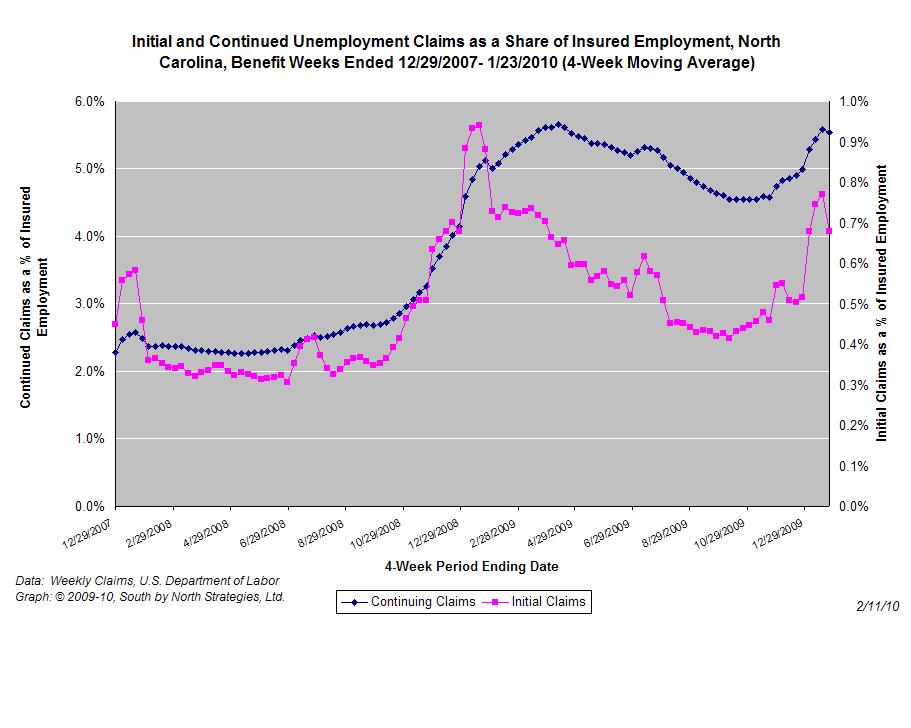
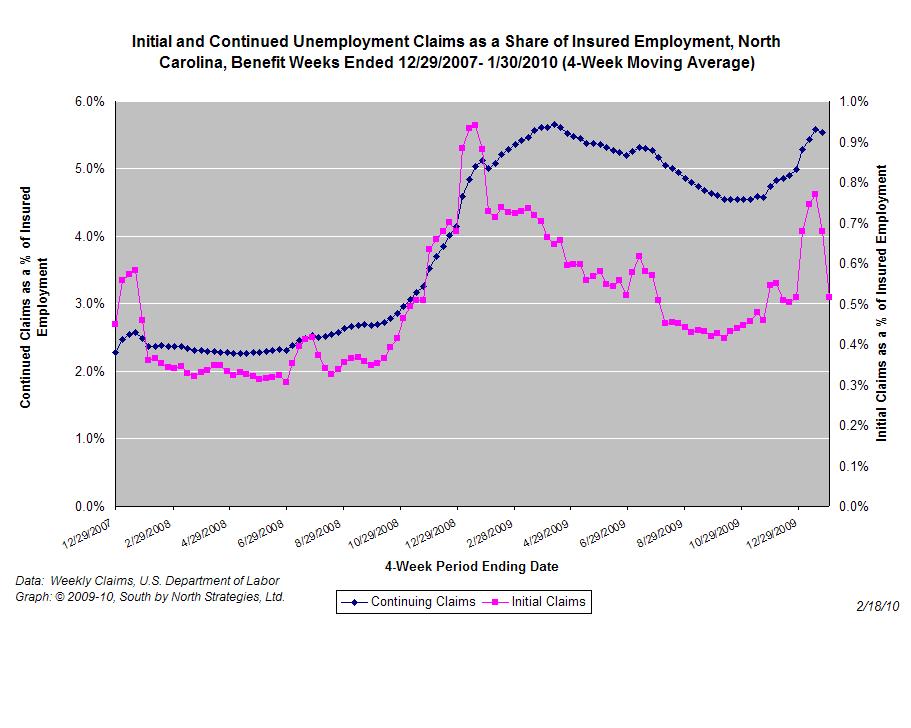
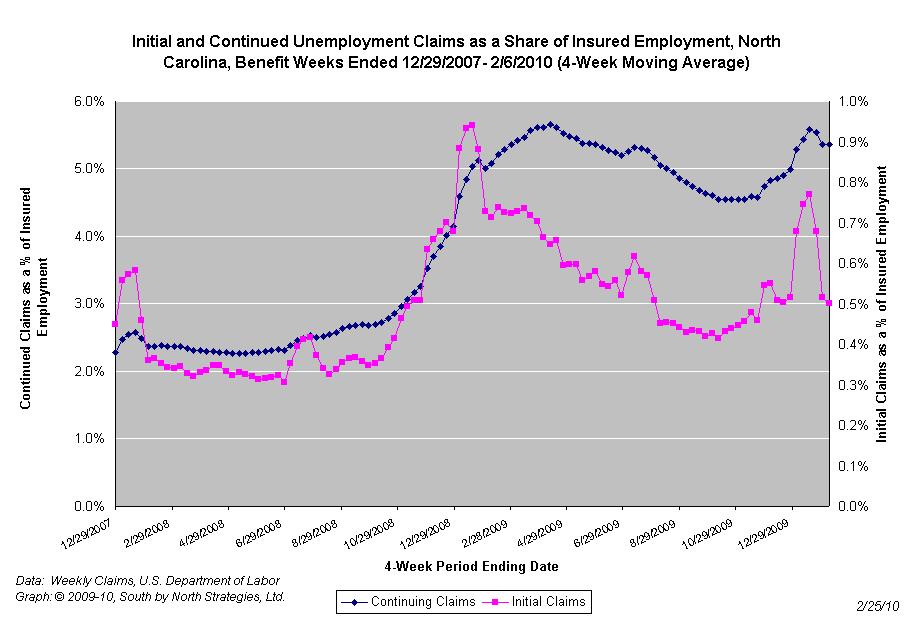
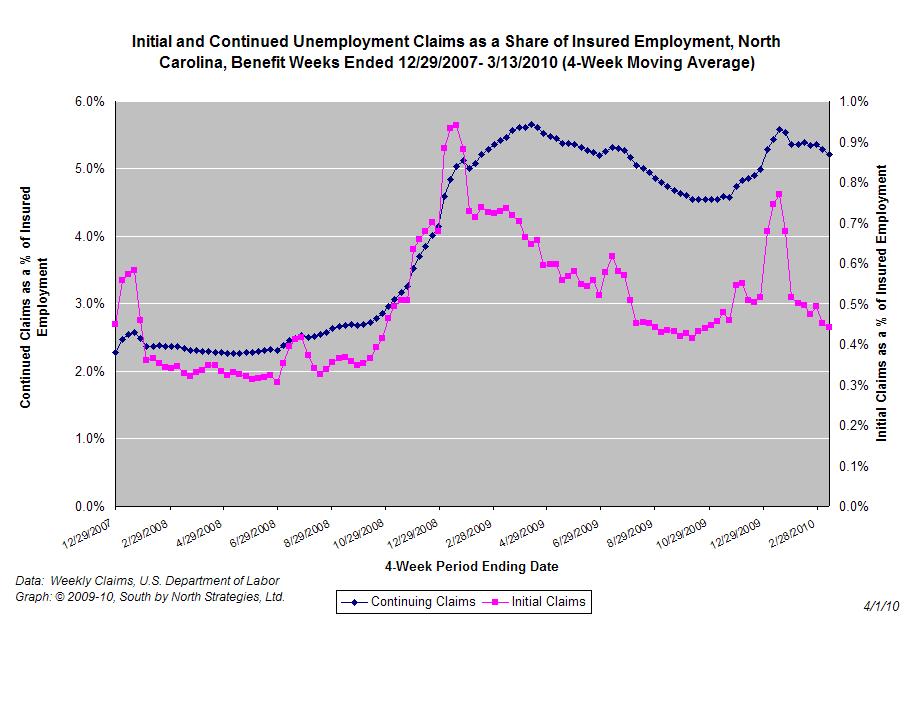
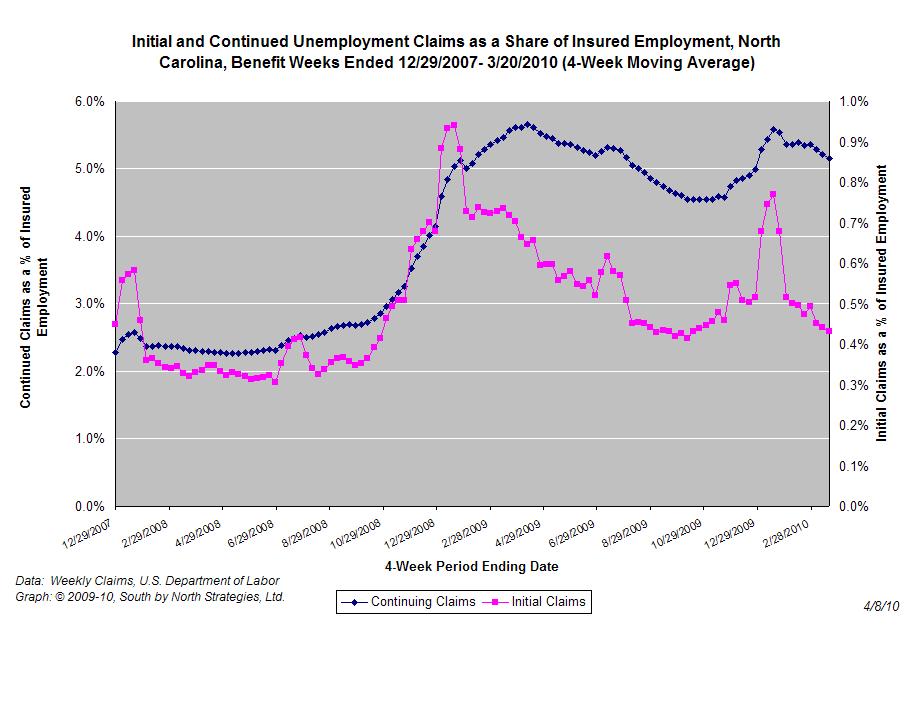
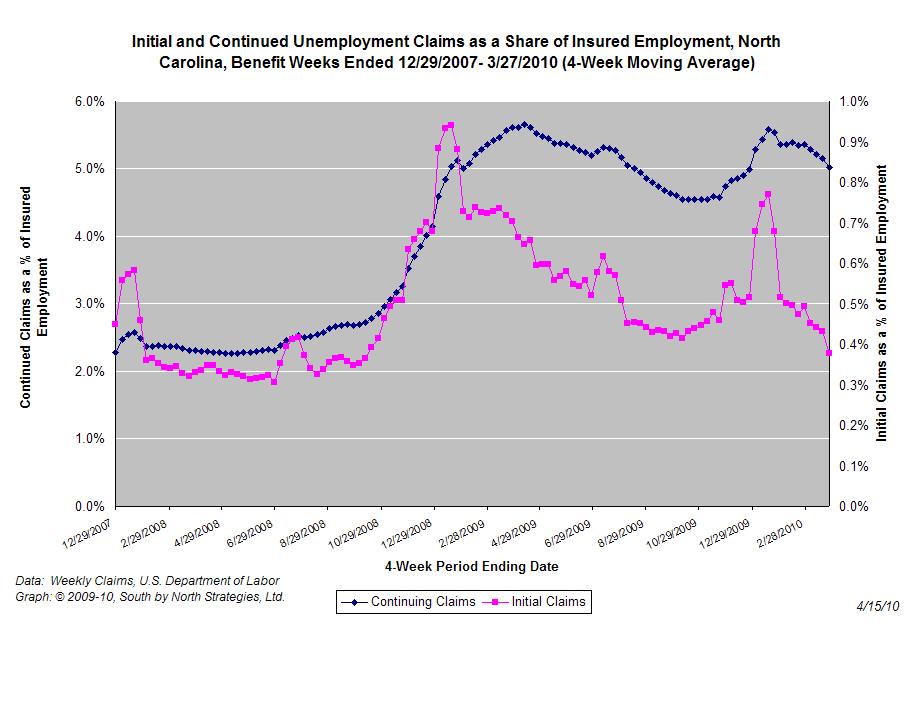
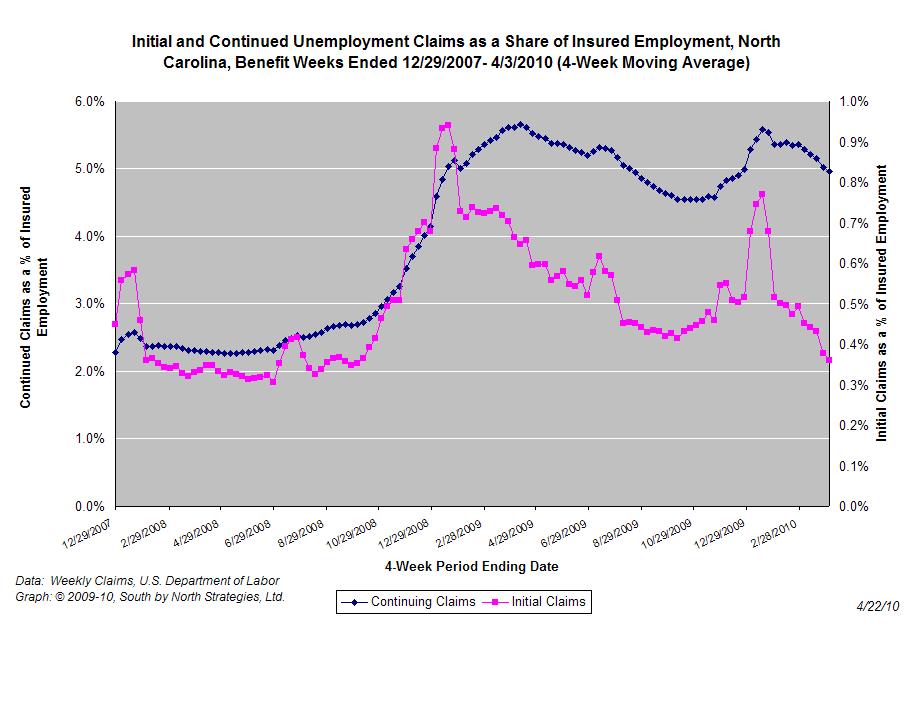
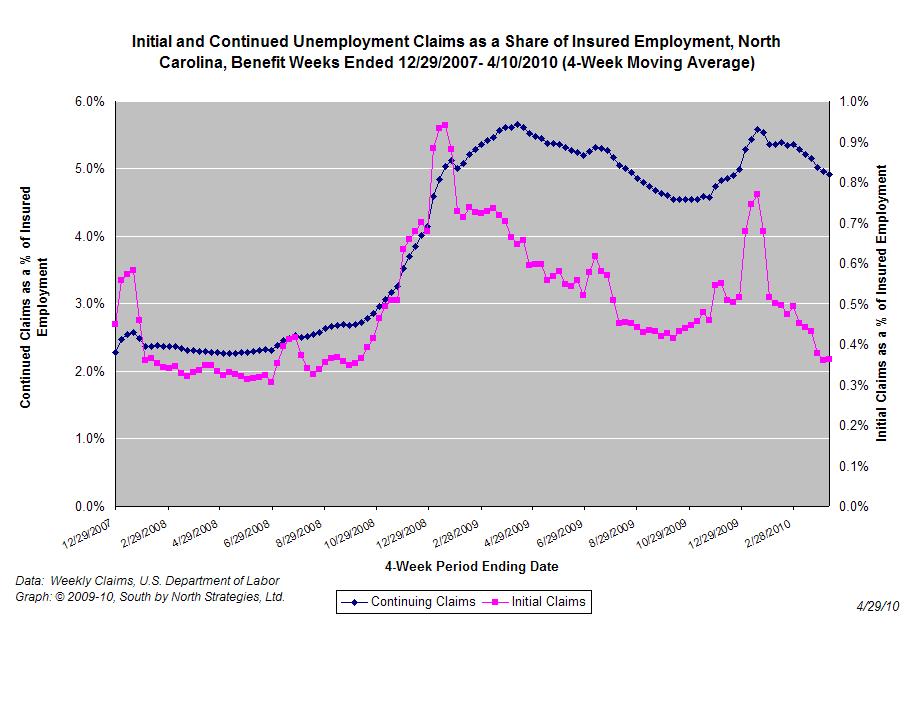
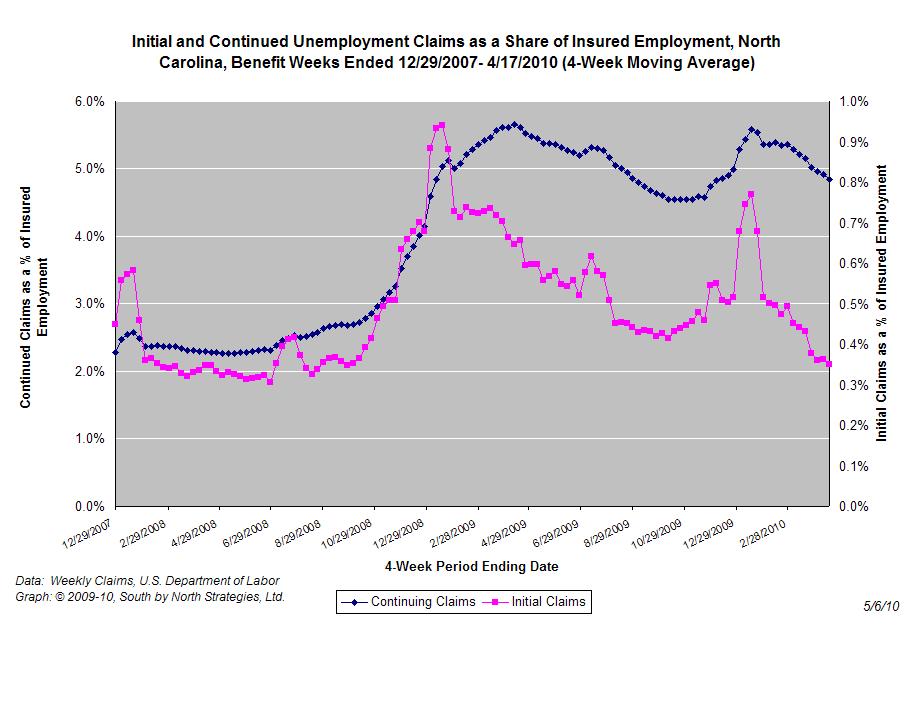
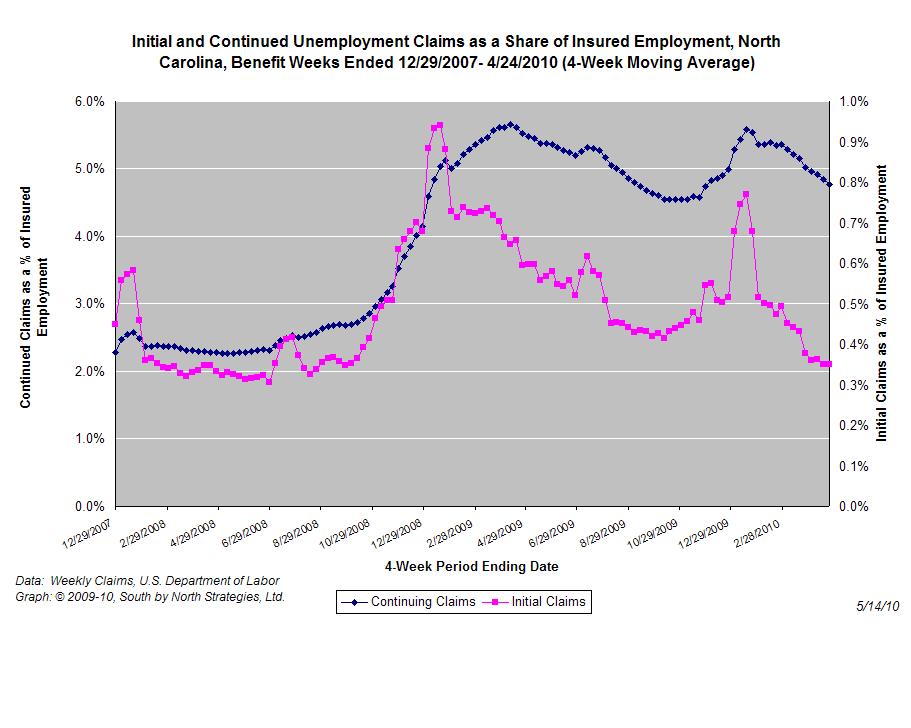
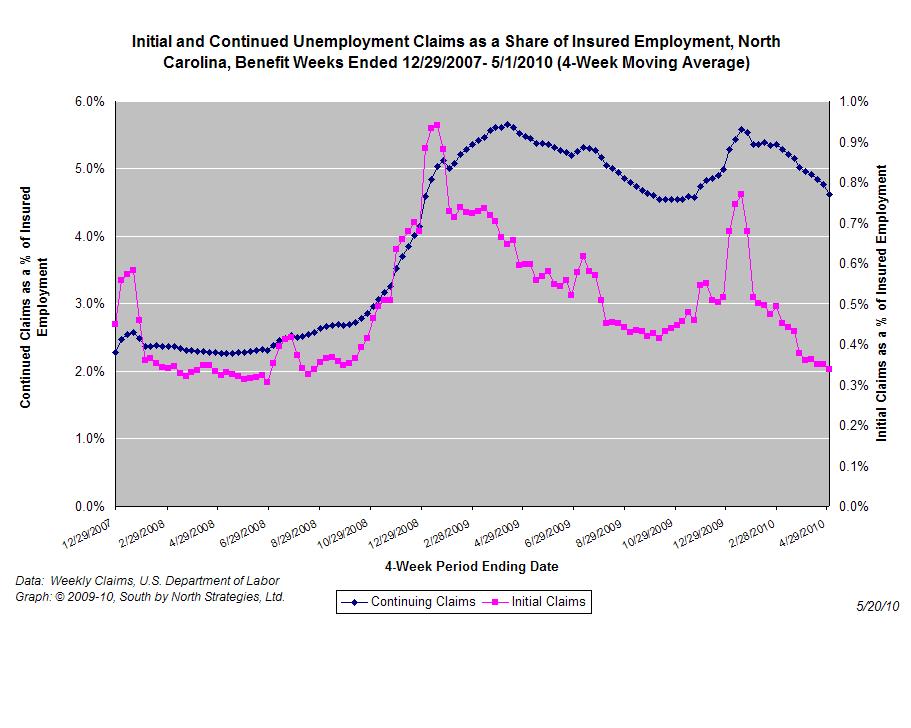
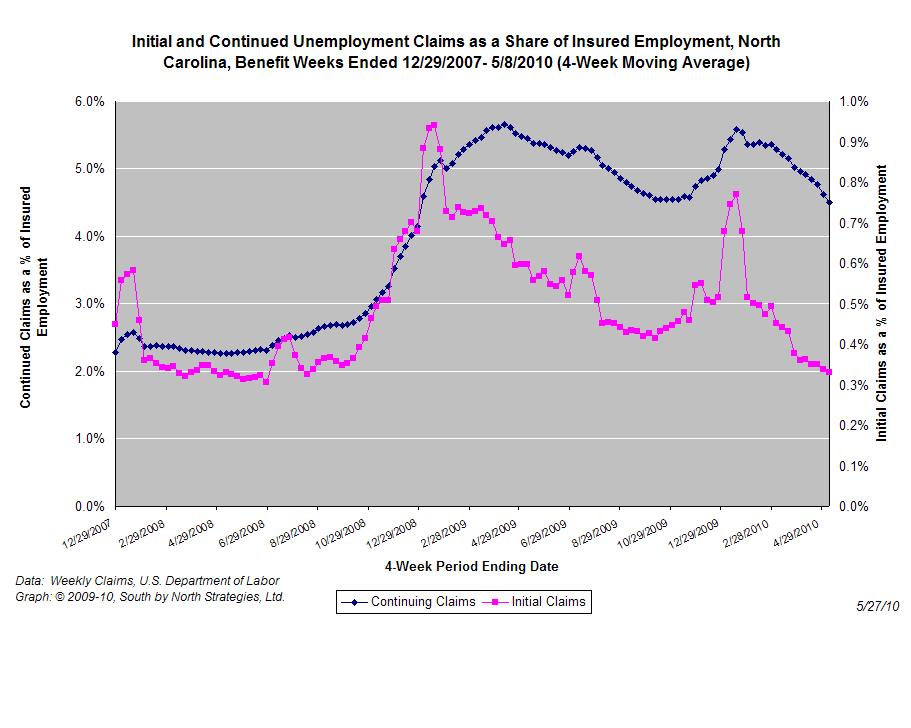
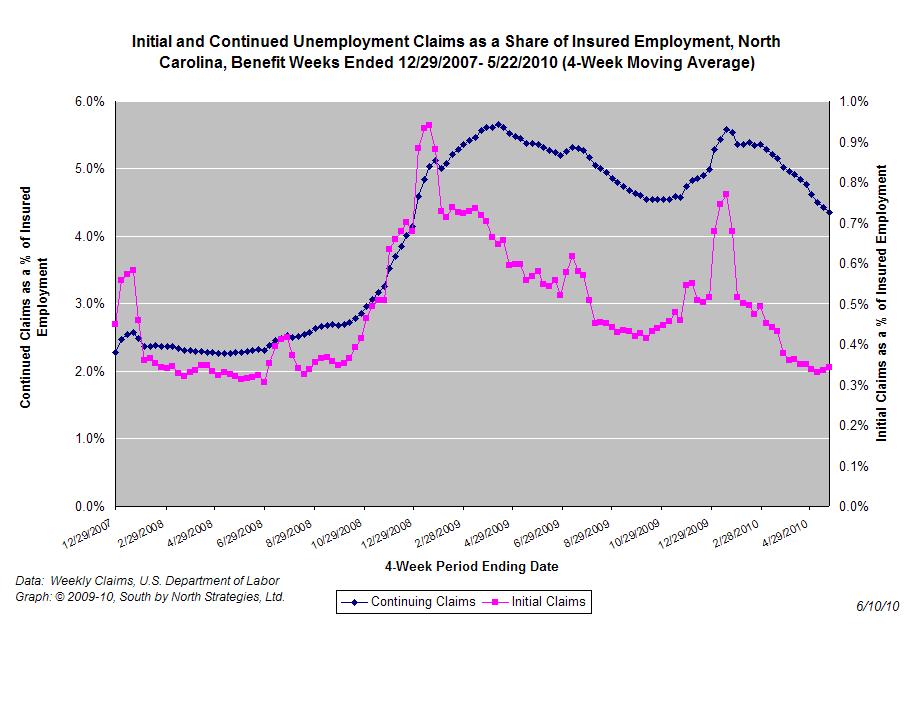
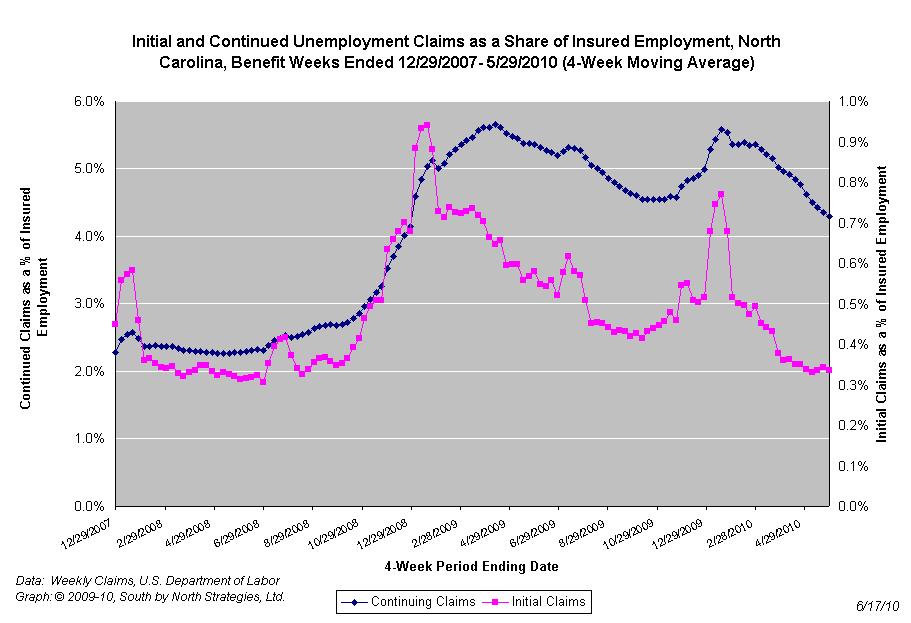
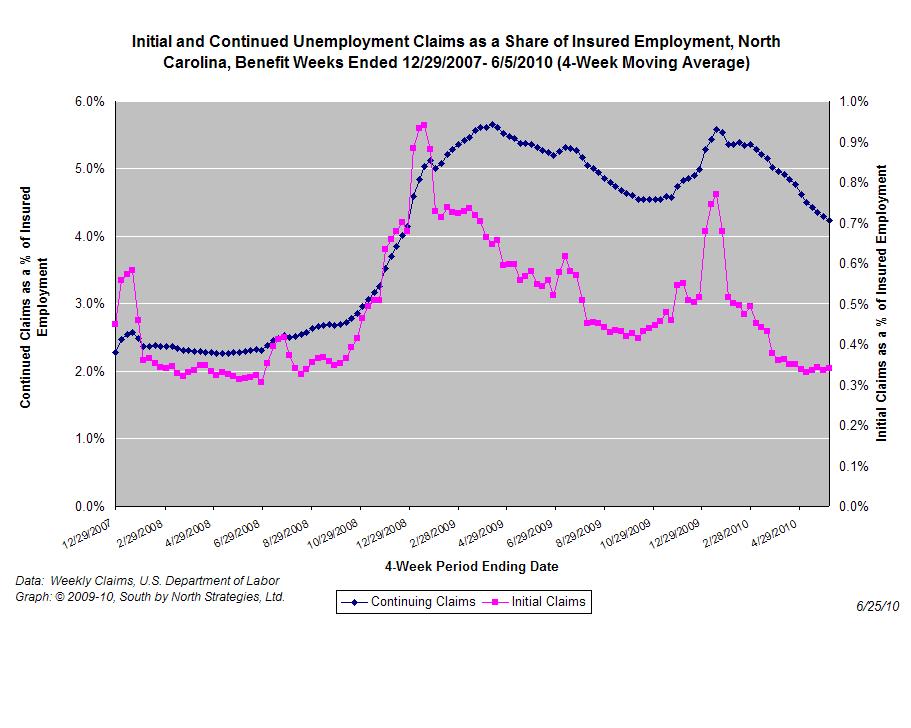
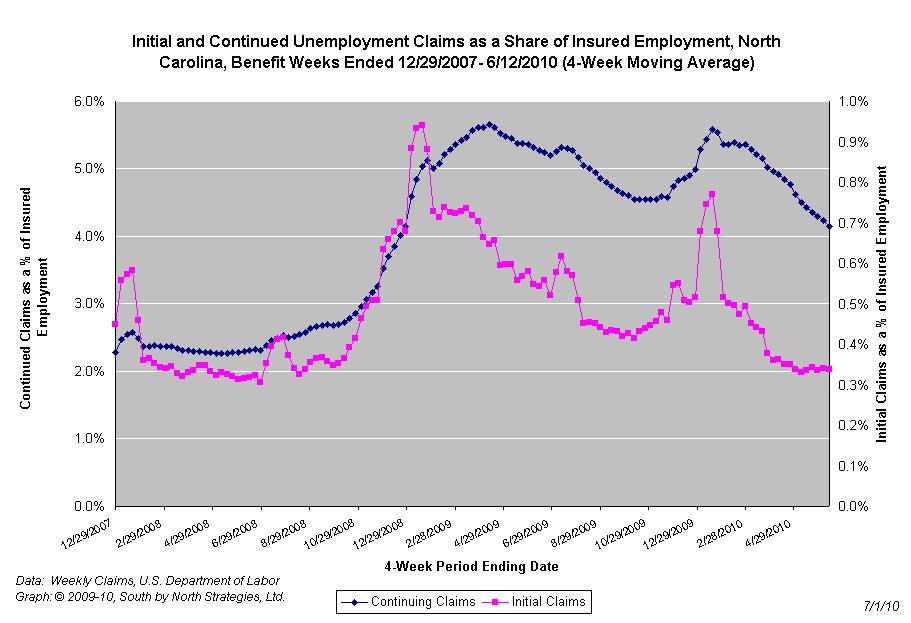
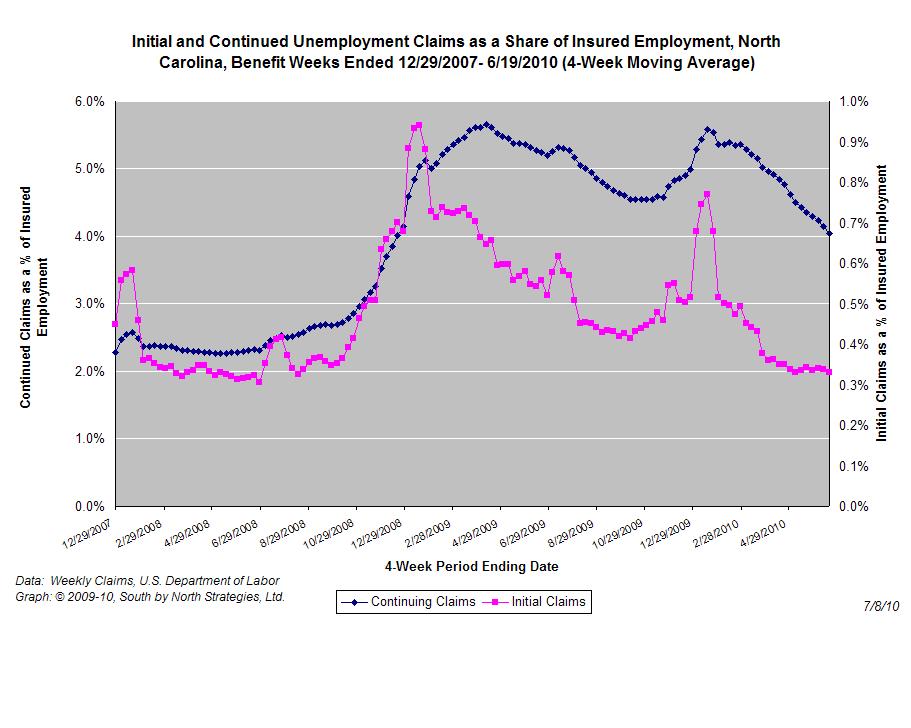
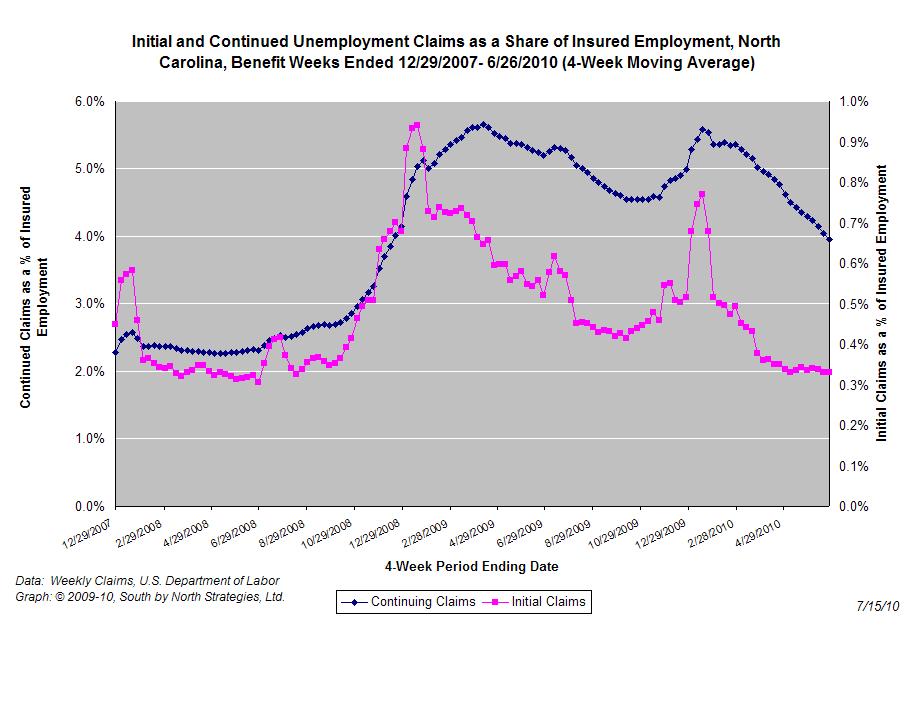
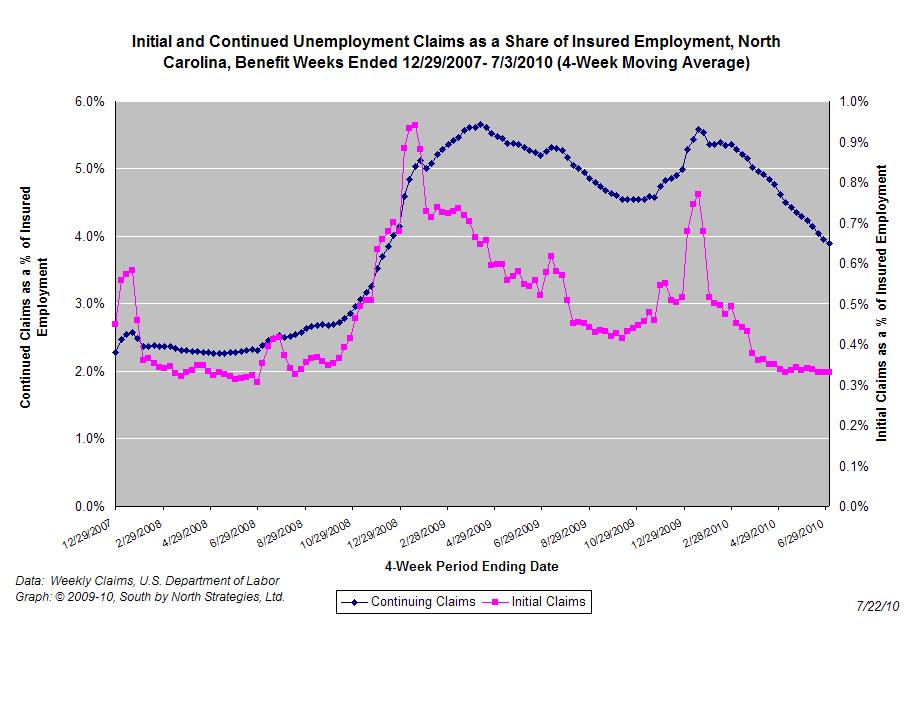
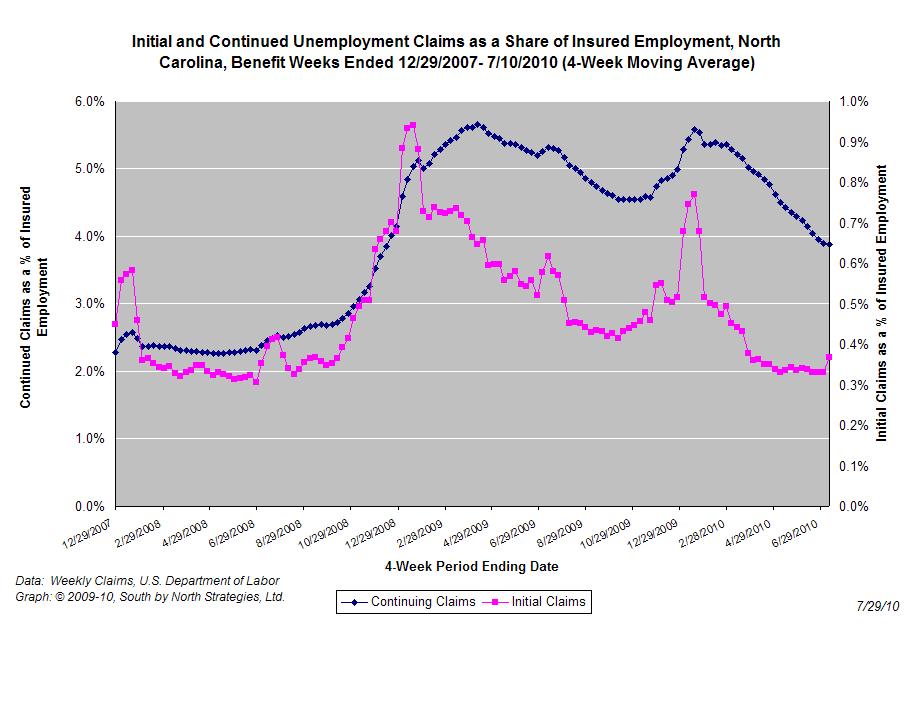
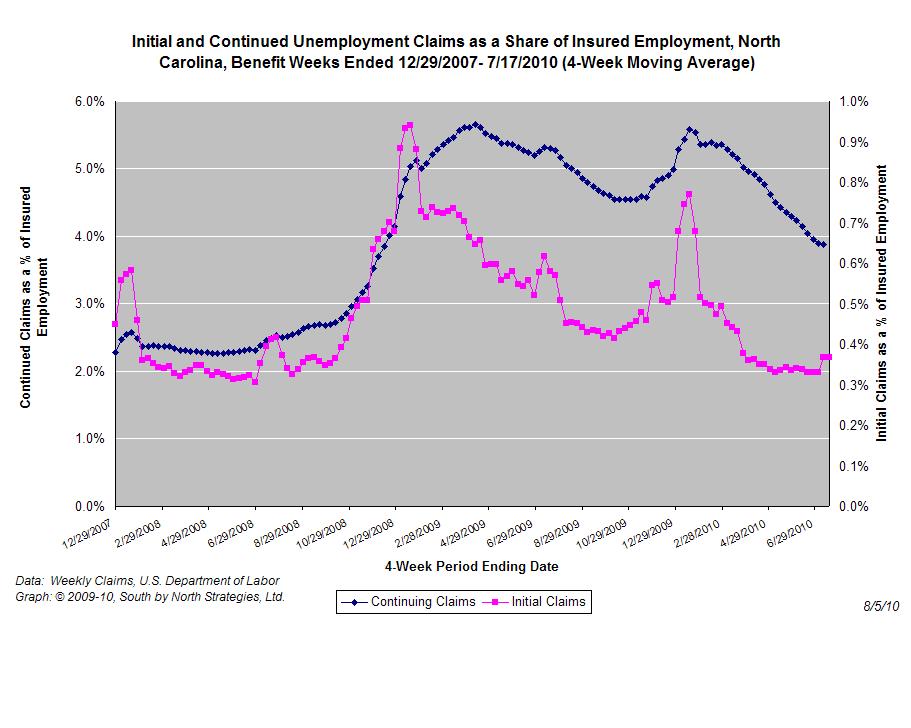
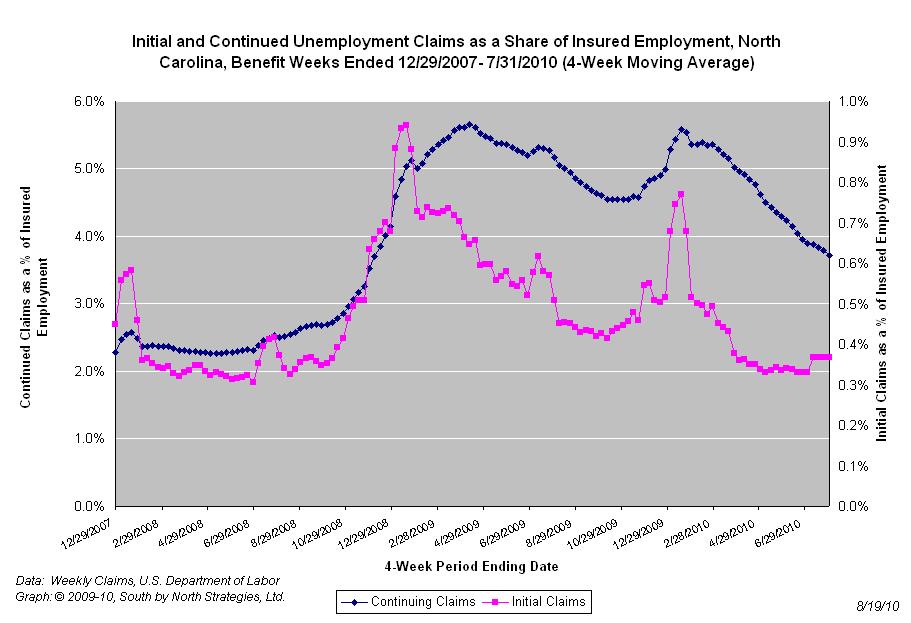
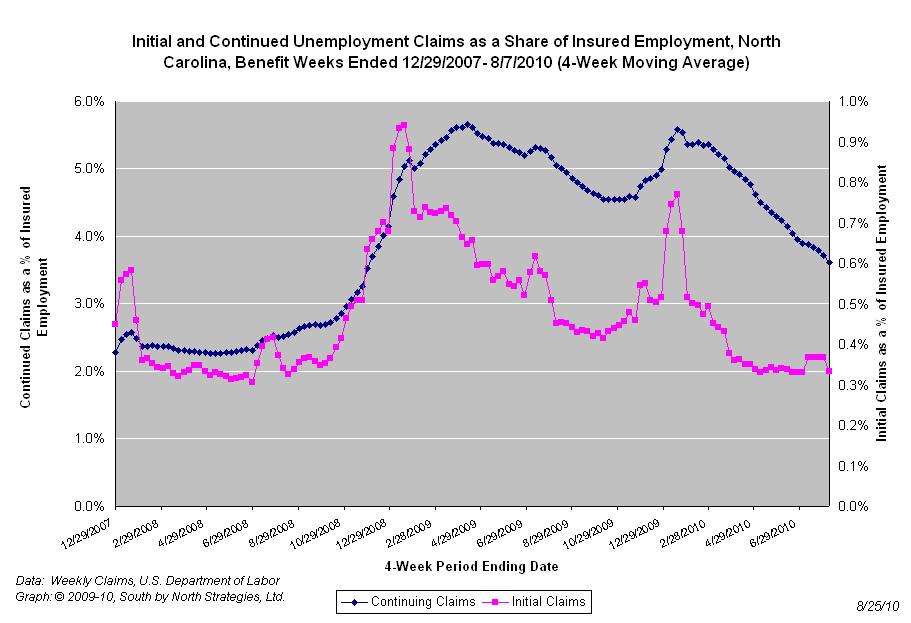
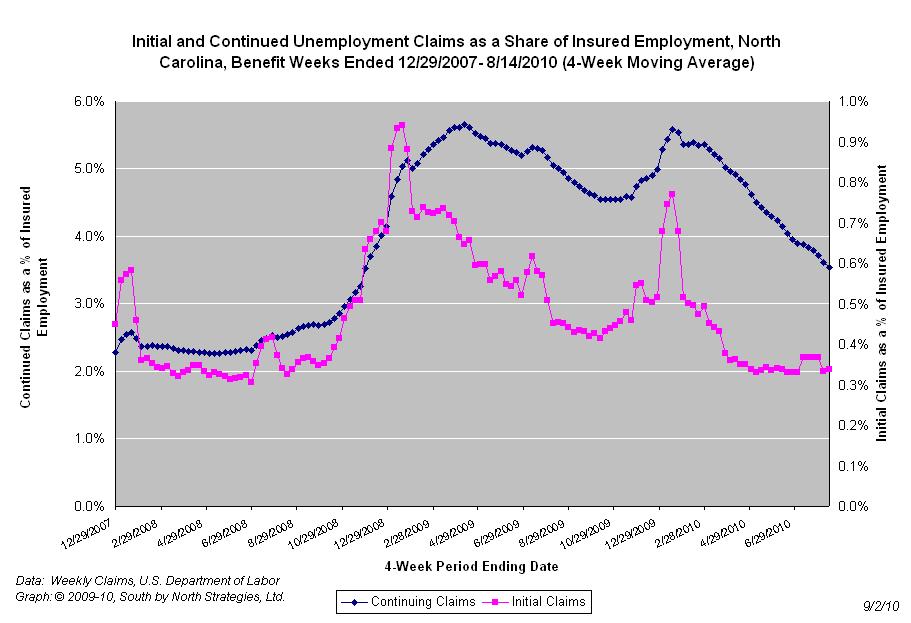
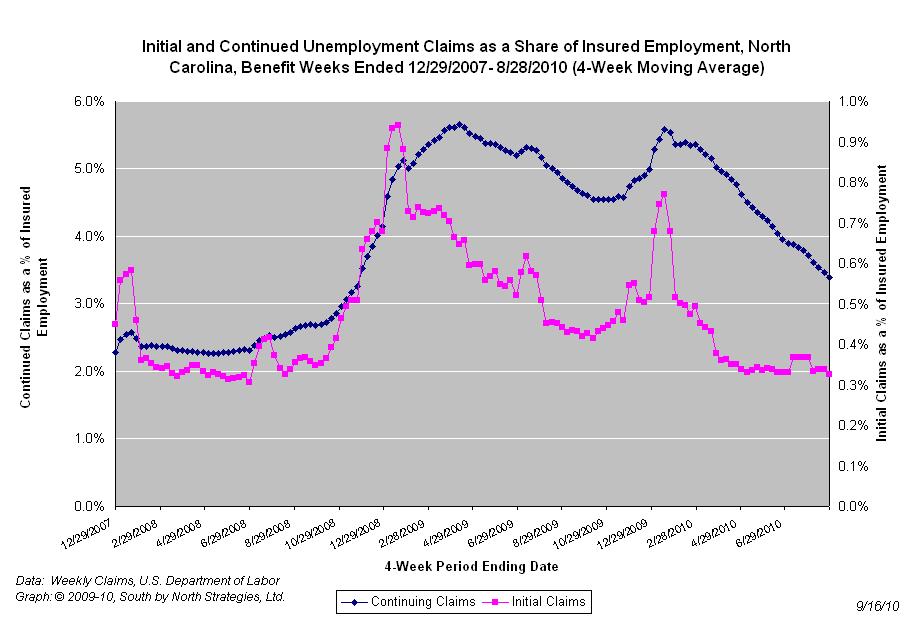
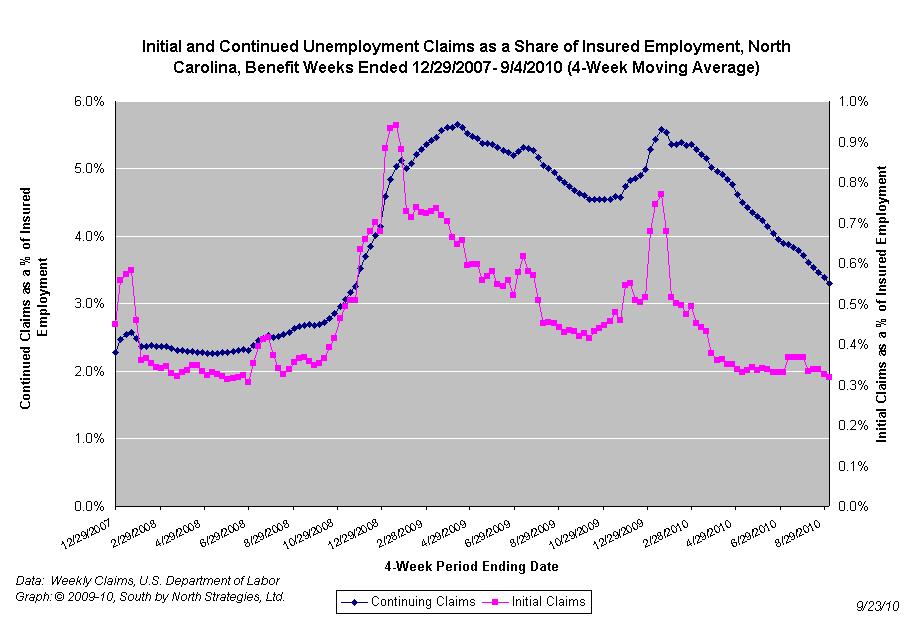
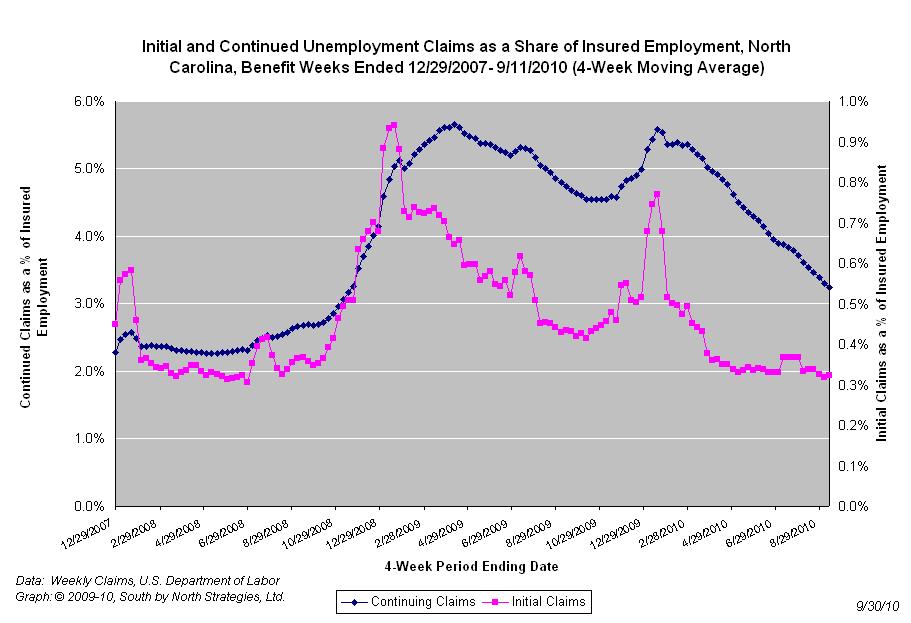
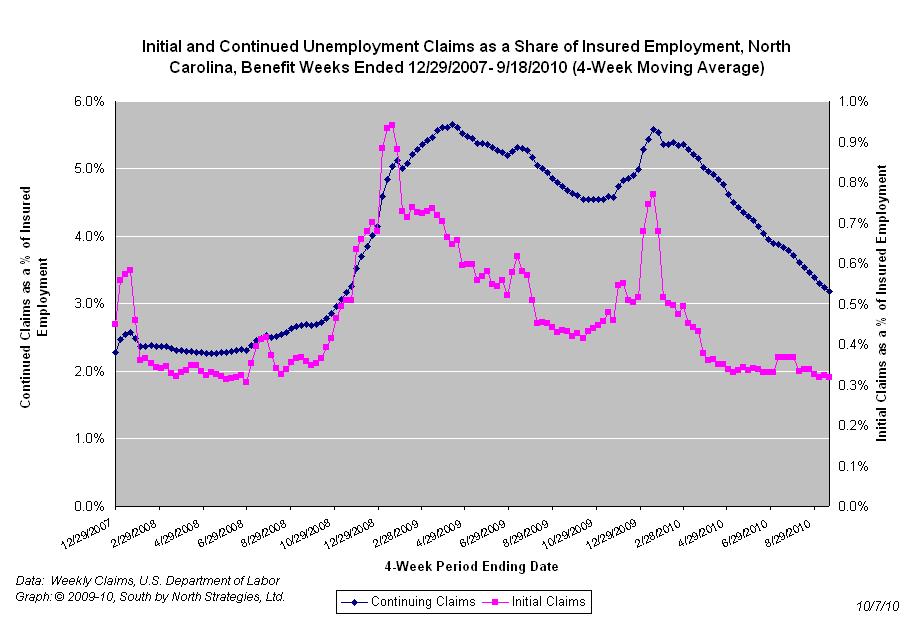
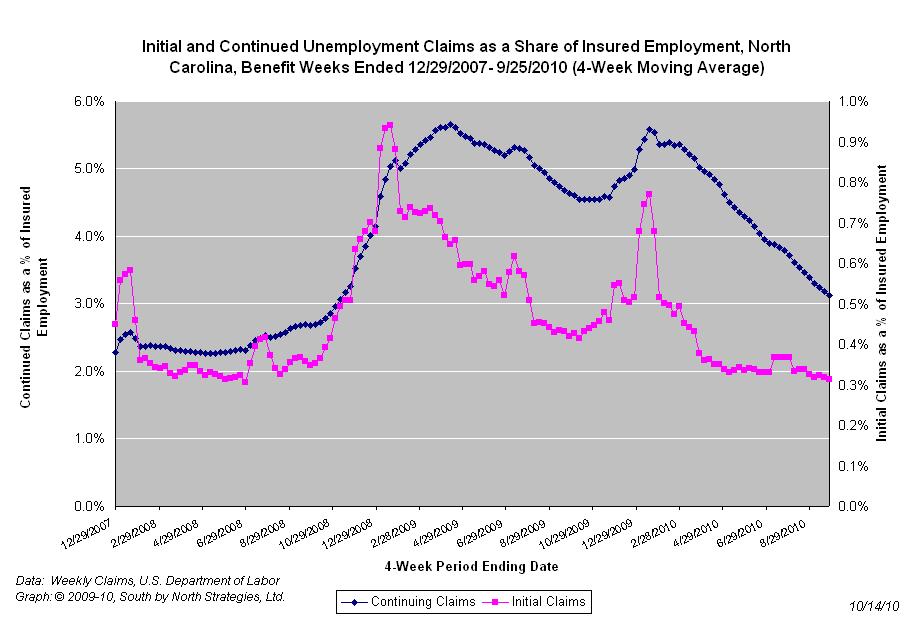
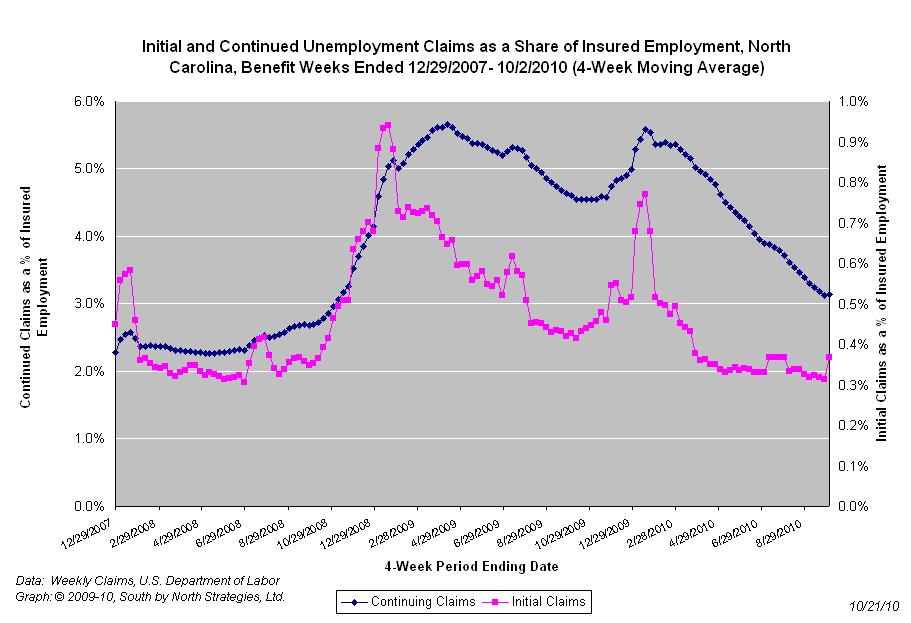
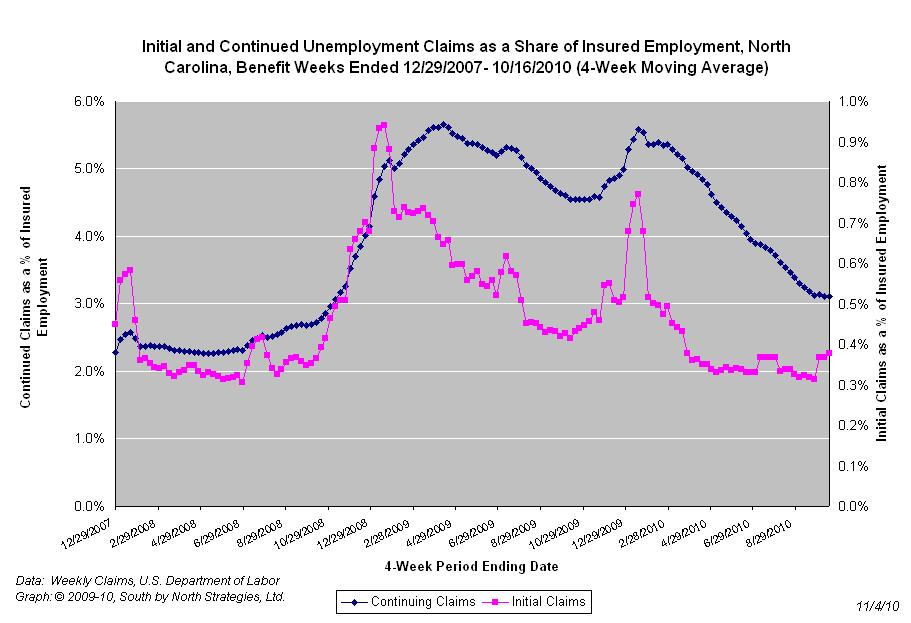
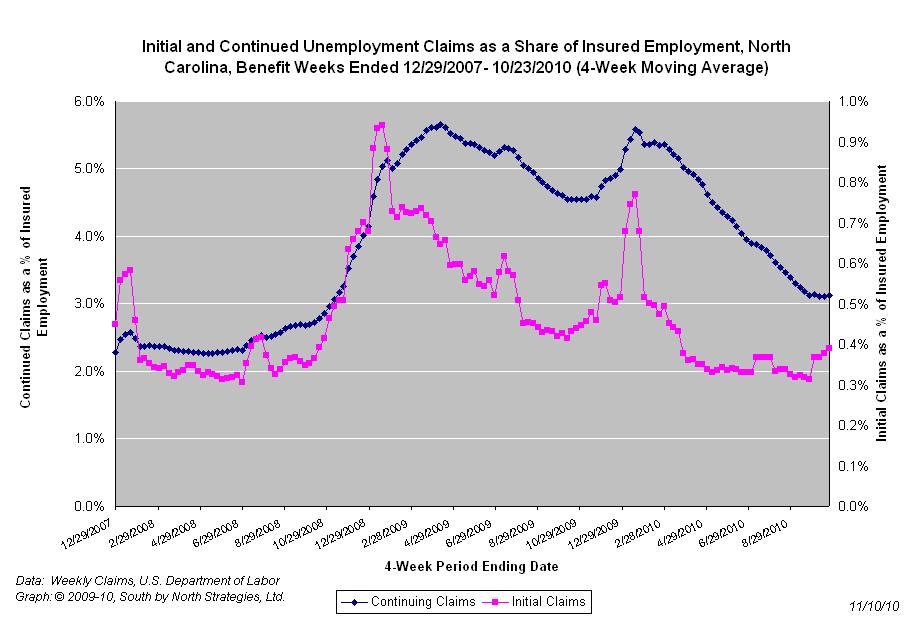
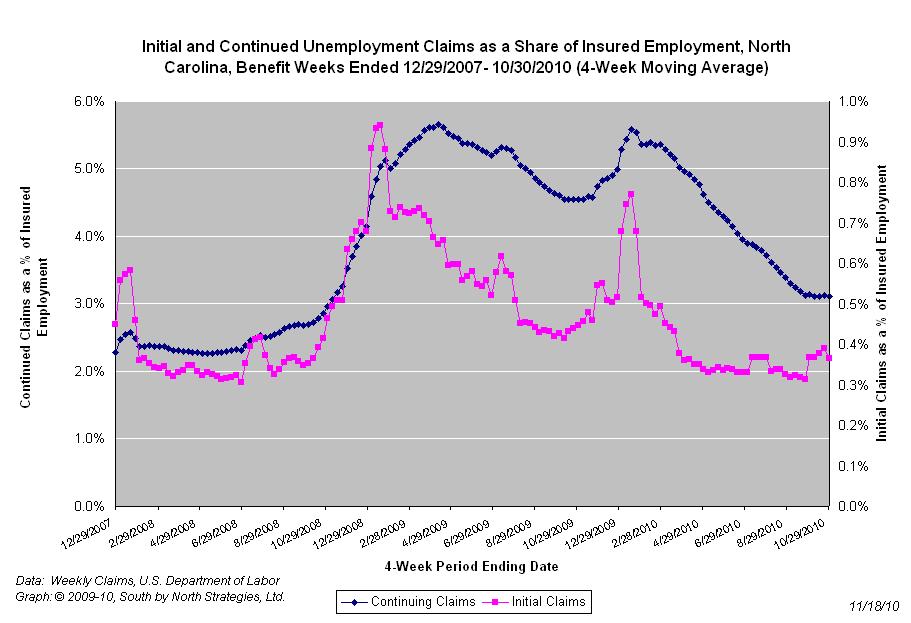
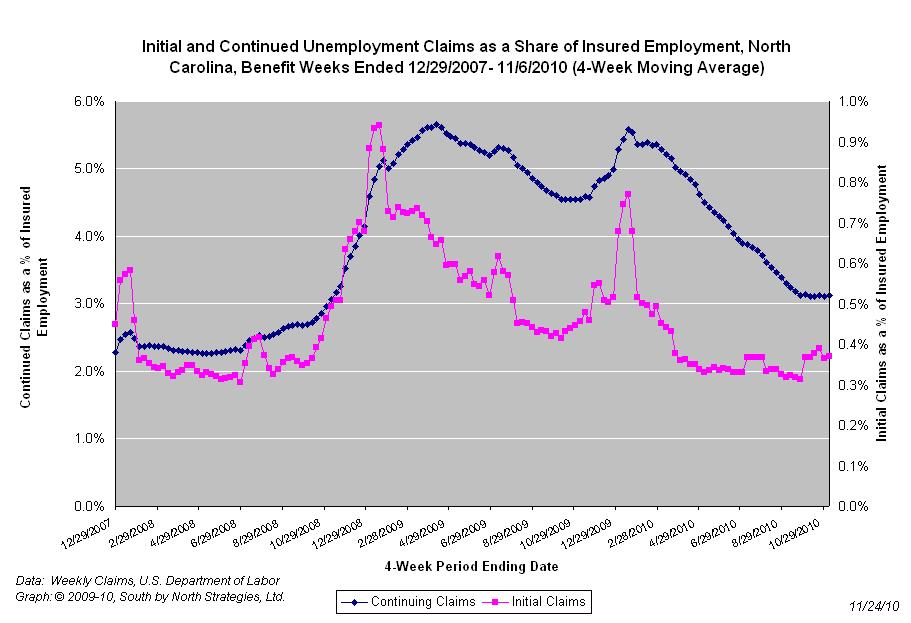
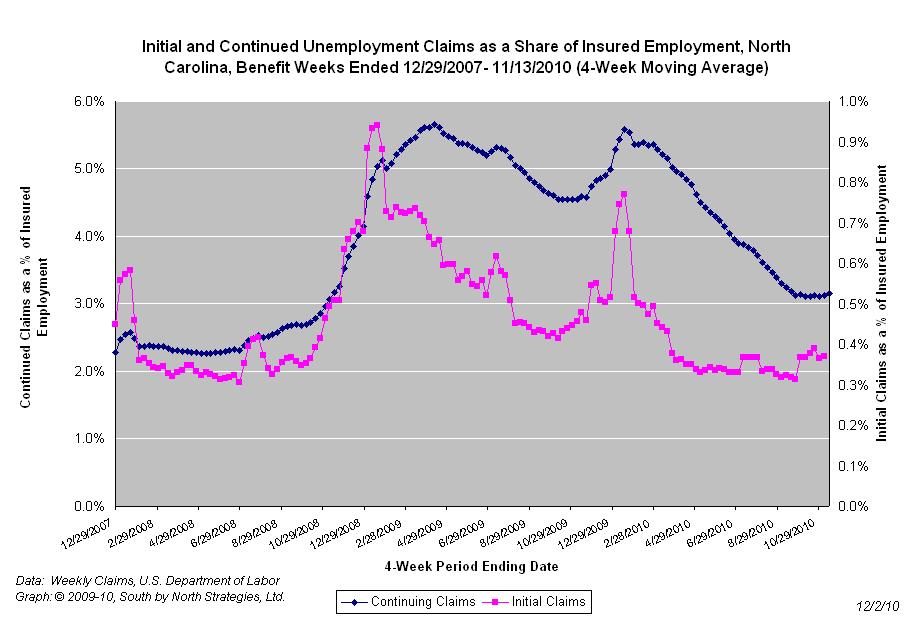
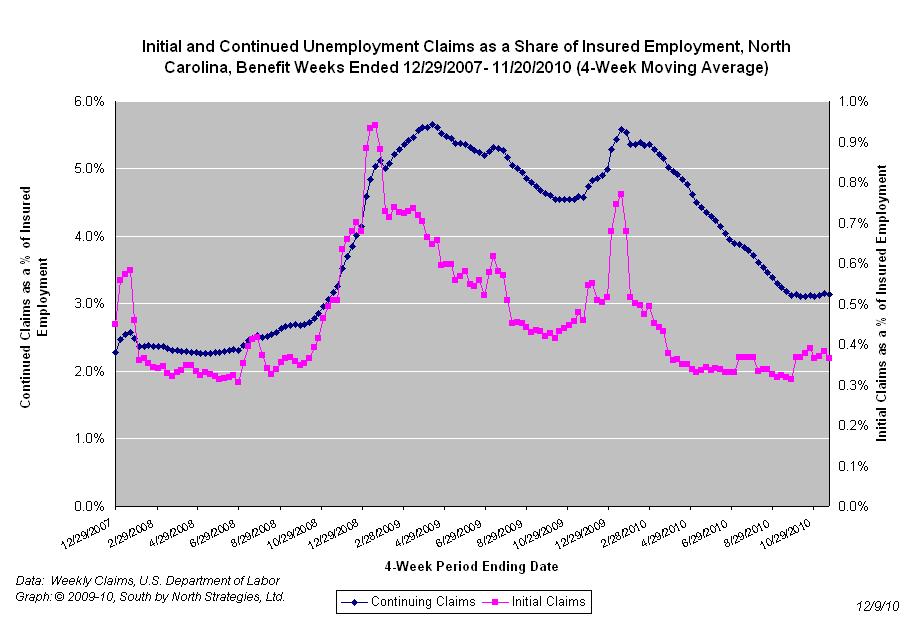
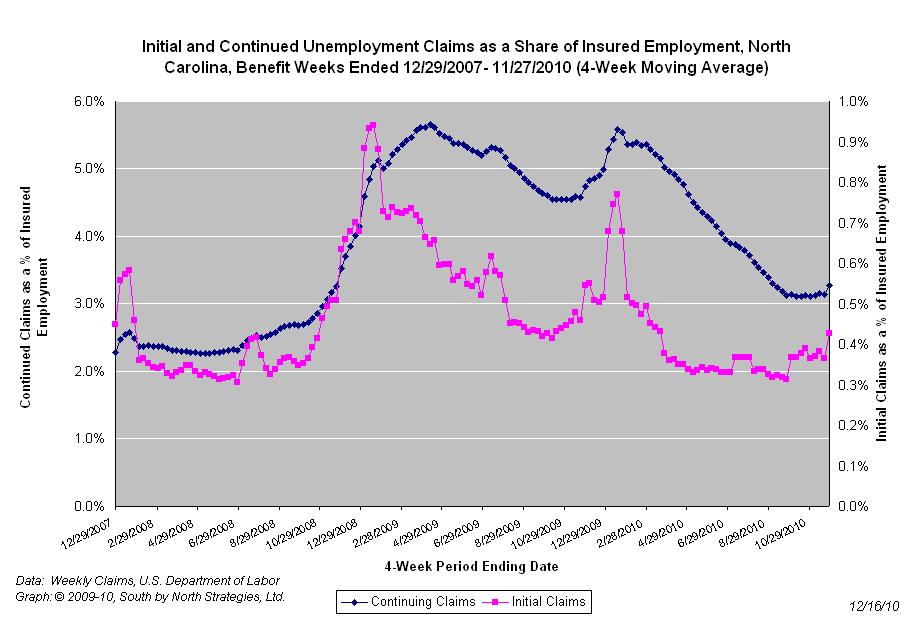
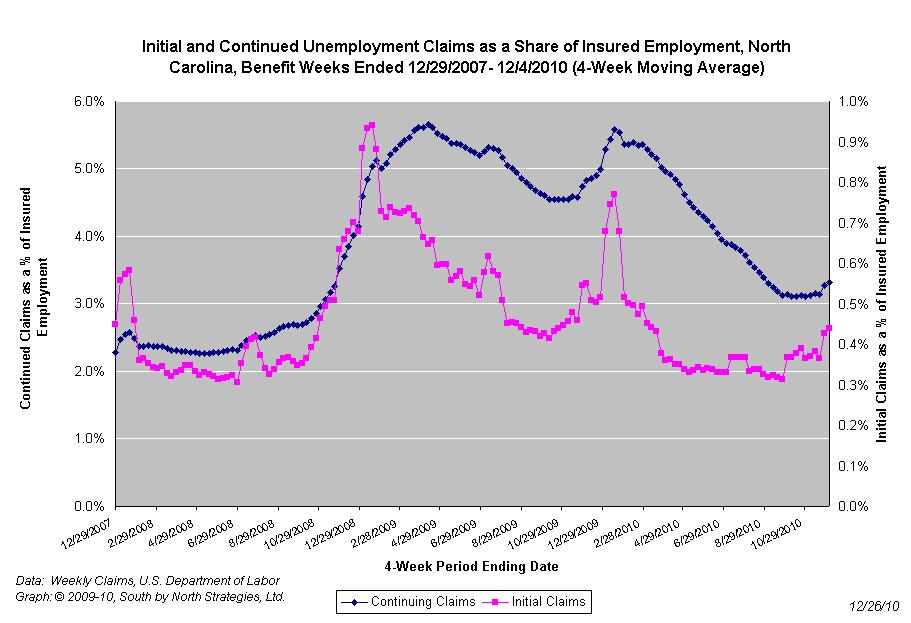
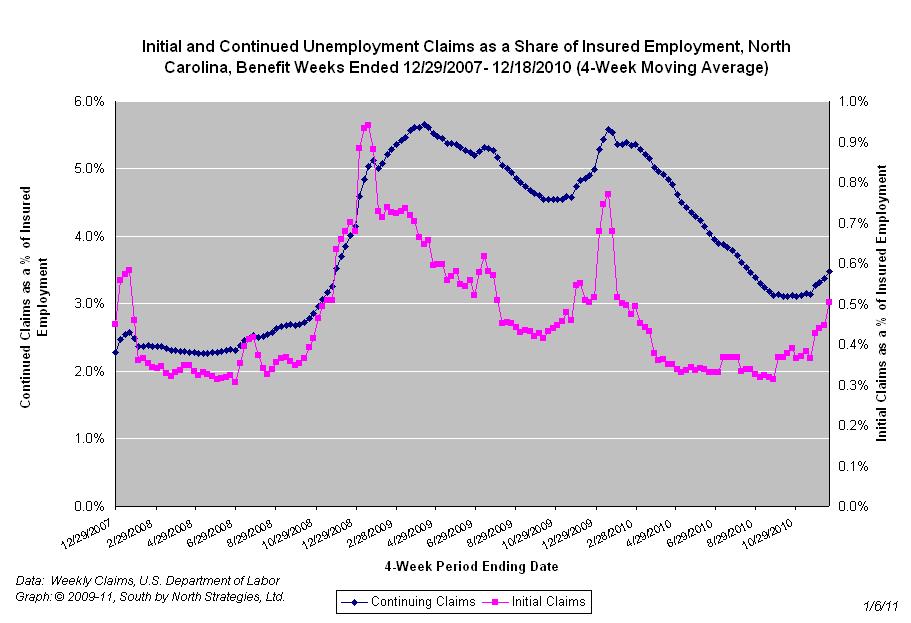
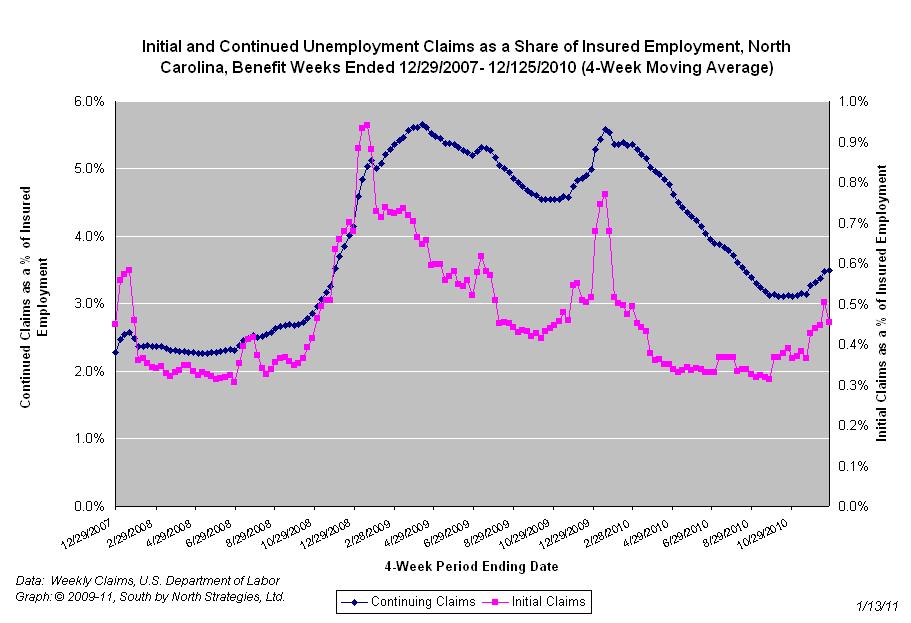
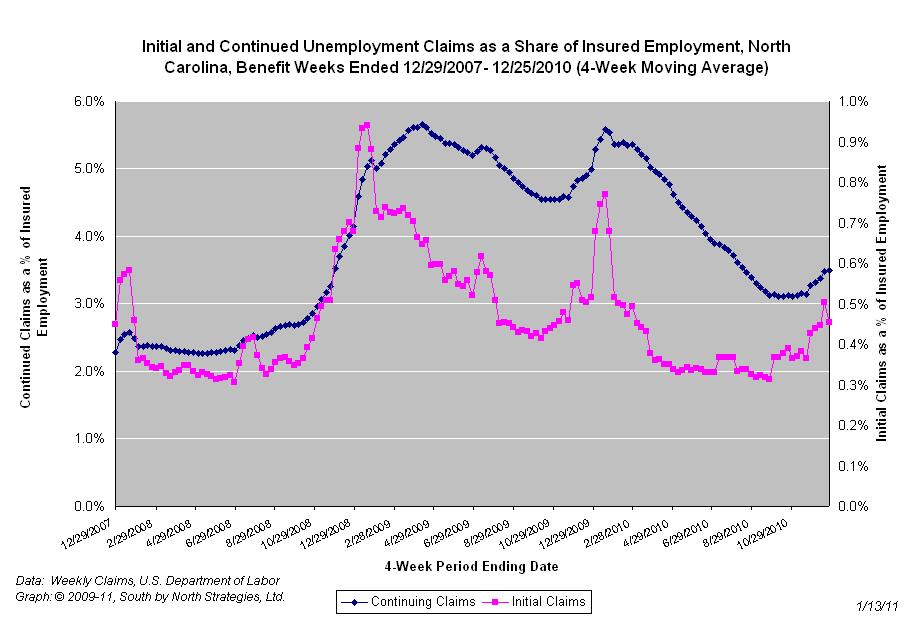
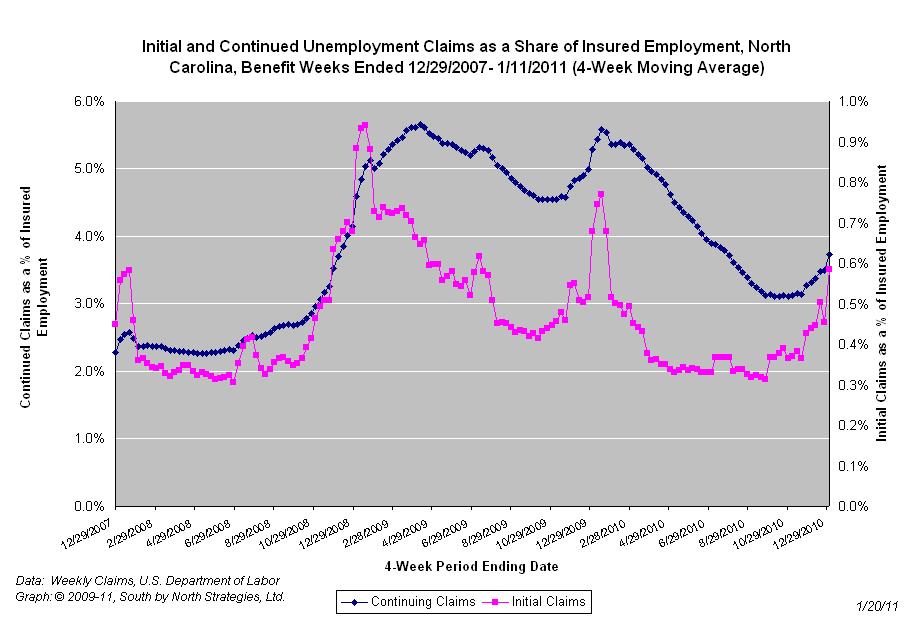
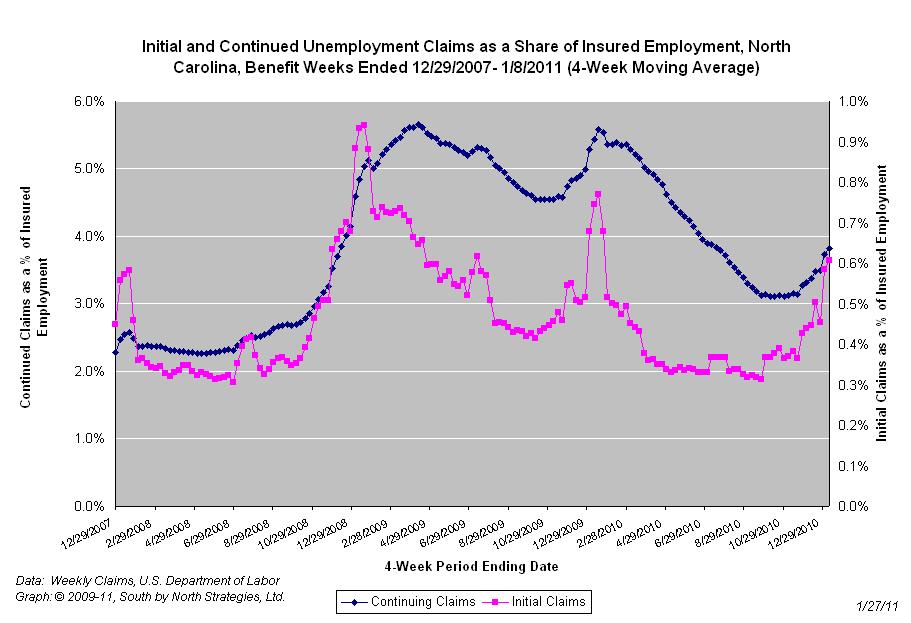
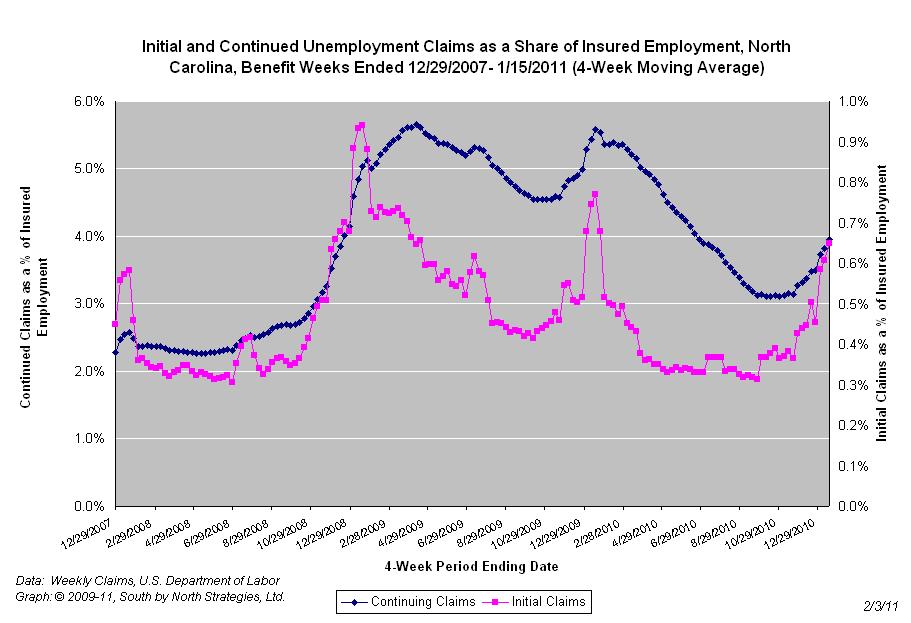
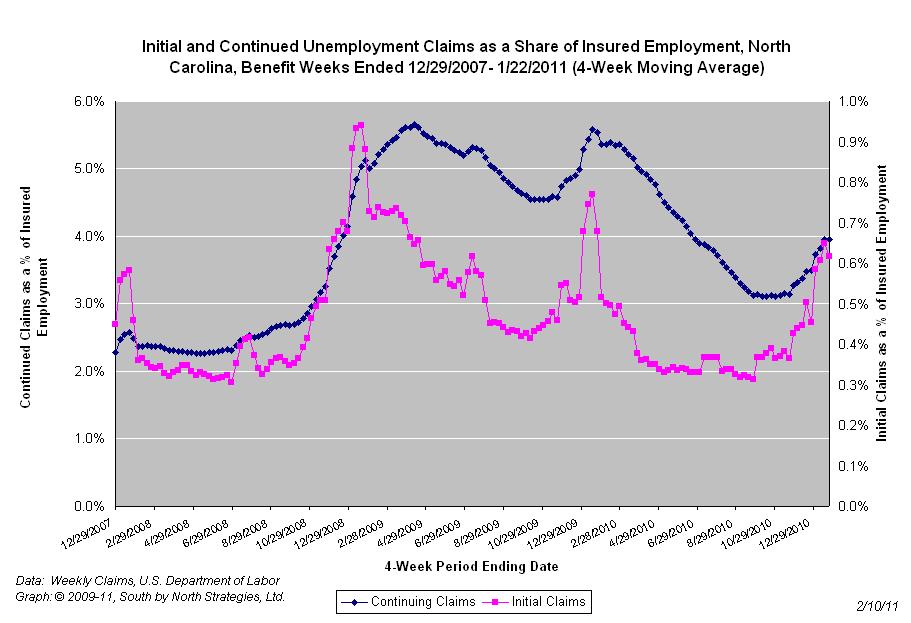
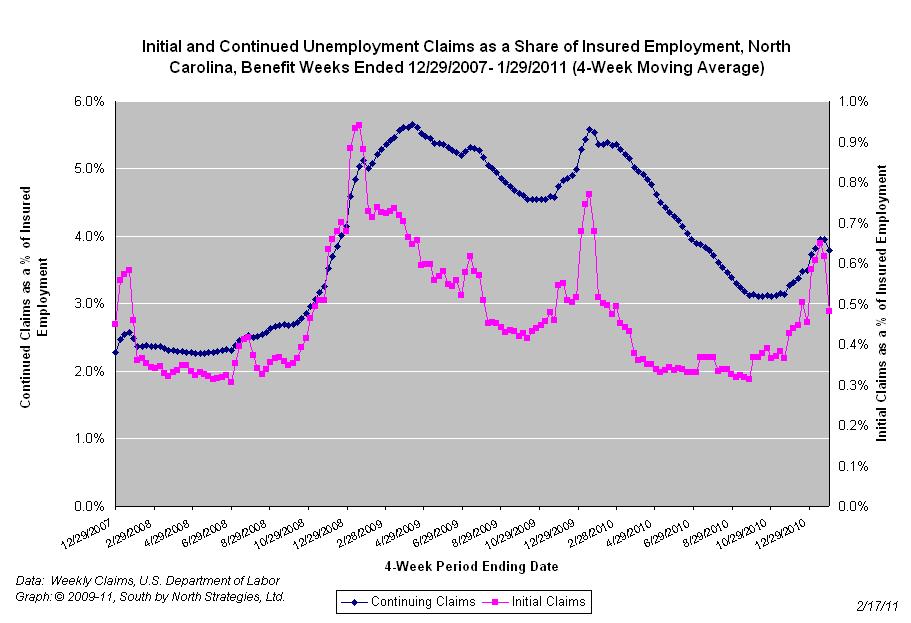
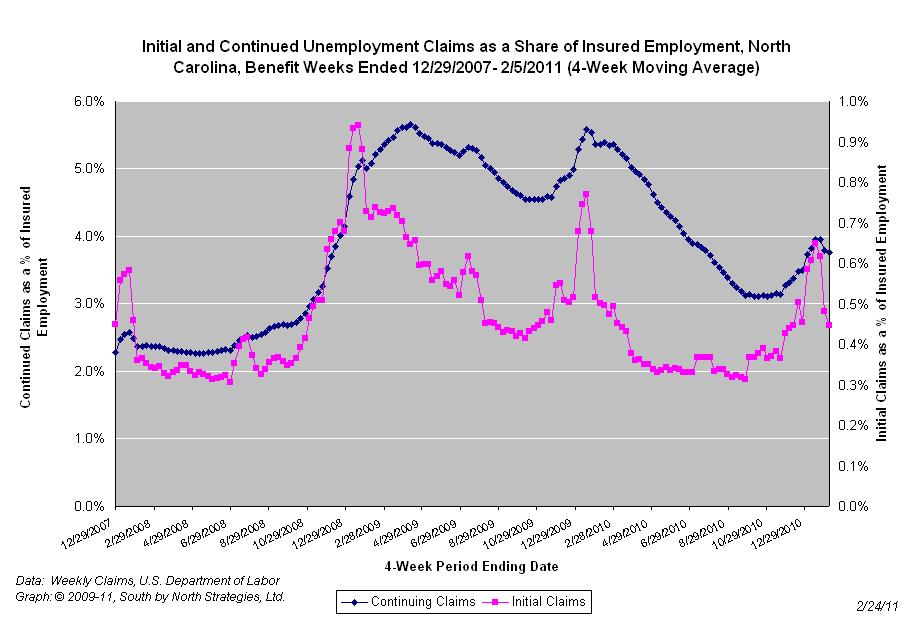
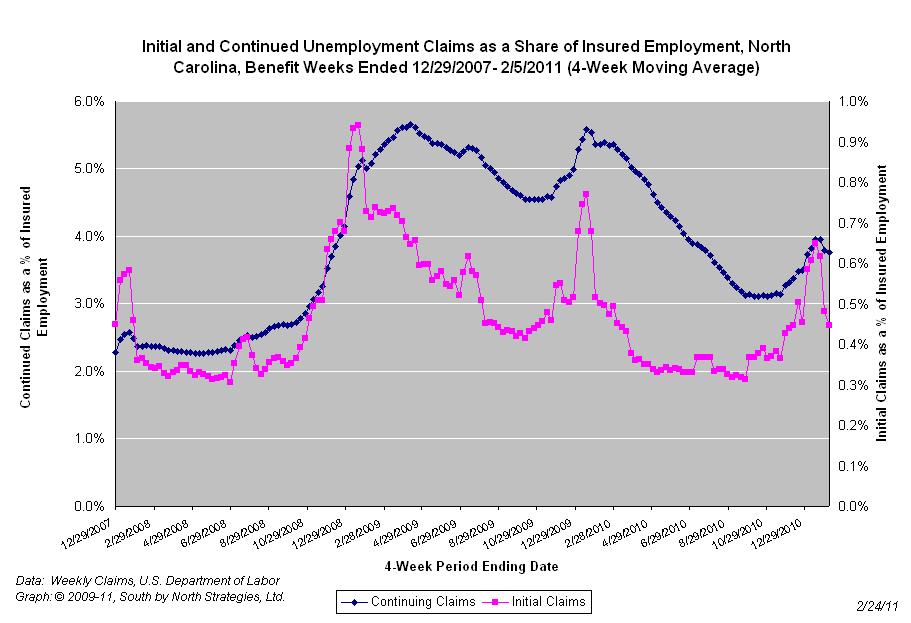
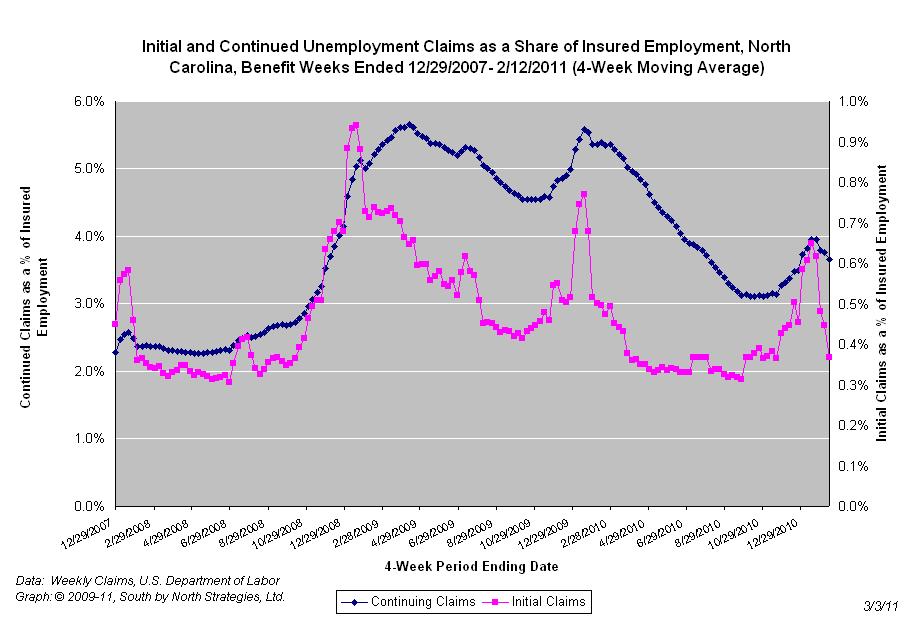
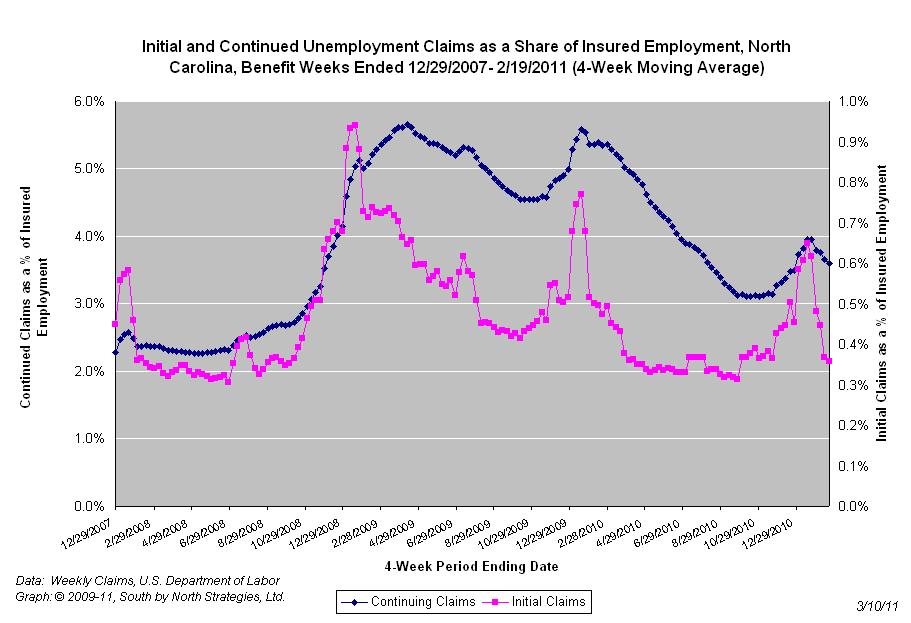
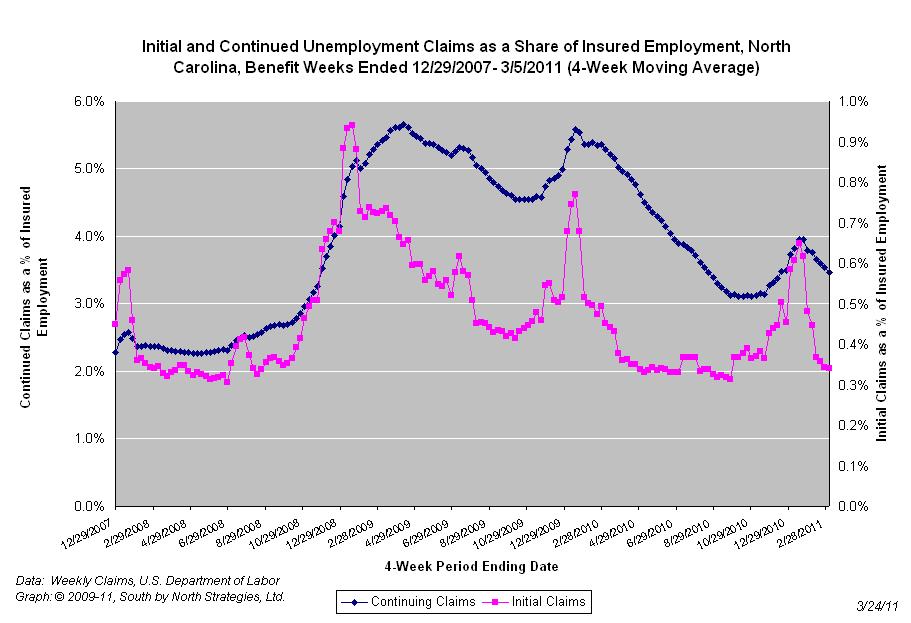
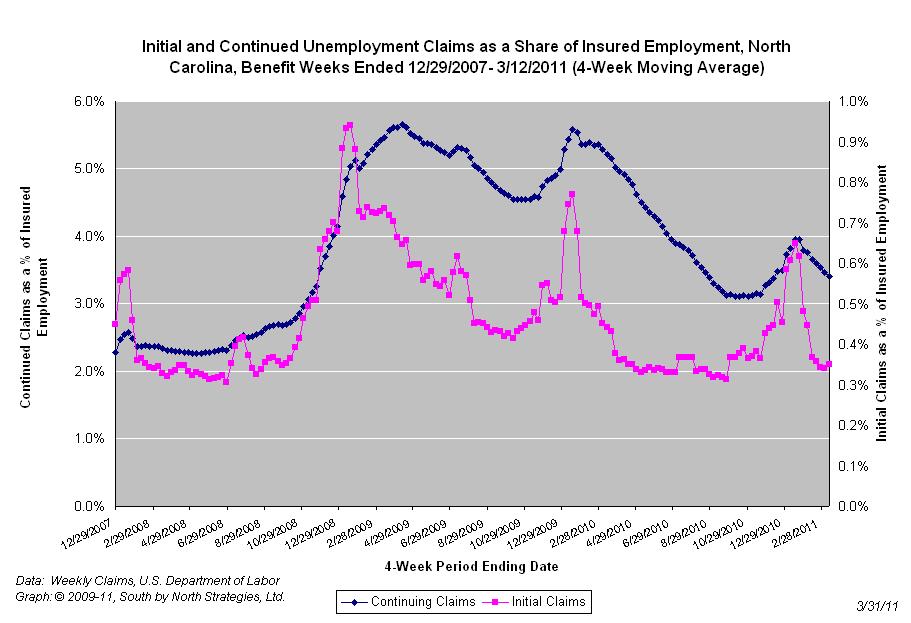
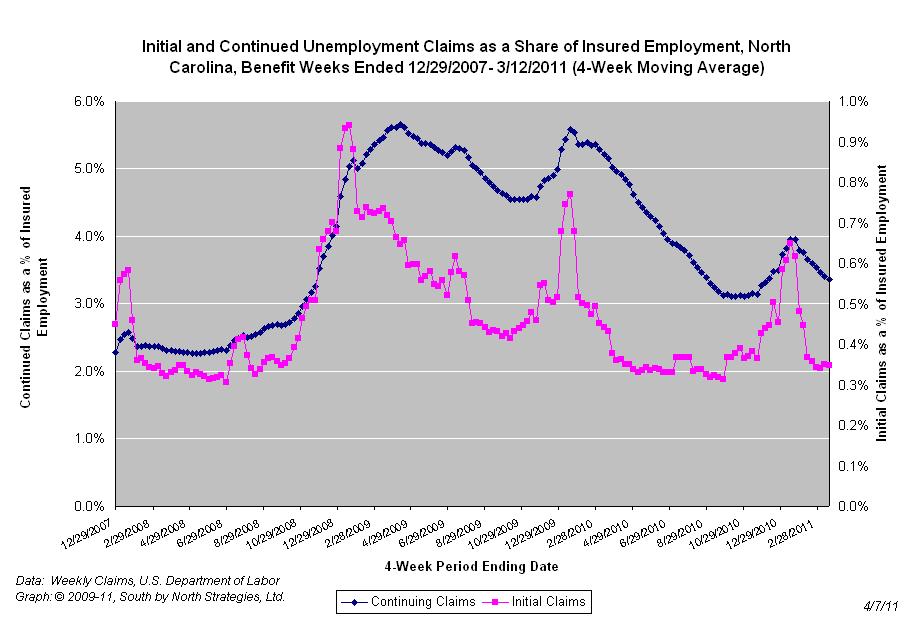
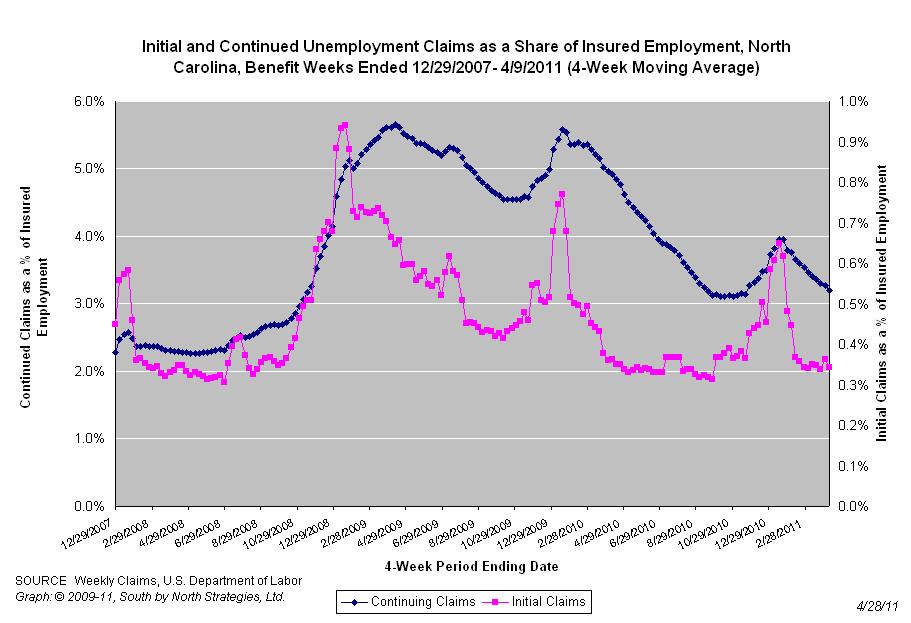 The graph (right) shows the changes in unemployment insurance claims (as a share of covered employment) in North Carolina since the recession’s start in December 2007.
Both new and continuing claims appear to have peaked for this cycle, and the four-week averages of new and continuing claims have fallen considerably. Yet continuing claims remain at an elevated level, which suggests that unemployed individuals are finding it difficult to find new positions.
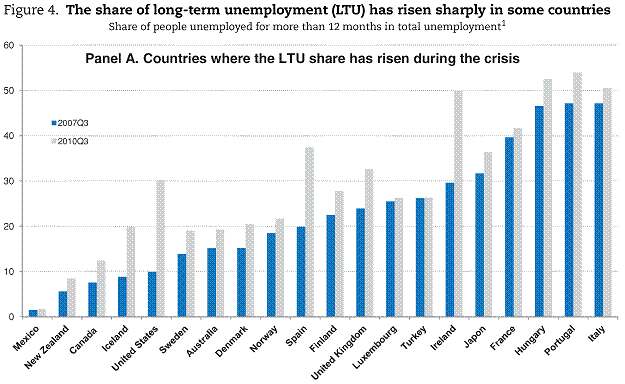
Long-Term Unemployment’s Rapid Rise
Econbrowser points out research that places the problem of long-term unemployment in the United States in international context.
Around The Dial – 4/27/11
Economic policy reports, blog postings, and media stories of interest:
- The Progressive Pulse isn’t a fan of “vending machine” government.
- Robert Reich describes the “wageless recovery.’
- Jonathan Cohn points out the effects of raising the Medicare age.
- Economist’s View notes the Fed should have done more about the housing bubble.
- Michael Kazin isn’t impressed by independent voters.
- New Deal 2.0 bemoans the loss of high-speed rail funding.
 Email Sign-Up
 RSS Feed