Unemployment Claims In NC: Week of 2/5
For the benefit week ending on February 5th, 13,750 North Carolinians filed initial claims for state unemployment insurance benefits, and 135,996 individuals applied for state-funded continuing benefits. Compared to the prior week, there were fewer initial and continuing claims. These figures come from data released by the U.S. Department of Labor.
Averaging new and continuing claims over a four-week period — a process that helps adjust for seasonal fluctuations and better illustrates trends — shows that an average of 16,602 initial claims were filed over the previous four weeks, along with an average of 139,816 continuing claims. Compared to the previous four-week period, there were fewer initial and continuing claims.
 One year ago, the four-week average for initial claims stood at 19,438 and the four-week average of continuing claims equaled 208,237.
While the number of claims has dropped over the past year so has covered employment. Last week, covered employment totaled 3.7 million, down from 3.9 million a year ago.
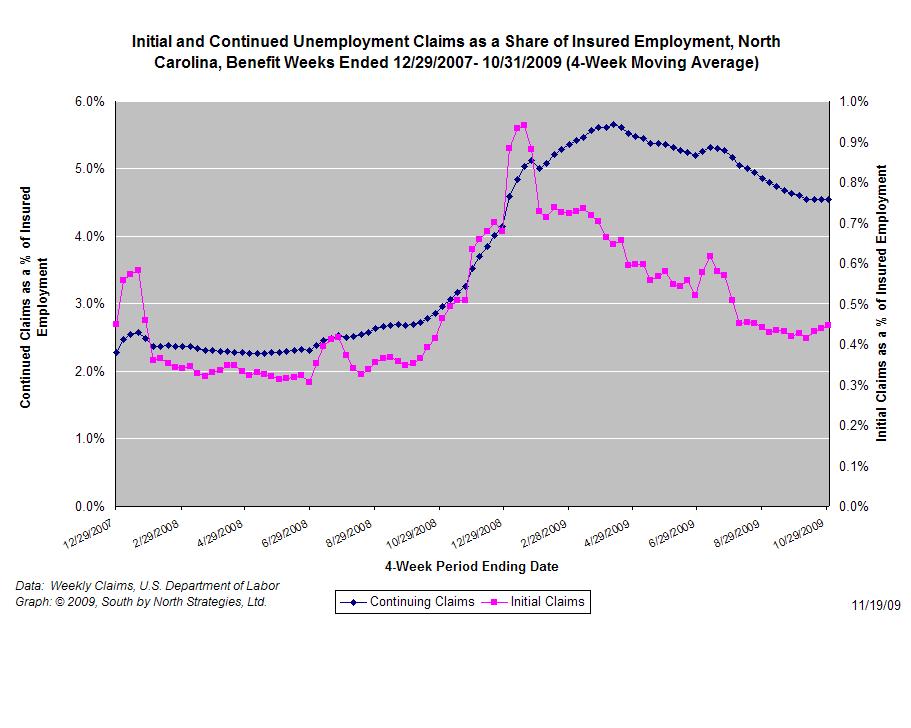
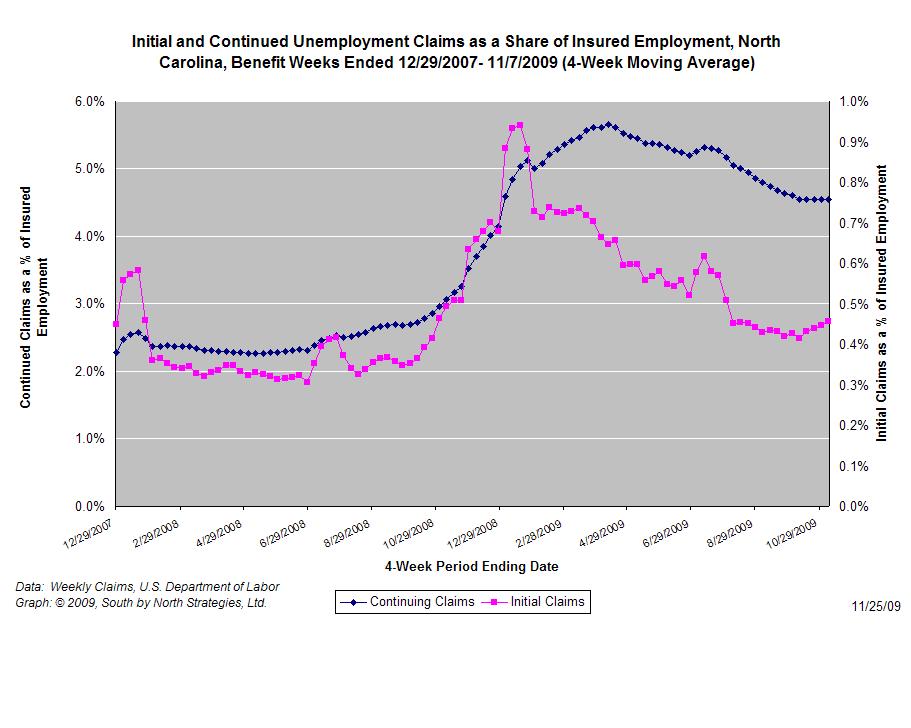
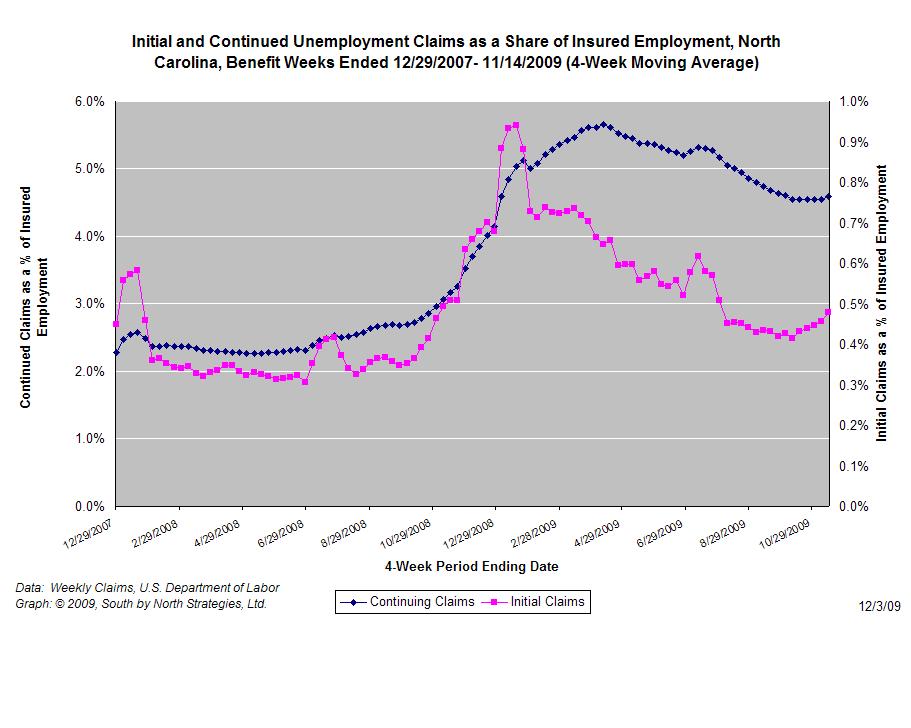
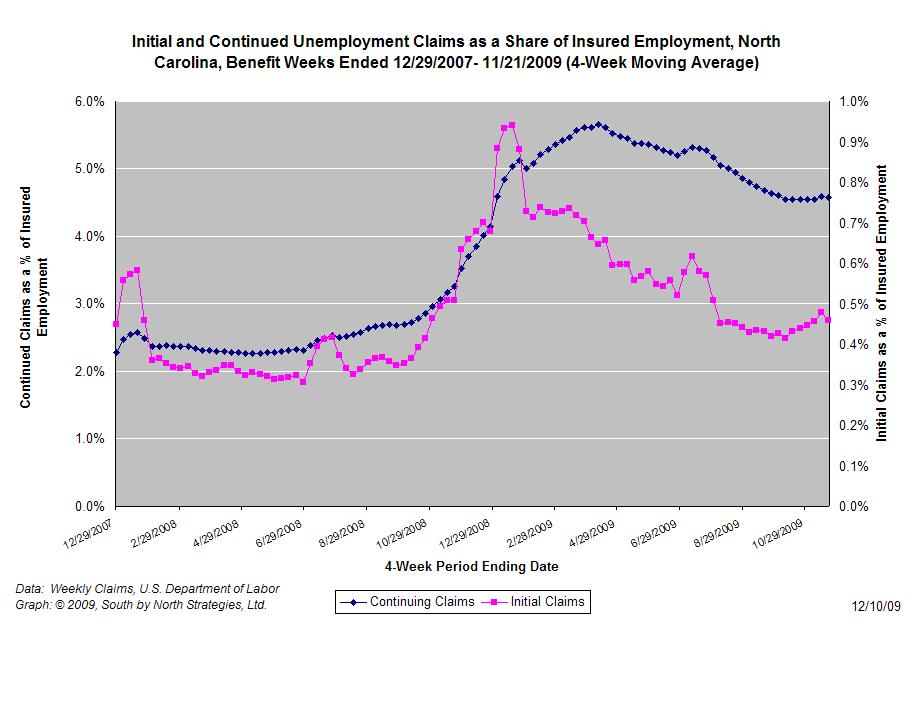
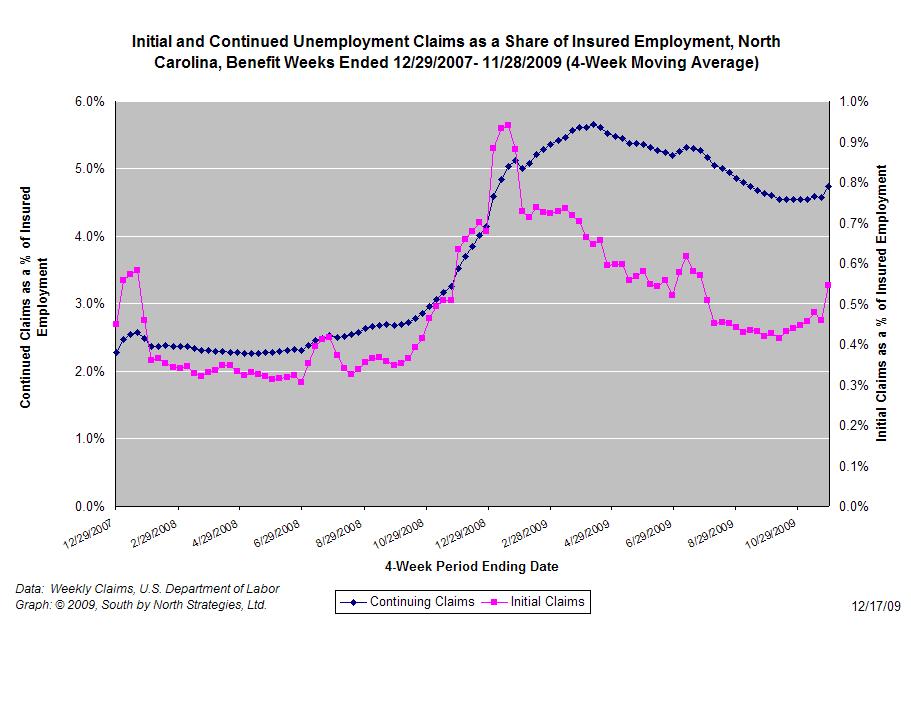
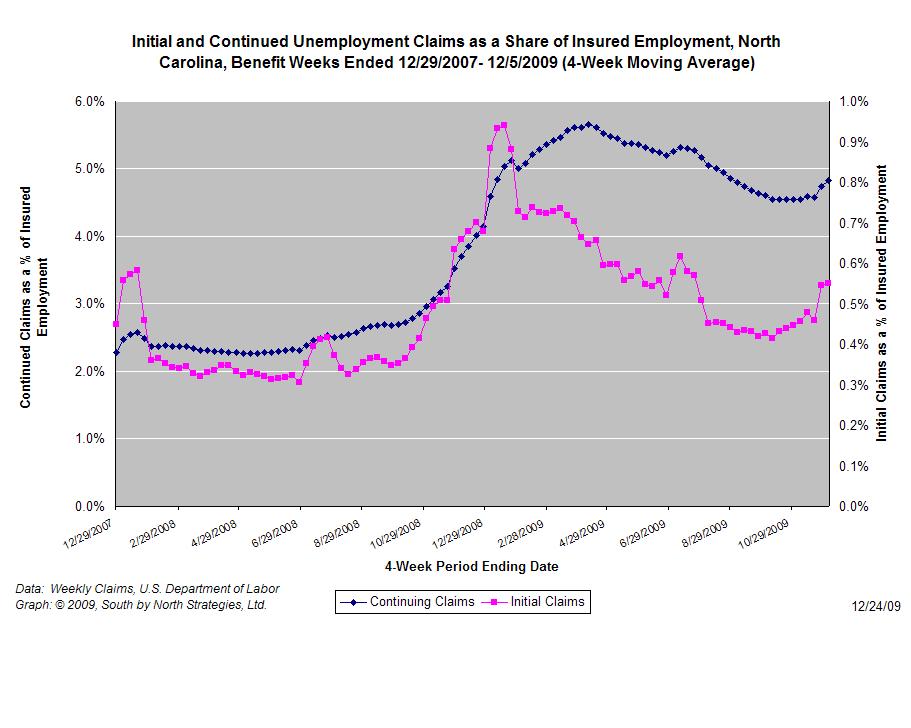
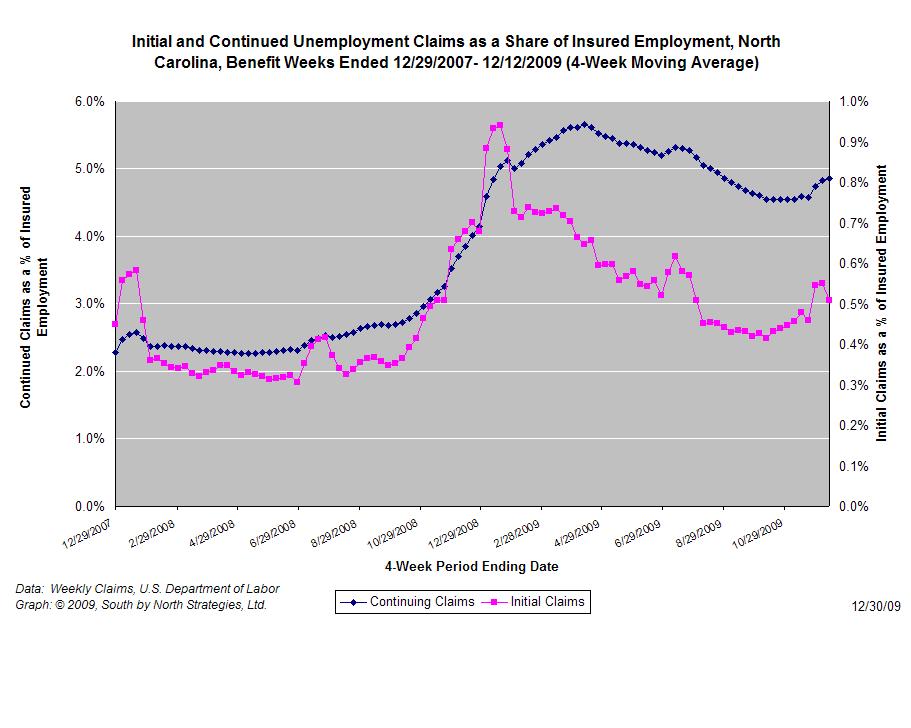
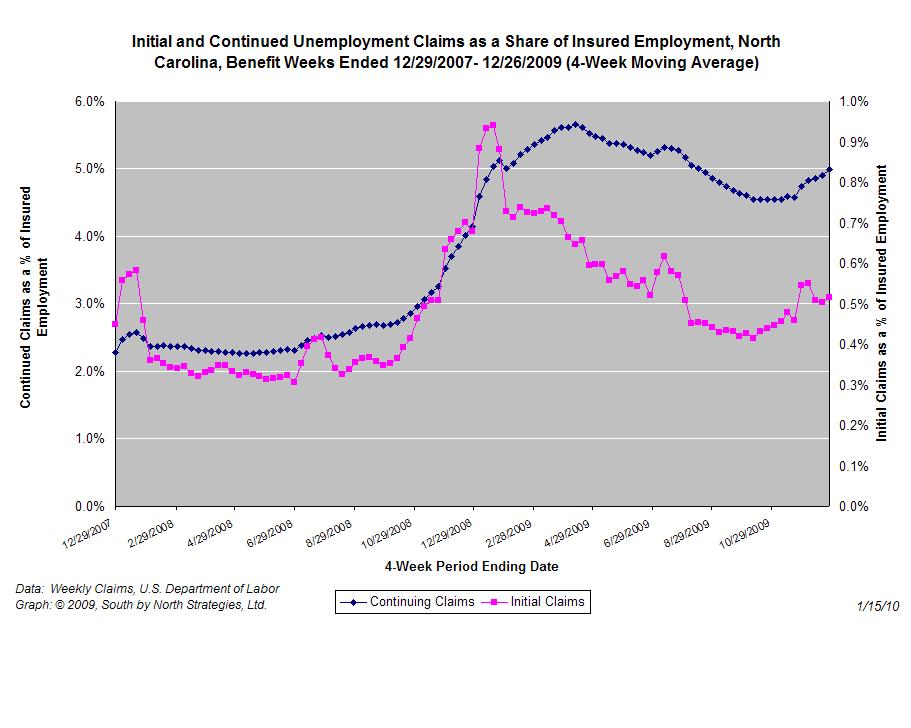
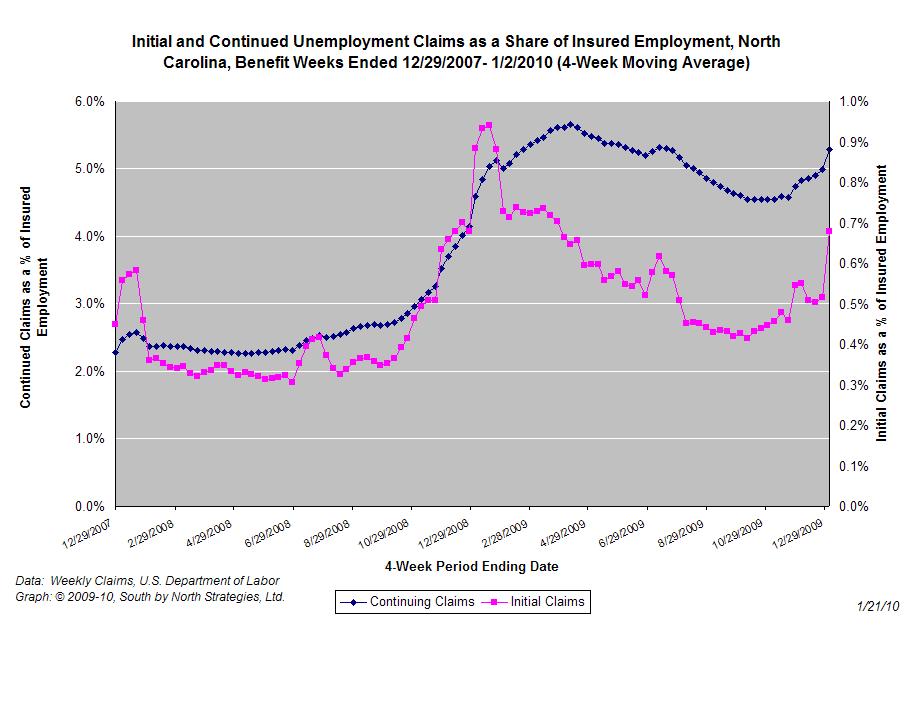
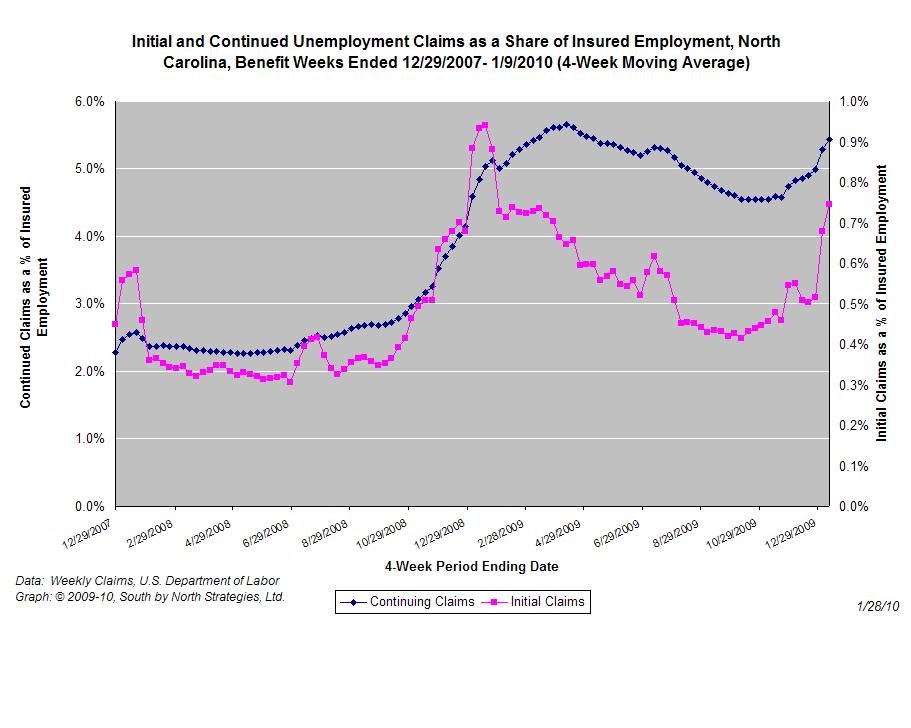
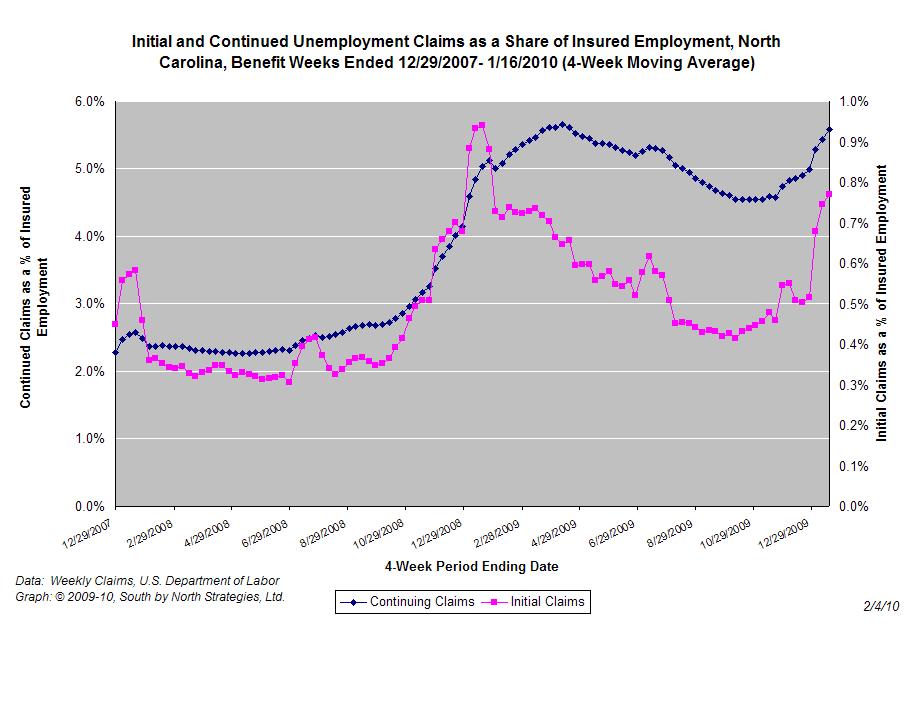
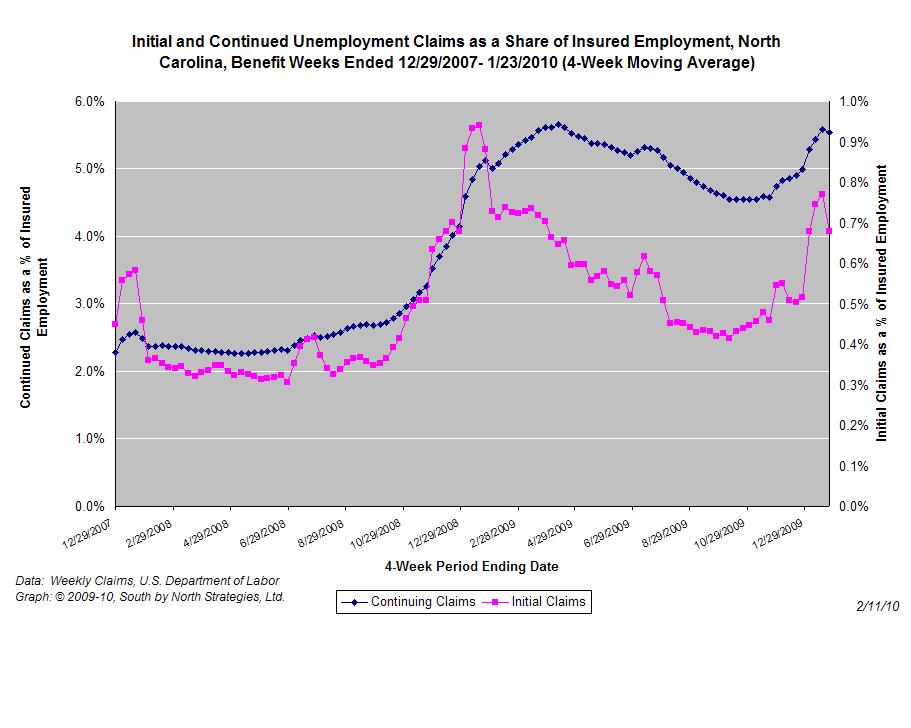
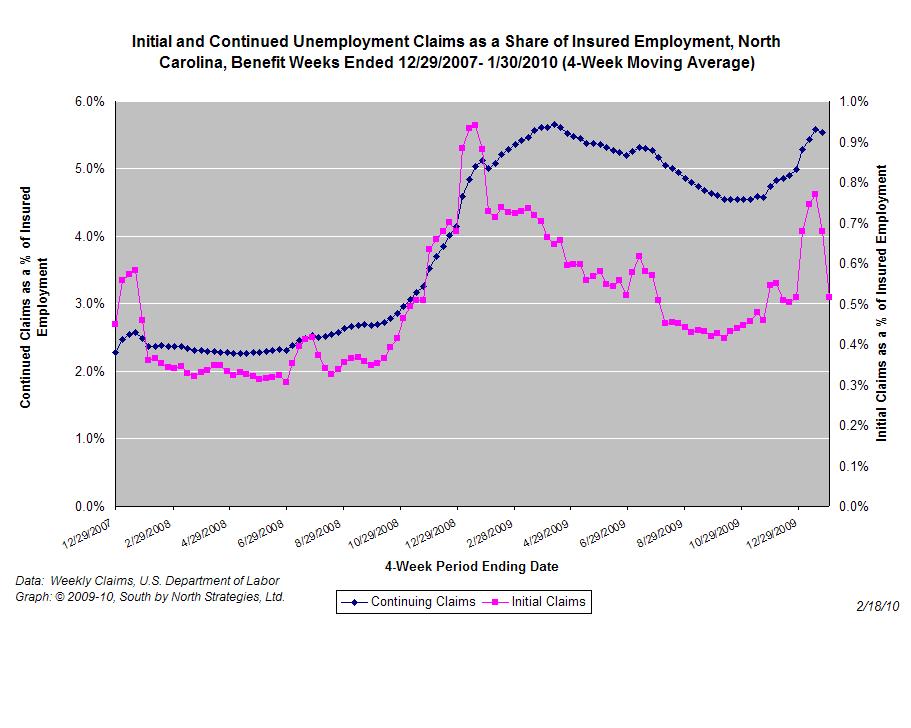
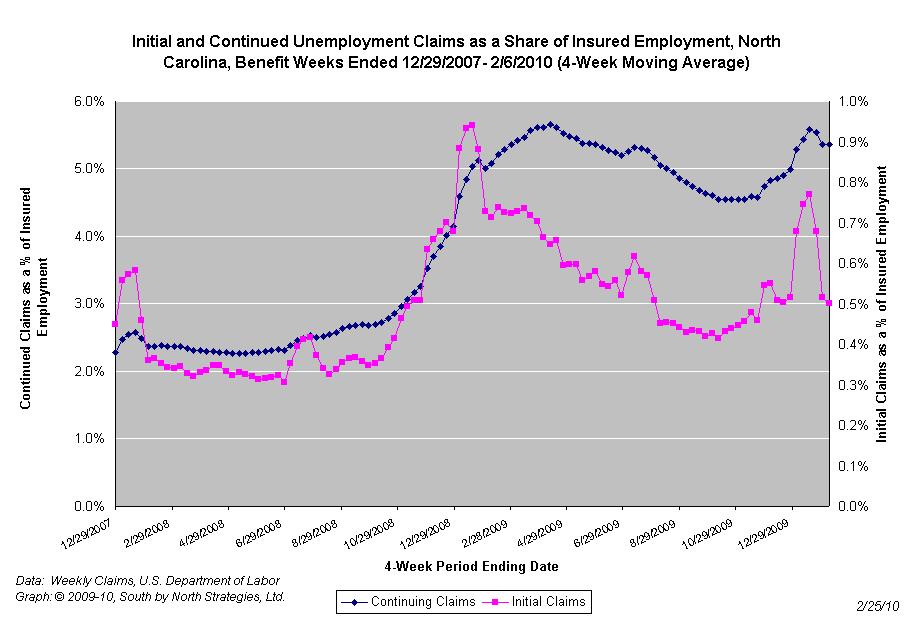
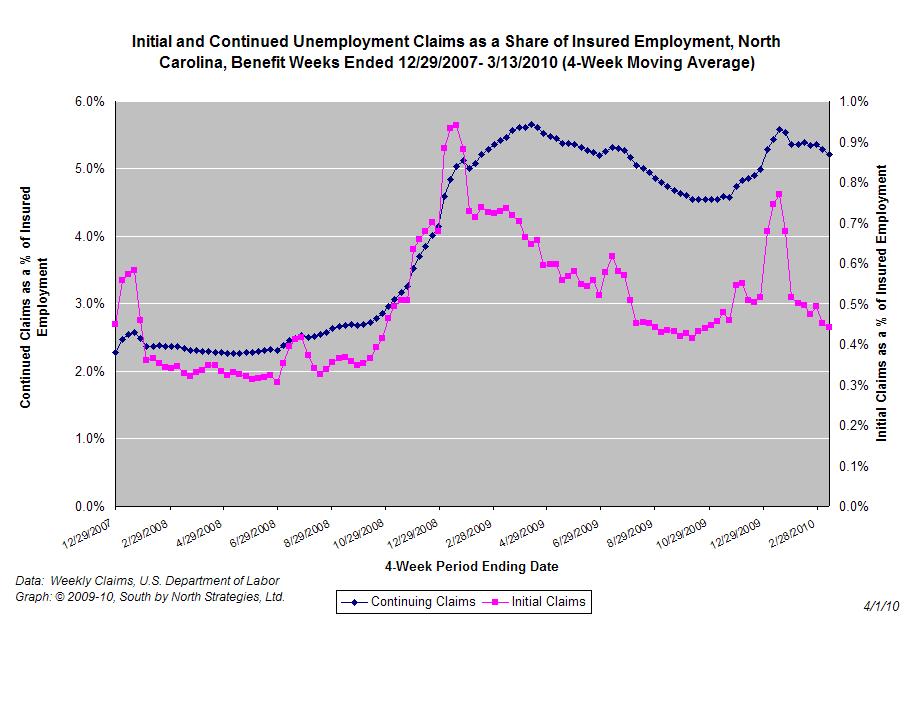
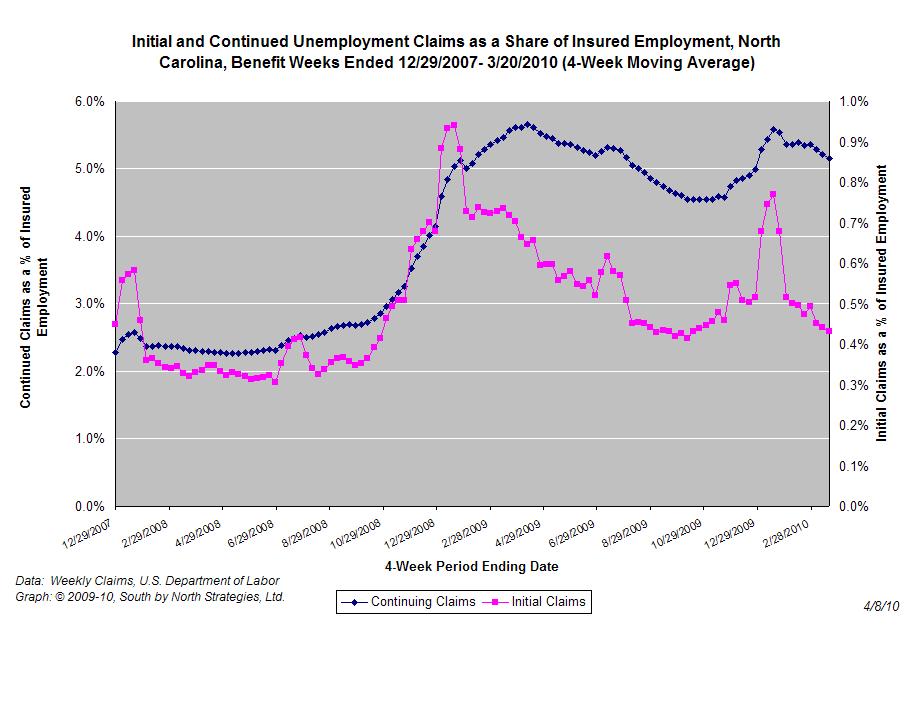
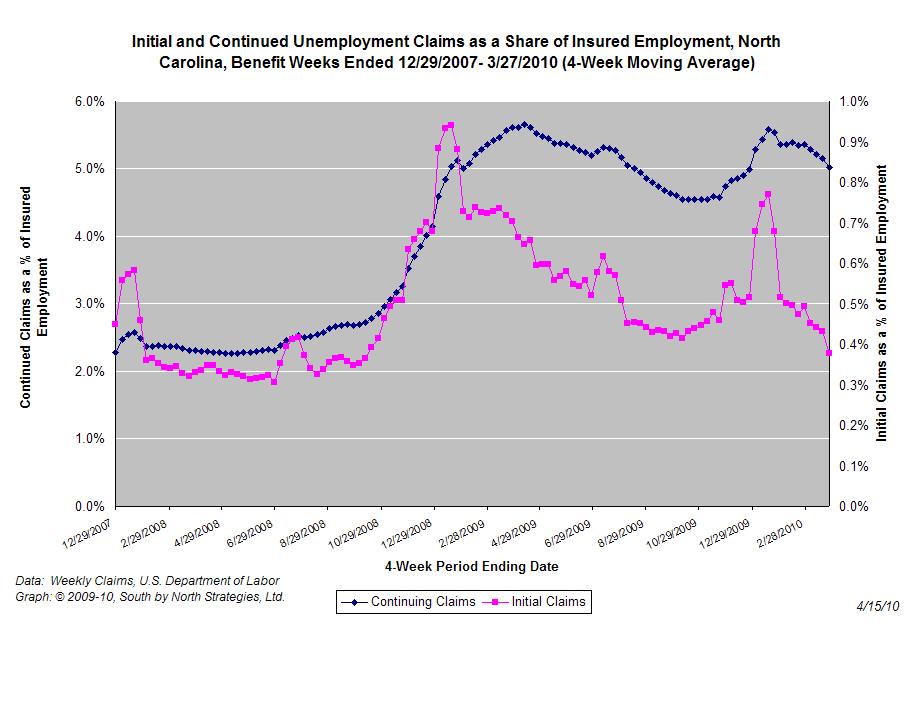
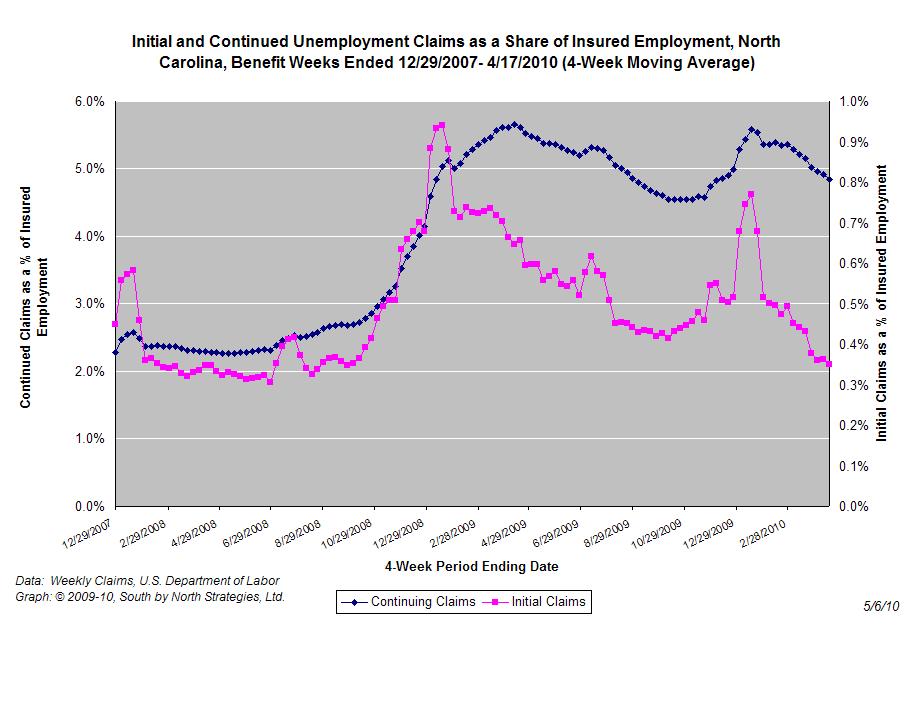
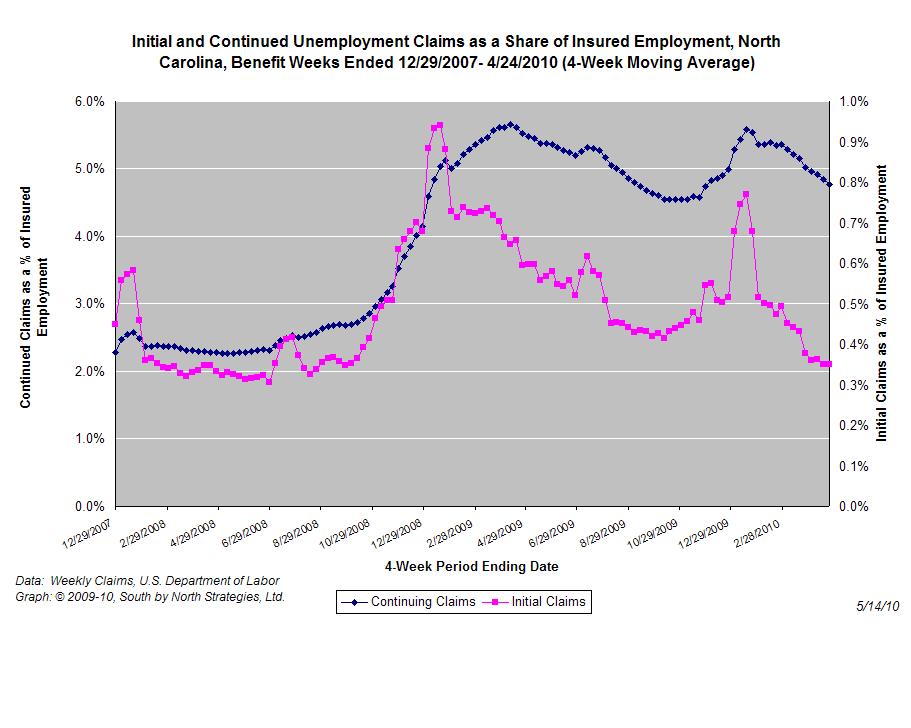
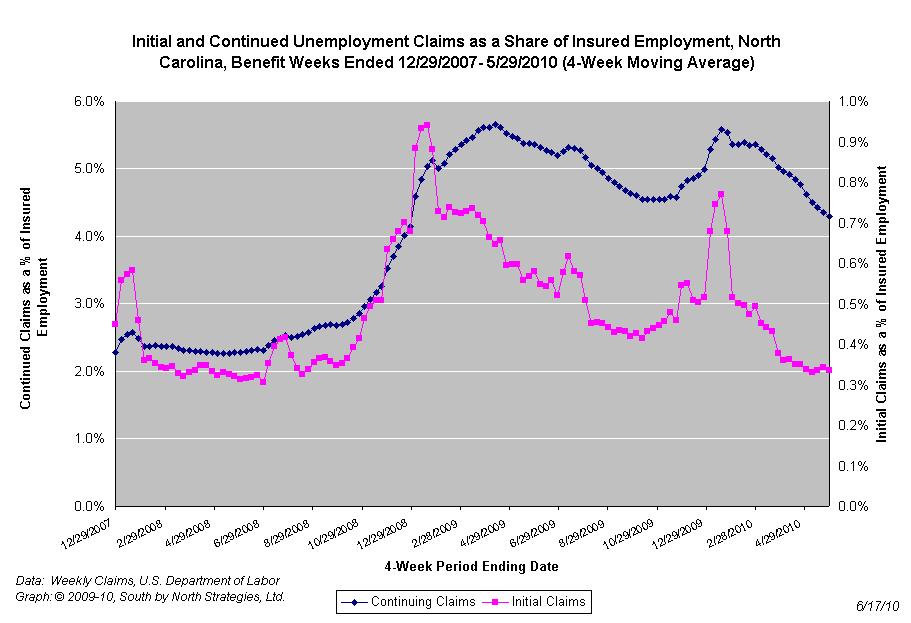
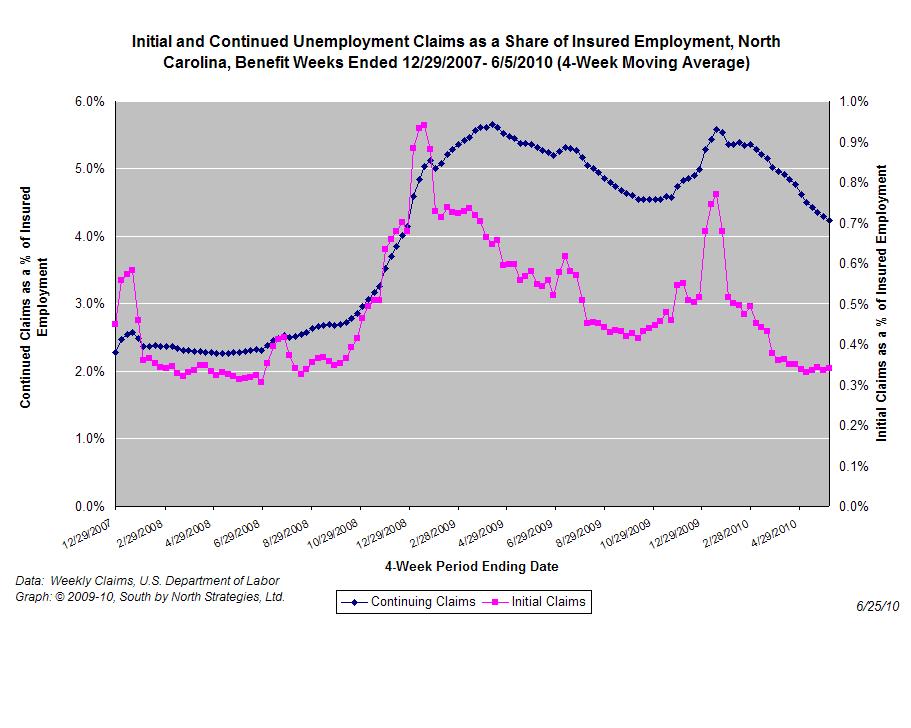
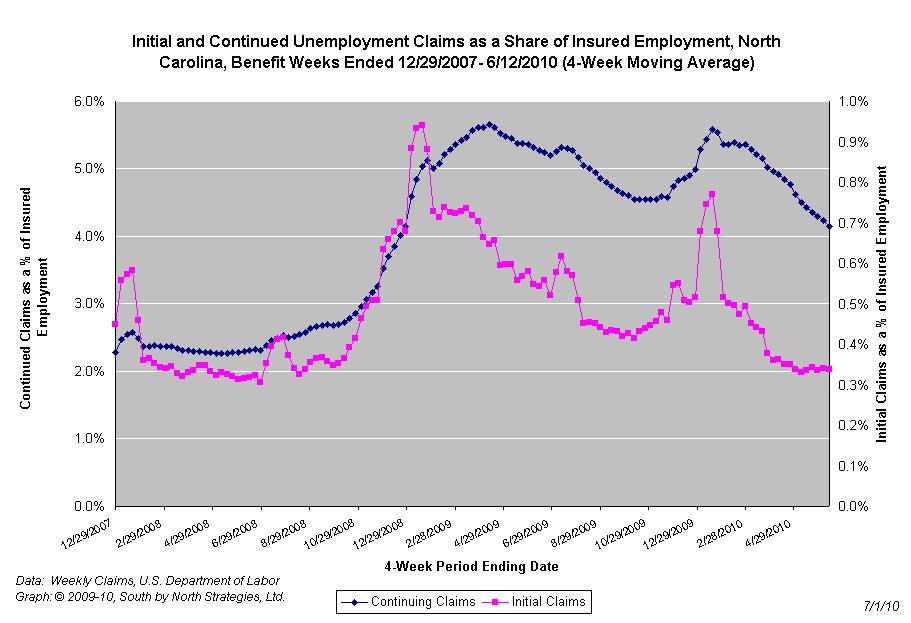
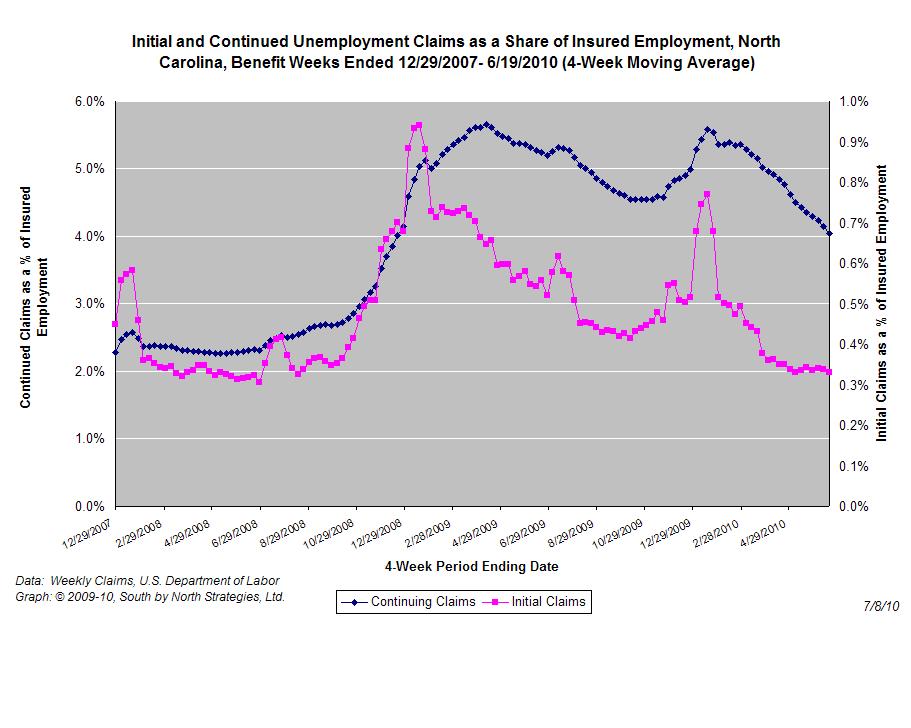
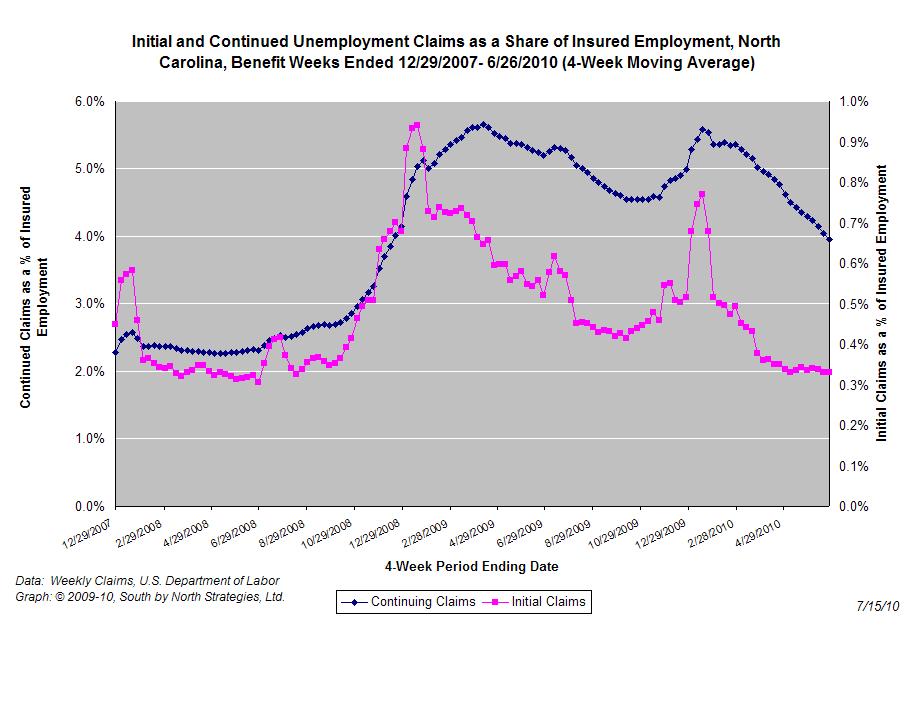
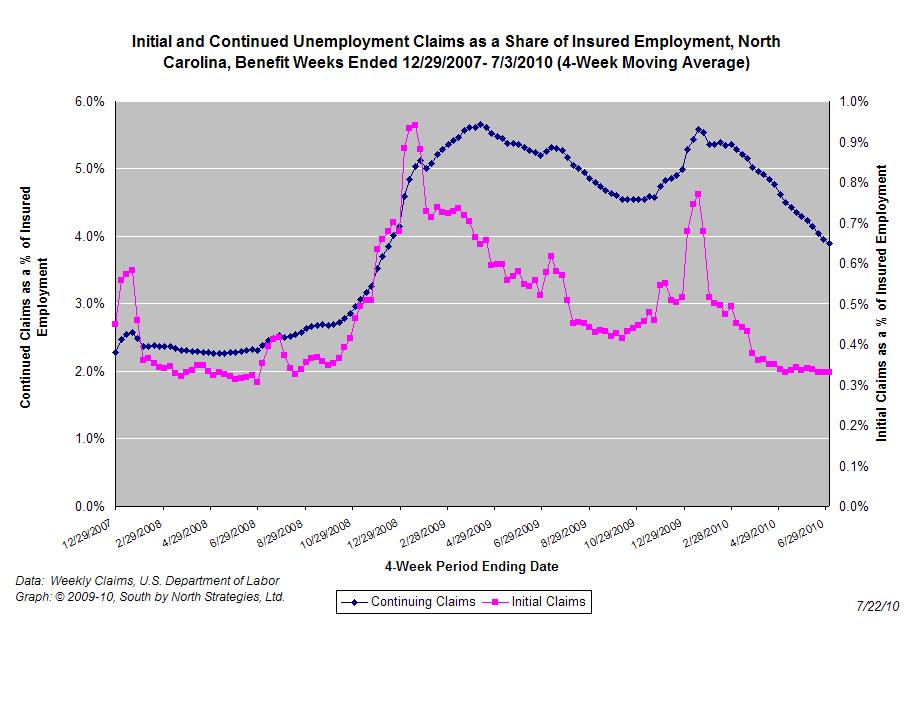
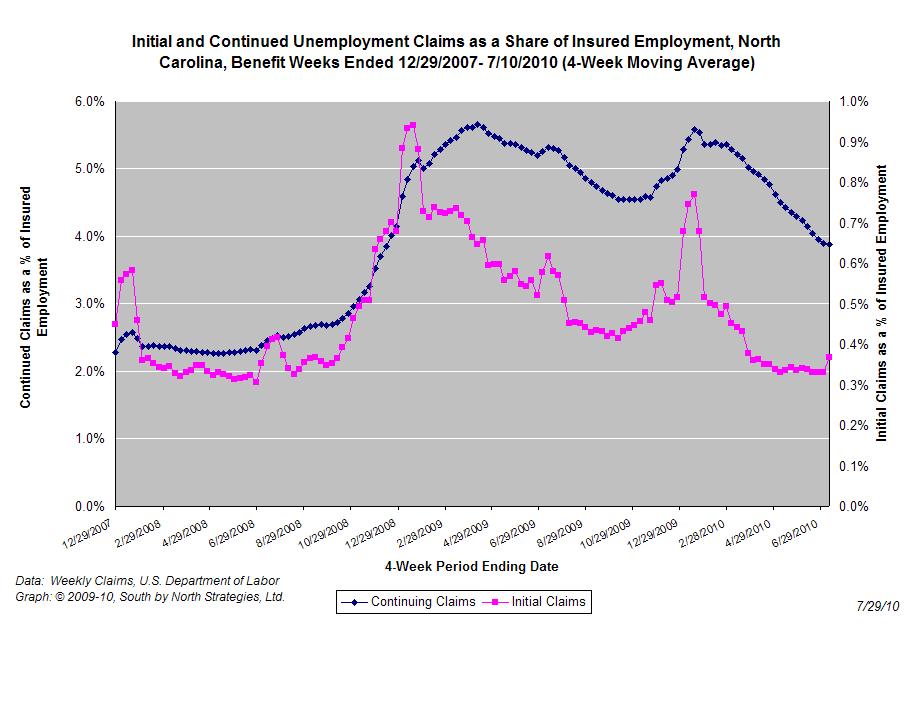
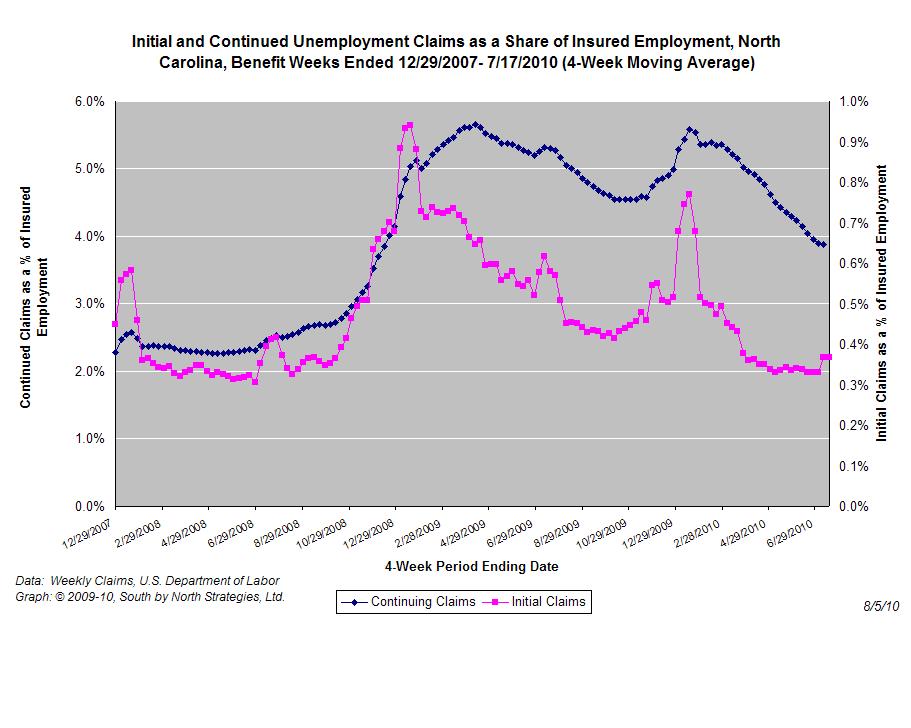
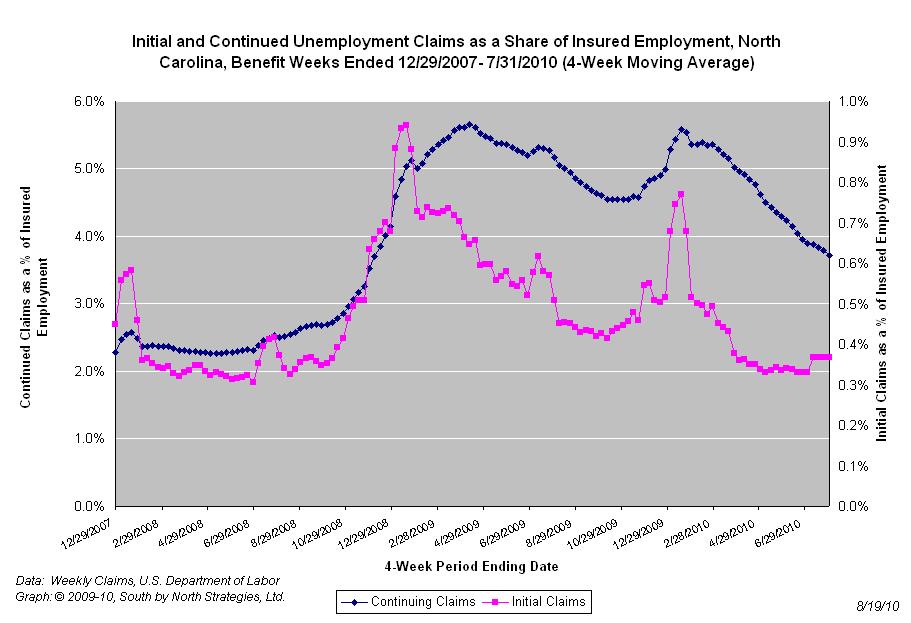
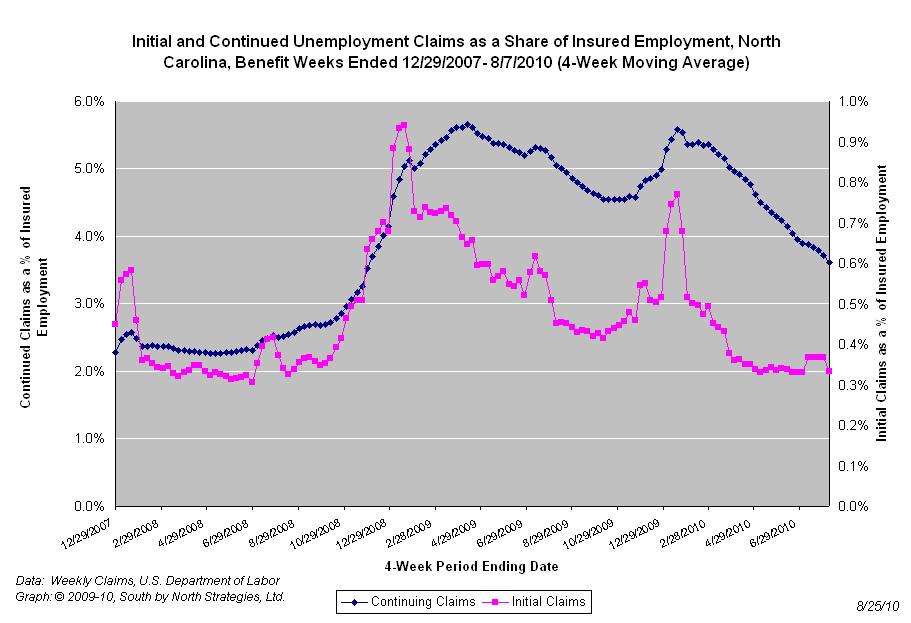
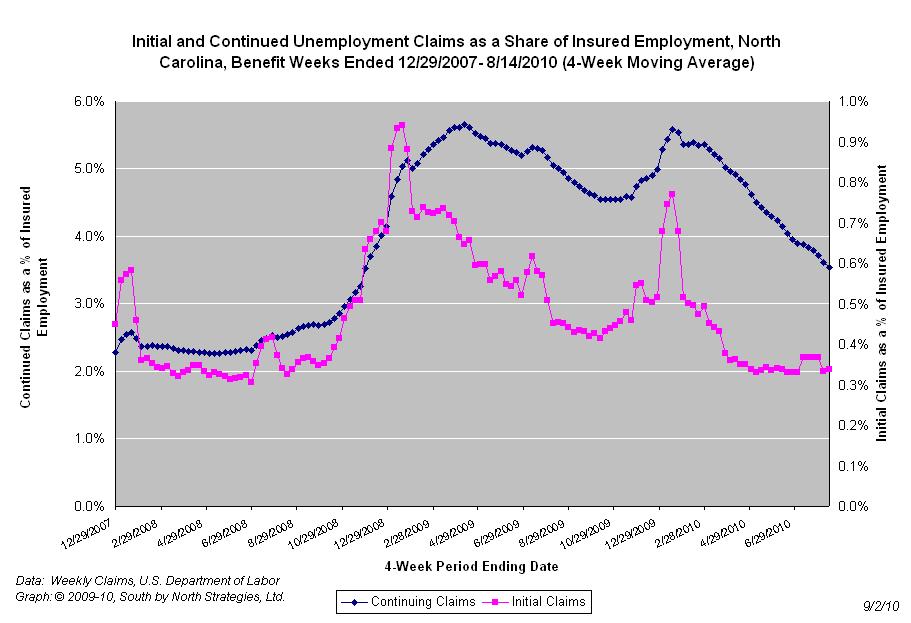
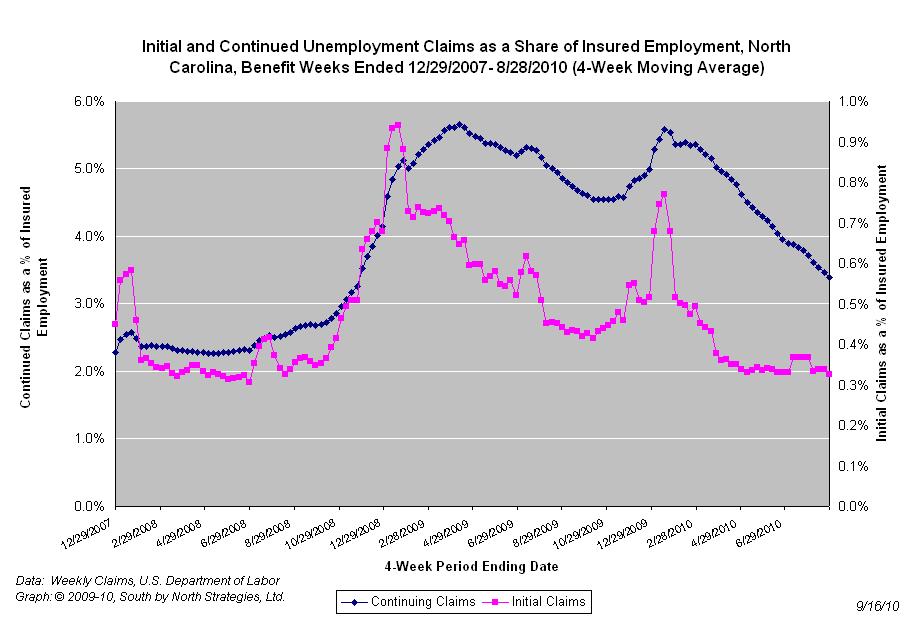
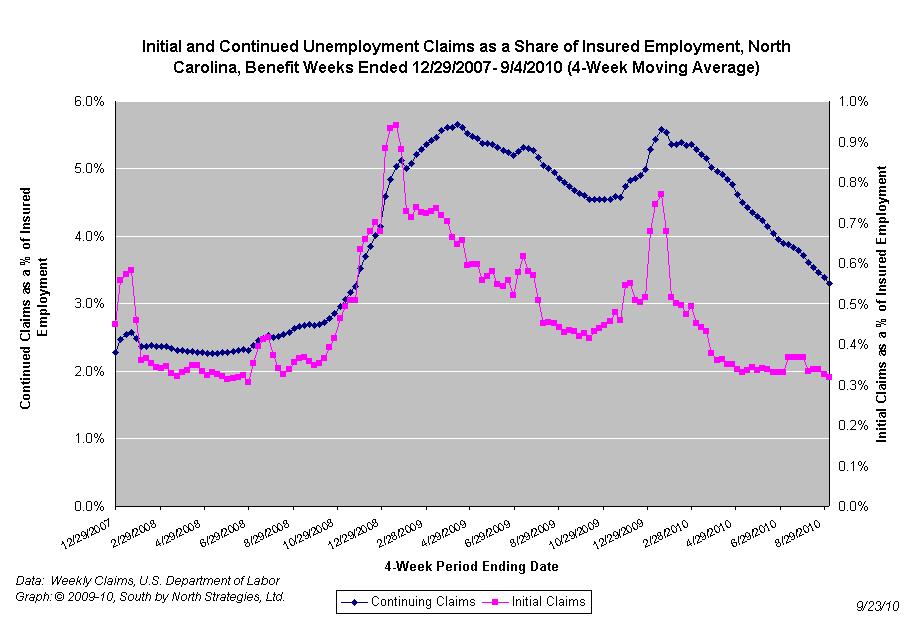
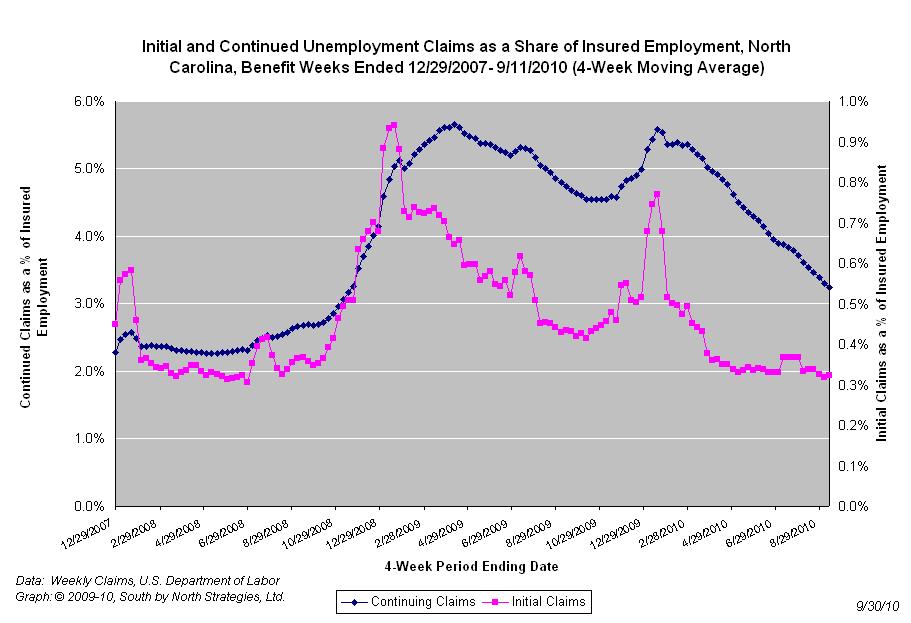
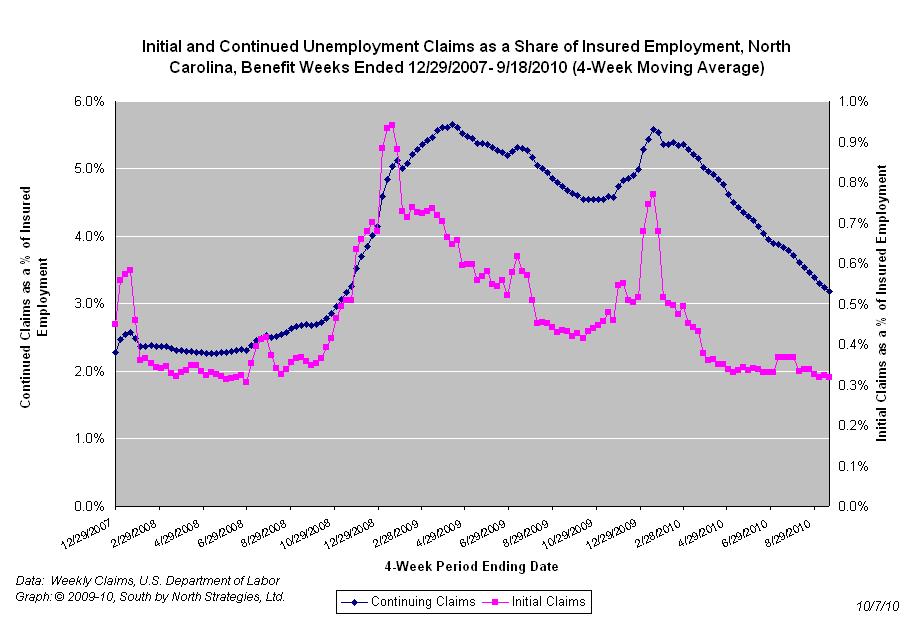
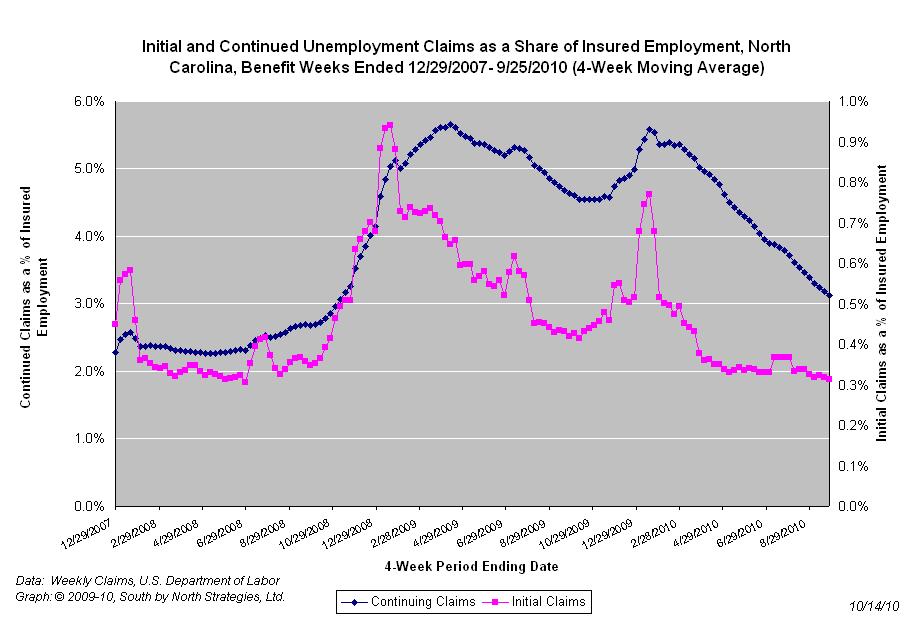
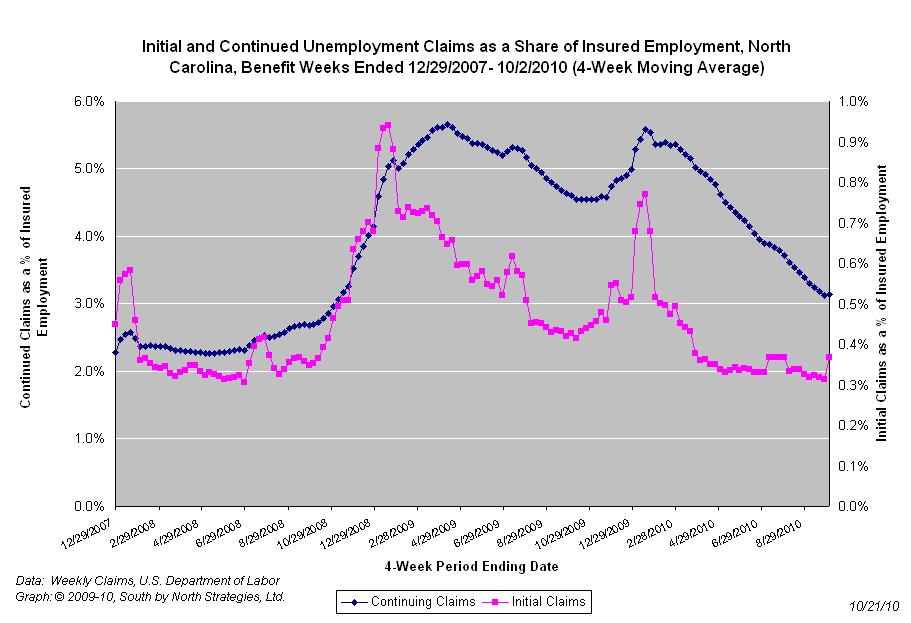
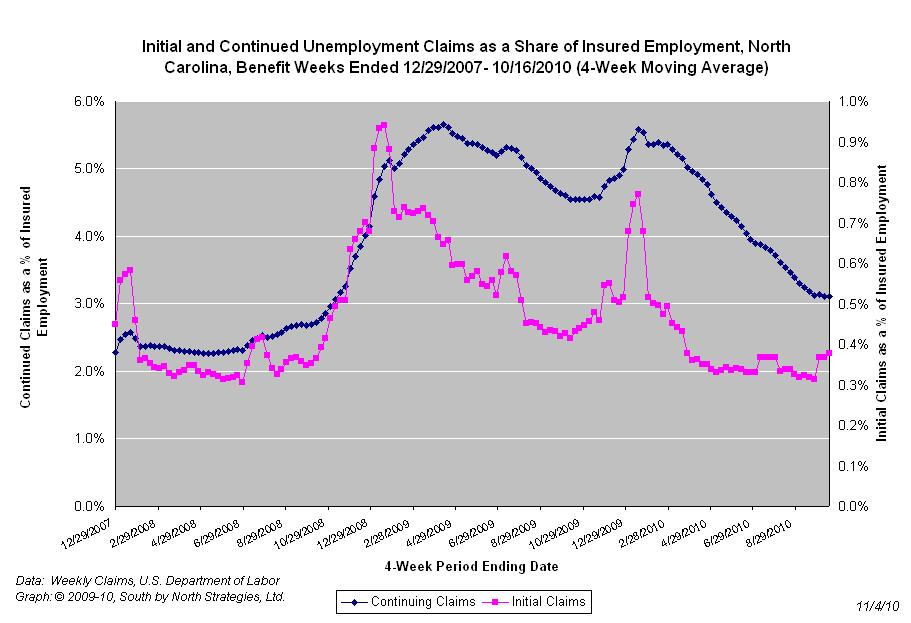
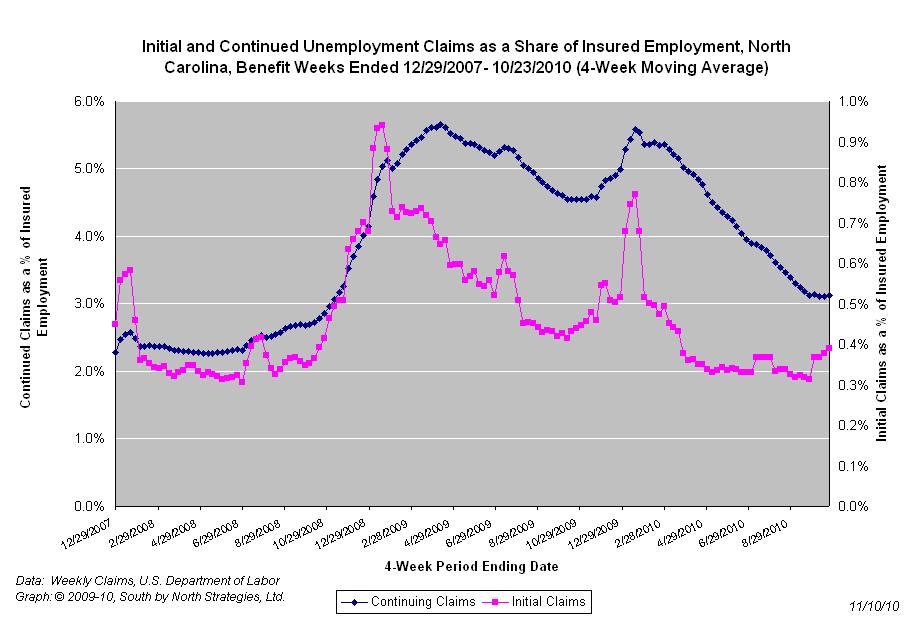
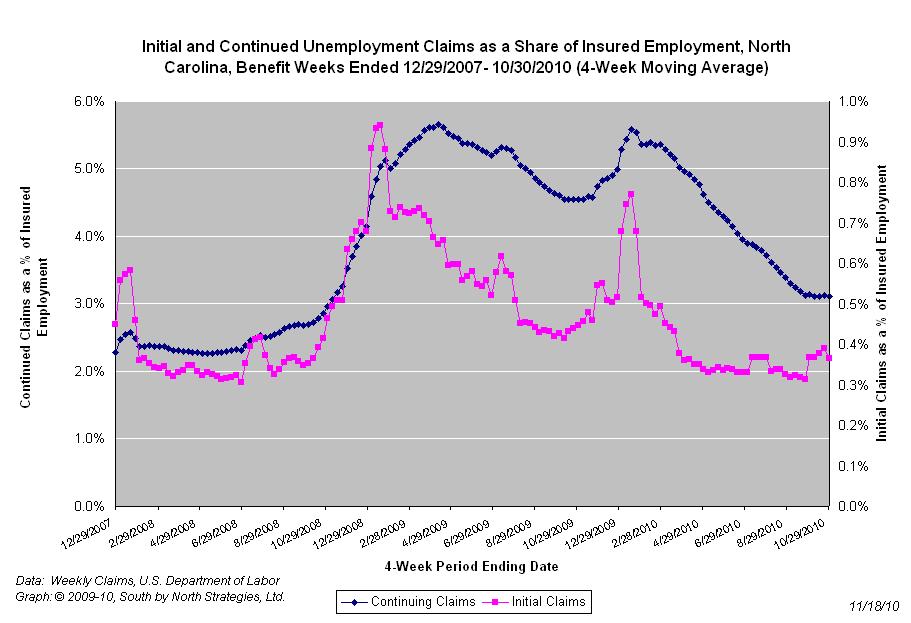
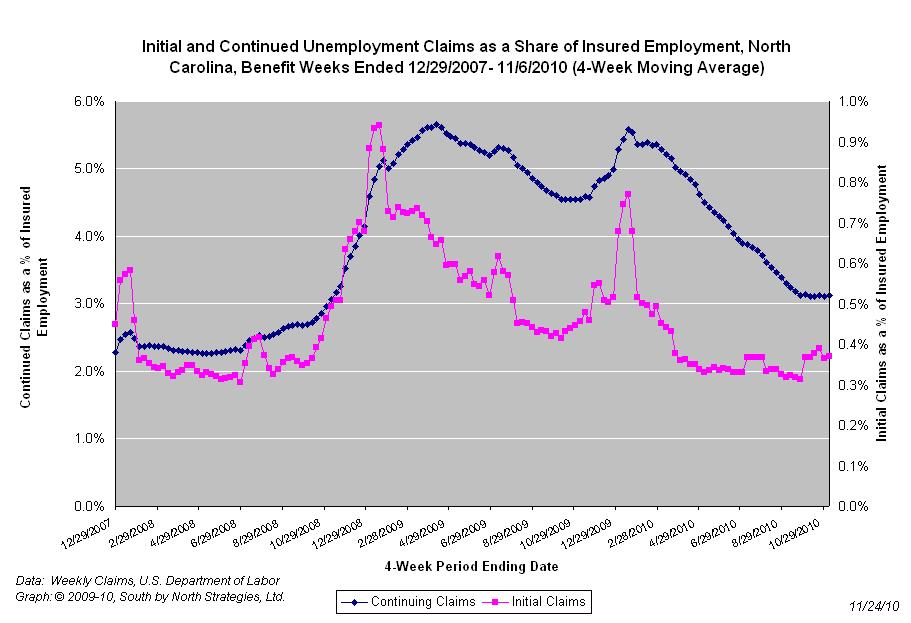
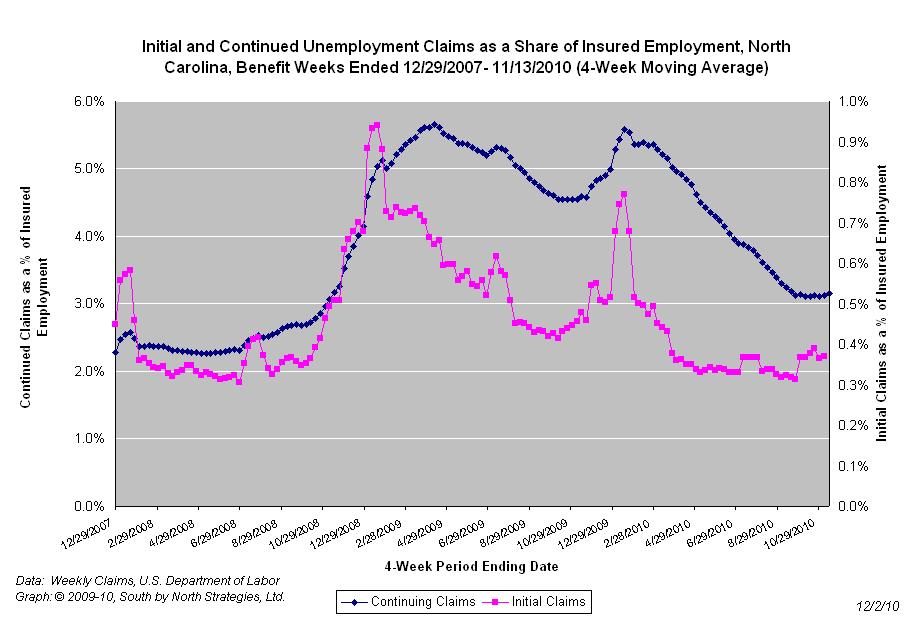
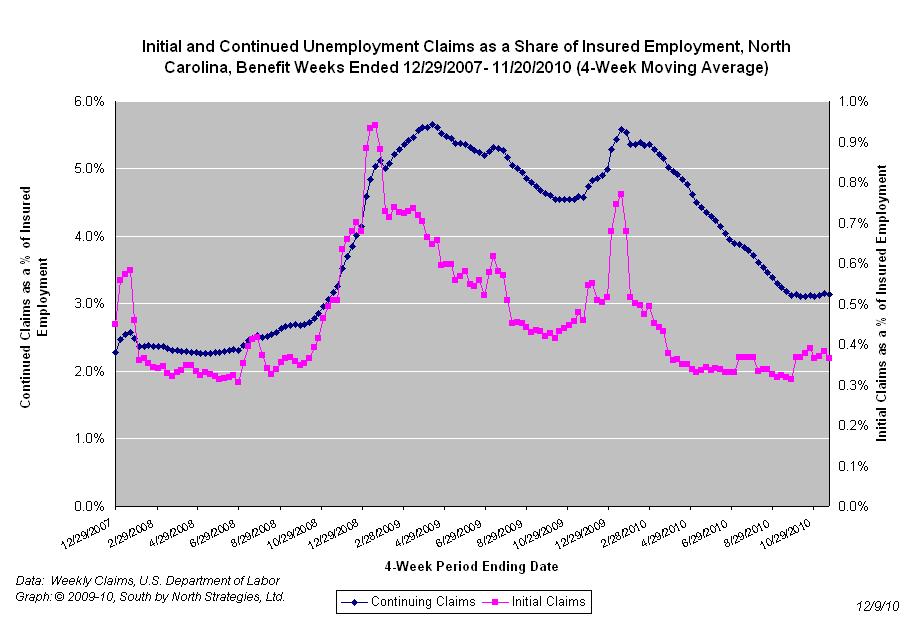
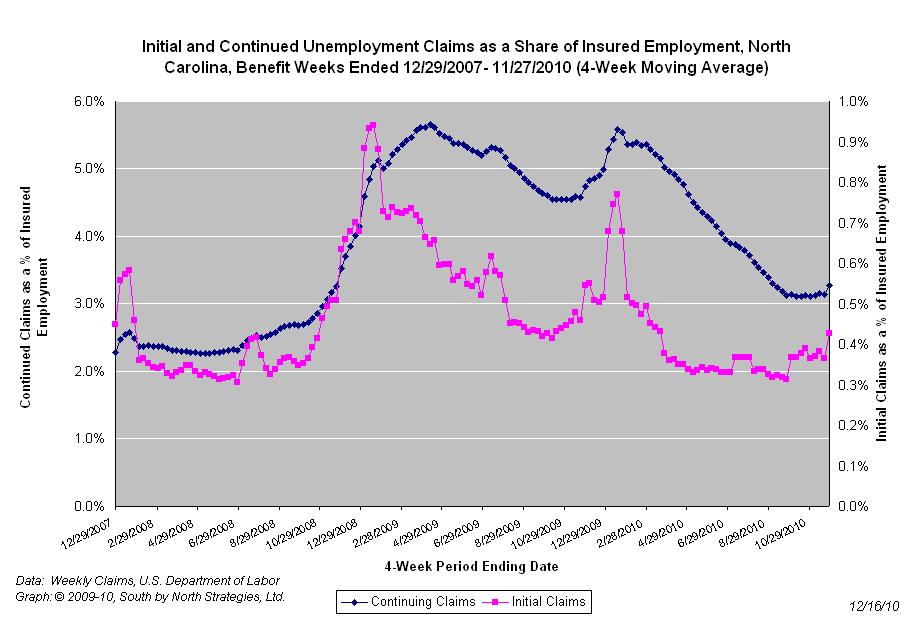
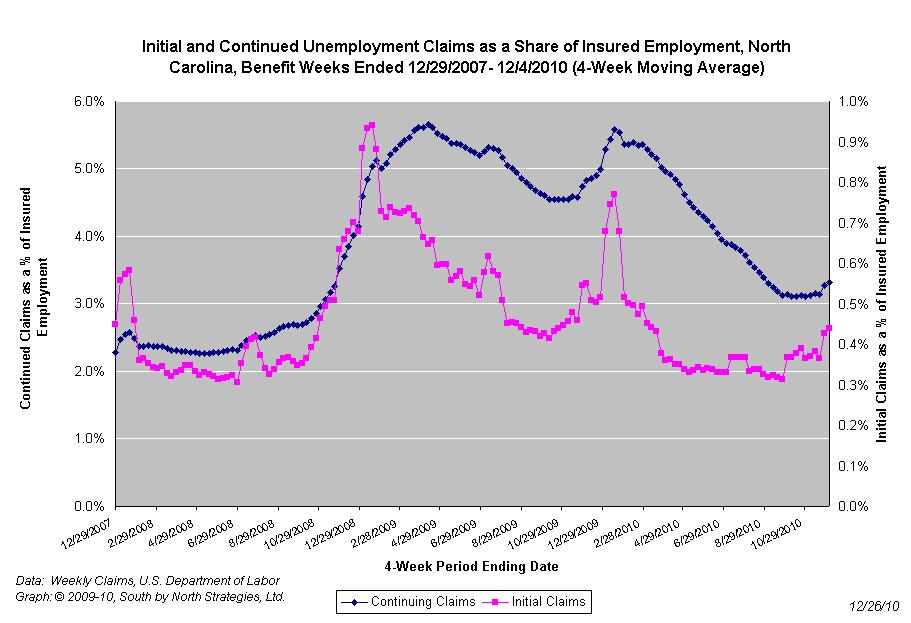
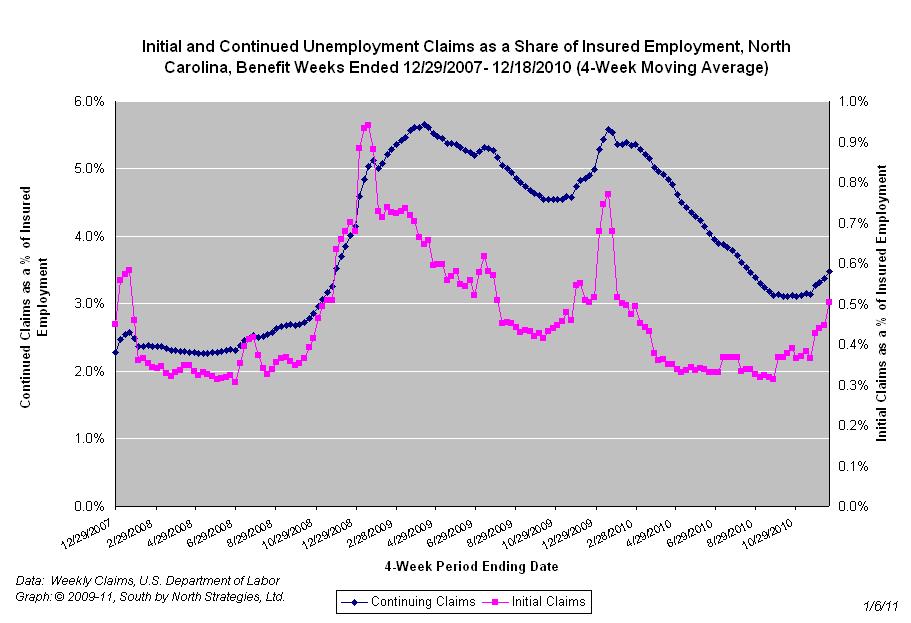
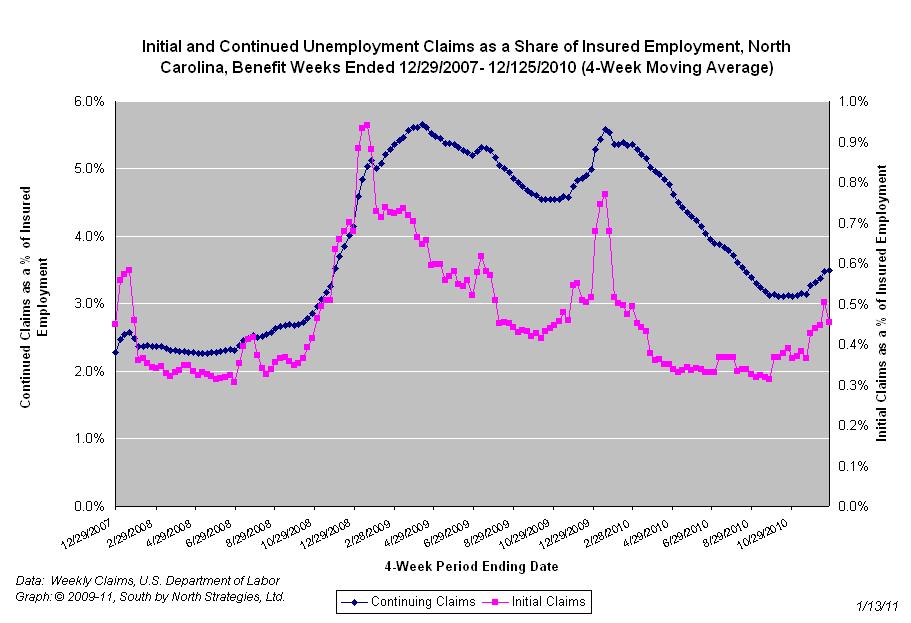
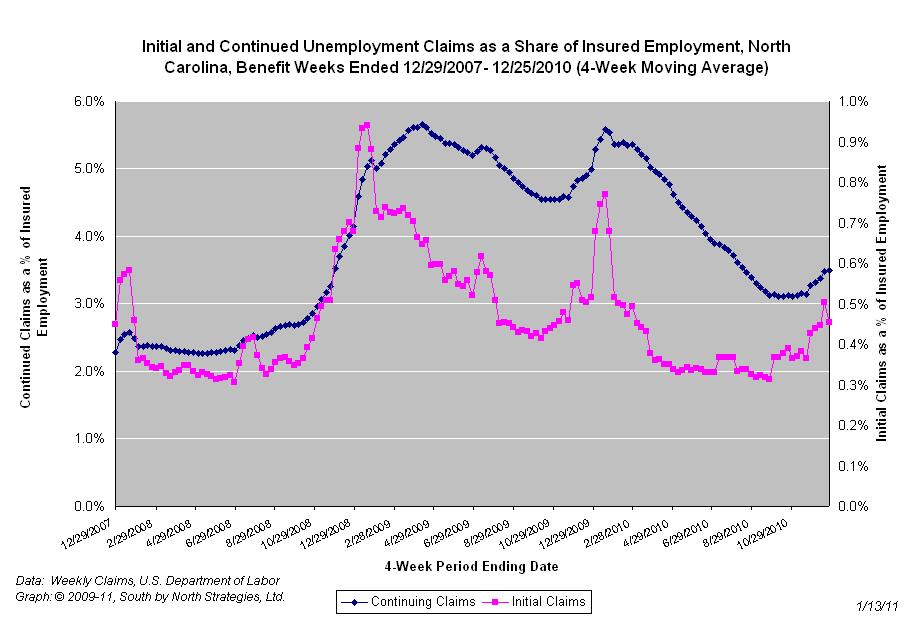
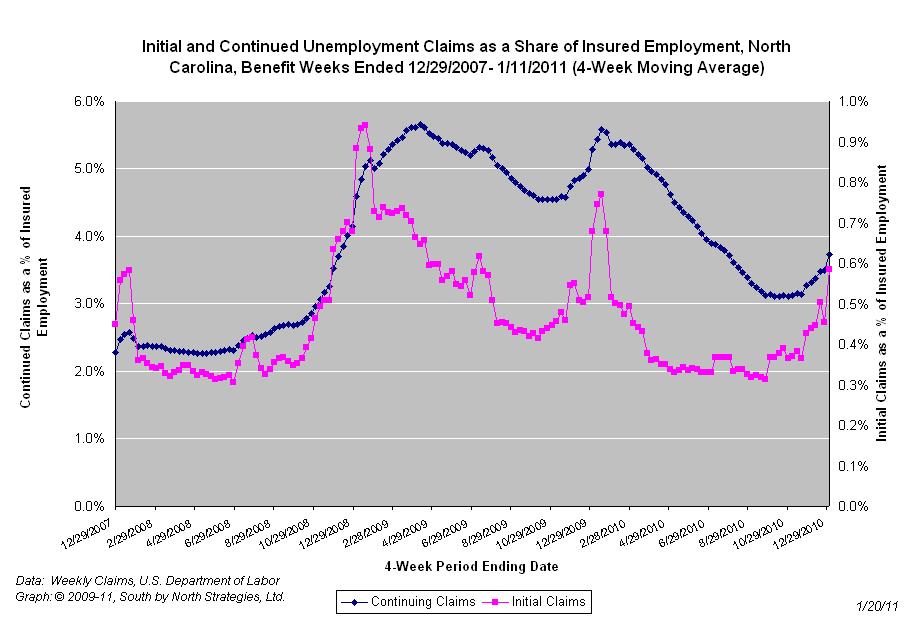
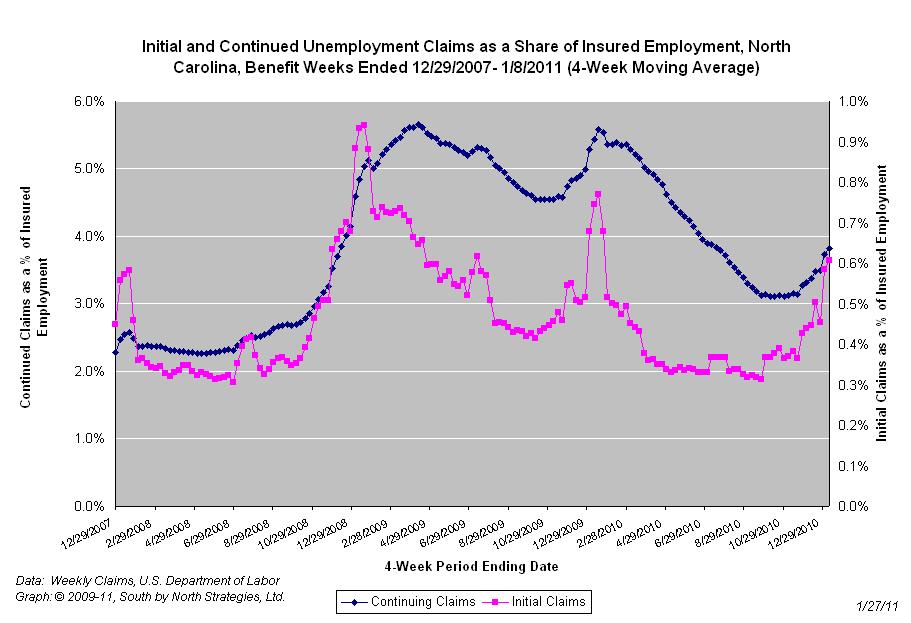
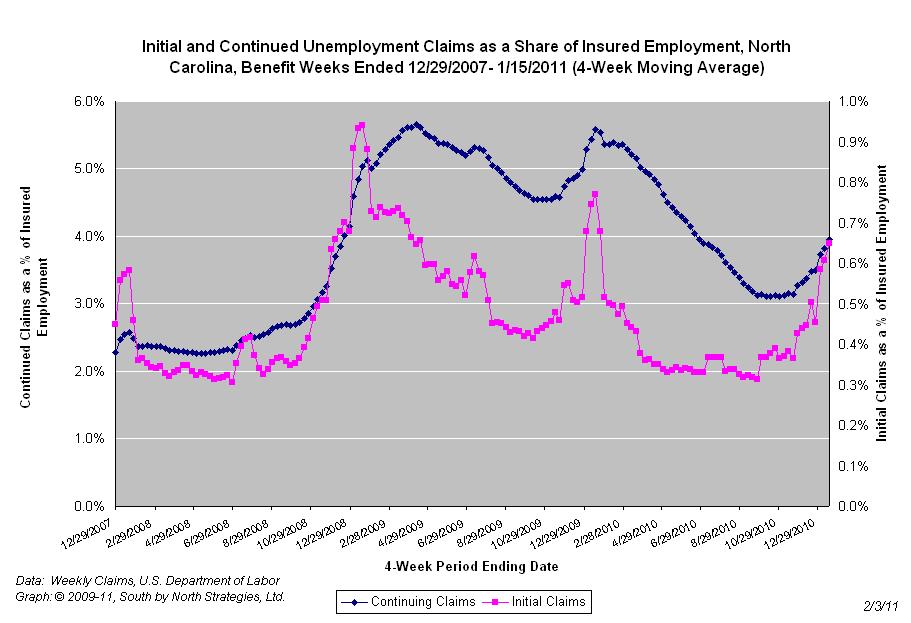
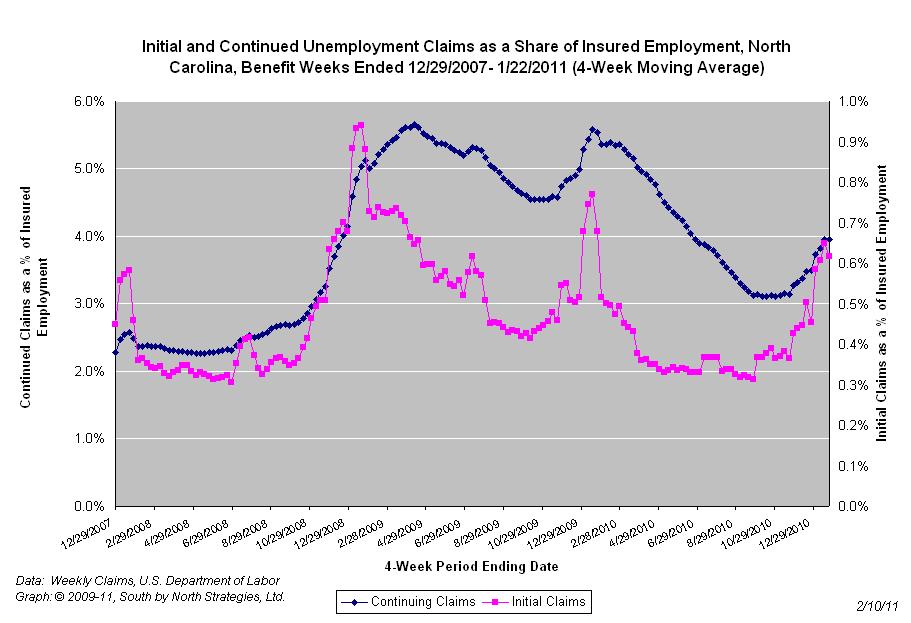
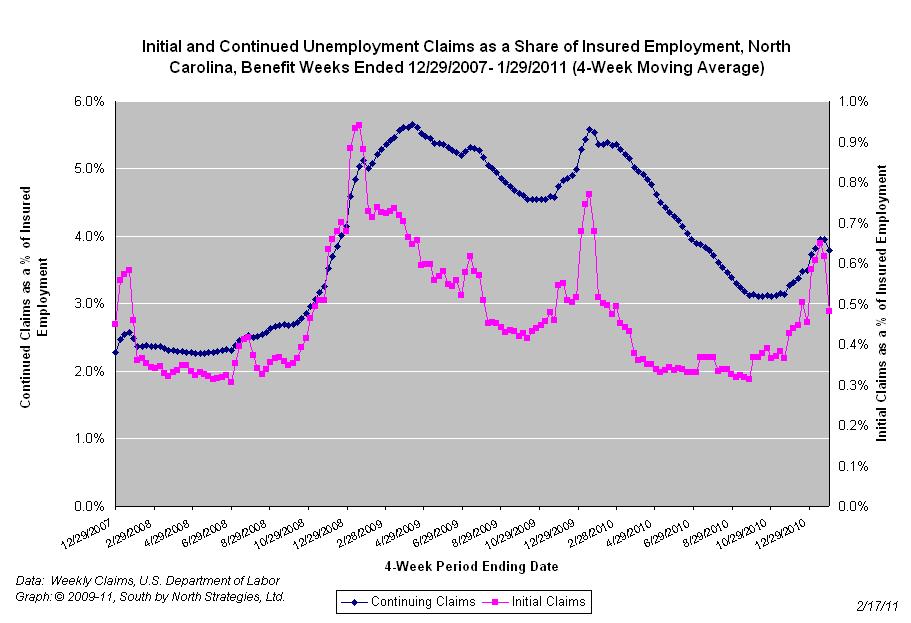
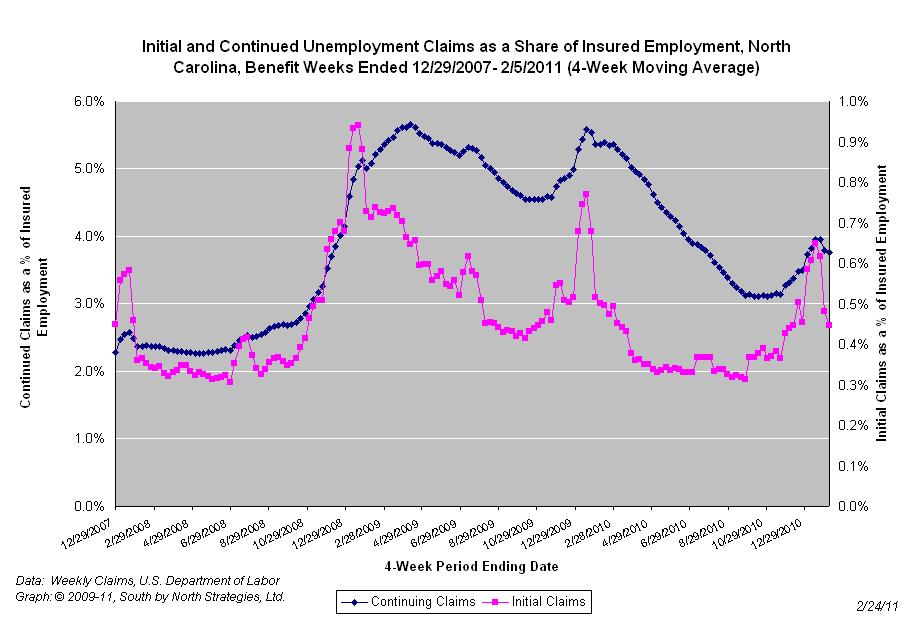
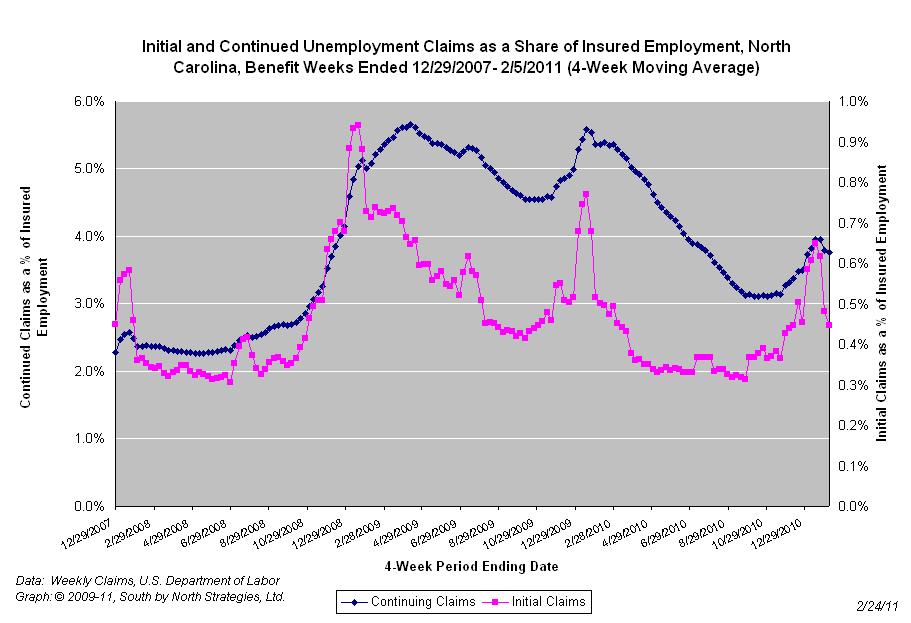
The graph (right) shows the changes in unemployment insurance claims (as a share of covered employment) in North Carolina since the recession’s start in December 2007.
Both new and continuing claims appear to have peaked for this cycle, and the four-week averages of new and continuing claims have fallen considerably. Yet continuing claims remain at an elevated level, which suggests that unemployed individuals are finding it difficult to find new positions.
Modernizing State Finances
The N.C. Budget and Tax Center lays out a plan for modernizing the state’s revenue system.
The plan outlines how North Carolina can create a modern revenue system that improves long-term adequacy, minimizes volatility and ensures equity so that the state can invest in North Carolina’s shared prosperity. The significant flaws of the current revenue system undermine the state’s ability to fulfill its mission and support the economic recovery. Research shows that revenue reform can improve the economy’s ability to grow and innovate in the long term. Revenue reform can minimize the devastating impact of a cuts-only approach to the budget shortfall and set North Carolina on a path to economic recovery.
Around The Dial – Feb. 23
Economic policy reports, blog postings, and media stories of interest:
- Beat the Press isn’t a fan of “the right to freeload.”
- Brad DeLong argues that politics is undermining the economy.
- Economix notes that there has been no surge in government hiring.
- Felix Salmon points out that austerity’s track record is poor.
Midweek Humor
Renewed interest in transferring public assets to the private sector calls to mind this old sketch.
Fixing Unemployment Insurance
The National Employment Law Project and the Center on Budget and Policy Priorities lay out a plan for reforming the financing of state unemployment insurance systems.
States could attempt to restore the adequacy of their trust funds under current law through tax increases alone. Without the provisions in the UI State Solvency Plan for limiting tax increases (delaying when federal UI taxes increase to recoup the loans, delaying interest payments, and partial loan forgiveness), however, that approach would require sharp tax increases beginning while the economy remains weak. Compared to a hypothetical scenario (referred to here as an “adjusted baseline” scenario), in which all or nearly all states do achieve solvency by 2020 by raising state UI taxes, even as employers continue to pay increased FUTA taxes to repay the loans, the UI State Solvency Plan produces significantly lower average employer tax rates nationally. That is, raising the combined federal and state UI tax rate enough for nearly all states to achieve an AHCM of 1.0 by 2020 would produce significantly higher tax rates than would be required under the UI State Solvency Plan, especially in the next several years when the economy likely will remain weak …
 Email Sign-Up
 RSS Feed