NC Unemployment Claims: Week of 1/1/11
For the benefit week ending on January 1st, 34,923 North Carolinians filed initial claims for state unemployment insurance benefits, and 159,674 individuals applied for state-funded continuing benefits. Compared to the prior week, there were more initial and continuing claims. These figures come from data released by the U.S. Department of Labor.
Averaging new and continuing claims over a four-week period — a process that helps adjust for seasonal fluctuations and better illustrates trends — shows that an average of 21,740 initial claims were filed over the previous four weeks, along with an average of 139,061 continuing claims. Compared to the previous four-week period, there were more initial and continuing claims.
 One year ago, the four-week average for initial claims stood at 26,738 and the four-week average of continuing claims equaled 208,010.
While the number of claims has dropped over the past year so has covered employment. Last week, covered employment totaled 3.7 million, down from 3.9 million a year ago.
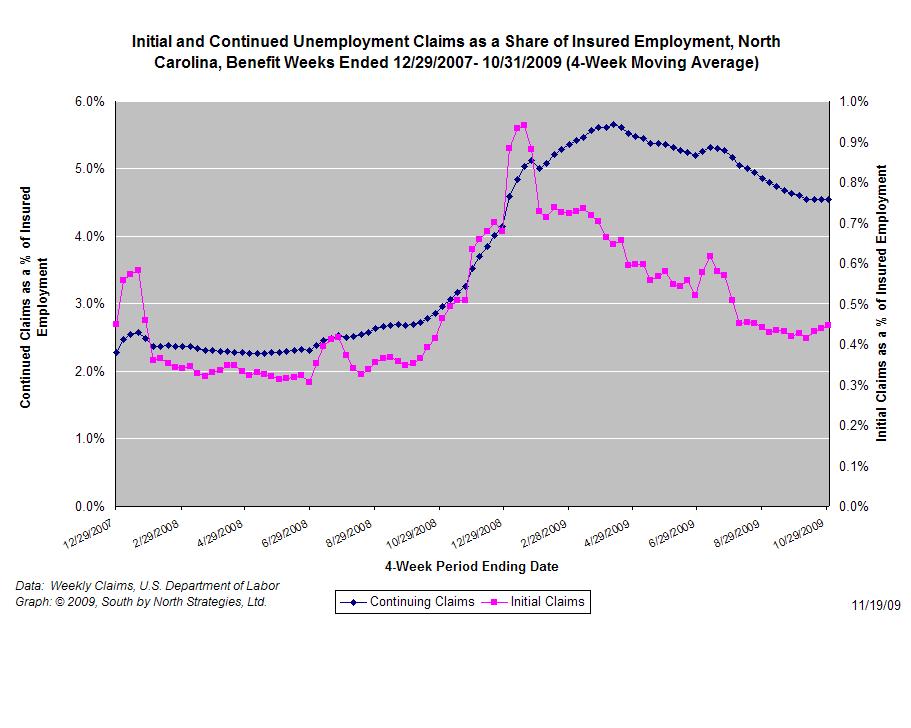
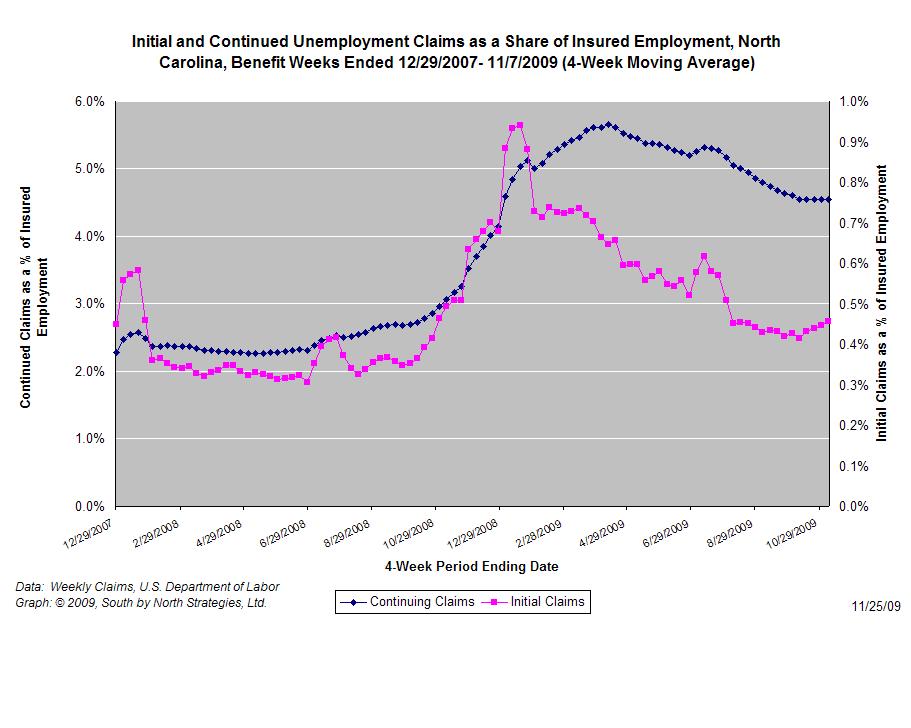
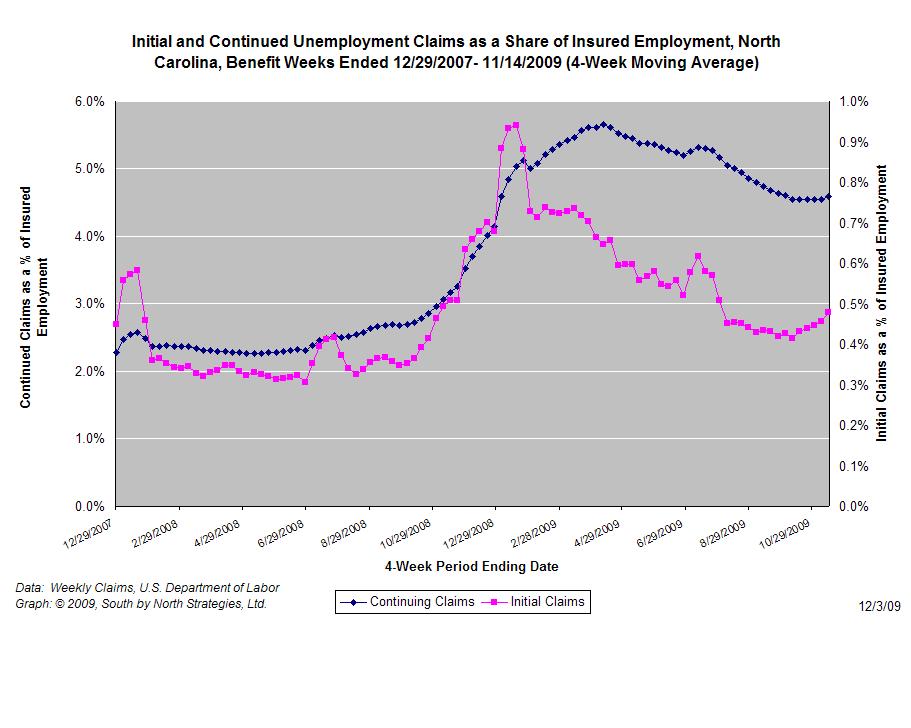
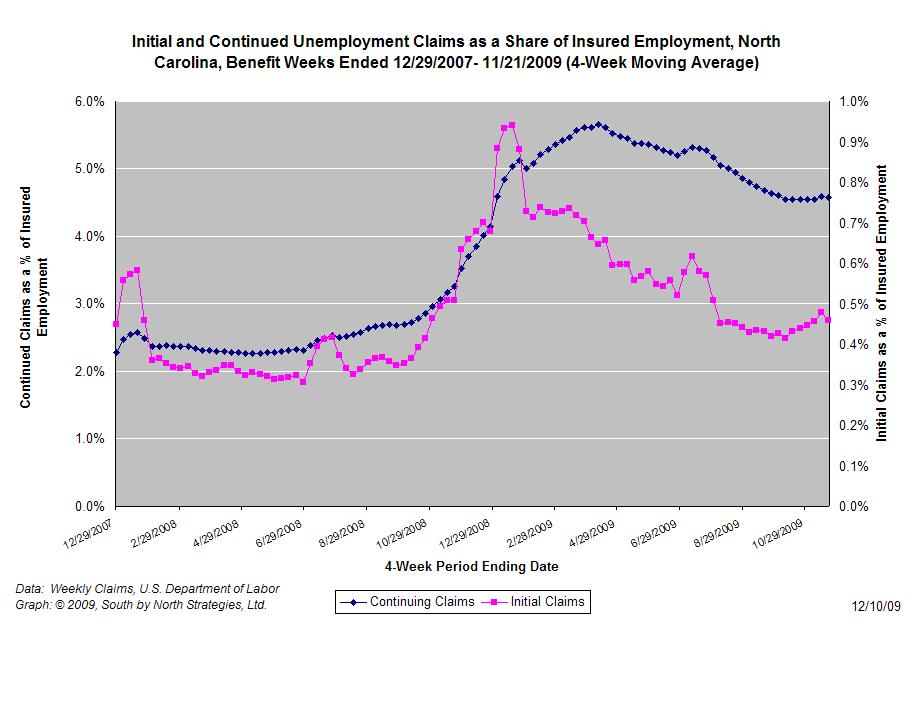
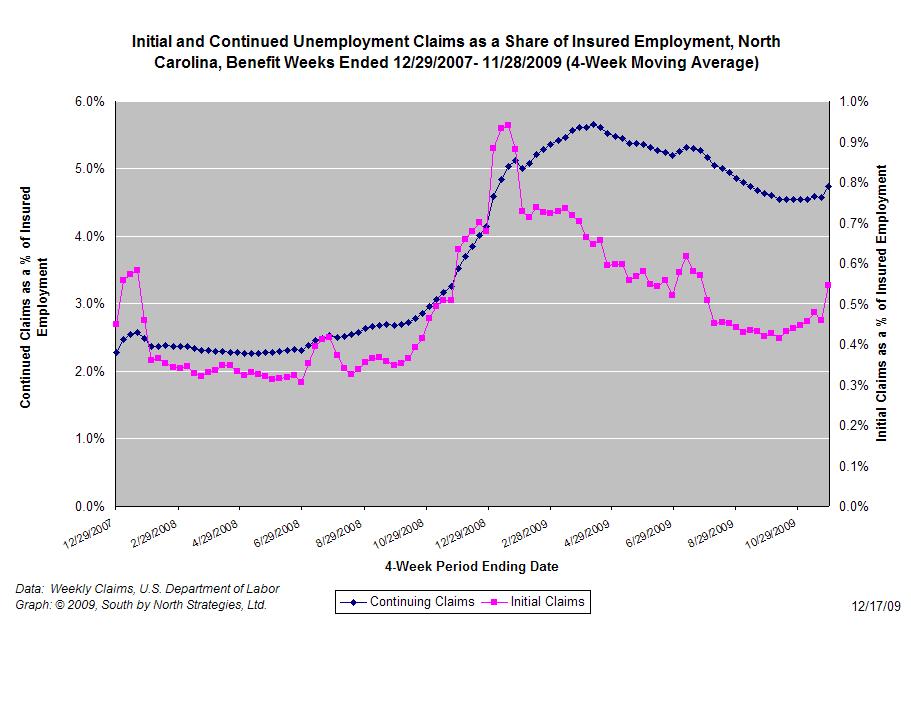
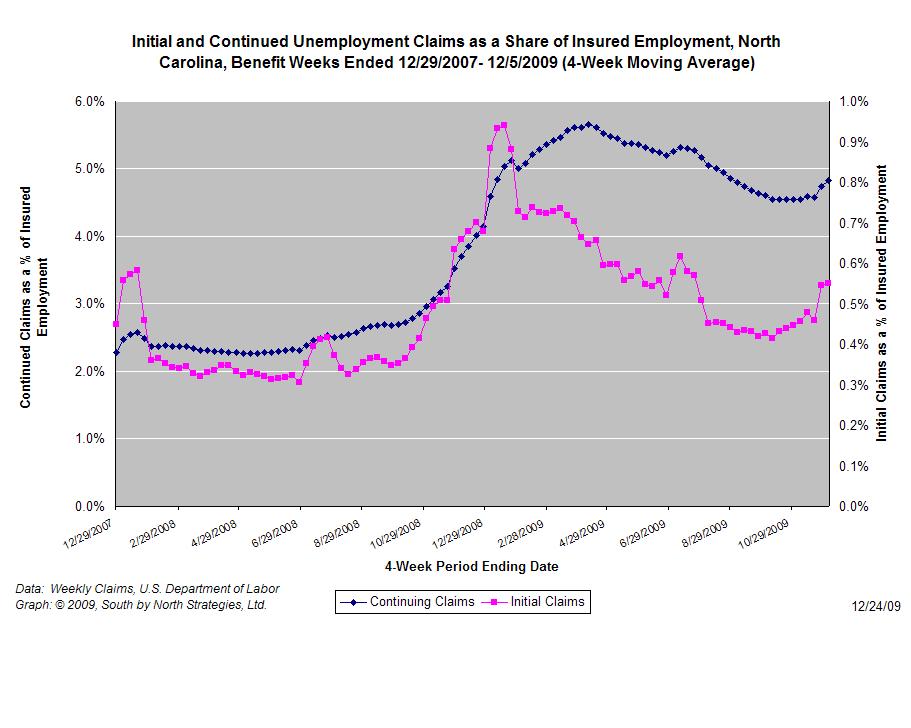
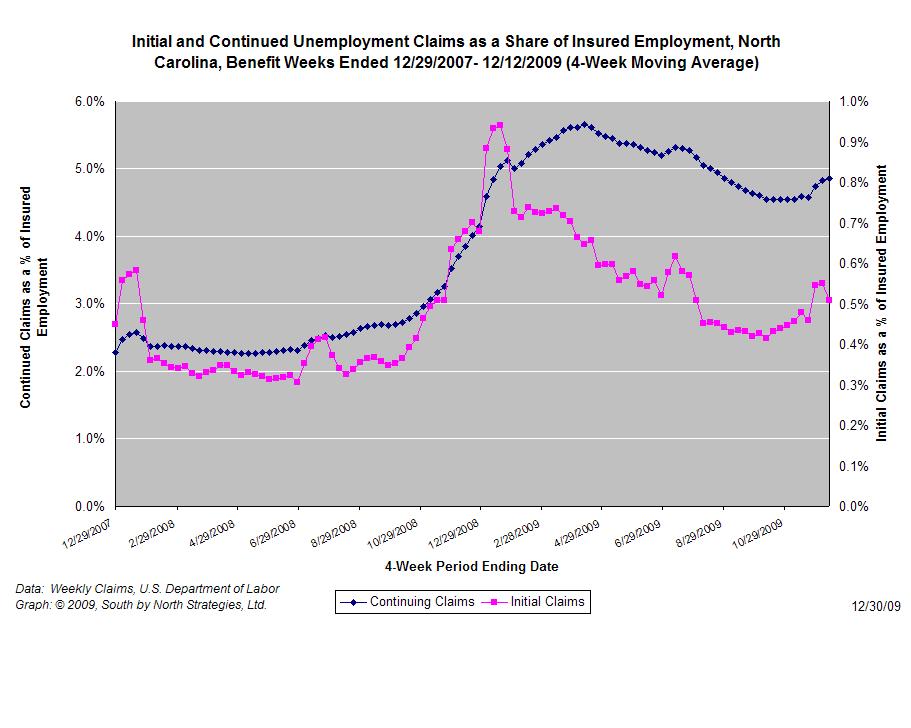
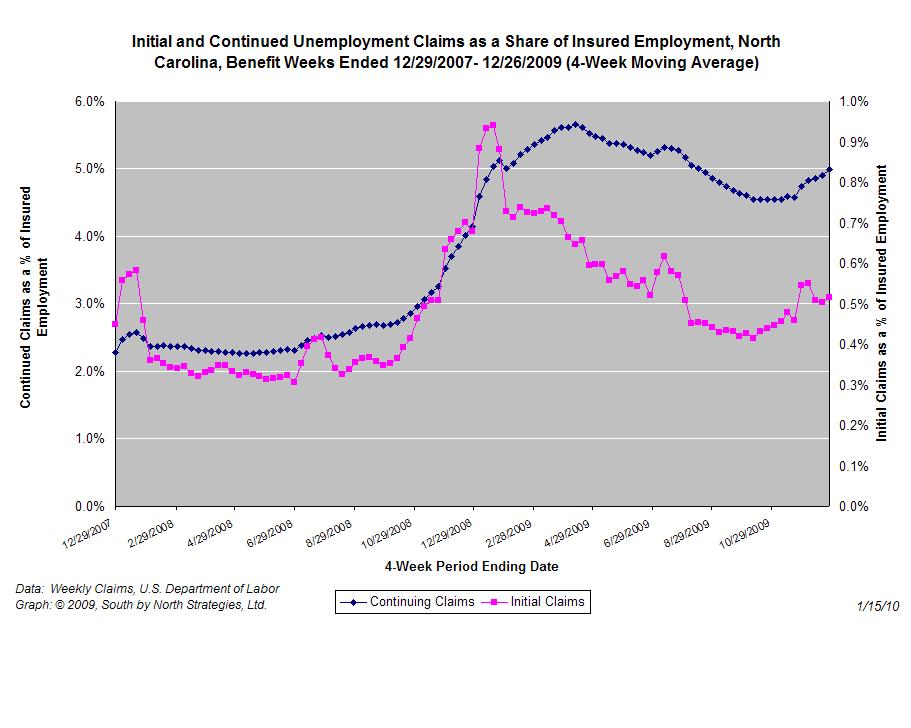
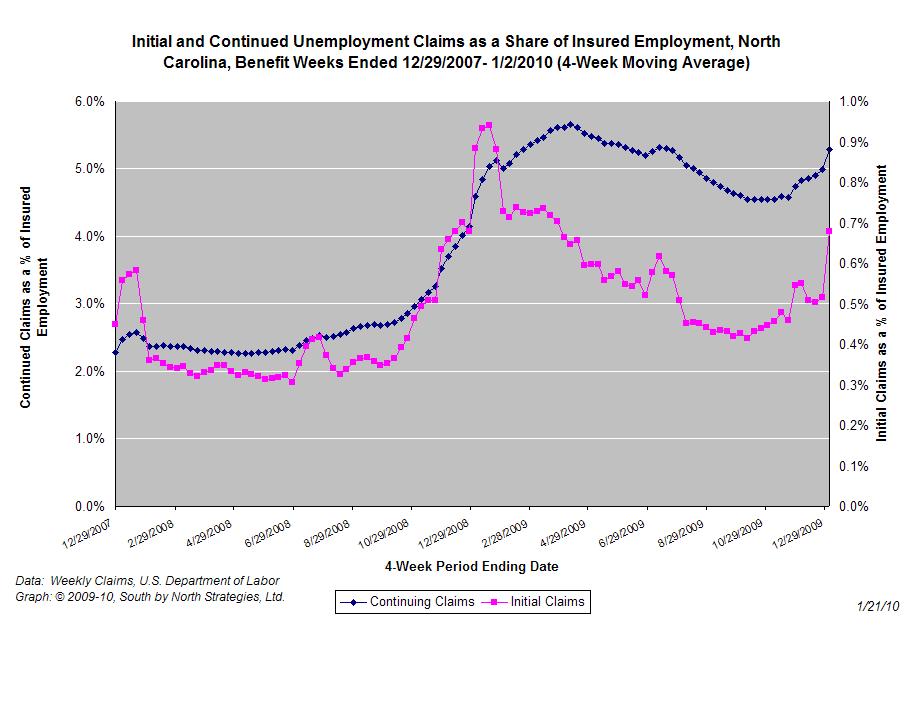
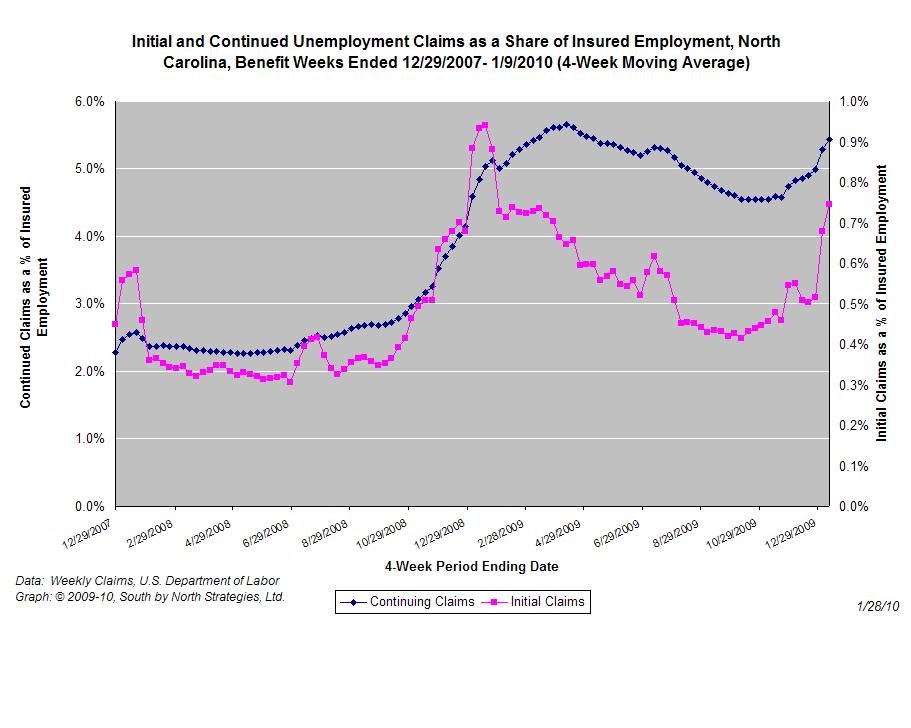
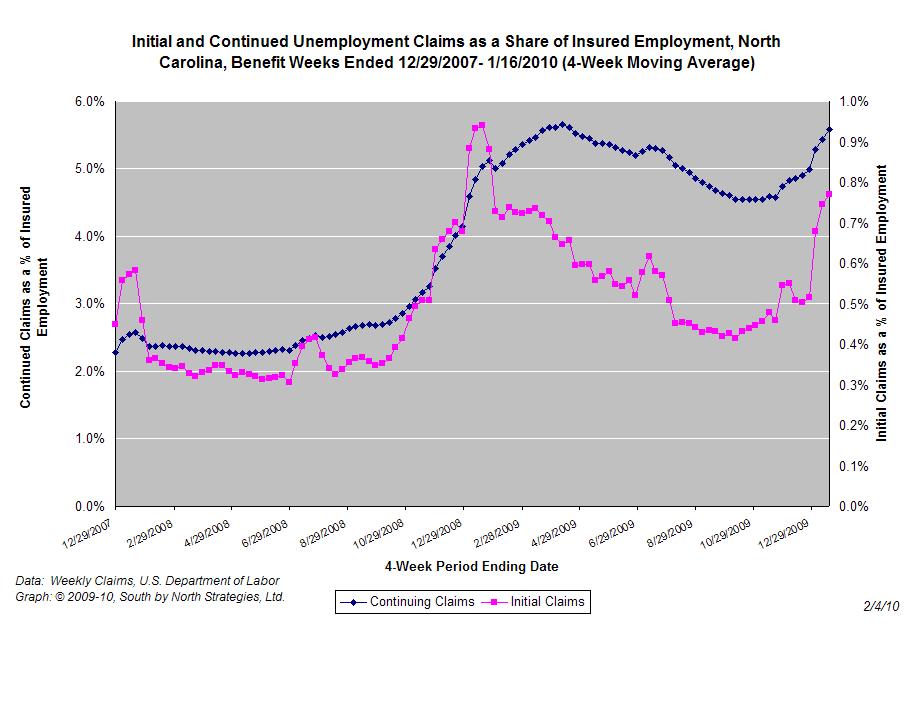
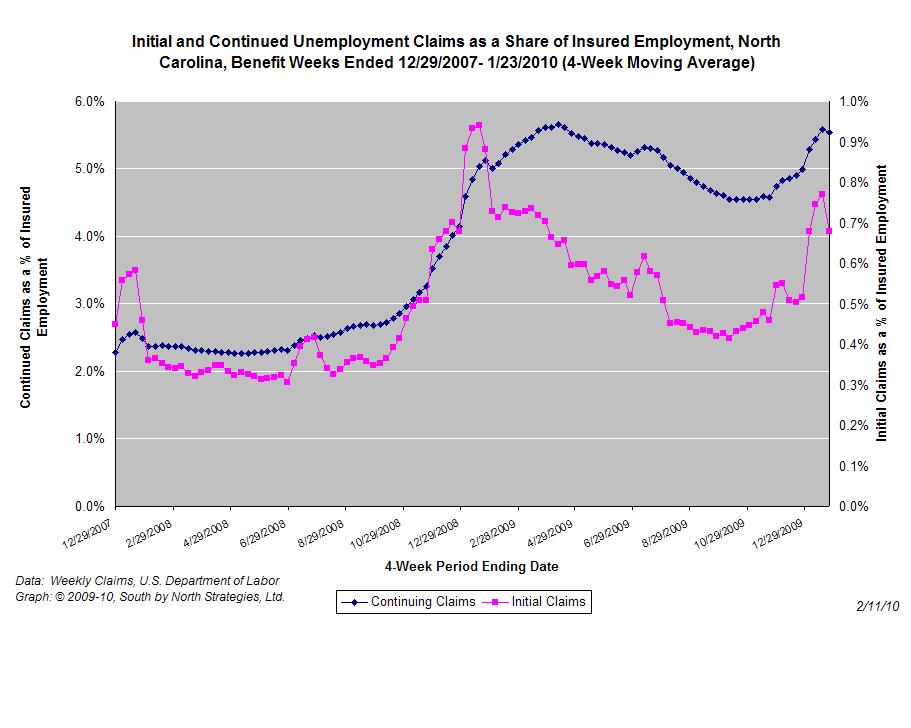
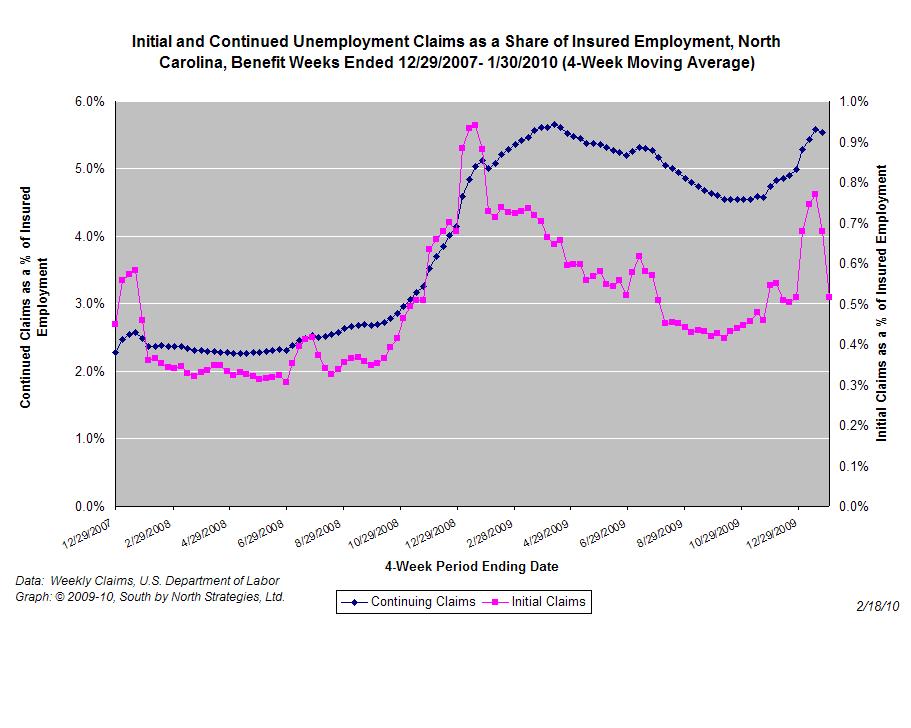
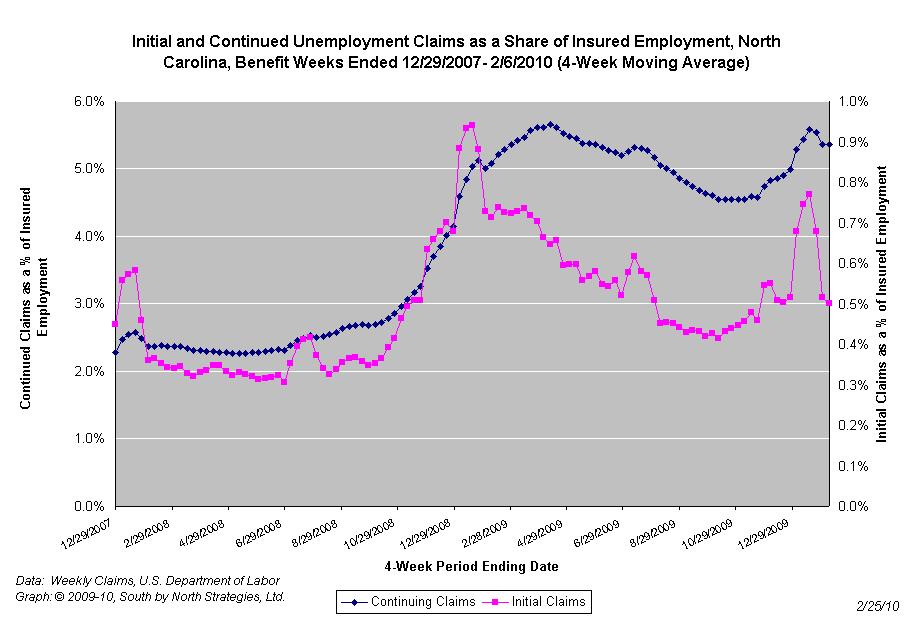
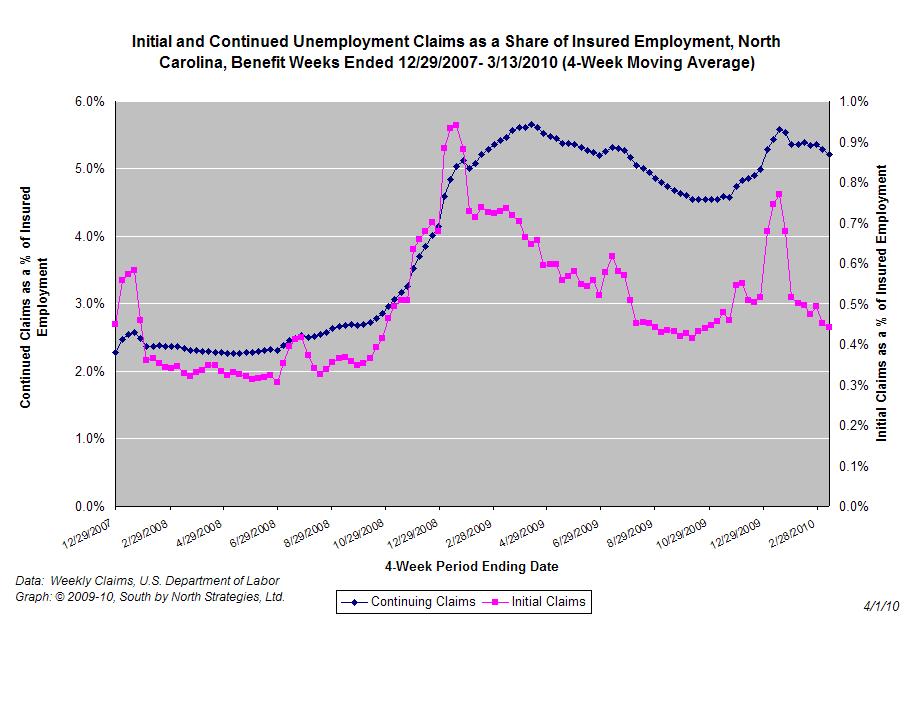
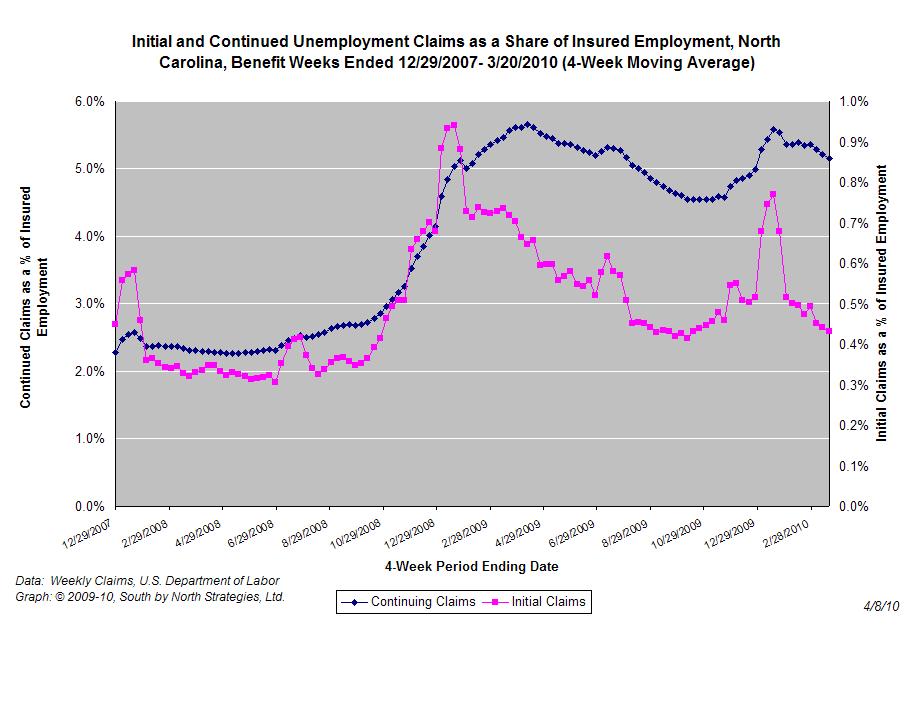
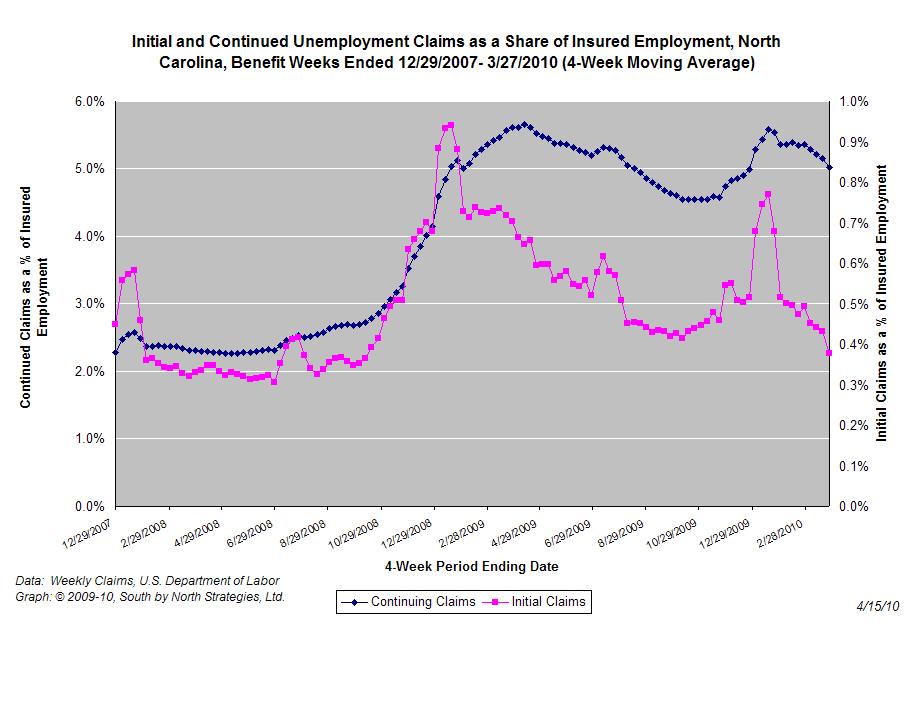
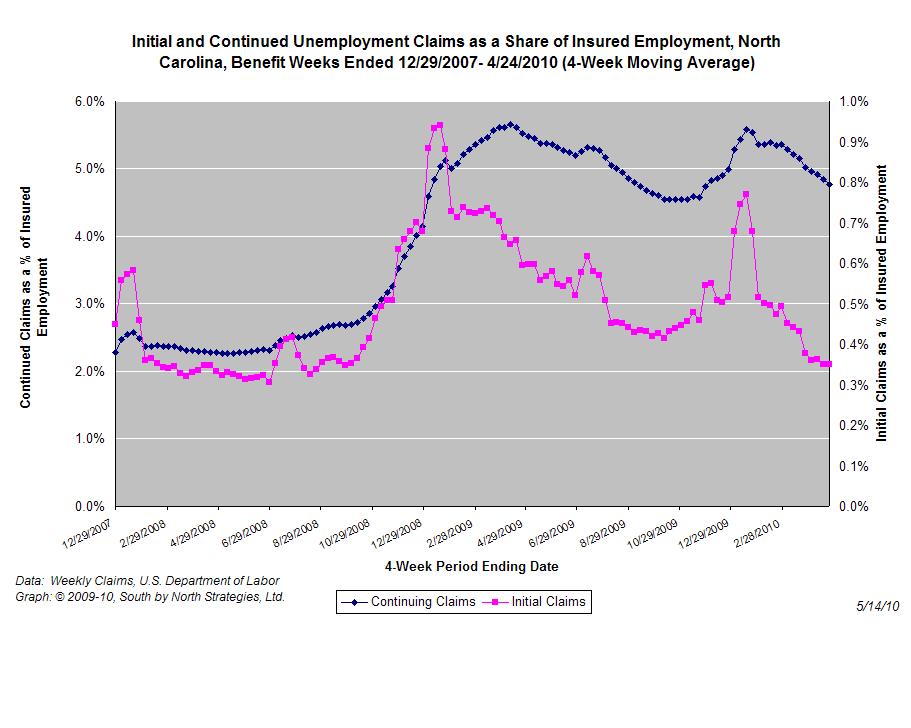
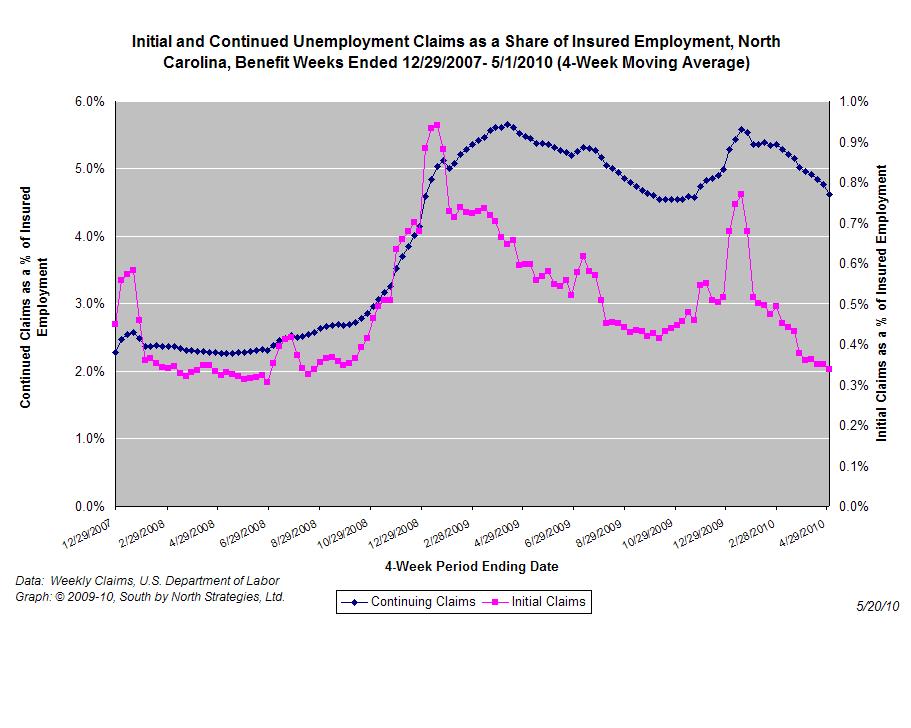
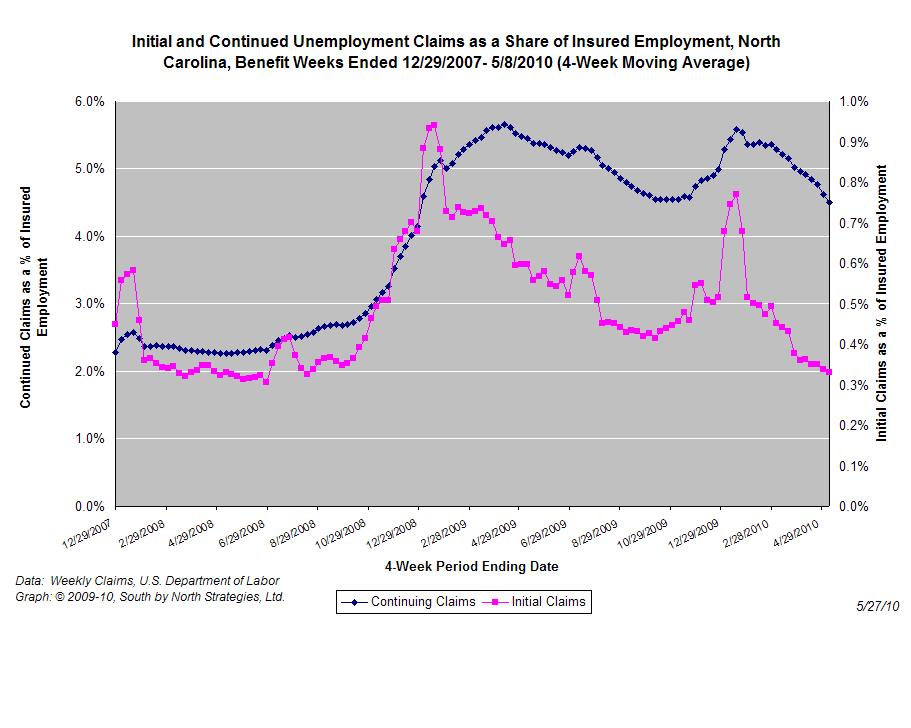
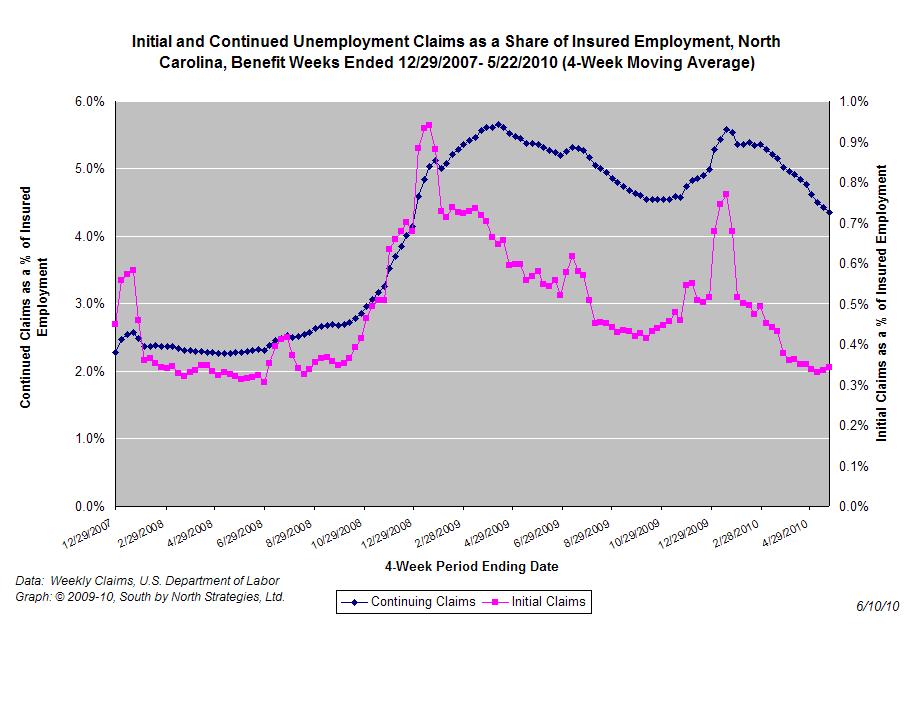
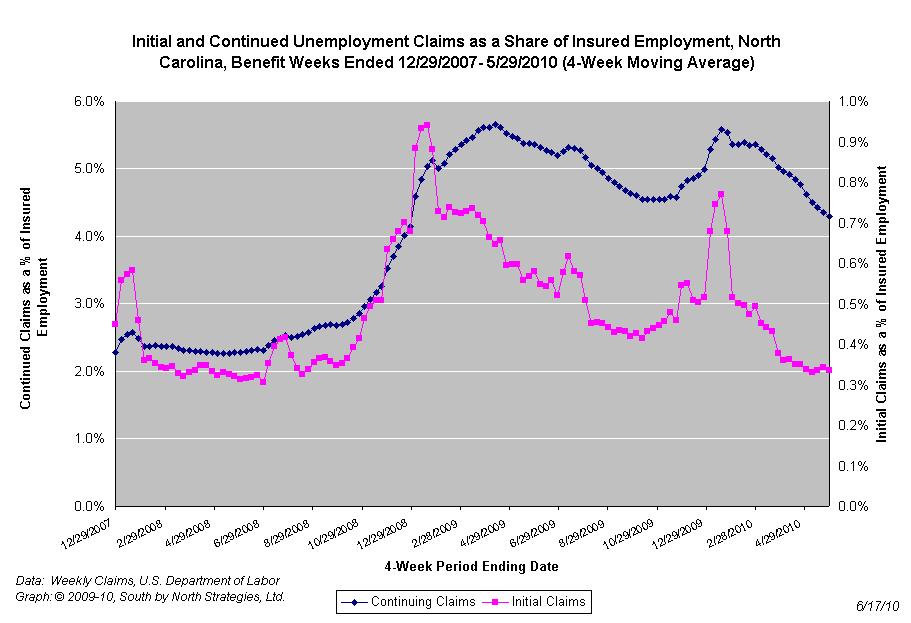
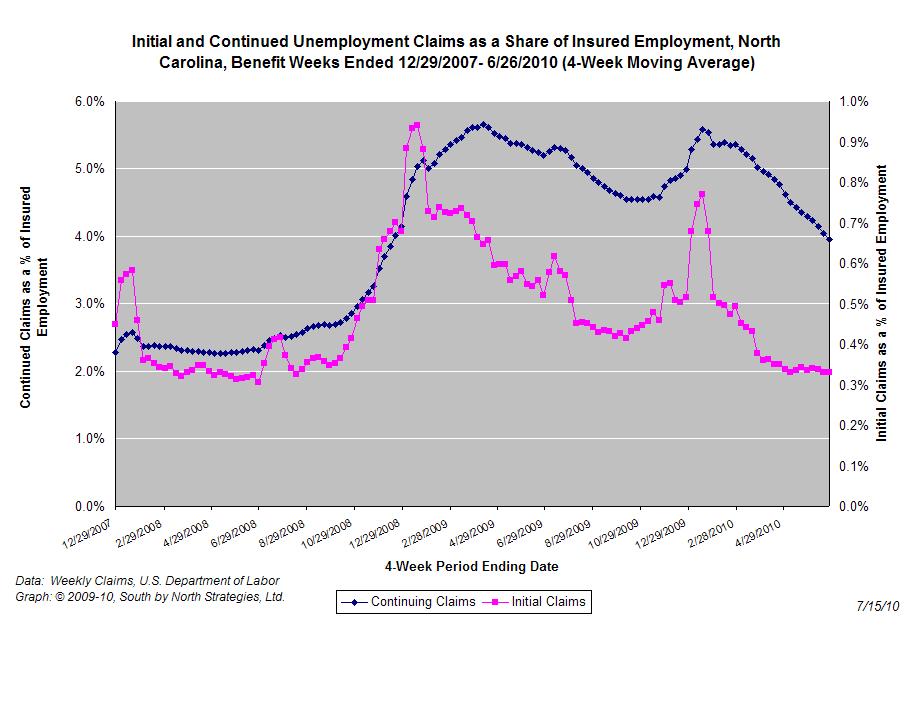
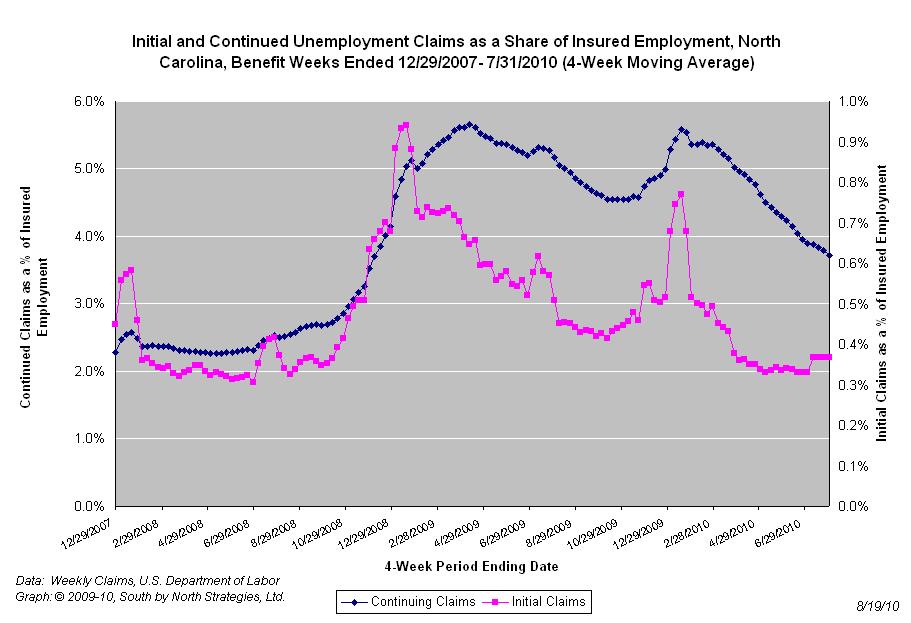
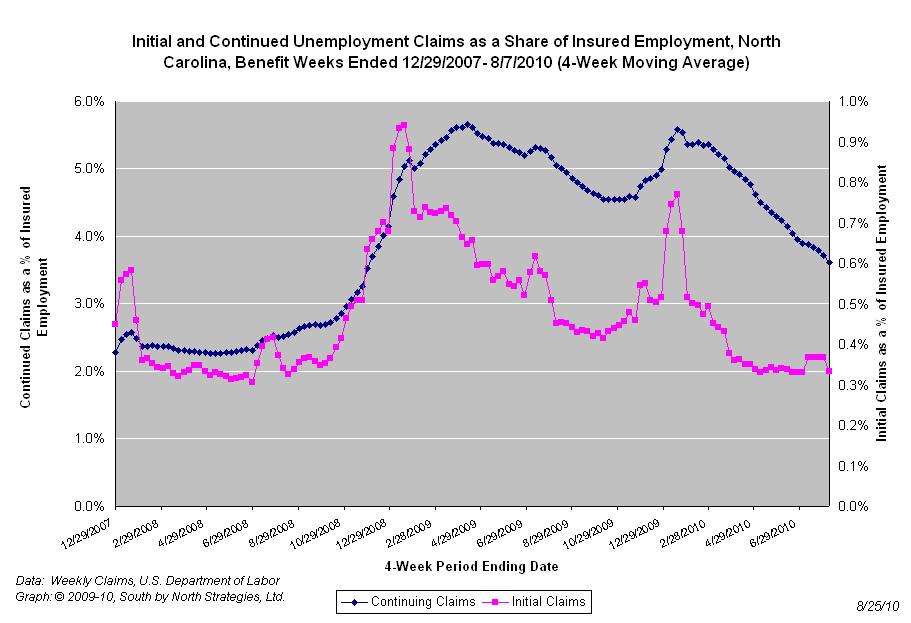
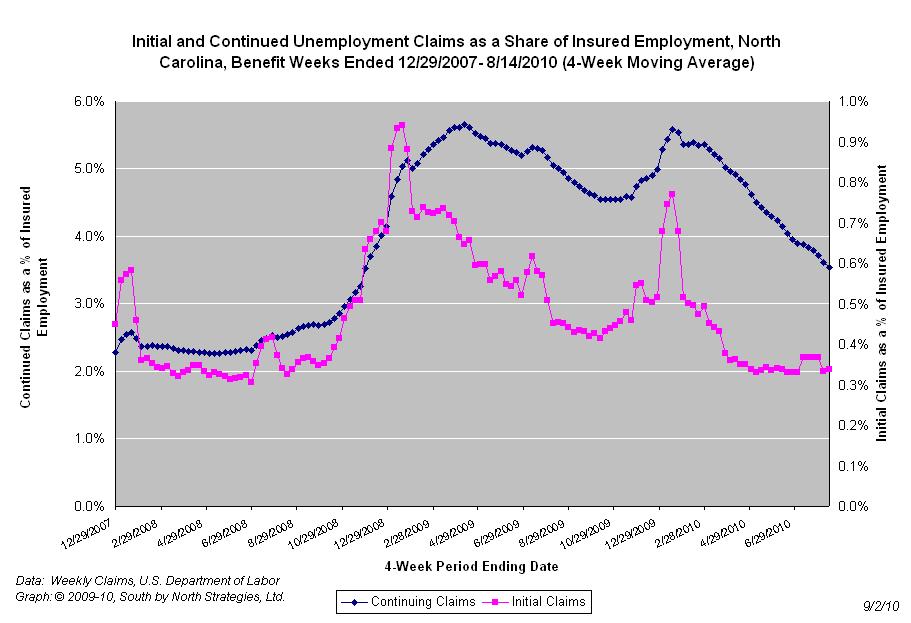
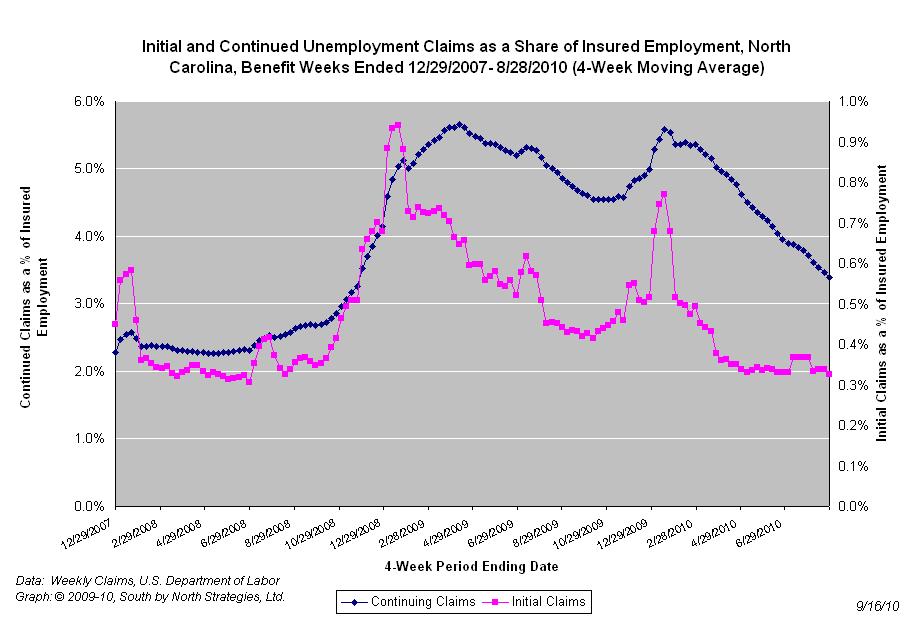
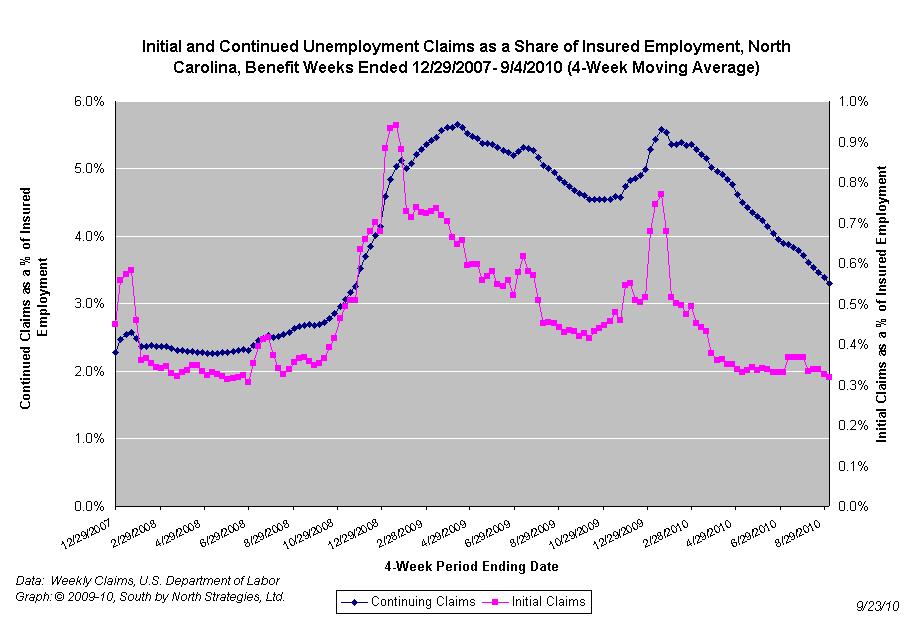
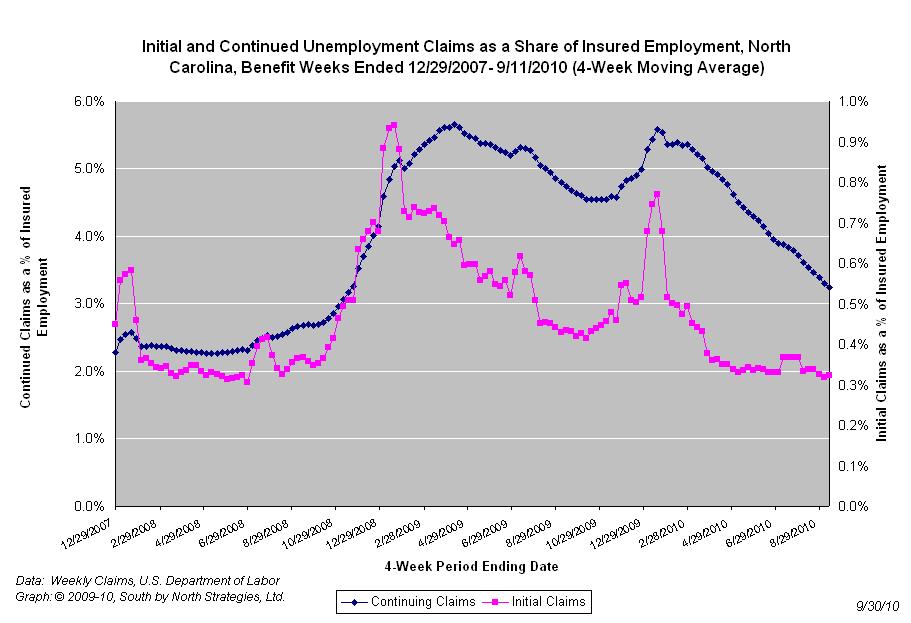
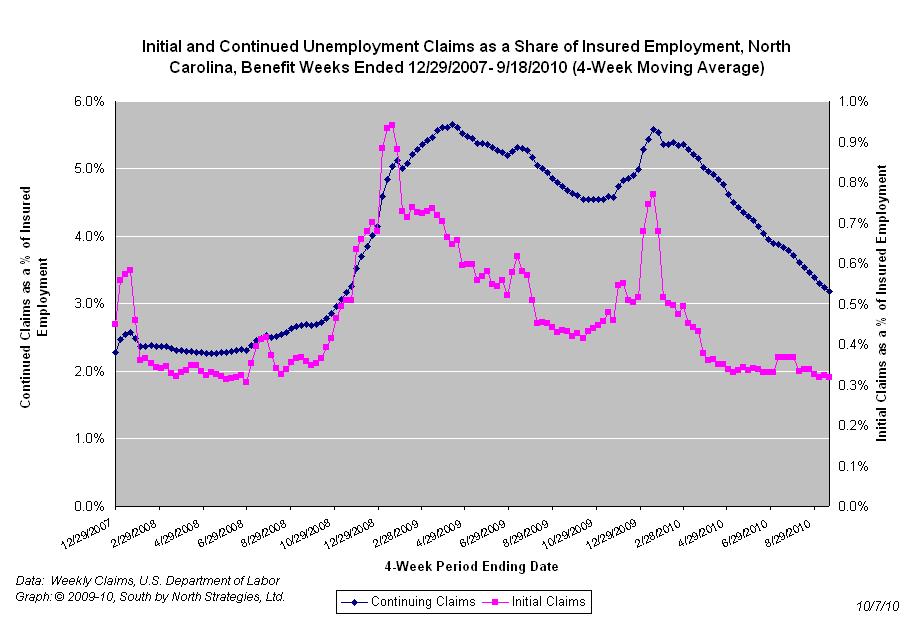
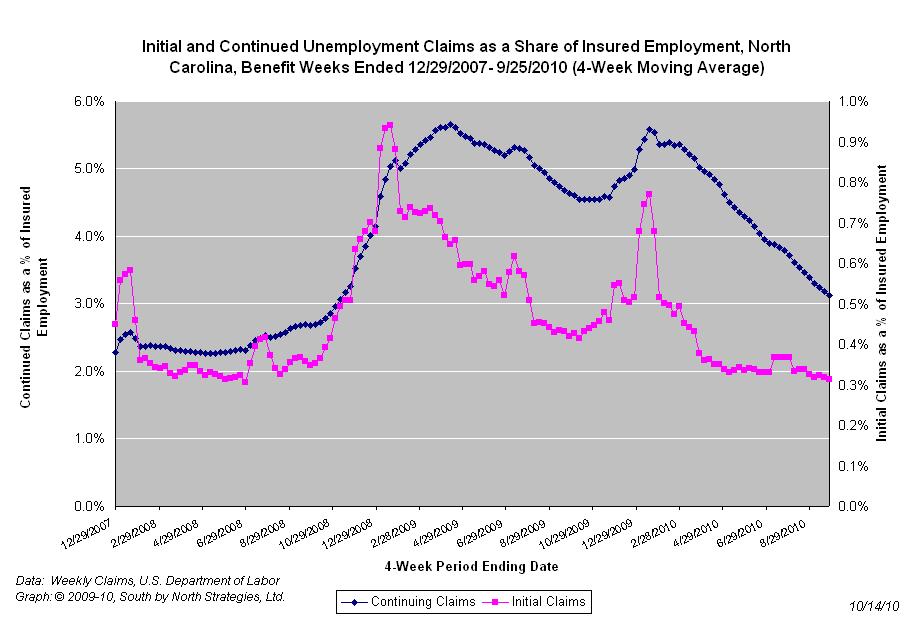
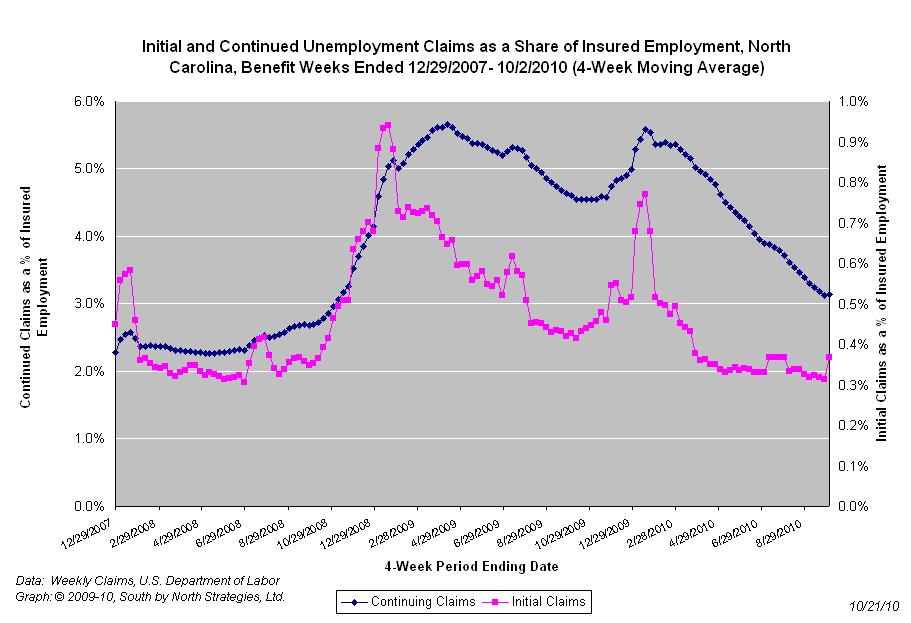
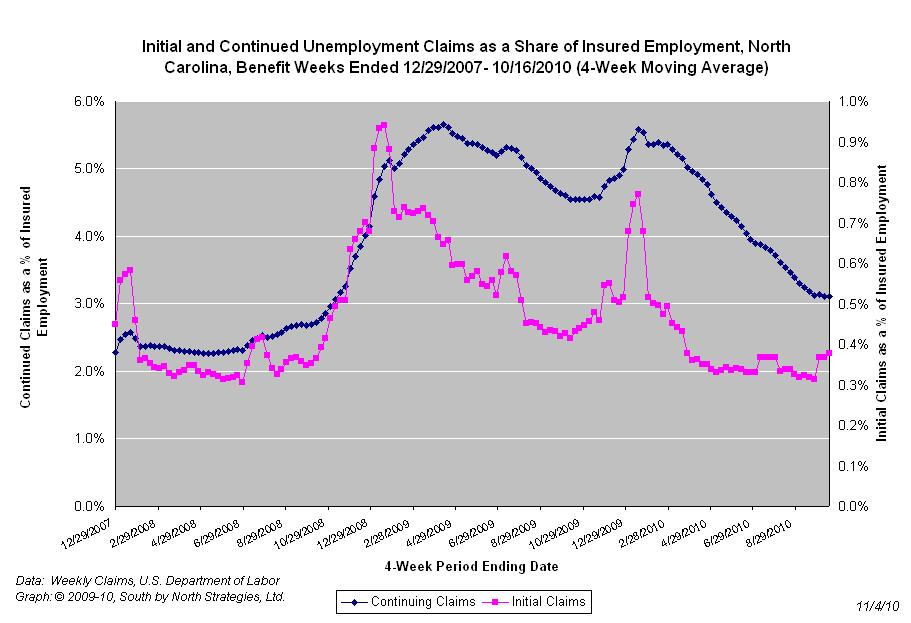
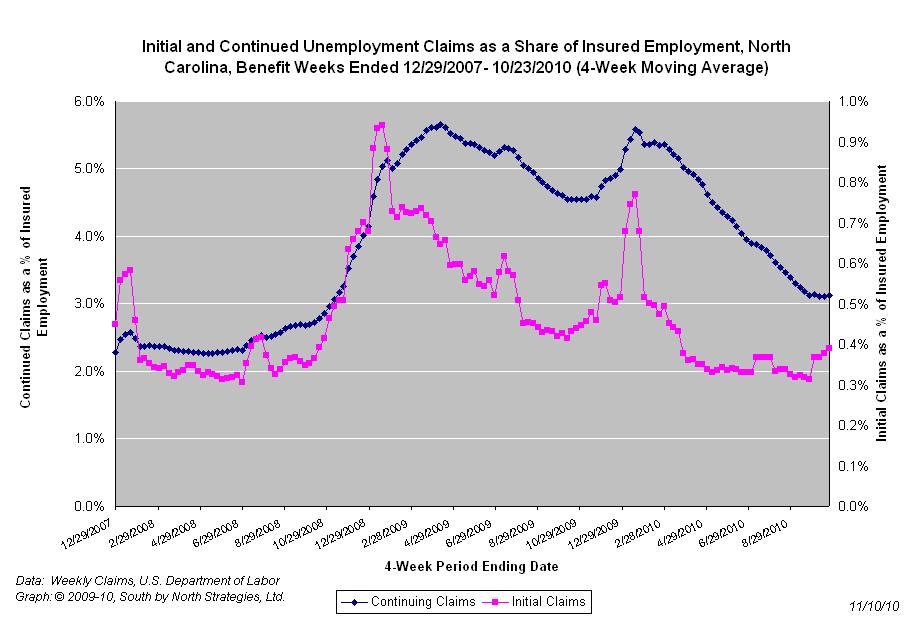
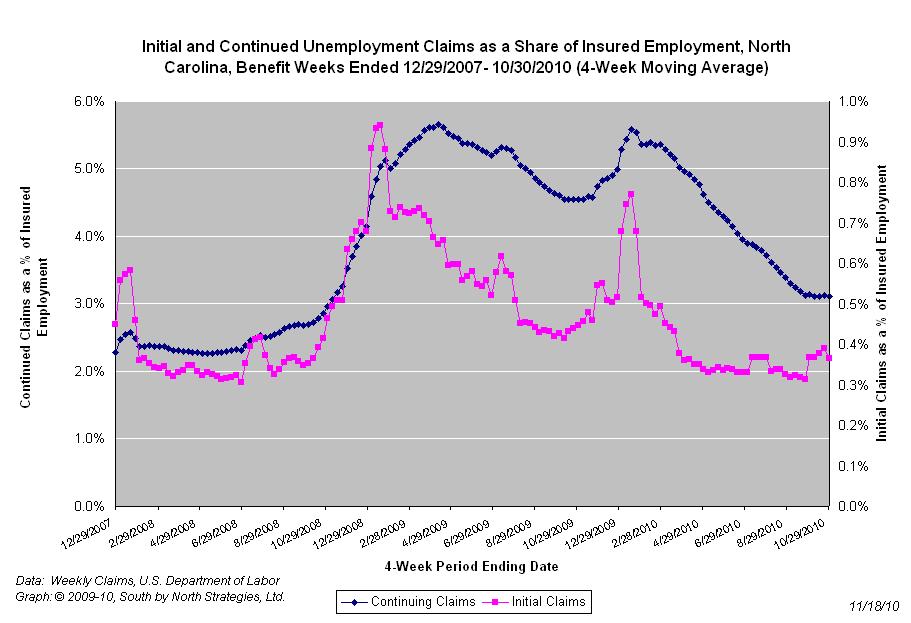
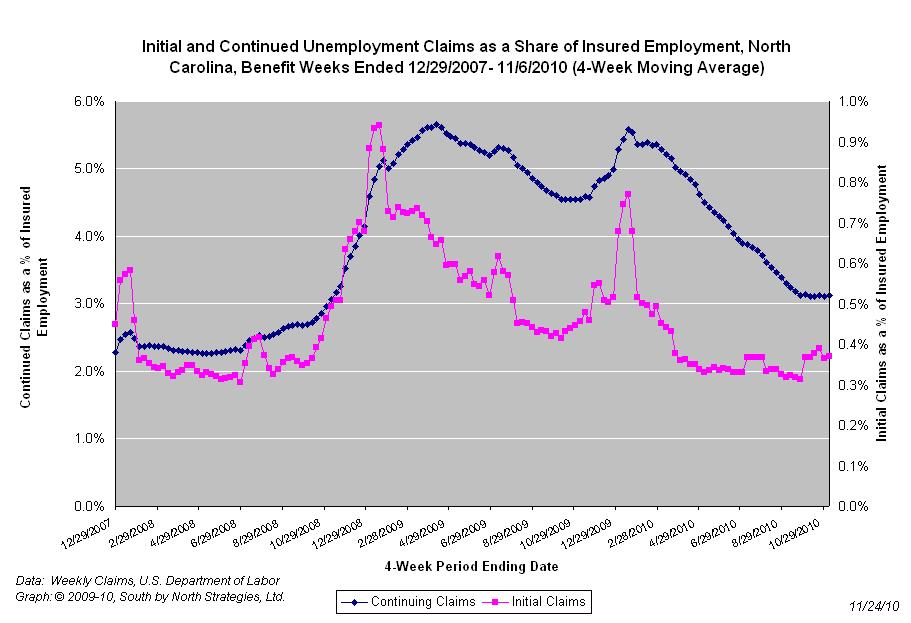
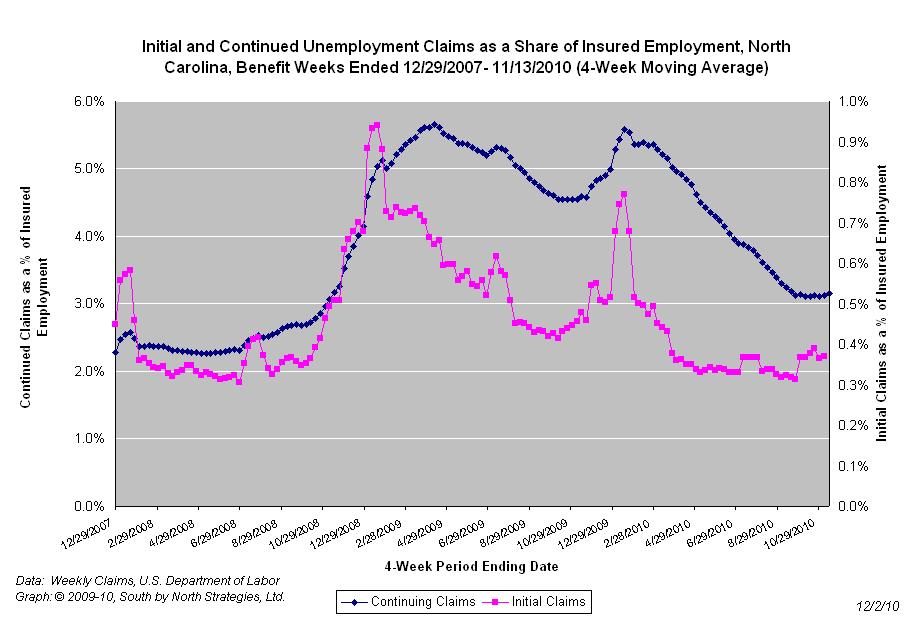
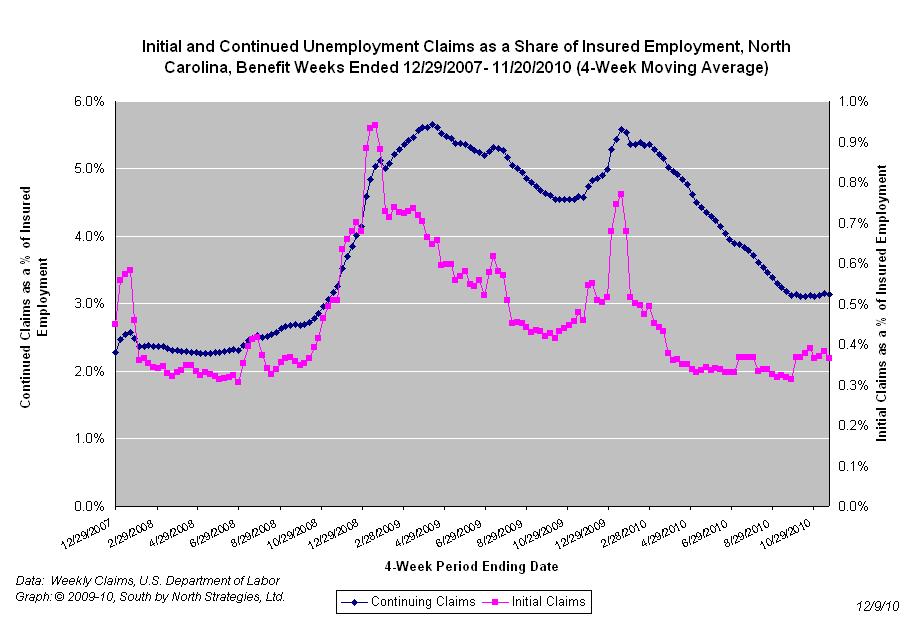
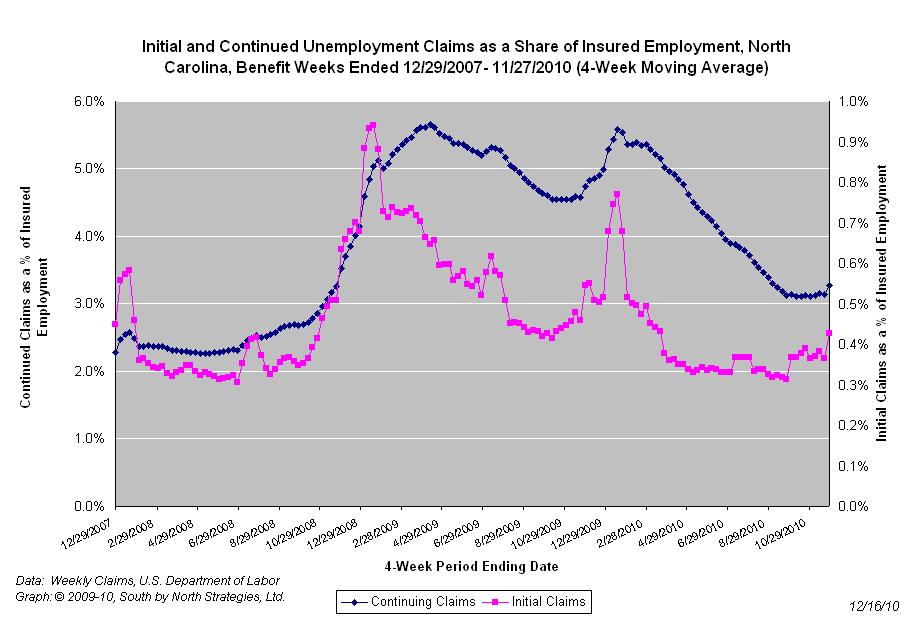
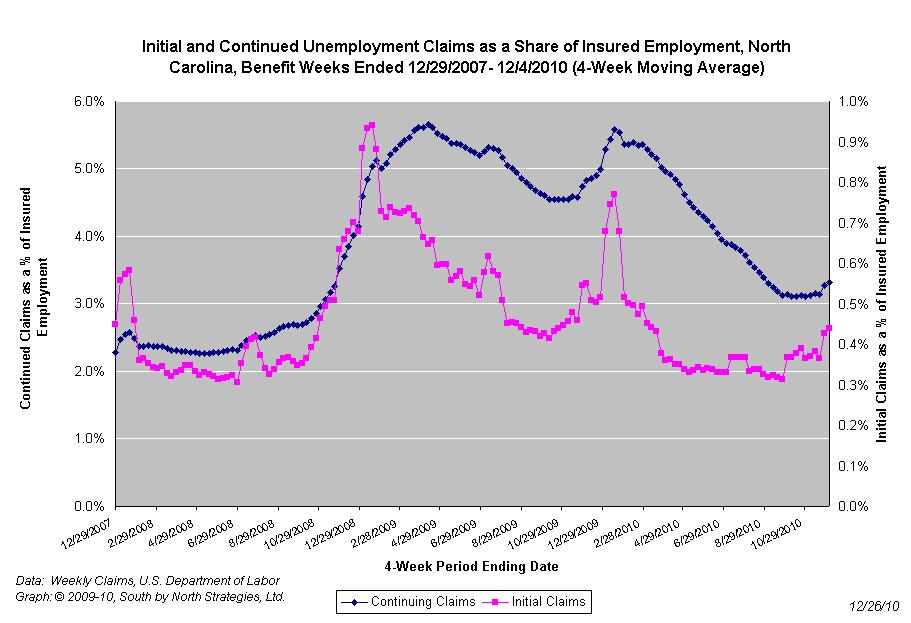
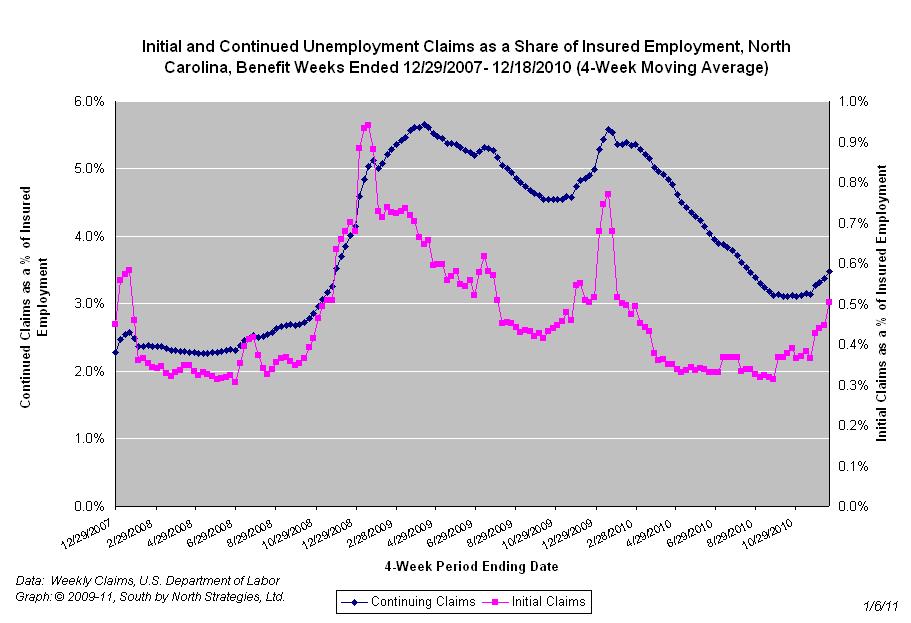
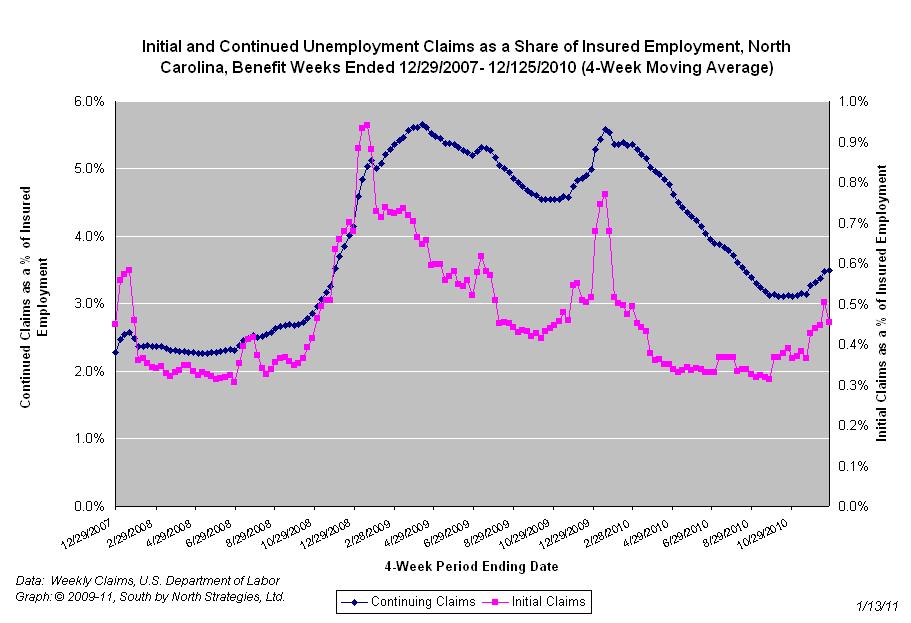
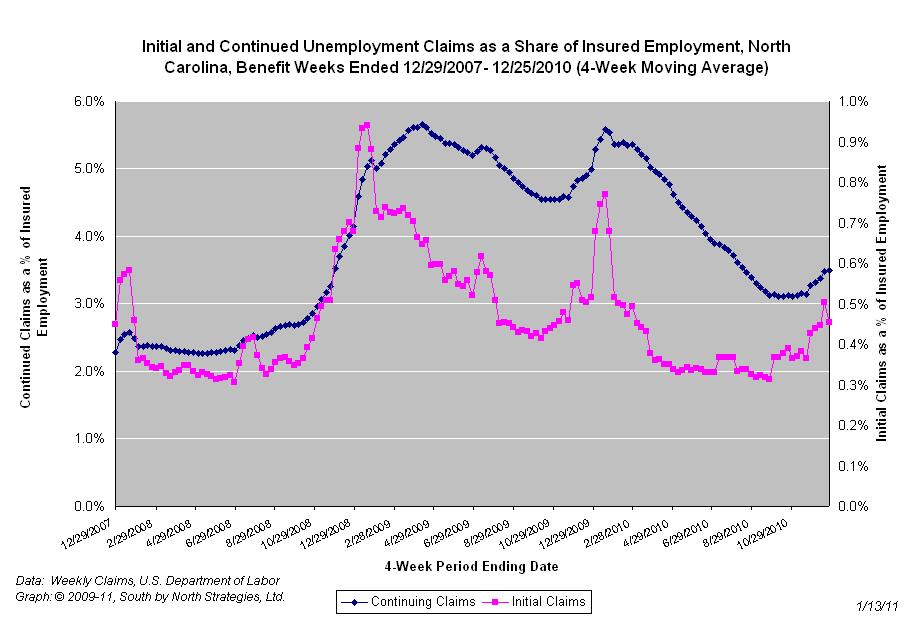
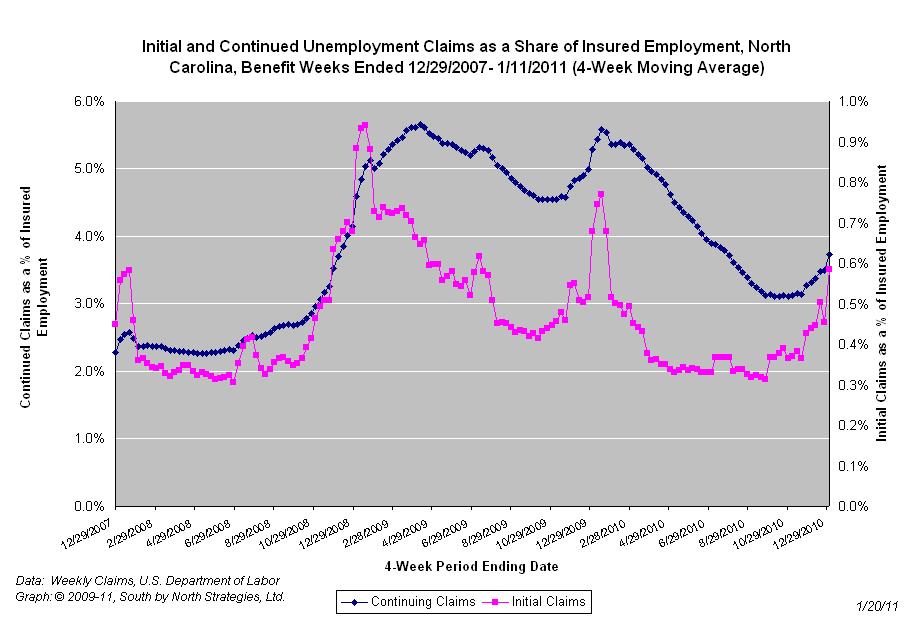
The graph (right) shows the changes in unemployment insurance claims (as a share of covered employment) in North Carolina since the recession’s start in December 2007.
Both new and continuing claims appear to have peaked for this cycle, and the four-week averages of new and continuing claims have fallen considerably. Yet continuing claims remain at an elevated level, which suggests that unemployed individuals are finding it difficult to find new positions. Also, new claims generally have been on the rise since the end of September.
Why So Glum?
Felix Salmon tries to explain the map below and answer why unemployment in the U.S. has risen much faster than in advanced countries where GDP has declined more sharply.
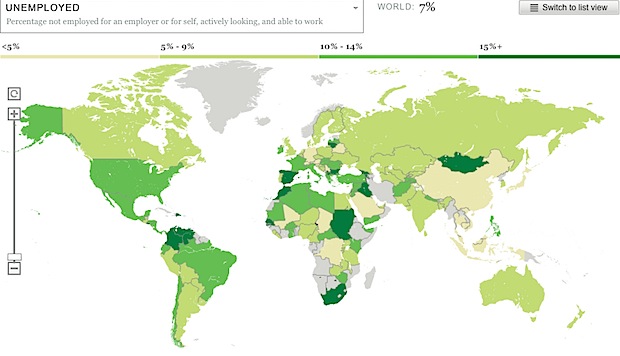 His take-away is the following:
When the median period of unemployment exceeds the maximum duration of unemployment checks, that’s a sign of a country which has simply given up on its neediest.
Around The Dial – Jan. 19
Economic policy reports, blog postings, and media stories of interest:
- David Leonhardt asks why the U.S. jobs slump is so deep.
- Calculated Risk breaks down the latest data on housing starts.
- Rortybomb points out the lack of evidence for strategic defaults.
- Slate wonders if half of all Americans really are uninsurable.
Bettering Postsecondary Education
The latest issue of Carolina Context, a publication of the UNC Program on Public Life, critiques several recent national reports about the importance of postsecondary education and how North Carolina could strengthen higher education in the face of economic and social change.
The picture that emerges from these reports is that of powerful economic, demographic and technological forces presenting an array of challenges to test North Carolina’s mettle. The challenges arise even as the Governor, the General Assembly and all elements of state government confront an especially difficult budgetary outlook for the next fiscal year. Our purpose here is to give policymakers information that helps frame the decisions they will make in 2011.
…The synthesized message is that nearly six out of 10 jobs in North Carolina’s near future are projected to require some higher education, principally in community colleges or universities. To meet that requirement, our higher education systems will have to elevate their completion rates substantially. Barely more than one in three North Carolina working-age adults holds an associate’s degree or higher.
Still Too Big To Fail
Simon Johnson explains why the problem of banks that are too big too fail hasn’t gone away and what could be done about it.
Or we could also make the biggest banks smaller — ideally, small enough to fail. This was the proposal of the Brown-Kaufman amendment to Dodd-Frank, which died on the Senate floor, largely because of opposition from Geithner and the Treasury Department. So we’ll do nothing, it seems, except let these massive banks become bigger and even less well managed.
…
Until next time, the people who run the country will again face the same choice as in November 2008: provide an unsavory bailout for management, shareholders and creditors that rewards failure and stupidity, or run the risk of causing a second Great Depression.
 Email Sign-Up
 RSS Feed