A National Train Wreck?
Marshall Auerback of The Roosevelt Institute despairs over the “American train wreck” being caused by the failure of the political system.
The “two Americas” theme will continue. Stock market participants won’t be particularly disturbed by growing anger and hopelessness in the country because, by and large, all they care about are the markets and their bonus checks. The electorate’s increasing dissatisfaction will be a side show. They voted (at least some of them did) and now have to live with the consequences of that vote.
…
Meanwhile, Obama will try to govern via more Clinton-style “triangulation” and “compromise” (although “compromise” is actually a charitable way of looking at it, since he has already capitulated to Wall Street). He wants to bring big business into his administration. Why? Business profits are sky-high. Contrary to the rhetoric, this has not been an administration that has been particularly “anti-business”. The administration’s instinct for solving a problem of fraud or criminality is to wish the problem away or “move forward” without any consequences for bad behavior. But it is also a manifestation of our political system’s impotence to respond to the problems of long-term unemployment and a general hopelessness about the system’s ability to craft sensible long-term solutions to our longstanding structural problems.
Double Trouble
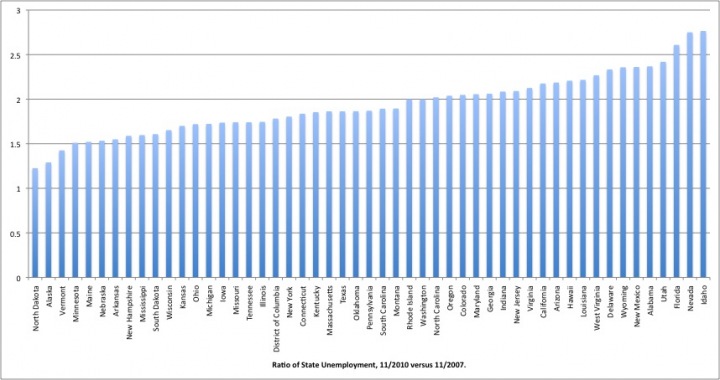
Rortybomb looks at the claim that the recession has caused the unemployment rate for almost every major demographic group roughly to double and finds that it holds at the state level. Over the course of the recession, official unemployment rates, at a minimum, have doubled in every state. The unanswered question is why.
Around The Dial – Jan. 13
Economic policy reports, blog postings, and media stories of interest:
- Economix asks if poor economic times encourage discrimination.
- The Washington Post reports on the public schools in Wake Co., NC.
- Tapped wants to know what makes a job “a green job.”
- Felix Salmon debates if the U.S. debt ceiling makes any sense.
- Off the Charts points out that subsidizing films is a bad idea.
- TaxVox notes that the IRS wants you to take your time this year.
NC Unemployment Claims: Week of 12/25
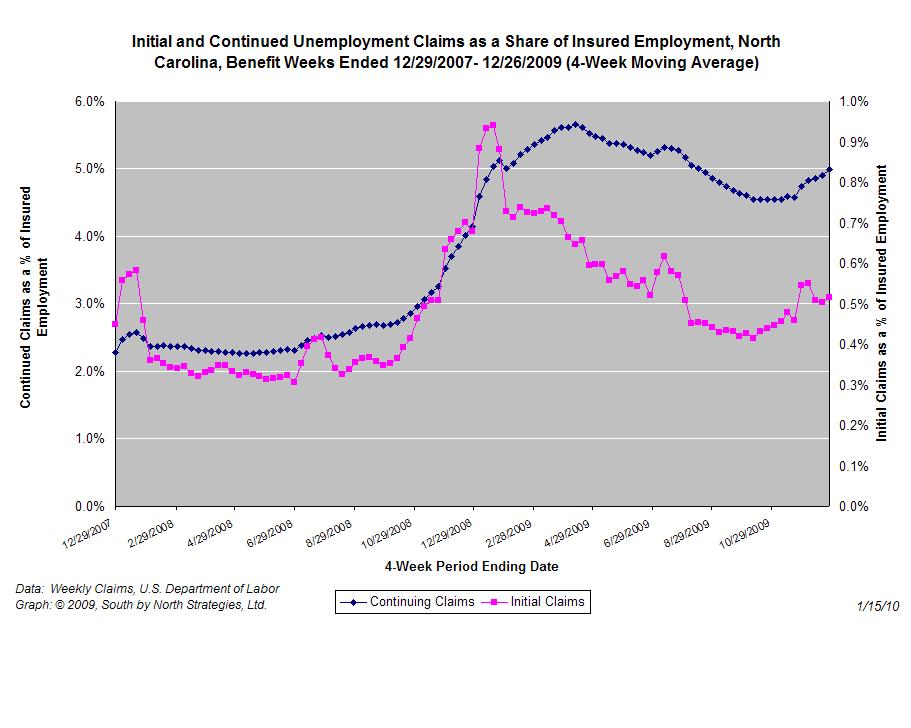
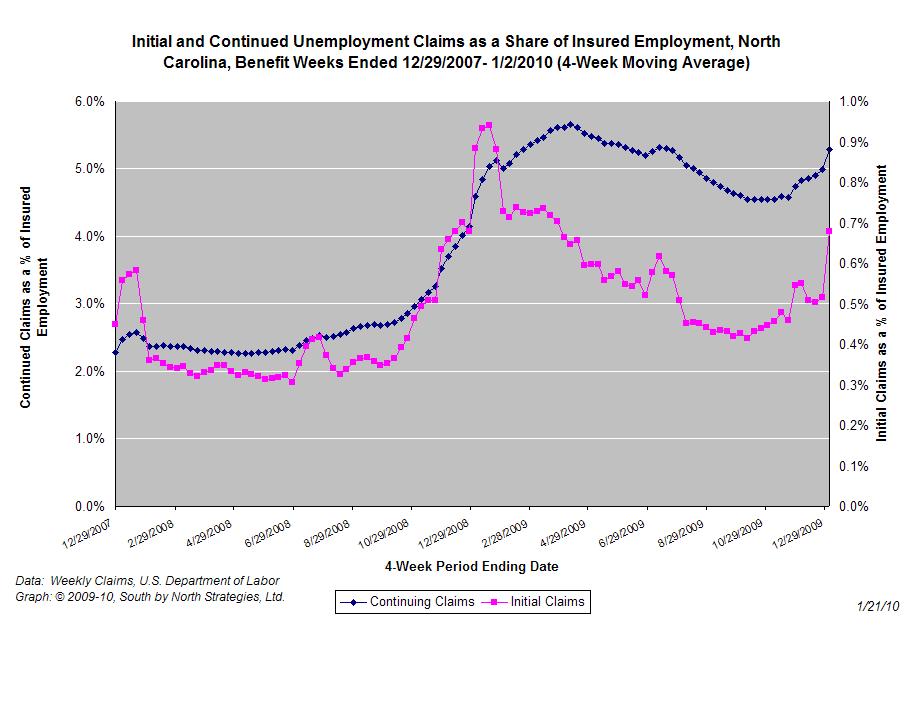
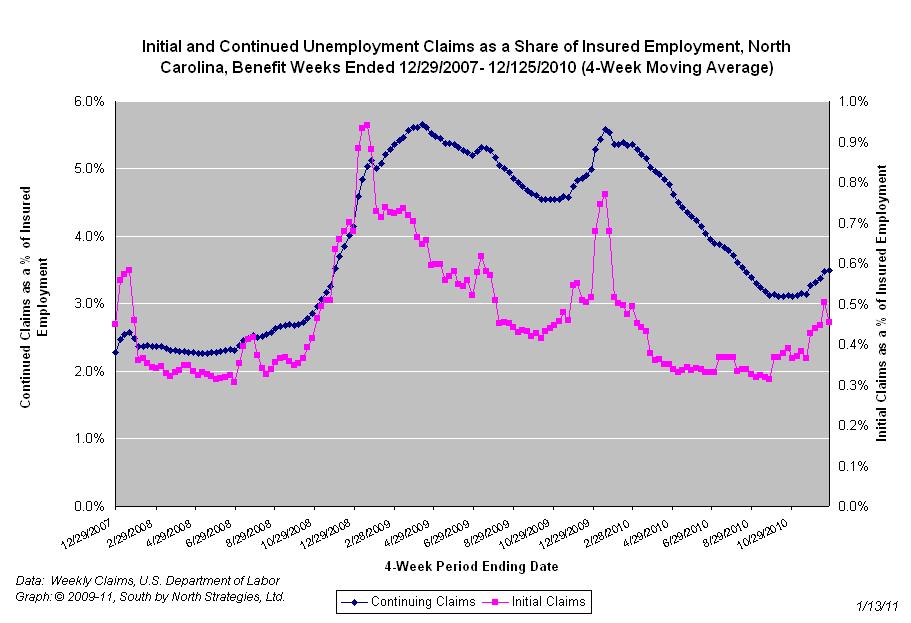
For the benefit week ending on December 25th, 18,050 North Carolinians filed initial claims for state unemployment insurance benefits, and 139,129 individuals applied for state-funded continuing benefits. Compared to the prior week, there were more fewer initial and more continuing claims. These figures come from data released by the U.S. Department of Labor.
Averaging new and continuing claims over a four-week period — a process that helps adjust for seasonal fluctuations and better illustrates trends — shows that an average of 16,890 initial claims were filed over the previous four weeks, along with an average of 130,453 continuing claims. Compared to the previous four-week period, there were fewer initial and more continuing claims.
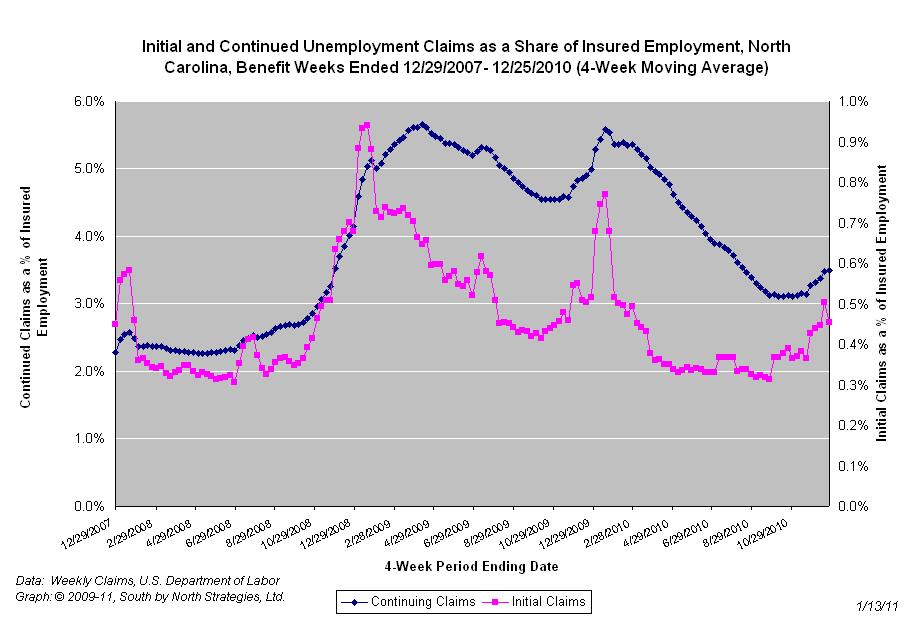 One year ago, the four-week average for initial claims stood at 20,405 and the four-week average of continuing claims equaled 197,495.
While the number of claims has dropped over the past year so has covered employment. Last week, covered employment totaled 3.7 million, down from 4 million a year ago.
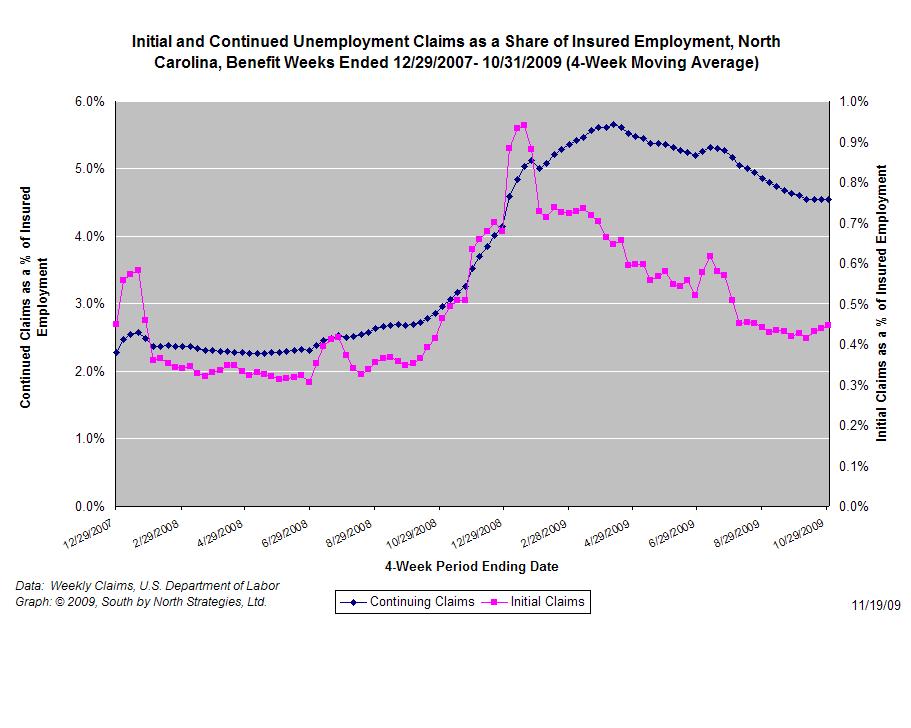
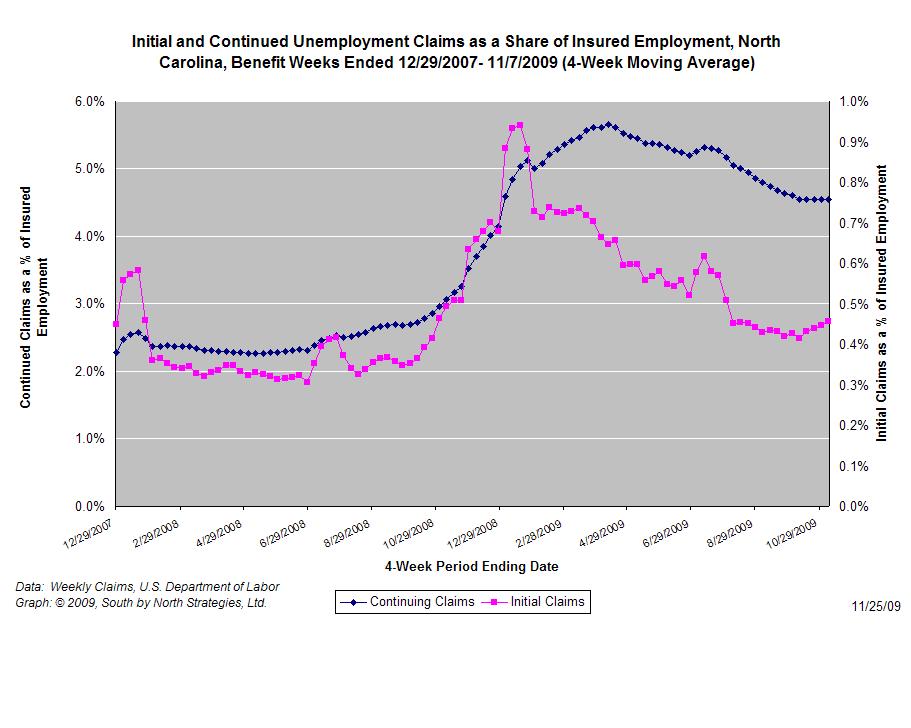
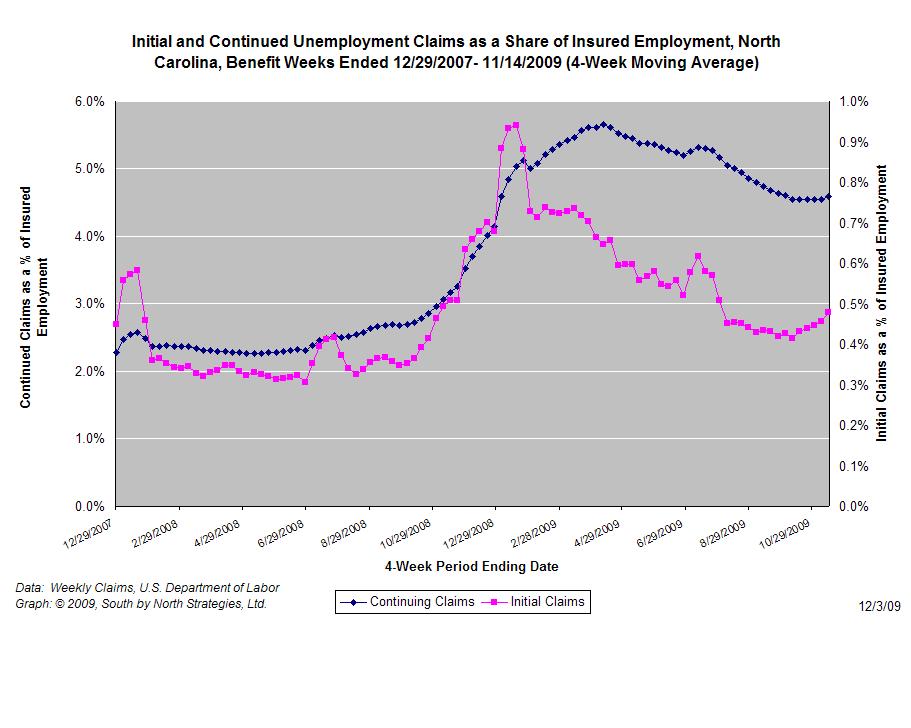
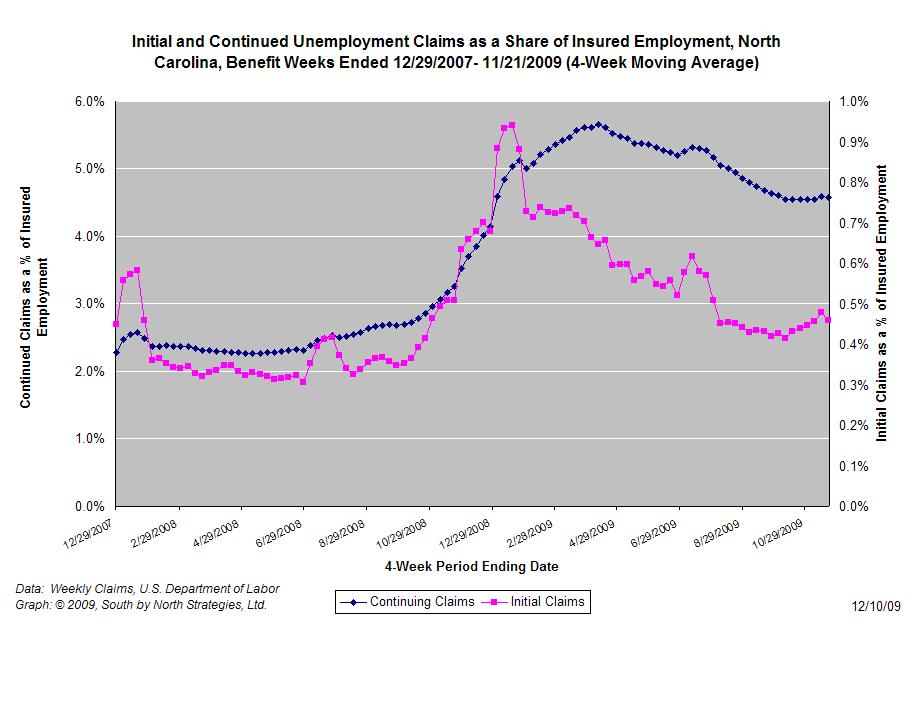
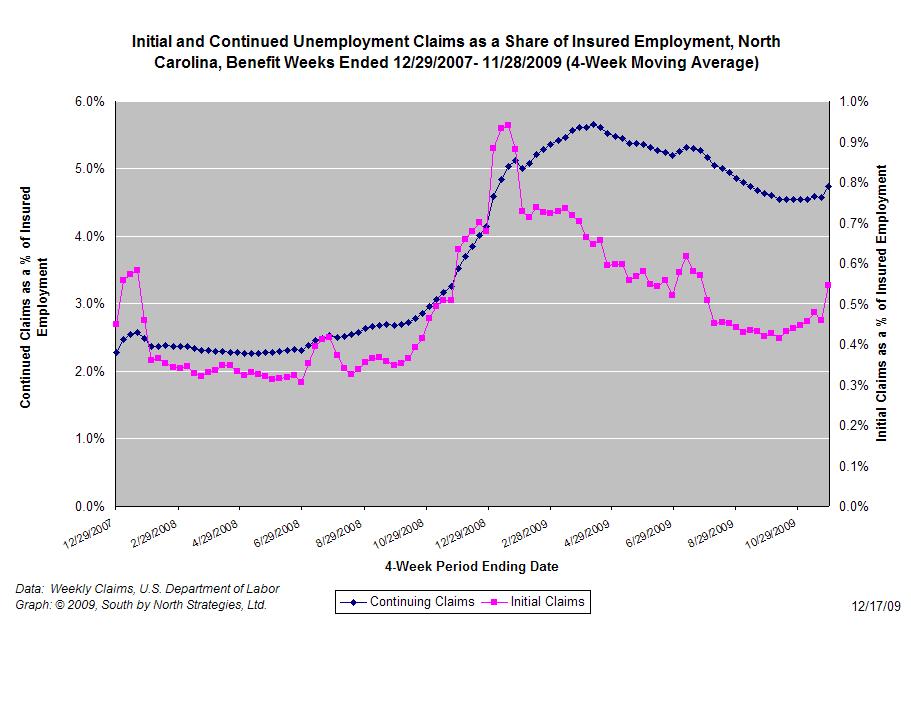
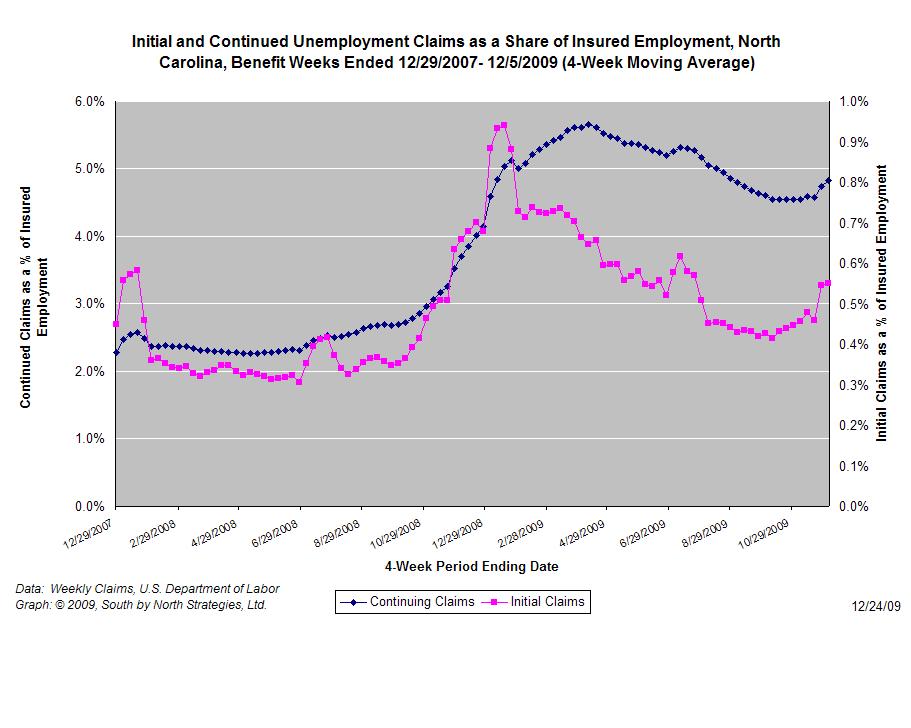
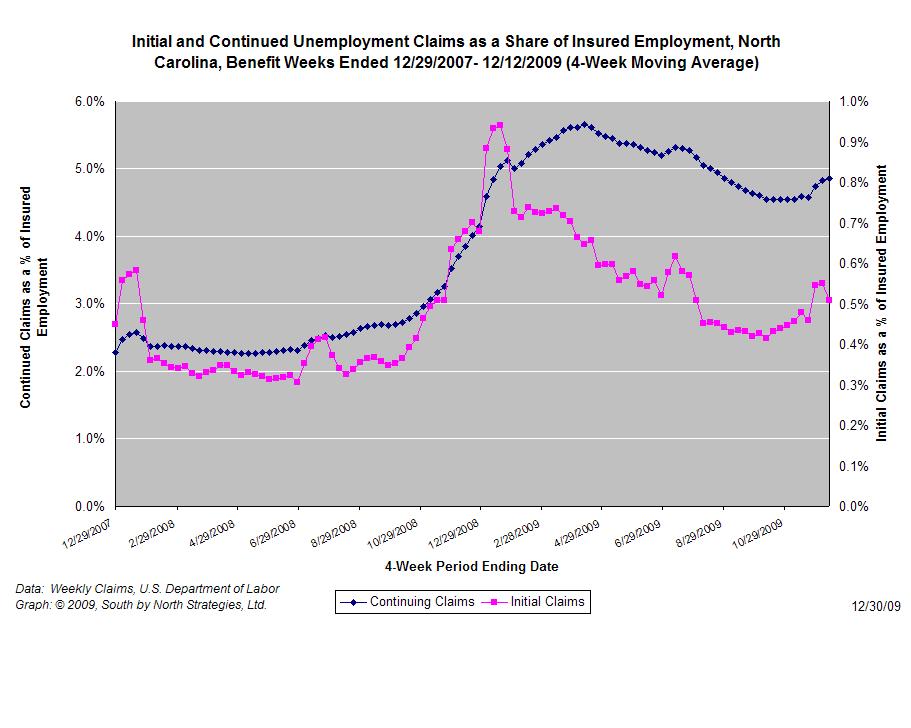
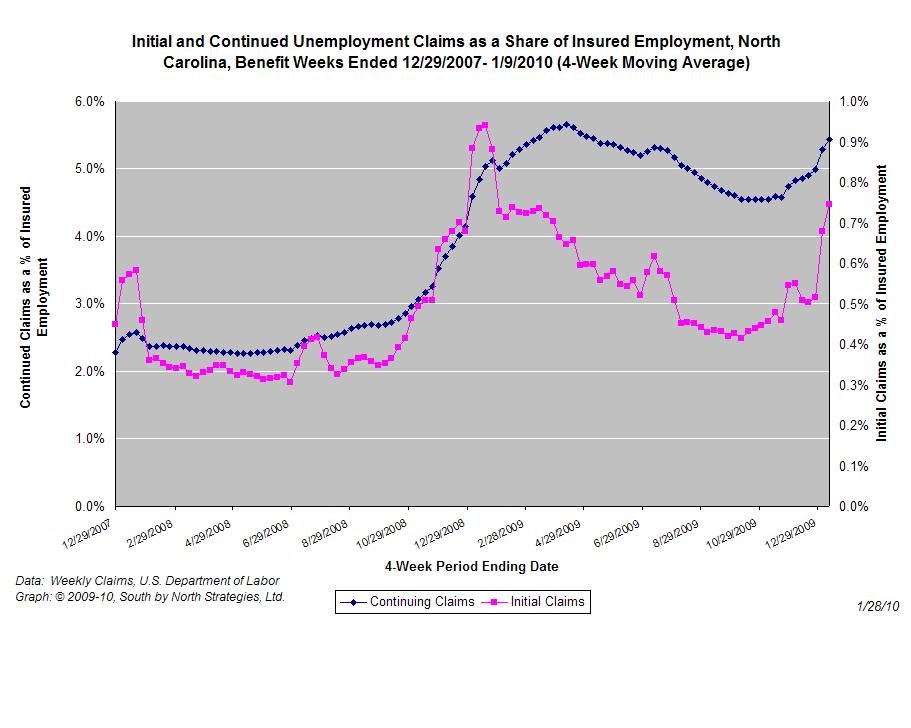
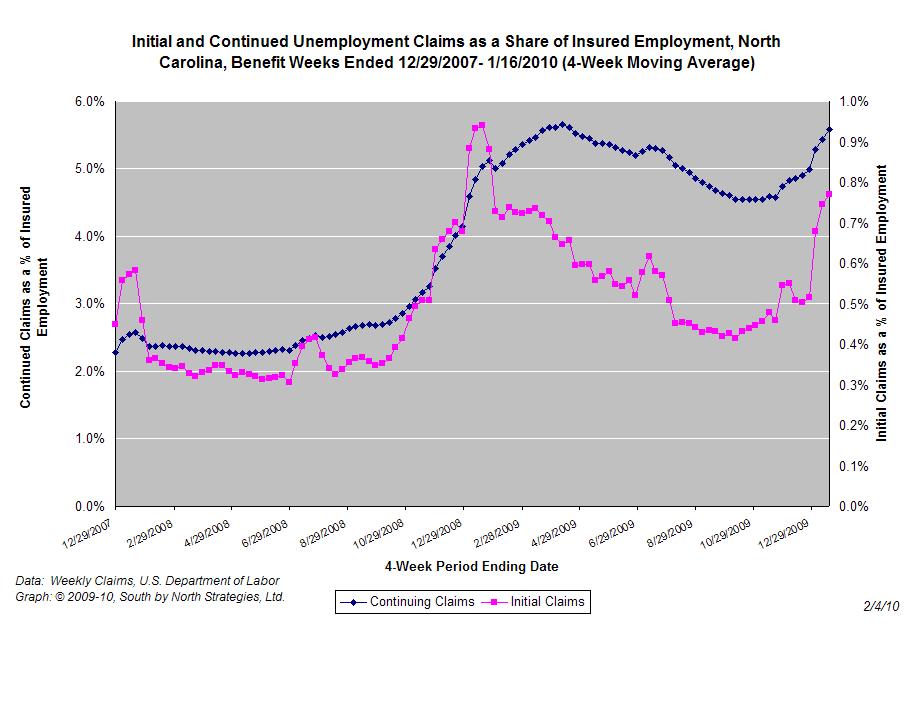
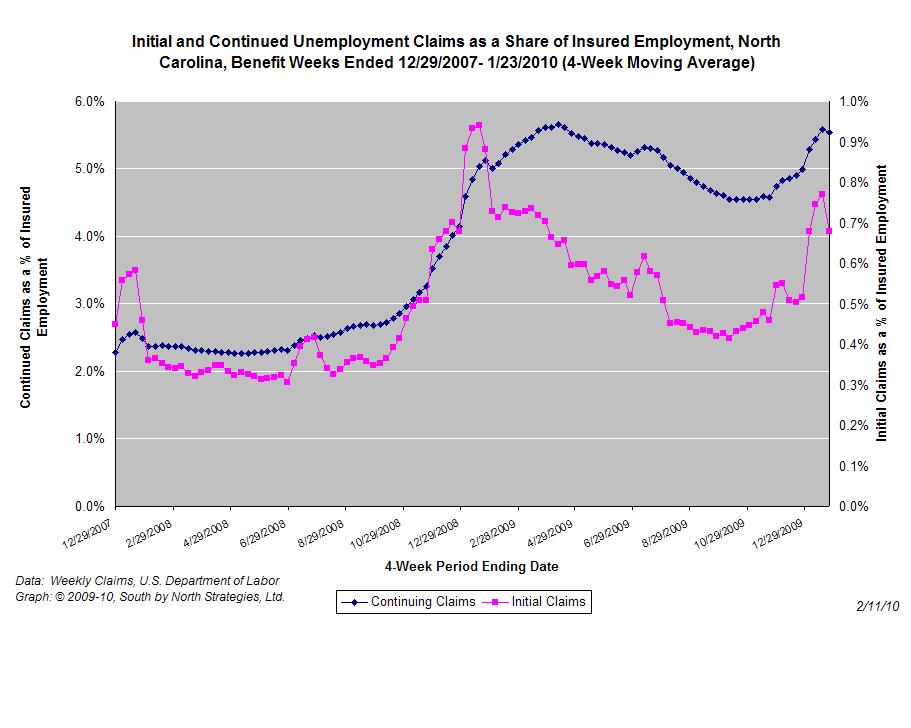
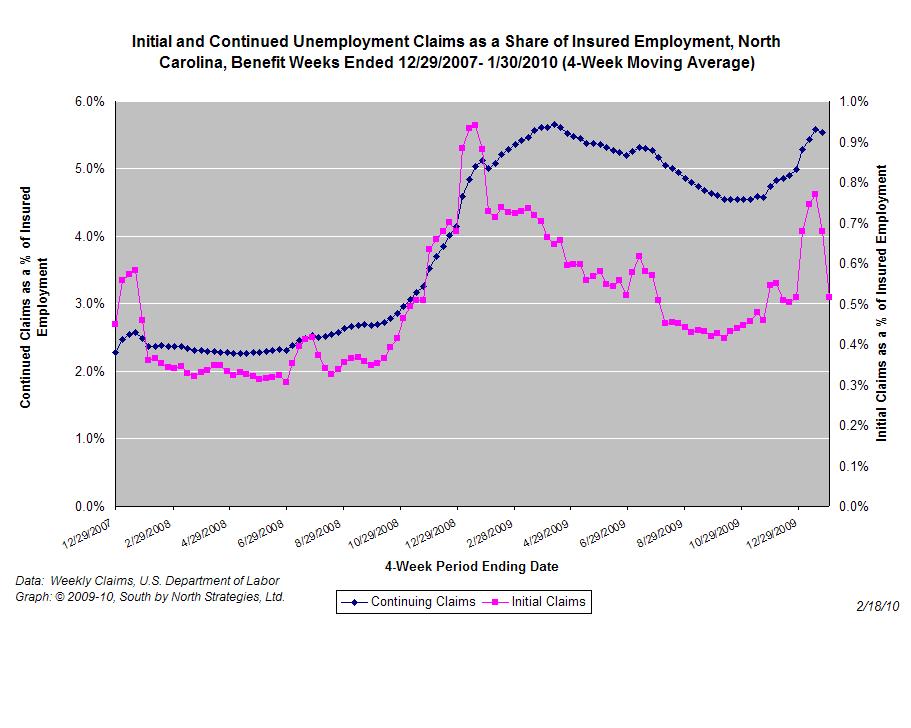
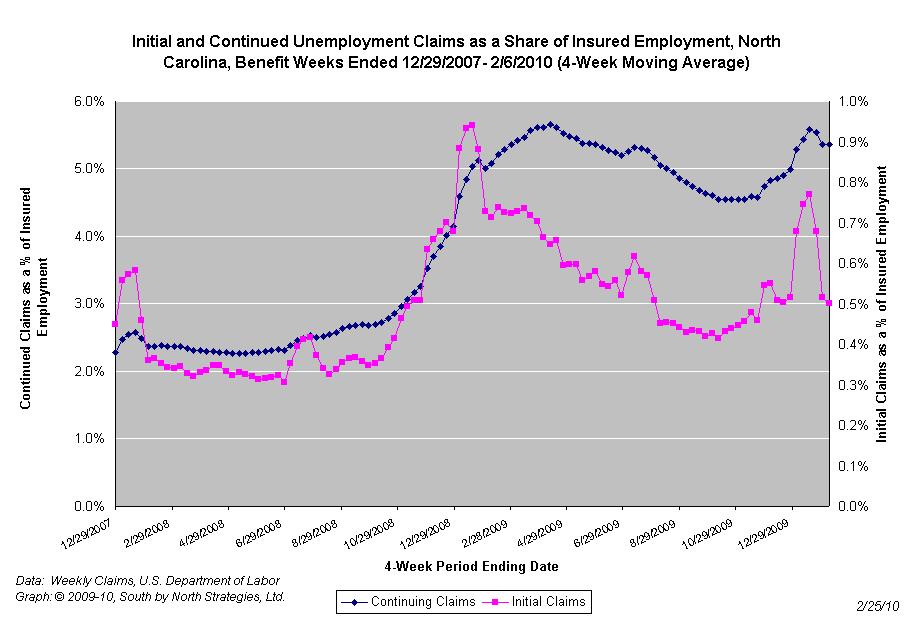
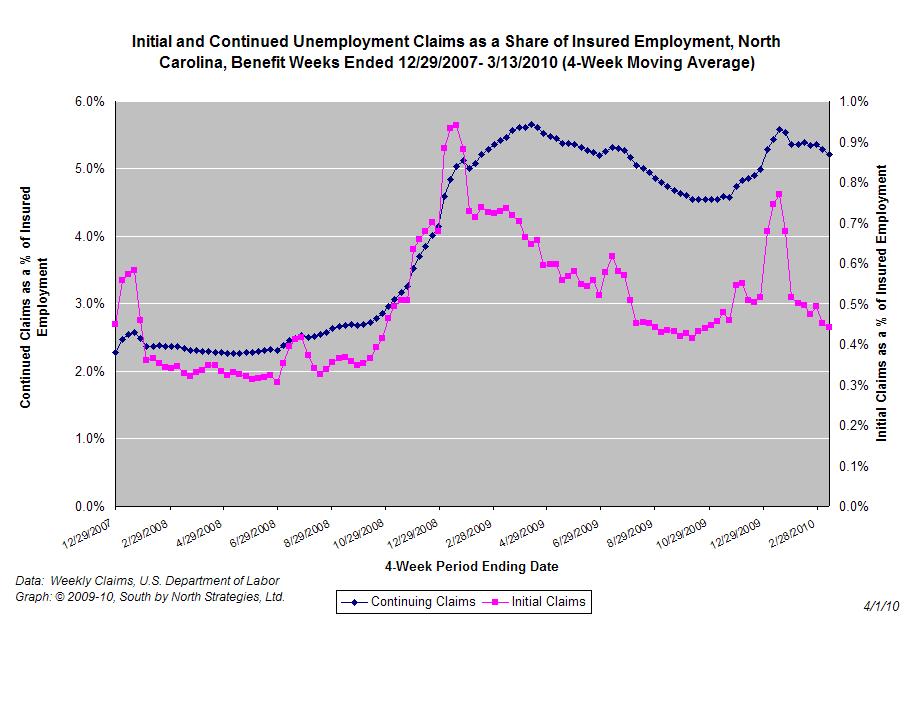
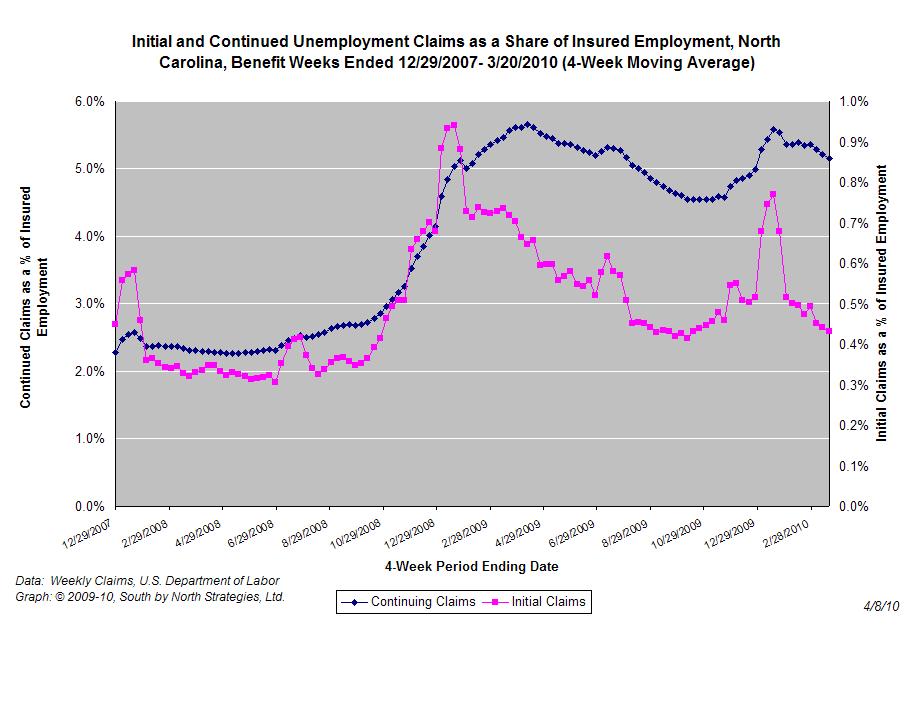
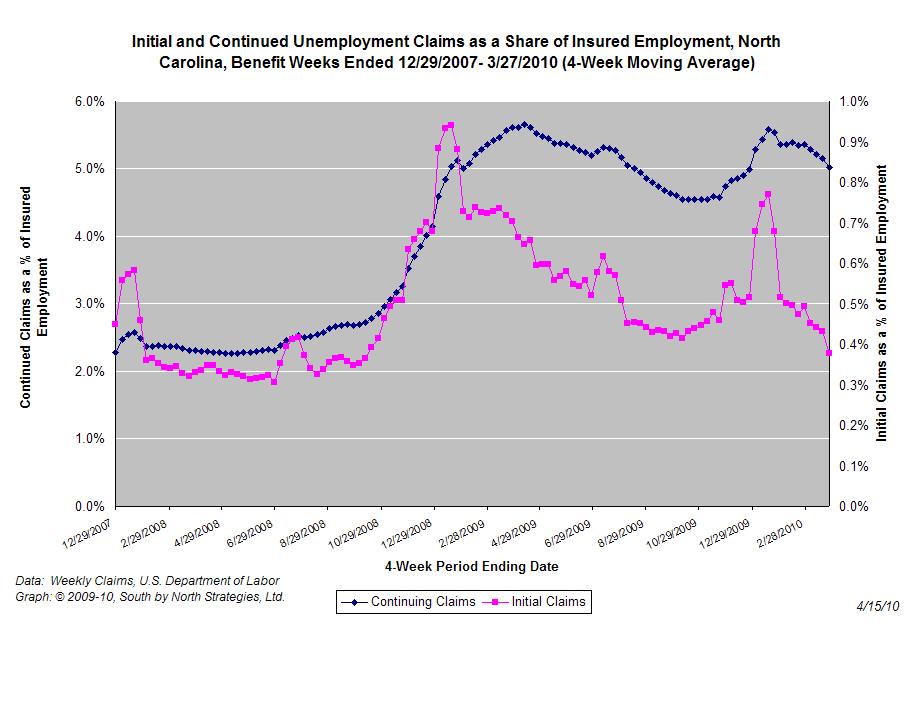
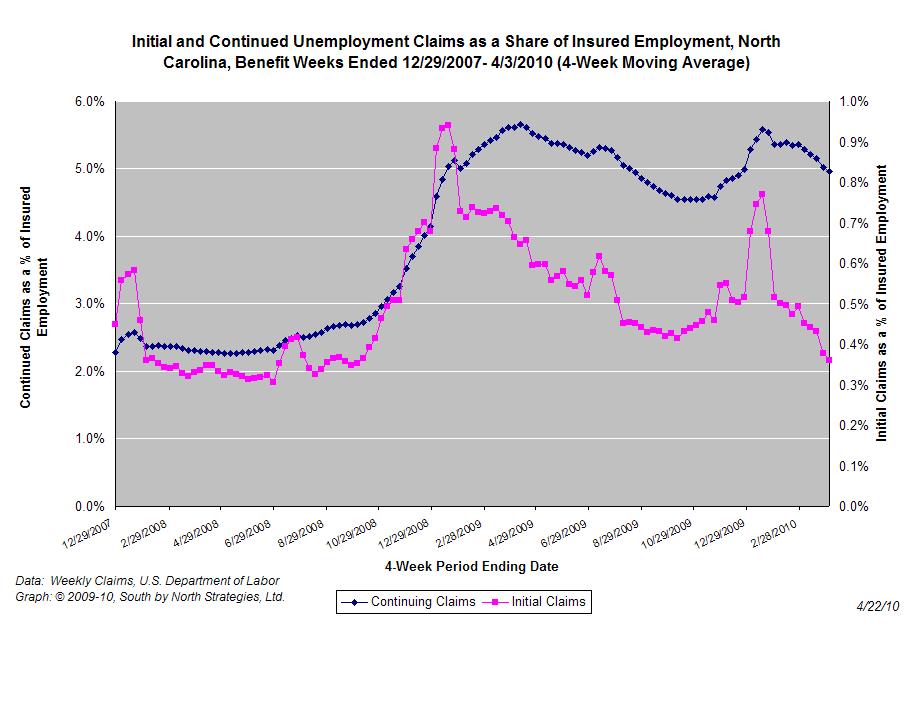
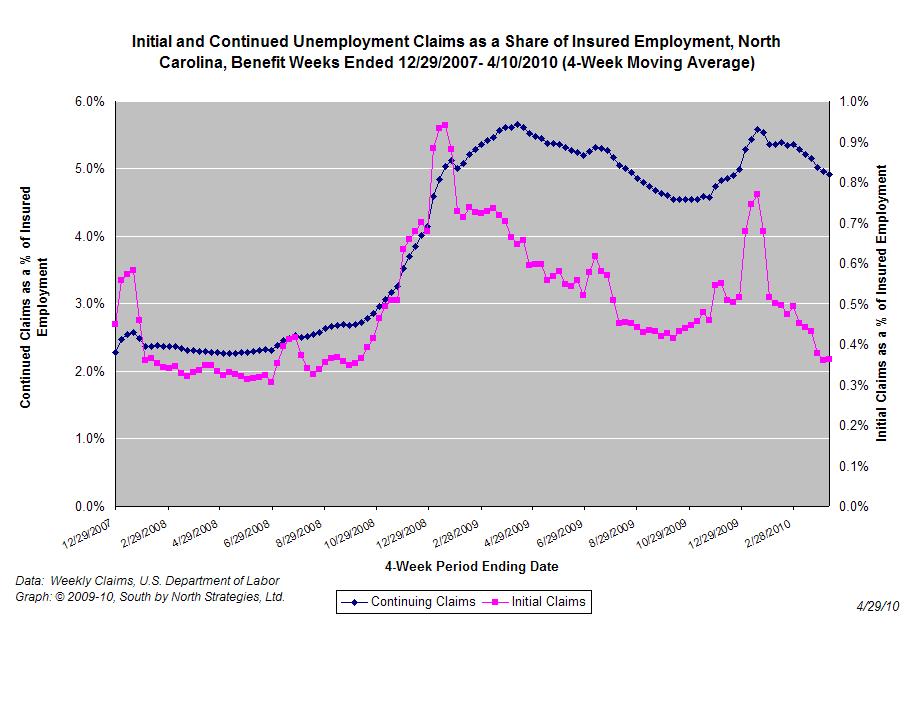
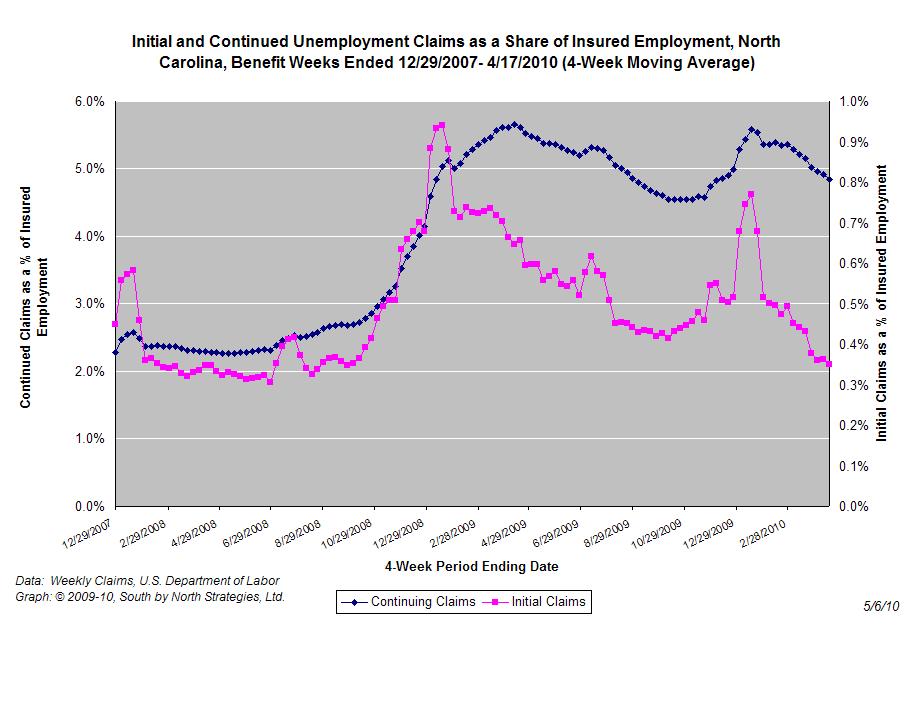
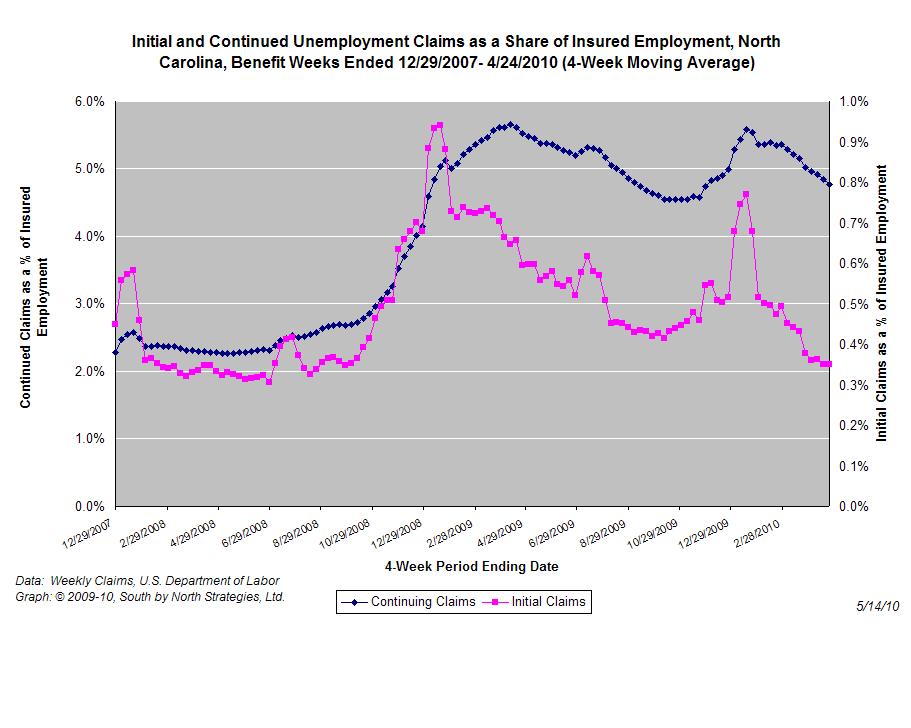
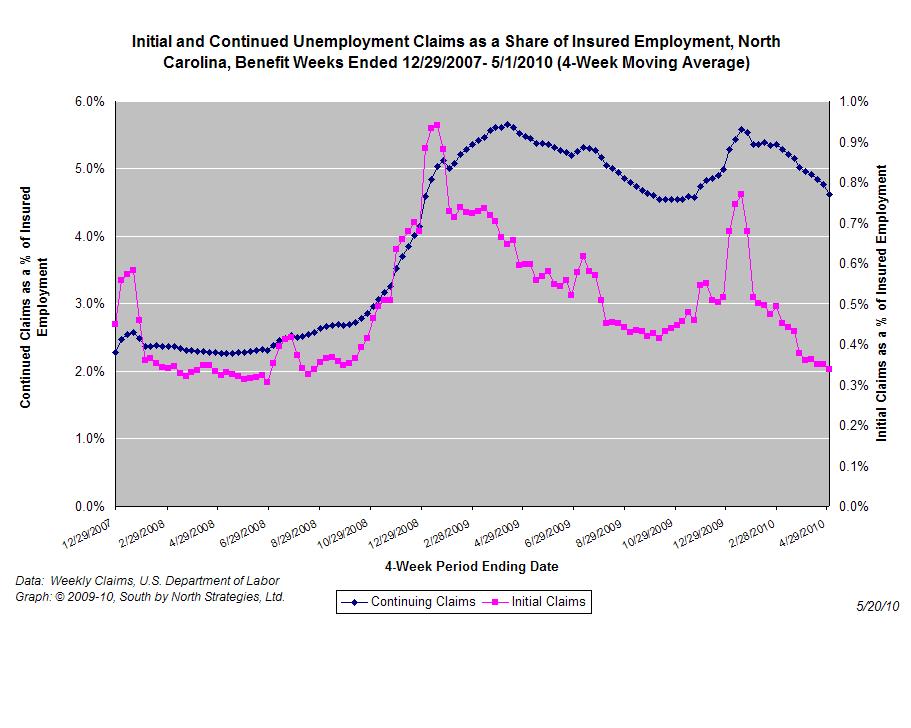
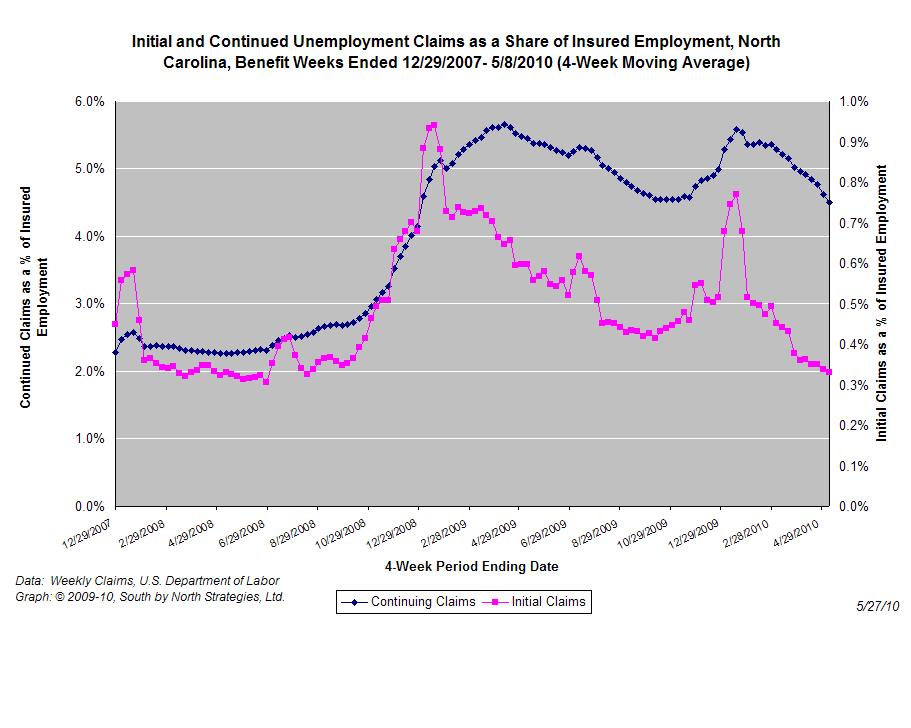
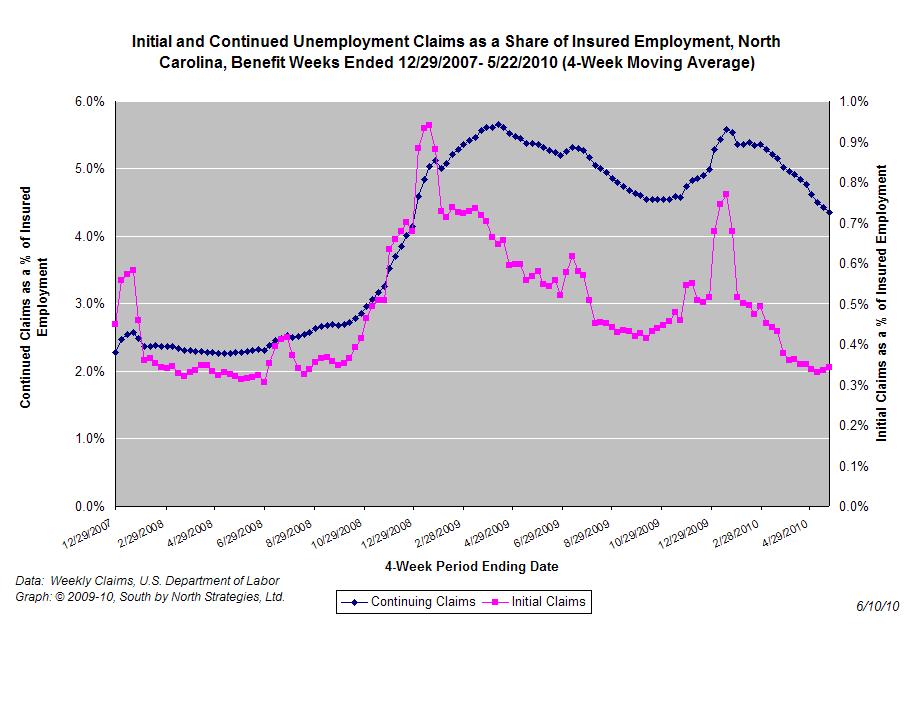
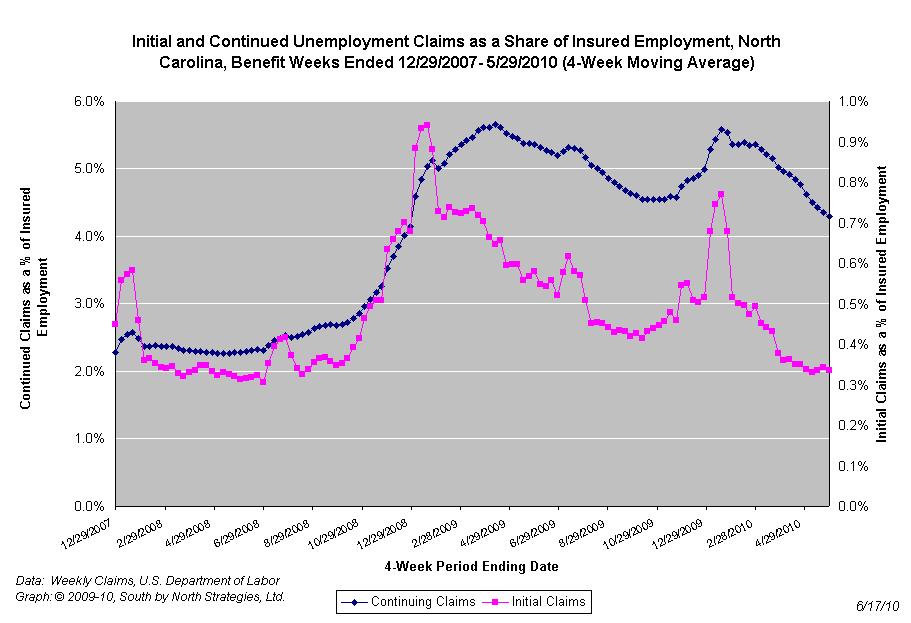
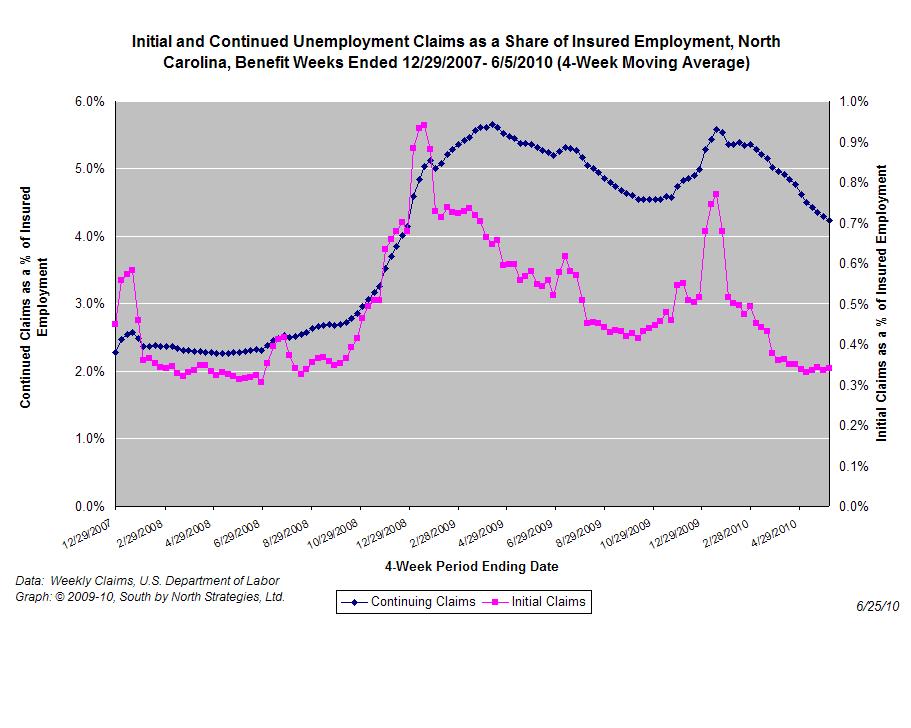
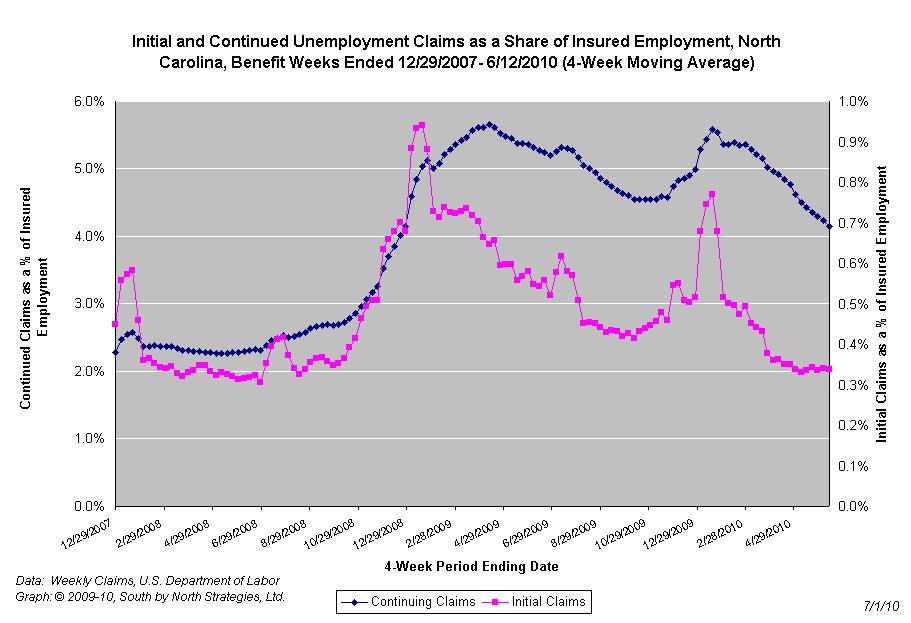
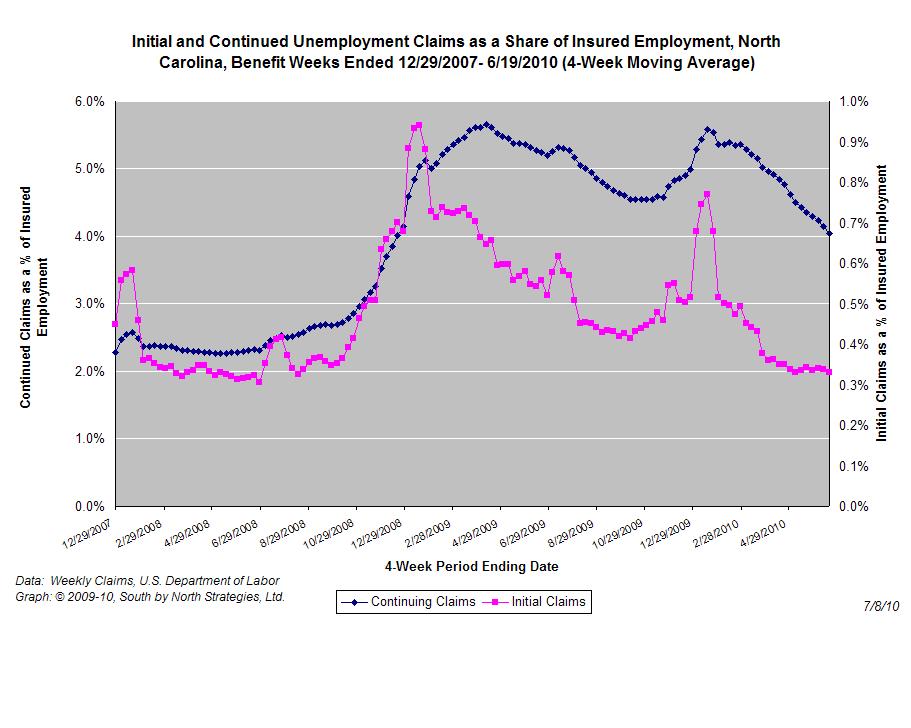
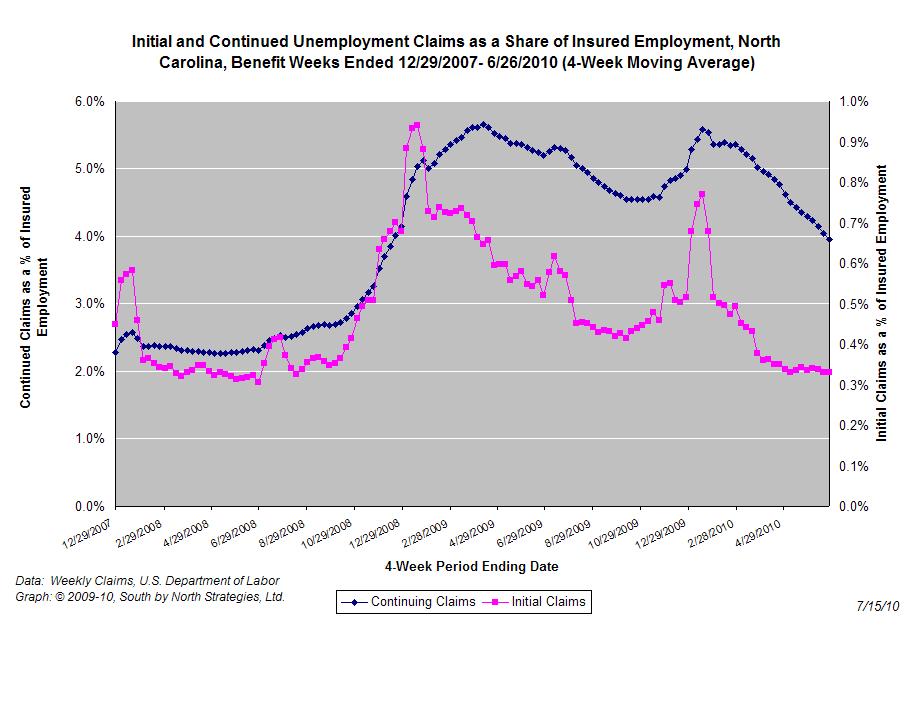
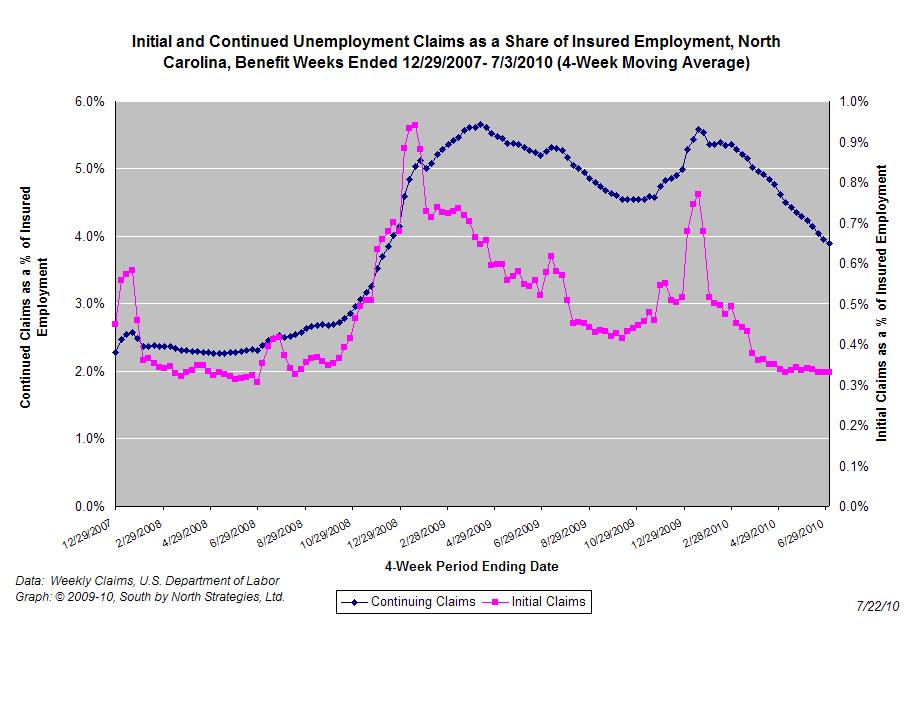
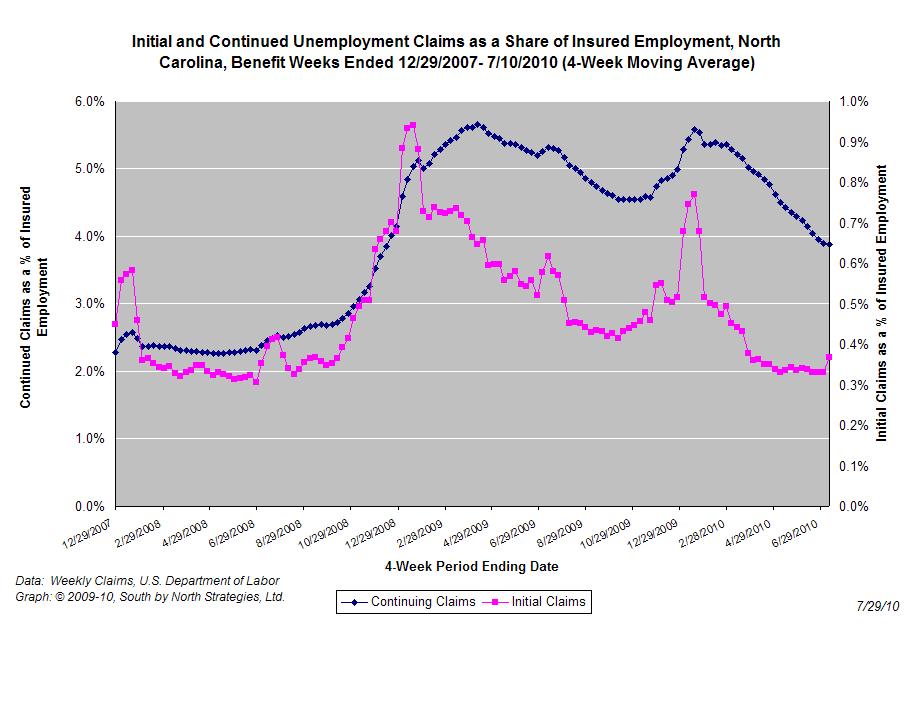
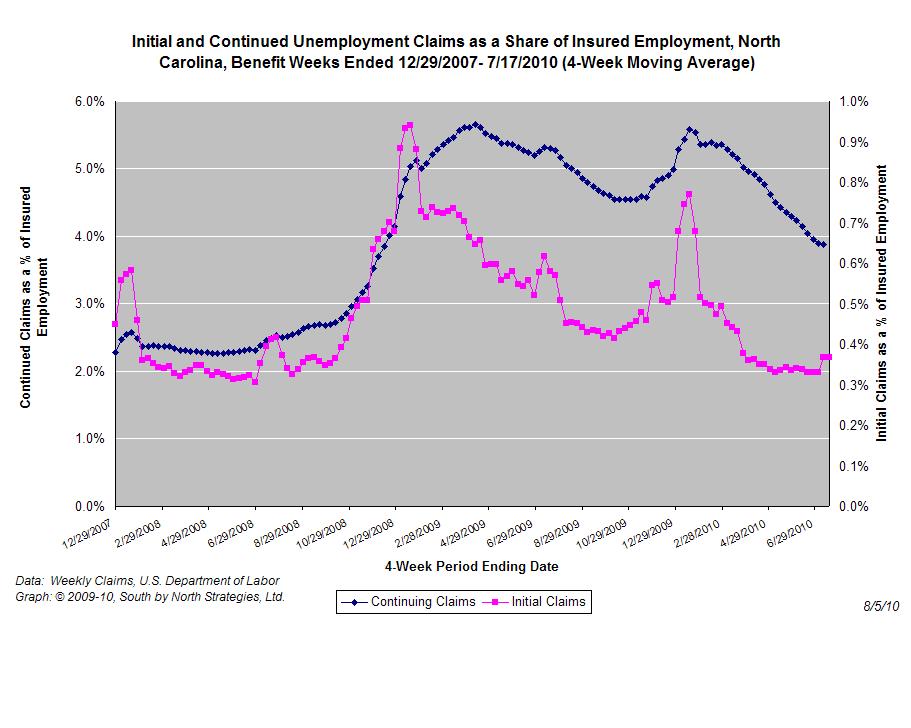
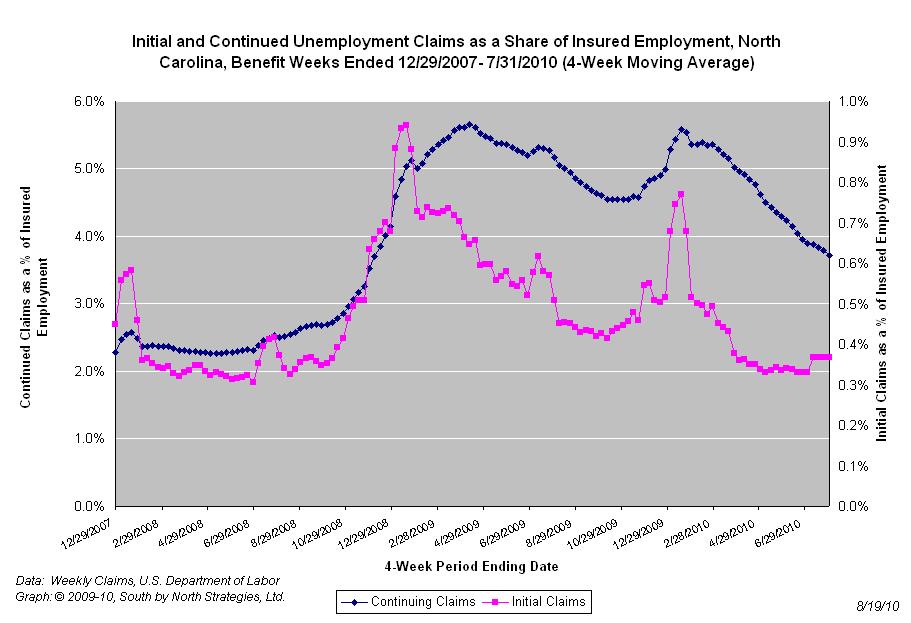
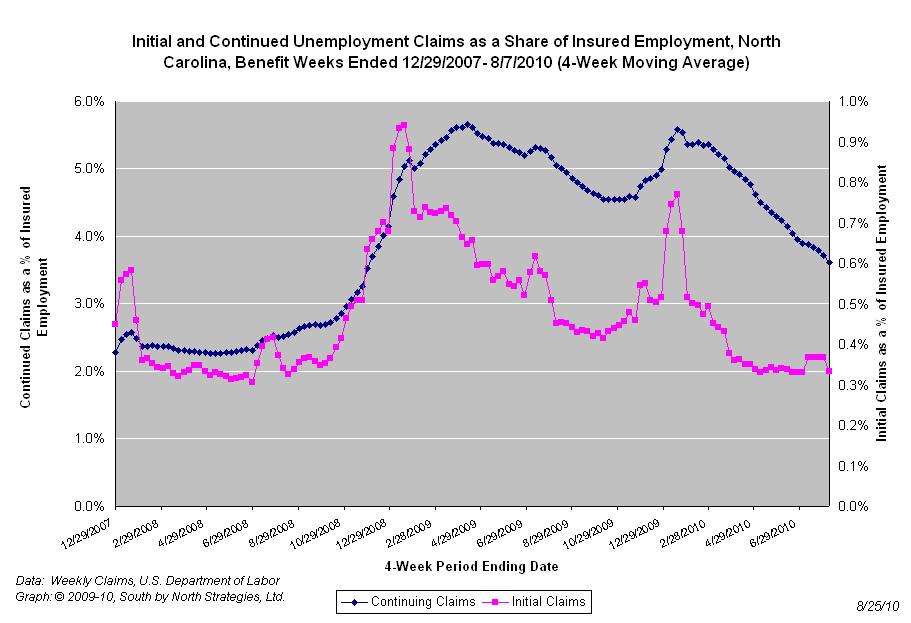
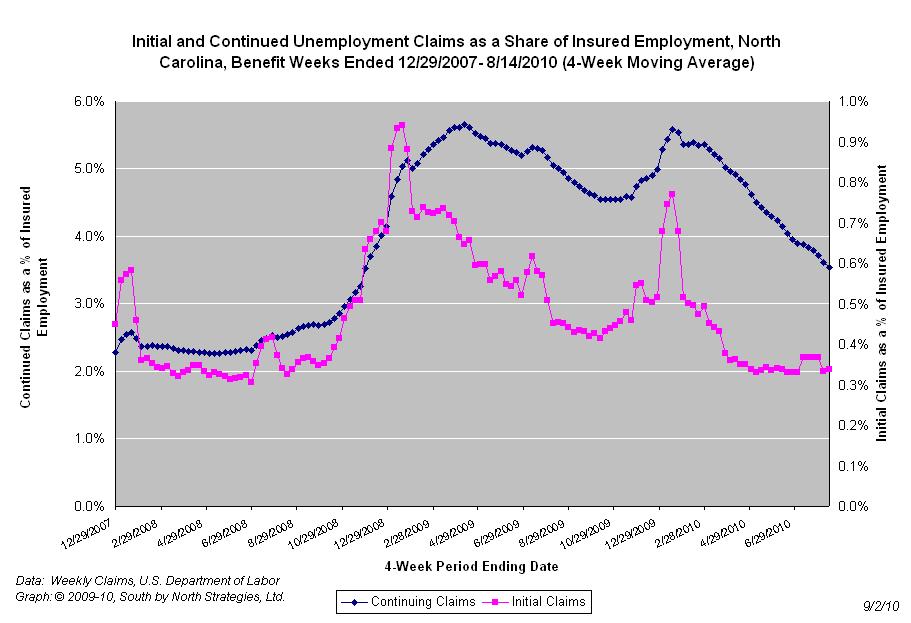
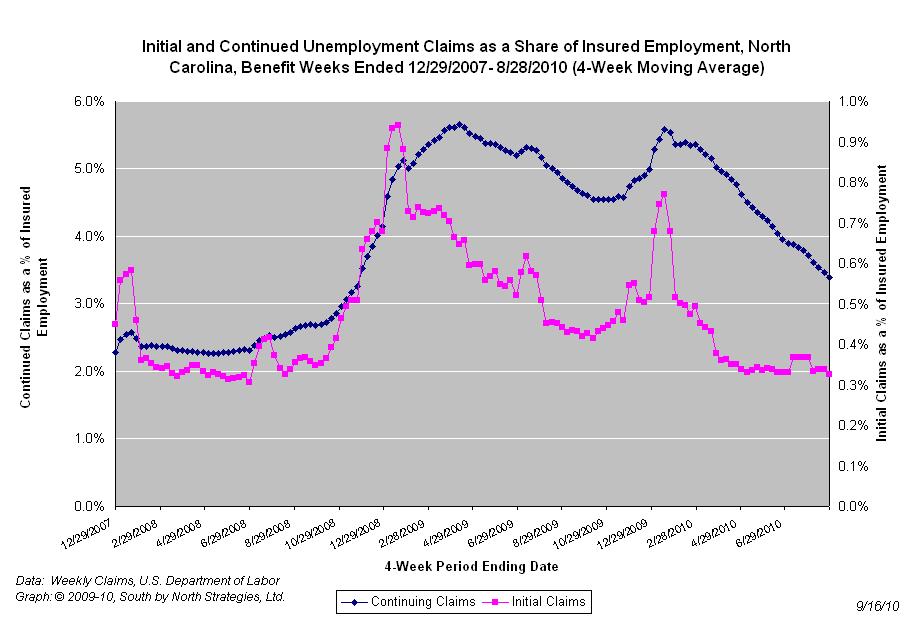
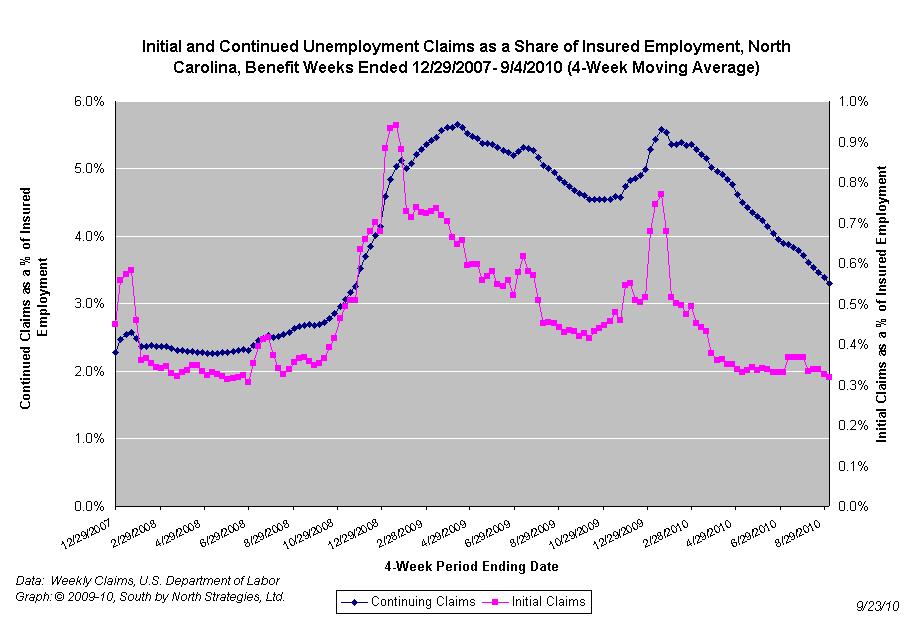
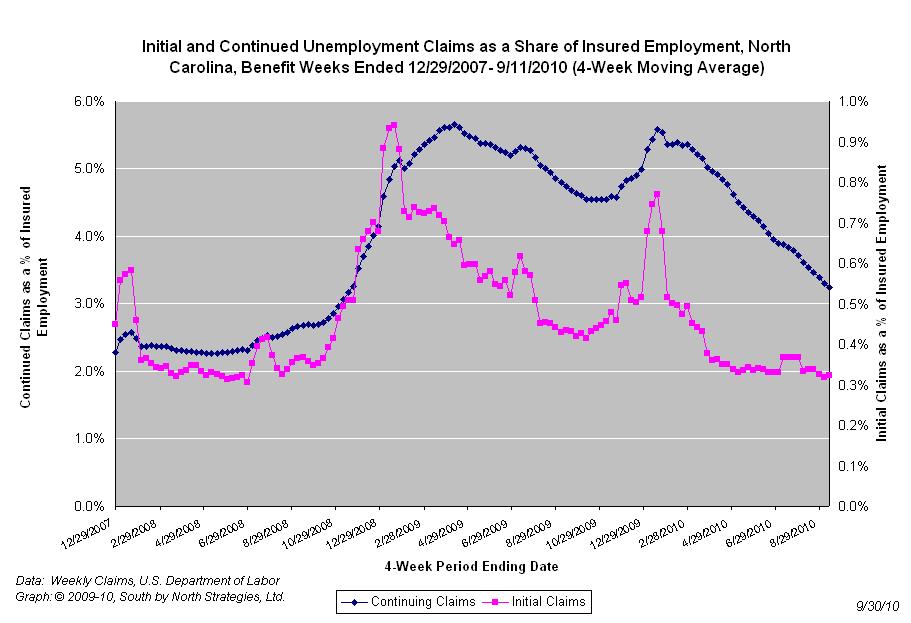
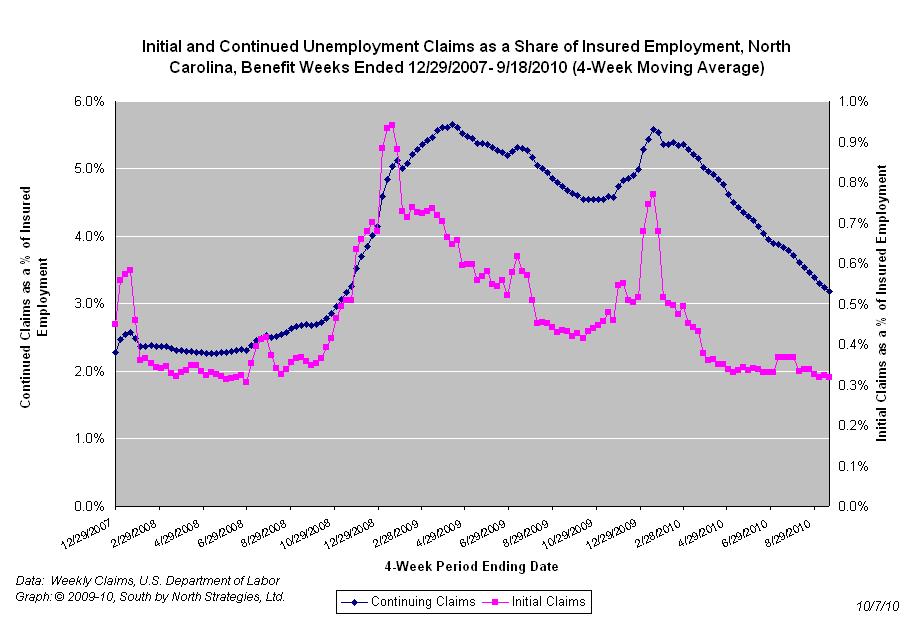
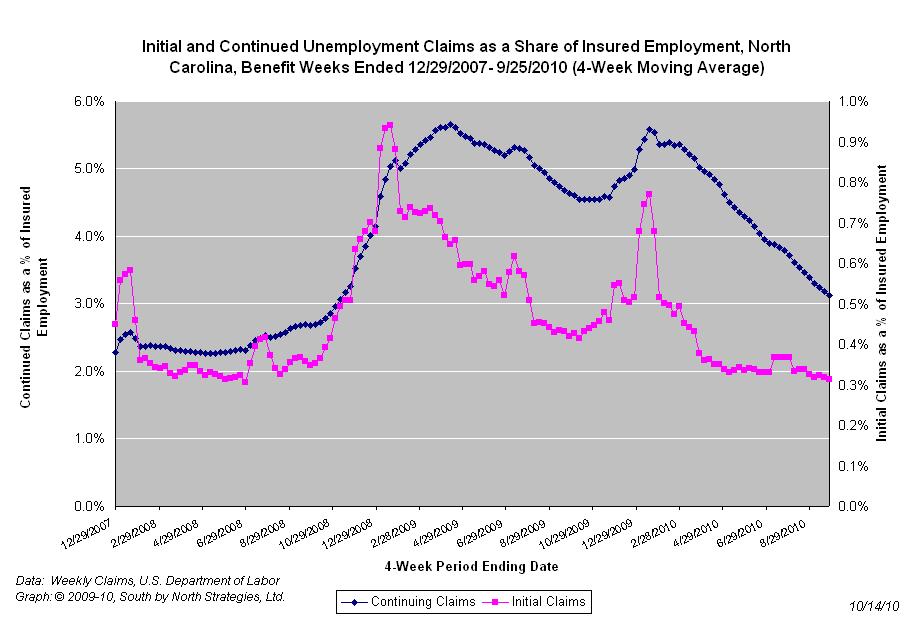
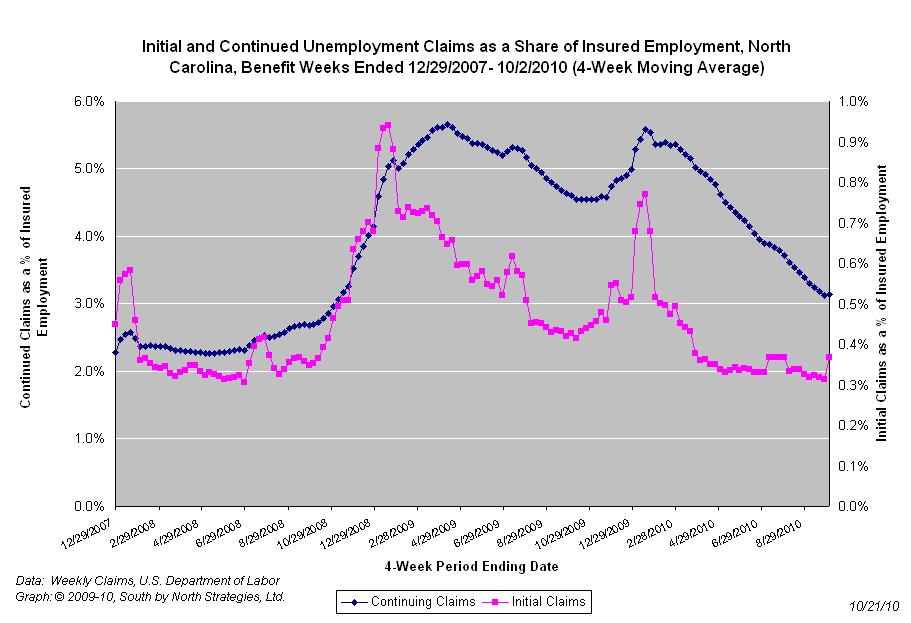
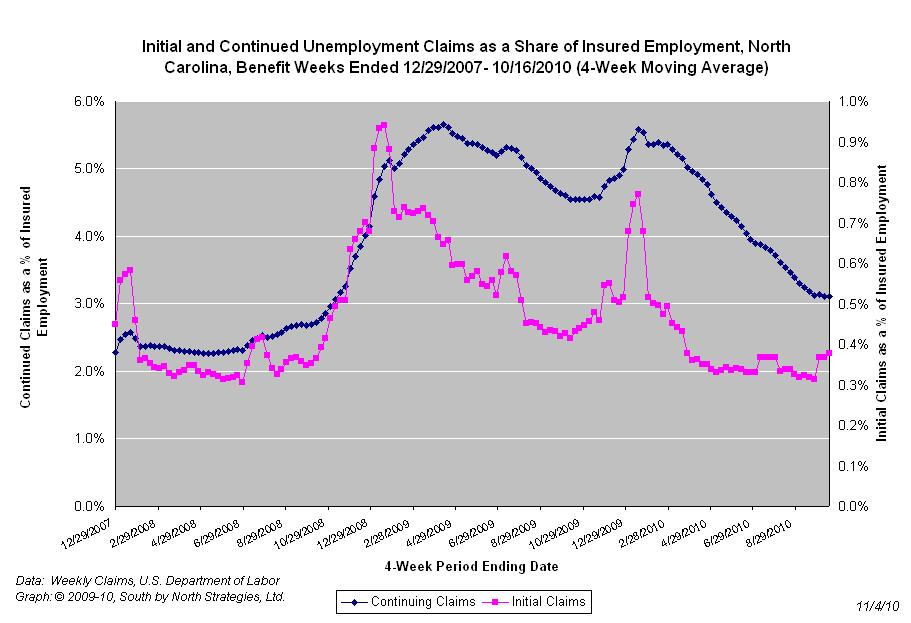
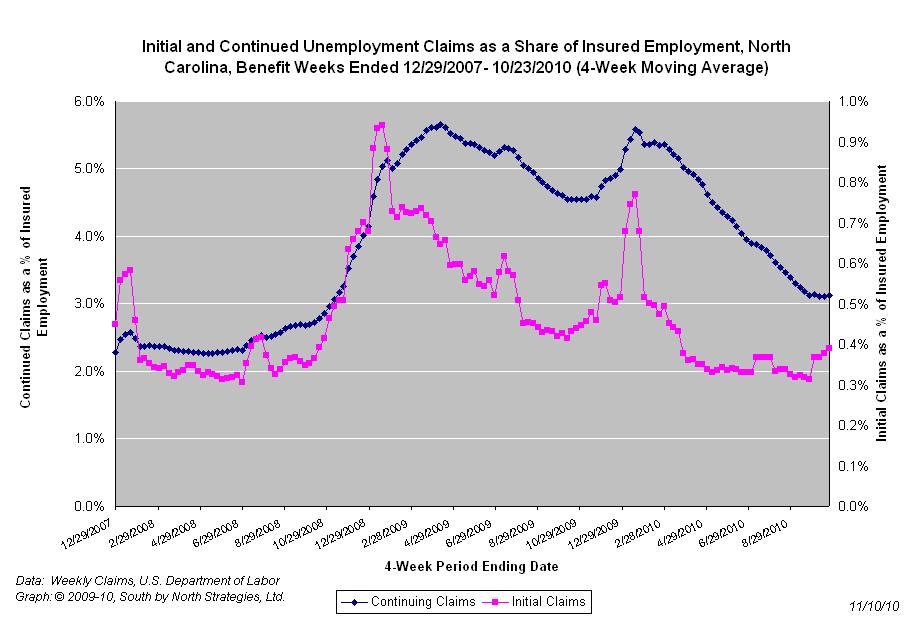
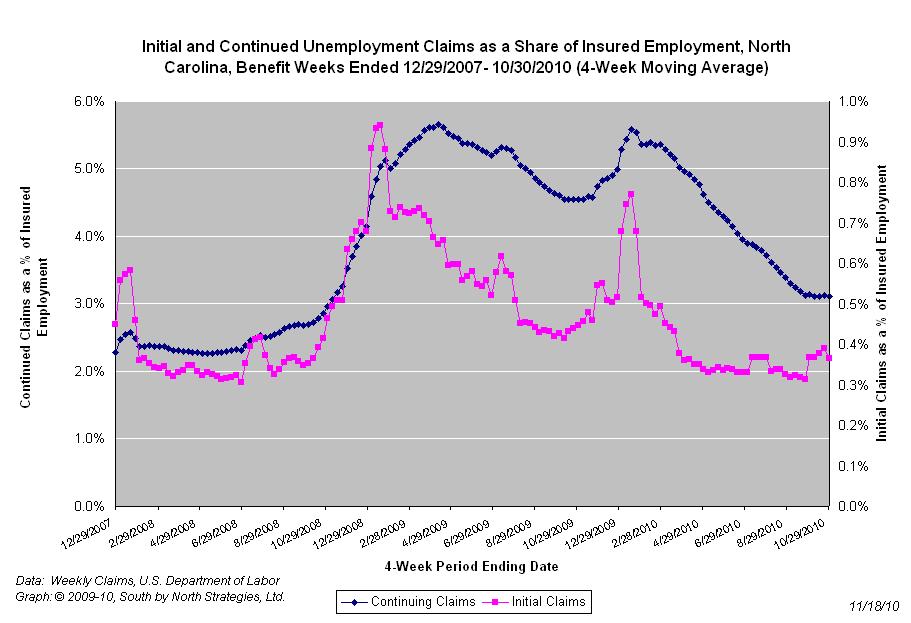
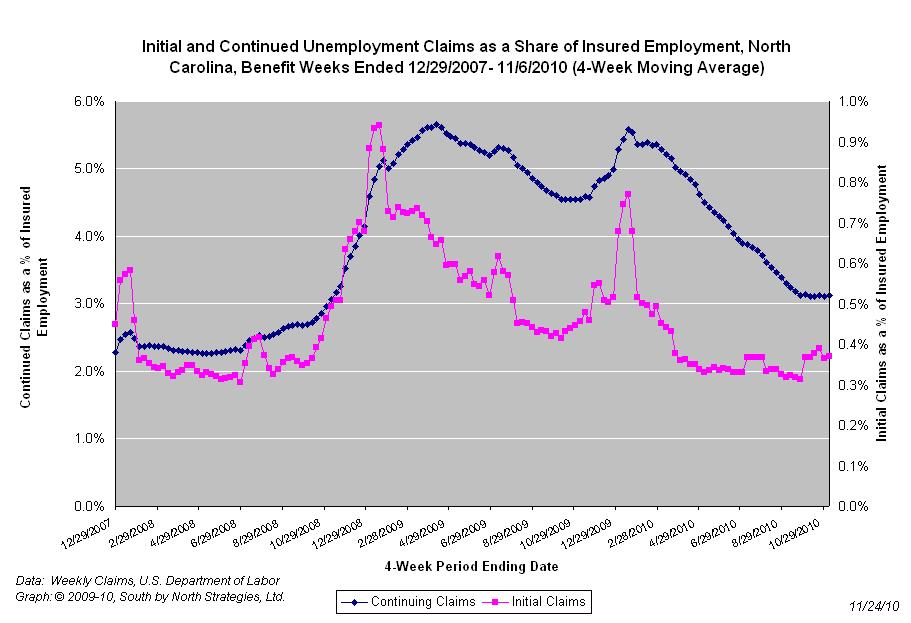
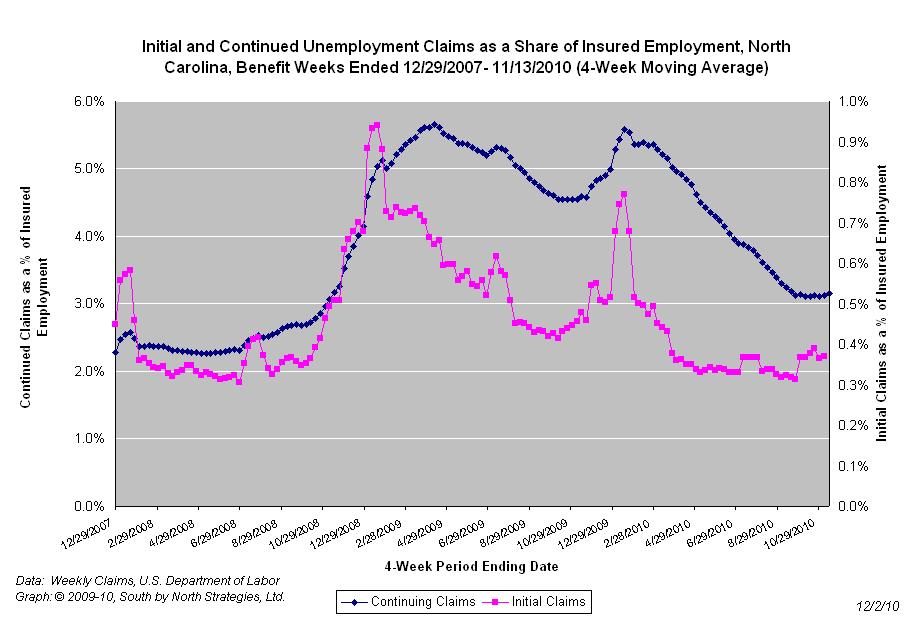
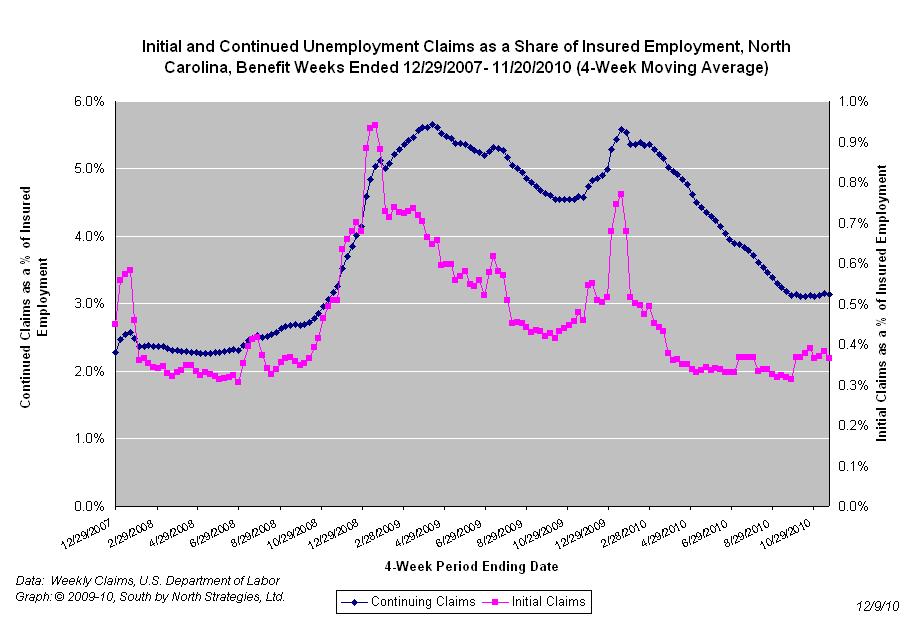
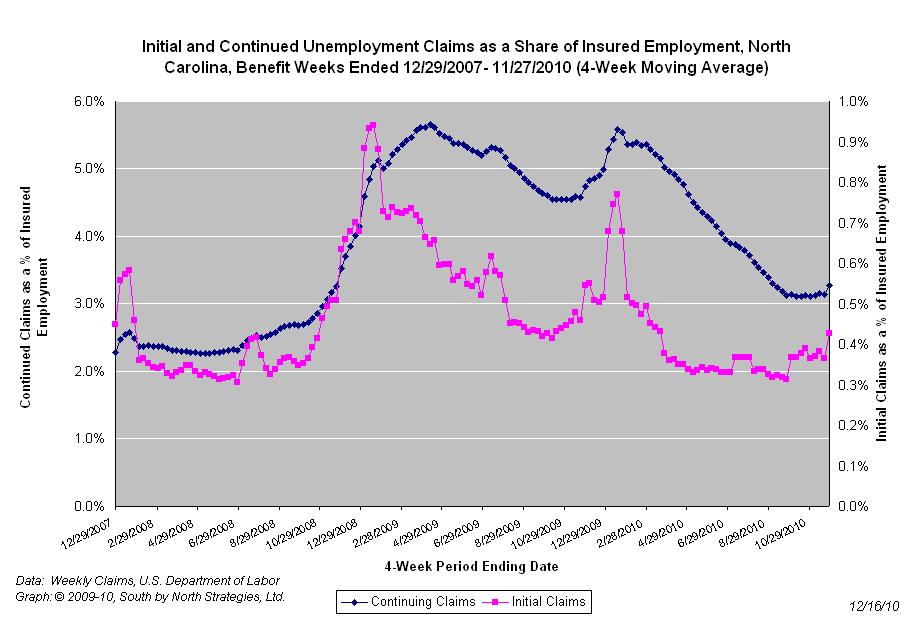
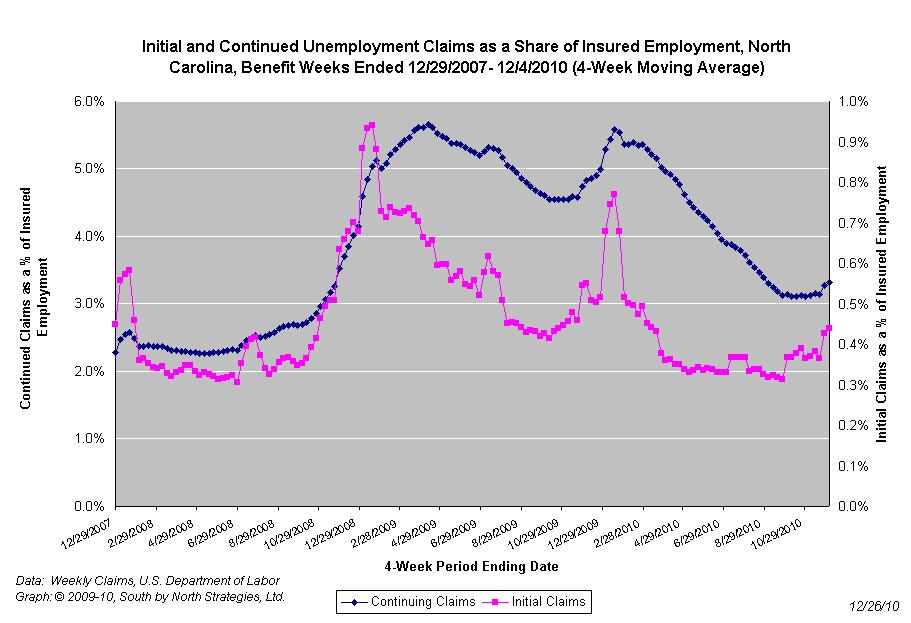
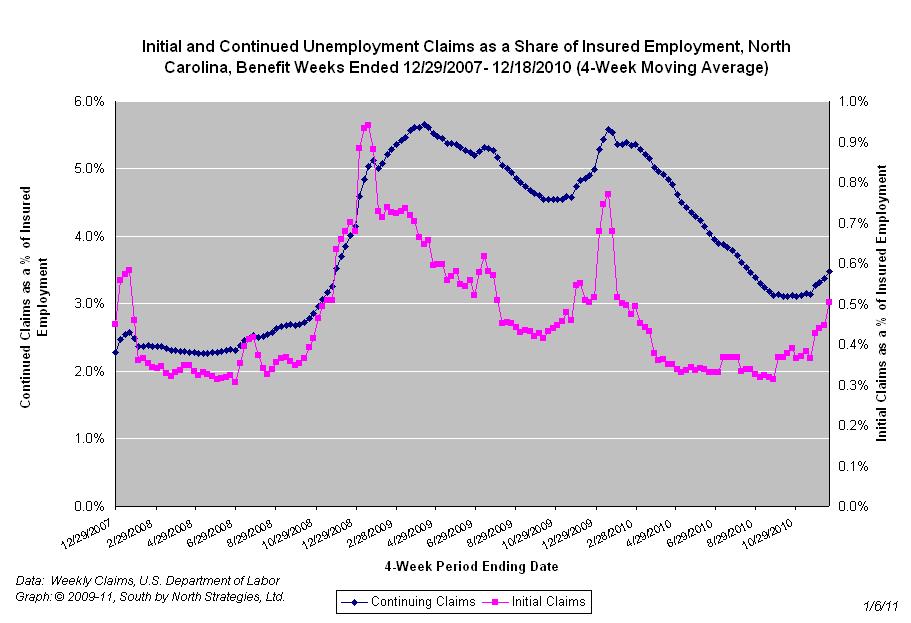
The graph (right) shows the changes in unemployment insurance claims (as a share of covered employment) in North Carolina since the recession’s start in December 2007.
Both new and continuing claims appear to have peaked for this cycle, and the four-week averages of new and continuing claims have fallen considerably. Yet continuing claims remain at an elevated level, which suggests that unemployed individuals are finding it difficult to find new positions. Also, new claims generally have been on the rise since the end of September.
The Opposite of Increasing
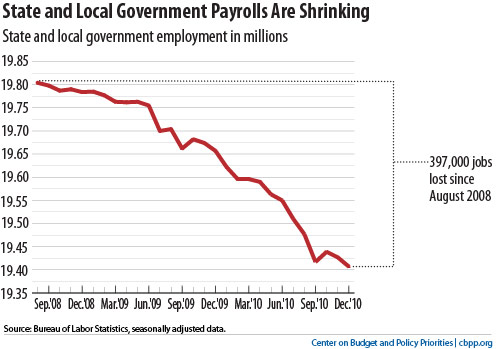
Off The Charts points out that, contrary to popular perceptions, total state and local government employment is falling. In fact, 397,000 state and local government payroll positions (net) have been lost since August 2008. The sector also has posted net job losses in 21 of the last 28 months.
 Email Sign-Up
 RSS Feed