NC Unemployment Claims: Week of 9/18
For the benefit week ending on September 18th, 11,083 North Carolinians filed initial claims for state unemployment insurance benefits, and 115,544 individuals applied for state-funded continuing benefits. Compared to the prior week, there were fewer initial and continuing claims. These figures come from data released by the U.S. Department of Labor.
Averaging new and continuing claims over a four-week period — a process that helps adjust for seasonal fluctuations and better illustrates trends — shows that an average of 12,004 initial claims were filed over the previous four weeks, along with an average of 119,677 continuing claims. Compared to the previous four-week period, there were fewer initial and continuing claims.
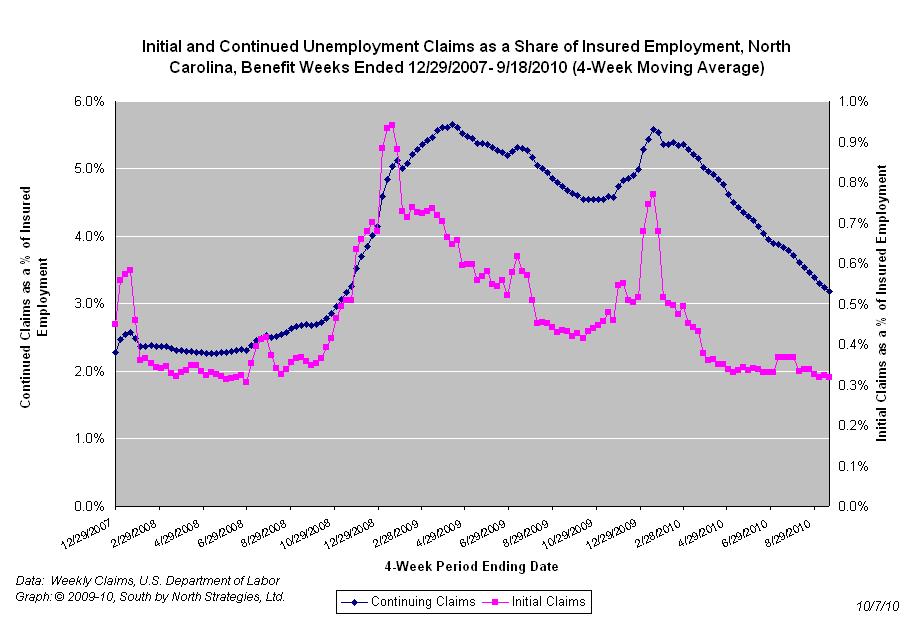 One year ago, the four-week average for initial claims stood at 17,241 and the four-week average of continuing claims equaled 187,377.
While the number of claims has dropped over the past year, so has covered employment. Last week, covered employment totaled 3.8 million, down from 4 million a year ago.
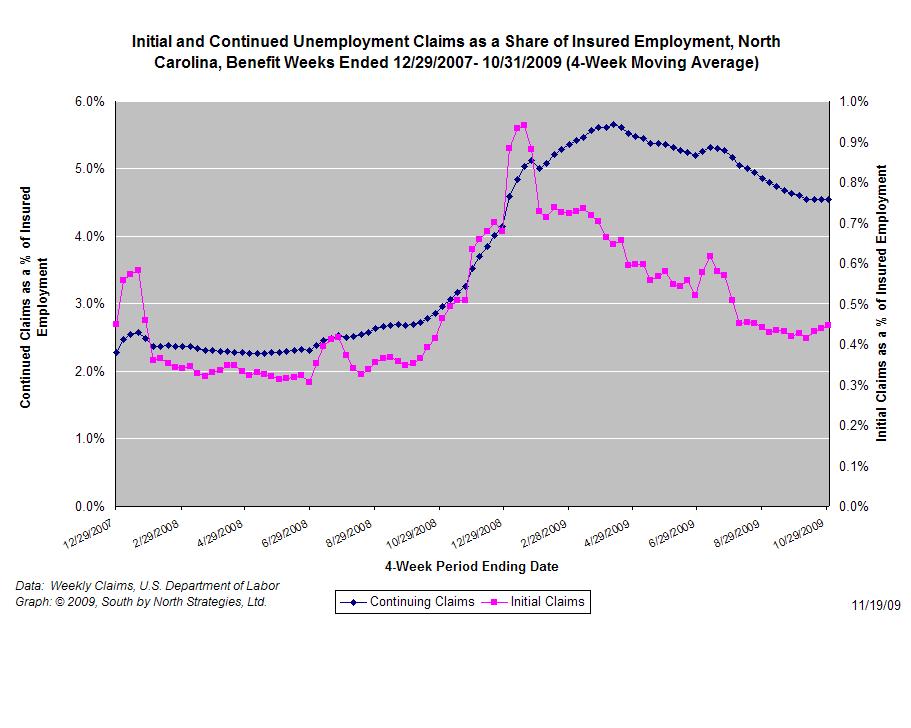
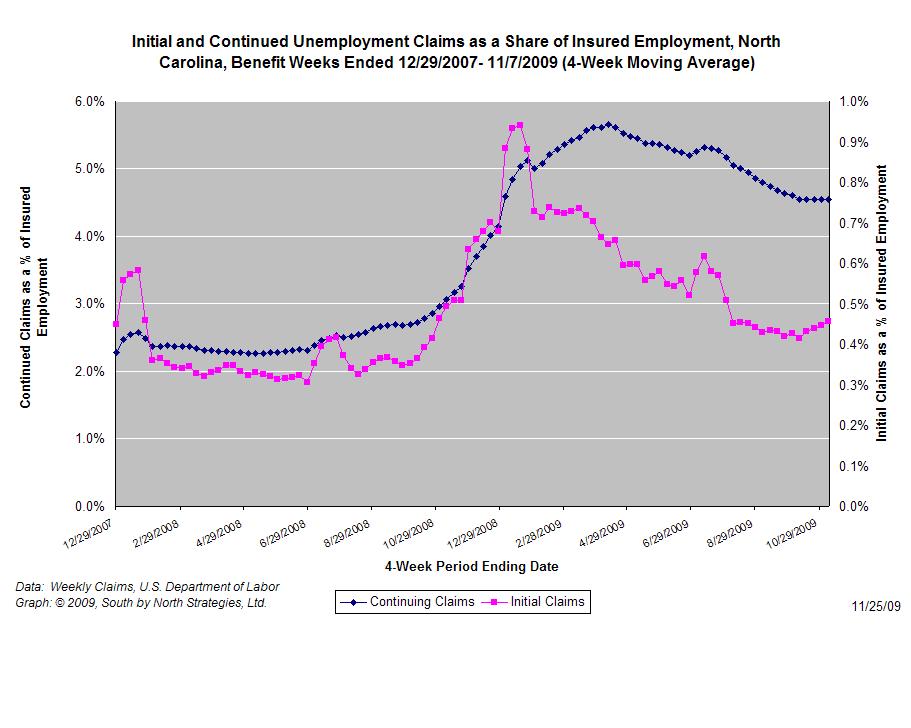
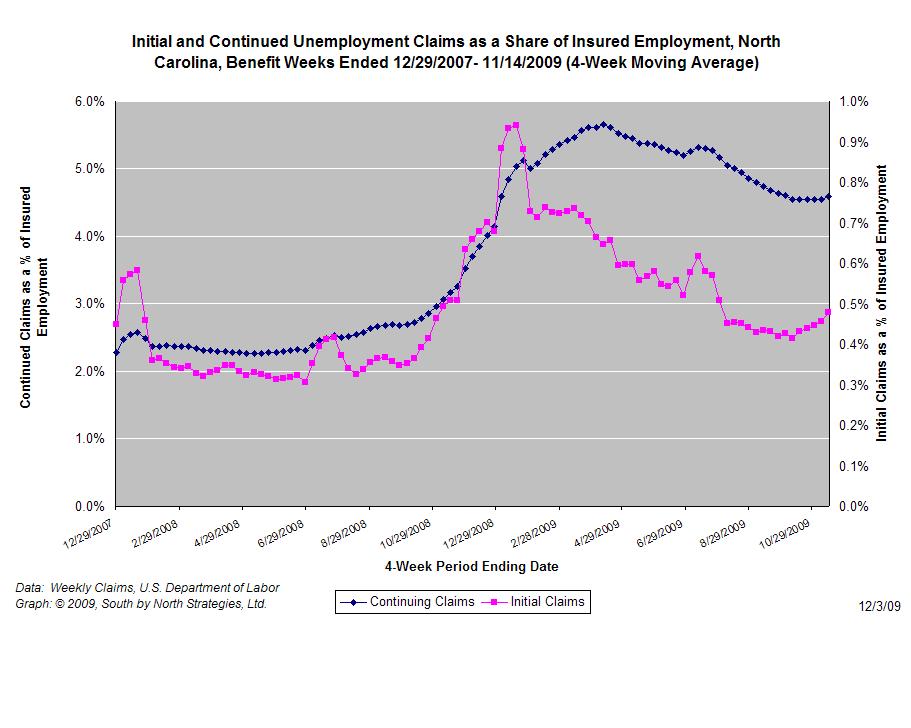
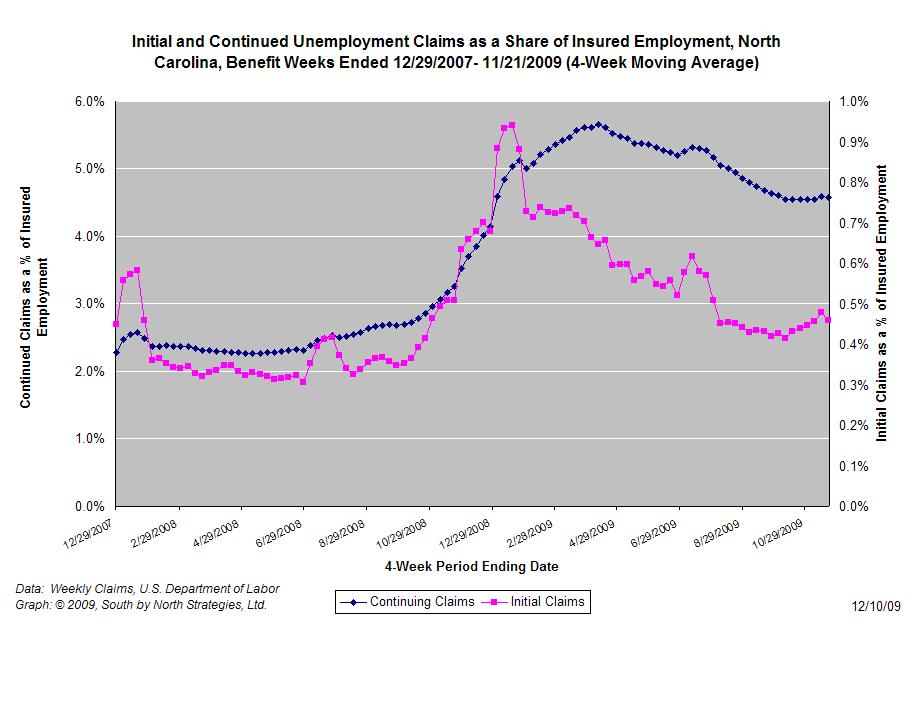
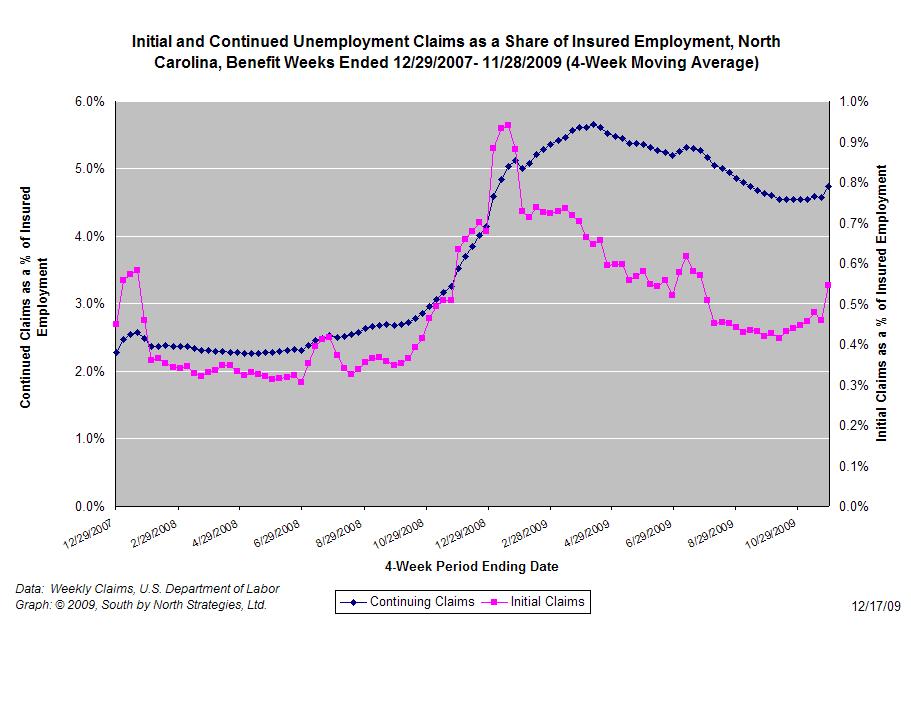
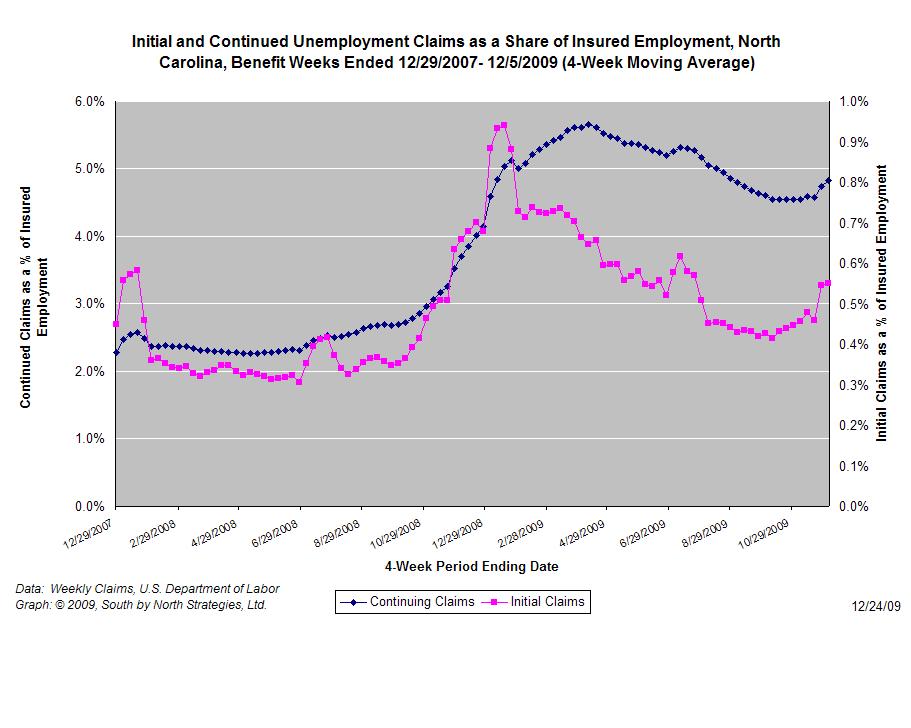
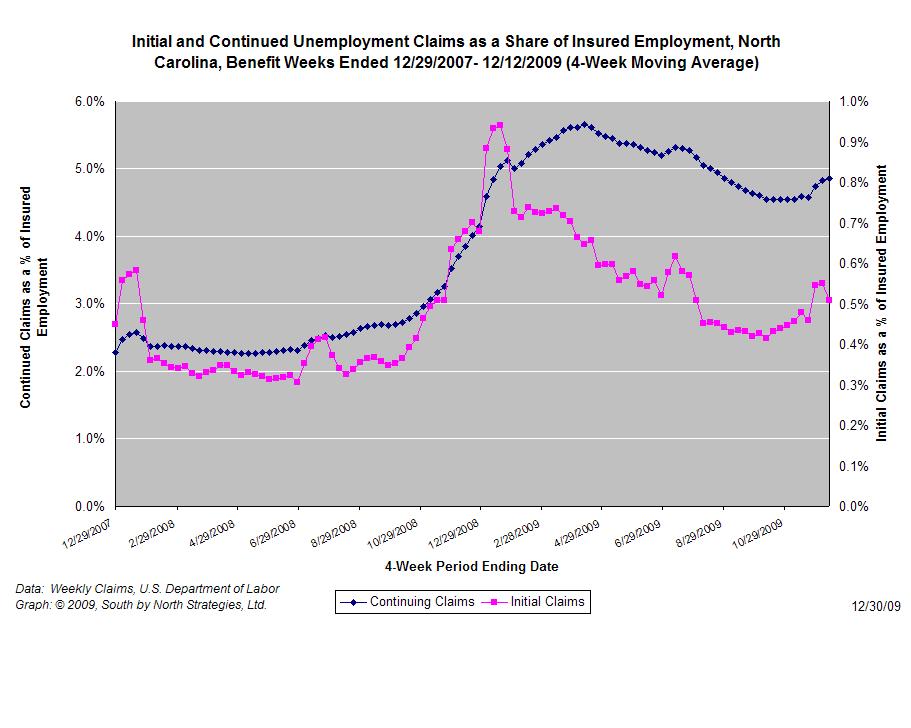
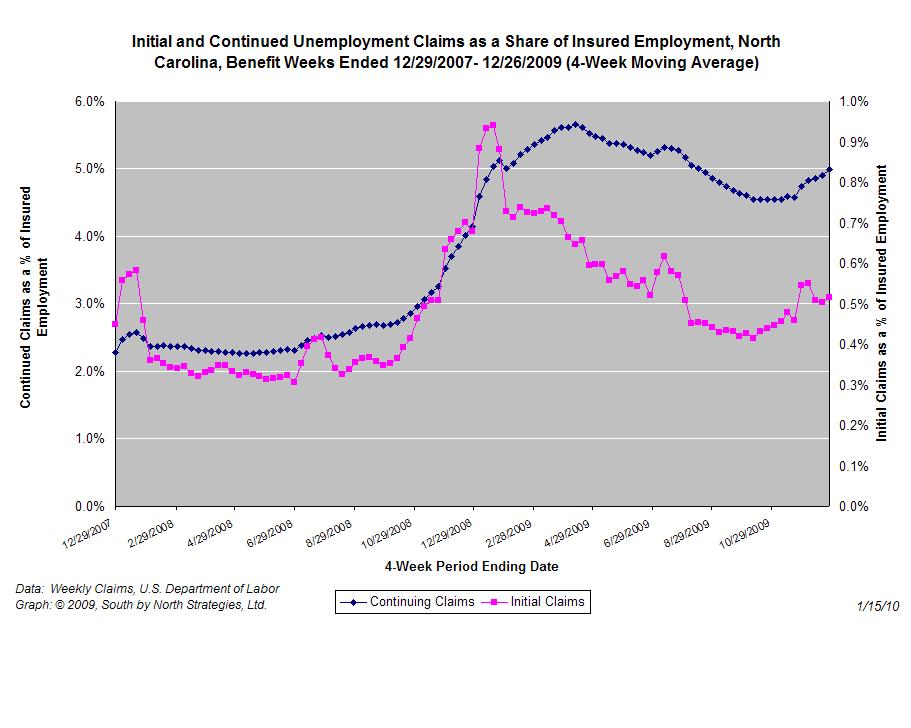
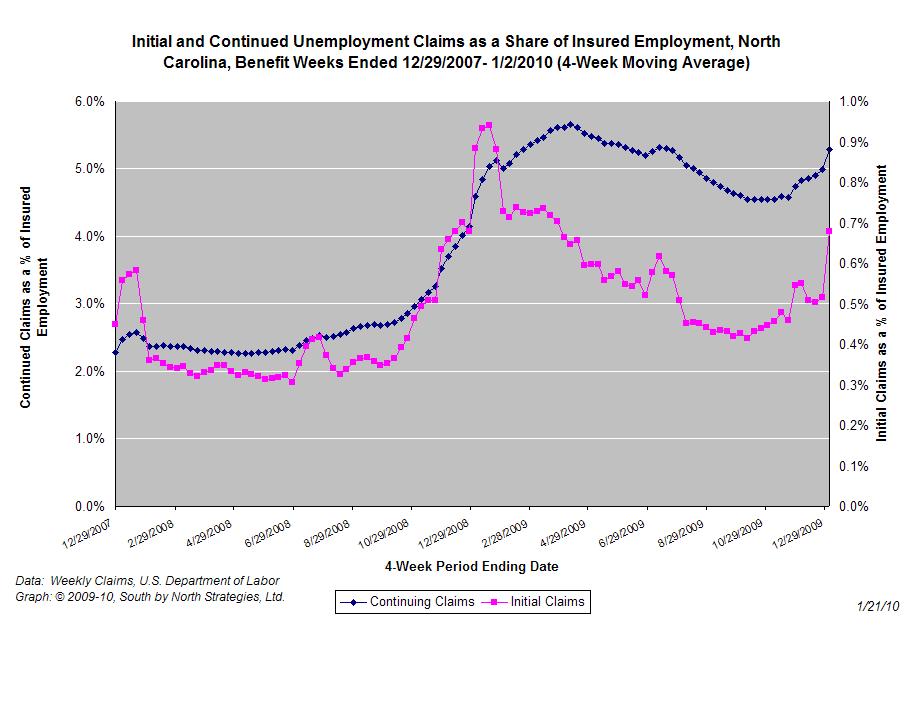
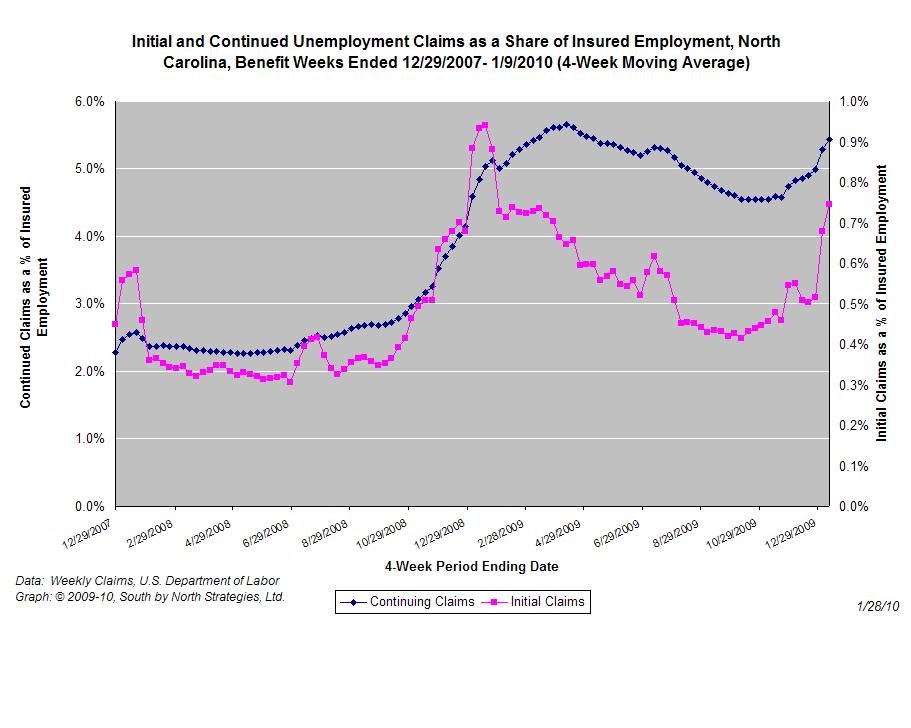
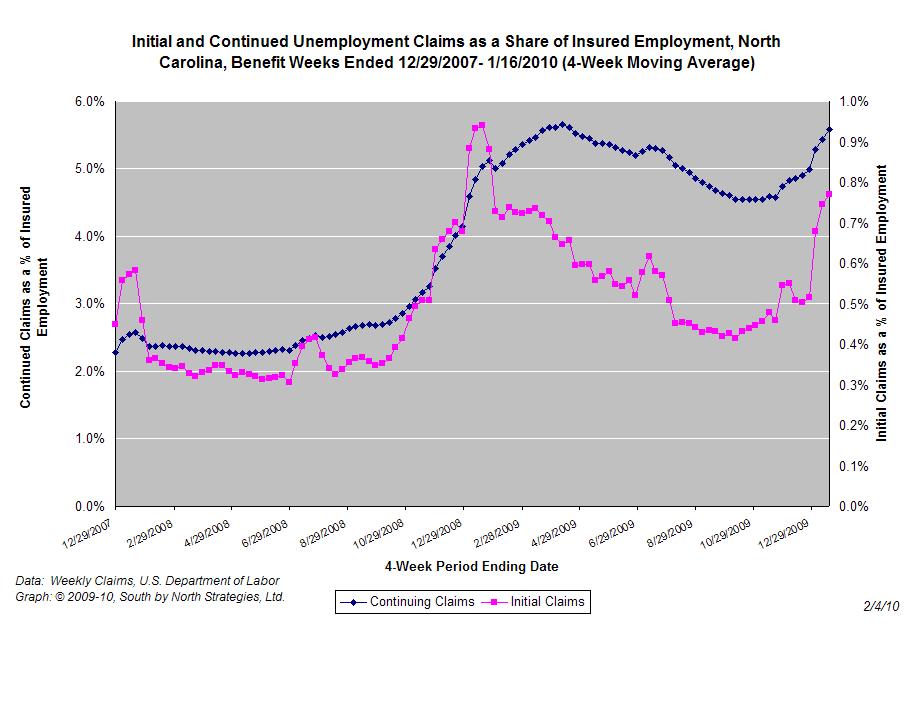
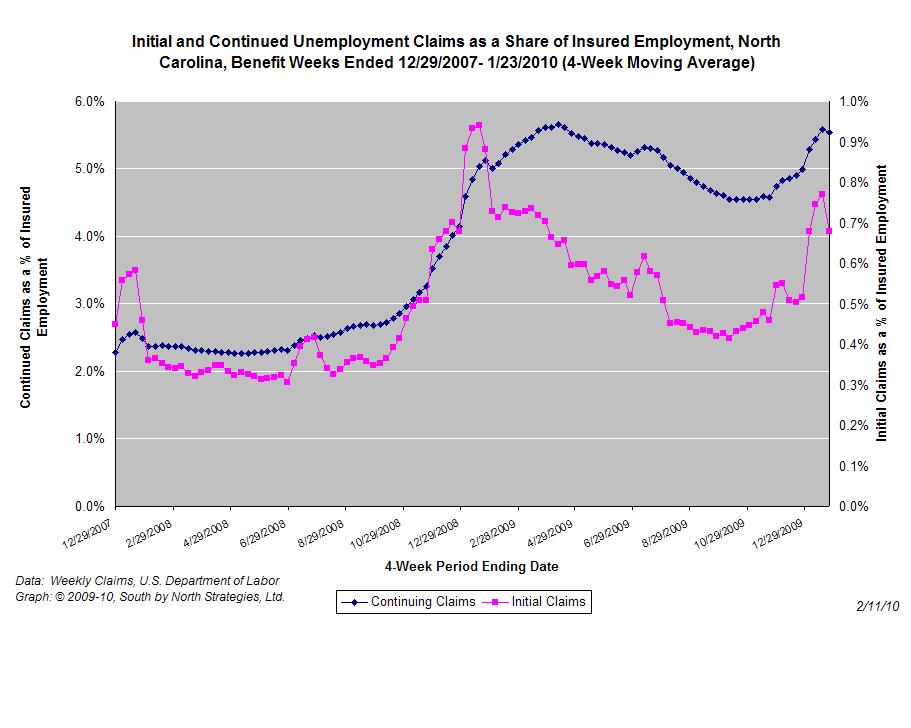
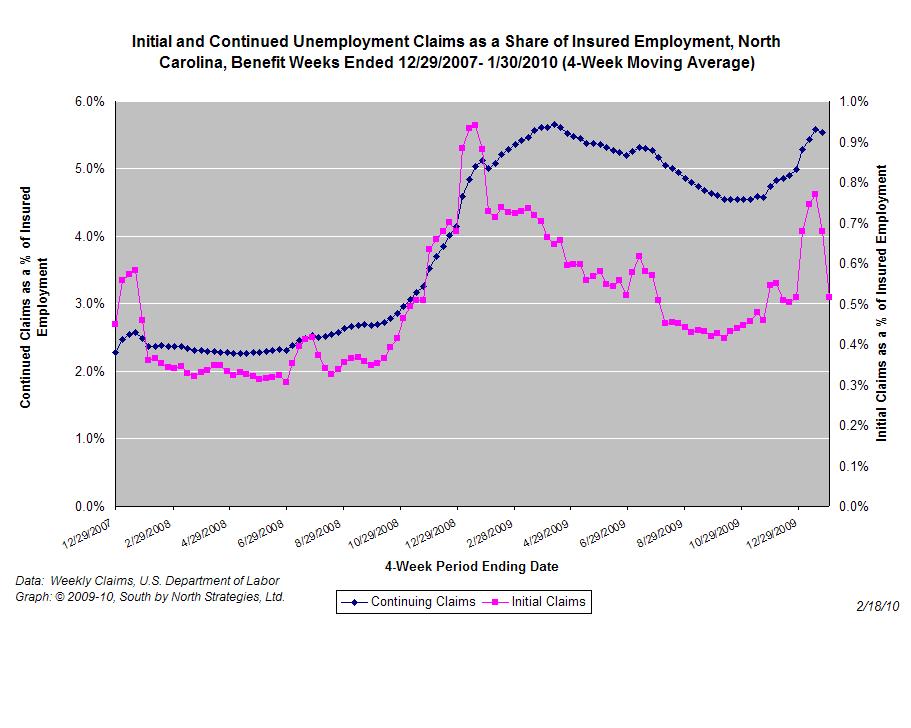
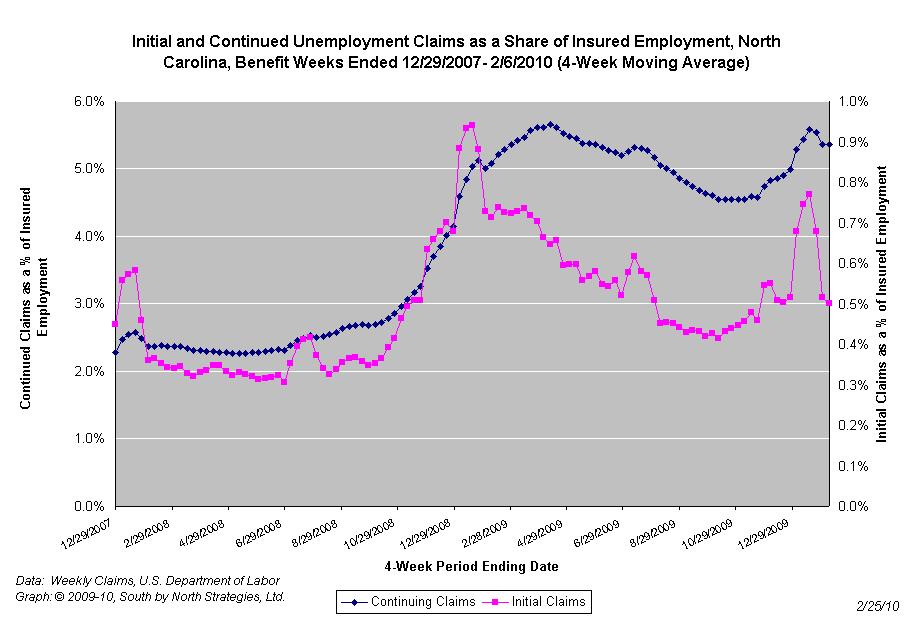
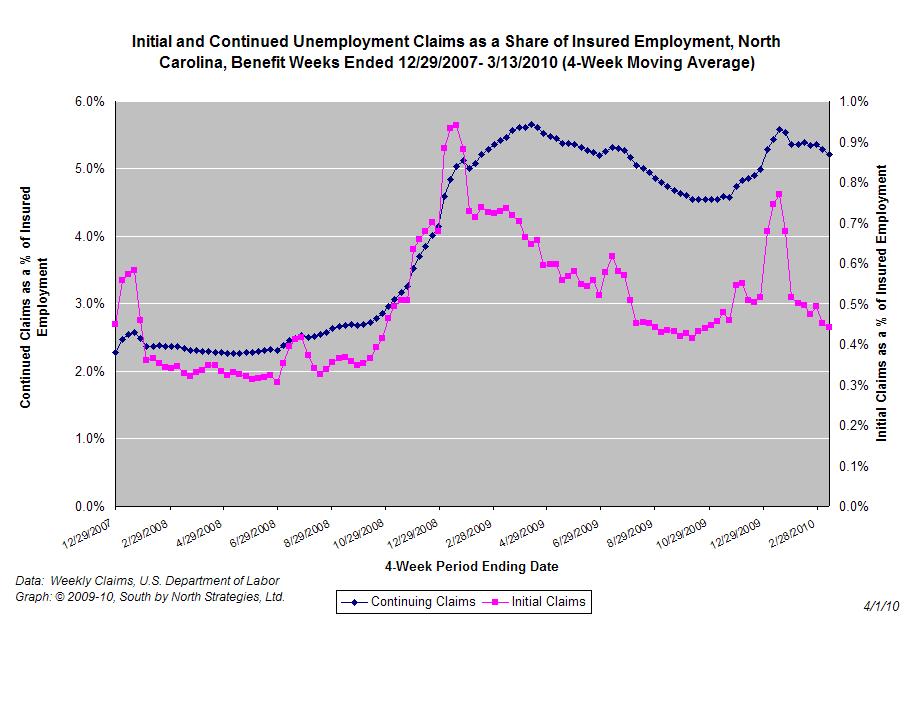
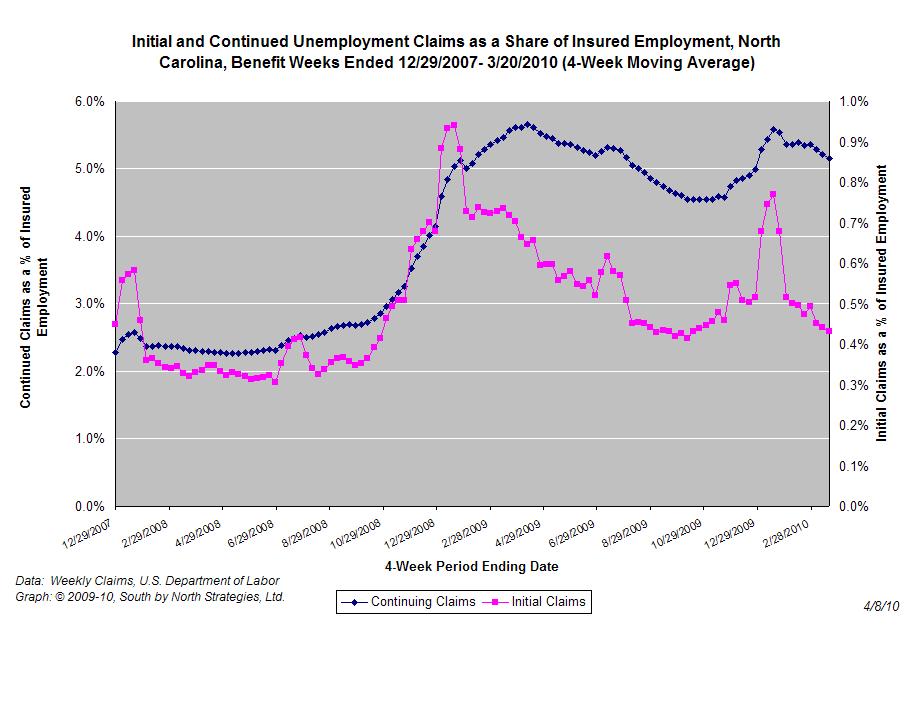
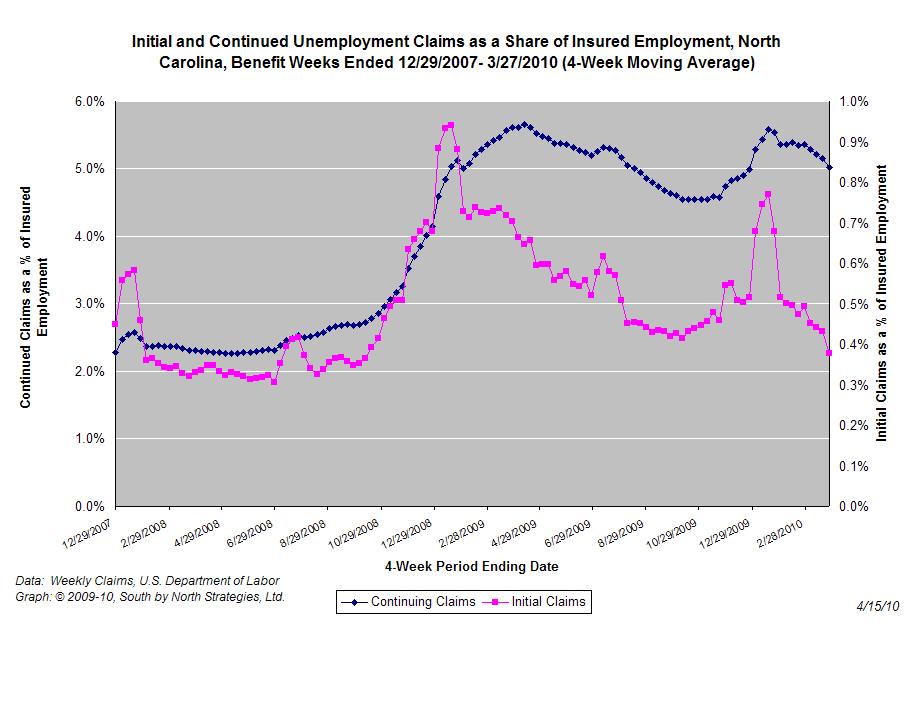
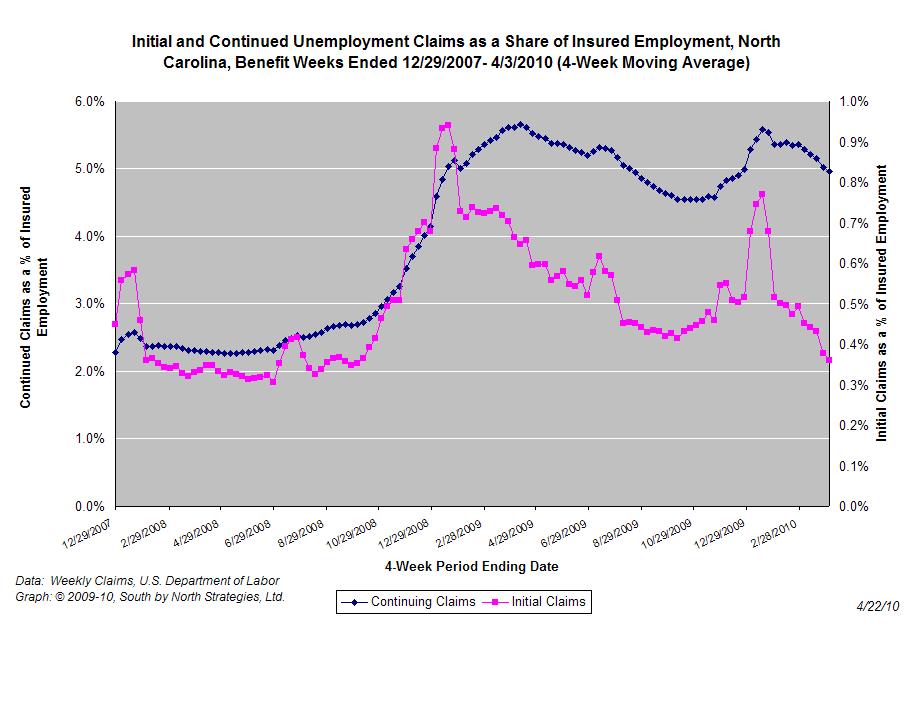
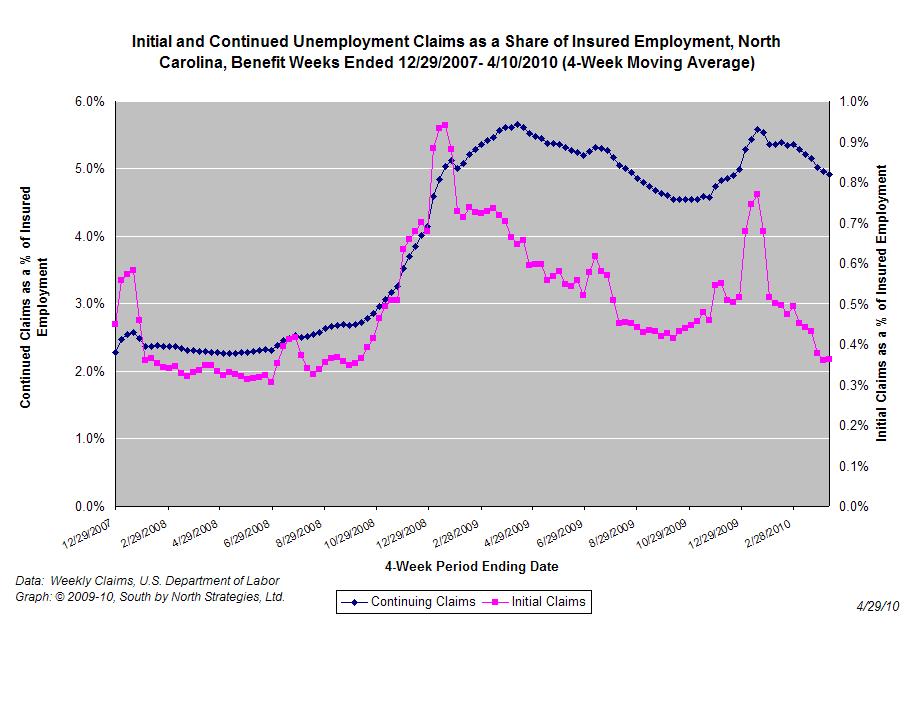
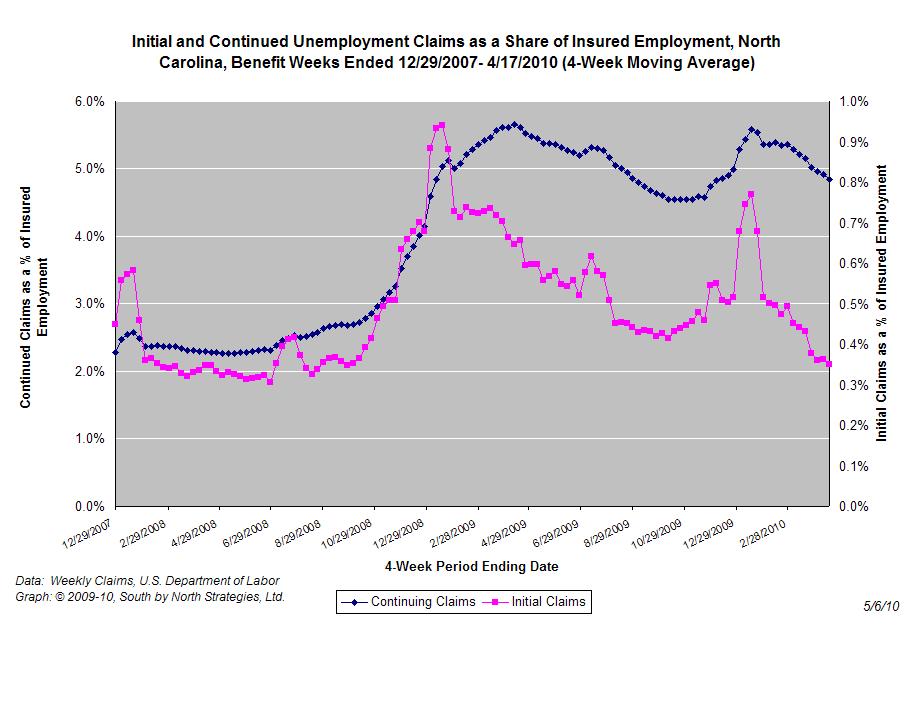
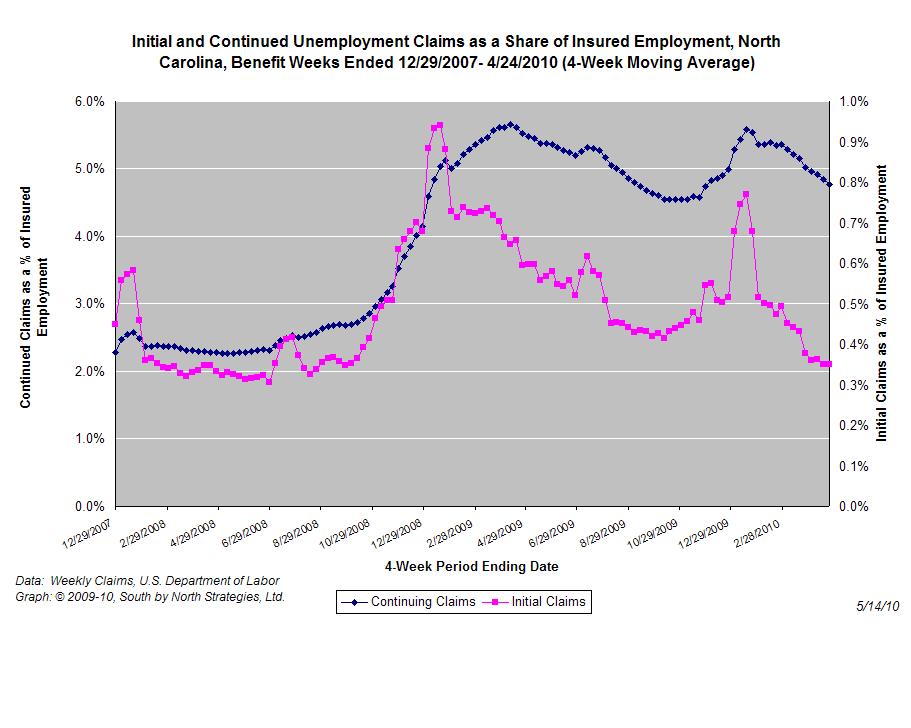
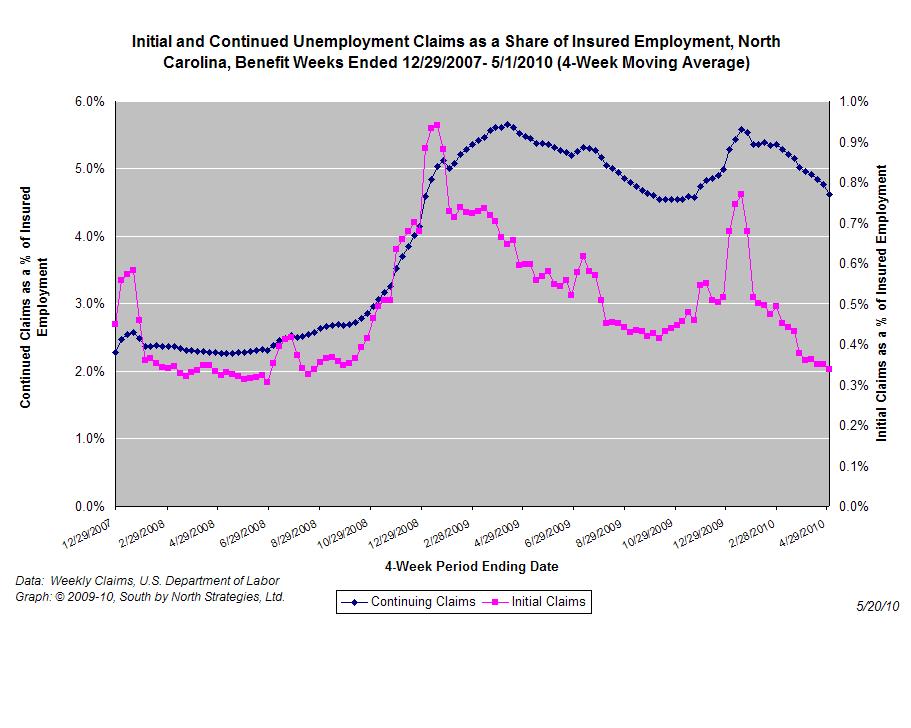
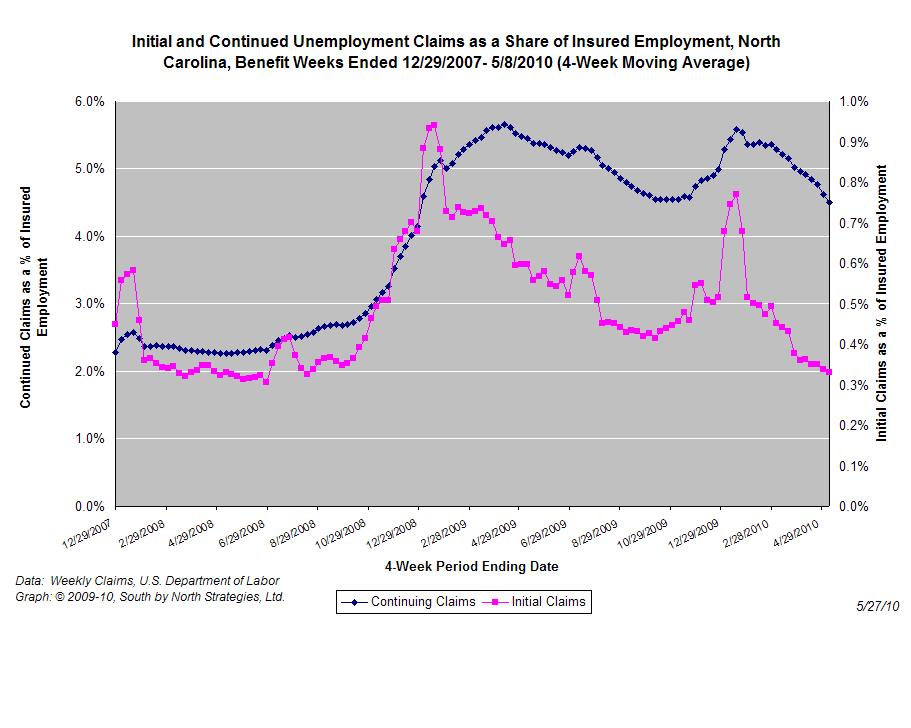
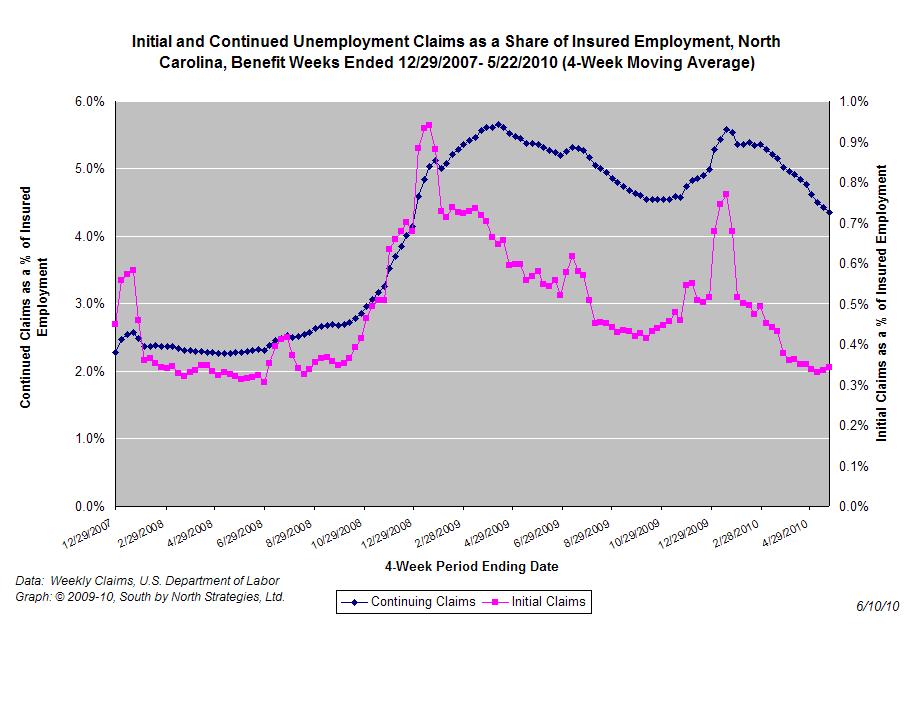
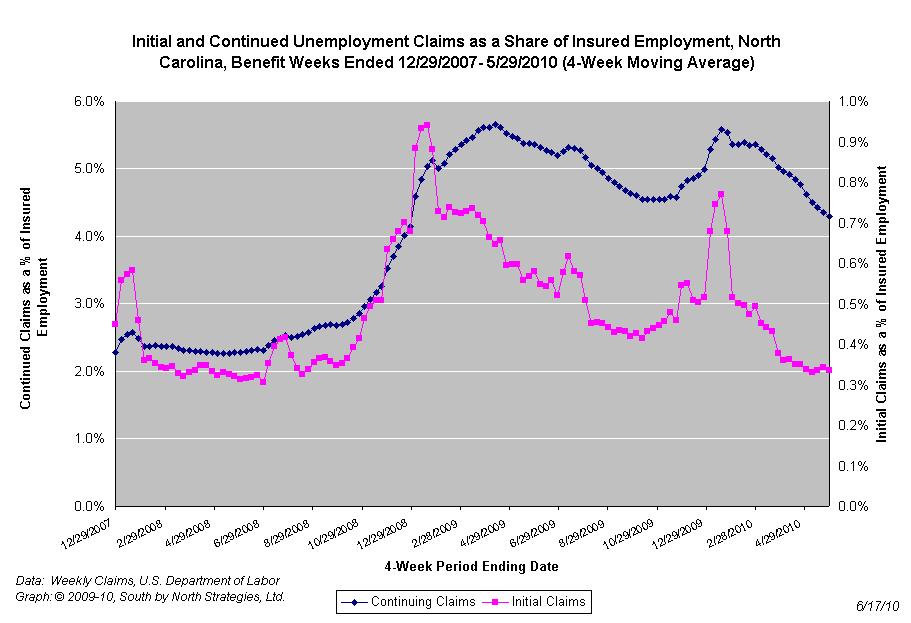
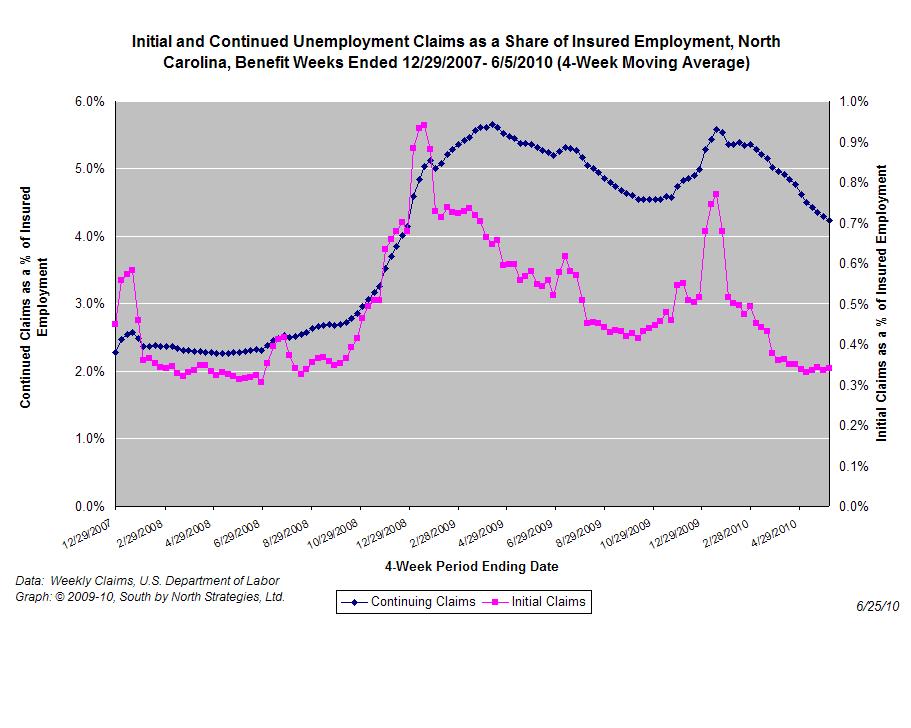
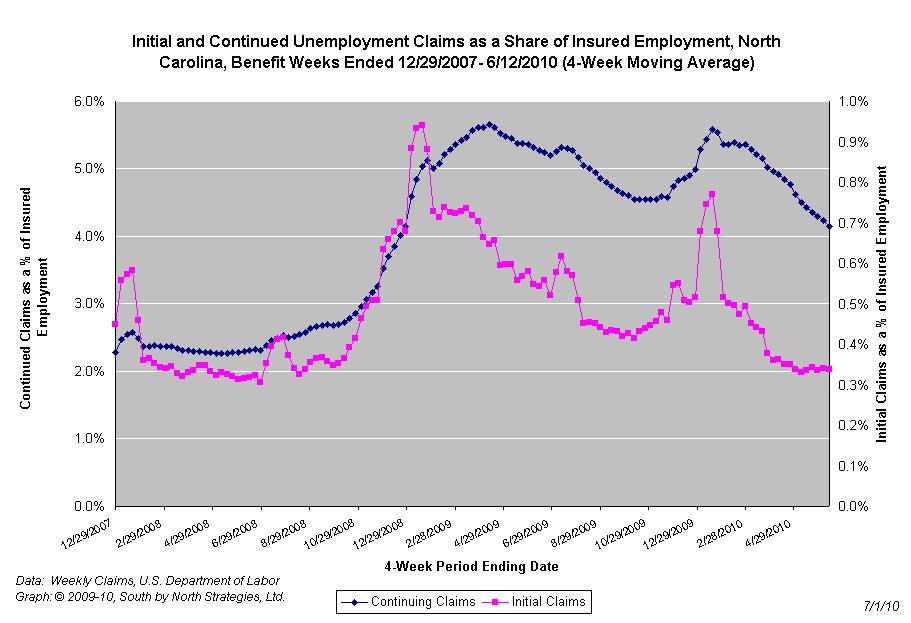
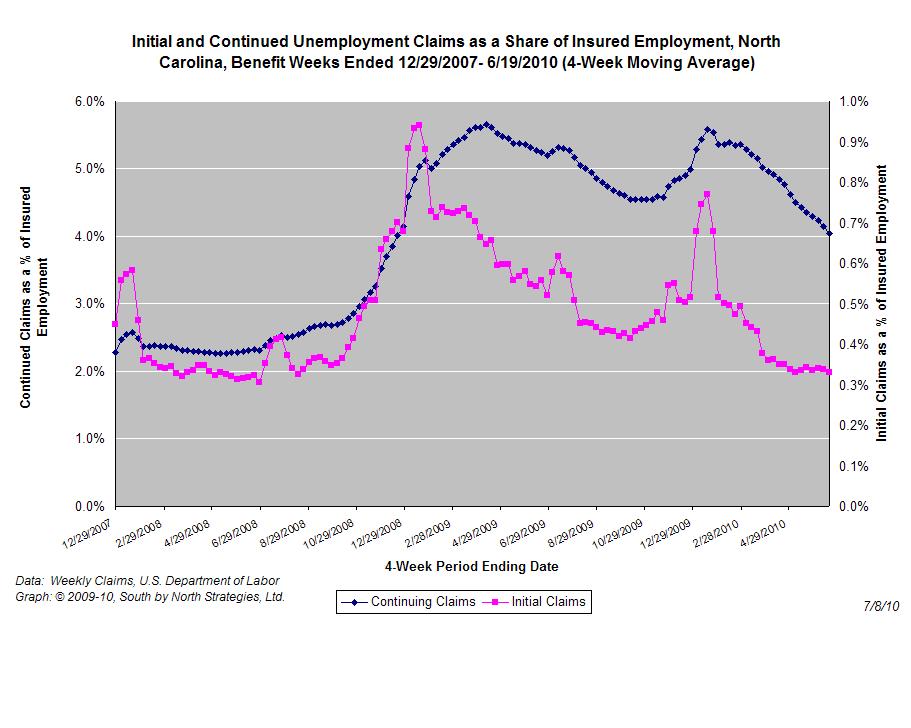
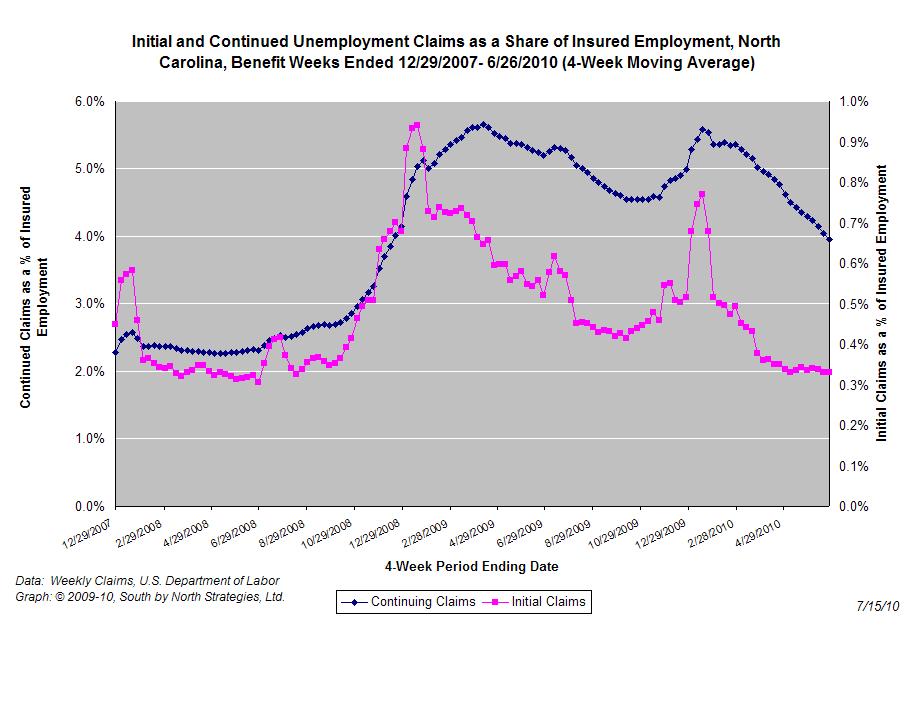
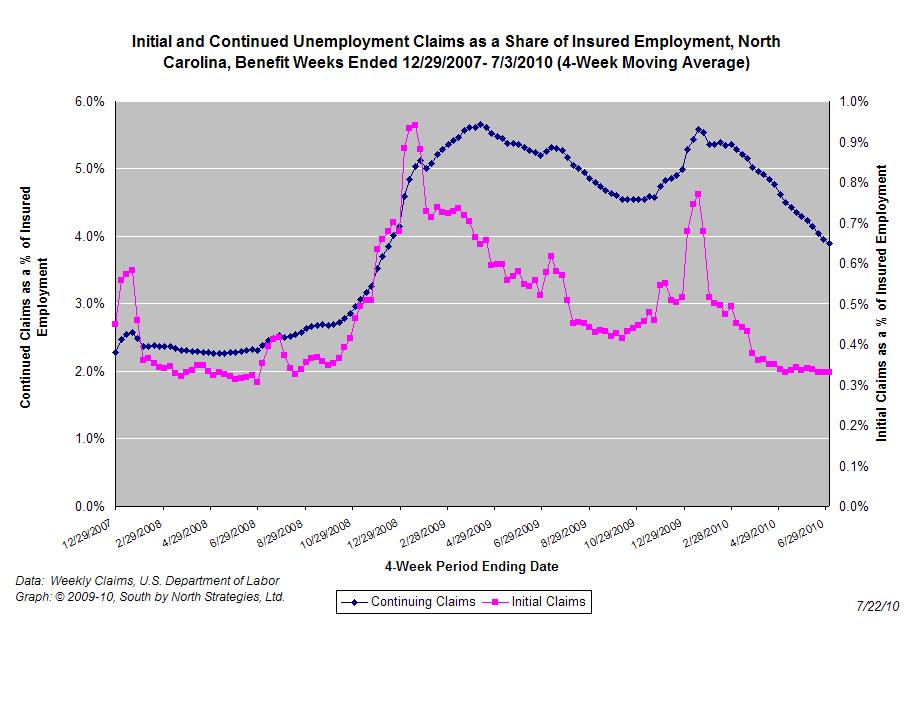
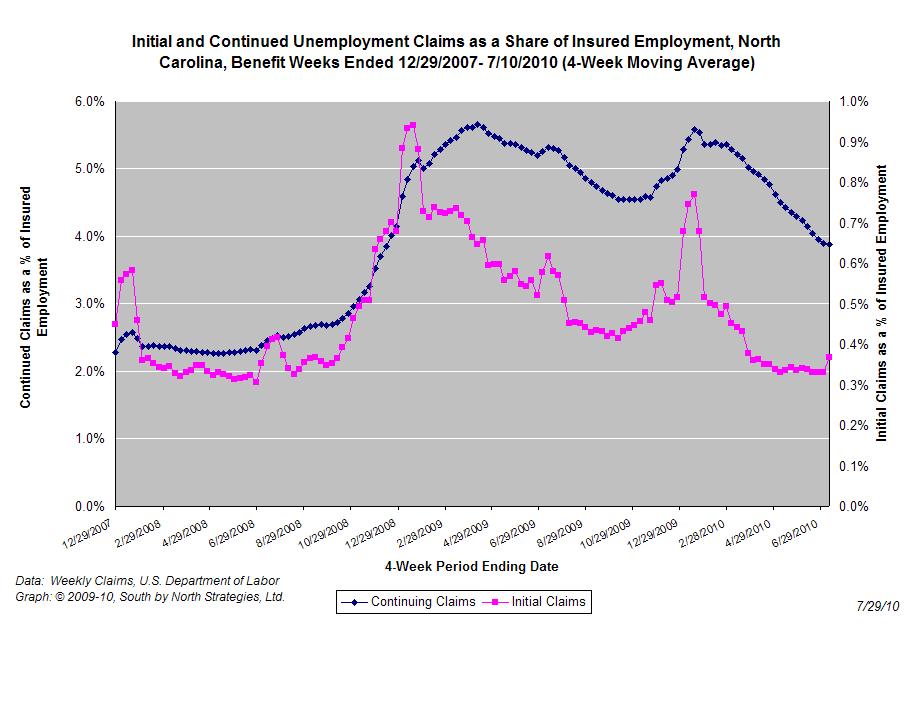
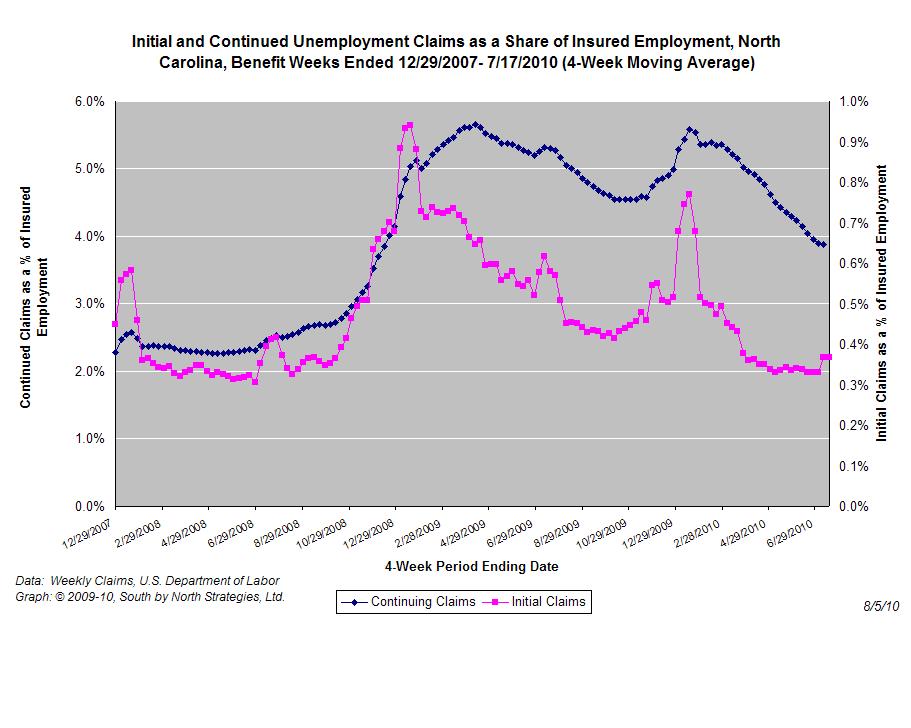
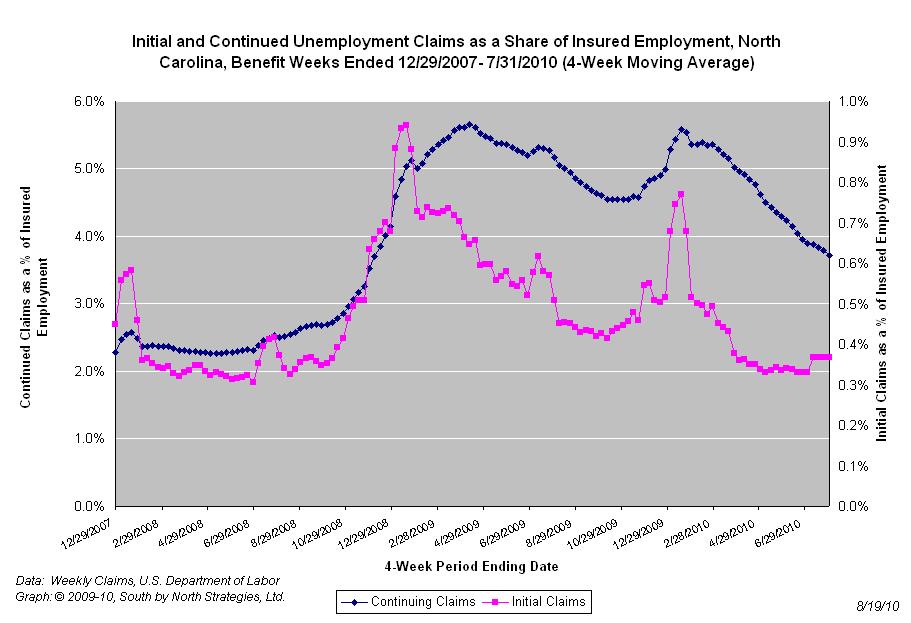
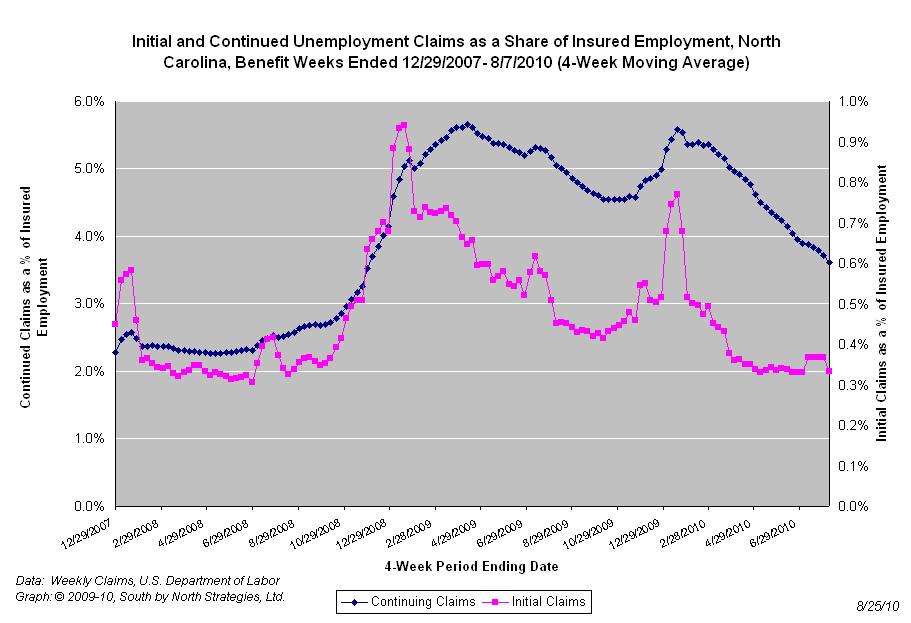
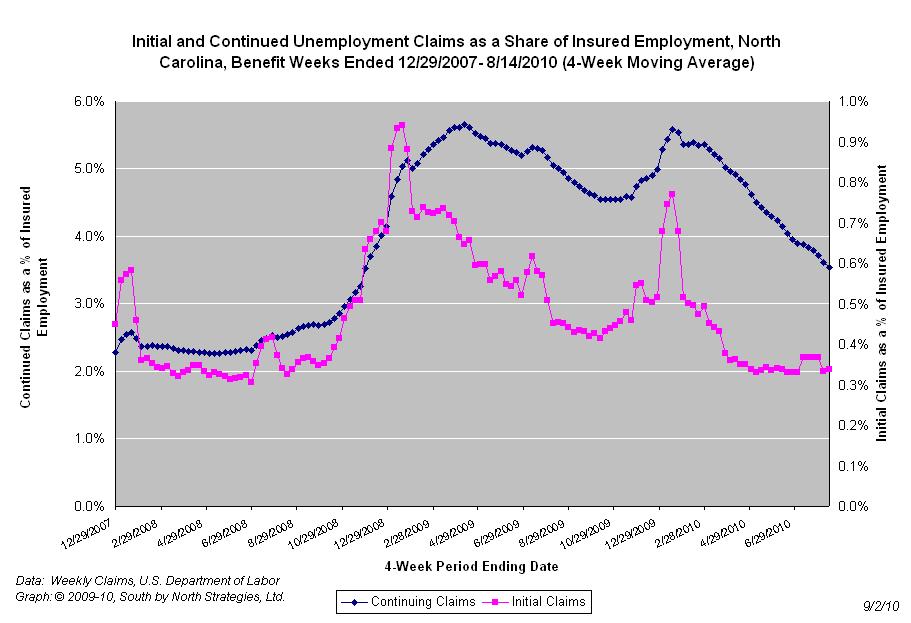
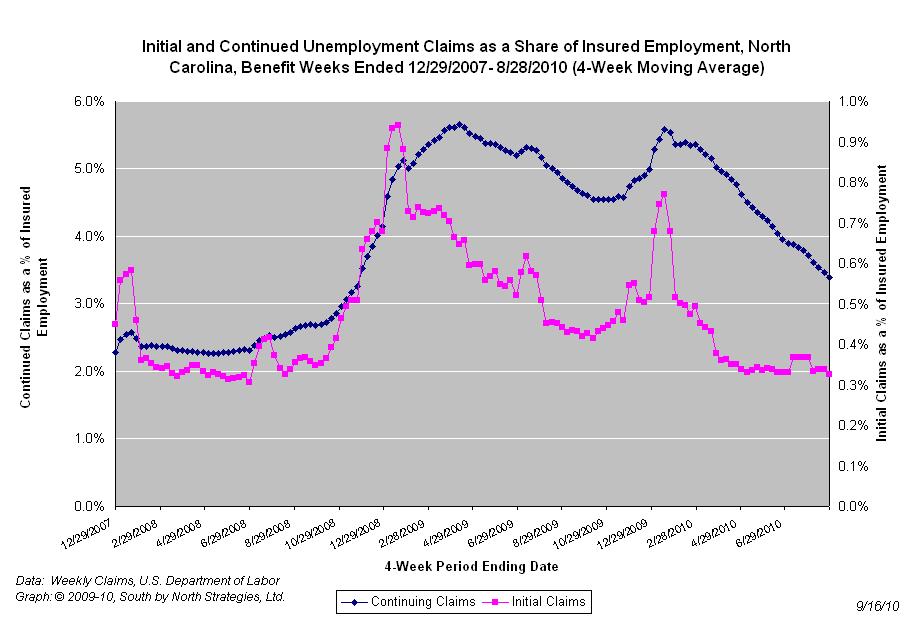
The graph (right) shows the changes in unemployment insurance claims (as a share of covered employment) in North Carolina since the recession’s start in December 2007.
Both new and continuing claims appear to have peaked for this business cycle, and the four-week averages of new and continuing claims have fallen considerably. Yet continuing claims remain at an elevated level, which suggests that unemployed individuals are finding it difficult to find new positions.
Also, little change has occurred within recent months. Since April 2010, the four-week average of initial claims consistently has ranged between 13,987 and 11,800.
The Way Forward
George Soros shares some thoughts about how American economic policy should move forward.
I believe that there is a strong case for further stimulus. Admittedly, consumption cannot be sustained indefinitely by running up the national debt; the imbalance between consumption and investment must be corrected. But to cut government spending at a time of large-scale unemployment would be to ignore the lessons of history.
…
The obvious solution is to distinguish between investments and current consumption, and increase the former while reducing the latter. But that seems politically untenable. Most Americans are convinced that government is incapable of efficiently managing investments aimed at improving the country’s physical and human capital.
—
Moreover, the simple truth is that the private sector is not employing available resources. Obama has been very friendly to business, and corporations are operating very profitably. But, instead of investing, they are building up liquidity. Perhaps a Republican victory will boost their confidence, but in the meantime investment and employment require fiscal stimulus (monetary stimulus, by contrast, would be more likely to stimulate corporations to devour each other than to hire workers).
Around The Dial – October 6
Economic policy reports, blog postings, and media stories of interest:
- The New York Times reports on high-speed rail projects.
- The Wall Street Journal discusses corporate tax changes.
- The Washington Post looks at the U.S.’s failing infrastructure.
- The Economist debates the risks of a long-period of stagnation.
- David Leonhardt writes about the uneven road to insurance reform.
Service Activity In The South Atlantic: Sept.
From the Federal Reserve Bank of Richmond’s latest survey of service-sector activity in the South Atlantic (District of Columbia, Maryland, North Carolina, South Carolina, Virginia and West Virginia):
Activity in the service sector remained weak in September, according to the latest survey by the Federal Reserve Bank of Richmond. A steep drop in big-ticket sales weighed down total retail sales, and shopper traffic continued to decline this month. Retail inventory depletion slowed, compared to a month ago. Revenues also contracted at non-retail services firms. Looking ahead six months, however, retailers expected demand for goods to pick up, and services providers anticipated solid demand for their services.
…
In labor markets, retail merchants and services providers trimmed their payrolls. Average wage growth advanced moderately across the sector.
…
Compared to a month ago, price growth slowed overall in the broad service sector, with a mild acceleration at retail establishments, while price change was virtually flat at services-providing firms.
Around The Dial – October 5
Economic policy reports, blog postings, and media stories of interest:
- Paul Krugman on how “the other half thinks.”
- Macroblog wonders what QE2 might mean for long-term interest rates.
- Economix wonders what Keynes would say.
- The Financial Times reports on the politics of TARP.
 Email Sign-Up
 RSS Feed