Around The Dial – October 1
Economic policy reports, blog postings, and media stories of interest:
- Which do we have – elite colleges or colleges for the elite?
- The National Skills Coalition tells a tale of two economies.
- Diane Ravitch warns against “trashing teachers.”
- Brad DeLong explains “economics for parrots.”
- Off the Charts breaks down the latest GDP revision.
Poverty In North Carolina
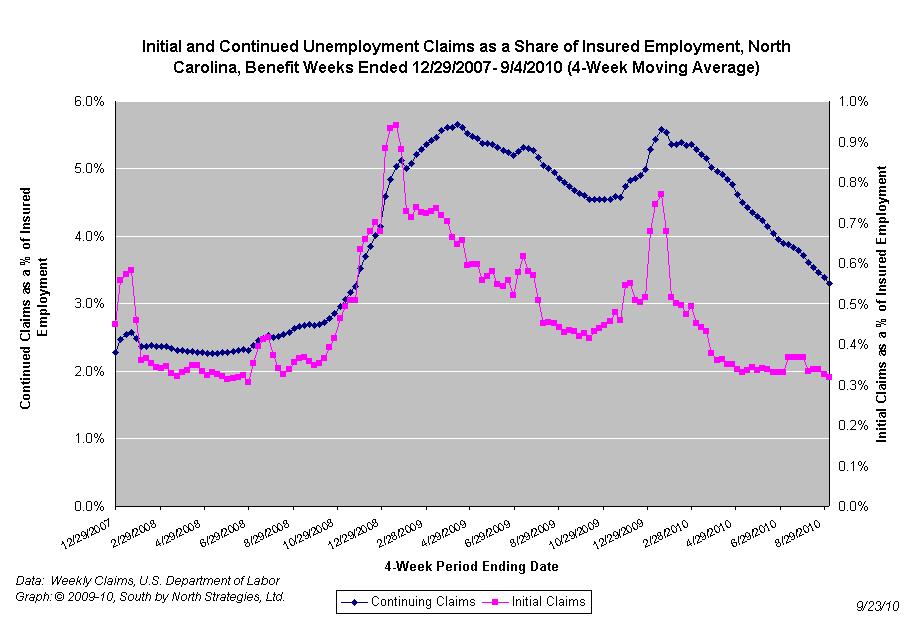
A new report from the N.C. Budget and Tax Center documents the rise in statewide poverty that has occurred between 2007 and 2009. The table below summarizes key data for the state and its most-populous counties.
NC Unemployment Claims: Week of 9/11
For the benefit week ending on September 11th, 13,161 North Carolinians filed initial claims for state unemployment insurance benefits, and 120,719 individuals applied for state-funded continuing benefits. Compared to the prior week, there were more initial and continuing claims. These figures come from new data released by the U.S. Department of Labor.
Averaging new and continuing claims over a four-week period — a process that helps adjust for seasonal fluctuations and better illustrates trends — shows that an average of 12,184 initial claims were filed over the previous four weeks, along with an average of 122,245 continuing claims. Compared to the previous four-week period, there were more initial and fewer continuing claims.
 One year ago, the four-week average for initial claims stood at 17,350 and the four-week average of continuing claims equaled 189,656.
While the number of claims has dropped over the past year, so has covered employment. Last week, covered employment totaled 3.8 million, down from 4 million a year ago.
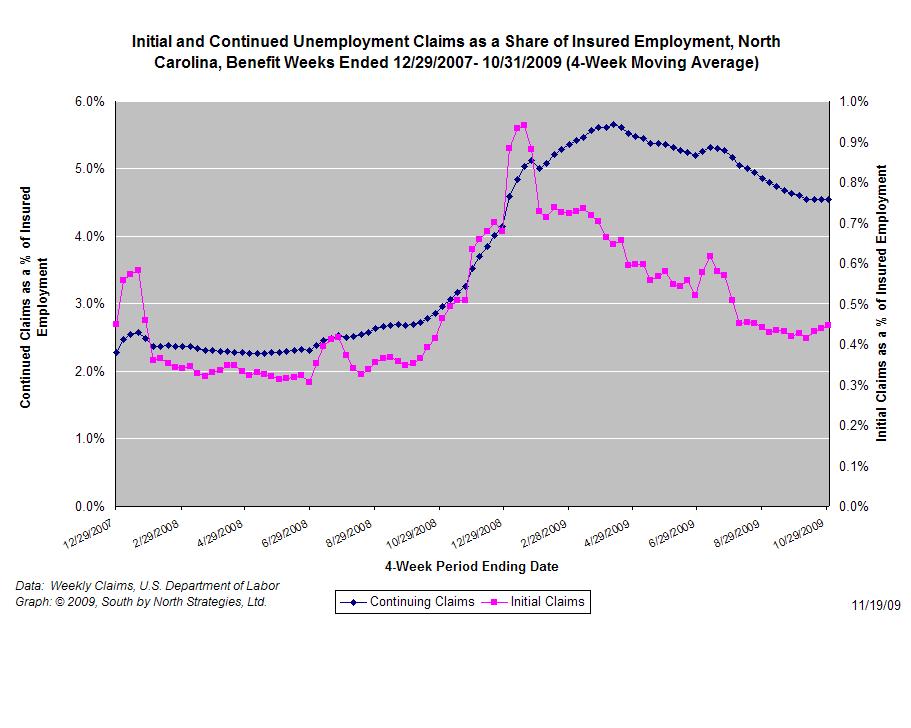
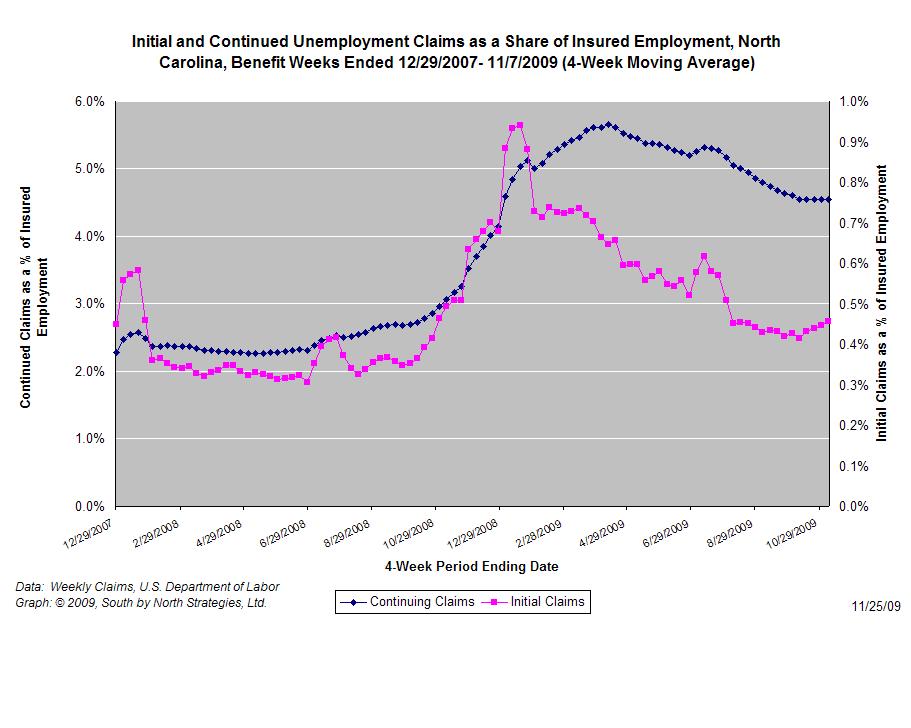
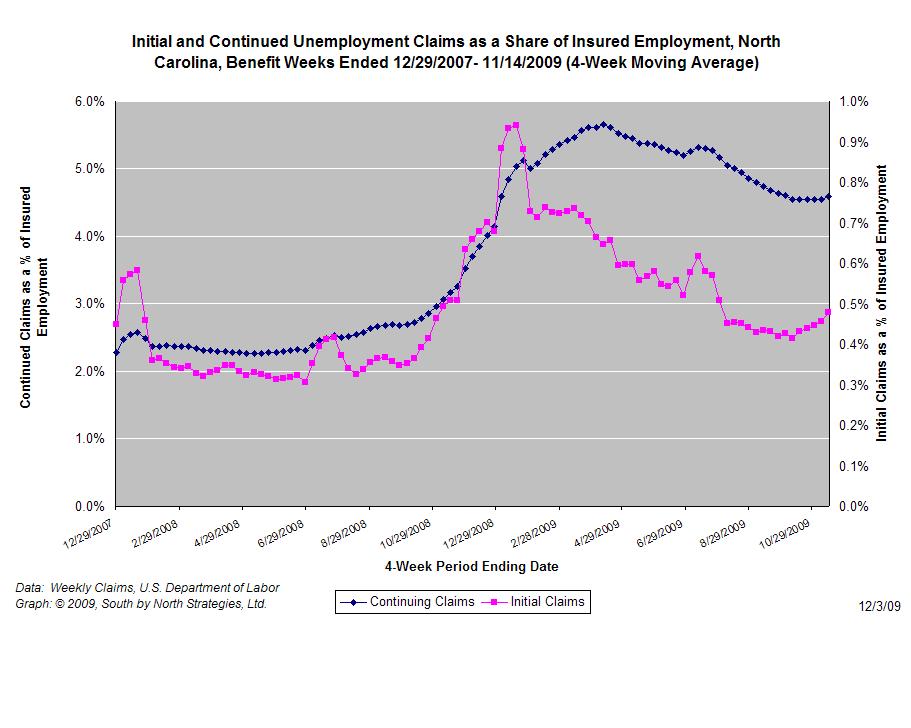
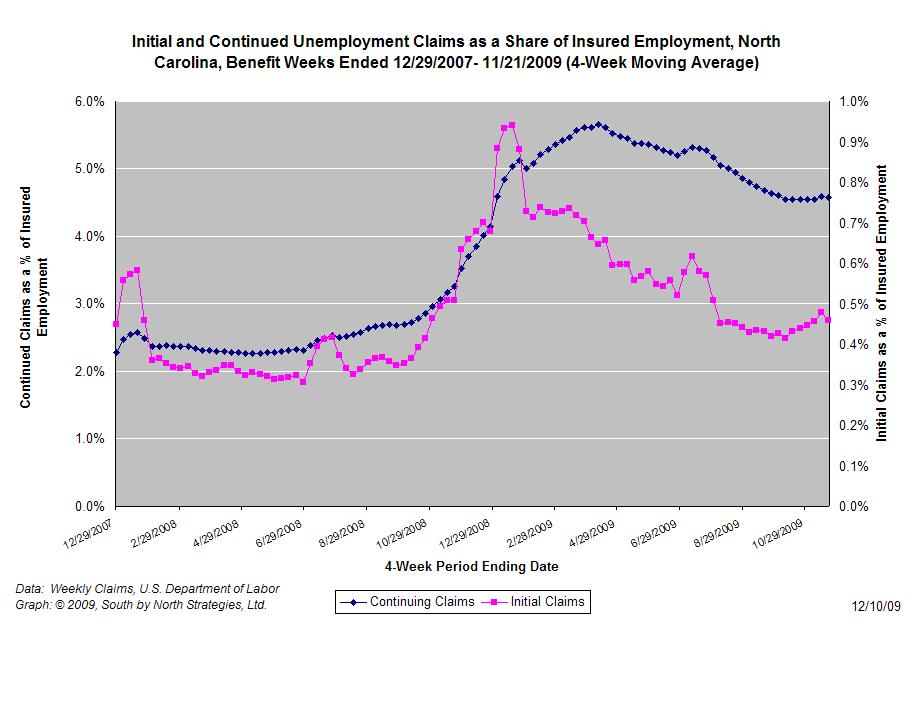
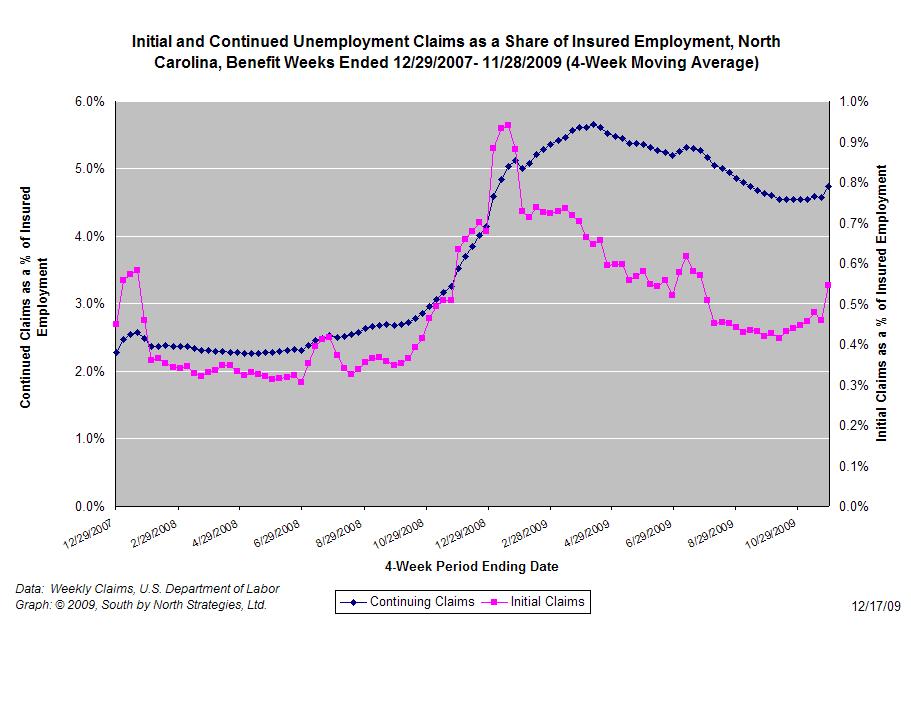
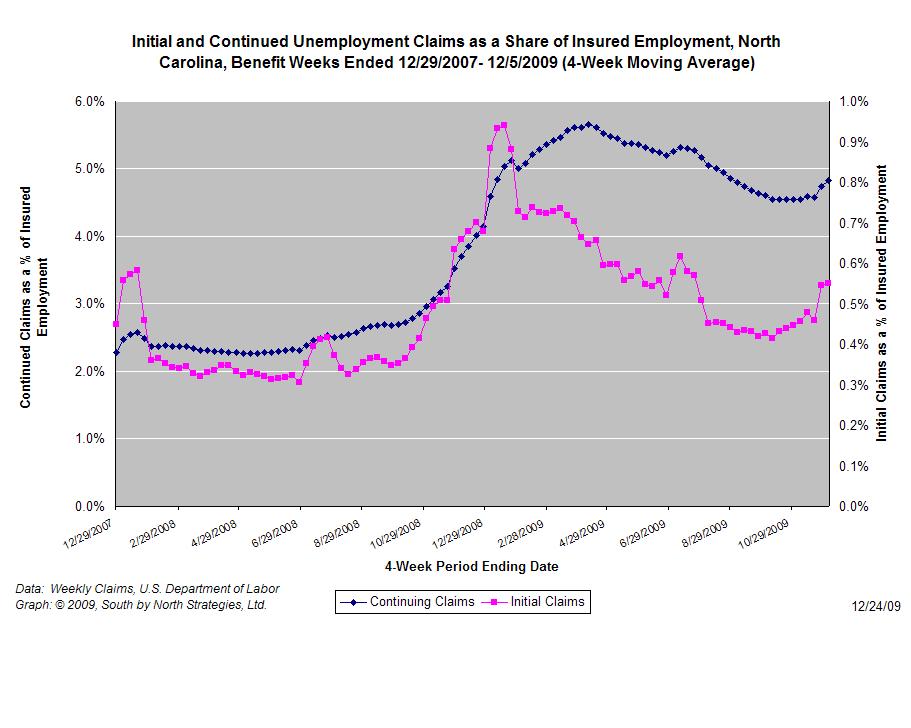
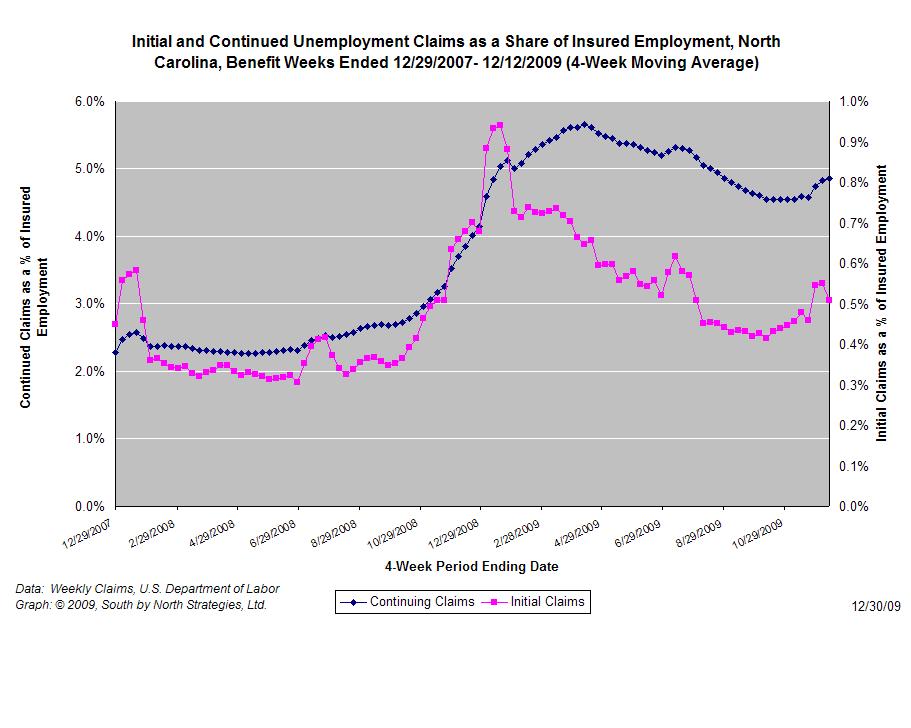
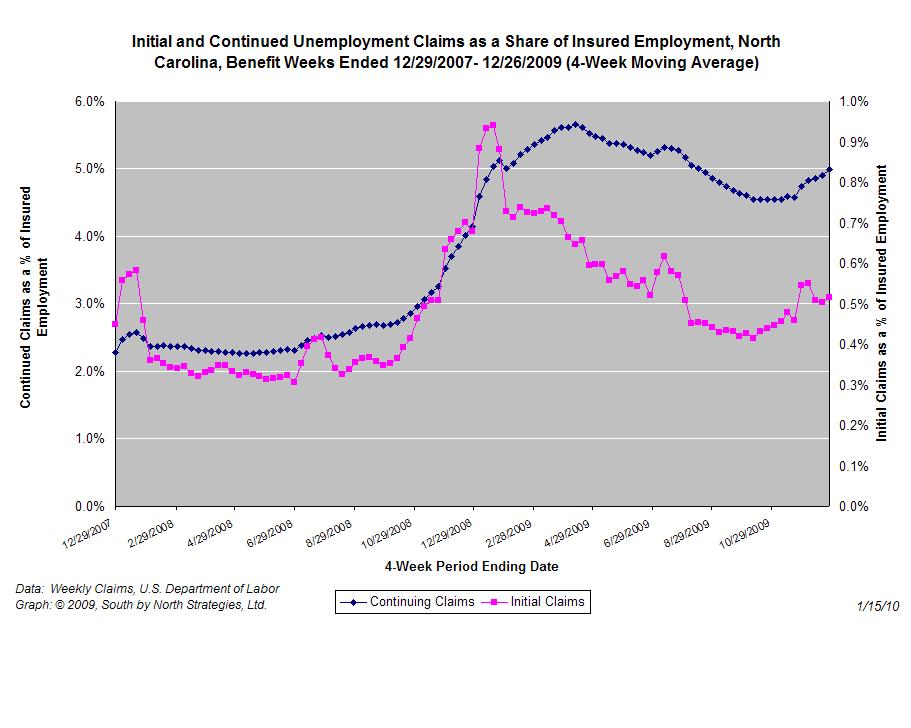
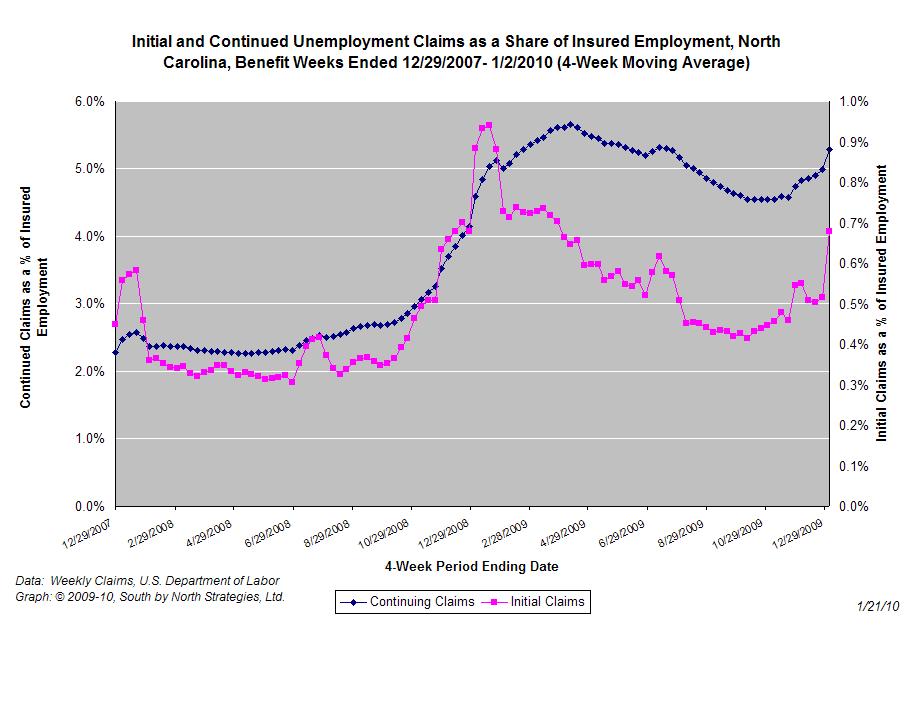
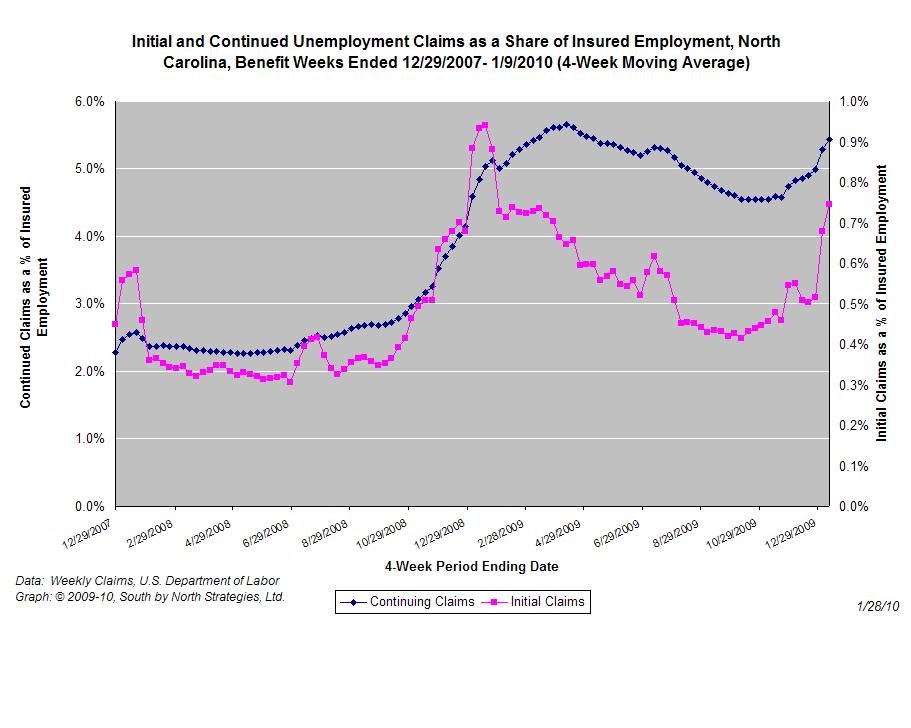
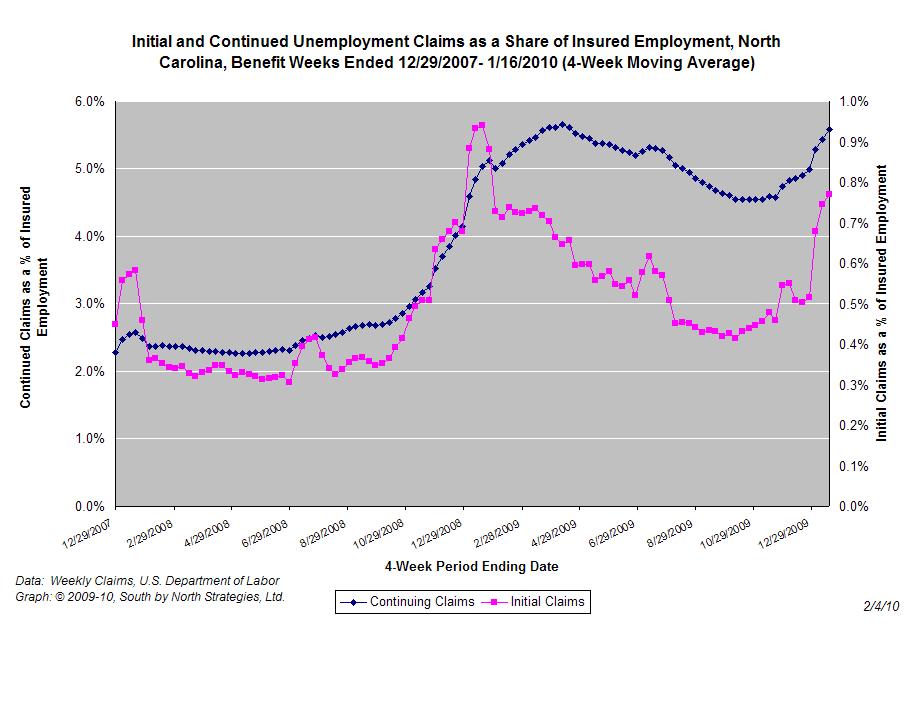
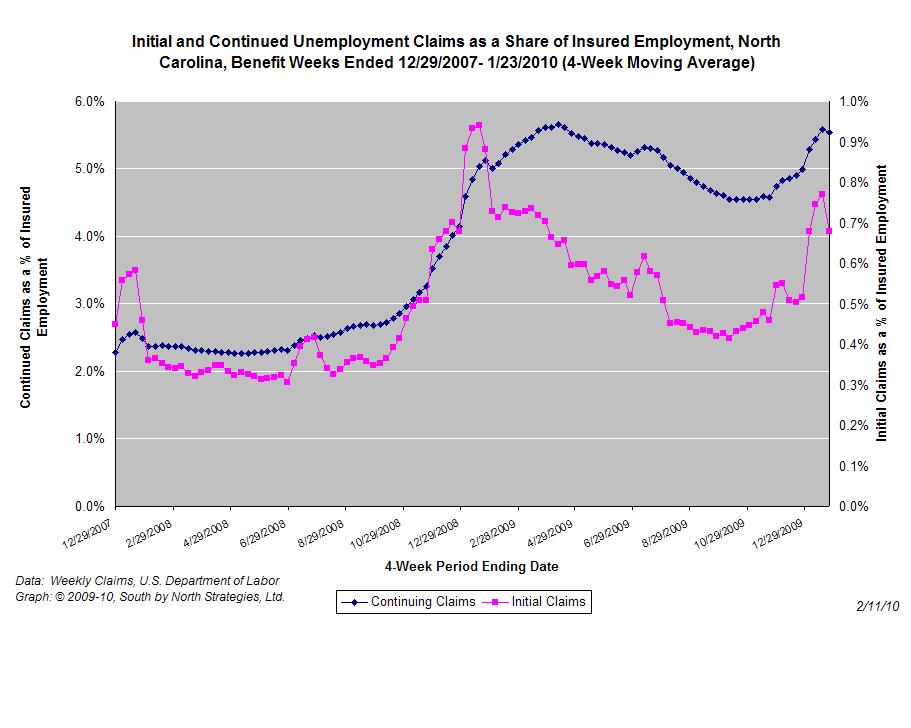
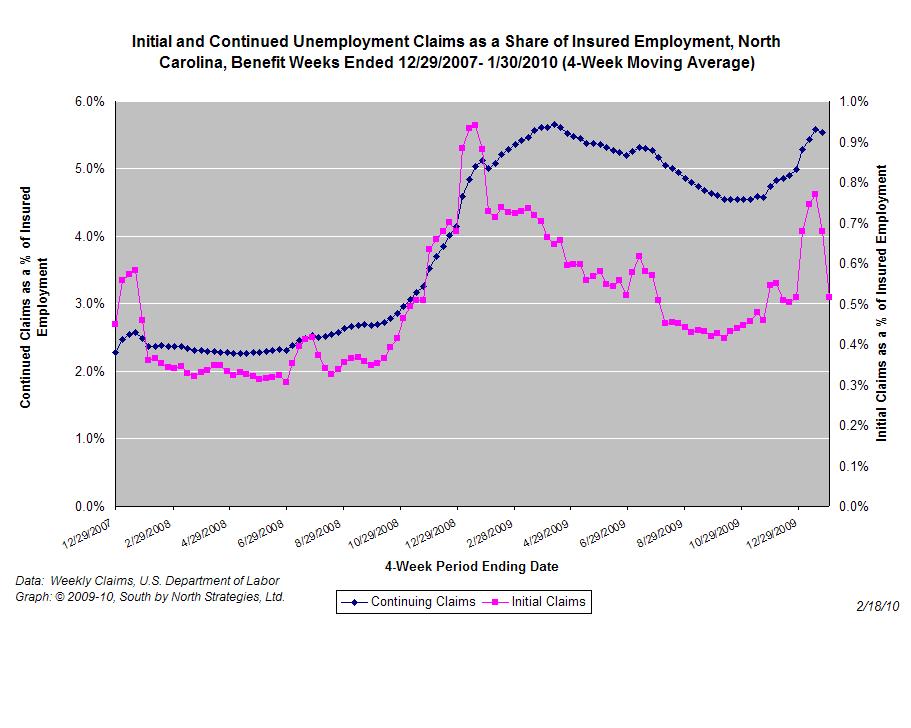
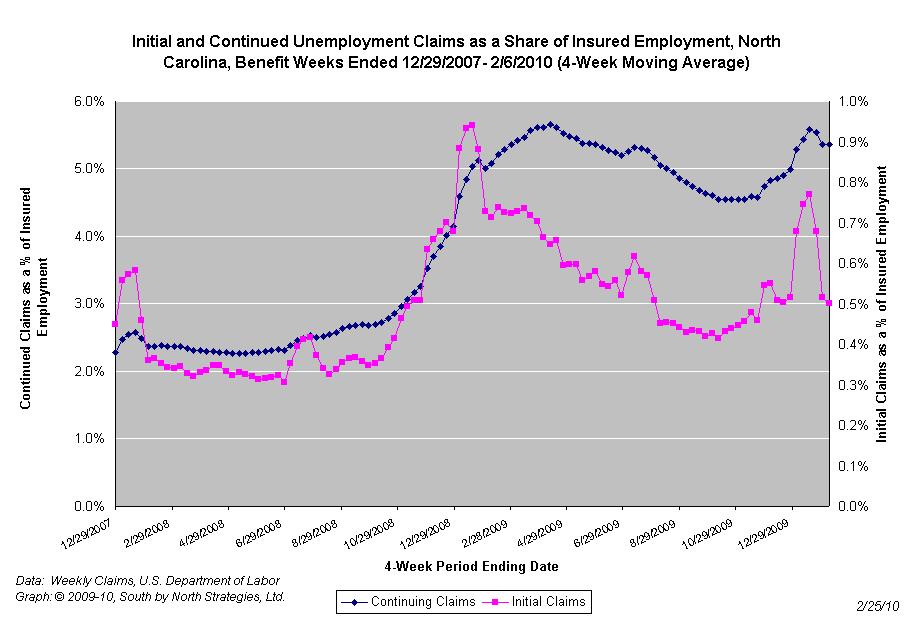
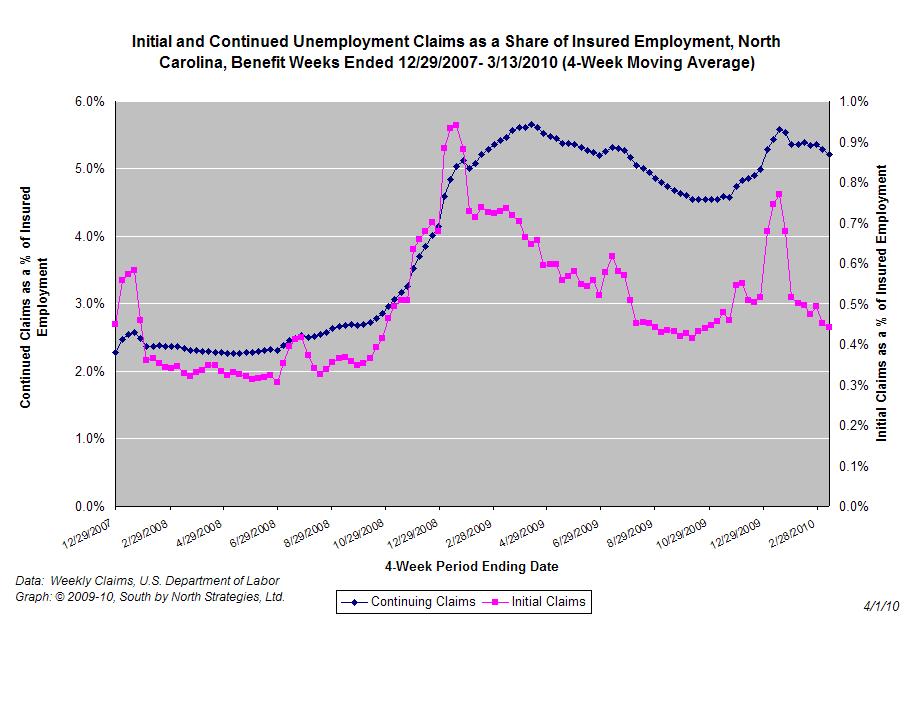
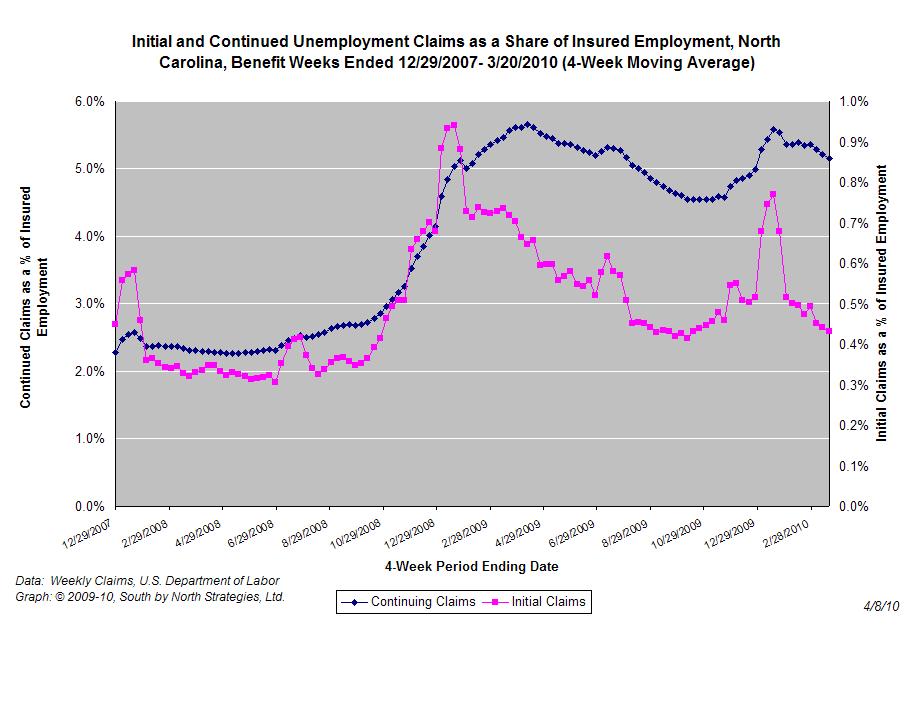
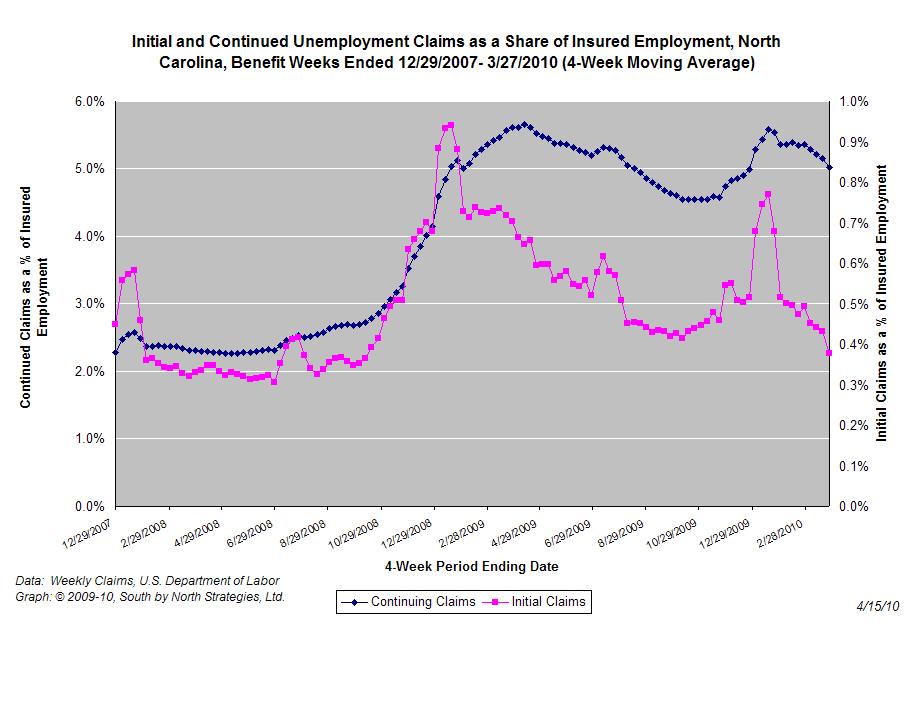
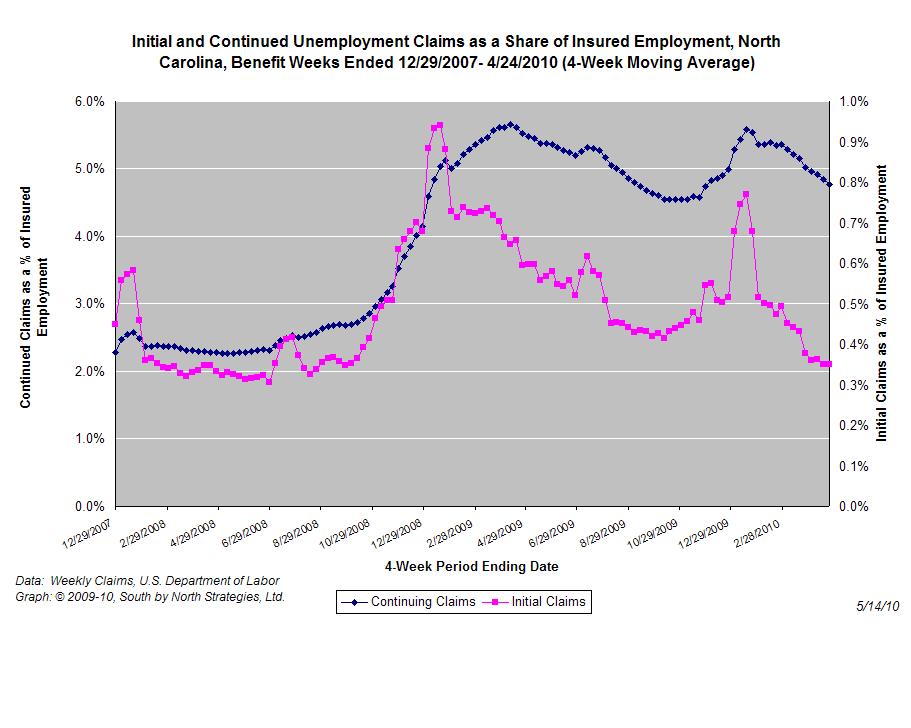
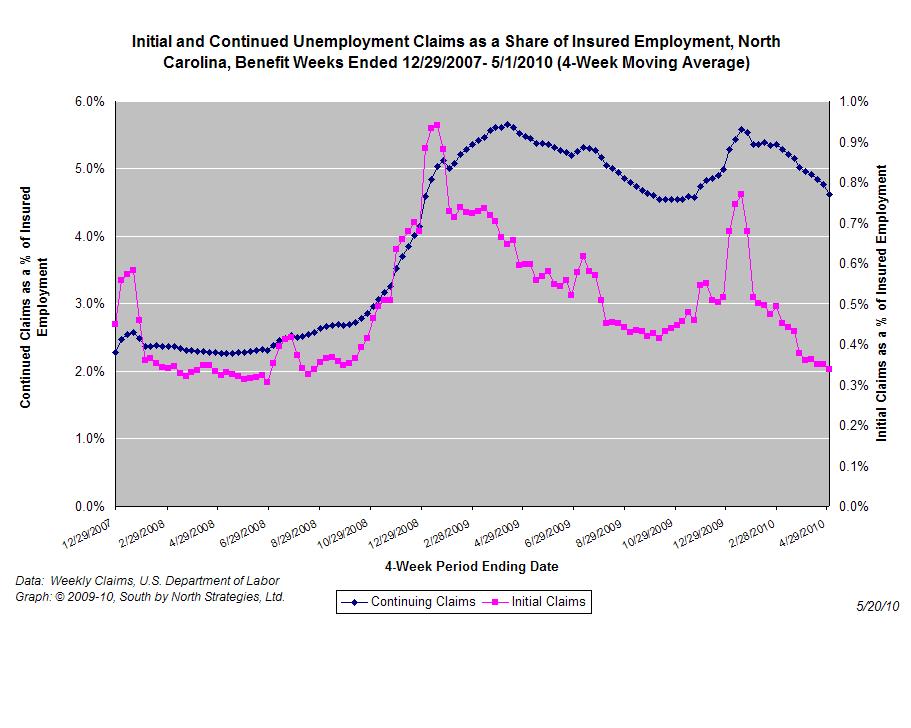
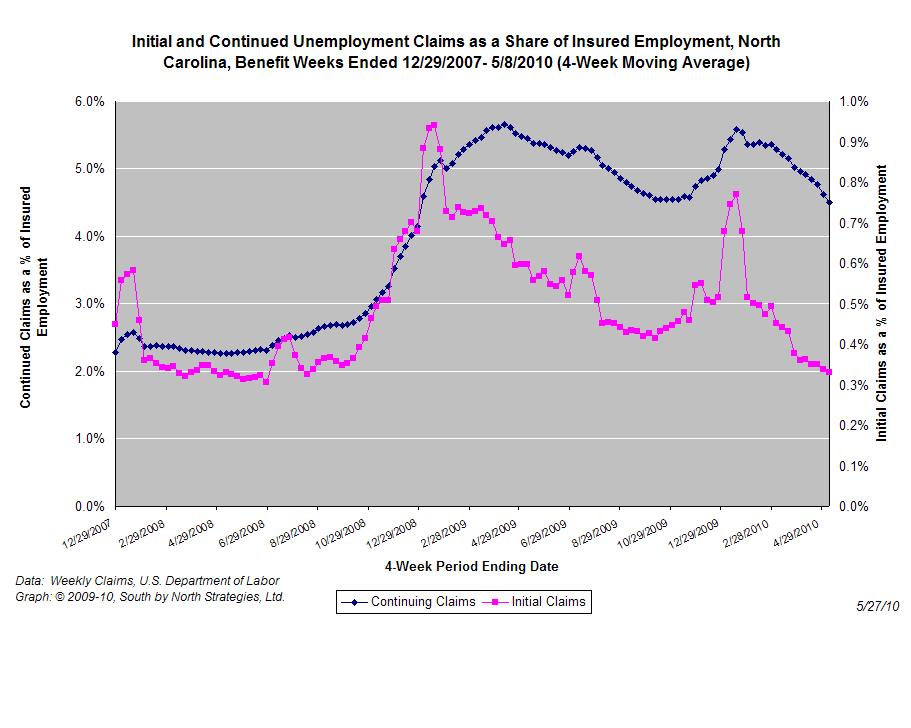
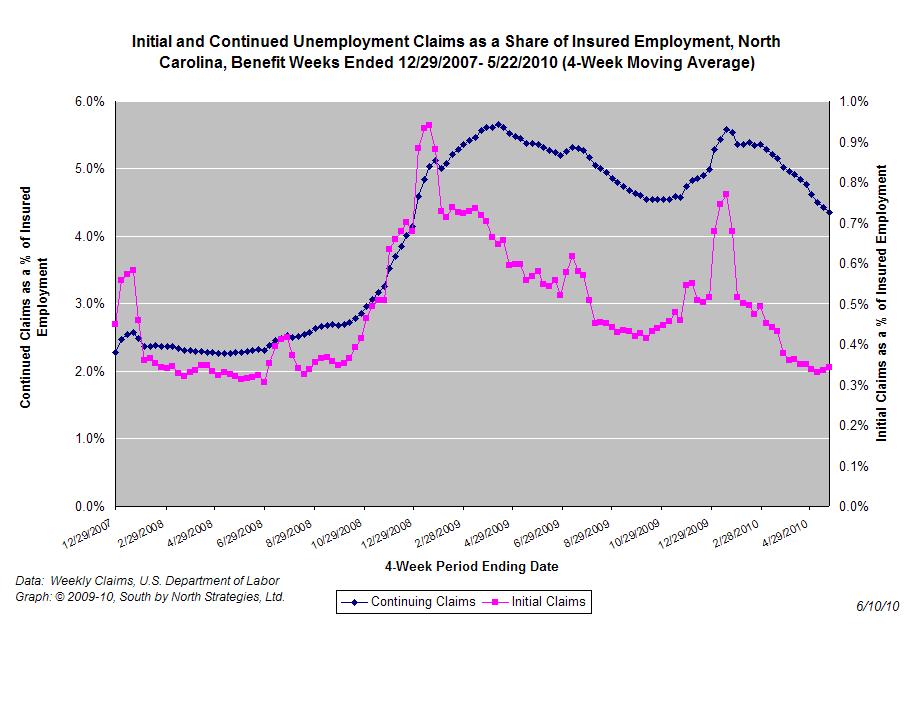
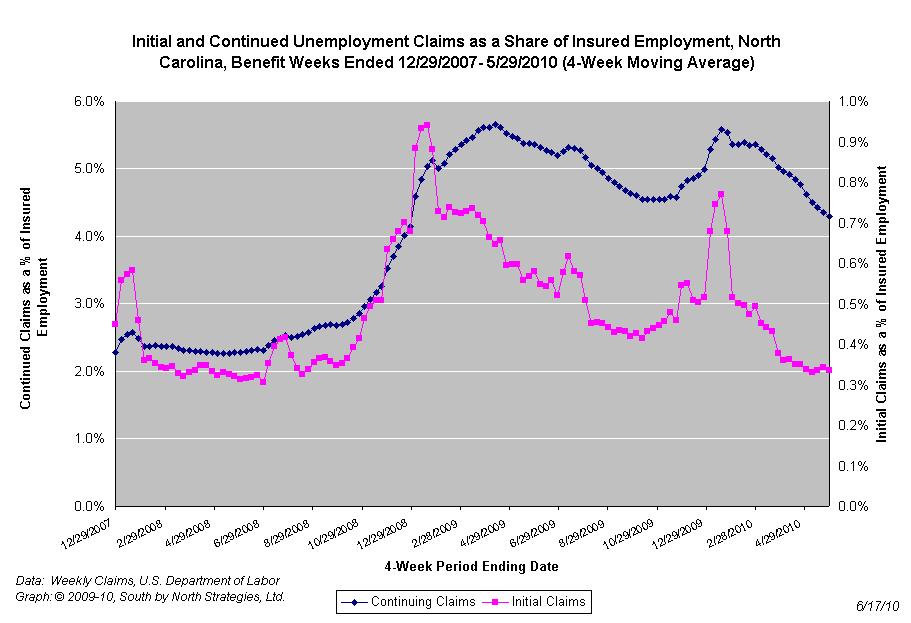
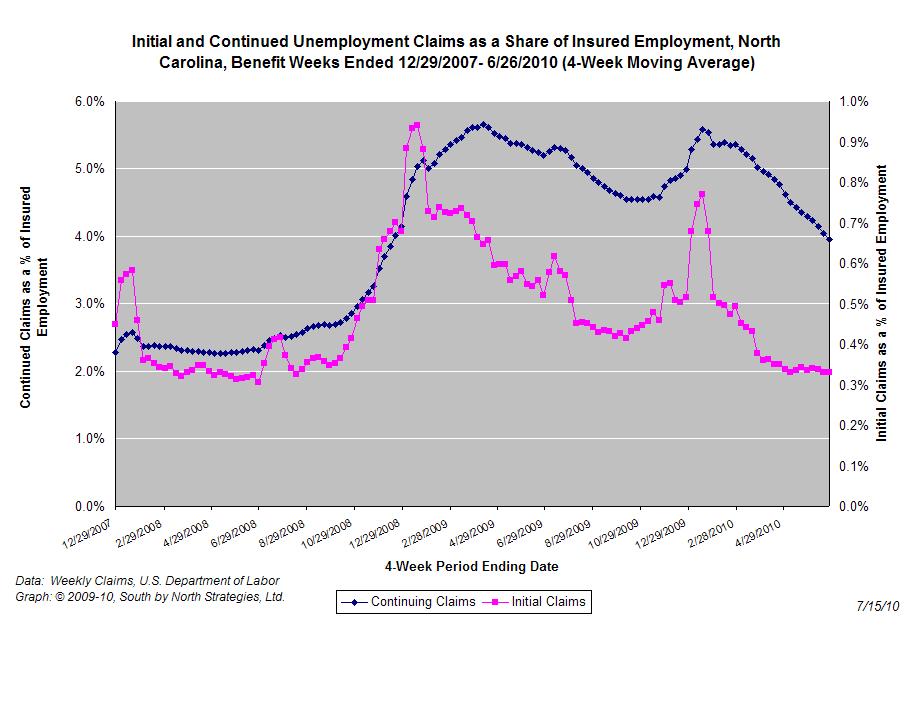
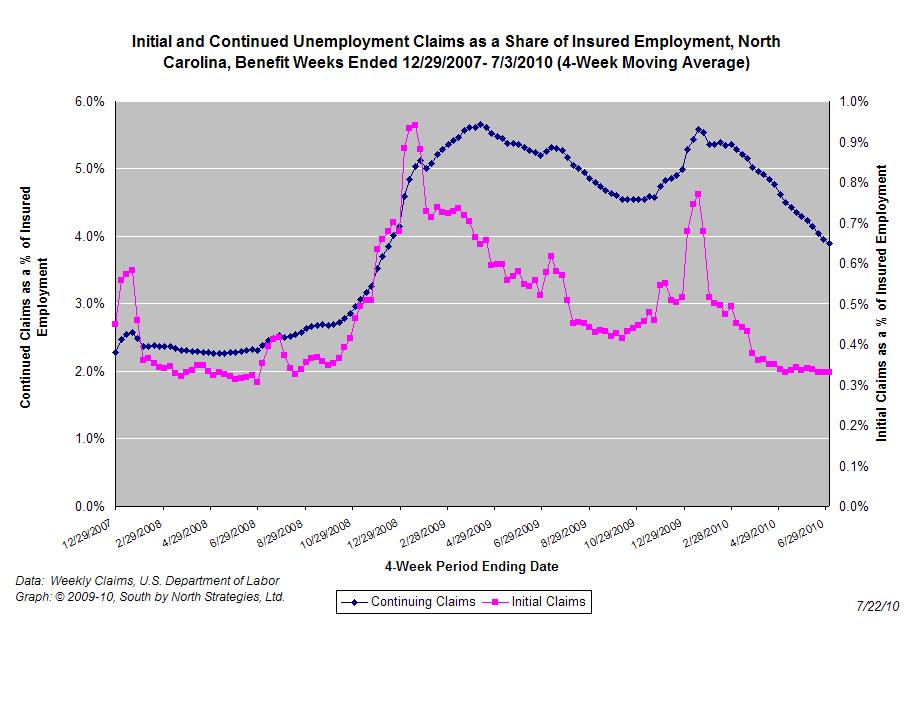
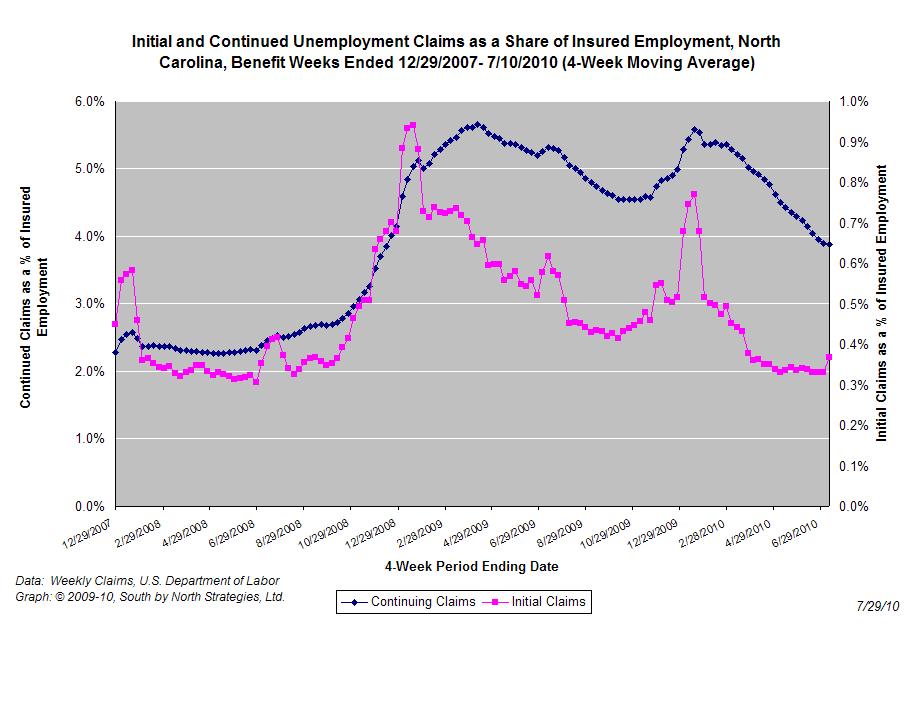
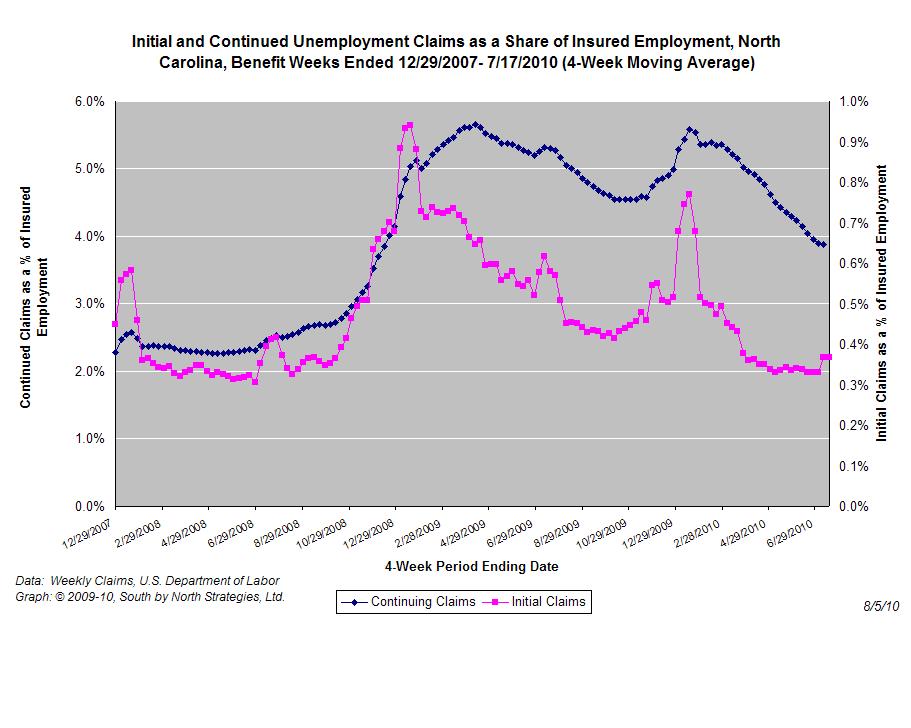
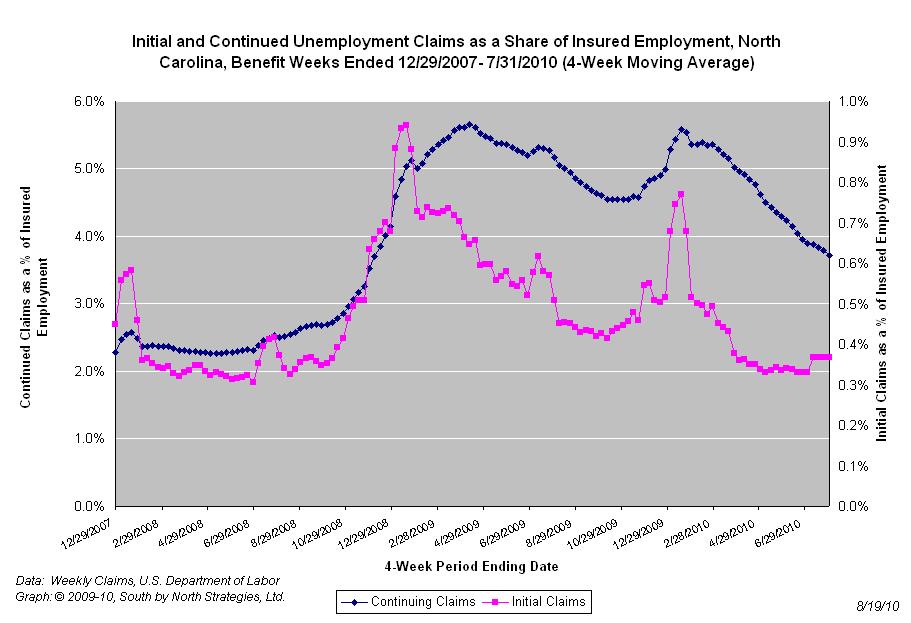
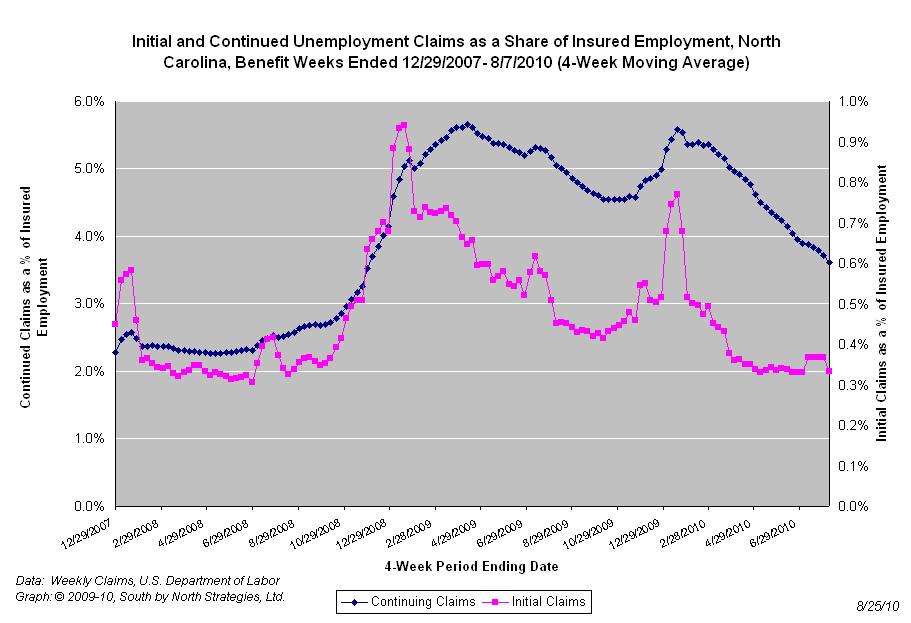
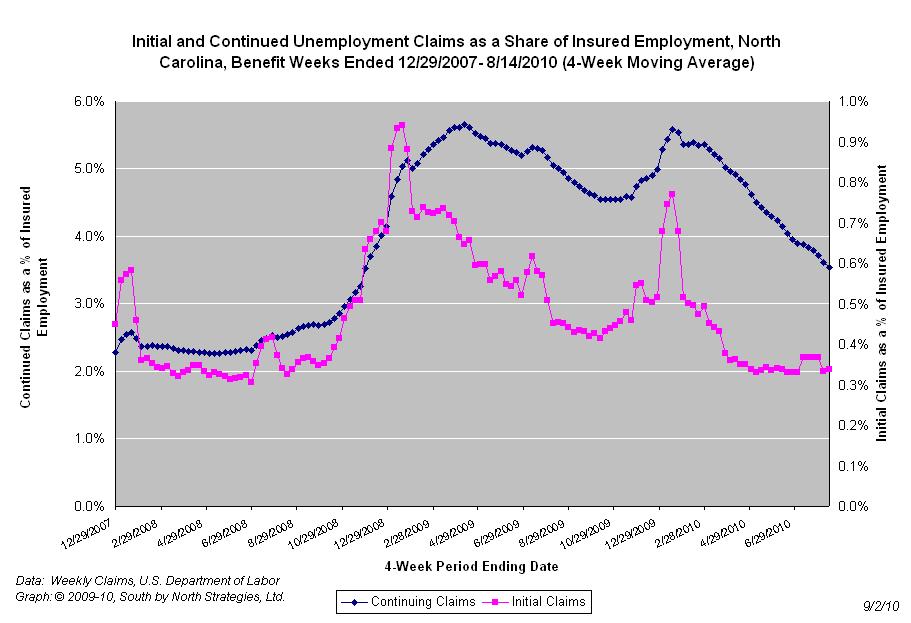
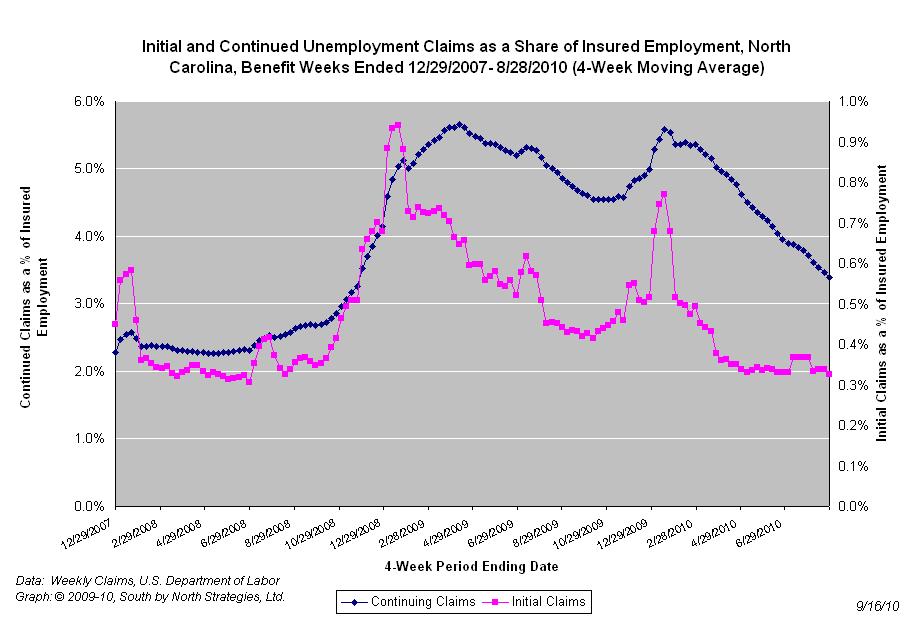
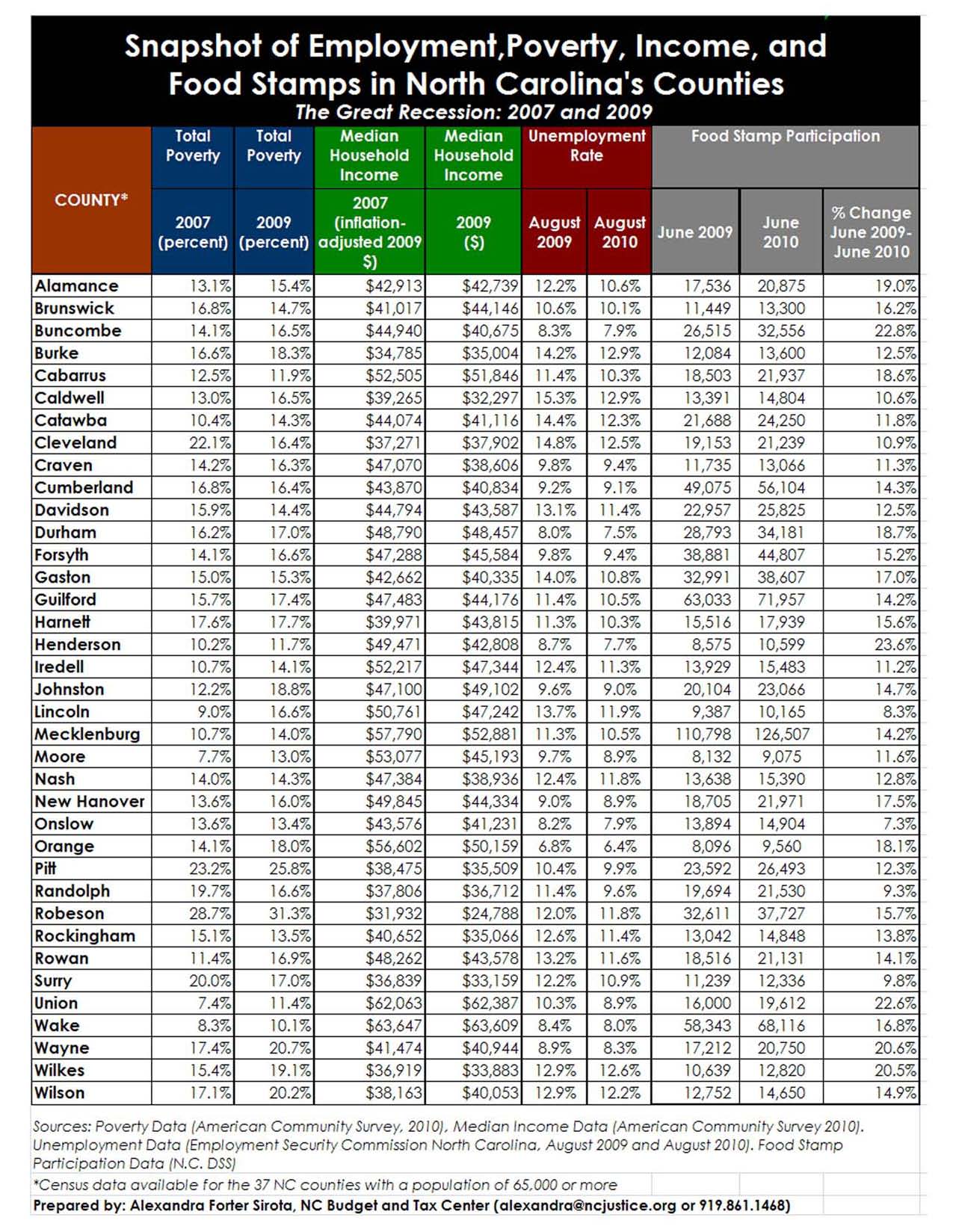
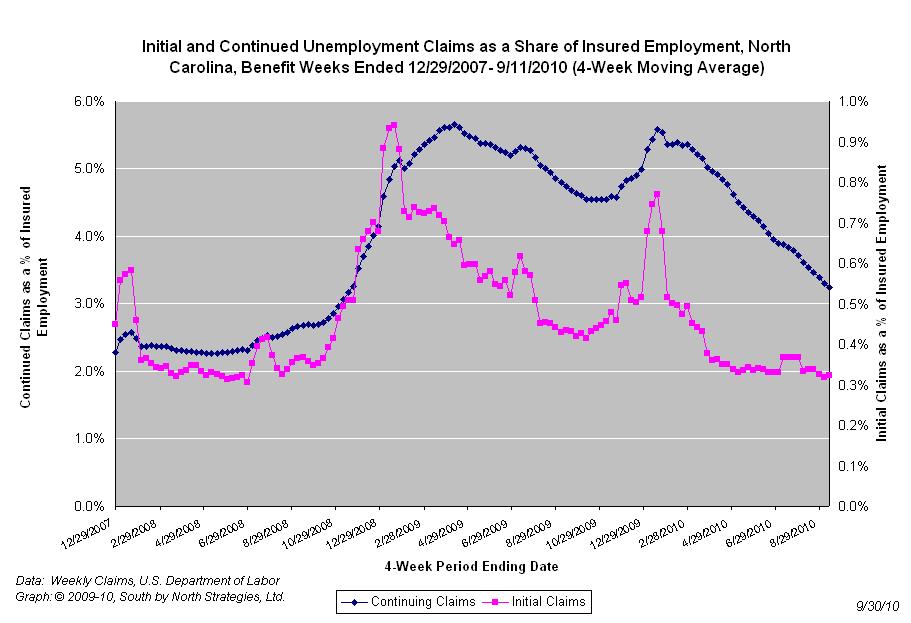
The graph (right) shows the changes in unemployment insurance claims (as a share of covered employment) in North Carolina since the recession’s start in December 2007.
Both new and continuing claims appear to have peaked for this business cycle, and the four-week averages of new and continuing claims have fallen considerably. Yet continuing claims remain at an elevated level, which suggests that unemployed individuals are finding it difficult to find new positions.
Also, little change has occurred within recent months. Since April 2010, the four-week average of initial claims consistently has ranged between 13,987 and 11,800.
Around The Dial – September 30
Economic policy reports, blog postings, and media stories of interest:
- The Washington Post wonders about “the innovation dilemma.“
- Economix considers state poverty rates.
- Paul Krugman argues against economics as “a morality play.”
- Real Time Economics says “employers aren’t trying hard to hire.”
- Felix Salmon considers the economics of airports.
Steer Away From The Iceberg
Free Exchange advises the captains of state to steer away from the economic icebergs.
Mr [Adam] Posen [of the Bank of England] has the calculation exactly right, against the threat of simply inflationary pressures, there is no question what should be done. In America, Britain, Europe, and Japan, there are living people manning the helms of large and slow-moving but nonetheless pilot-able economies. As these captains almost universally acknowledge, they have tools at their disposal to steer economies away from deflation and high unemployment—the rudder is not broken. And yet they seem to assume either that their double-hulled marvel of a modern global economy is unsinkable in a way that the world of the 1930s was not, or that steering the ship sharply away from trouble may spill drinks on board, leading to some unpleasant clean-up afterwards.
…
There is no choice here. We can see trouble ahead, and though we may not be able to appreciate the full extent of it, we know it’s likely to be messy and dangerous. If the world fails to avoid it, the resulting disaster can only be ascribed to a steering error. From either panic or carelessness, those minding the ship will have turned it one way when they should have turned it another. And future scribes will be left to wonder how they could have been so foolish.
 Email Sign-Up
 RSS Feed