NC Unemployment Claims: Week of 6/19
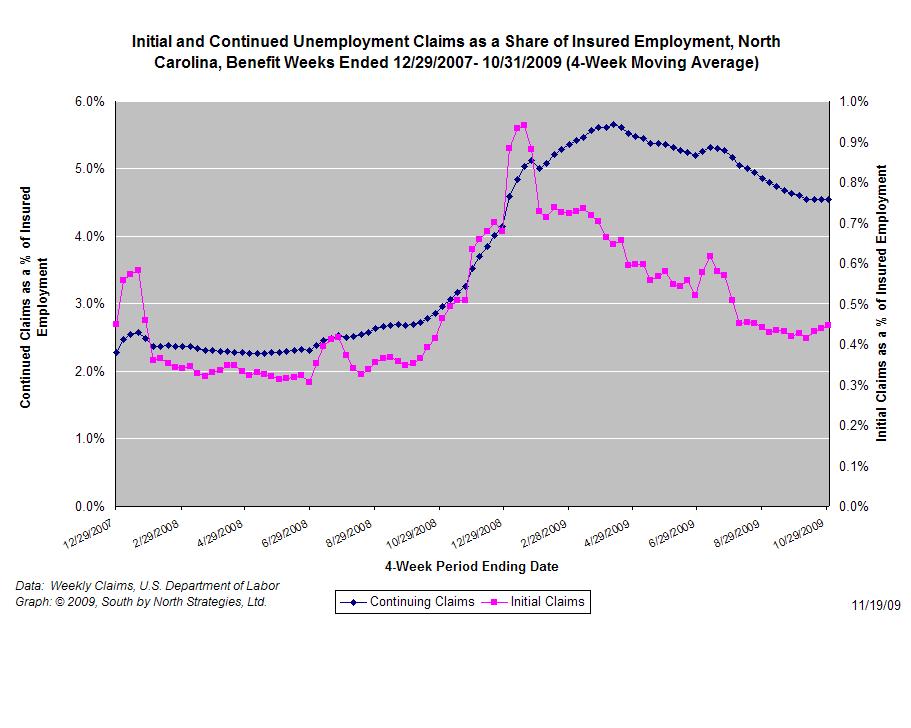
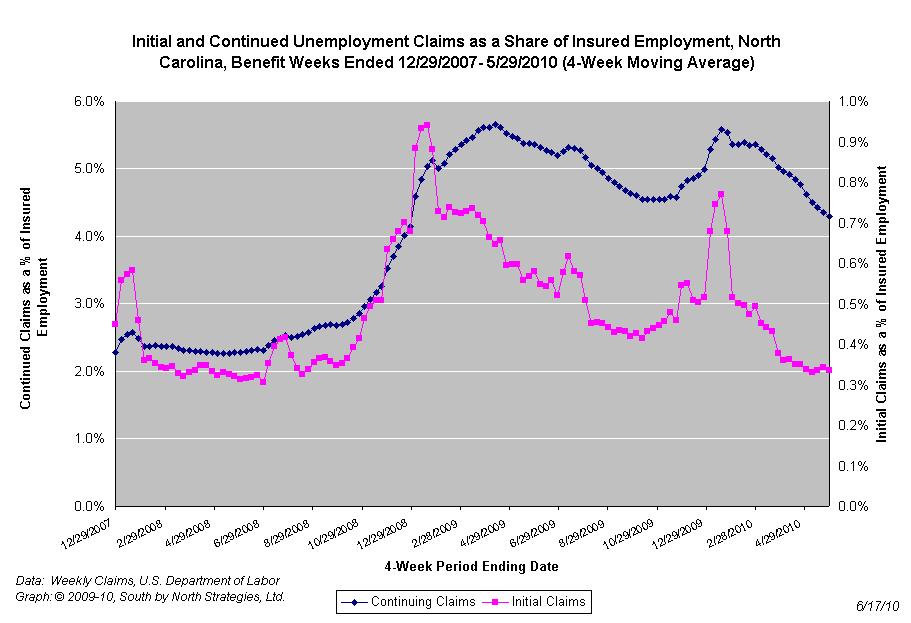
For the benefit week ending on June 19th, 12,065 North Carolinians filed initial claims for state unemployment insurance benefits, and 149,195 individuals applied for state-funded continuing benefits. Compared to the prior week, there were fewer initial and continuing claims. These figures come from data released today by the U.S. Department of Labor.
Averaging new and continuing claims over a four-week period — a process that helps adjust for seasonal fluctuations and better illustrates trends — shows that an average of 12,600 initial claims were filed over the previous four weeks, along with an average of 154,539 continuing claims. Compared to the previous four-week period, there were fewer initial and continuing claims.
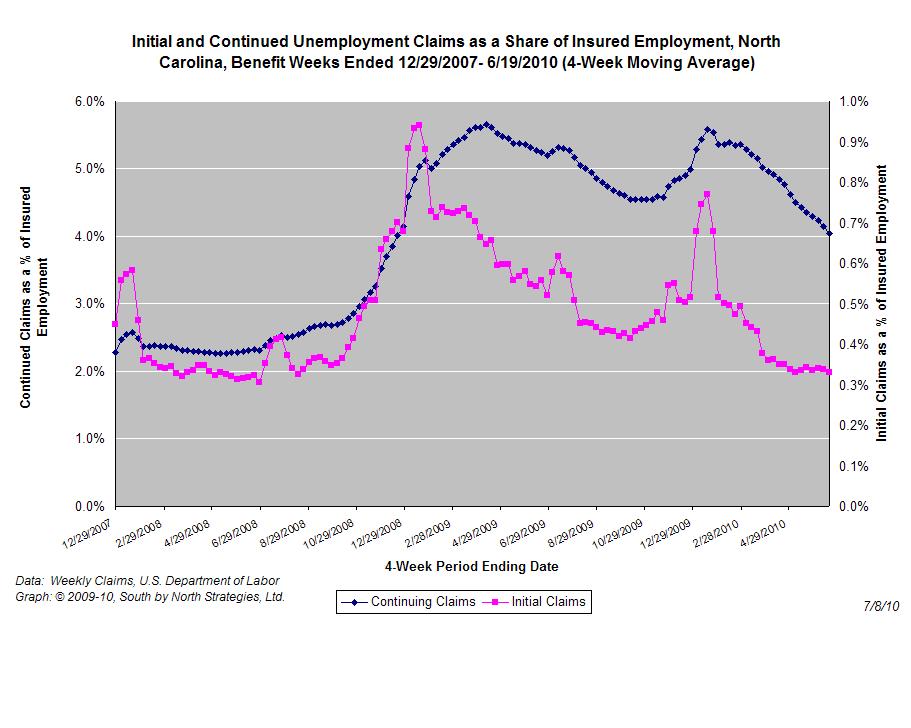 One year ago, the four-week average for initial claims stood at 22,426 and the four-week average of continuing claims equaled 211,307.
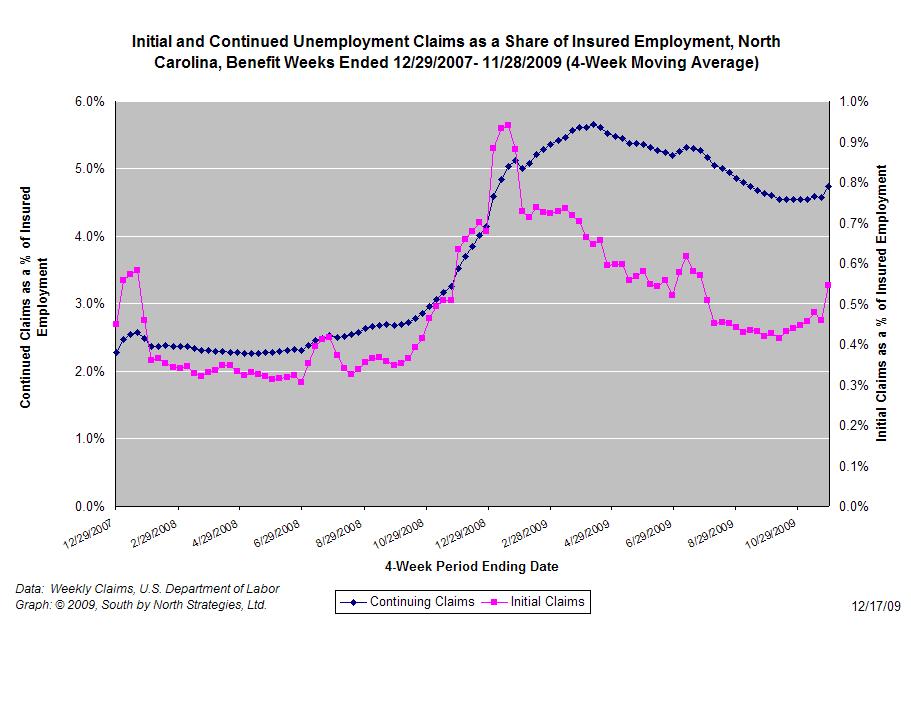
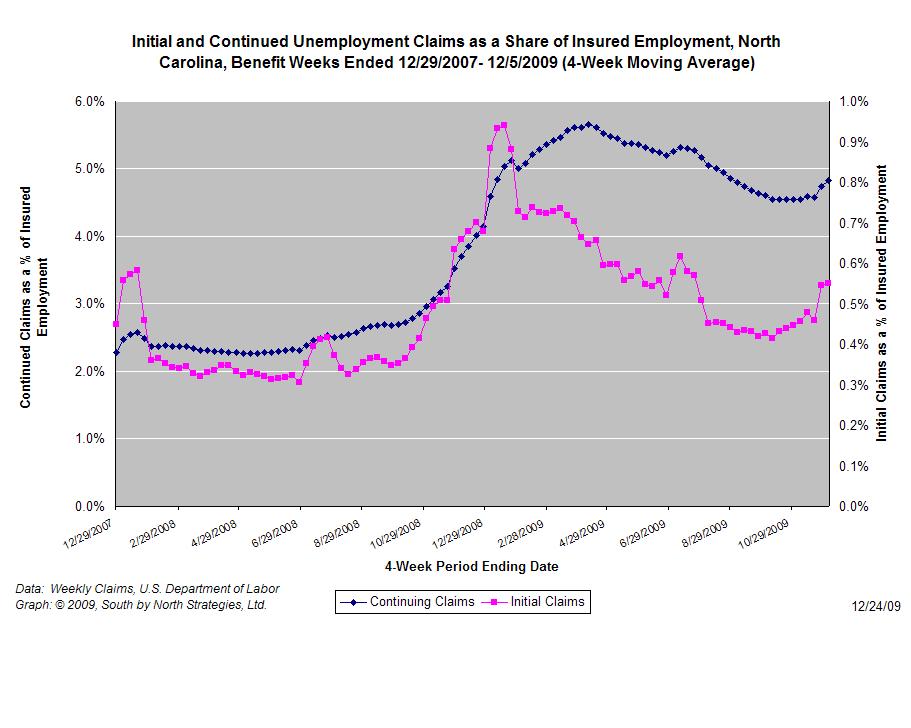
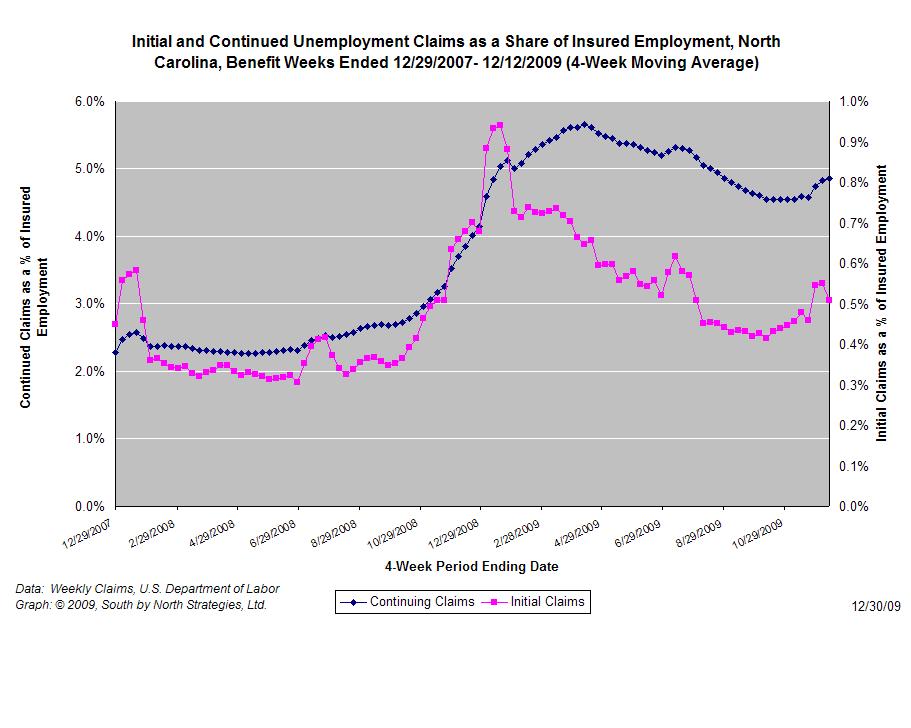
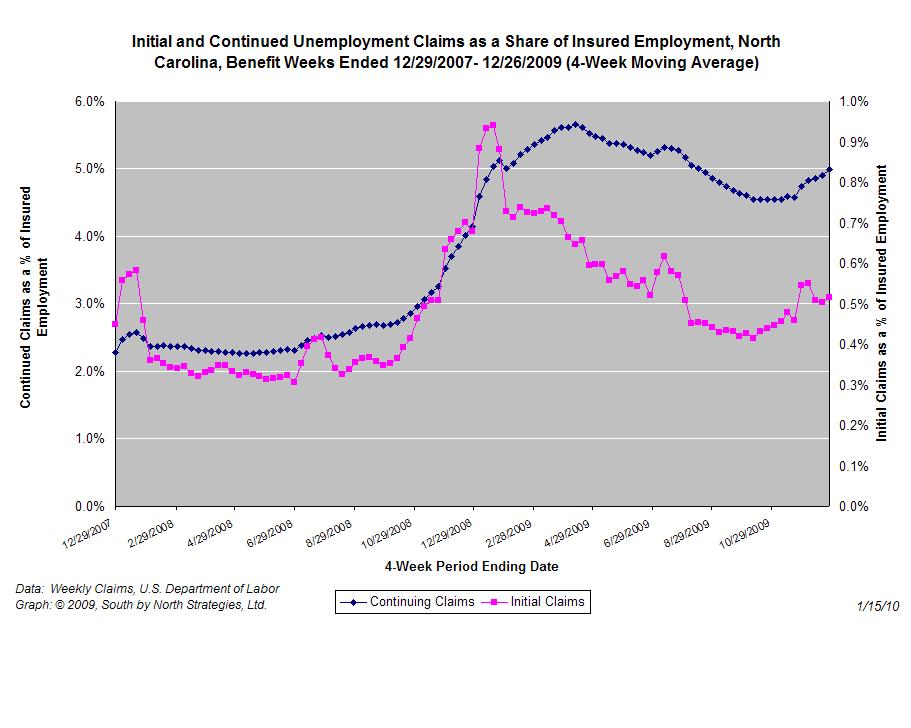
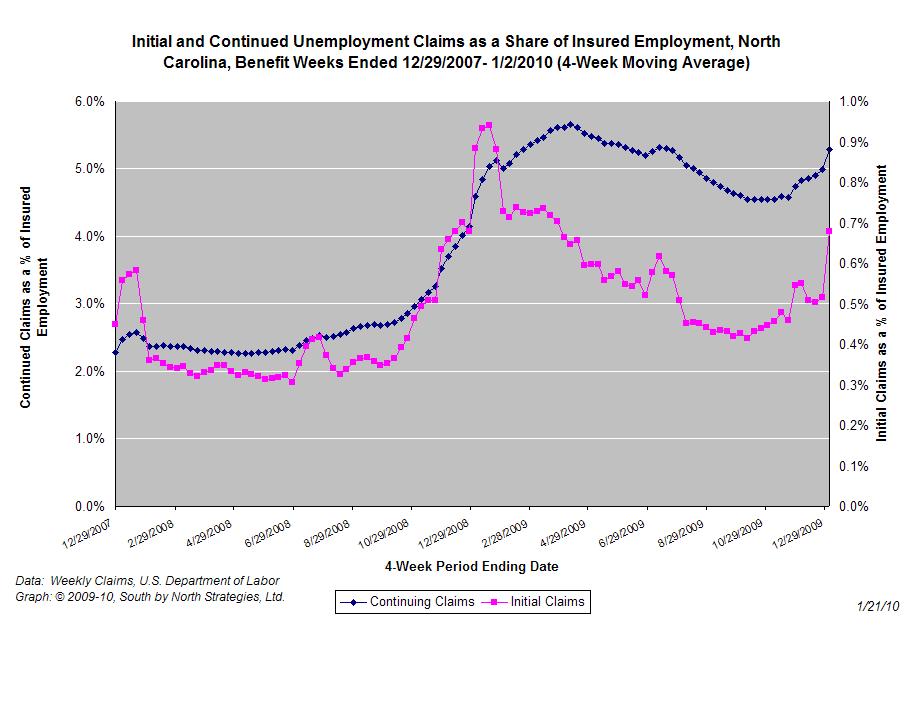
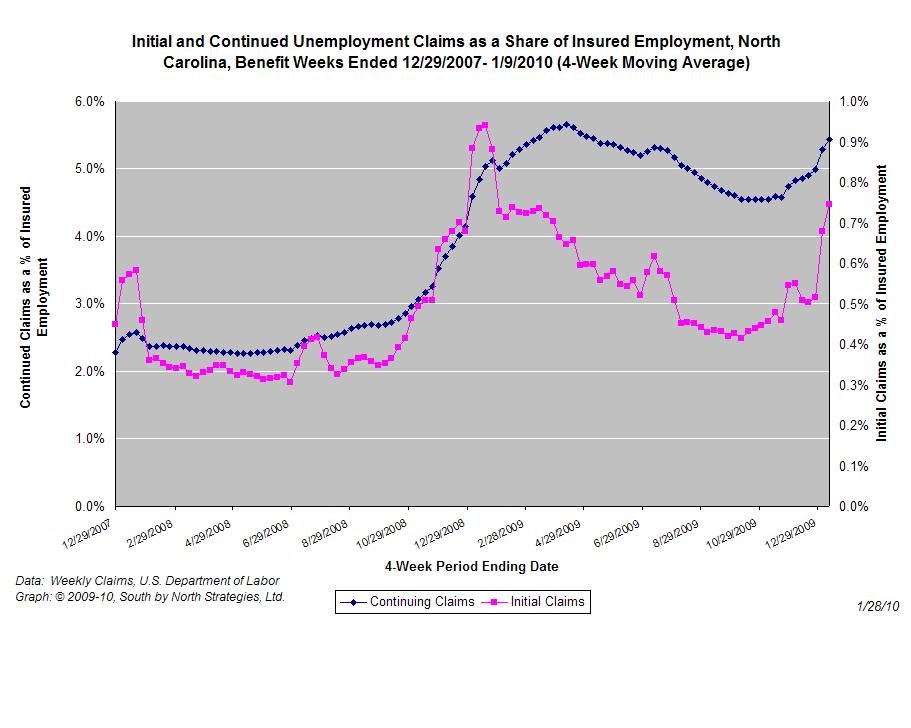
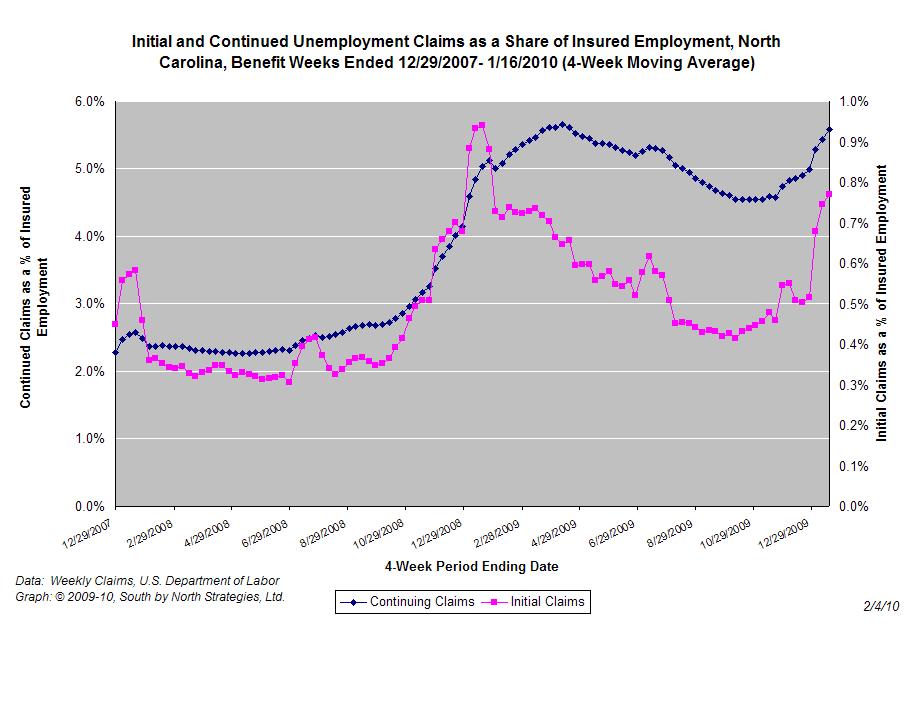
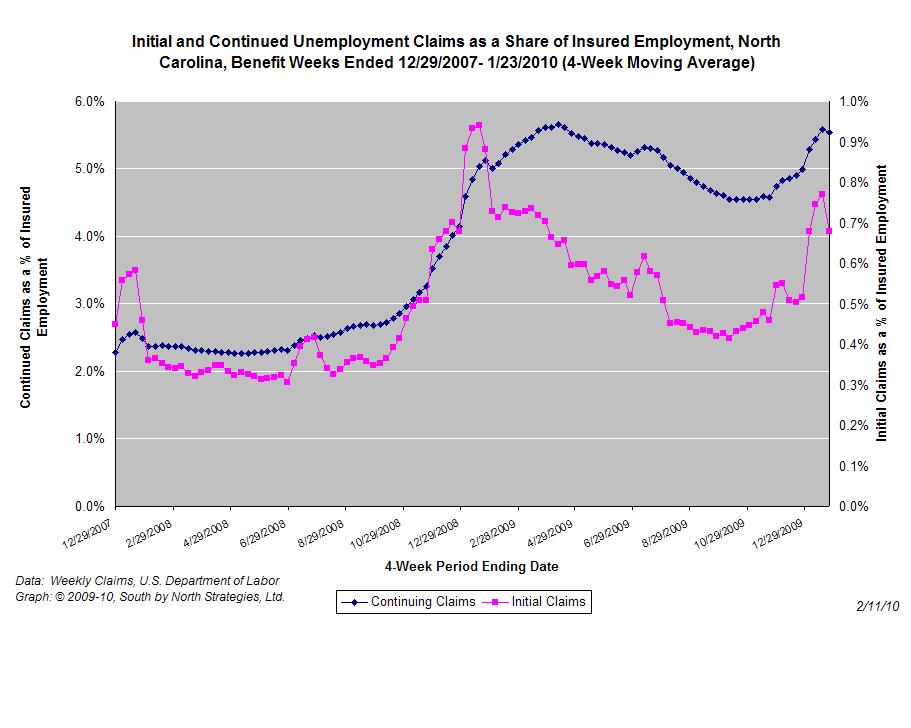
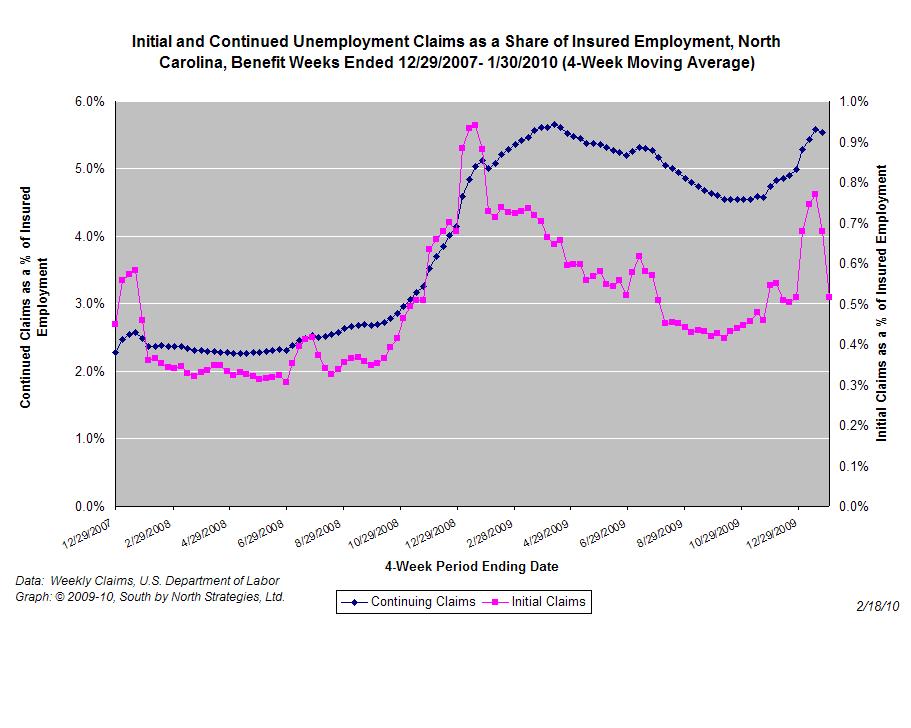
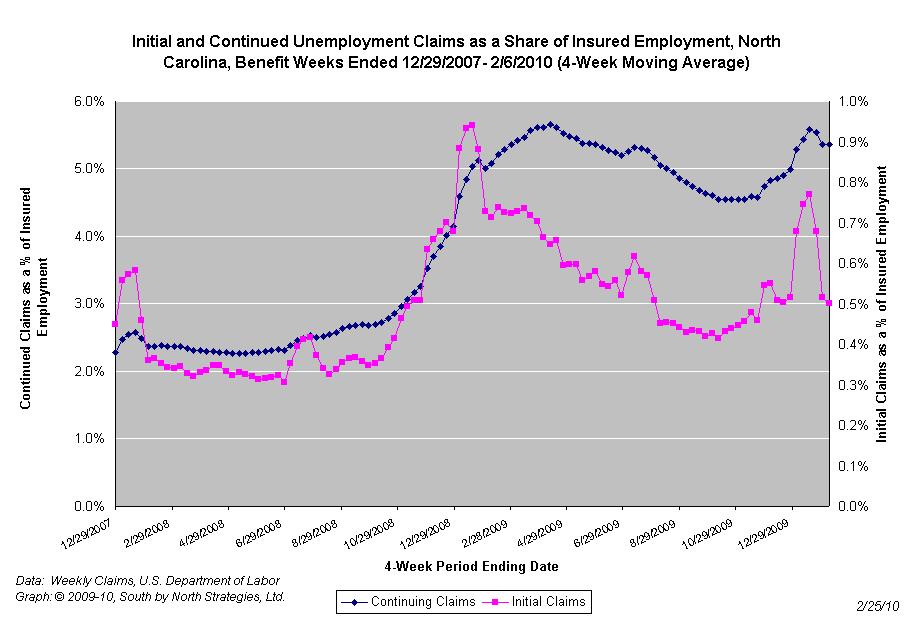
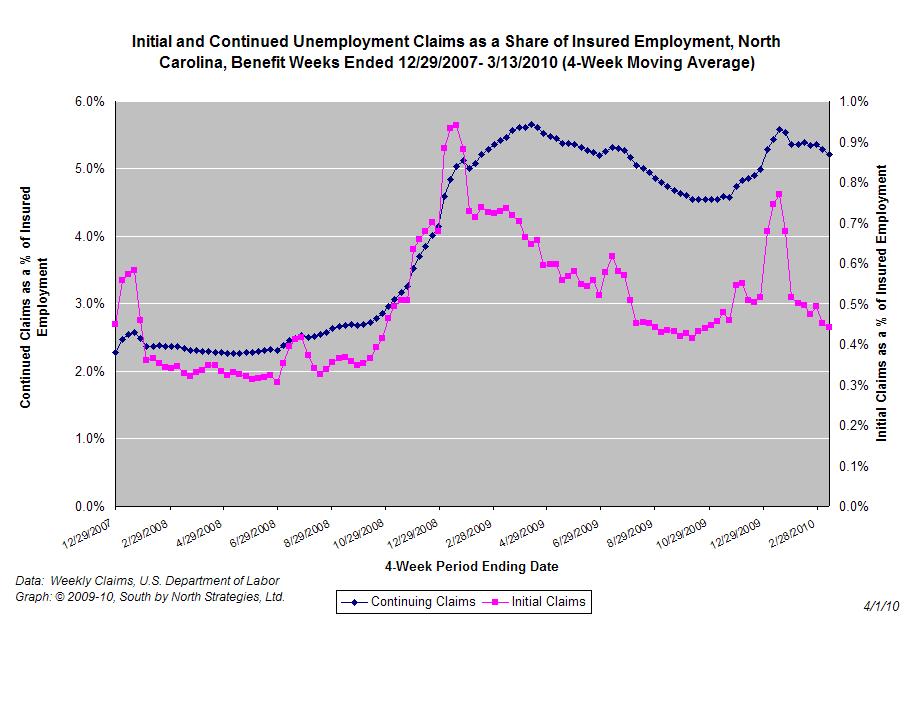
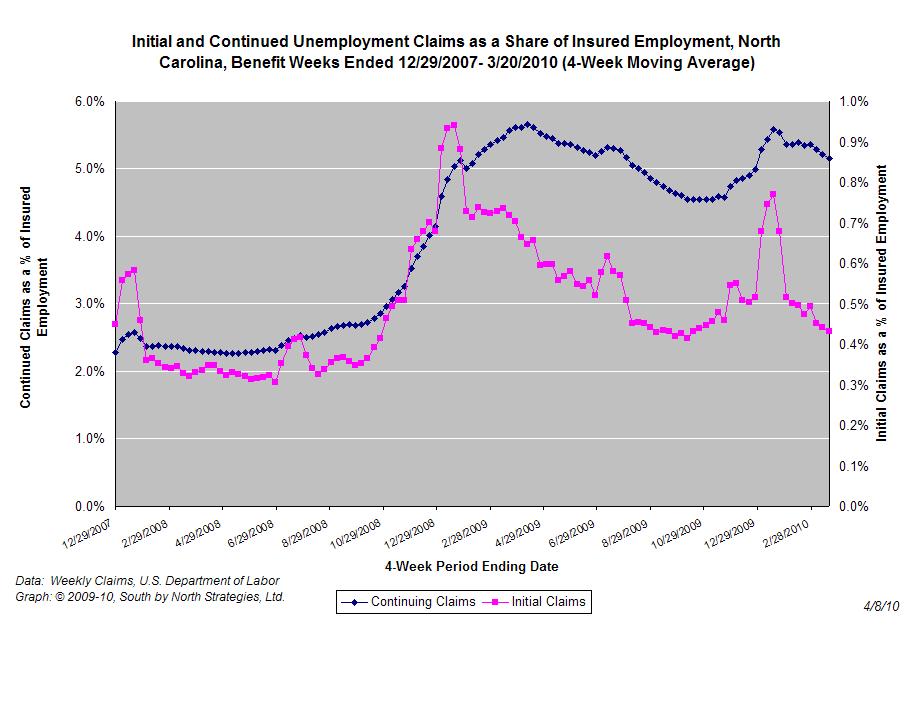
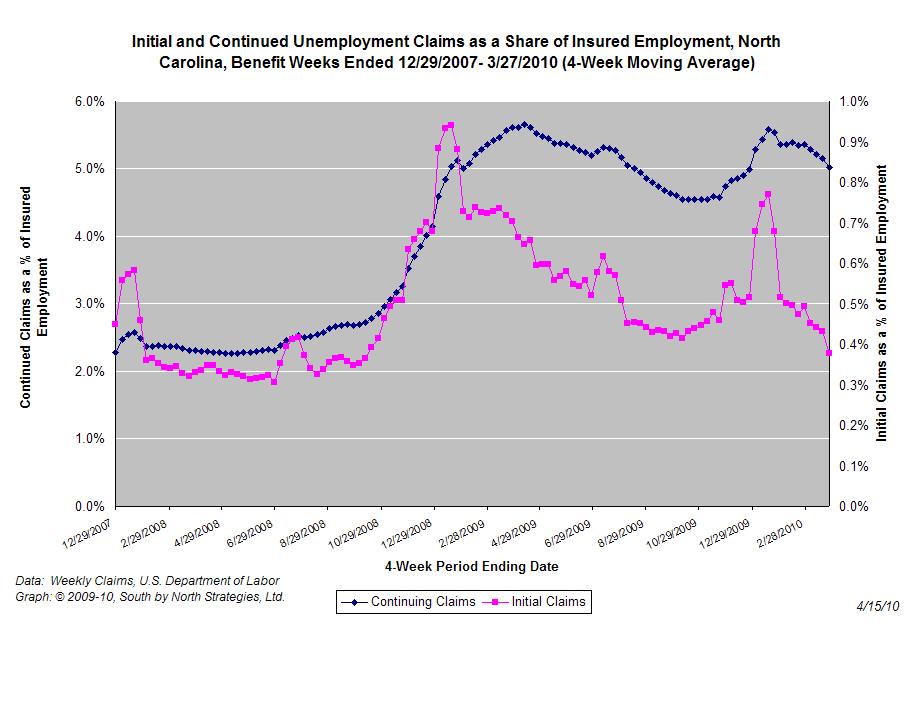
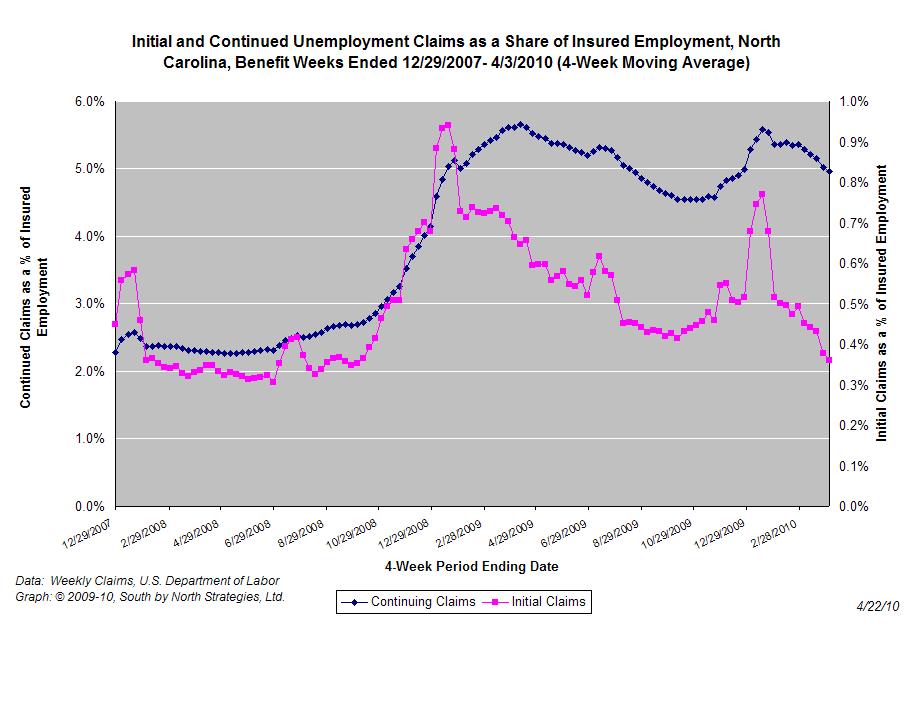
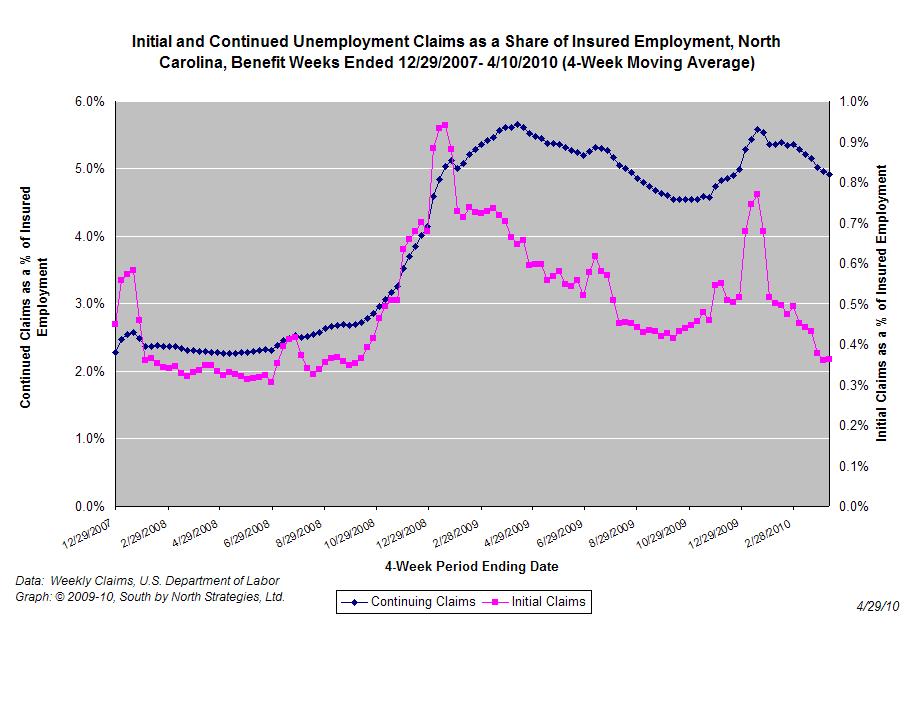
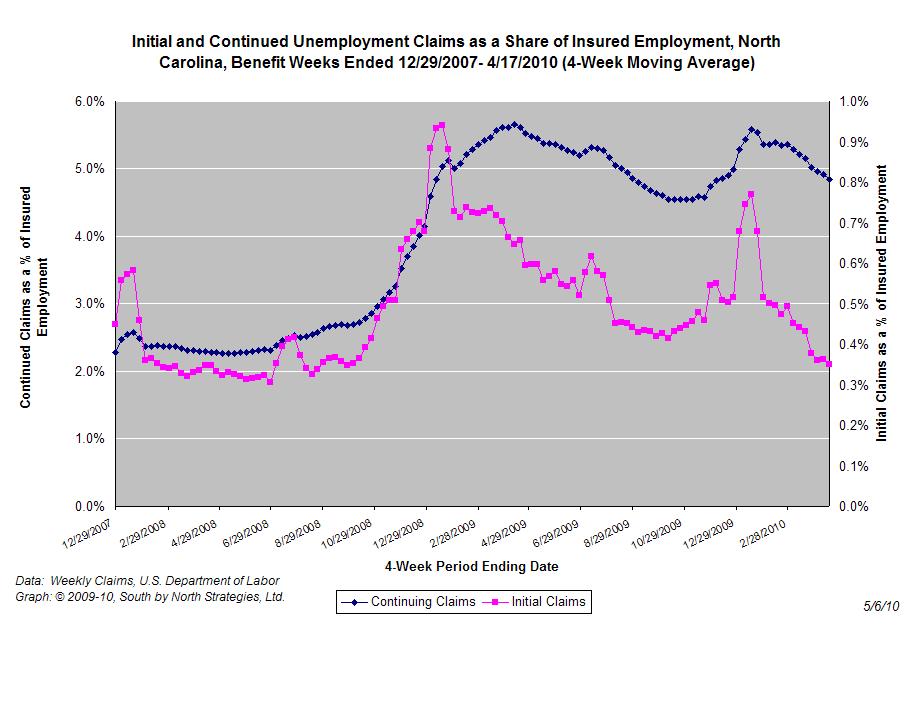
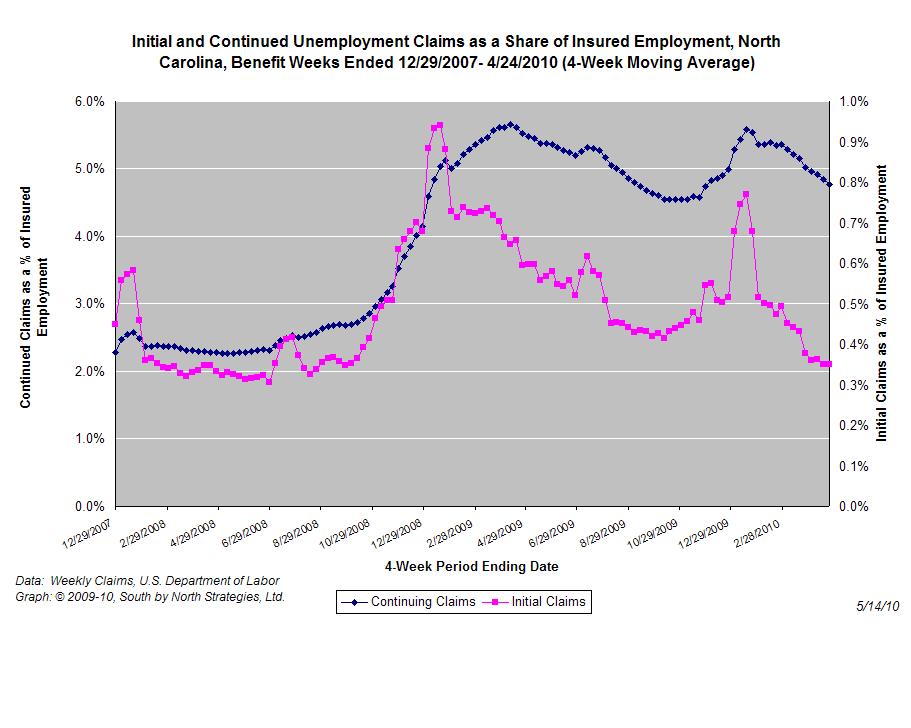
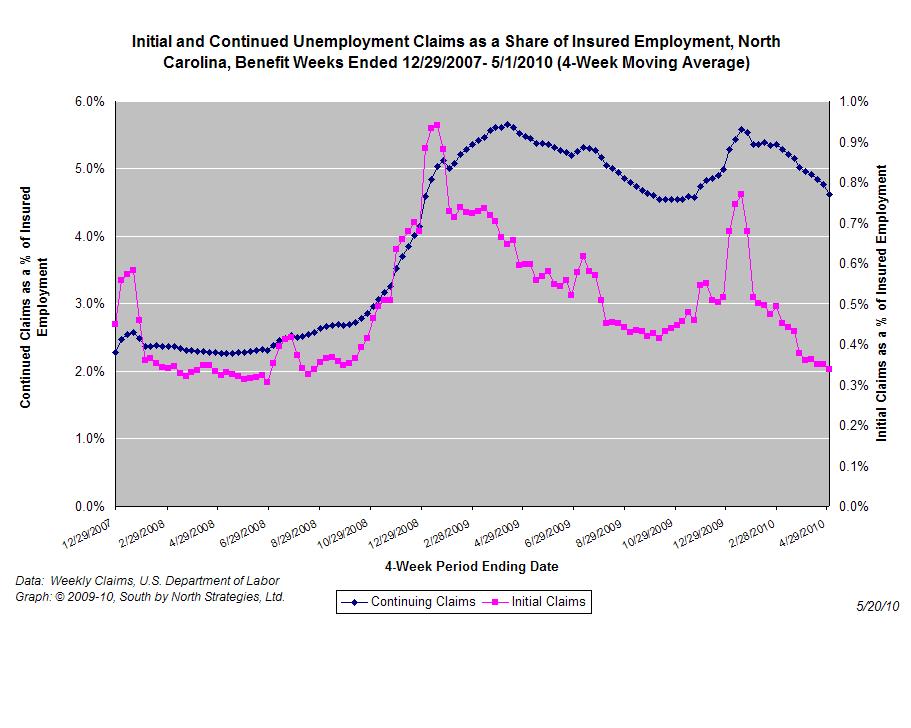
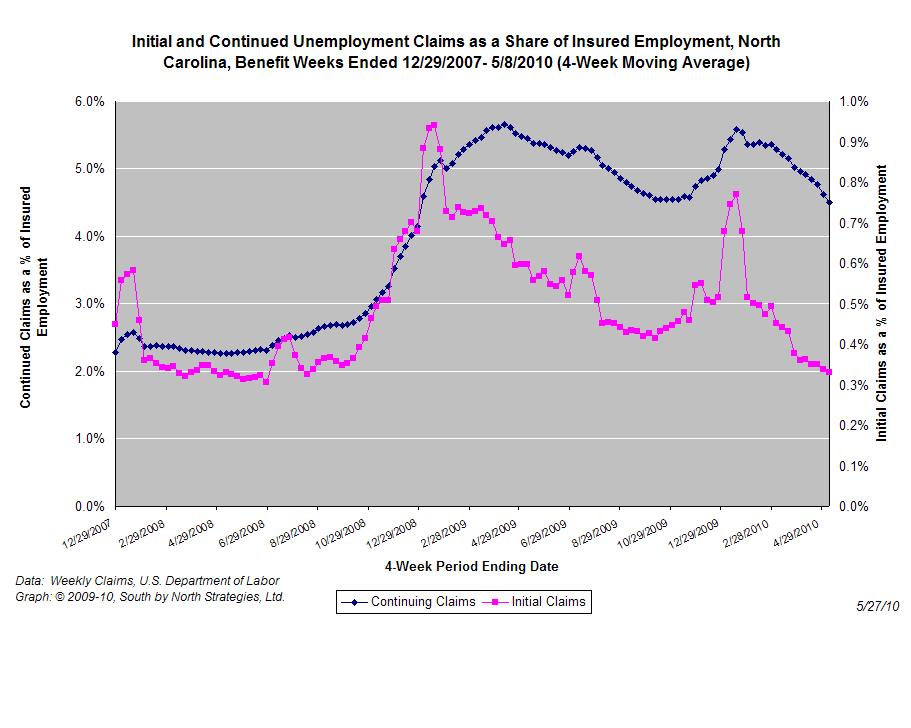
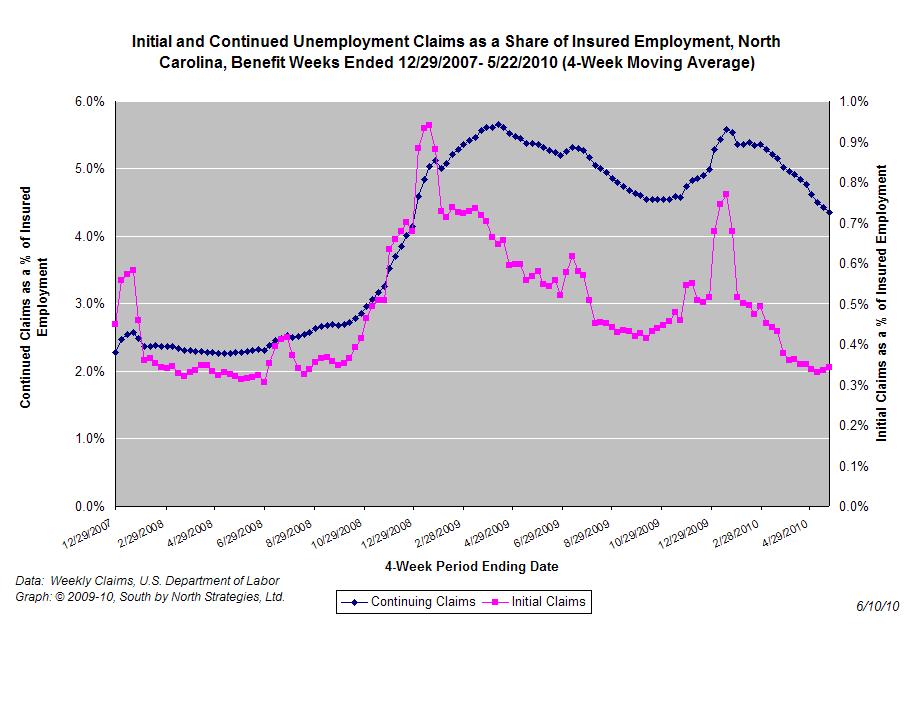
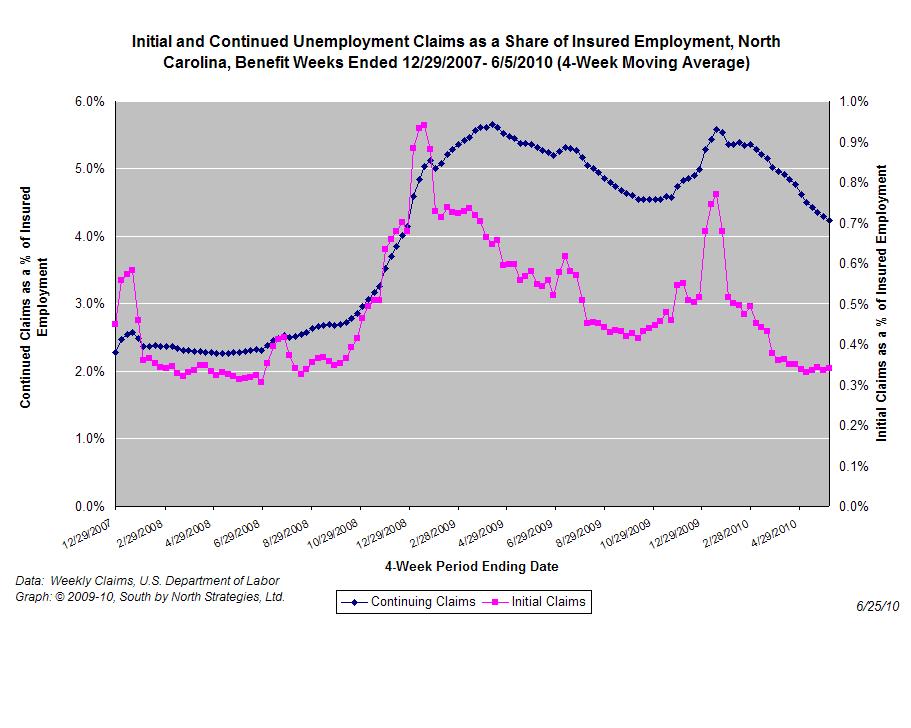
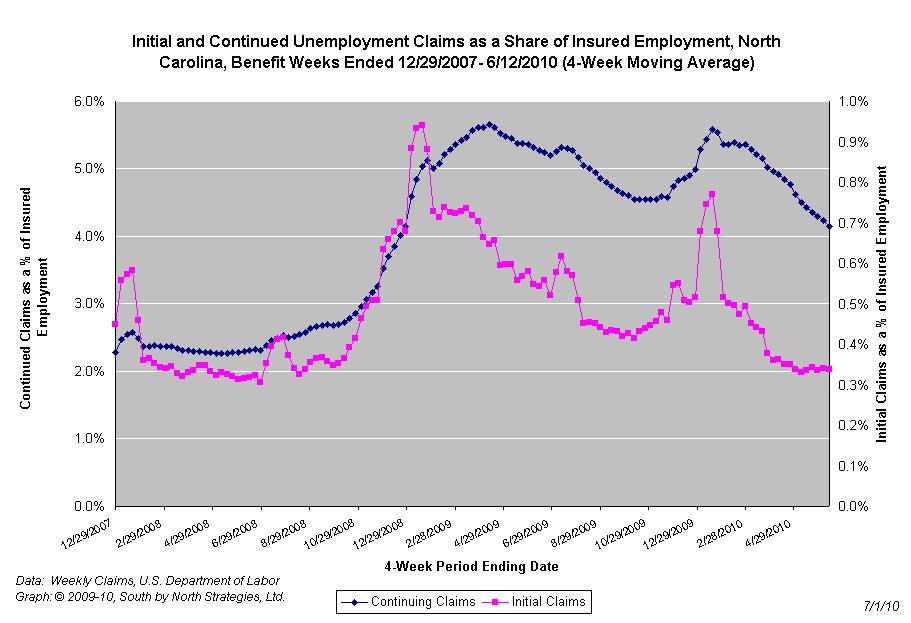
The graph (right) shows the changes in unemployment insurance claims (as a share of covered employment) in North Carolina since the recession’s start in December 2007.
Both new and continuing claims appear to have peaked for this business cycle, and the four-week average of new claims has fallen considerably. Yet continuing claims remain at an elevated level, which suggests that unemployed individuals are finding it difficult to find new positions.
Two Approaches to Economic Change
A recent episode of the radio show This American Life compared the economic policies used in the nations Barbados and Jamaica in response to similar economic crises. Barbados’ choices led to higher levels of growth while Jamaica’s choices led to economic hardships.
Click here to listen to the report (starting at the 37th minute).
Around The Dial – July 7
Economic policy reports, blog postings, and media stories of interest:
- Yves Smith & Rob Parenteau ask why firms stopped investing in themselves.
- Fed Watch worries that America’s job machine is structurally broken.
- The Washington Post profiles Jared Bernstein of the Middle Class Task Force.
- TaxVox notes the contradictions in the unemployment insurance debate.
A Battle to Nowhere
A story in The Washington Independent traces the political twists and turns in Congress’ ongoing argument over extending emergency unemployment insurance benefits in response to record levels of long-term unemployment.
So, the debate has dragged on. Yesterday evening’s failed cloture vote is just the latest in a long line of disappointments and failures around unemployment insurance, known as UI. For the past nine months, the Senate has devoted hours of floor time and hundreds of hours of behind-the-scenes negotiations to ensuring that the government continues to support those left unemployed by the worst labor-market recession since the Great Depression. And for the past nine months, every bill — every extension, every jobs package — has faced staunch opposition from Republicans. Repeatedly, the Senate has had to turn to short-term stopgap measures rather than more permanent extensions. In the words of one aide, “it is beyond frustrating,” particularly since the measures are so noncontroversial. “Frustrating” has become the touchword for advocates of UI — and particularly for the unemployed.
—
The economic establishment stresses that the unemployment checks continue to be not only beneficial, but necessary. Testifying before the National Commission on Fiscal Responsibility and Reform, John Irons, the research and policy director of the Economic Policy Institute argued, “Unemployment should reach 6 percent or lower, and be trending downward, before any fiscal contraction should be seriously considered. In fact, with unemployment hovering near 10 percent and with projections putting unemployment at elevated levels for at least the next couple of years, further job creation is indeed necessary.”
How To Make An American Job
In recent decades, American economic policy has looked to “knowledge industries” like finance, pharmaceuticals, and high tech as drivers of job creation. In a thoughtful piece at Bloomberg.com, Andy Grove, a co-founder of Intel, questions this view and argues that knowledge industries can’t create jobs absent a production capacity.
… Startups are a wonderful thing, but they cannot by themselves increase tech employment. Equally important is what comes after that mythical moment of creation in the garage, as technology goes from prototype to mass production. This is the phase where companies scale up. They work out design details, figure out how to make things affordably, build factories, and hire people by the thousands. Scaling is hard work but necessary to make innovation matter.
—
You could say, as many do, that shipping jobs overseas is no big deal because the high-value work — and much of the profits — remain in the U.S. That may well be so. But what kind of a society are we going to have if it consists of highly paid people doing high-value-added work — and masses of unemployed?
—
The first task is to rebuild our industrial commons. We should develop a system of financial incentives: Levy an extra tax on the product of offshored labor. (If the result is a trade war, treat it like other wars — fight to win.) Keep that money separate. Deposit it in the coffers of what we might call the Scaling Bank of the U.S. and make these sums available to companies that will scale their American operations. Such a system would be a daily reminder that while pursuing our company goals, all of us in business have a responsibility to maintain the industrial base on which we depend and the society whose adaptability — and stability — we may have taken for granted.
 Email Sign-Up
 RSS Feed