The End of the Graduation Initiative
Writing in The New Republic, Kevin Carey documents the collapse of the American Graduation Initiative.
Listening to the administration, you would think none of these failures had occurred. The White House has focused media attention on student loan reform and how it transferred billions of dollars from rich bankers to poor college students. And this is an unquestionably great accomplishment. But the bill-signing ceremony for loan reform was staged at a community college, and Organizing for America’s website declared that the legislation would help 5 million more students earn degrees by revitalizing community colleges—which is true in the alternate universe where the graduation initiative didn’t implode. Obama has also promised a White House “community college summit,” which is what you get in Washington in lieu of actual resources and reform.
—
By allowing Congress to slash higher-education goals from the reconciliation bill, the administration is left with no backup plan to help more students graduate—and no money with which to build one. Just pretending to tackle the graduation problem will undermine this presidency in the long run. Above all, the United States needs strong economic growth and jobs to match. Recession-driven unemployment has brutally discriminated against people without college degrees. Economists across the political spectrum see well-educated workers as the lynchpin of American competitiveness—and note with alarm our declining position relative to other nations. If the administration doesn’t redouble its efforts to help more students graduate, it will look back on the collateral damage of the reconciliation bill with far more regret than anyone imagines today.
Around the Dial – April 15
Economic policy reports, blog postings, and media stories of interest:
- Paul Krugman wonders about the secrets of banks’ success.
- The Washington Post looks at basic literacy education for adults.
- Andrew Sum documents the disparate impact of job losses.
NC Unemployment Claims: Week of 3/27
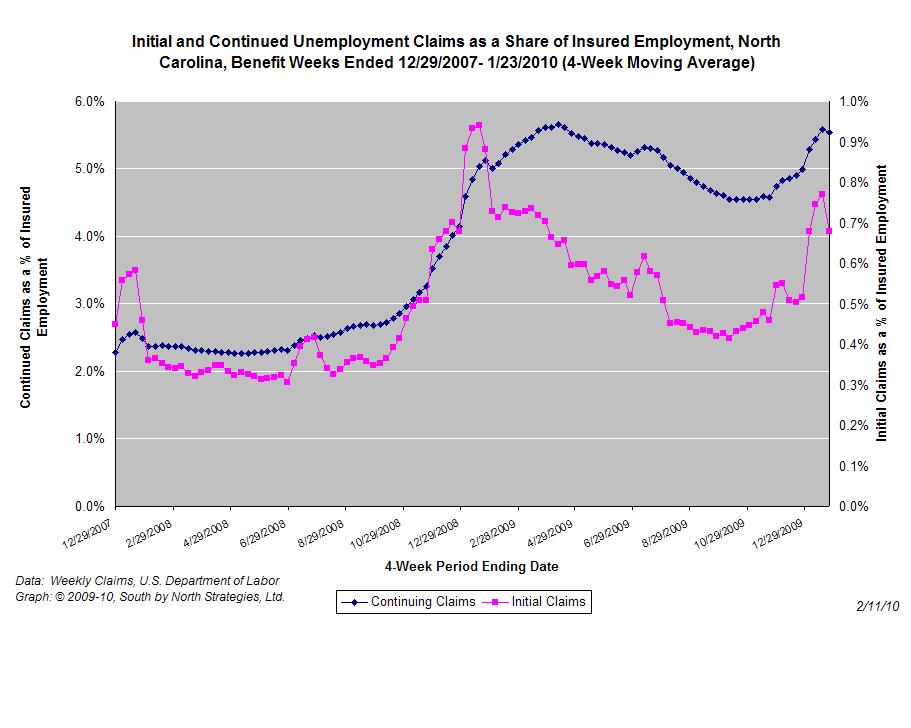
For the benefit week ending on March 27th, 12,323 North Carolinians filed initial claims for state unemployment insurance benefits, and 1987,429 individuals applied for state-funded continuing benefits. Compared to the prior week, there were fewer initial and continuing claims. (Note the filing week had one fewer day due to the Good Friday state government holiday.) These figures come from data released today by the U.S. Department of Labor.
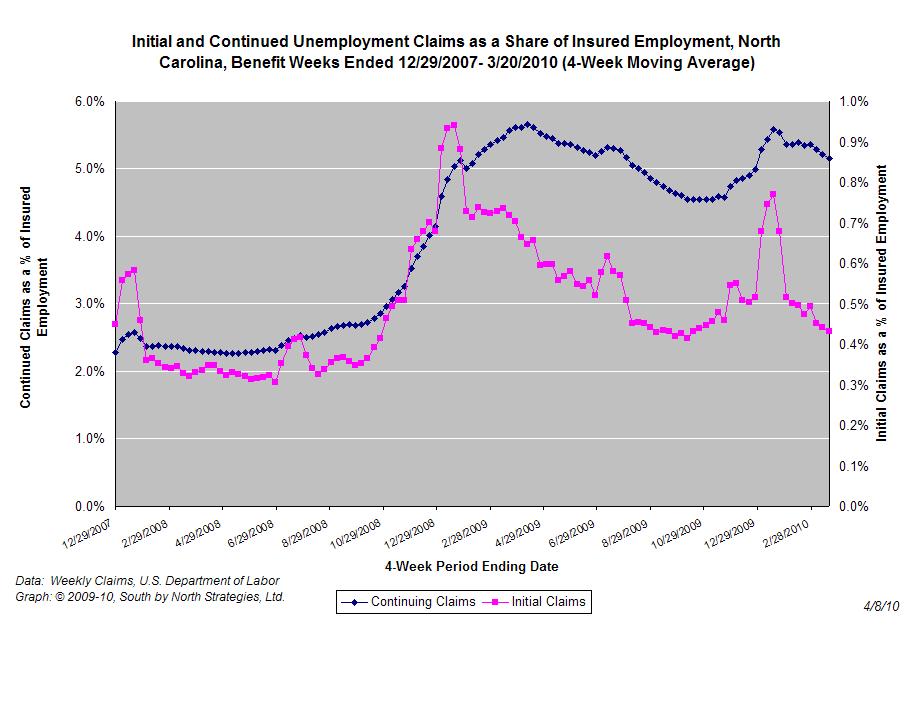
Averaging new and continuing claims over a four-week period — a process that helps adjust for seasonal fluctuations and better illustrates trends — shows that an average of 14,610 initial claims were filed over the last four weeks, along with an average of 194,750 claims. Compared to the previous four-week period, both initial and continuing claims were lower.
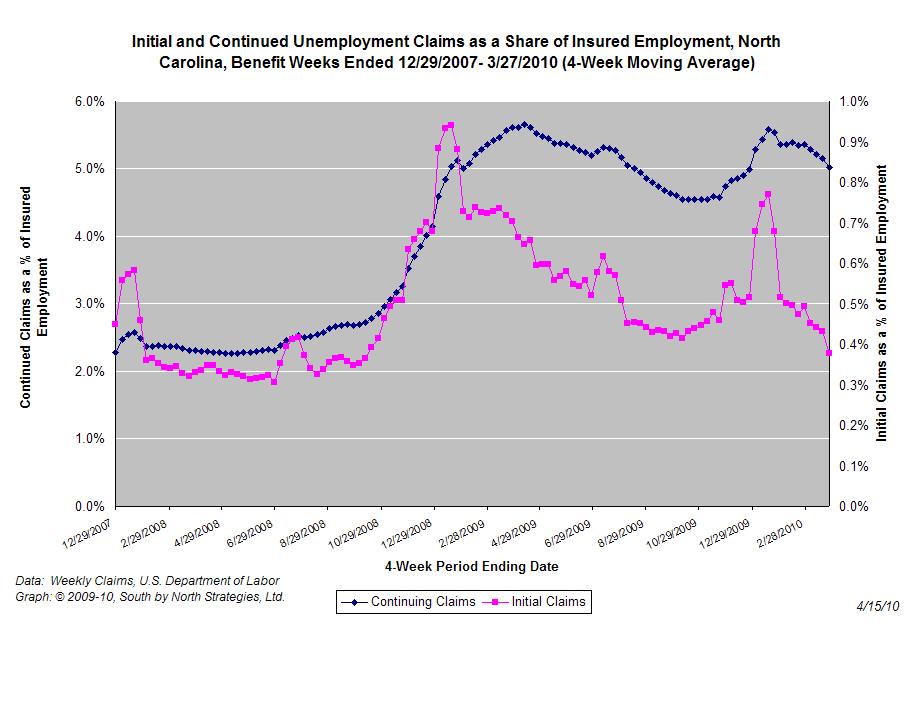 One year ago, the four-week average for initial claims stood at 28,393 and the four-week average of continuing claims equaled 226,231.
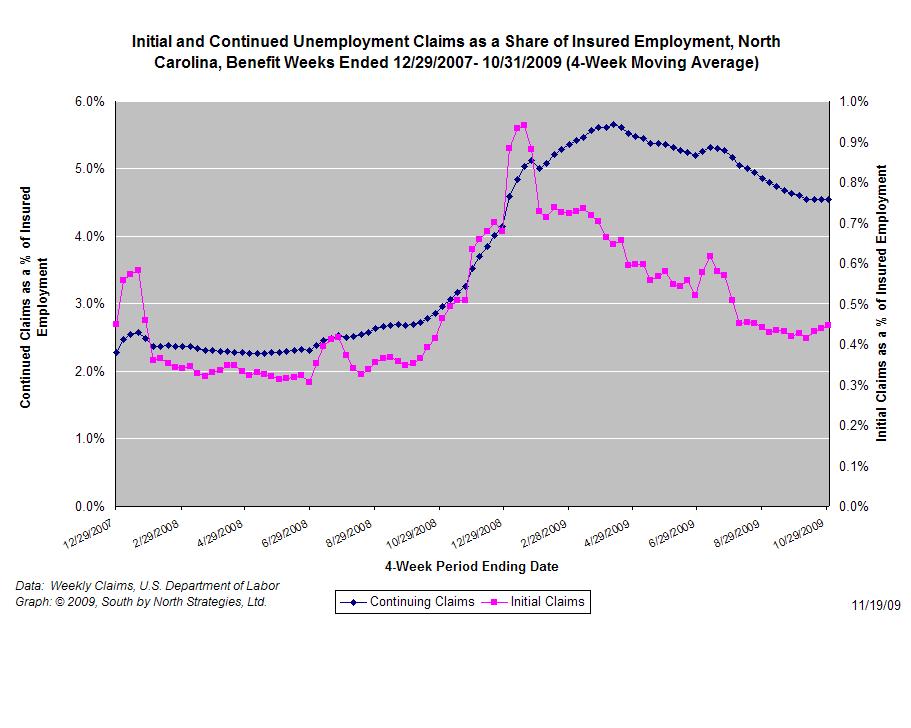
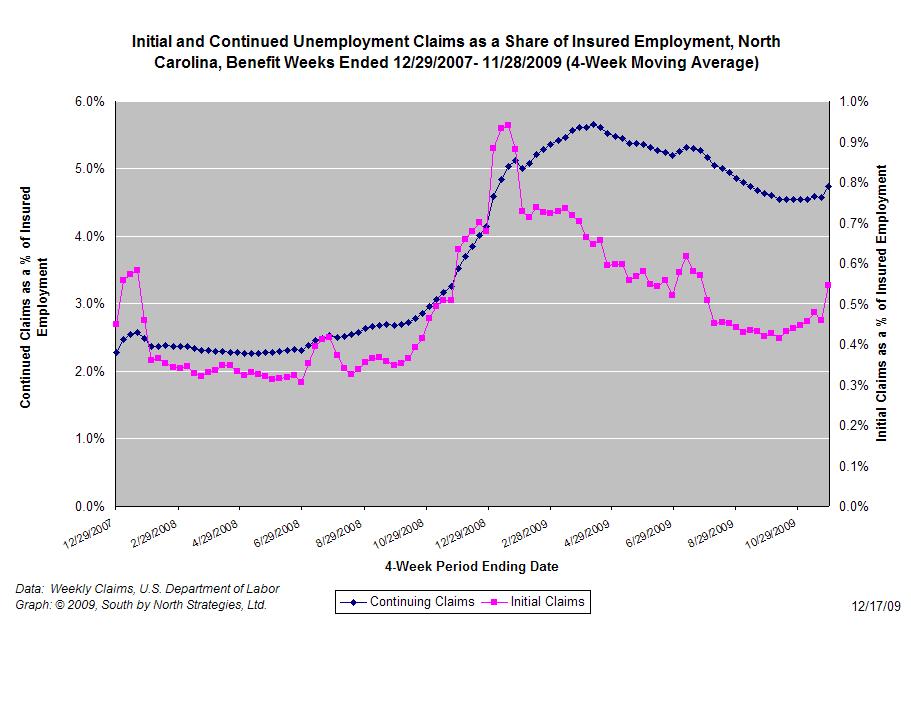
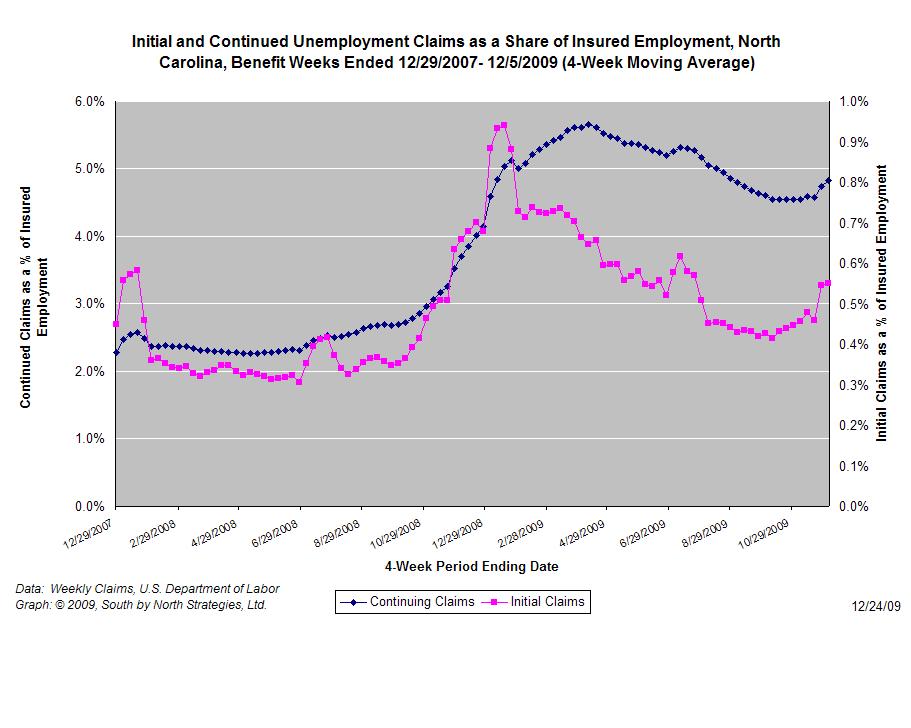
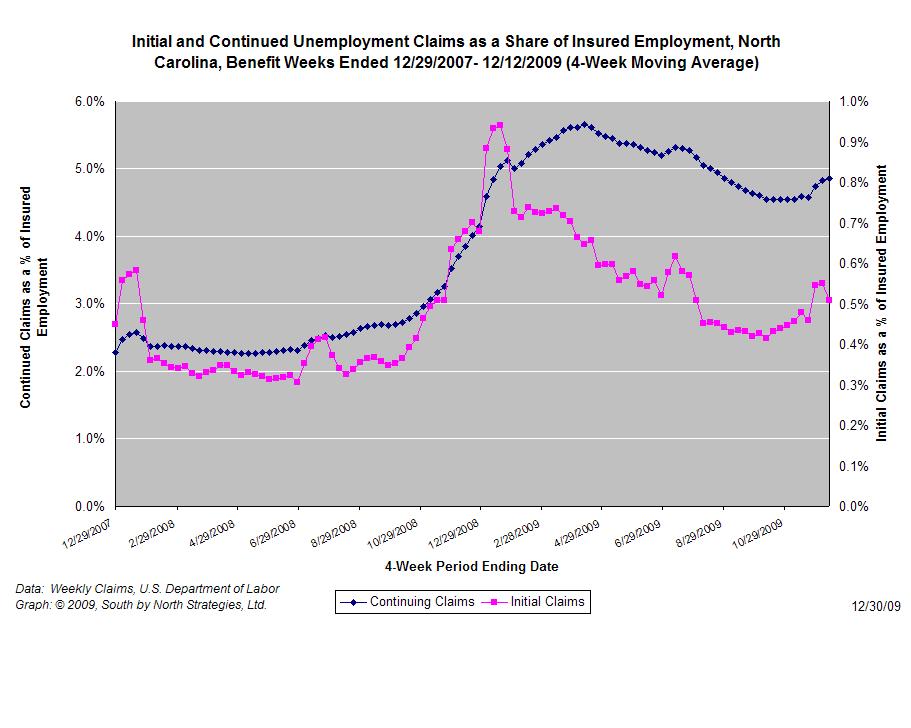
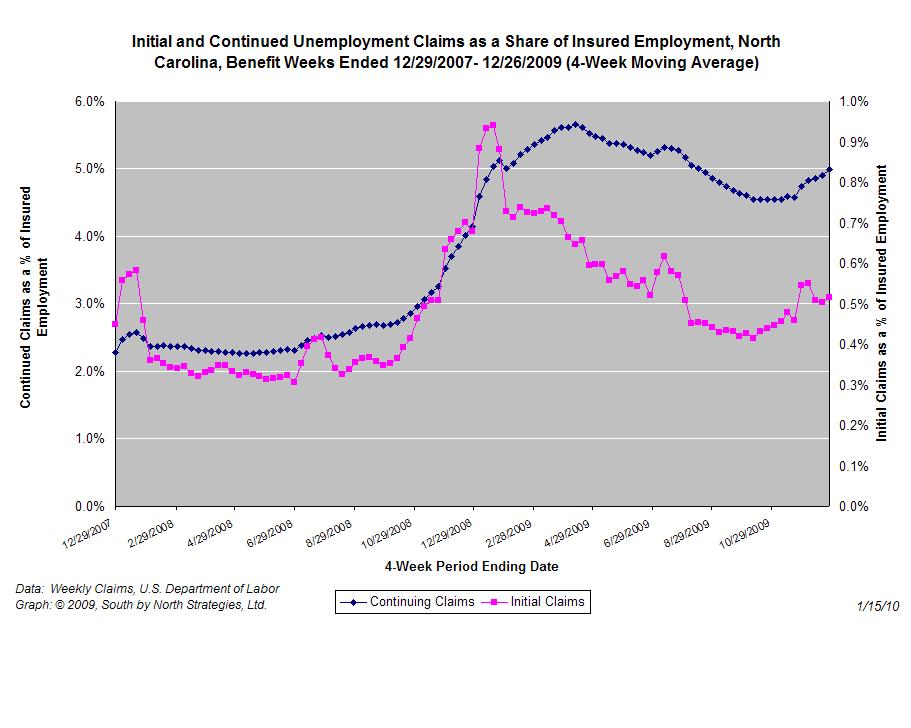
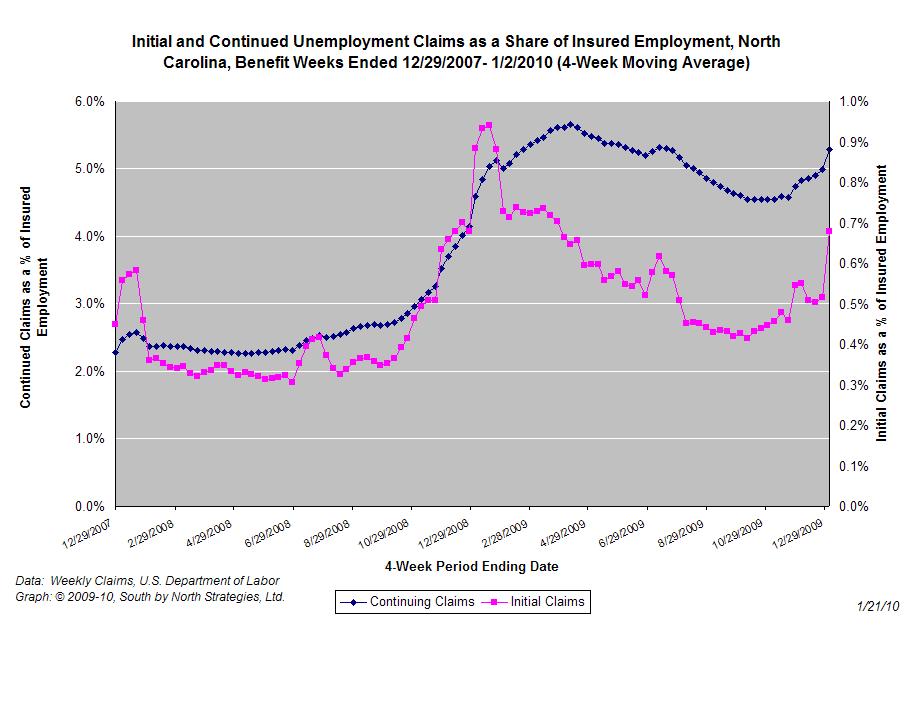
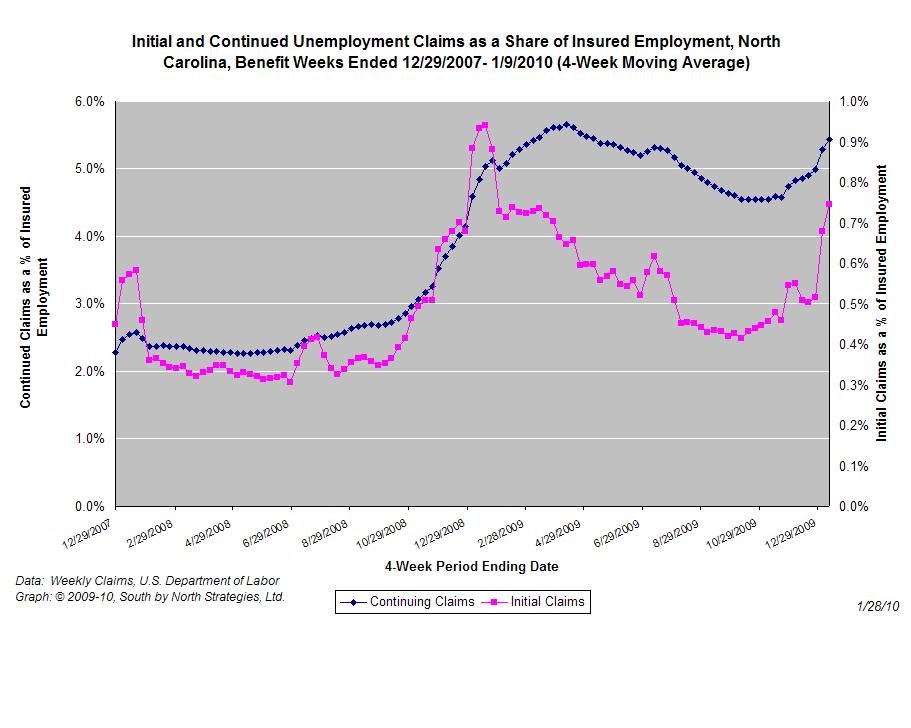
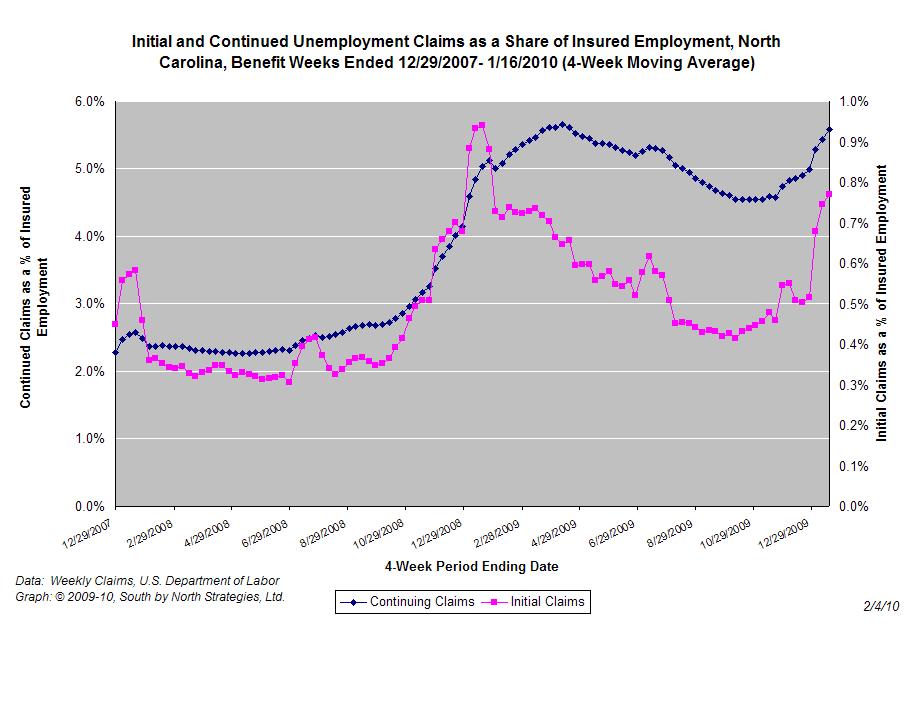
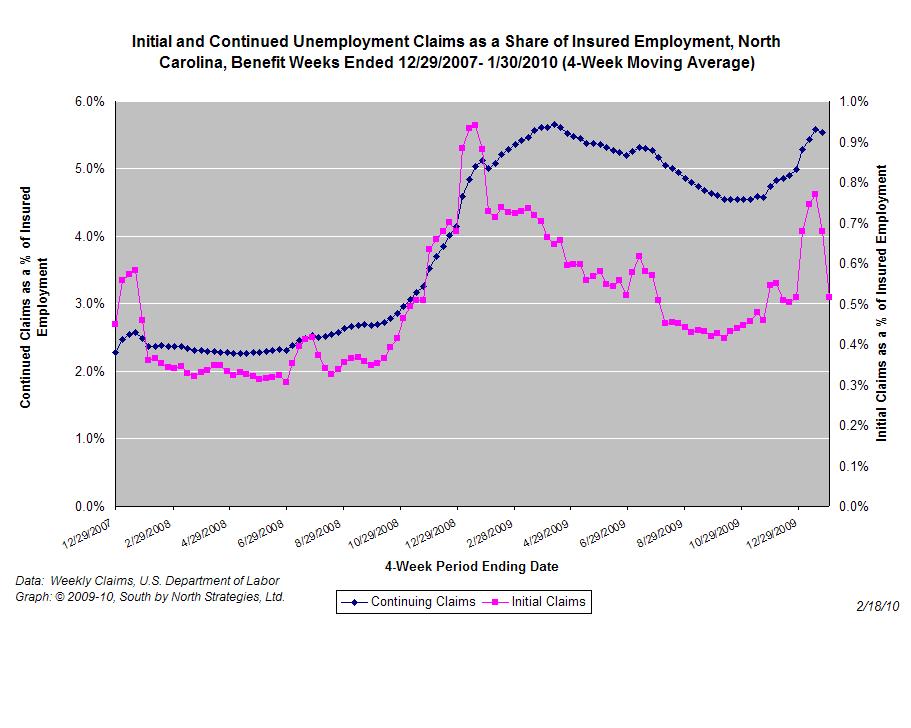
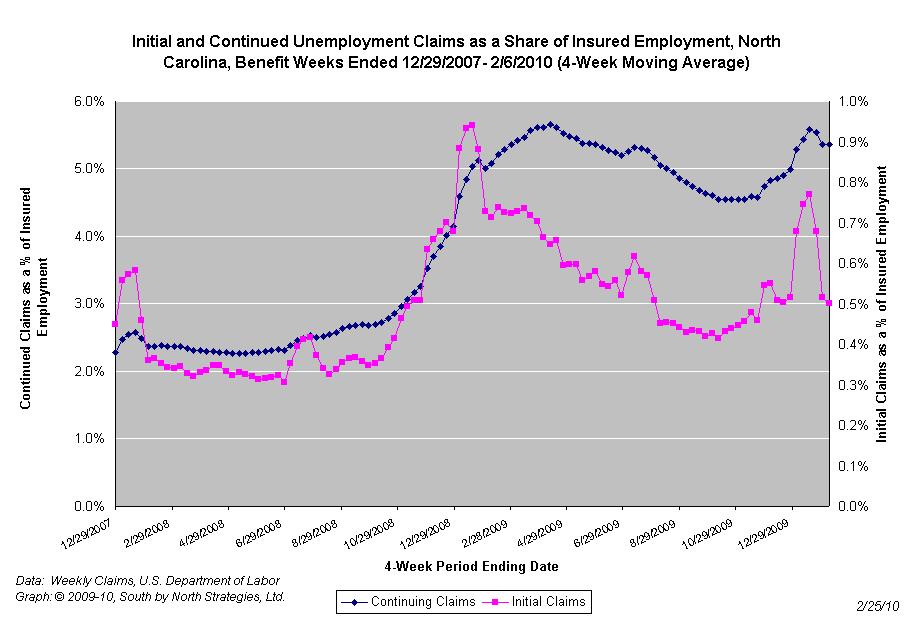
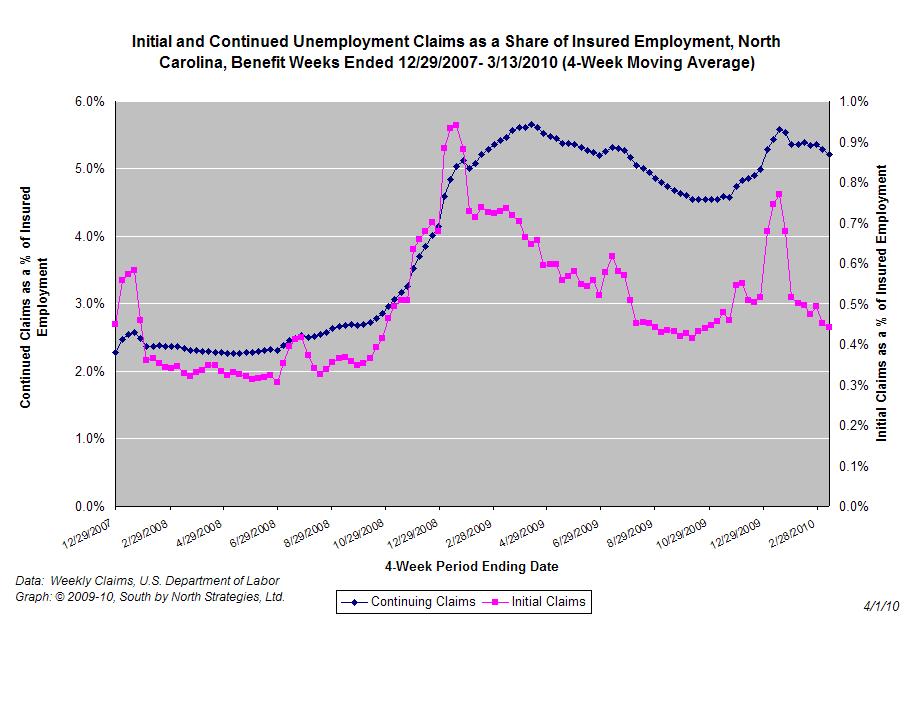
The graph (right) shows the changes in unemployment insurance claims (as a share of covered employment) in North Carolina since the recession’s start in December 2007.
Both new and continuing claims appear to have peaked for this business cycle, and the four-week average of new claims has fallen to a level last seen in October 2008. Yet continuing claims remain at an elevated level, which suggests that unemployed individuals are finding it extremely difficult to find new positions.
Tax Day Humor
A little tax day humor, courtesy of The Daily Show.
| The Daily Show With Jon Stewart | Mon – Thurs 11p / 10c | |||
| That’s Tariffic | ||||
|
||||
Around the Dial – April 14
Economic policy reports, blog postings, and media stories of interest:
- The New Yorker discusses the tie between elections and economics.
- Calculated Risk looks at the household debt figures.
- Naked Capitalism asks why economists ignore the real world.
 Email Sign-Up
 RSS Feed