

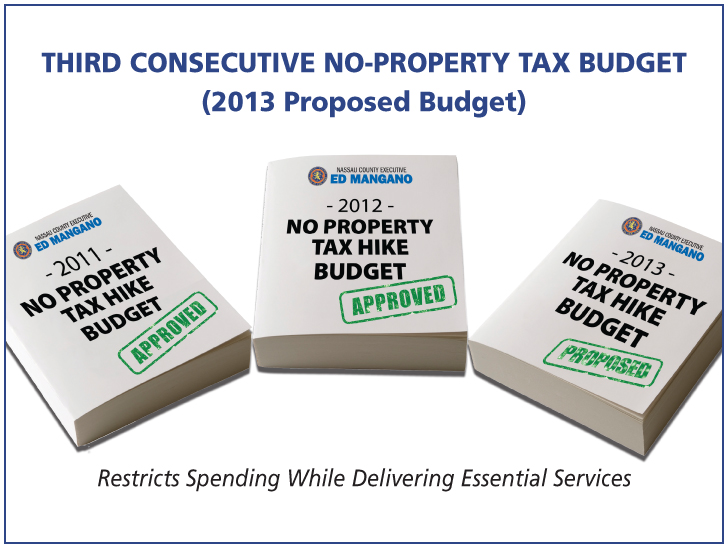
A Not-So-Subtle Tax Message
Courtesy of Edward Mangano, the county executive of Nassau County, New York, where John Quinterno of South by North Strategies was raised.
Around The Dial – October 16, 2012
Economic policy reports, blog postings, and media stories of interest:
- Chrystia Freeland foresees “the self-destruction of the 1 percent.”
- The New York Times profiles economist Glenn Hubbard.
- The News & Observer reports on economic development policy.
- Dean Baker discusses the applicability of deficit spending.
Not Like A Business
Jordan Weissmann of The Atlantic explains “why conservatives don’t really want the U.S. to run like a business.”
Think, for a moment, about what corporations are. They exist to make a return for shareholders and are generally managed from the top down. Every few months, a CEO has to ask themselves: “Are my investors richer than they were four quarters ago?” If the answer is yes, chances are they’ve done their job. If the answer is no, it’s their obligation to cut costs and boost revenue. Once the boss comes up with a strategy for making it happen, it’s everybody else’s task to implement it.
…
Upshot: They’re dictatorships that turn a profit.
…
This is not how most people envision the United States, thankfully, and especially not conservatives. We’re a messy democracy that leaves much in our economy up to chance (or, if you prefer, the market). There’s no official growth target for the economy. The Federal Reserve can set all the employment benchmarks it wants, and nobody else is required to play along. Congress can tell the president to take his jobs plan and shove it. Corporations can take tax cuts designed to spur hiring and spend them on fat dividend checks for shareholders instead.
Around The Dial – October 15, 2012
Economic policy reports, blog postings, and media stories of interest:
- James Kwak explains “why taxes should pay for health care.’
- Bruce Katz describes “the next economy in Metro Atlanta.”
- Joe Hines explains why Social Security isn’t going broke.
- Wonkblog notes how raising the Social Security age “hits the poor the hardest.”
- Working Economics asks “how much do you really pay in taxes.”
Graphing Wage Stagnation
Working Economics illustrates the erosion of real (inflation-adjusted) wages in the United States between 1973 and 2011.

 Email Sign-Up
 RSS Feed