

Choosing Inequality
Jared Bernstein points out that the rise in inequality has to do with more than just taxes and results in part from other policy choices that shape how the benefits of economic growth are distributed.
One more biggie: full employment. It’s very much a policy variable and one, in fact, that used to be the law for the Federal Reserve—so-called Humphrey Hawkins Act mandated full employment as a policy goal of the Fed. As I stress here, the fact that our job market has run with so much slack over the very period when inequality grew so quickly is no coincidence (and visa-versa: when inequality was flat or falling, we were more likely to be at full employment).
…
And of course, in recession, like now, by dithering on stimulus, we’re disproportionately hurting the wage, incomes, and living standards of the folks who’ve been losing income share over the years shown in the figure above.
…
In other words, there are a lot of policy measures that have considerable impact on how the benefits of growth are distributed—before taxes even show up on the scene. When representatives of the wealthy squeal about “class warfare,” they’re not just talking about shielding their treasure from the tax system. They’re also protecting and endorsing a policy agenda that’s helped tilt growth their way for a long time.
Around The Dial – September 26, 2011
Economic policy reports, blog postings, and media stories of interest:
- Christina Romer argues why a jobs plan needs a hearing.
- Robert Shiller explains the limits of consumer confidence surveys.
- Working Economics runs down the latest Census data on income and poverty.
- New Deal 2.0 points out 10 reasons why the postal service matters.
- Paul Krugman describes a “Euro Zone Death Trip.”
In The News – September 2011
Research prepared by South by North Strategies was featured in several media stories during the month of September:
- The Winston-Salem Journal: “N.C. jobless rate rises to 10.4 percent”
- The News & Record: “N.C. unemployment rises to 10.4 percent”
- State Government Radio: “Labor expert says private market growth gloomy”
- The News & Record:“Area job losses continue to mount”
- The News & Observer: “Triangle’s unemployment rate creeps up”
- The Durham Herald-Sun: “Unemployment rises very slightly for Durham, Chapel Hill”
- The High Point Enterprise: “Fewer working: jobless rate rises to 11 percent”
- The Winston-Salem Journal: “Job gains don’t keep area unemployment from rising”
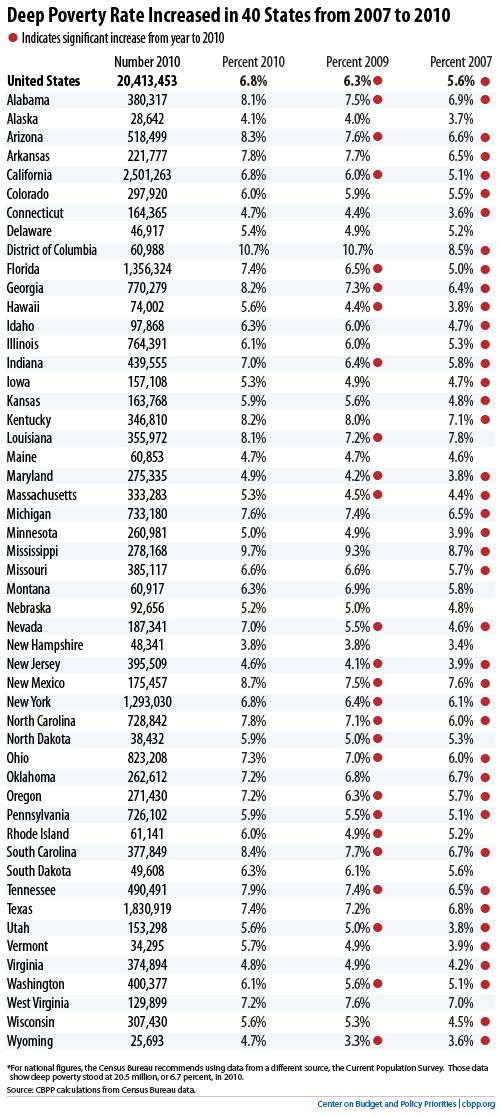
The Rise In “Deep Poverty”
Off the Charts tracks the rise in deep poverty, meaning people with income below half of the federal poverty level, between 2007 and 2010. Over that period, deep poverty rose in 40 states and the District of Columbia and declined in no states. As a result, 20.4 million Americans experienced deep poverty in 2010.
Around The Dial – September 23, 2011
Economic policy reports, blog postings, and media stories of interest:
- Robert Skidelsky has a history lesson for Angela Merkel.
- Bill Black wonders why “banking regulators bother to conduct faux stress tests.”
- Martin Wolf explains why Europe finds that “breaking up is so hard to do.”
 Email Sign-Up
 RSS Feed