

South by North In The News: June 2011
South by North Strategies economic analyses have been featured in numerous media stories so far in June 2011.
- Triangle Business Journal: “Small businesses not creating jobs”
- The News & Record: “Guilford’s job losses shocking”
- Signal Hill: “Graduates face tough job prospects”
- Viewpoints: Radio interview on state of the labor market.
- The Winston-Salem Journal: “Obama jobs visit puts NC in national spotlight”
- The Times-News: “Obama jobs visit puts NC in national spotlight”
- The News-Argus: “Obama visit to put NC in national spotlight”
- WXII-12: “Obama announces jobs initiative during NC Speech”
- The Durham Herald-Sun: “Jobless rate holds at 9.7 percent”
- The Rocky Mount Telegram: “Jobless rate holds steady at 9.7 percent”
- The Winston-Salem Journal: “State jobless rate holds steady at 9.7 percent”
- The News & Record: “NC unemployment rate remains unchanged”
- The Daily Advance: “NC jobless rate holds steady at 9.7 percent”
Strengthening Developmental Education
A recent research report from the N.C. Budget and Tax Center proposed “four evidence-based policy directions” for strengthening the developmental education courses offered through the North Carolina Community College System.
Demand for a workforce with more skills training and education is necessarily driving the need for reform of developmental education in North Carolina. It is unfortunate the movement toward this critical economic goal is building just as the state faces its third year of fiscal challenges, which the legislature is responding to by cutting investments rather than seeking new revenue sources. The results will hopefully not impact the important efforts underway in the community college system to ensure that students are successful achieving the goals of their educational programs.
…
Private foundations that have heretofore seeded developmental education initiatives should not be left alone to support greater scale. The state of North Carolina has a stake in the outcomes that community colleges are able to achieve and thus should be investing innovation and reform. It is equally important that policymakers and the system be guided by the goal of ensuring that reform and innovation are accessible to all and capable of serving those with the greatest barriers to success. Adult workers who enroll in skills training and post-secondary education must be considered in the design and implementation of policies and programs. Their success in attaining credentials or degrees will be critical to their ability to earn family-sustaining wages and support North Carolina’s strong economy in the future.
Around The Dial – June 20, 2011
Economic policy reports, blog postings, and media stories of interest:
- Robert Reich writes about the role of unions.
- Simon Johnson notes the coming fight over capital standards for banks.
- Martin Wolf explains “how China could yet fail like Japan.”
- Economist’s View asks if the current slowdown is temporary.
- Econbrowser think that the debt ceiling debate is the wrong “game of chicken.”
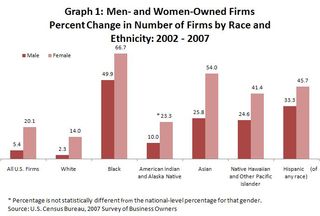
Who Owns Small Businesses?
Last week, the U.S. Census Bureau released new data about business ownership, broken out by race and gender. The data show that, while the total number of businesses in the country increased 17.9 percent between 2002 and 2007, the number of minority-owned businesses grew by 45.5 percent.
Minimum Wage Research
A Center for American Progress review of the most recent research into the employment effects associated with raising the minimum notes that increases don’t increase unemployment, even during recessions.
In short, the academic research suggests that even during hard economic times, raising the minimum wage doesn’t reduce employment.
…
Why is this the case? Studies generally find that policies that increase the compensation of low-wage workers significantly reduce turnover, boost worker effort,encourage employers to invest in training for their workers, and can increase demand for goods and services—all of which help balance out any potential negative effects.
…
There may be another factor that comes into play even more during hard times—economic power. Low-wage workers have very little of it, particularly during periods of high unemployment.
…
When the economy is doing poorly , employers have less incentive e to raise wages, while workers, especially those making near minimum wage, have little ability to demand a raise because there is a ready supply of unemployed labor available to take their job. Even though these workers likely become more productive … they have less economic power to ask to be paid for their increased productivity. This suggests that during hard economic times, there is a critical role for government to raise the minimum wage to ensure workers are being paid for their economic contributions.
 Email Sign-Up
 RSS Feed