Lost Perspective
Calculated Risk worries that policymakers are forgetting a troublesome reality.
There are currently 7.25 million fewer payroll jobs than before the recession started in 2007, with 13.5 million Americans currently unemployed. Another 8.4 million are working part time for economic reasons, and about 4 million more workers have left the labor force. Of those unemployed, 6.1 million have been unemployed for six months or more.
…
So even as we start to discuss how to fix the structural budget deficit, and also to address the long term fiscal challenges from healthcare costs, we can’t forget about all of these Americans.
Democracy vs. Finance
Robert Skidelsky worries about the growing conflict between the standards of democracy and finance.
This is not to deny that some governments have been living beyond their means, and that shorting their debt is how financial markets hold them accountable. But, in the last resort, it is voters, not markets, which hold governments to account. When these two accounting standards diverge, the popular standard must prevail if democracy is to survive.
…
The tension between democracy and finance is at the root of today’s rising discontent in Europe. Popular anger at budget cuts imposed at the behest of speculators and bankers has toppled leaders in Ireland and Portugal, and is forcing the Spanish prime minister into retirement.
…
Of course, there are other targets: Muslim immigrants, ethnic minorities, bankers’ bonuses, the European Commission, the ECB. Nationalist parties are gaining ground. In Finland, the anti-European True Finns party has shot up from nowhere to the brink of power.
…
So far, none of this has shaken democracy, but when enough people become vexed at several things simultaneously, one has the makings of a toxic political brew. Nationalism is the classic expression of thwarted democracy.
Editor’s Note
Policy Points will not appear today due to the observance of Good Friday. Normal posting will resume on Monday, April 25, 2011. Thank you for your interest in the blog.
Around The Dial – 4/21/11
Economic policy reports, blog postings, and media stories of interest:
- Rortybomb lays out a case for public options.
- Free Exchange isn’t too worried about the US debt position.
- Off the Charts looks at the benefits of rental assistance programs.
- Simon Johnson points out that the long-term deficit is a function of health care.
- Naked Capitalism muses about political economy and plutocracy.
NC Unemployment Claims: Week of 4/2
For the benefit week ending on April 2nd, 17,143 North Carolinians filed initial claims for state unemployment insurance benefits, and 121,940 individuals applied for state-funded continuing benefits. Compared to the prior week, there were more initial and continuing claims. These figures come from data released by the U.S. Department of Labor.
Averaging new and continuing claims over a four-week period — a process that helps adjust for seasonal fluctuations and better illustrates trends — shows that an average of 13,483 initial claims were filed over the previous four weeks, along with an average of 121,542 continuing claims. Compared to the previous four-week period, there were more initial and fewer continuing claims.
One year ago, the four-week average for initial claims stood at 13,904 and the four-week average of continuing claims equaled 191,875.
While the number of claims has dropped over the past year so has covered employment. Last week, covered employment totaled 3.7 million, down from 3.9 million a year ago.
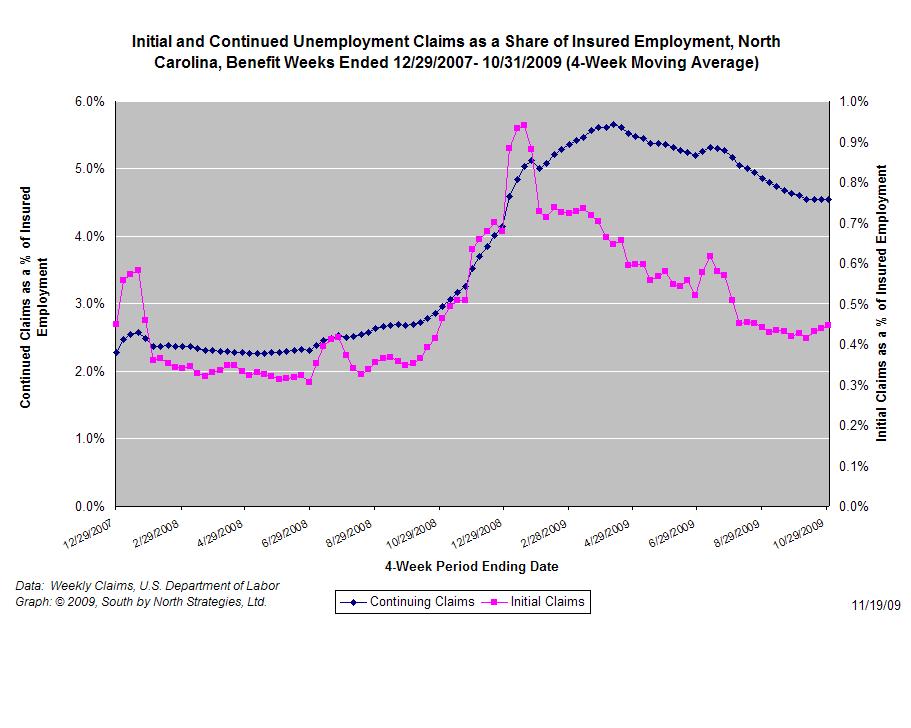
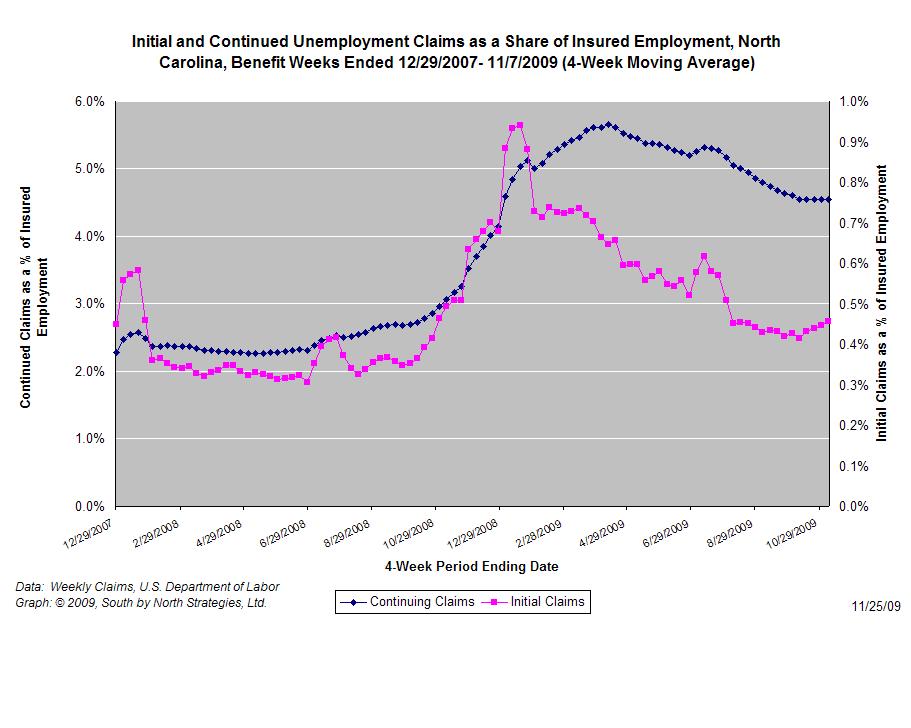
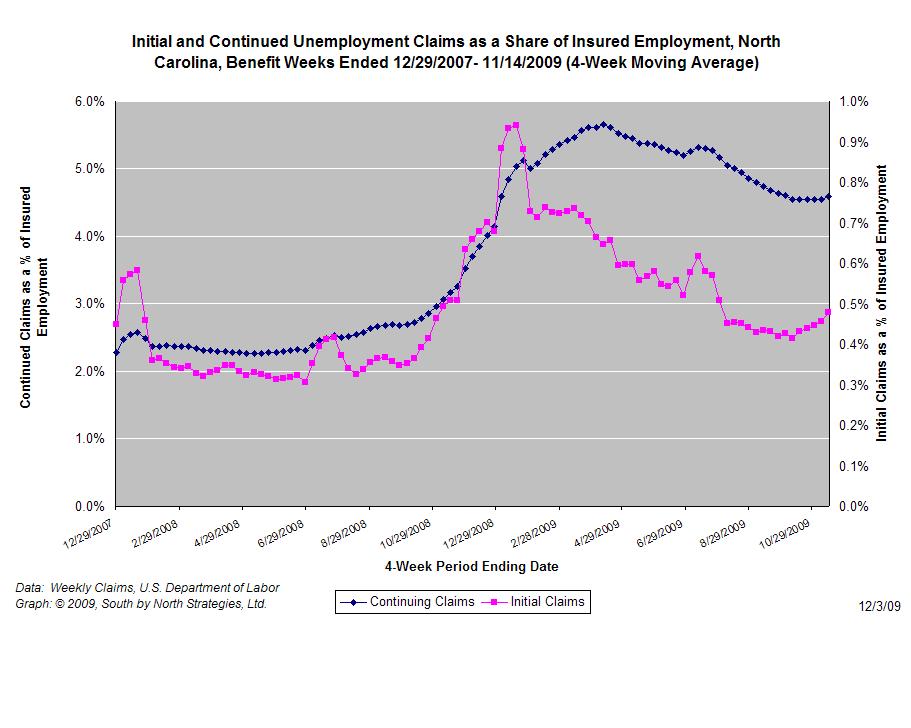
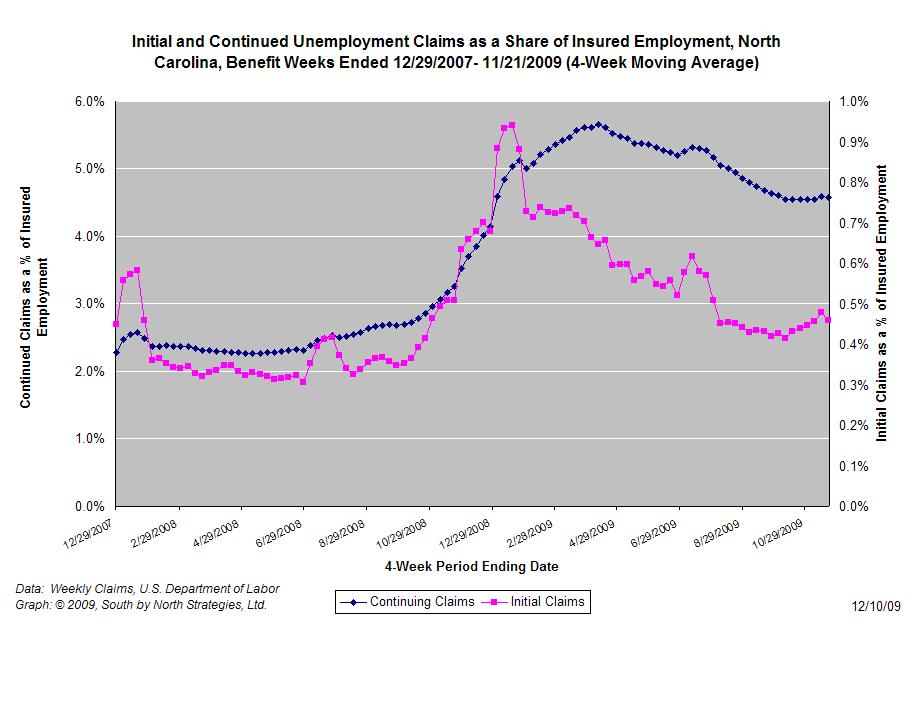
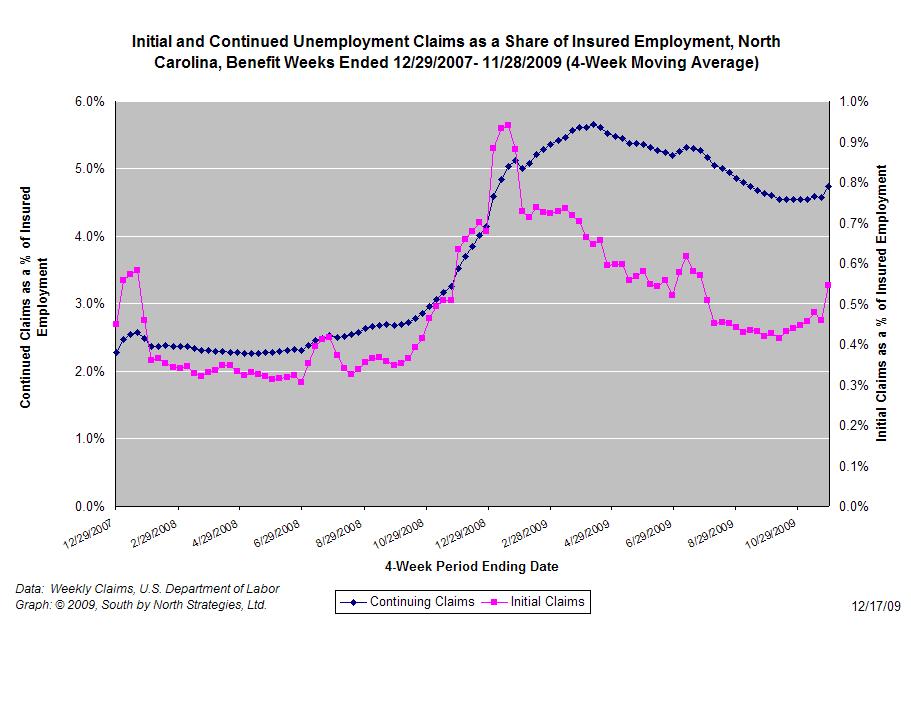
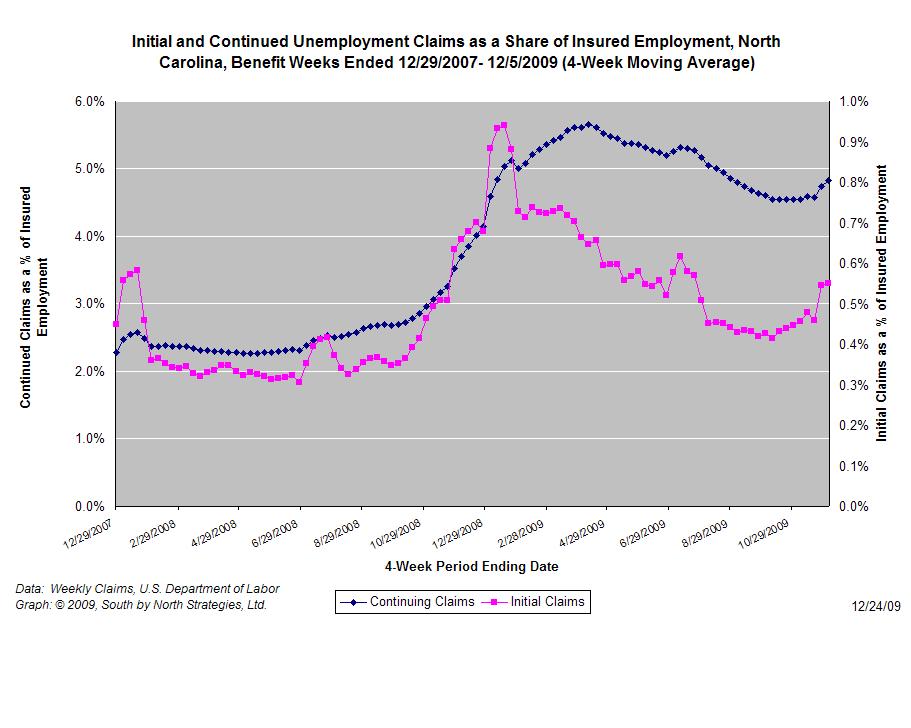
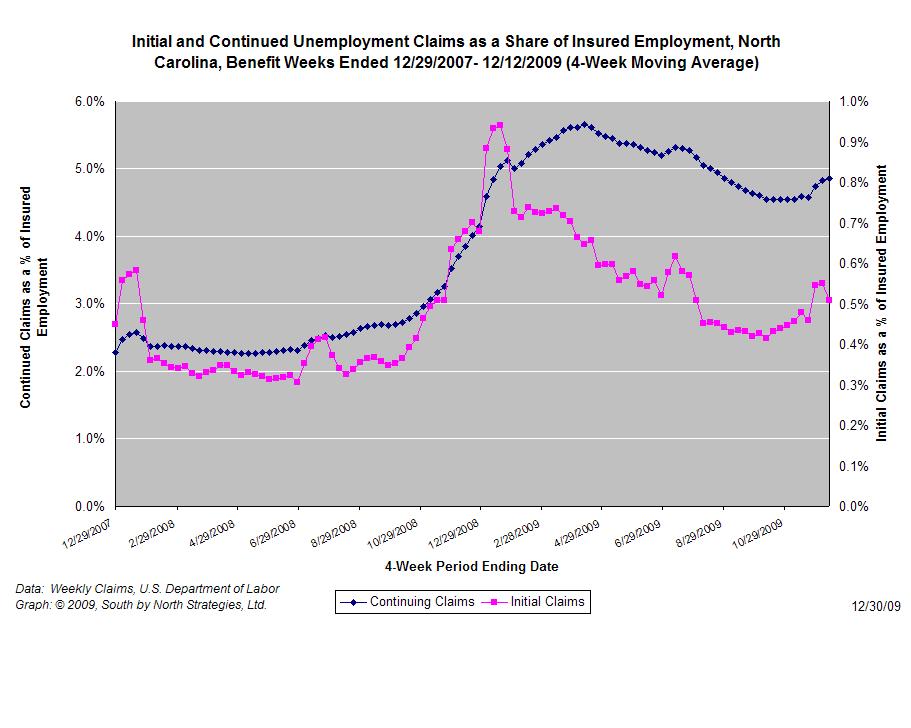
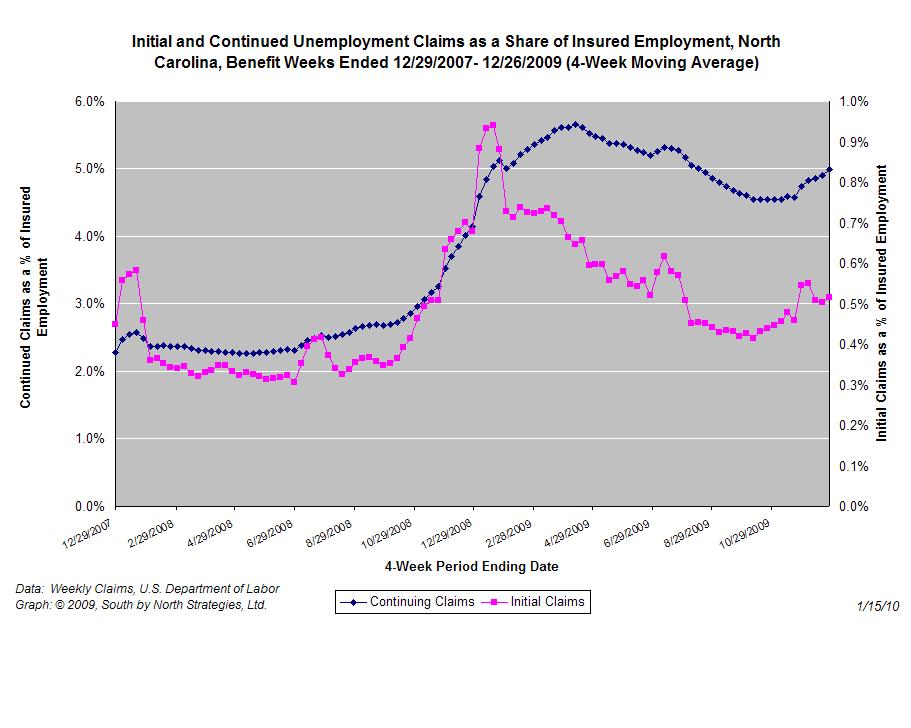
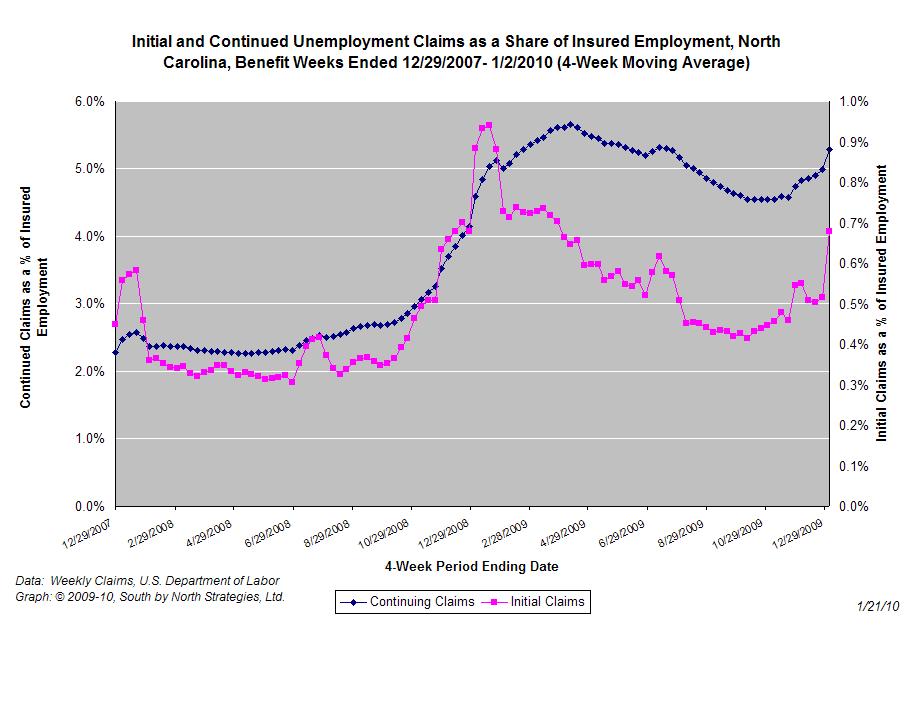
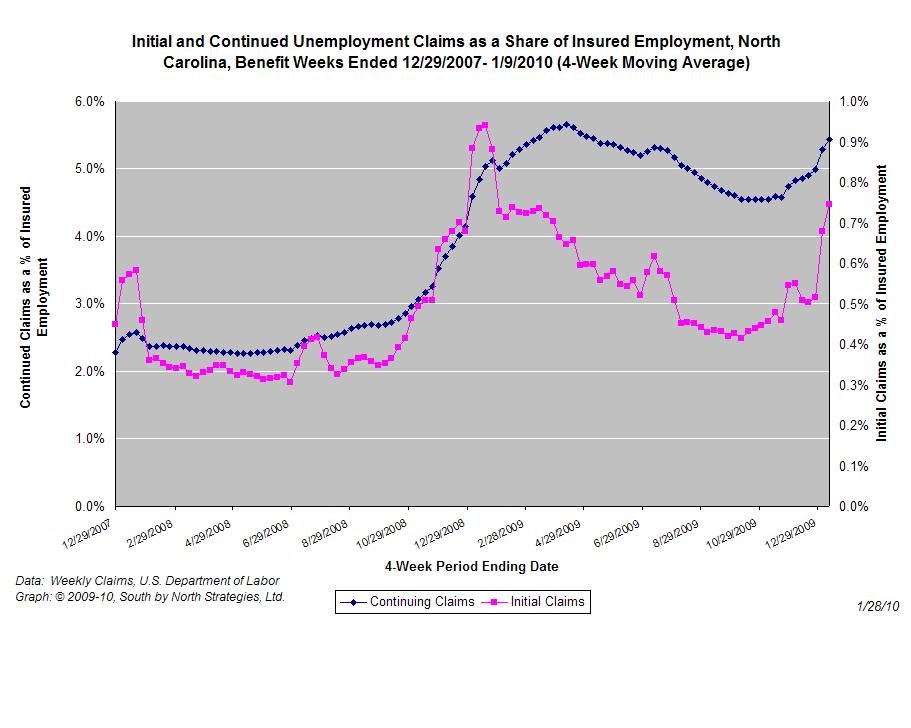
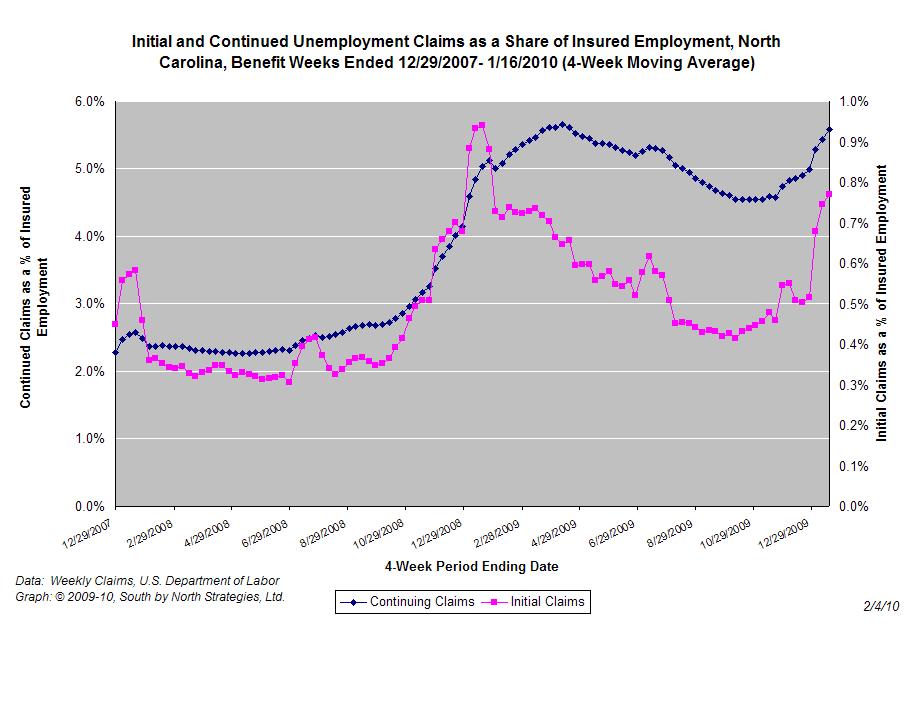
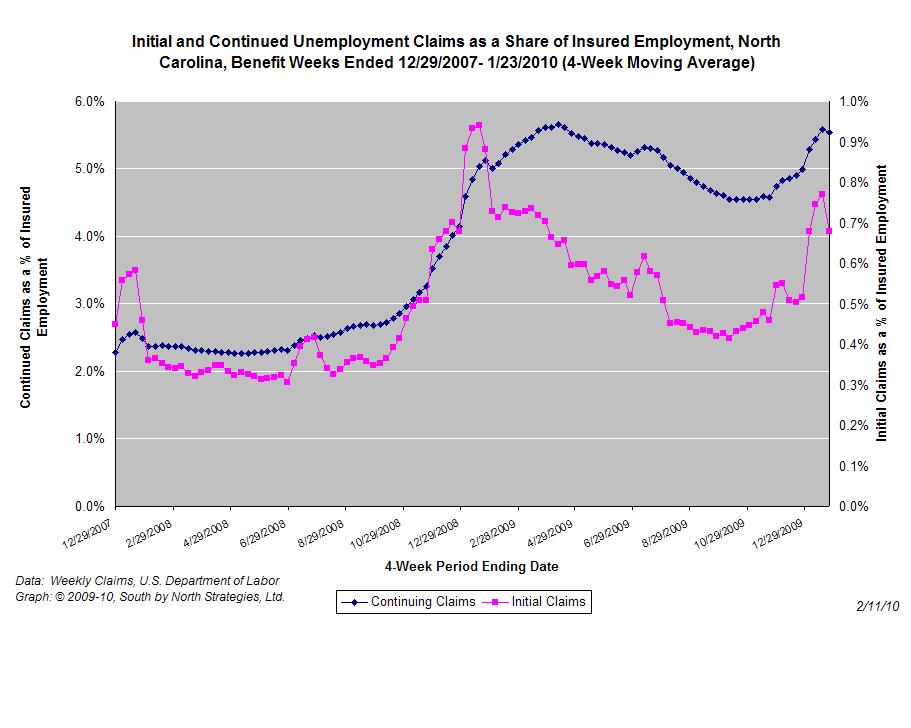
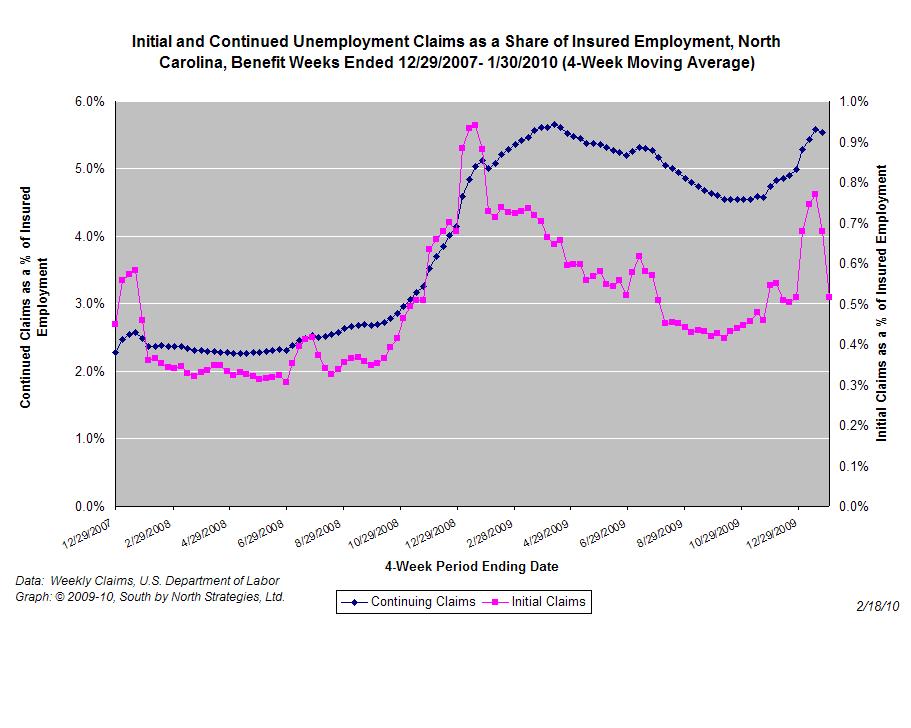
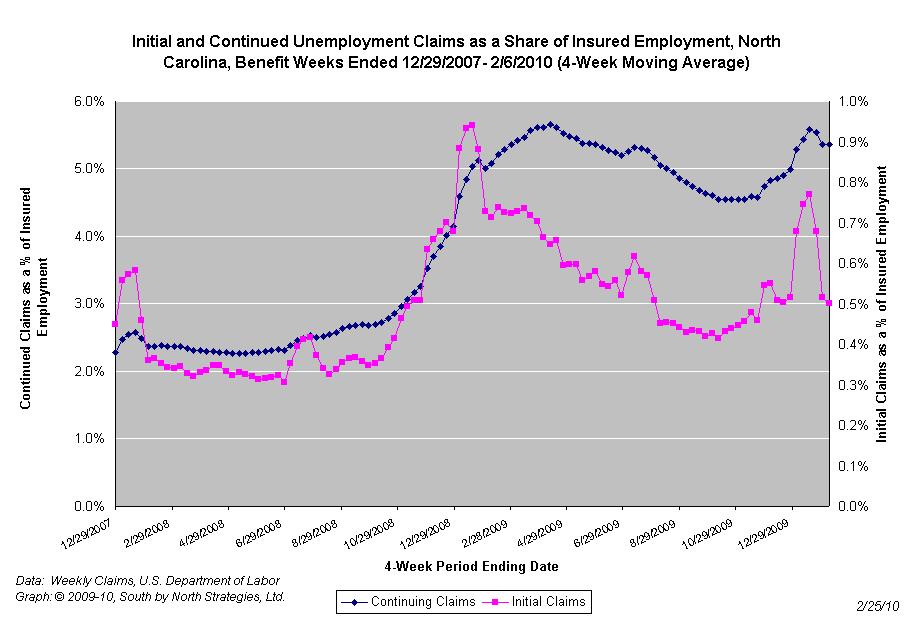
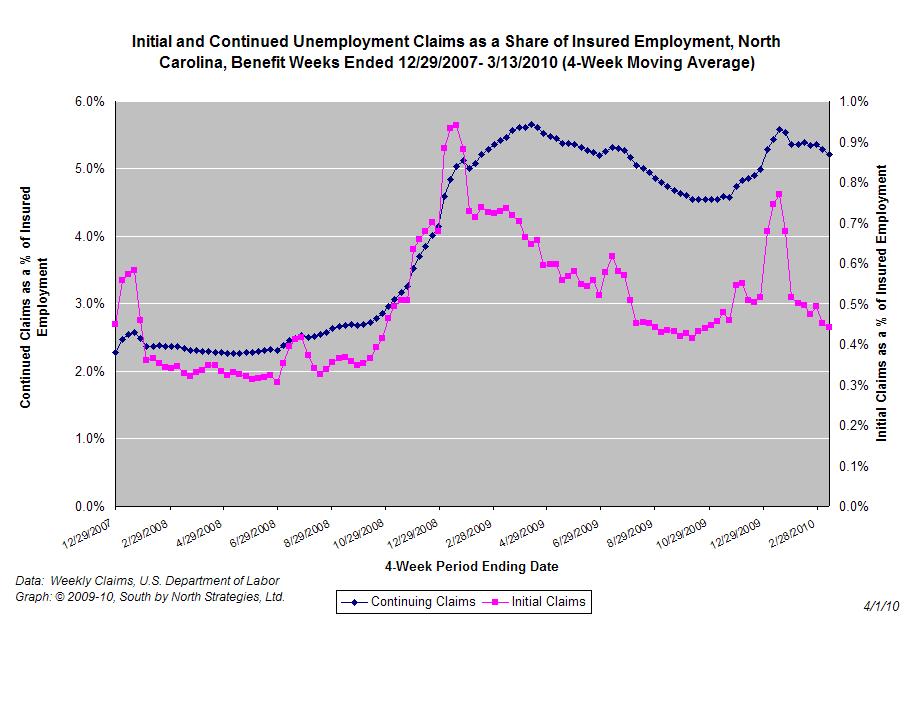
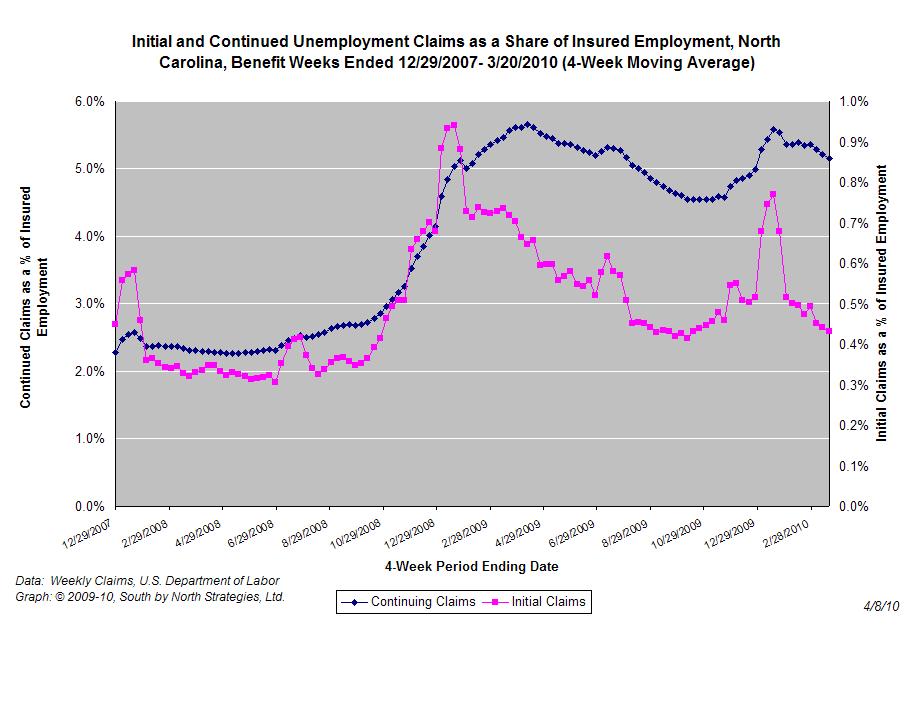
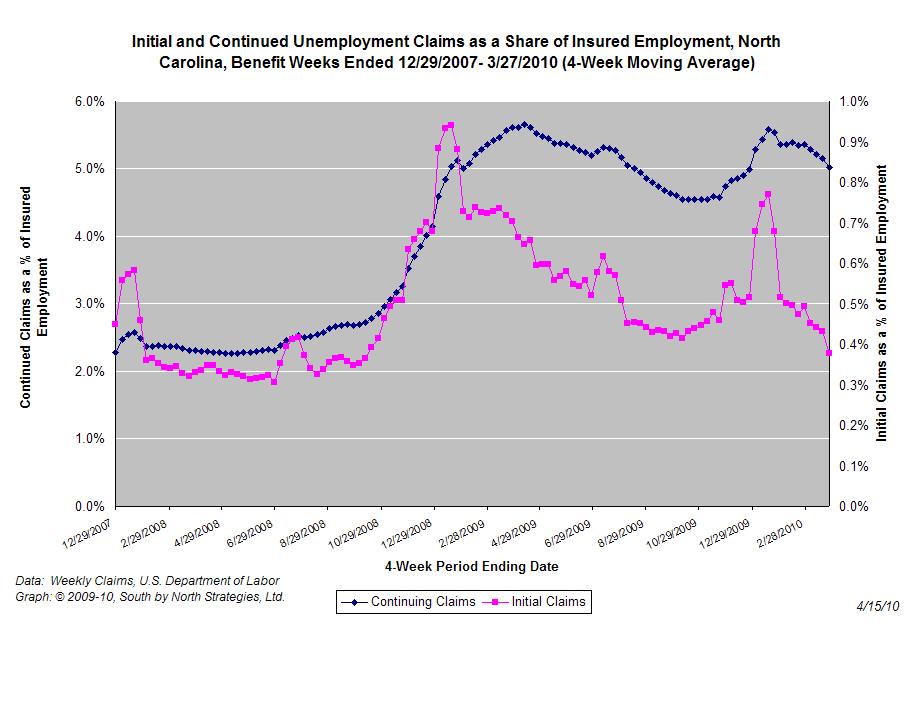
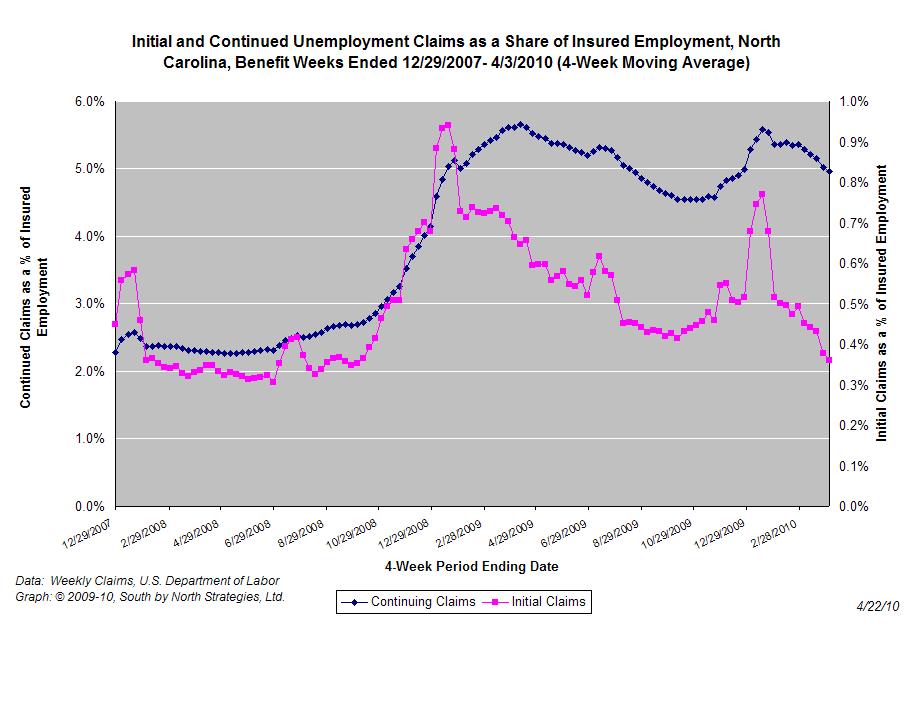
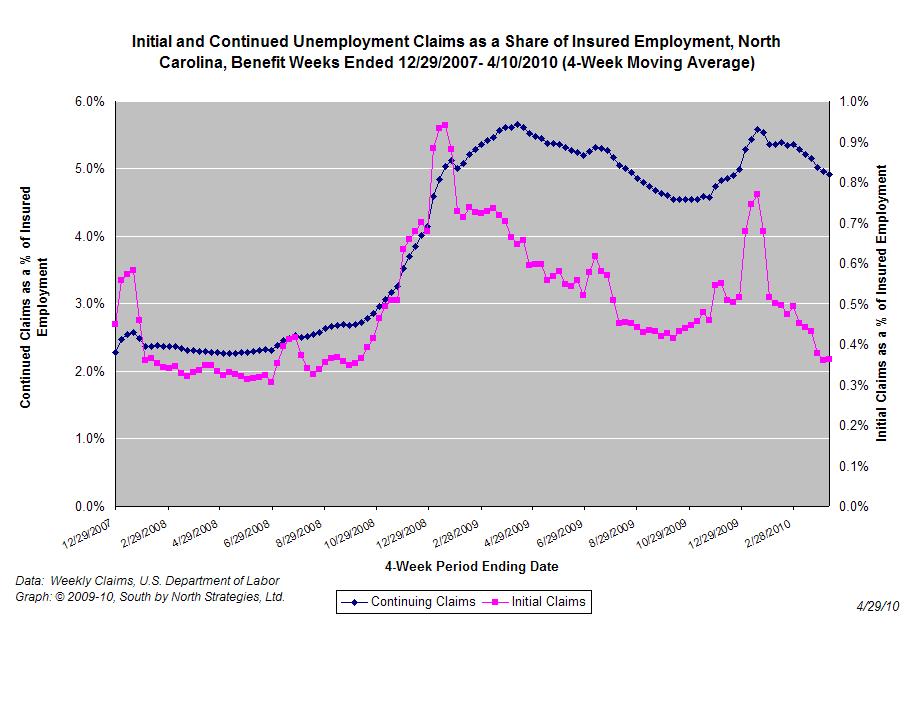
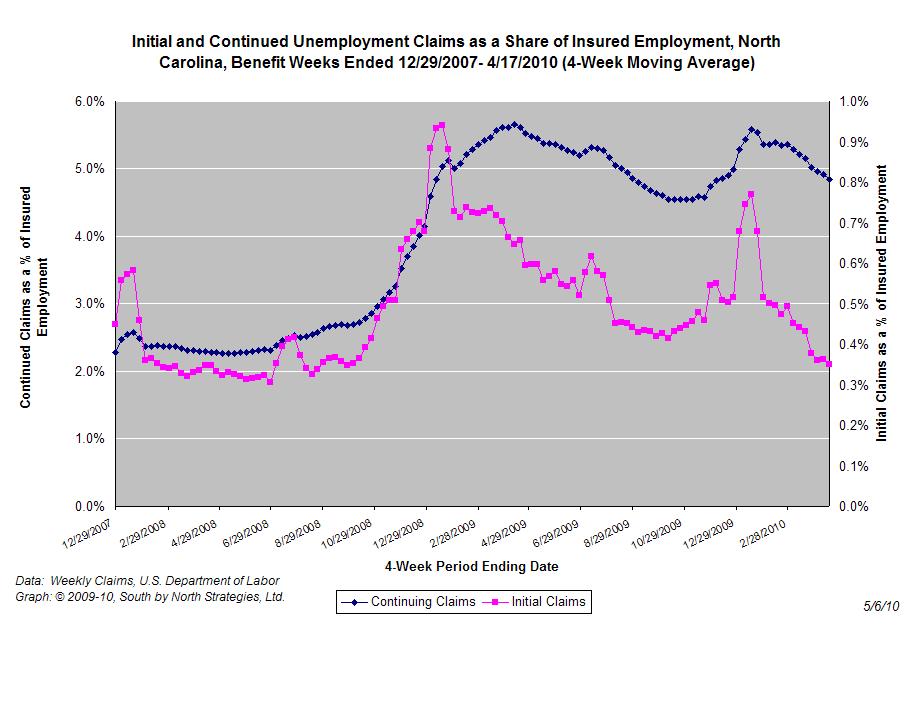
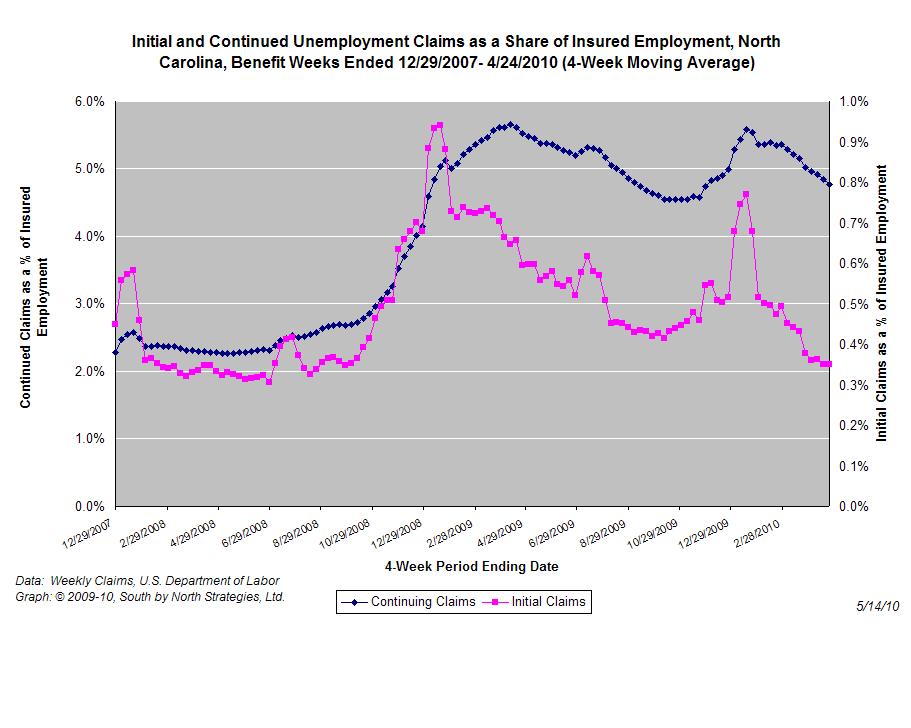
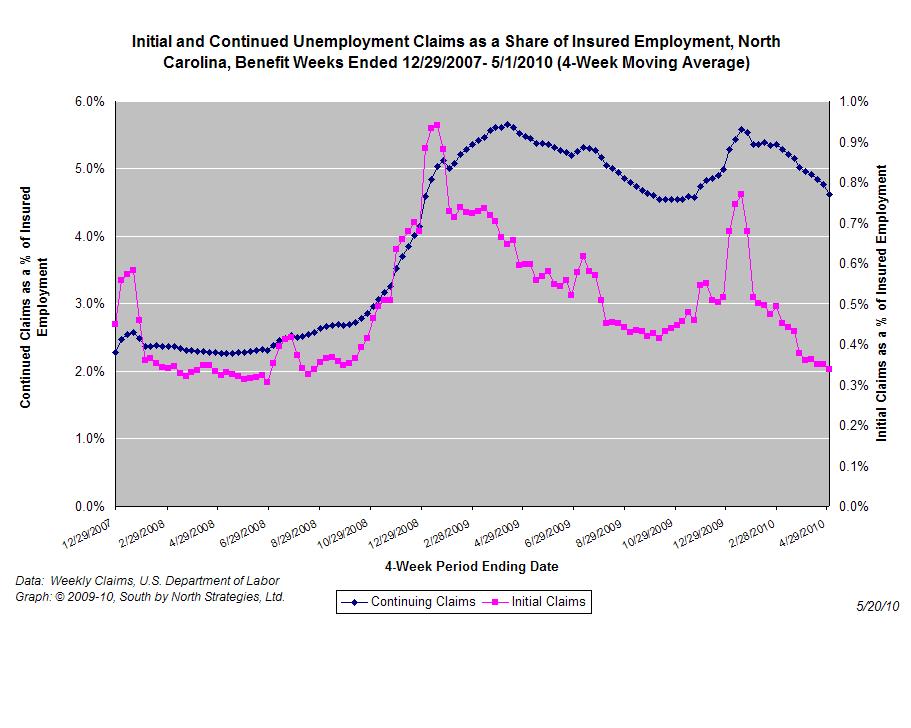
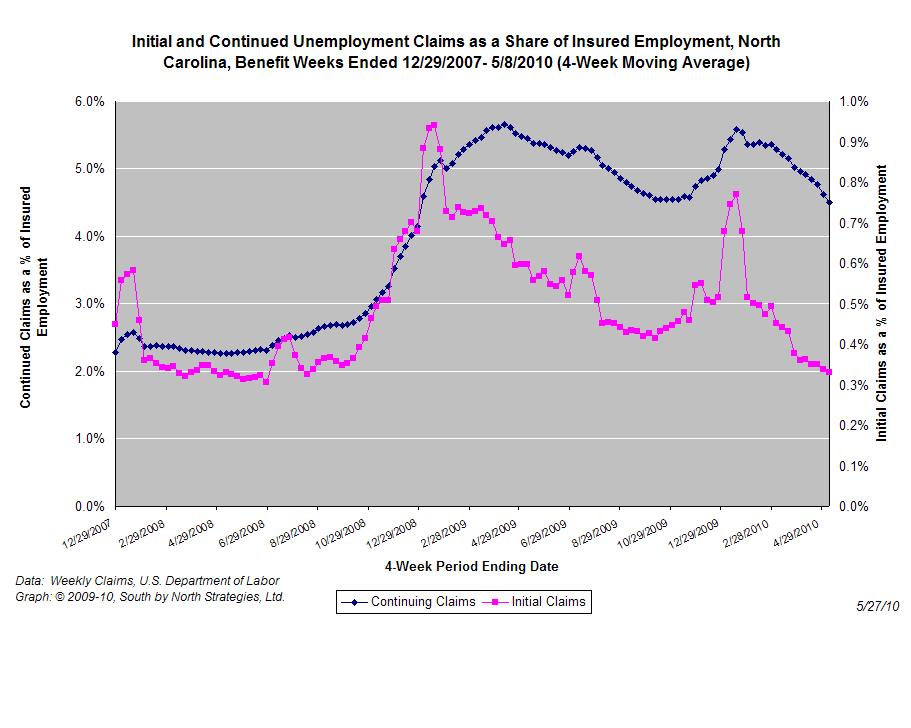
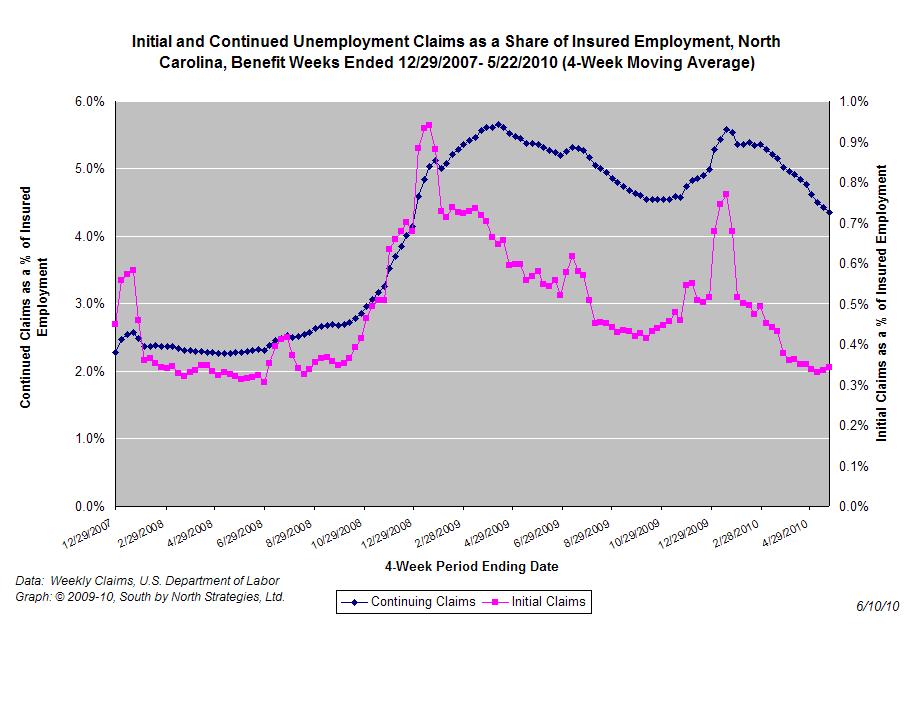
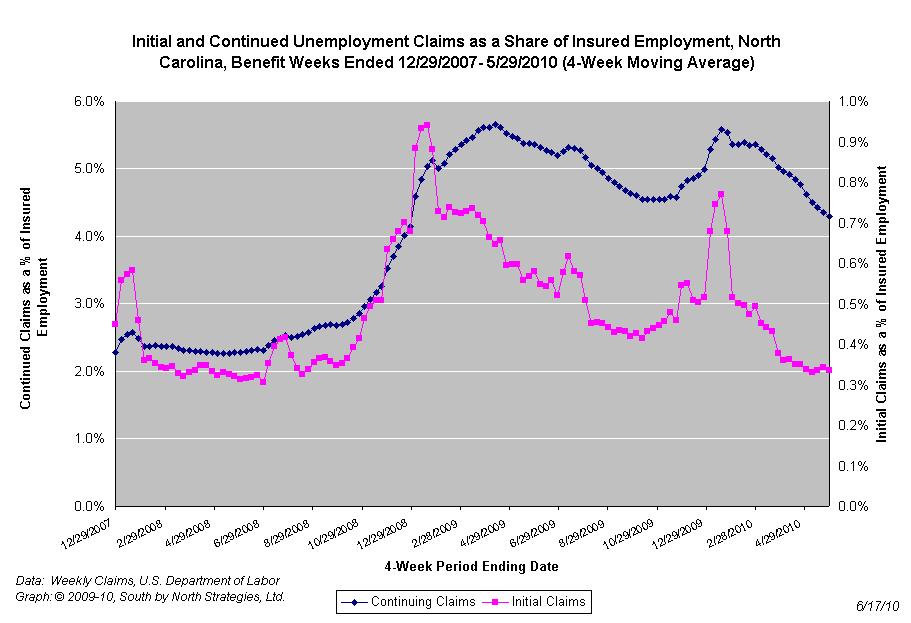
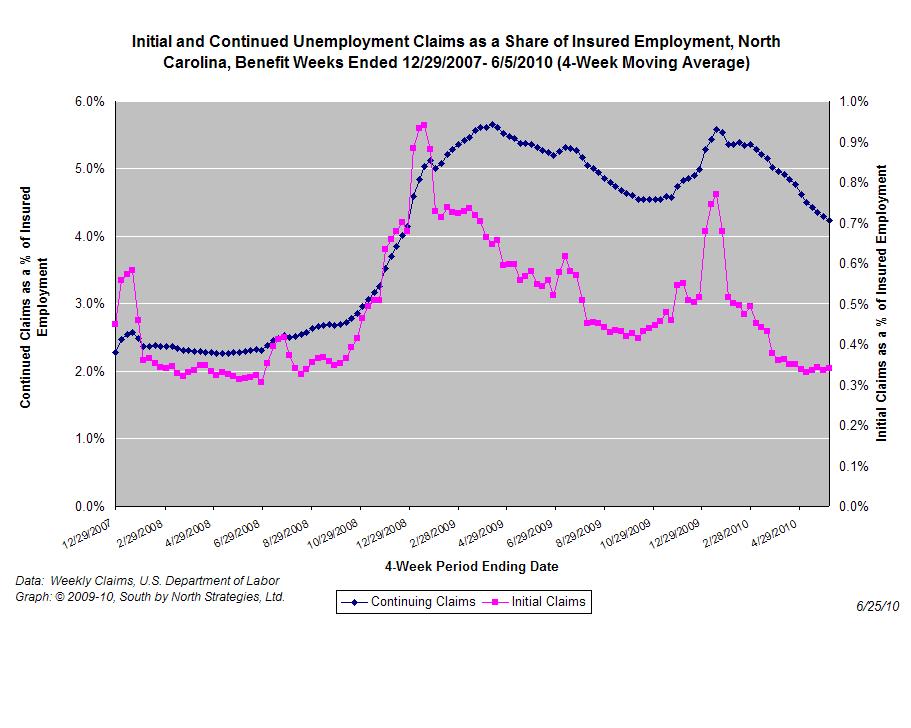
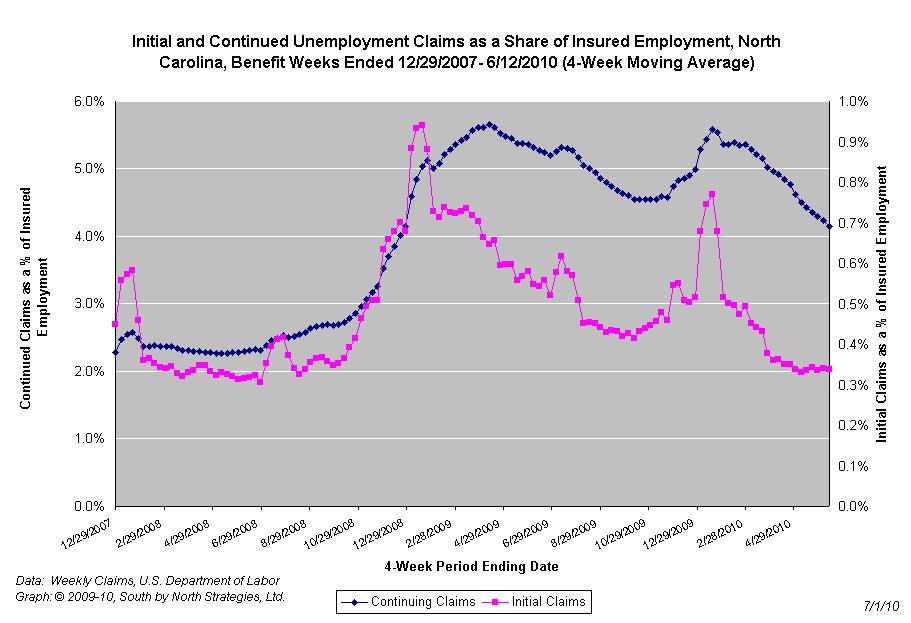
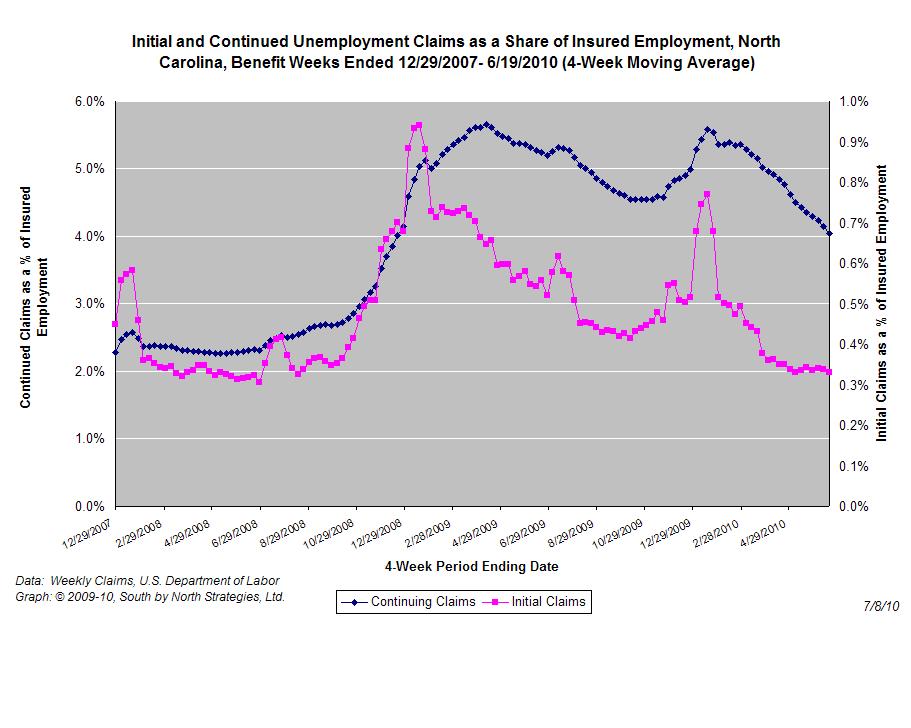
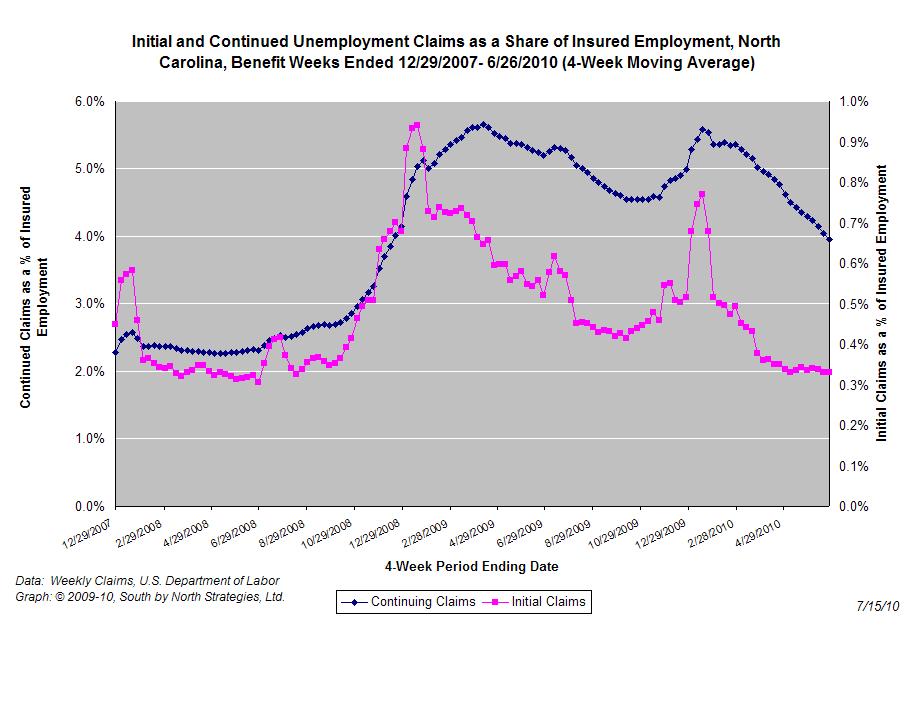
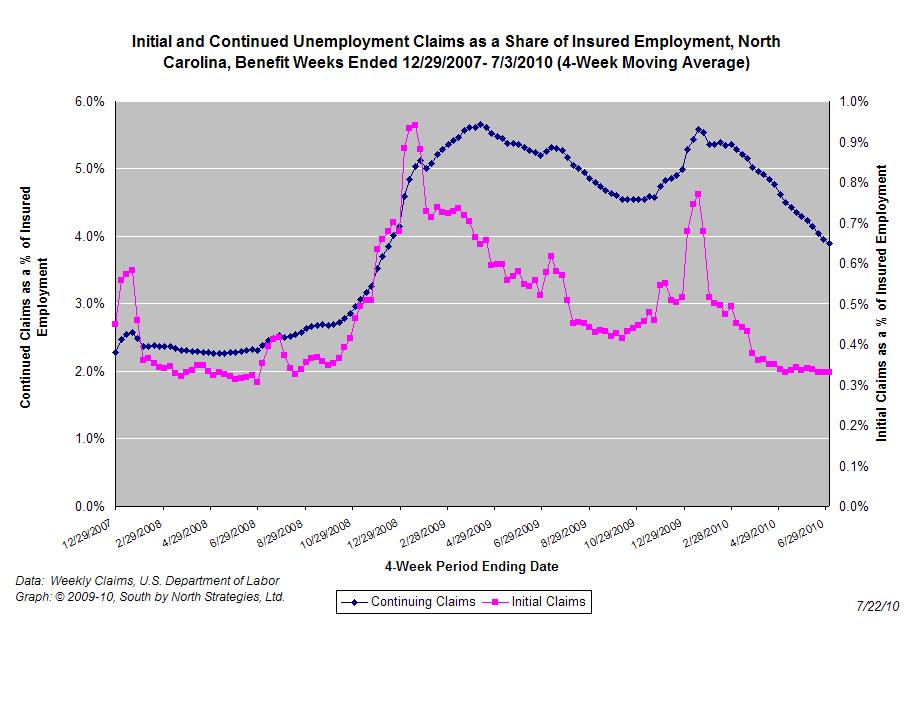
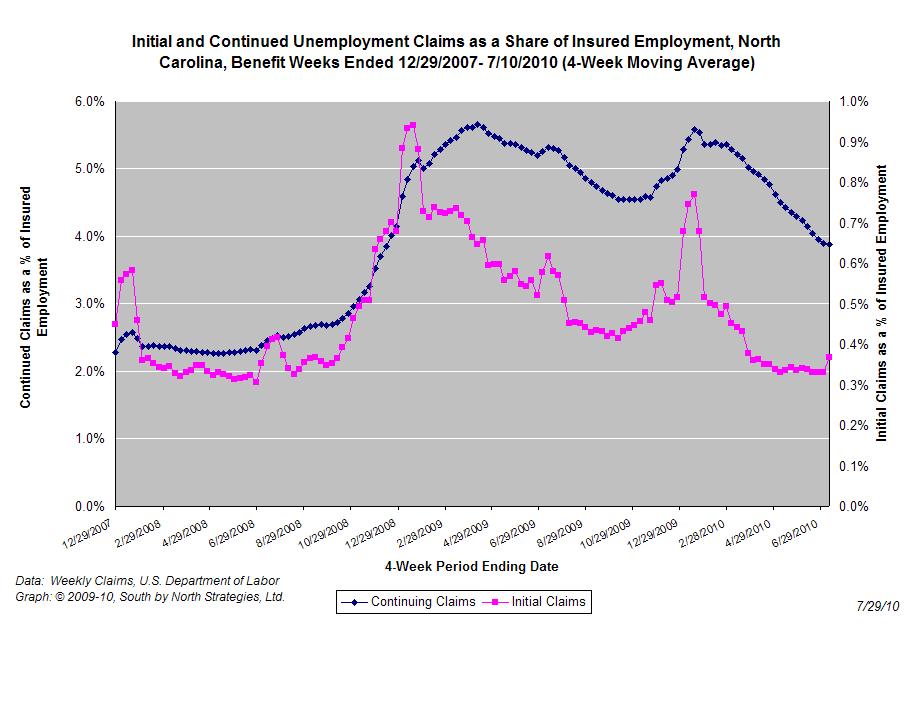
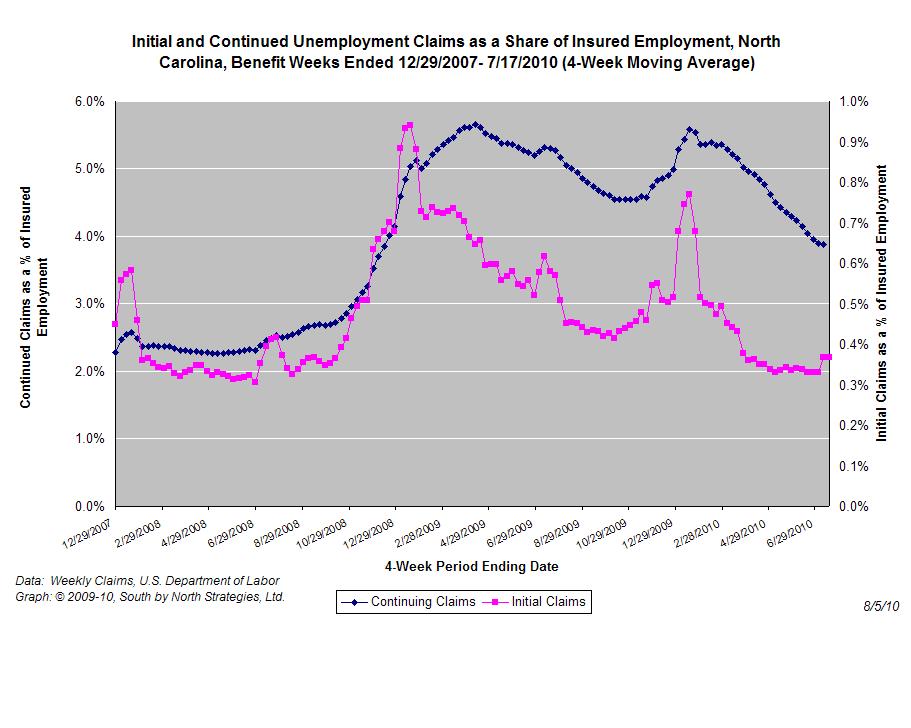
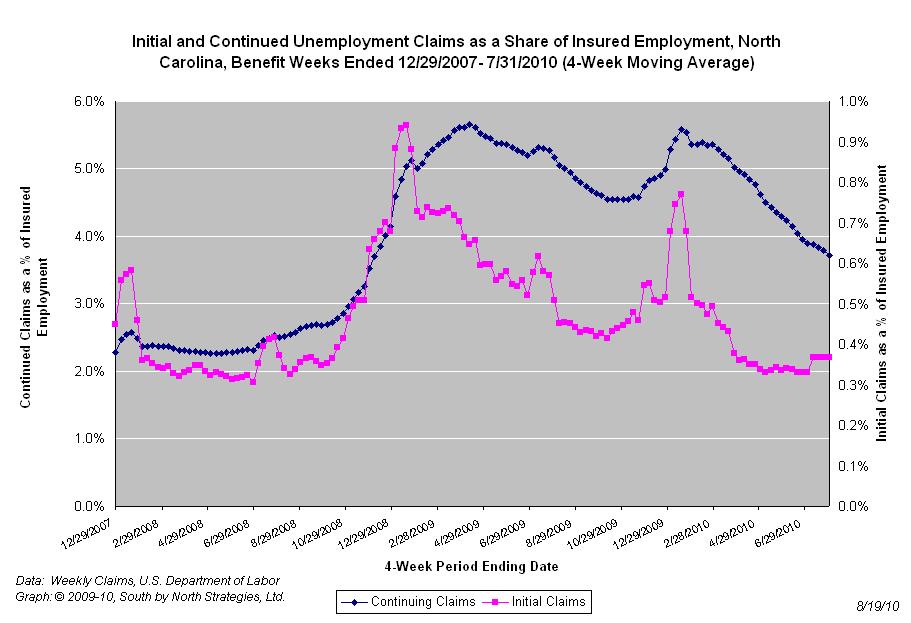
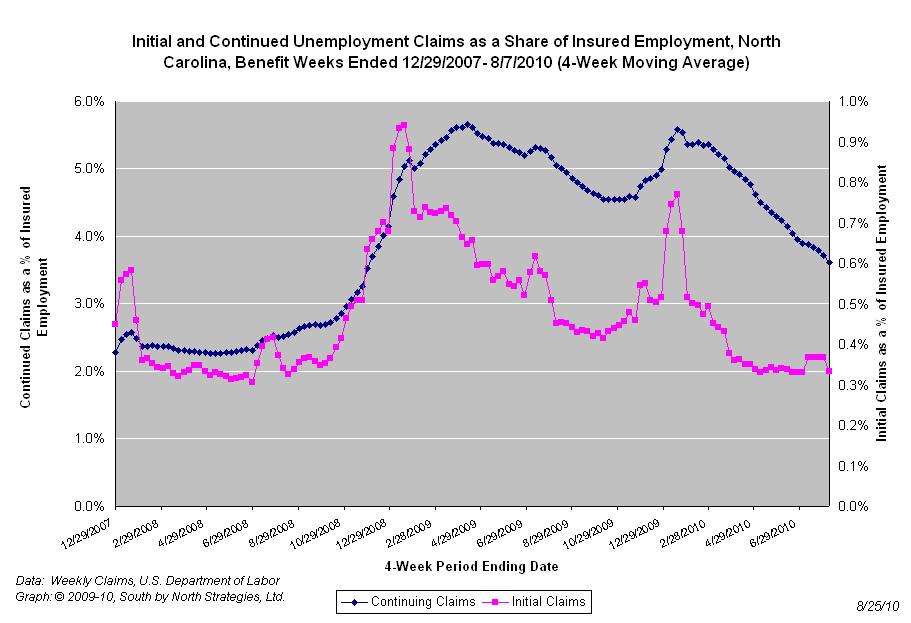
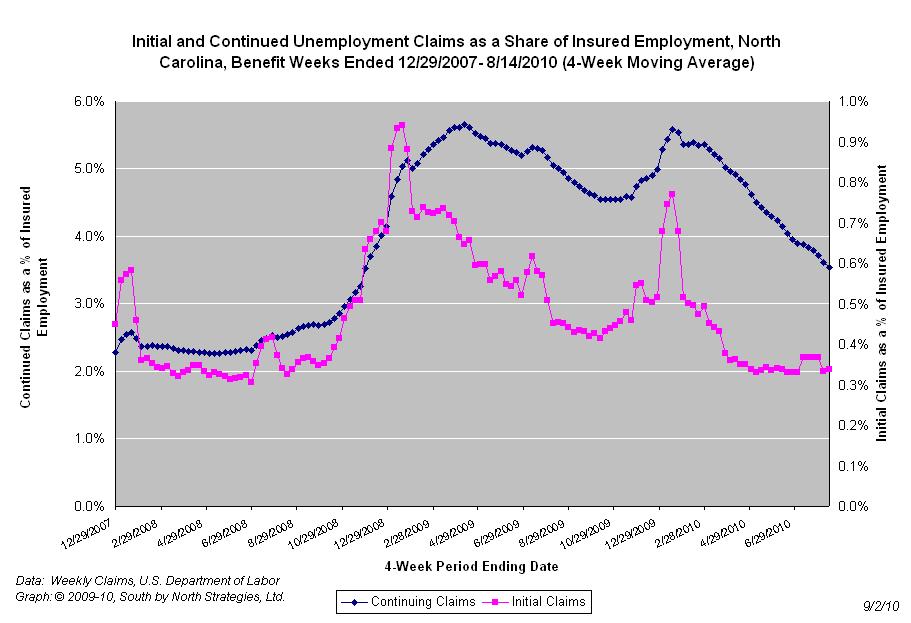
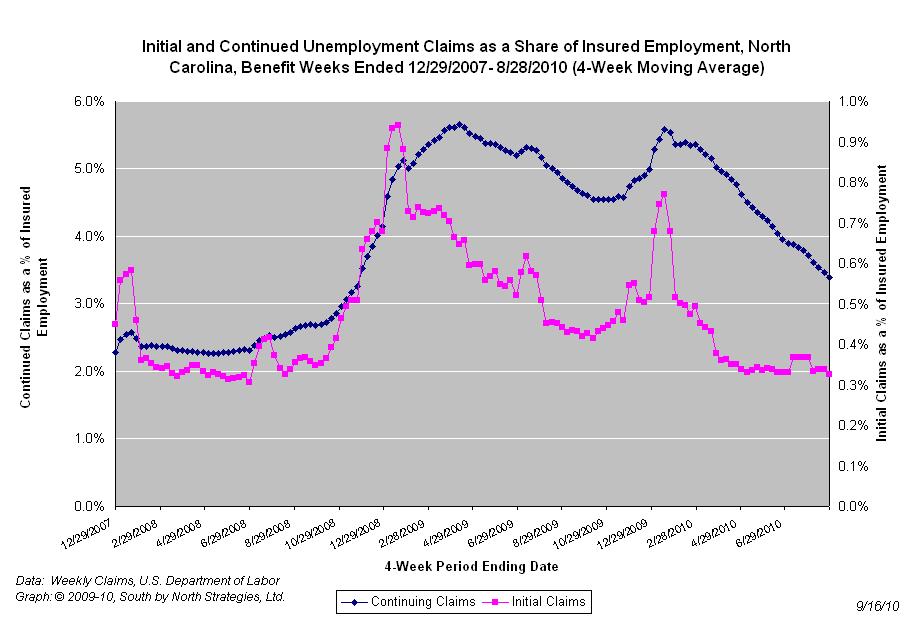
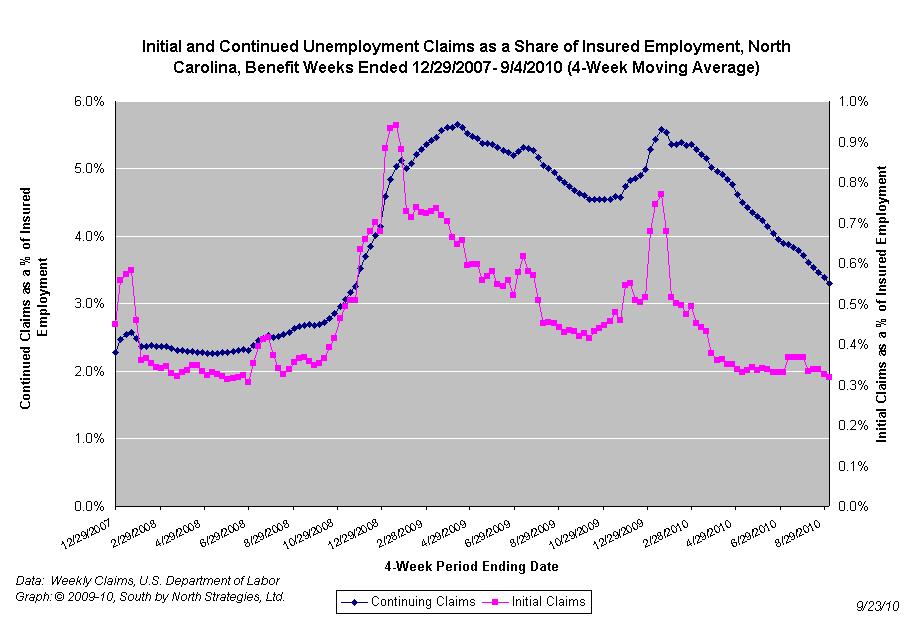
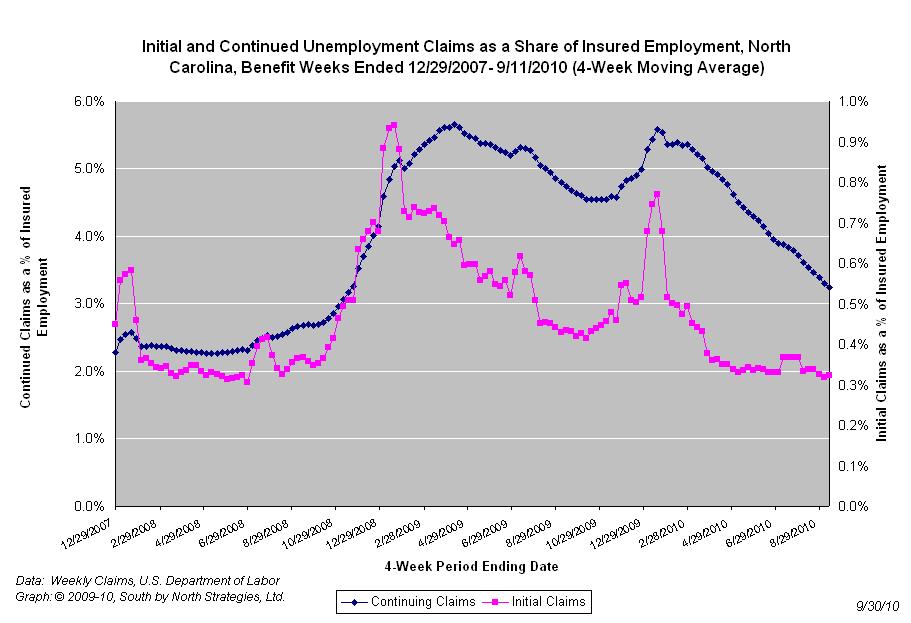
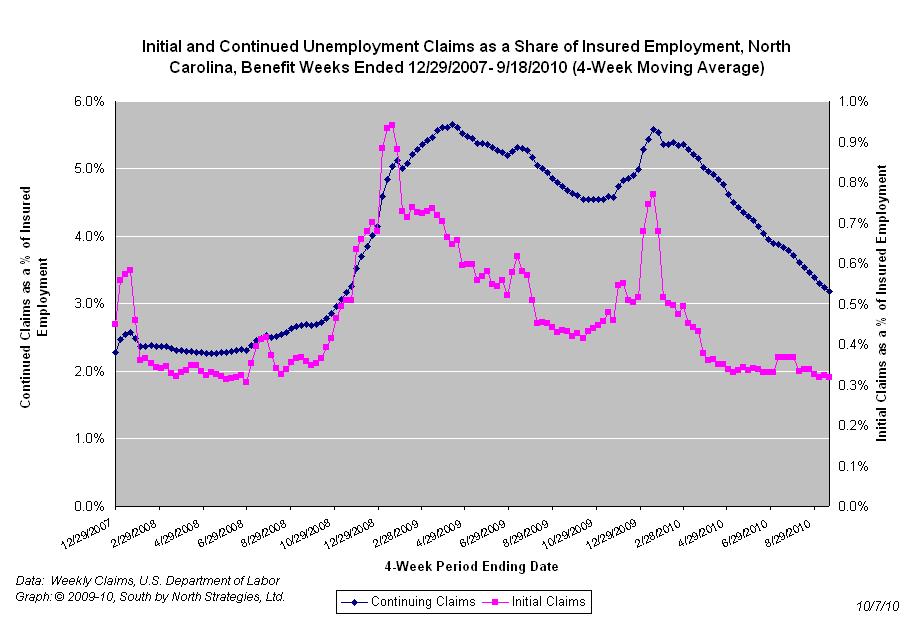
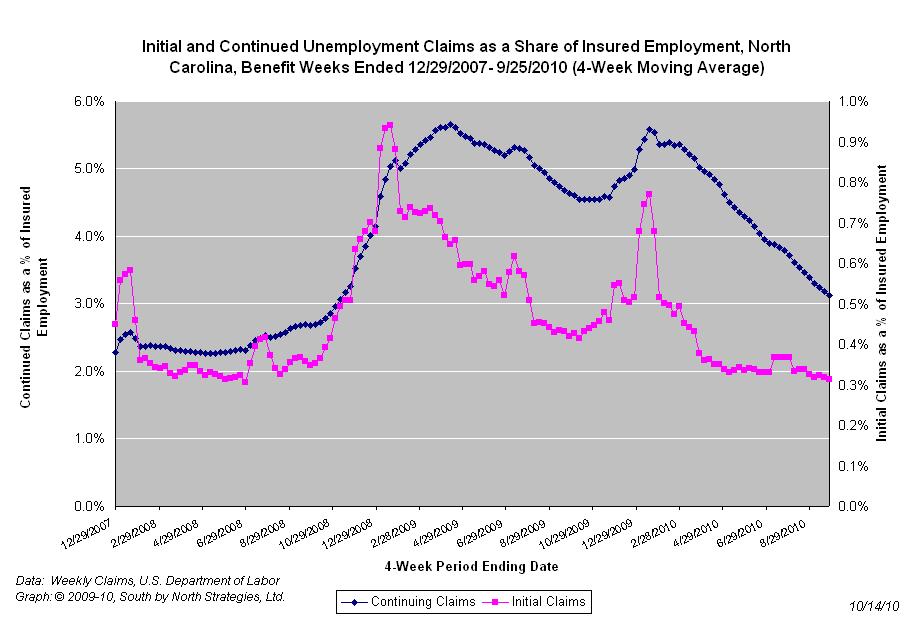
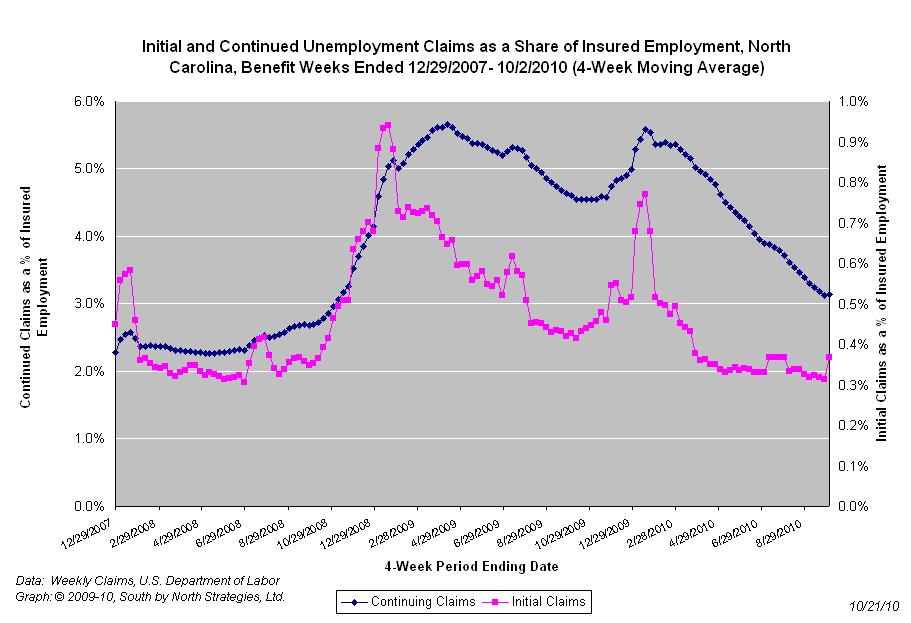
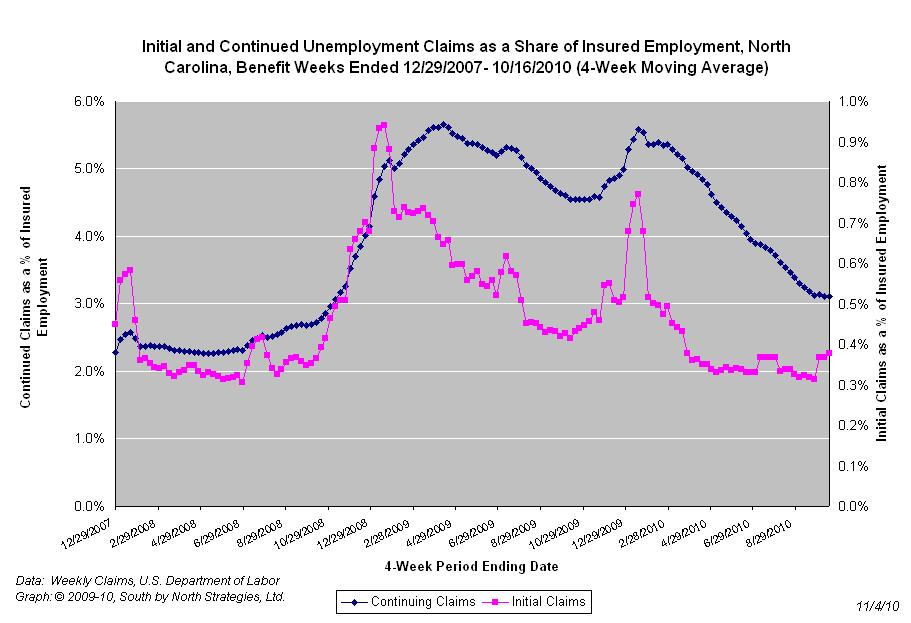
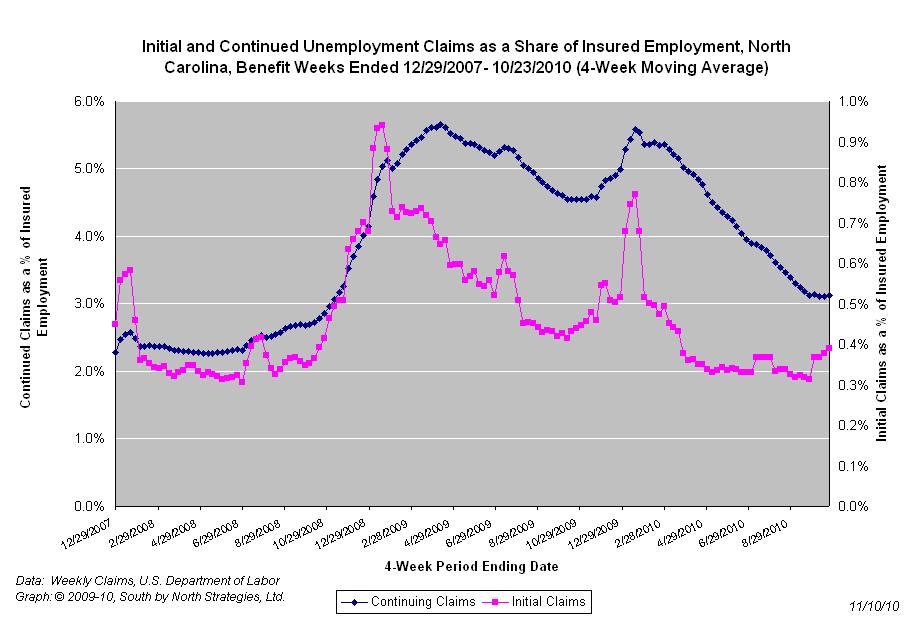
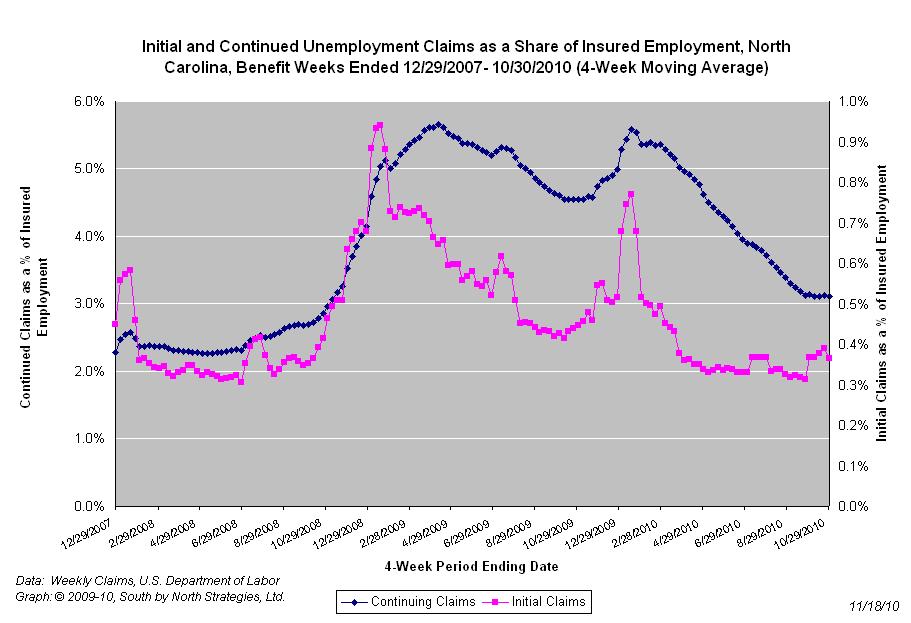
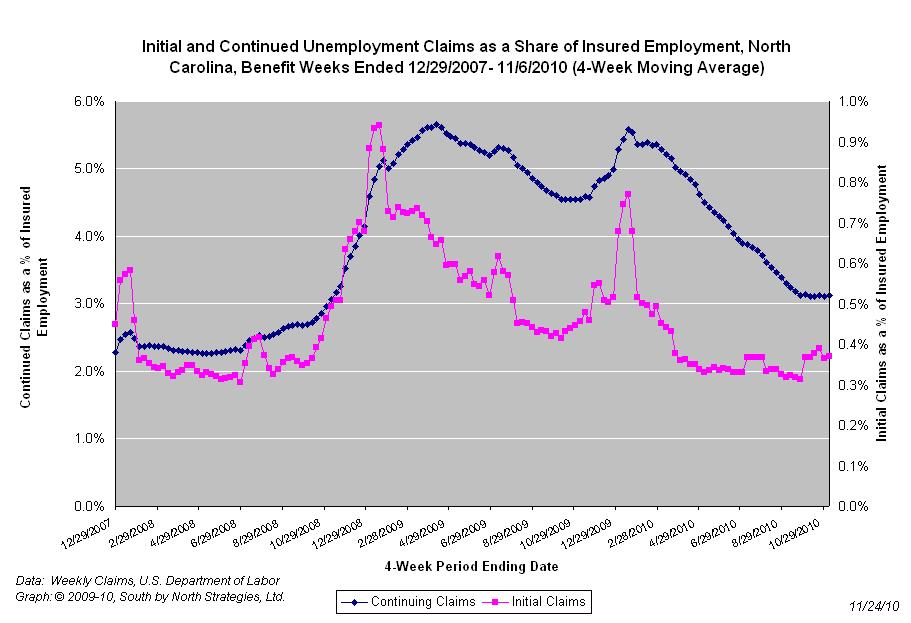
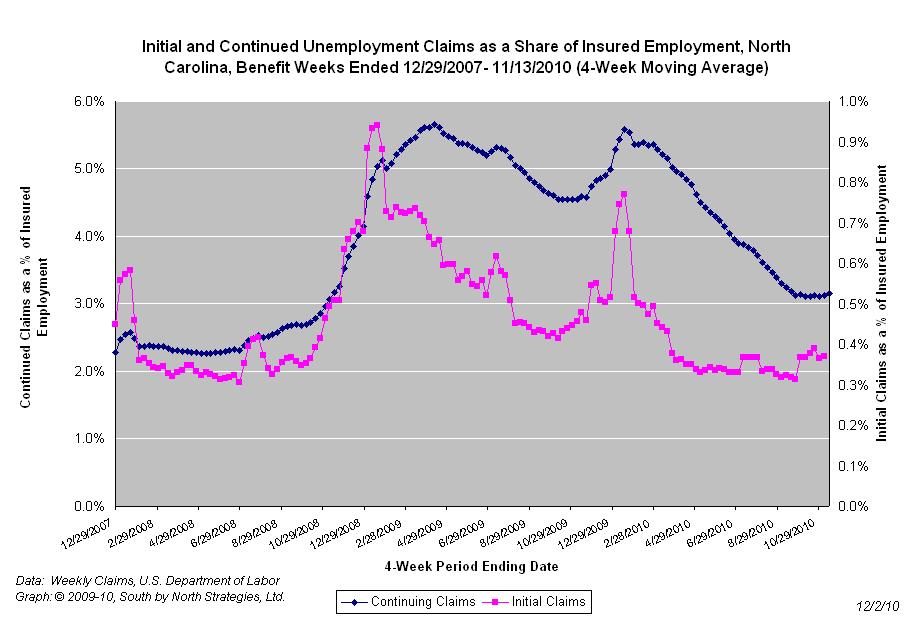
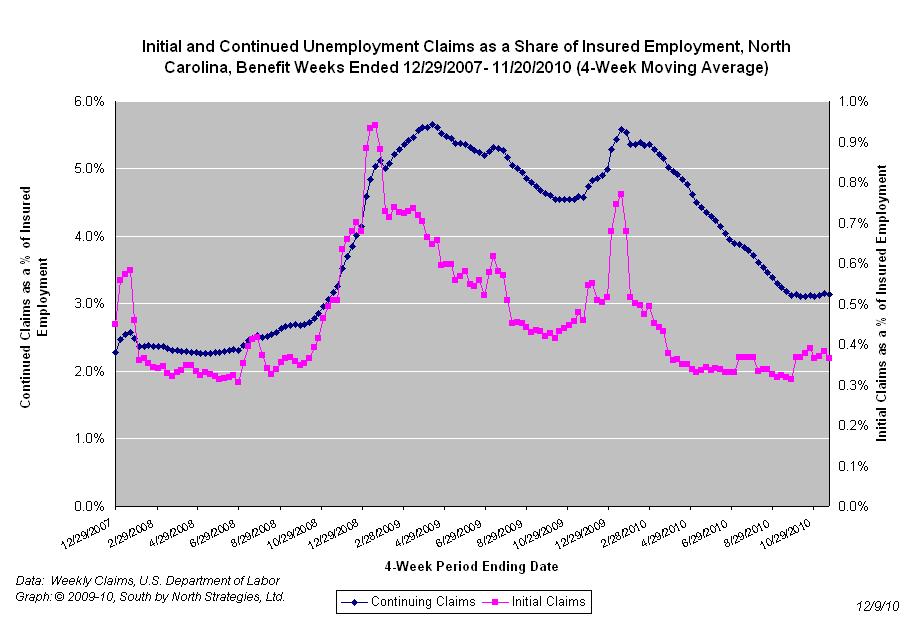
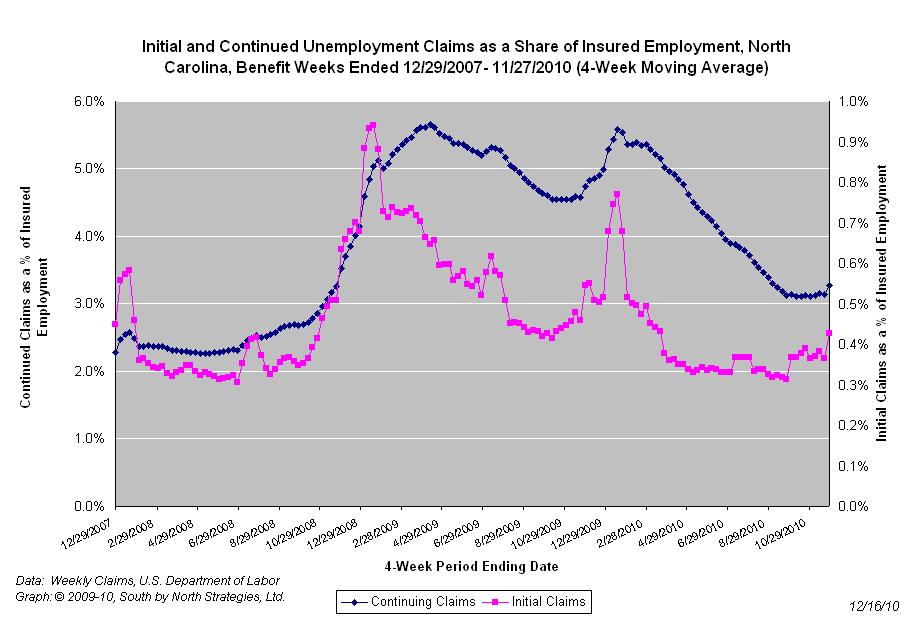
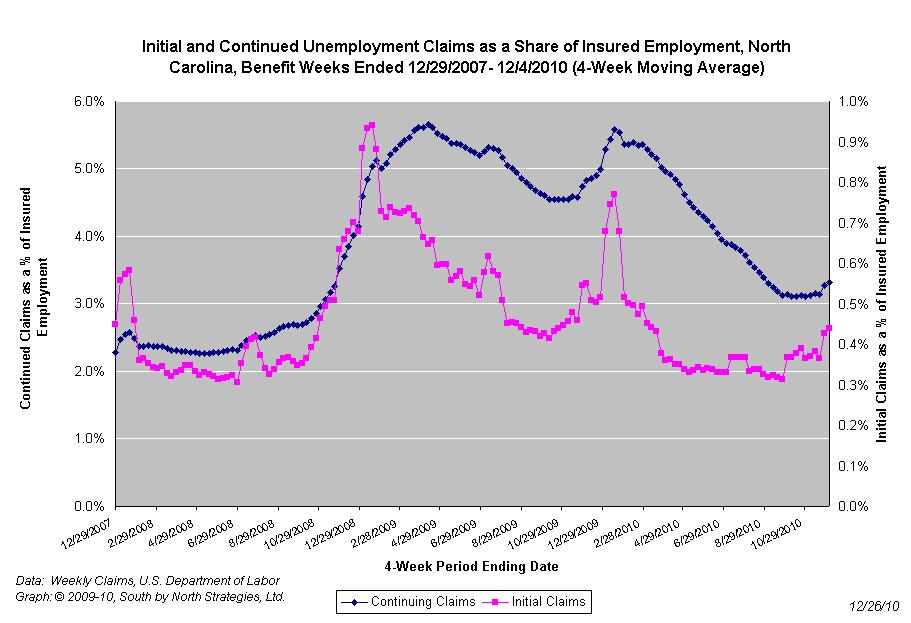
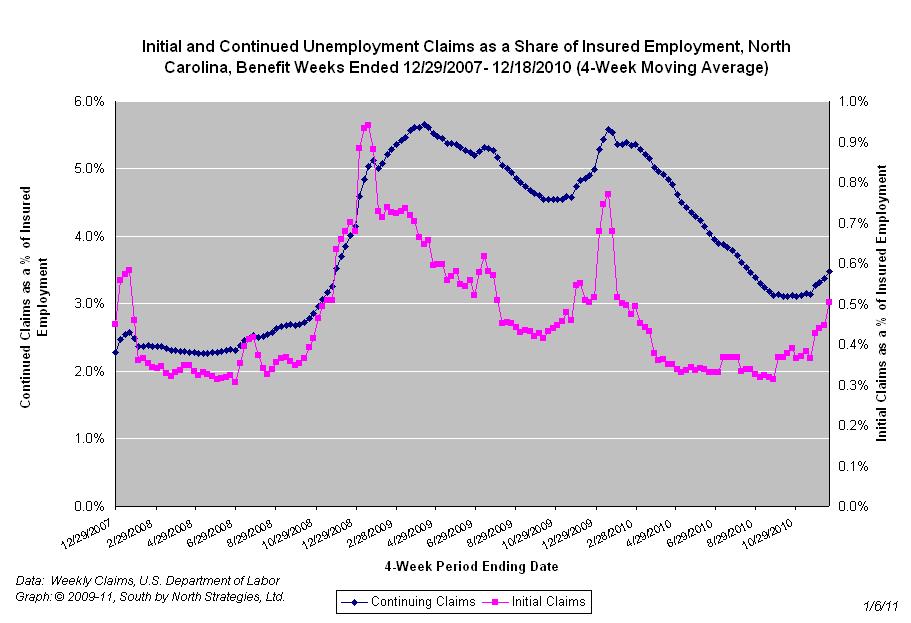
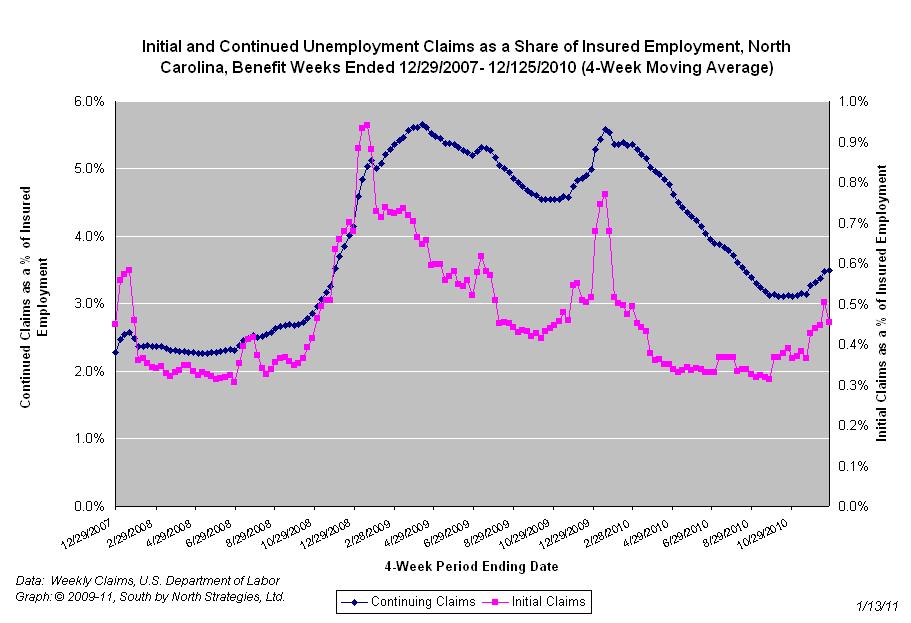
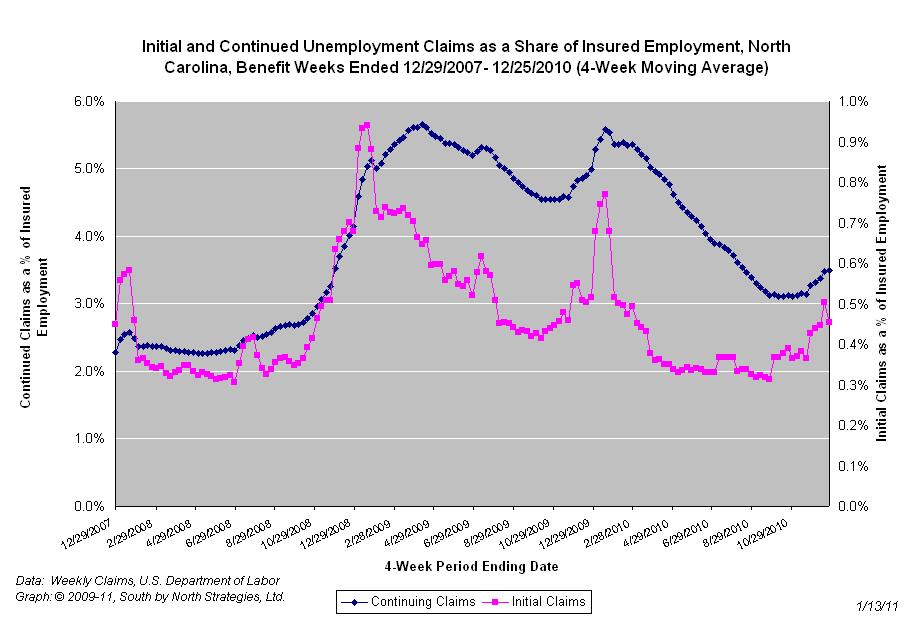
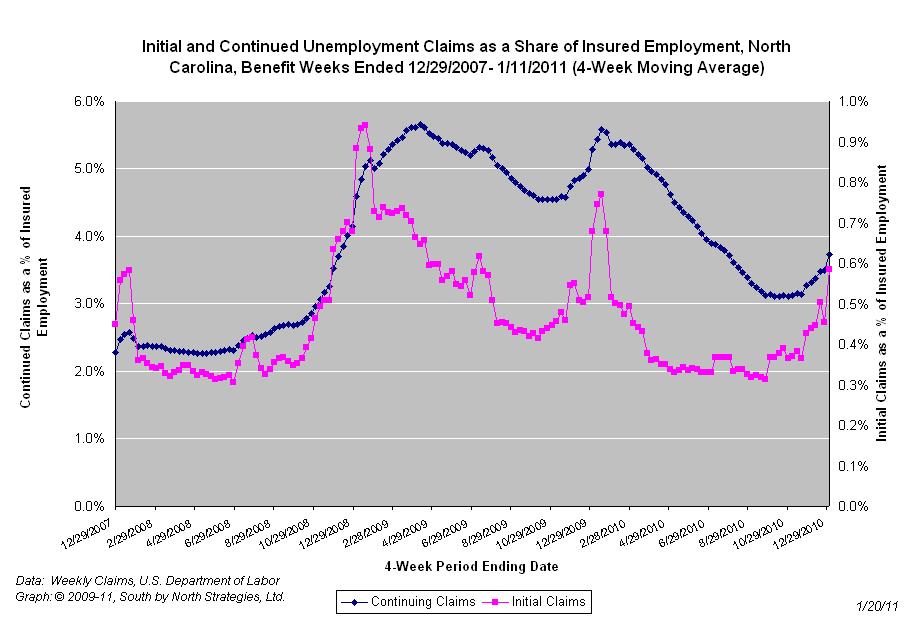
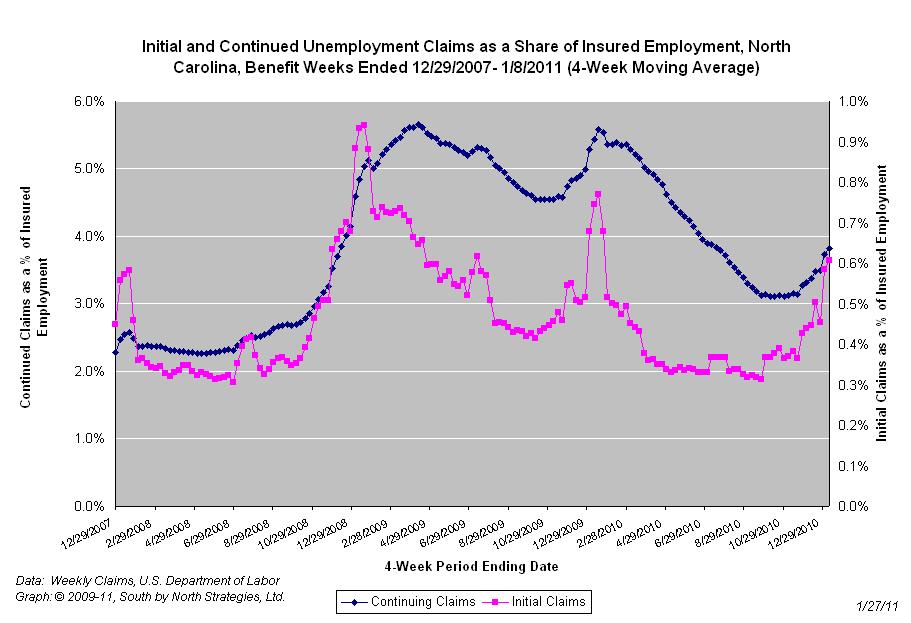
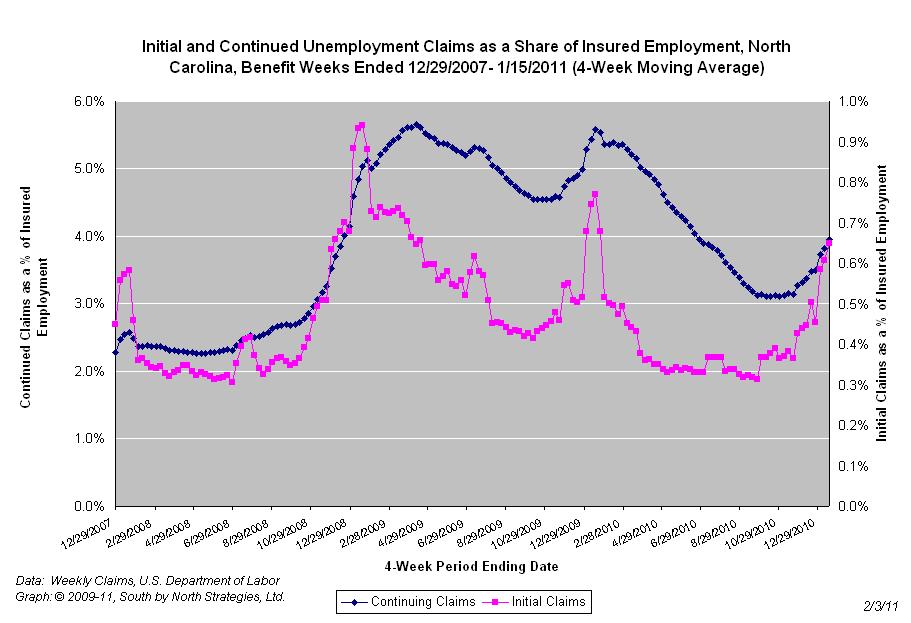
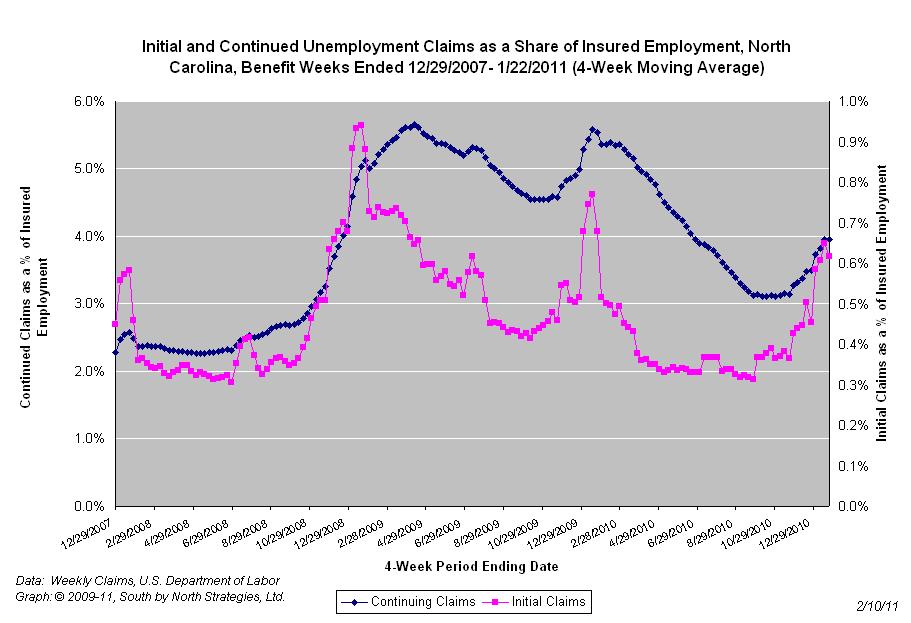
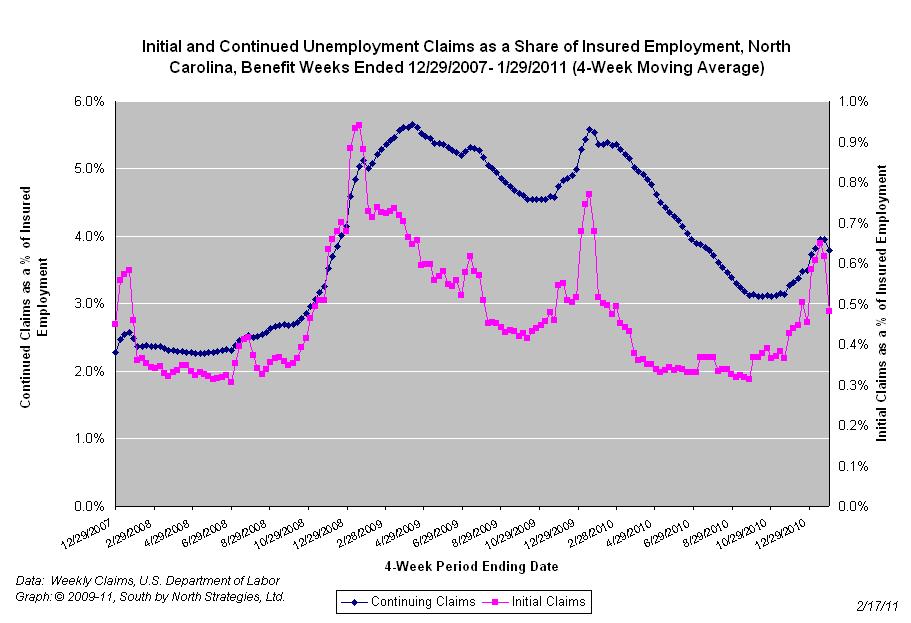
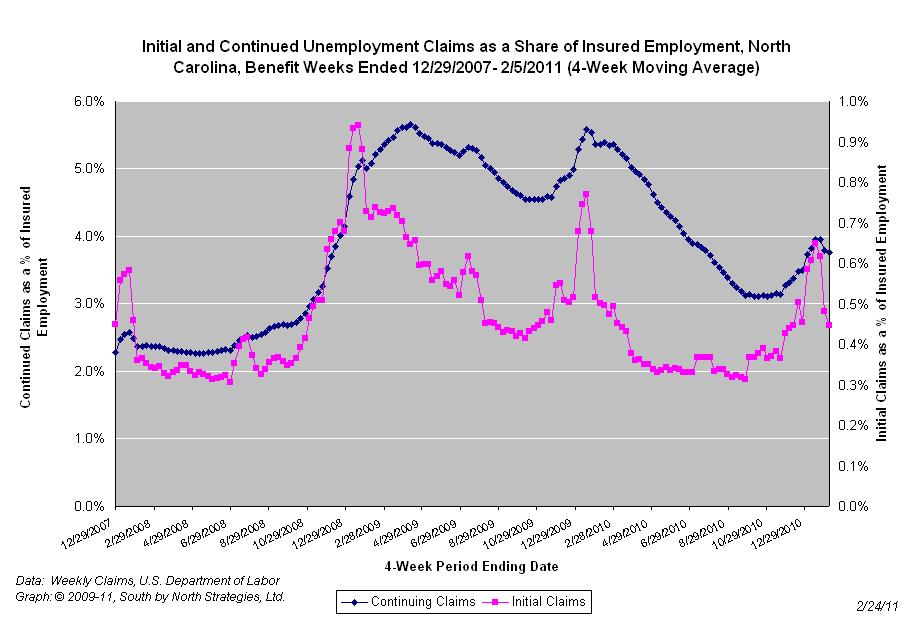
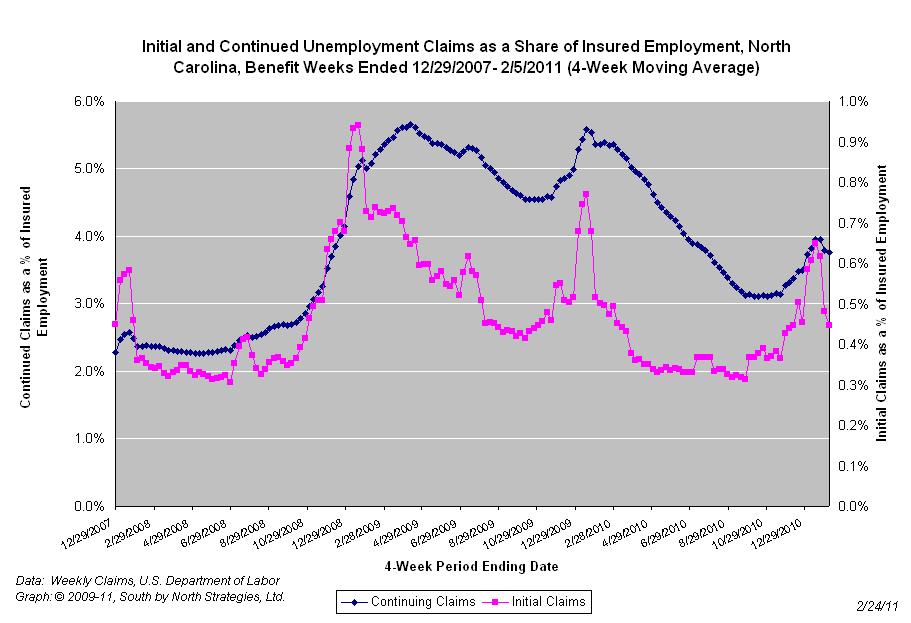
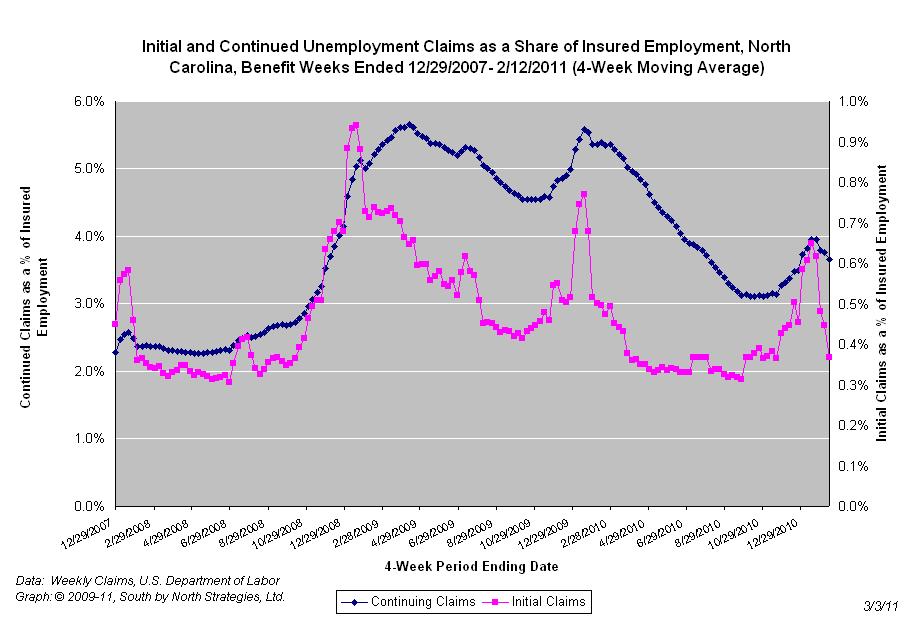
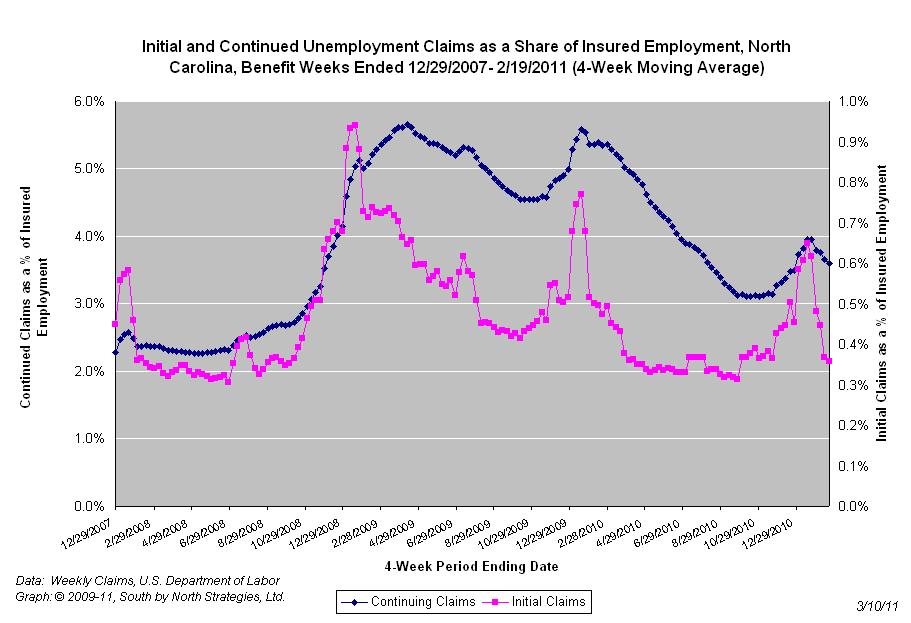
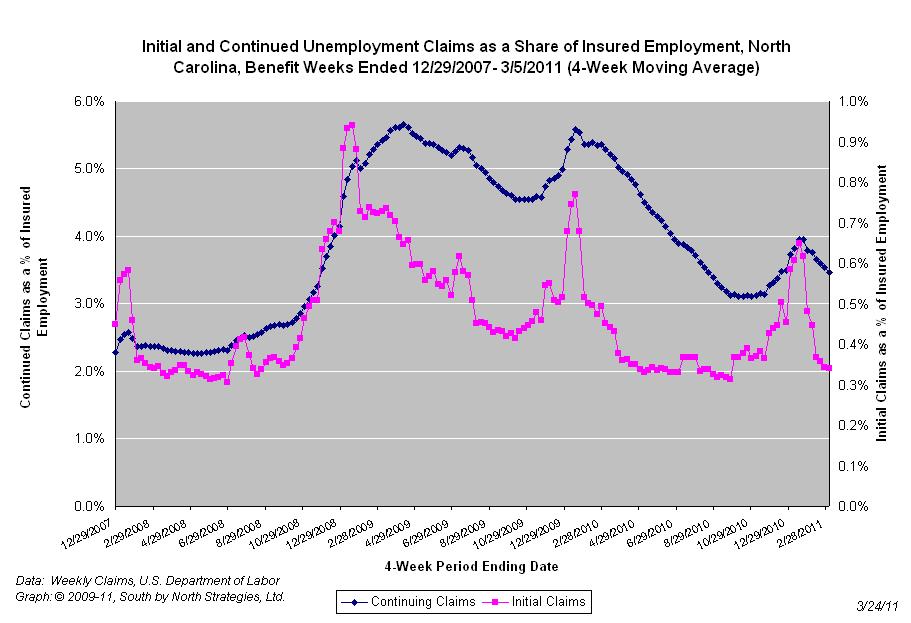
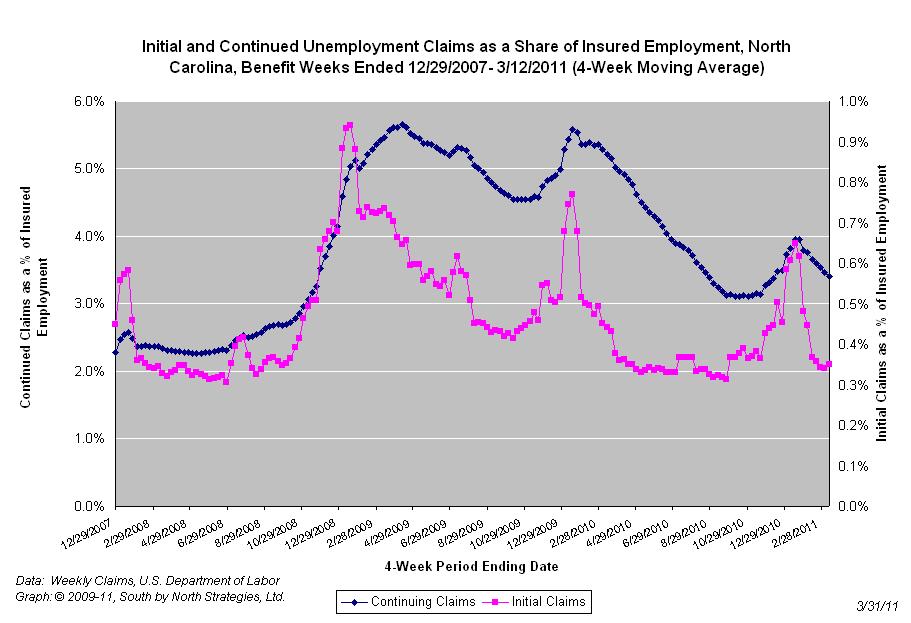
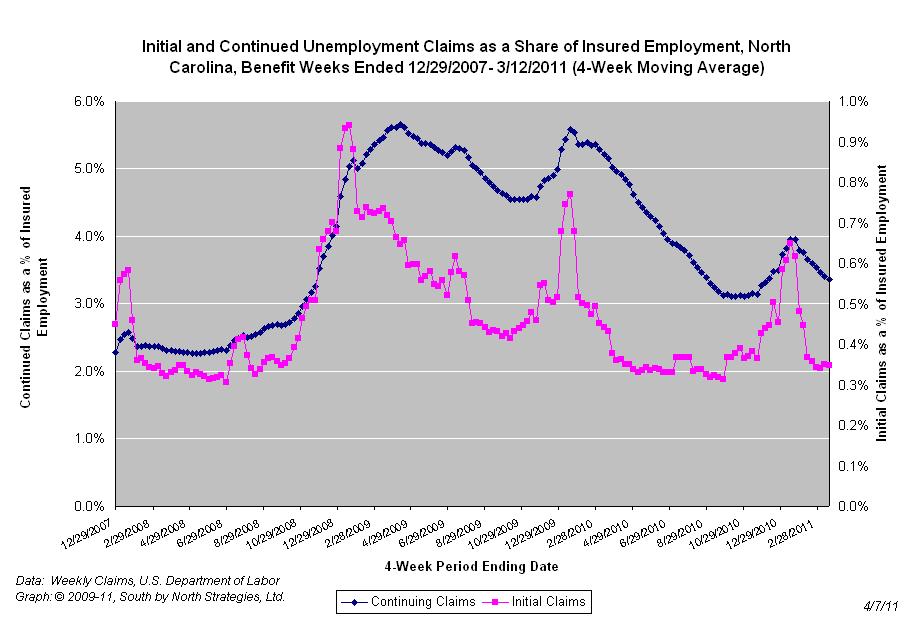
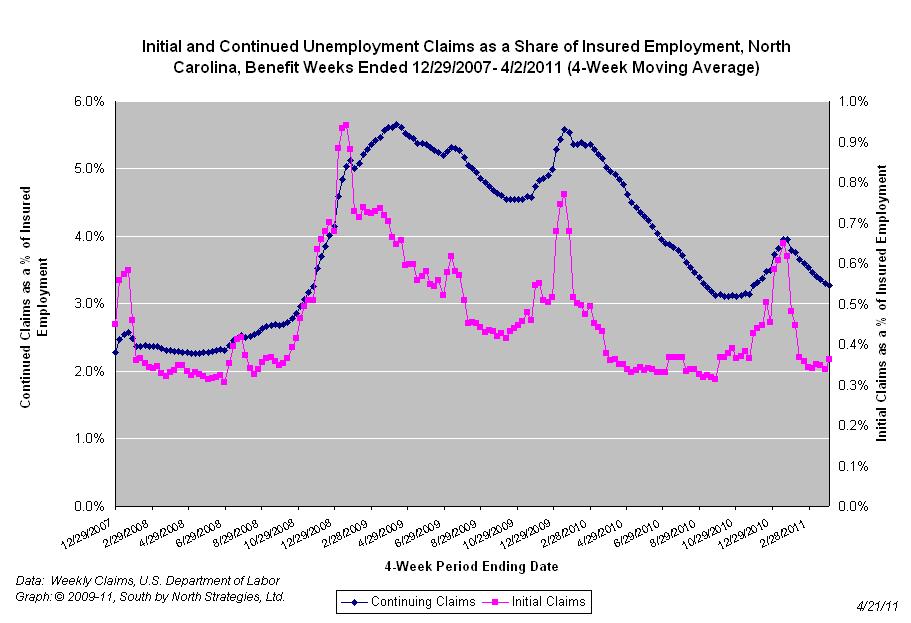 The graph (right) shows the changes in unemployment insurance claims (as a share of covered employment) in North Carolina since the recession’s start in December 2007.
Both new and continuing claims appear to have peaked for this cycle, and the four-week averages of new and continuing claims have fallen considerably. Yet continuing claims remain at an elevated level, which suggests that unemployed individuals are finding it difficult to find new positions.
 Email Sign-Up
 RSS Feed