Unemployment Claims: Week of 1/22
For the benefit week ending on January 22nd, 13,298 North Carolinians filed initial claims for state unemployment insurance benefits, and 137,633 individuals applied for state-funded continuing benefits. Compared to the prior week, there were fewer initial and continuing claims. These figures come from data released by the U.S. Department of Labor.
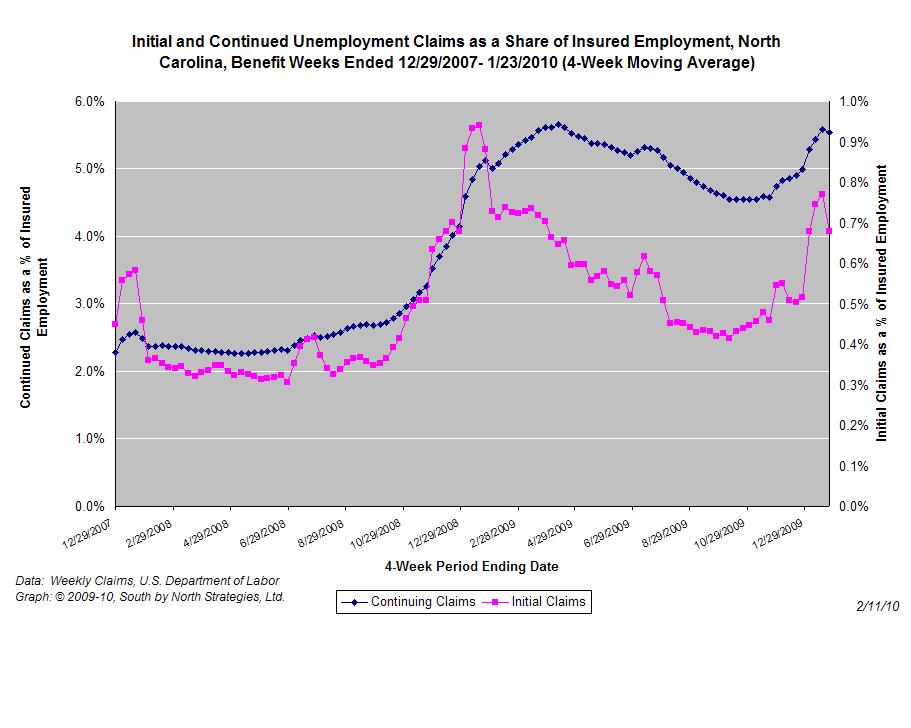
Averaging new and continuing claims over a four-week period — a process that helps adjust for seasonal fluctuations and better illustrates trends — shows that an average of 22,963 initial claims were filed over the previous four weeks, along with an average of 146,817 continuing claims. Compared to the previous four-week period, there were fewer initial and continuing claims.
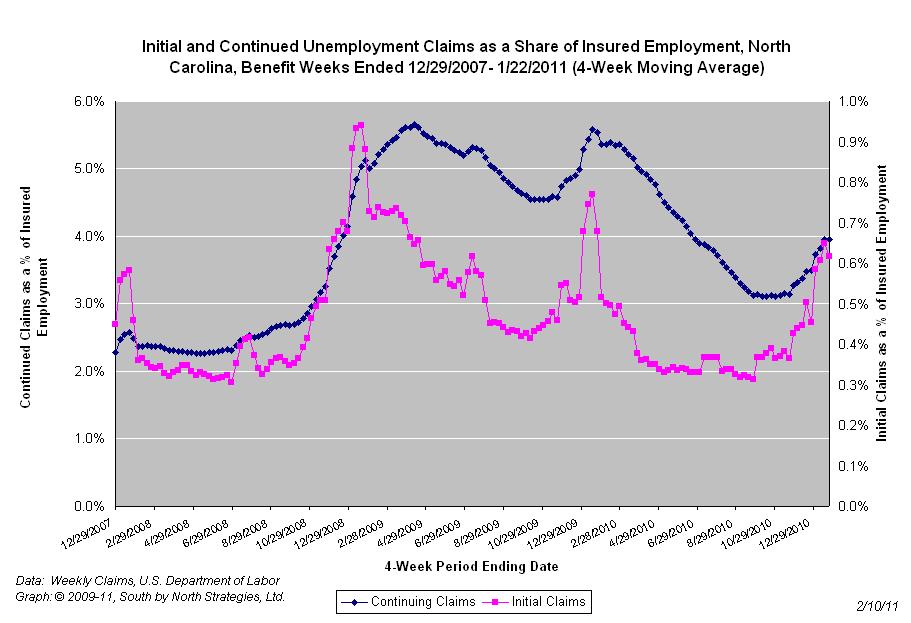 One year ago, the four-week average for initial claims stood at 26,323 and the four-week average of continuing claims equaled 215,063.
While the number of claims has dropped over the past year so has covered employment. Last week, covered employment totaled 3.7 million, down from 3.9 million a year ago.
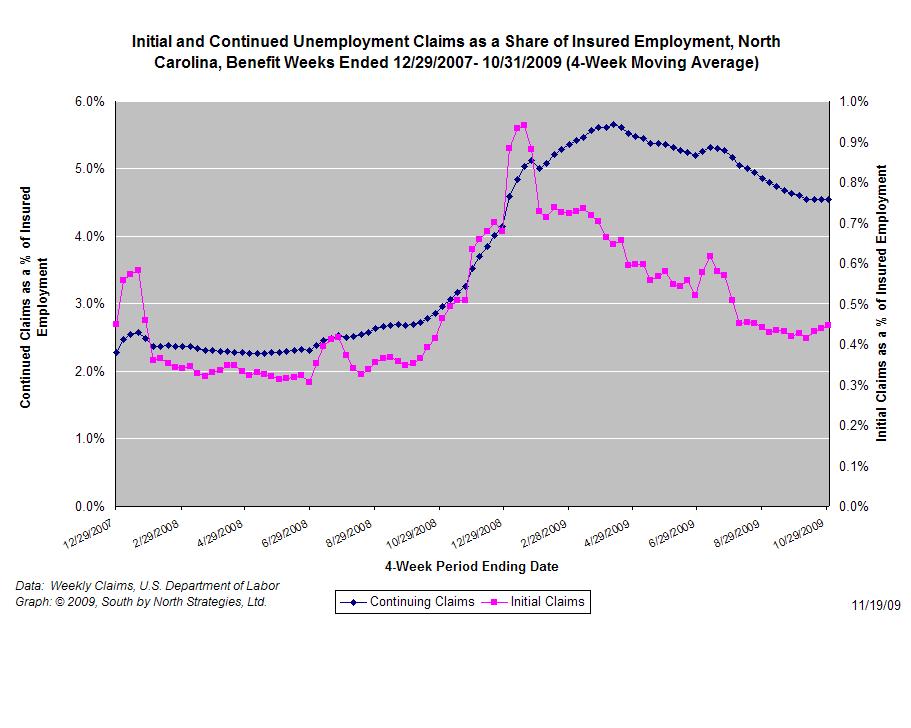
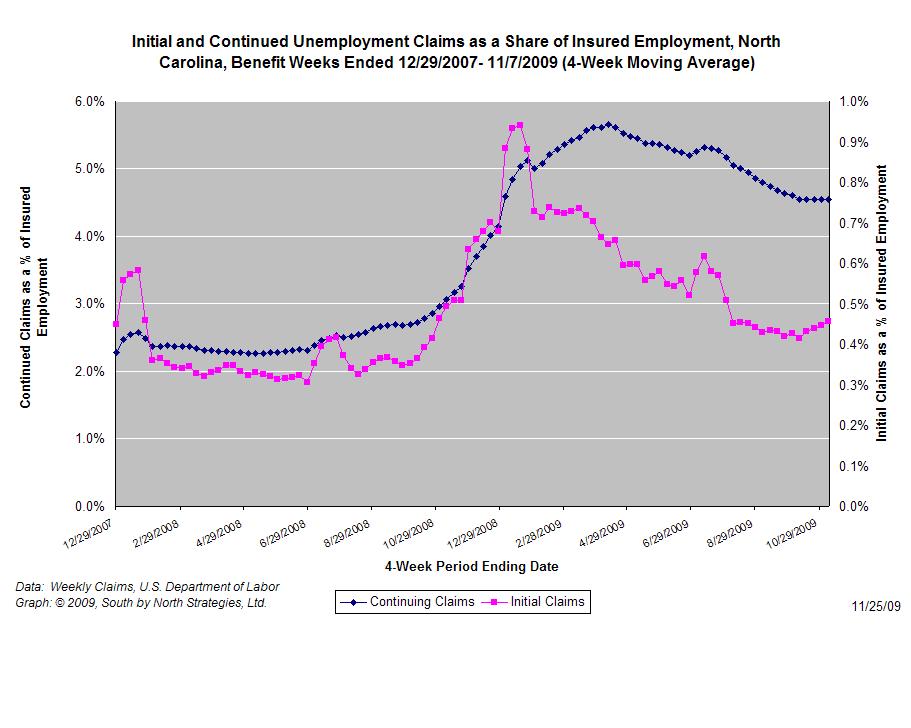
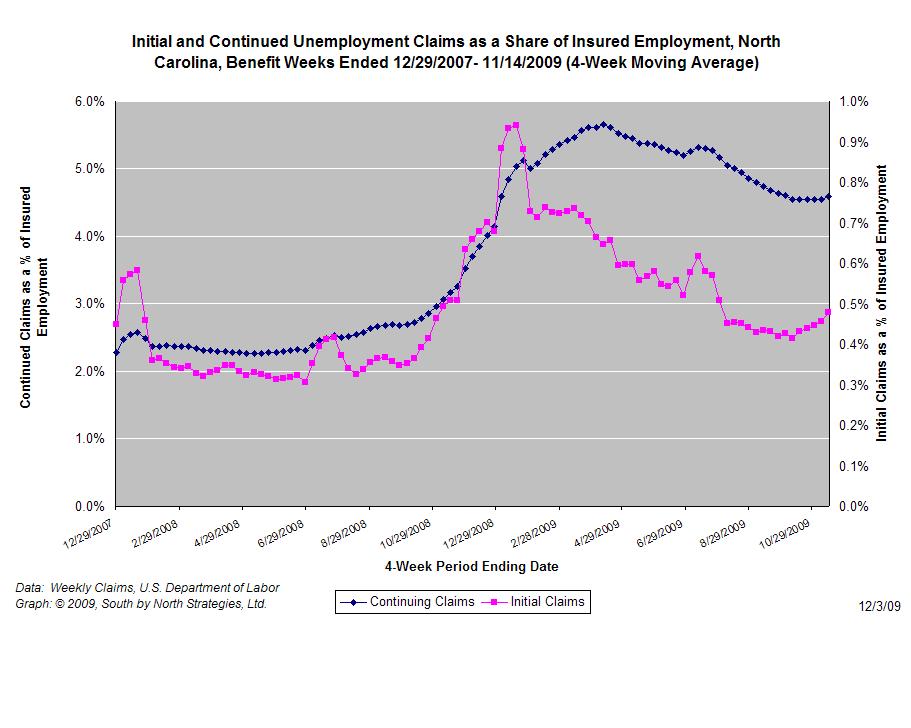
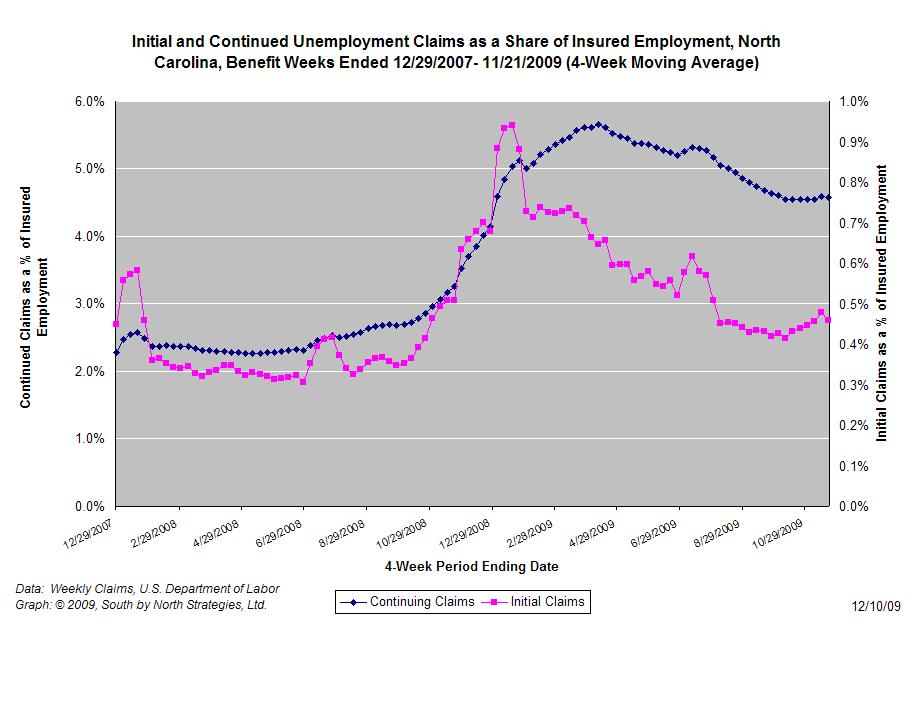
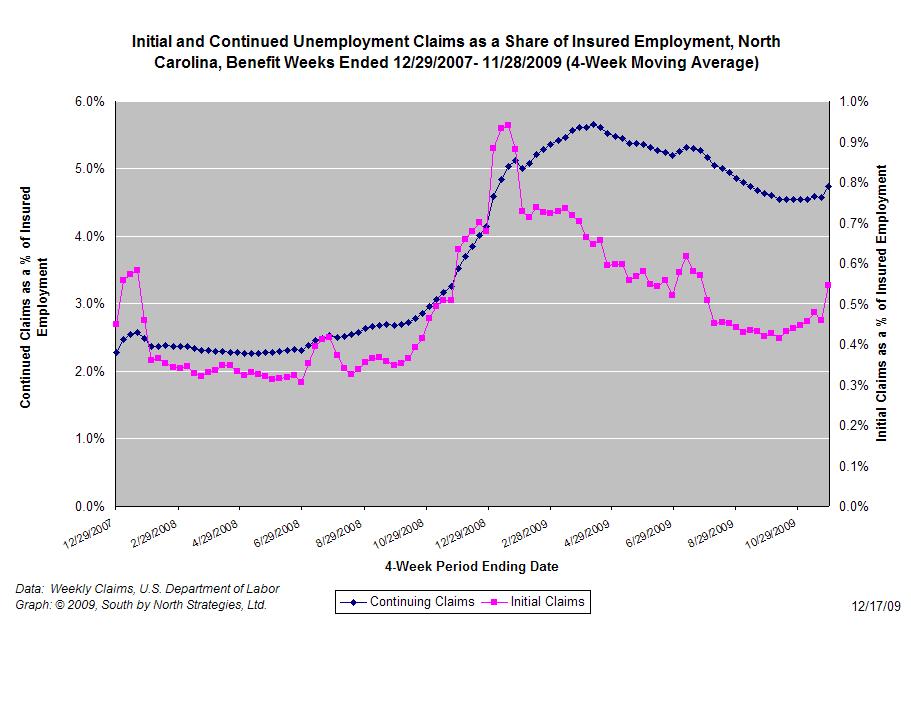
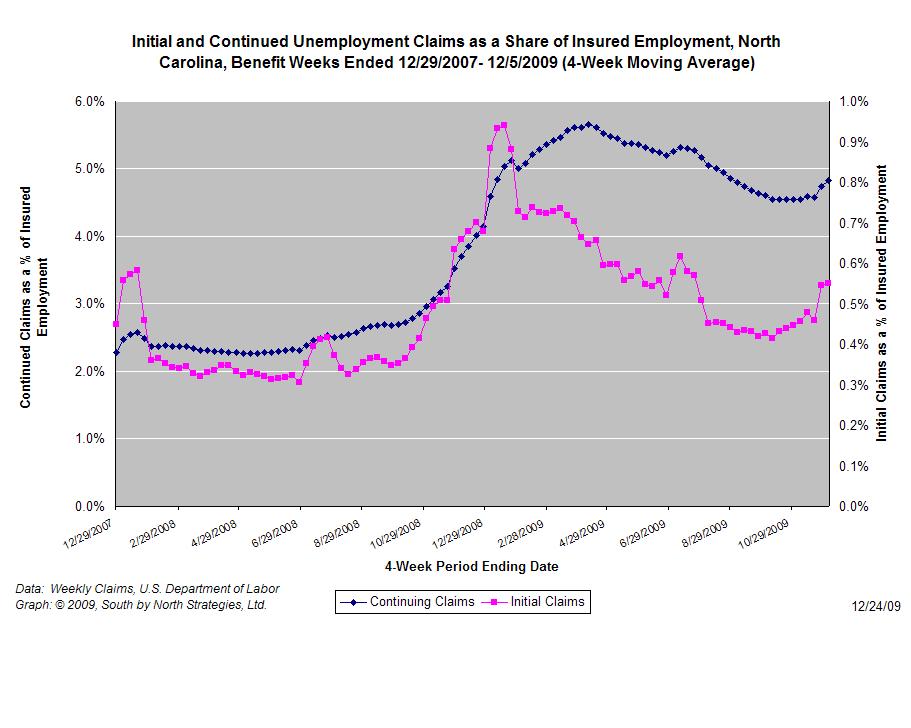
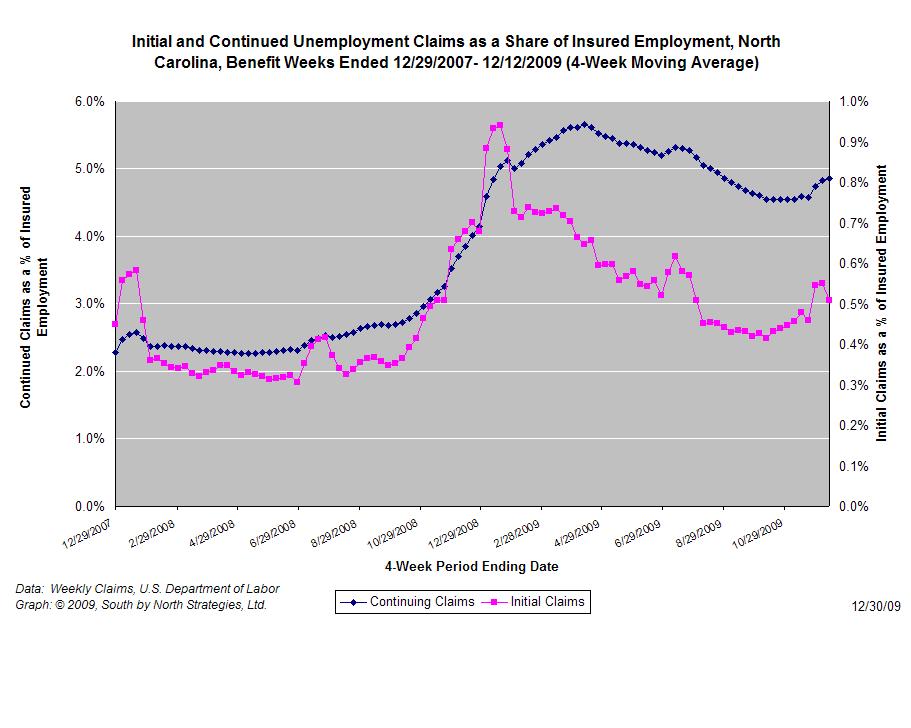
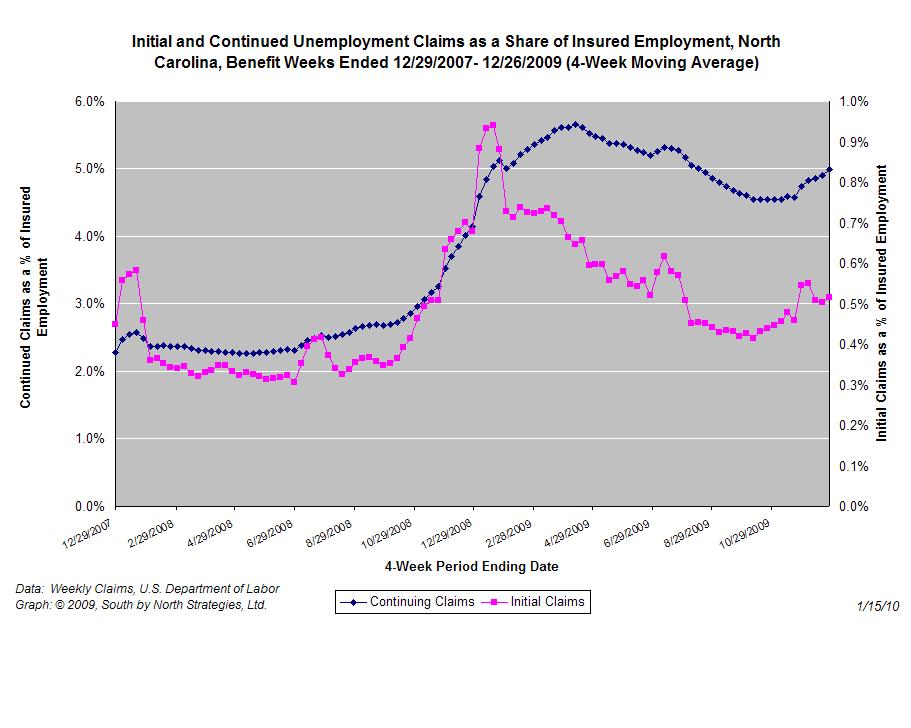
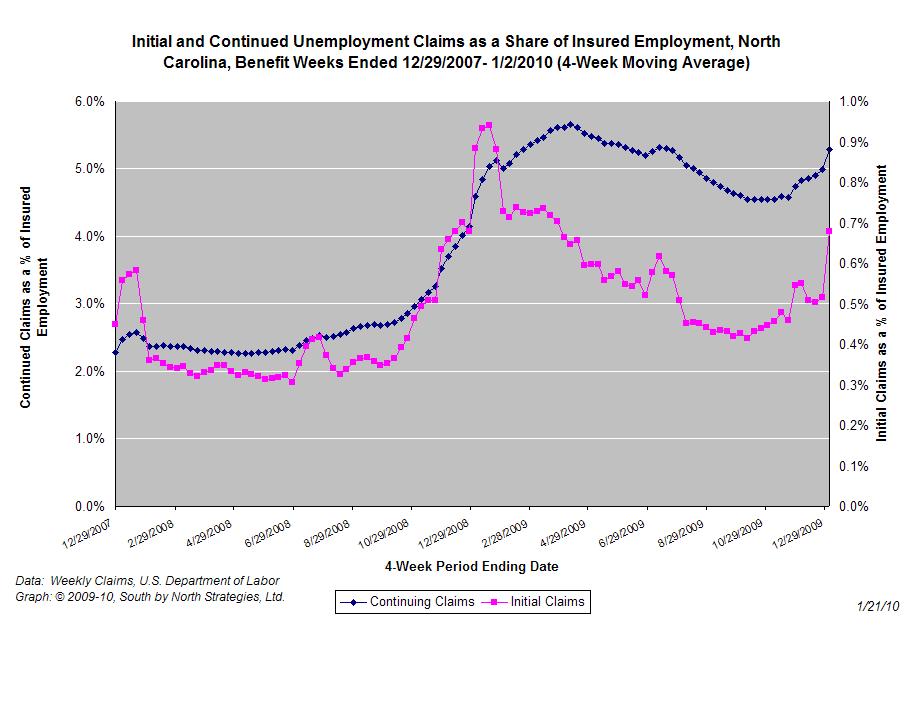
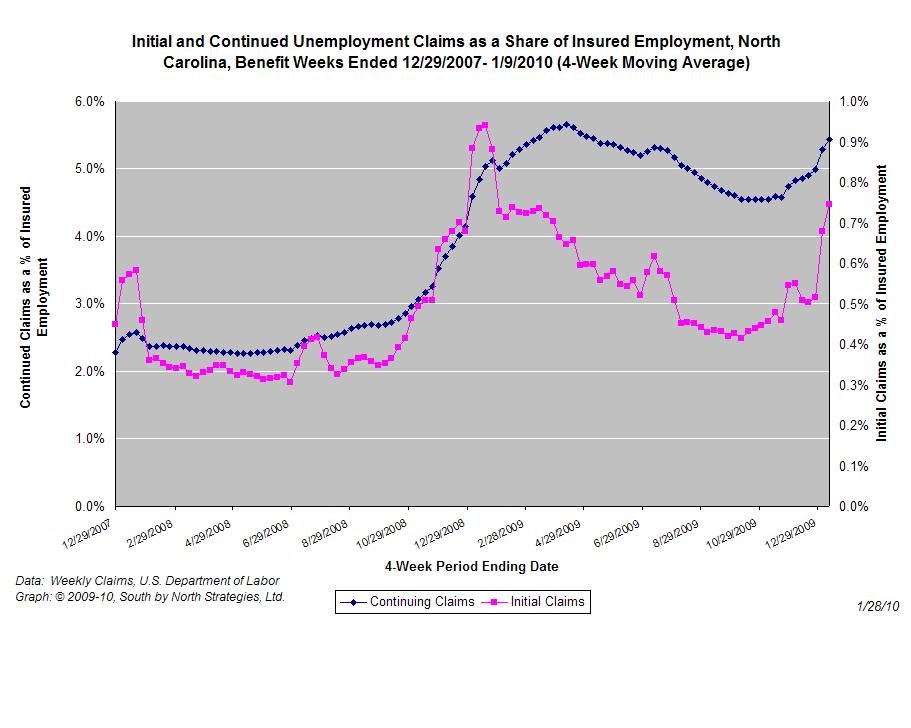
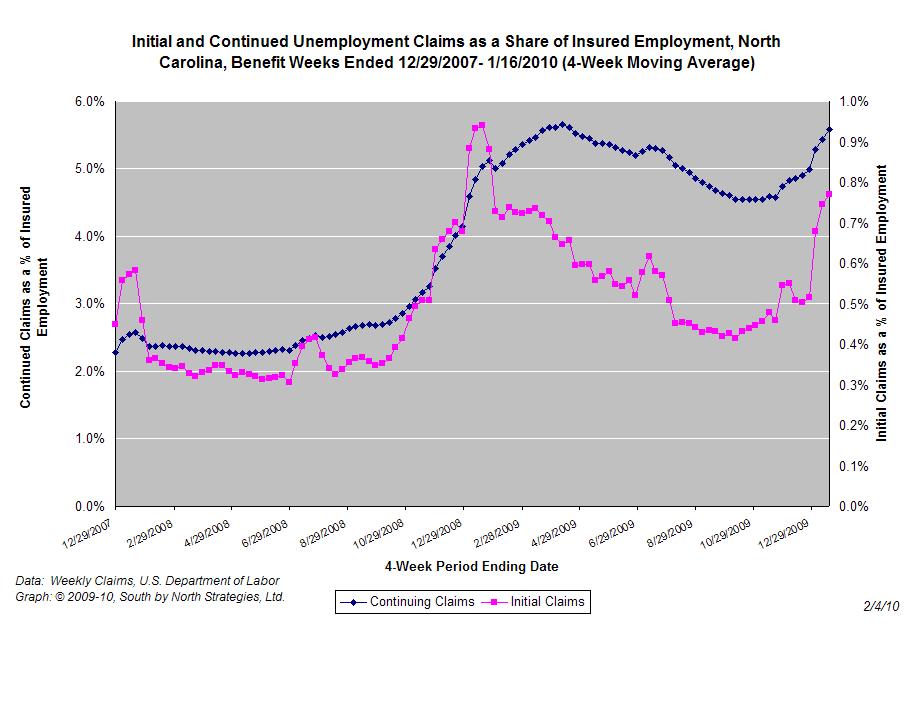
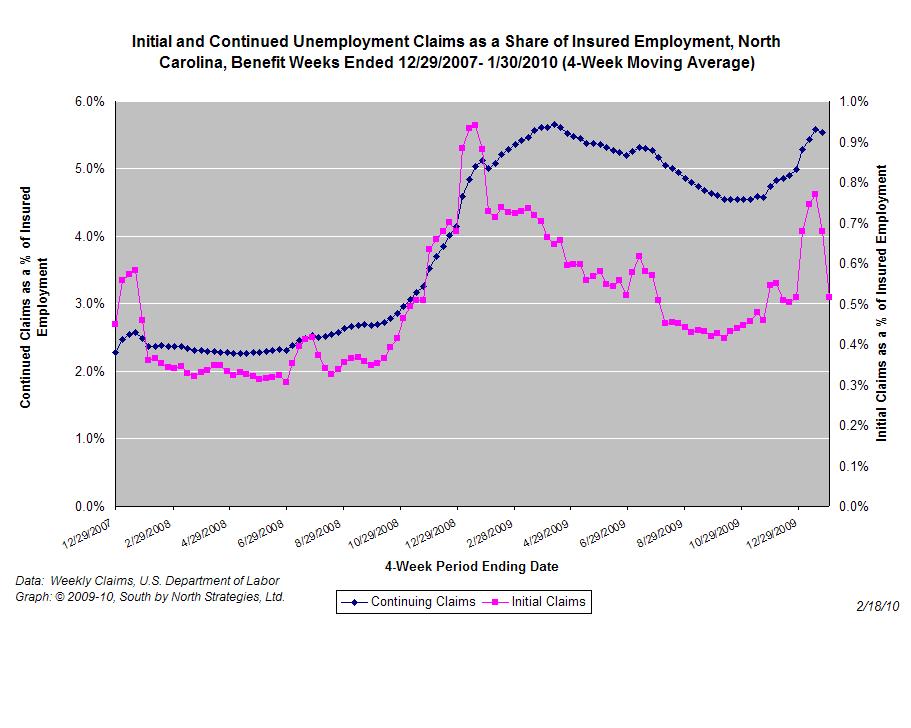
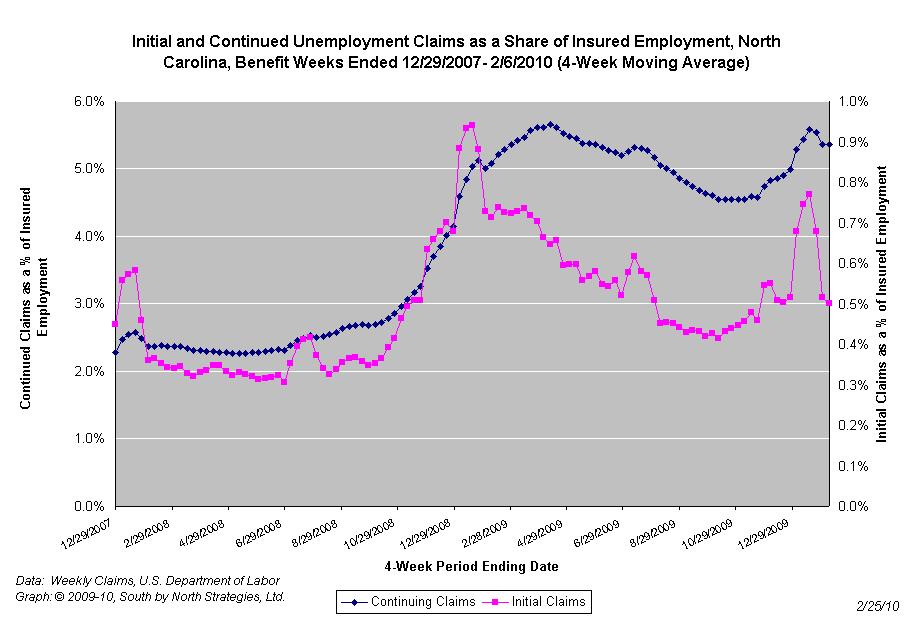
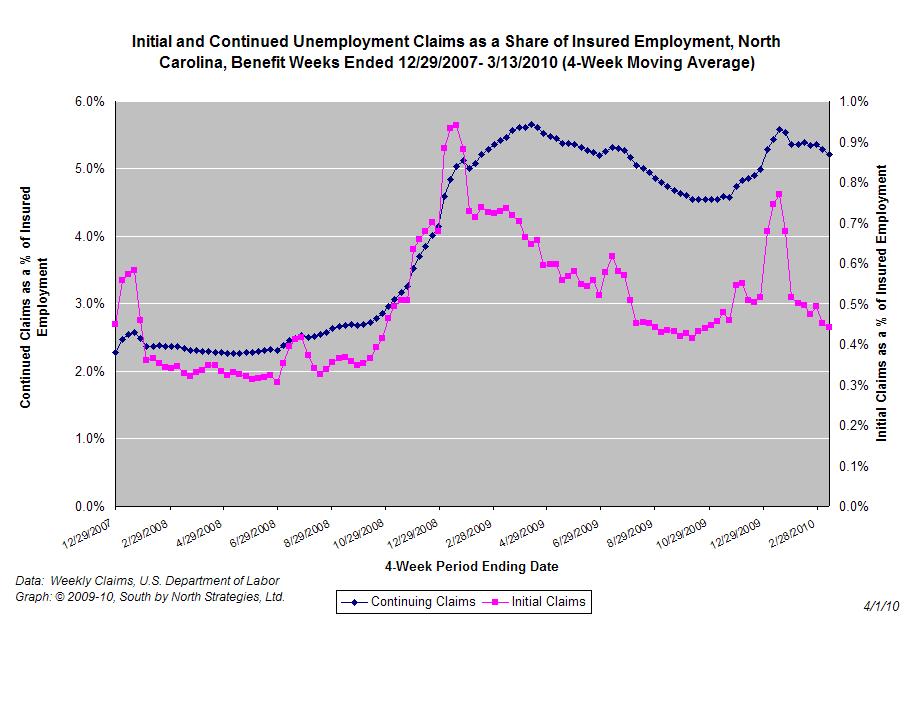
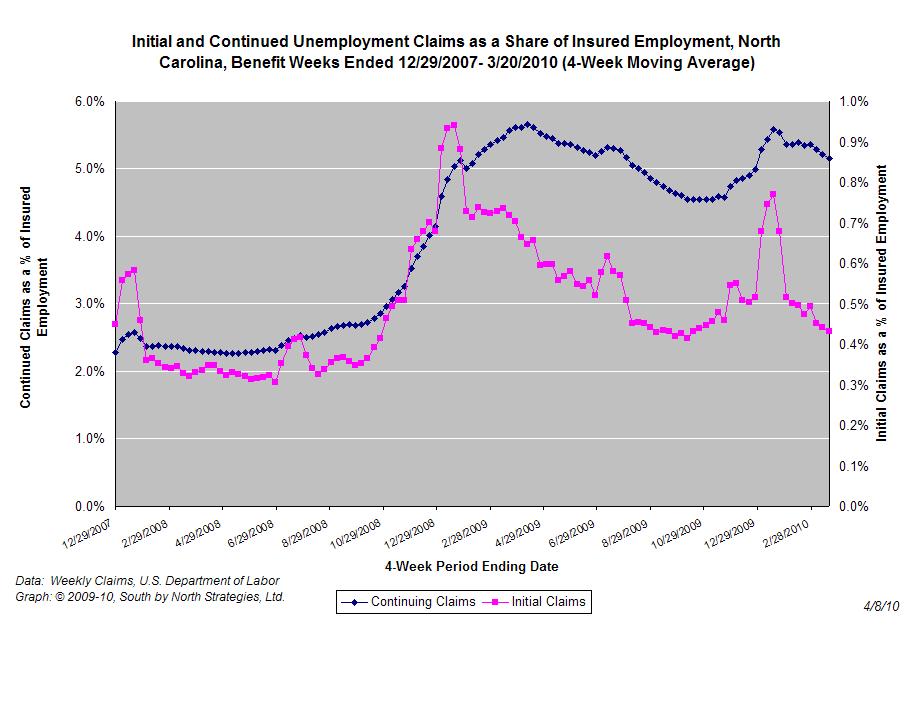
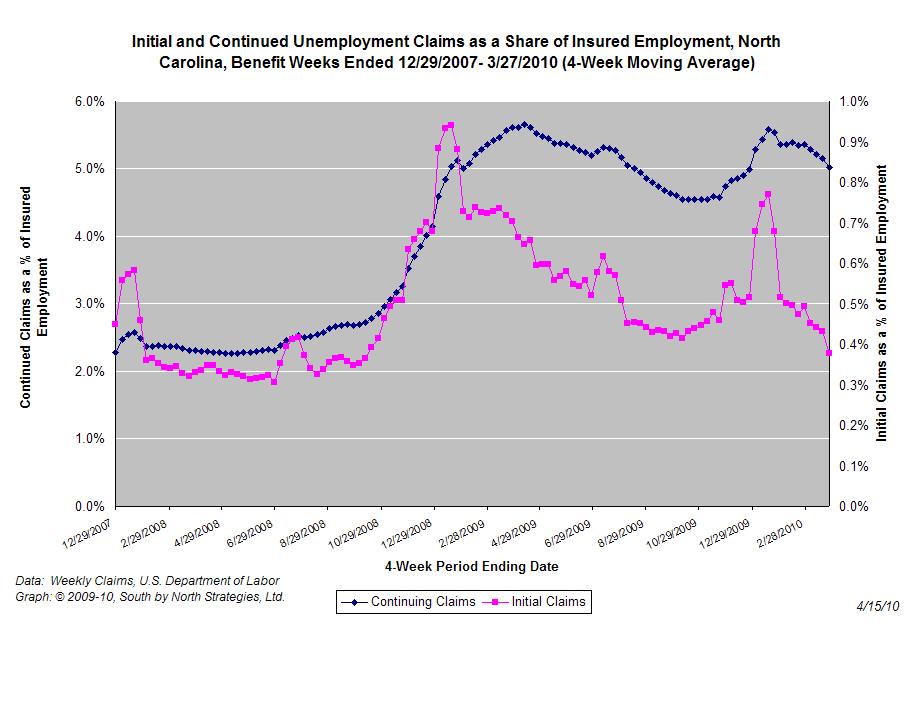
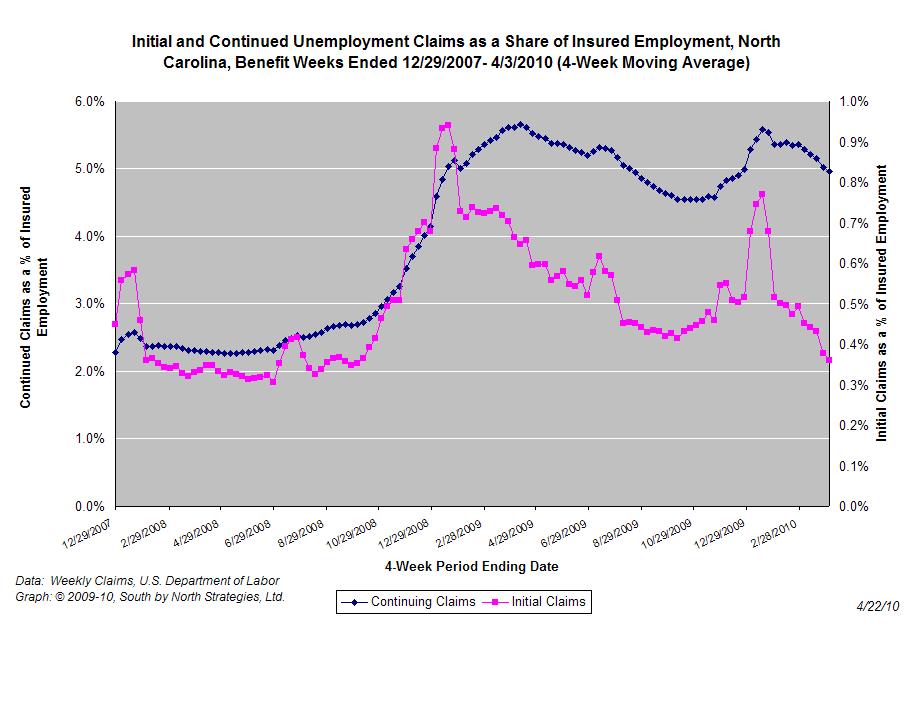
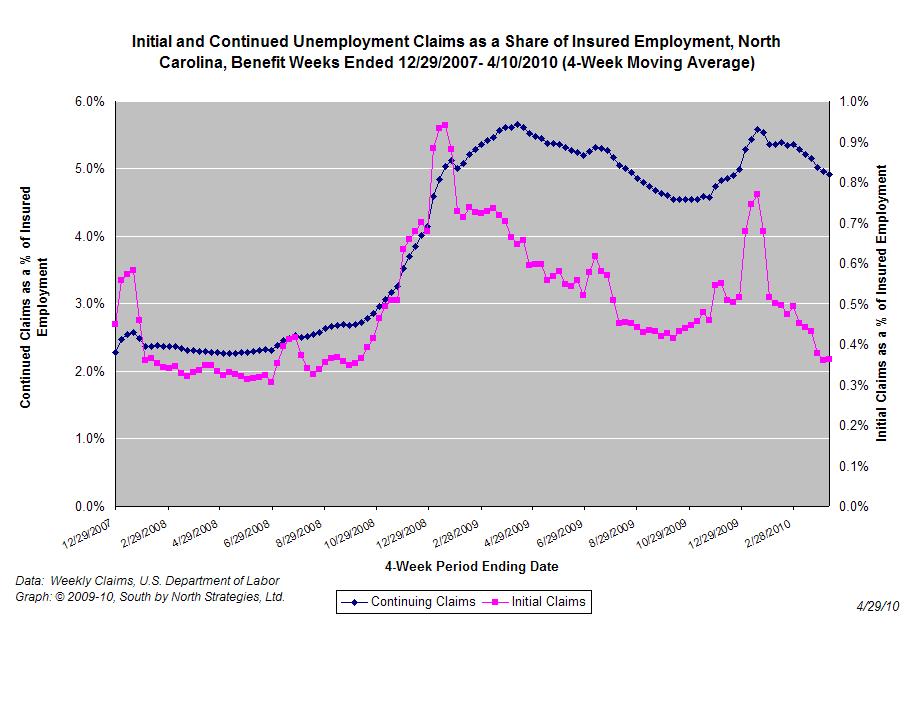
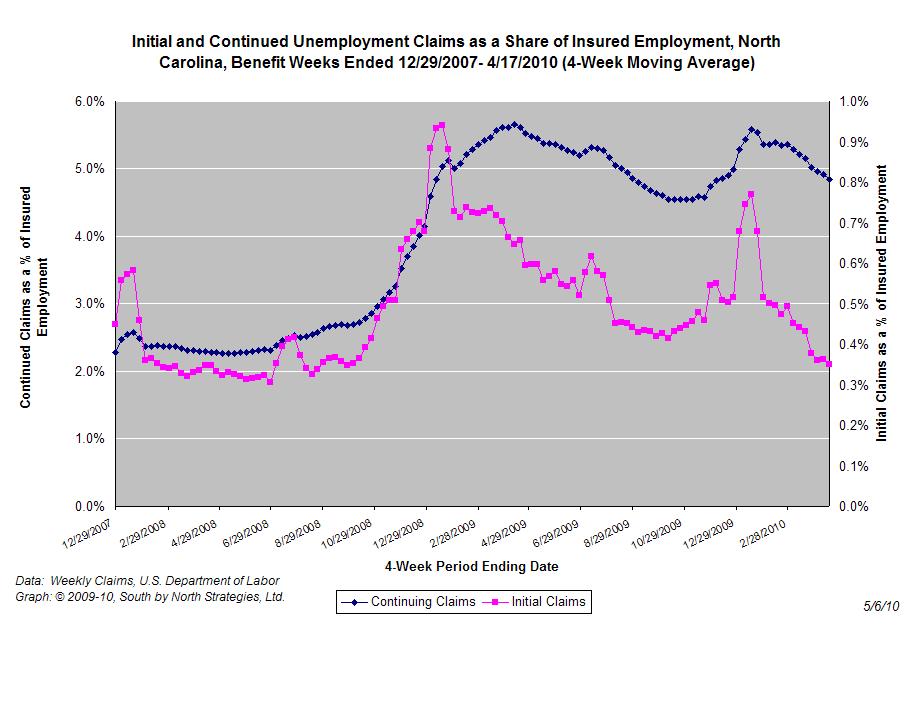
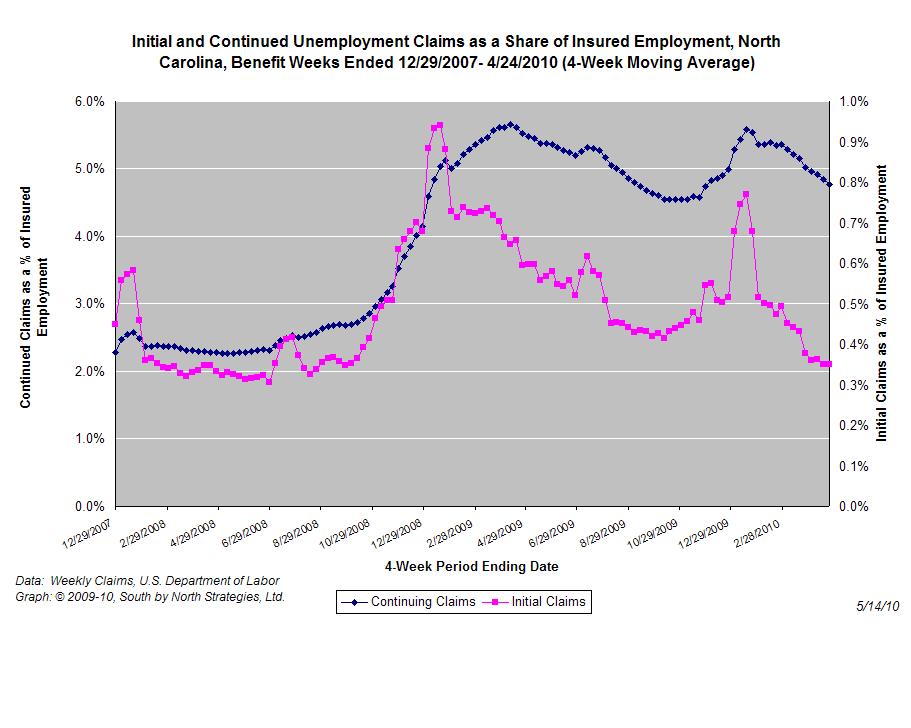
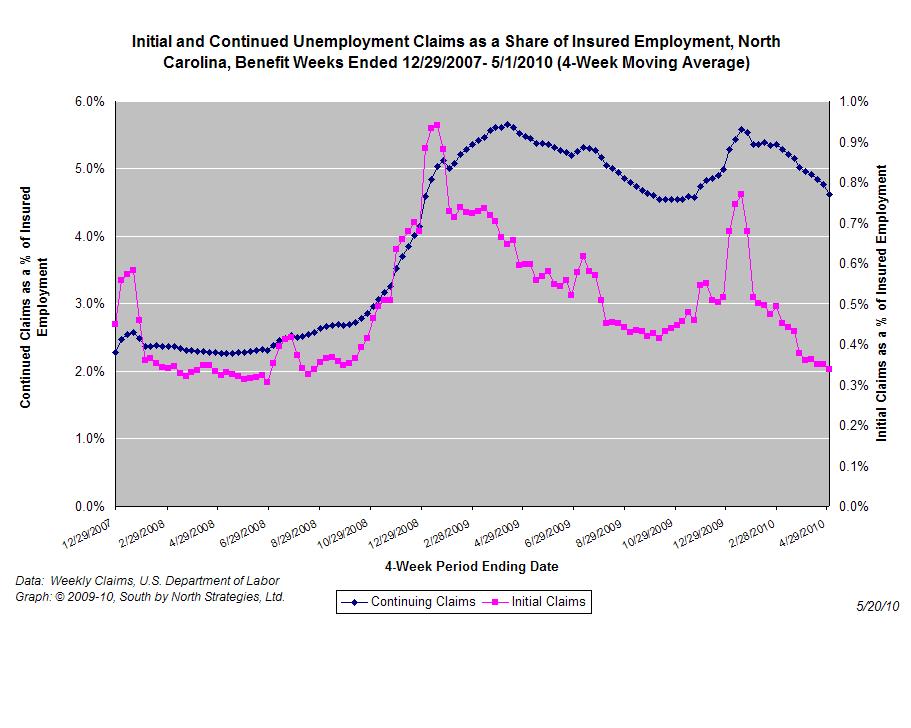
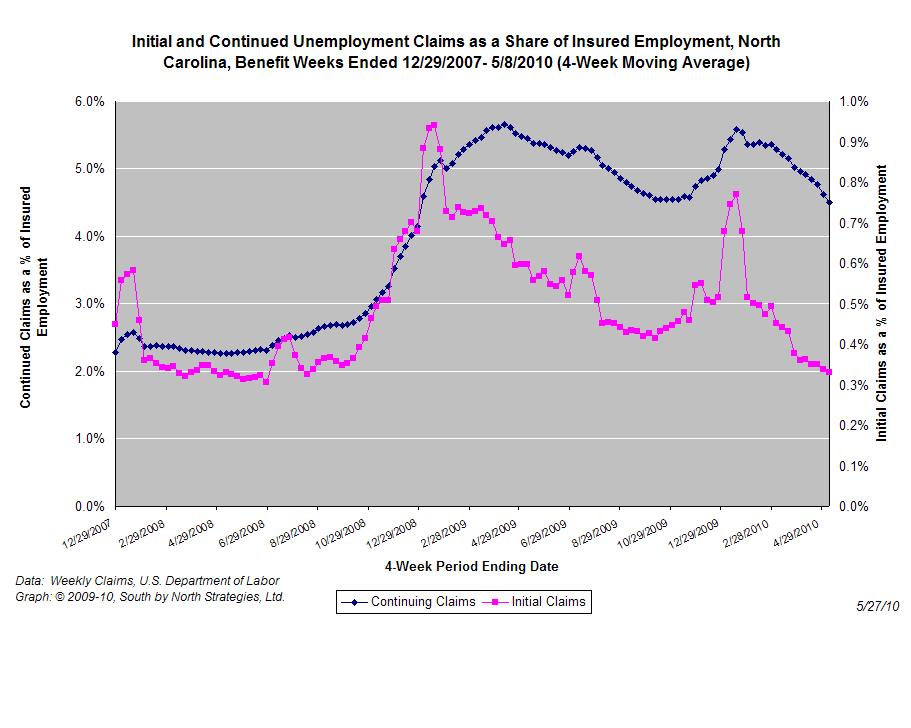
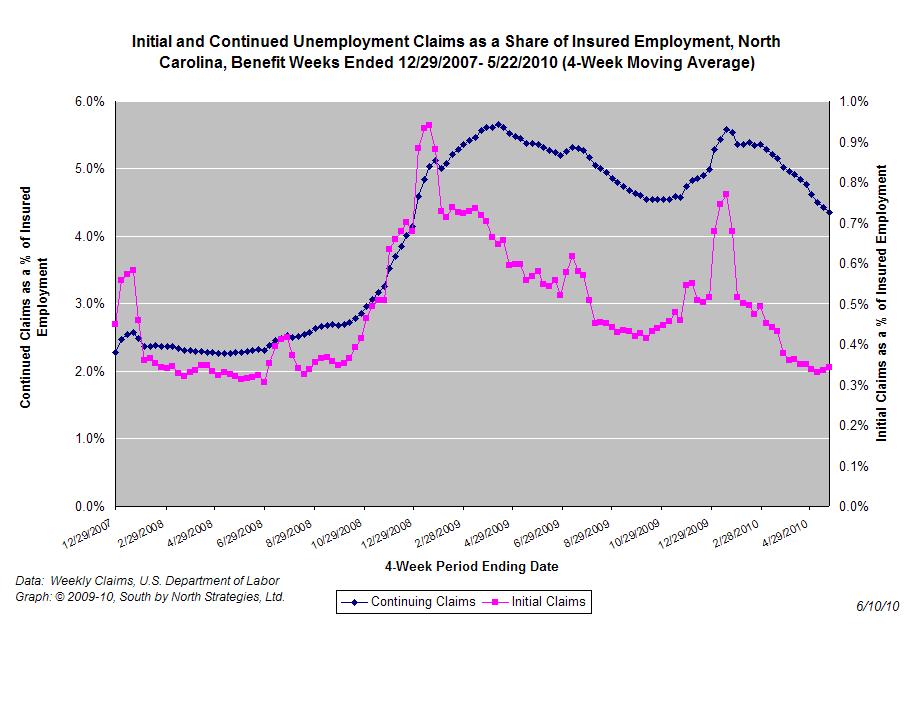
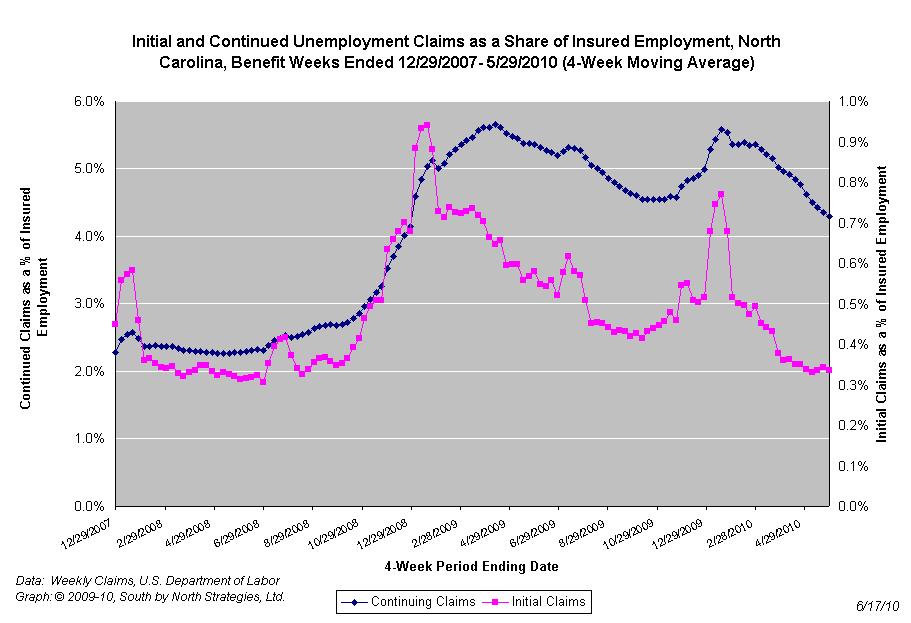
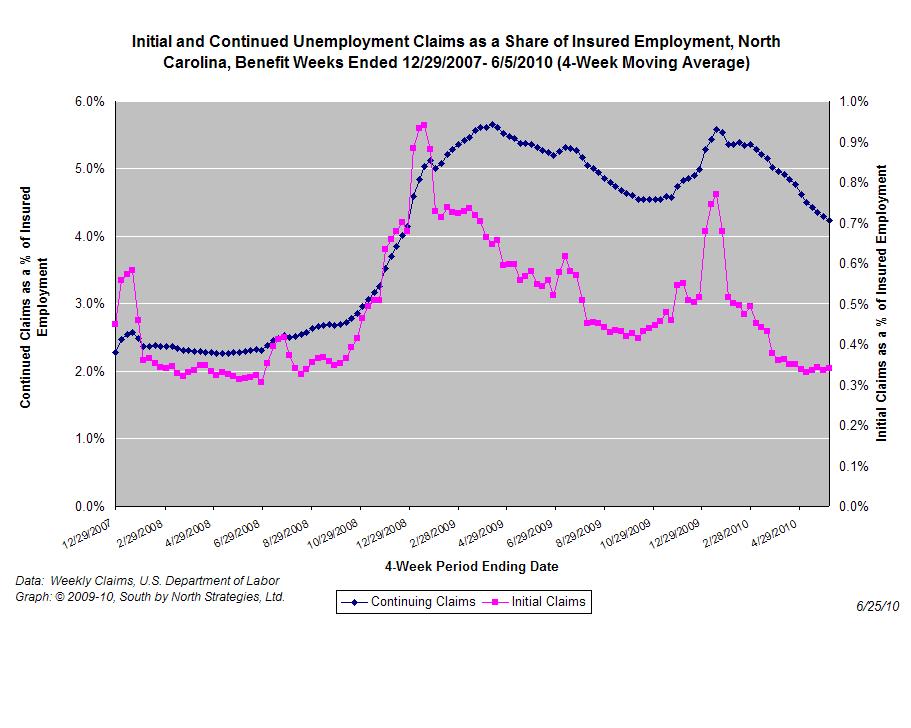
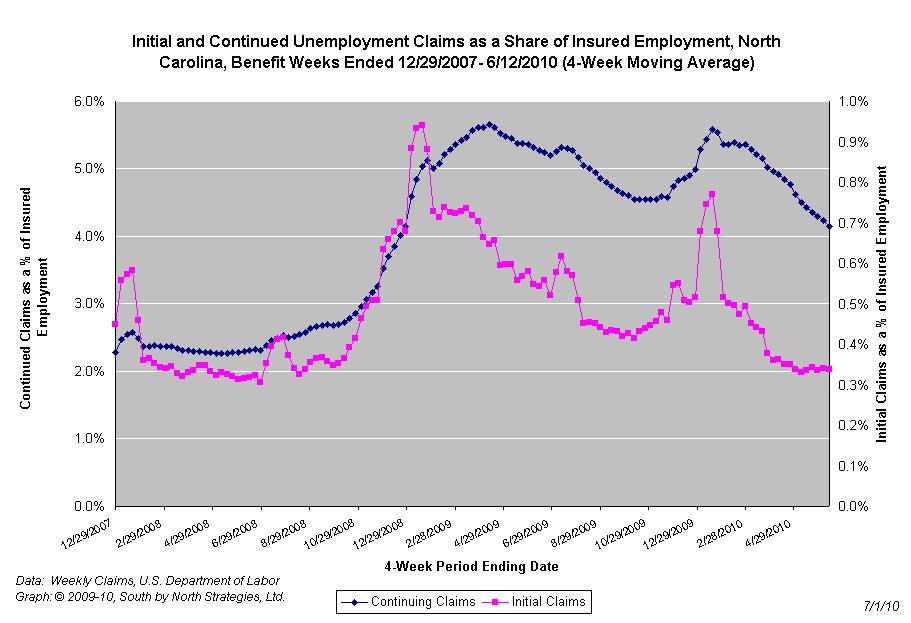
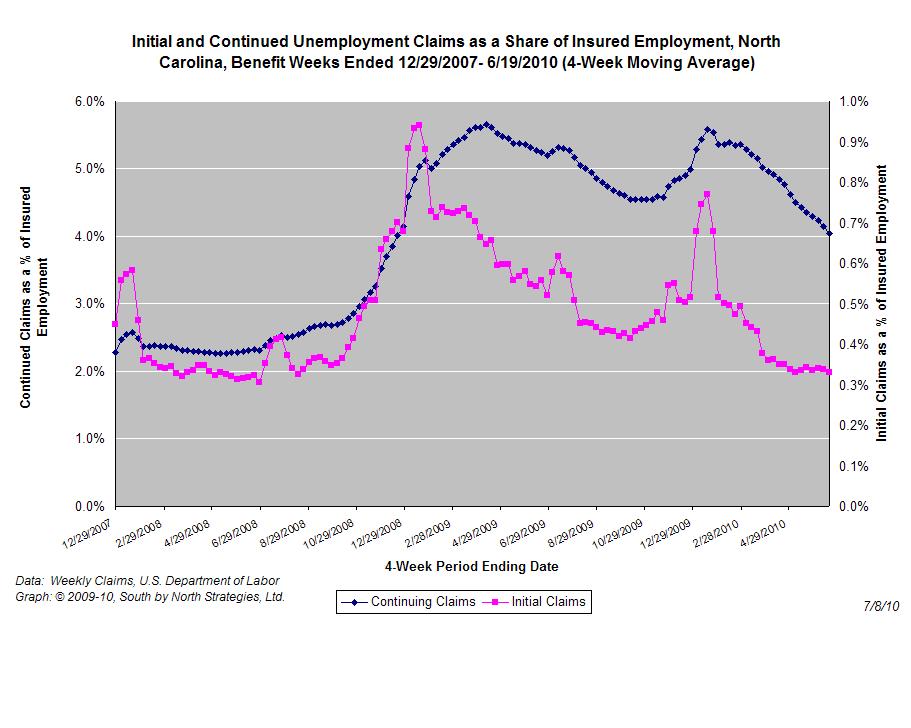
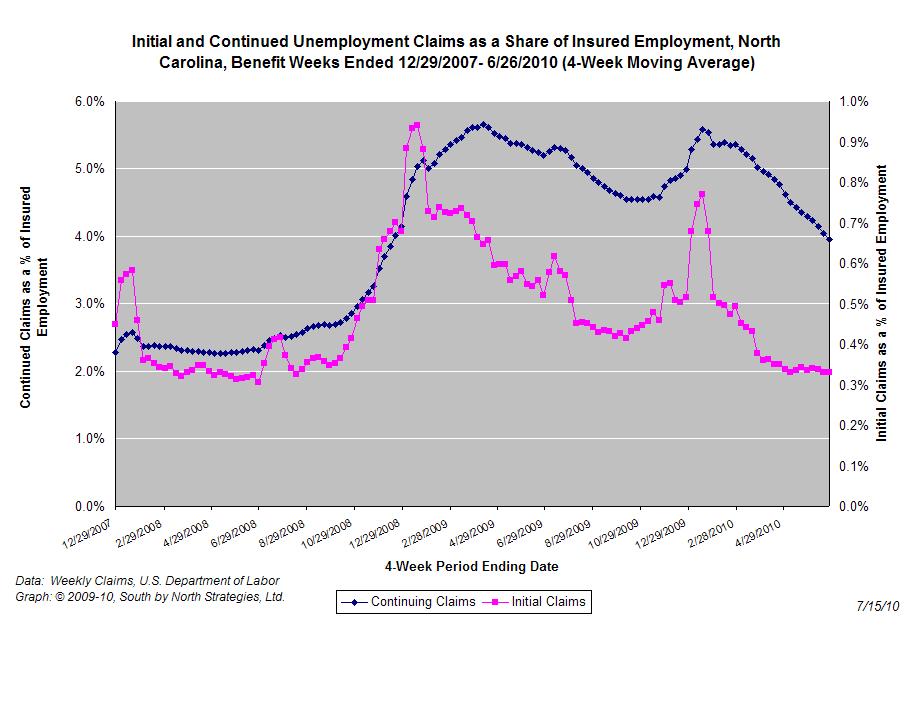
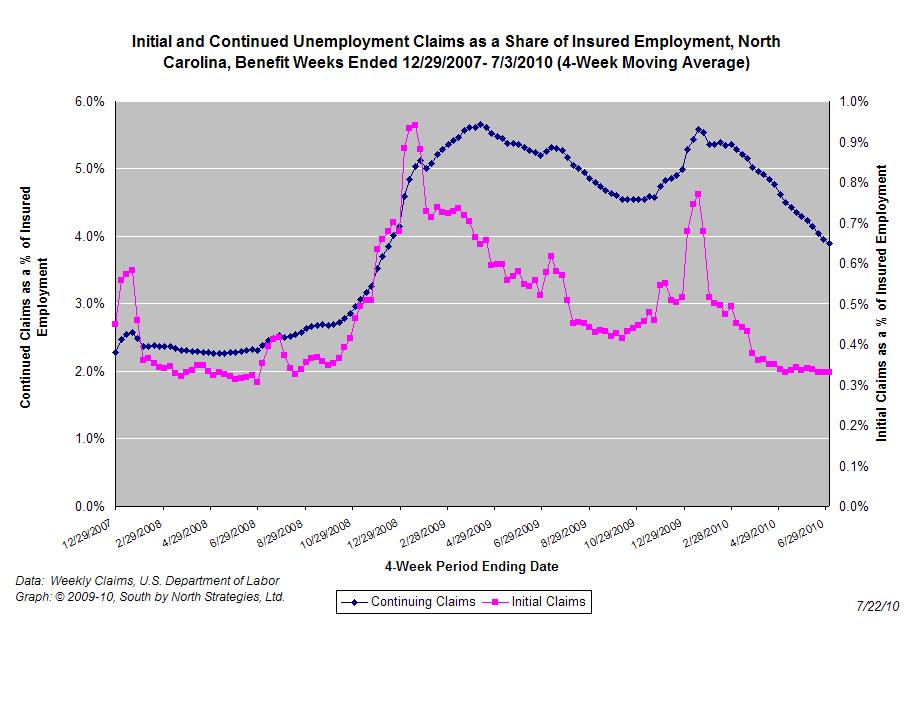
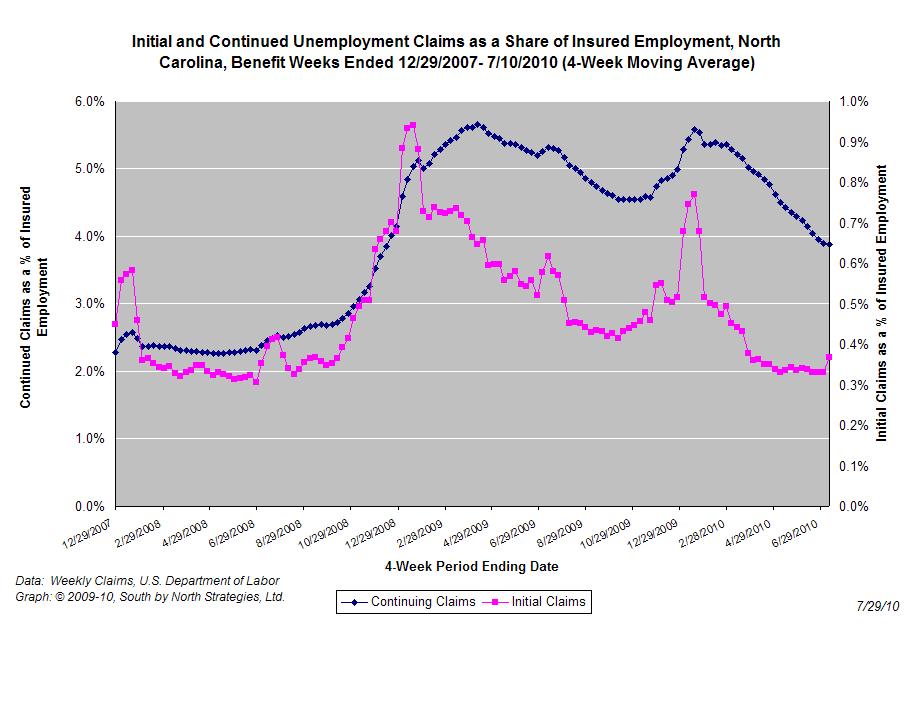
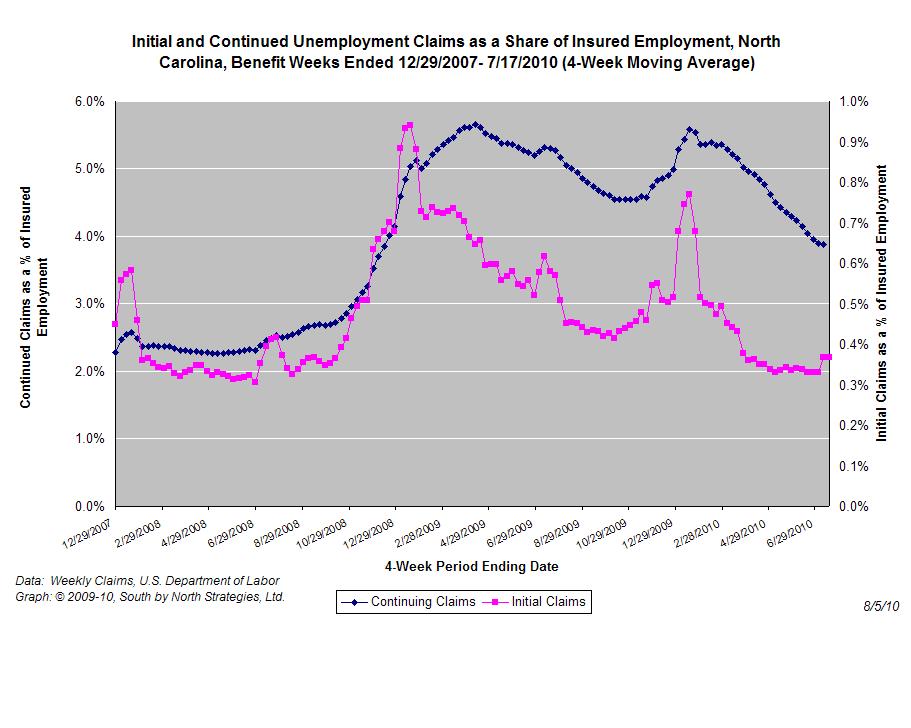
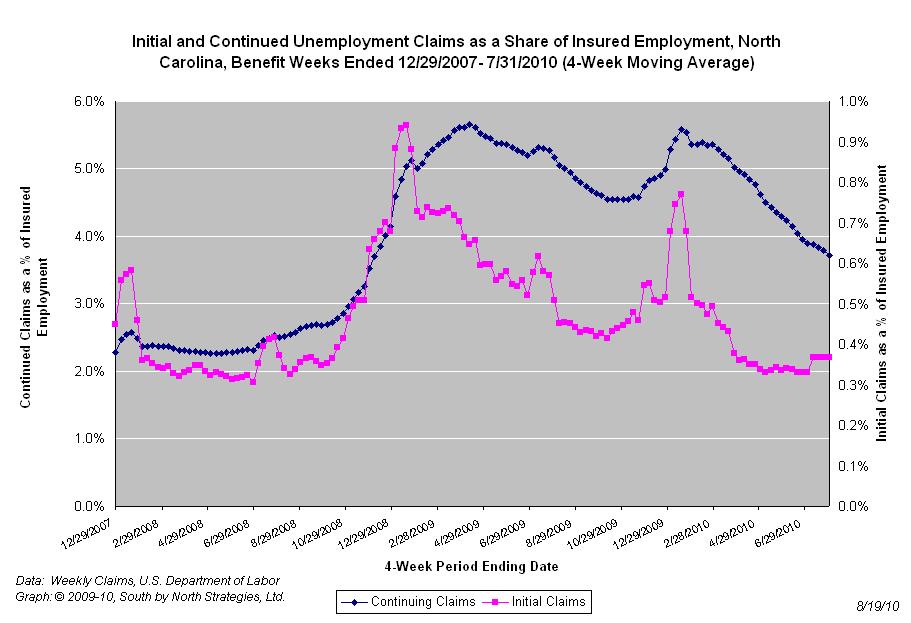
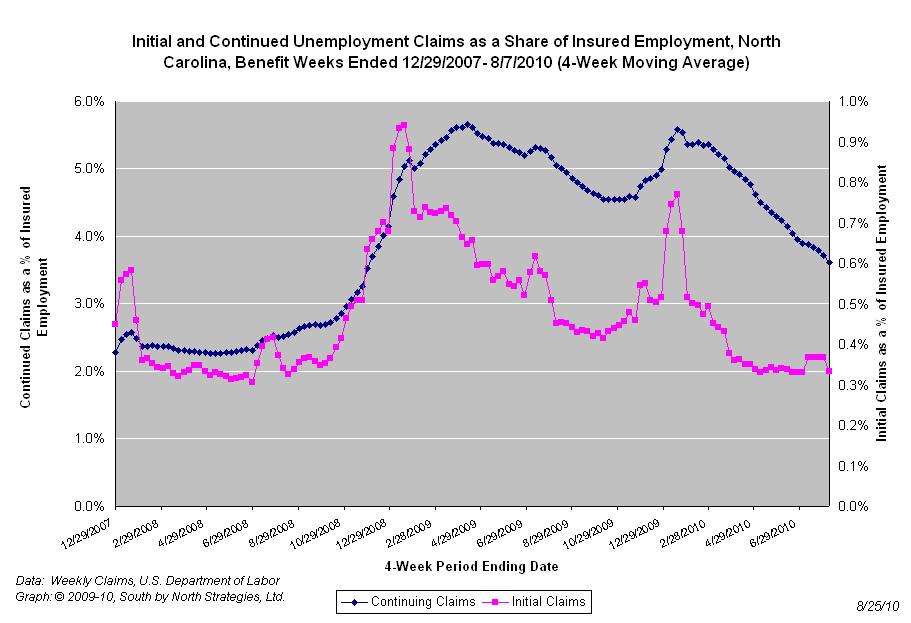
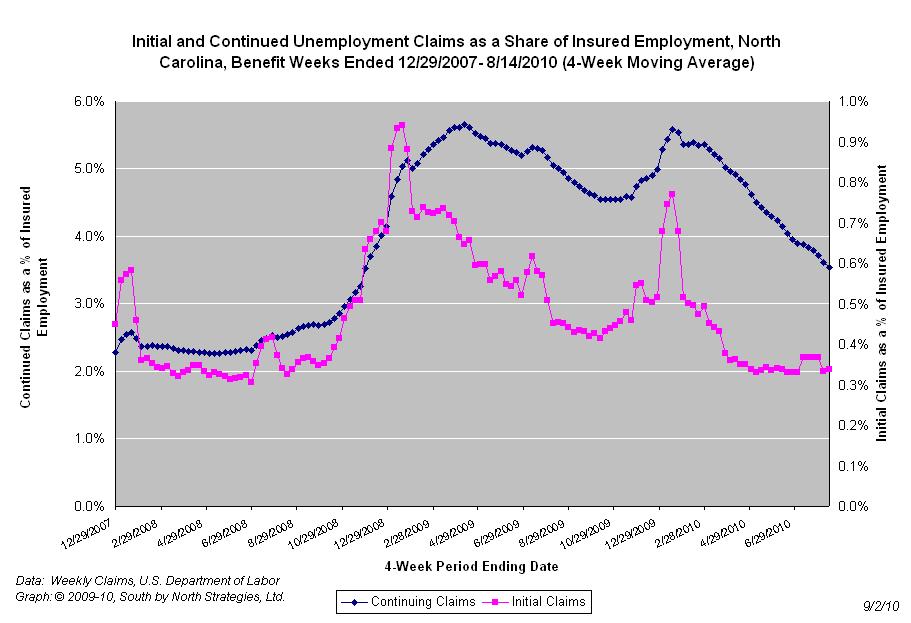
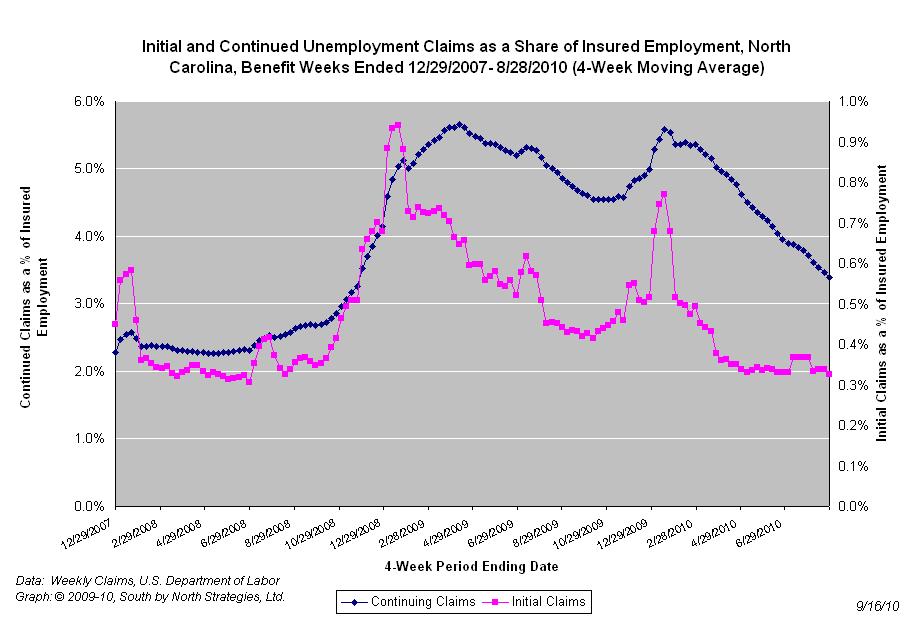
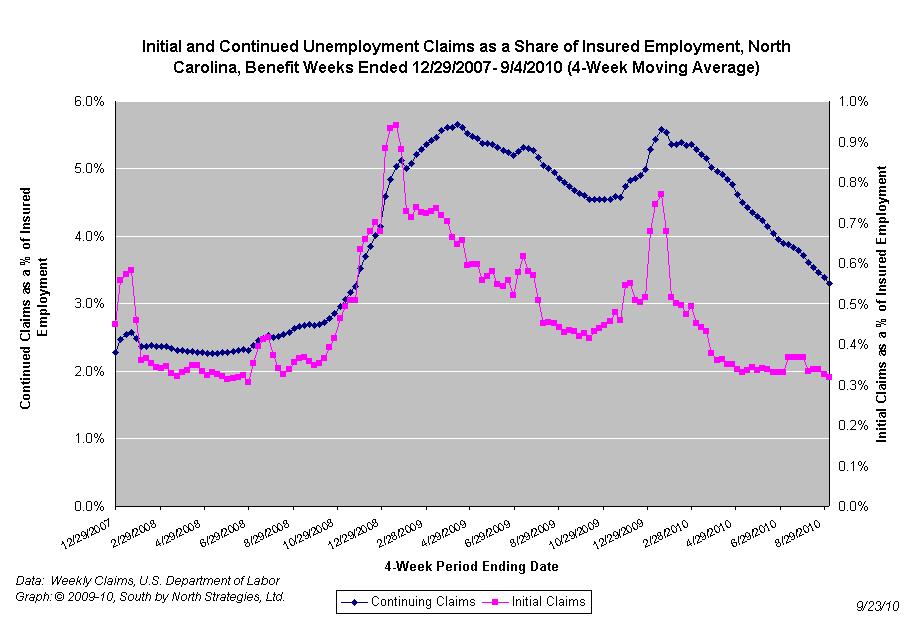
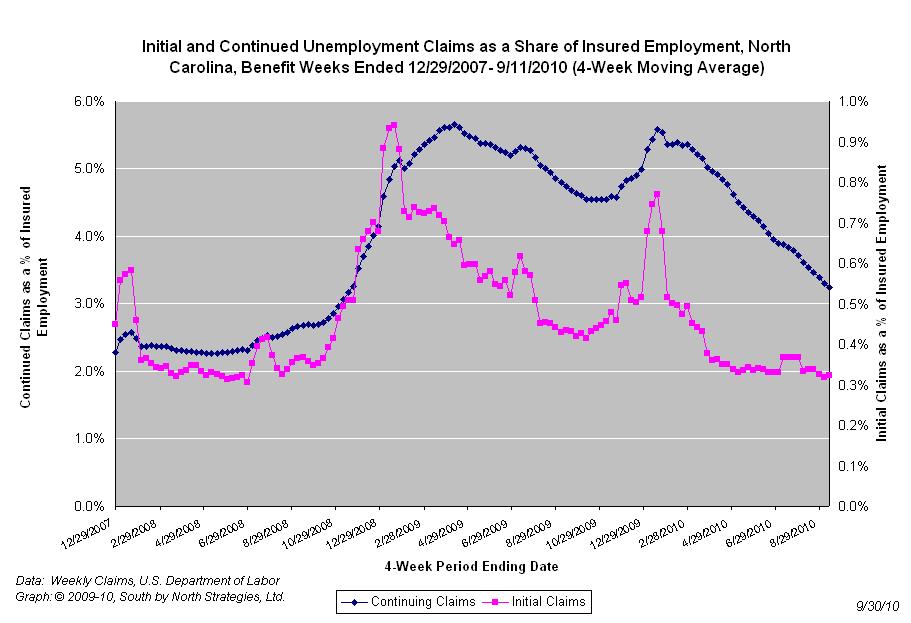
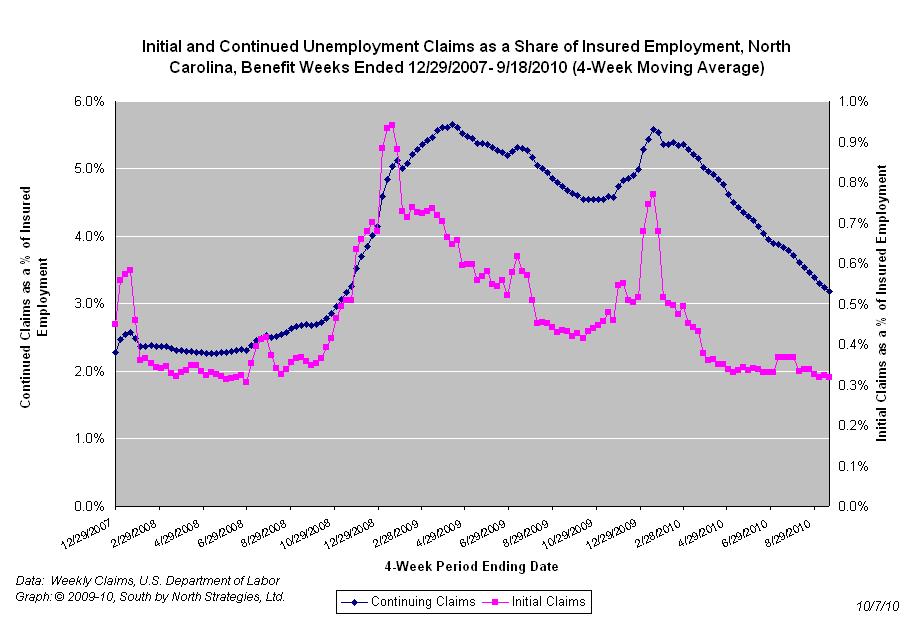
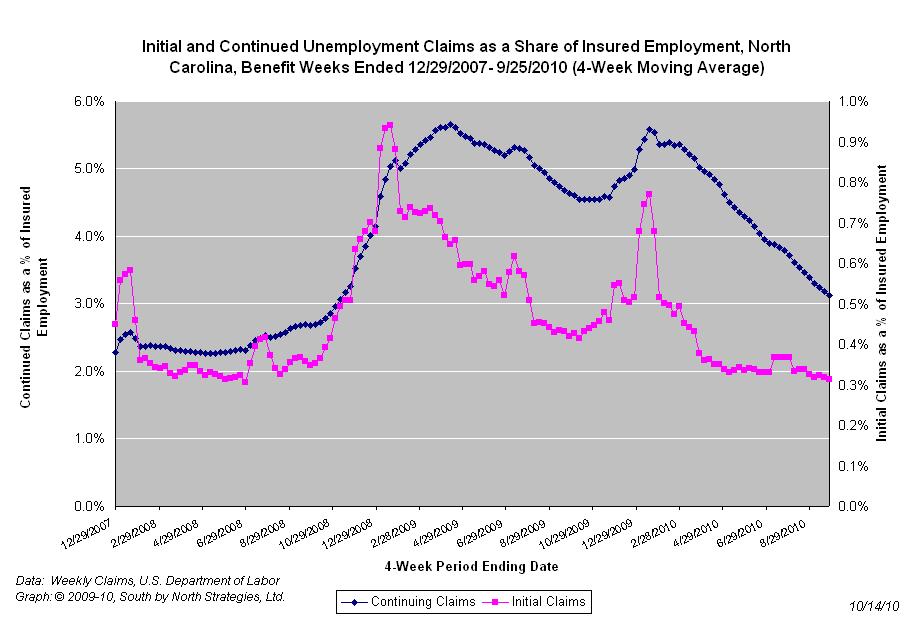
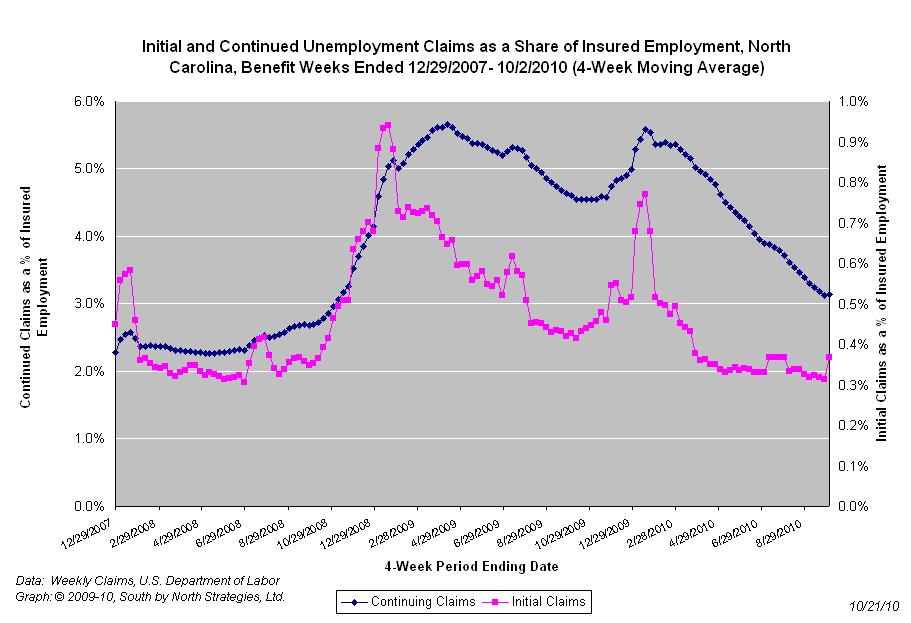
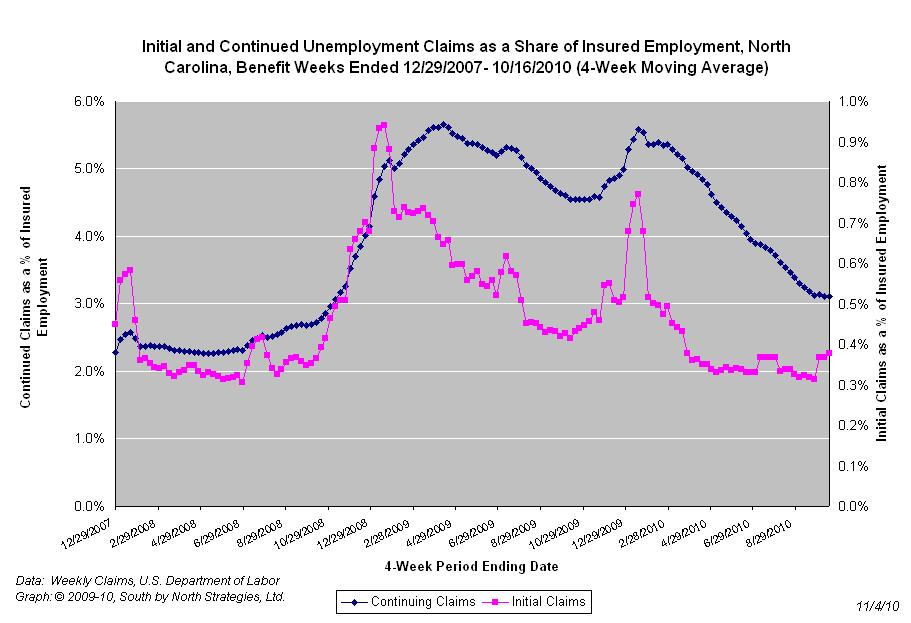
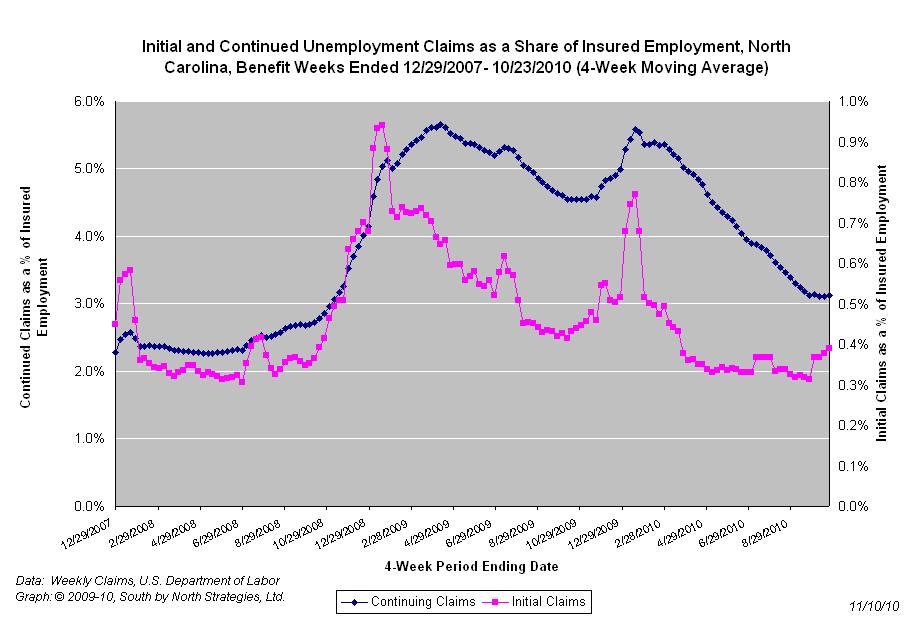
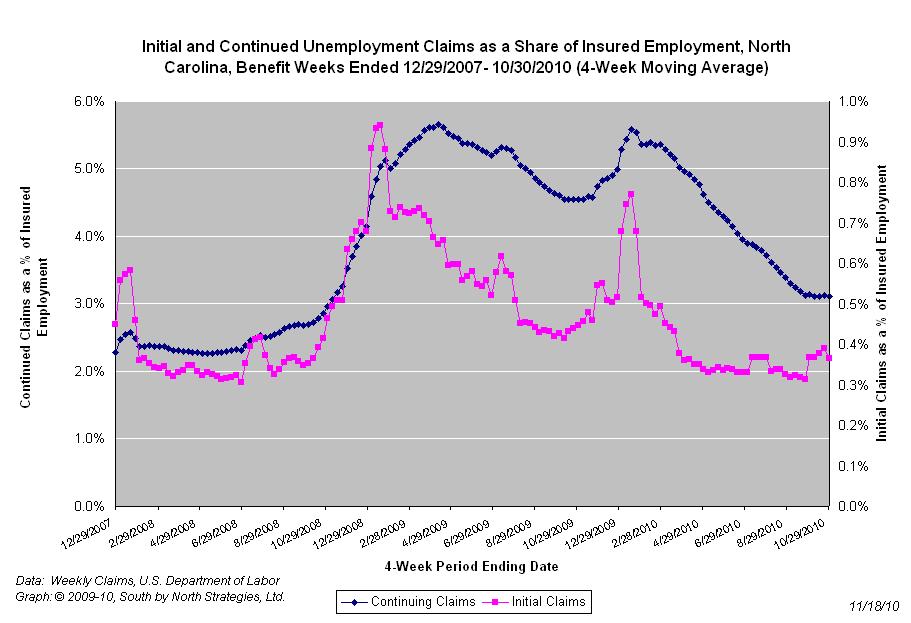
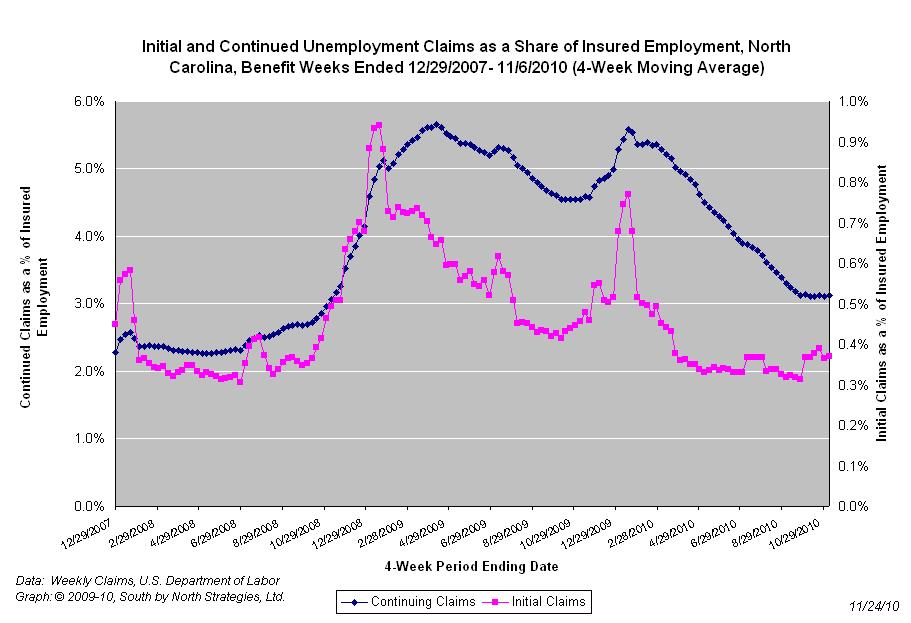
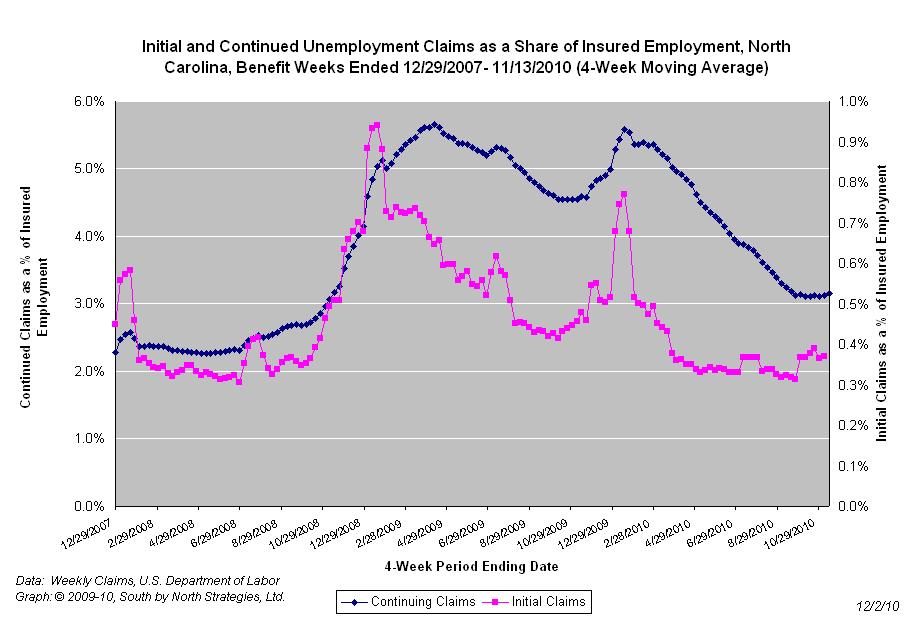
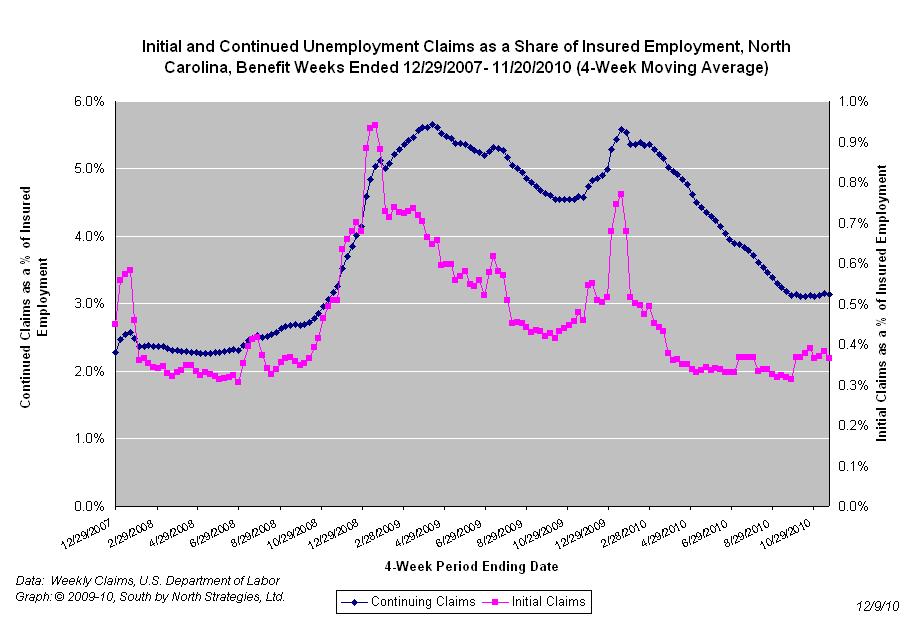
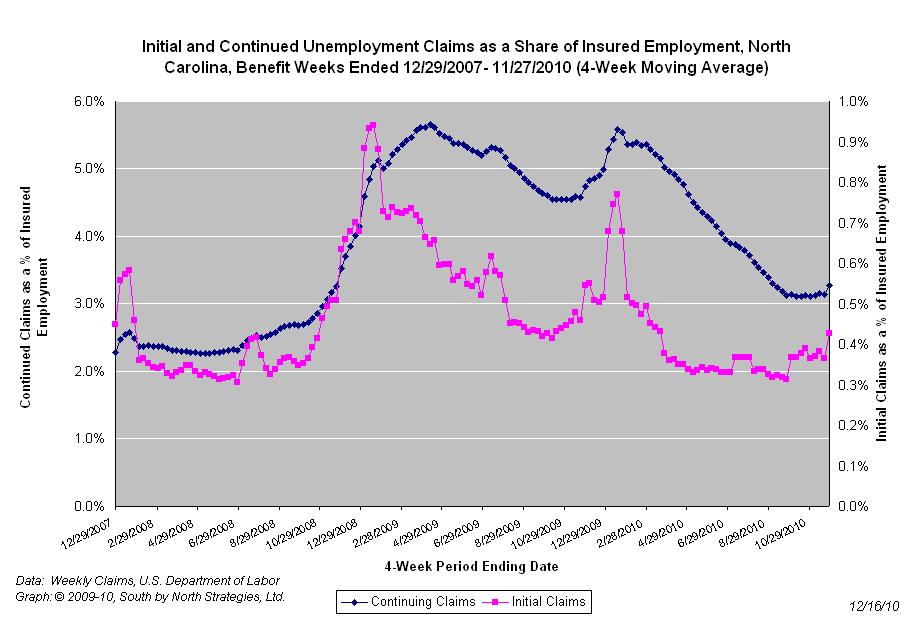
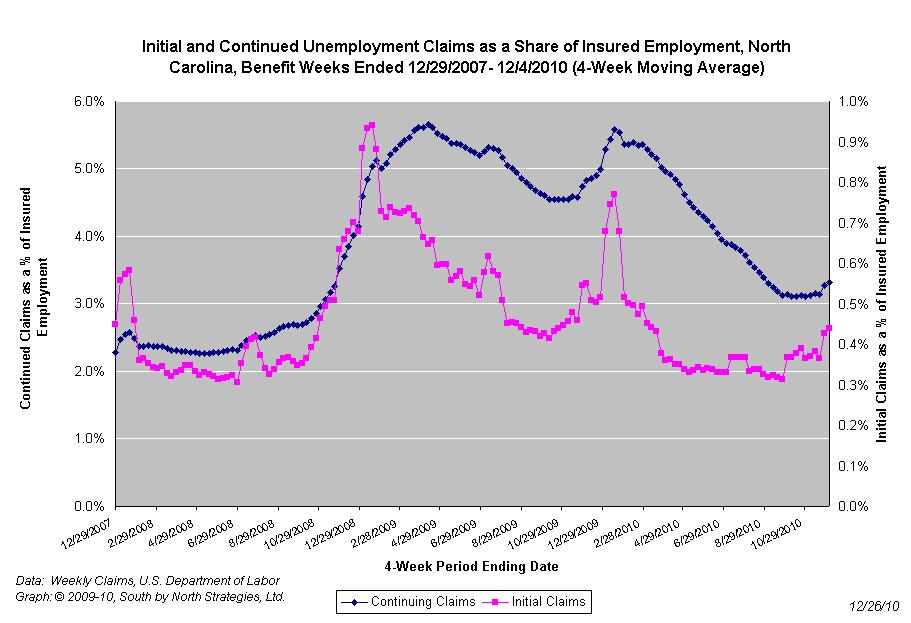
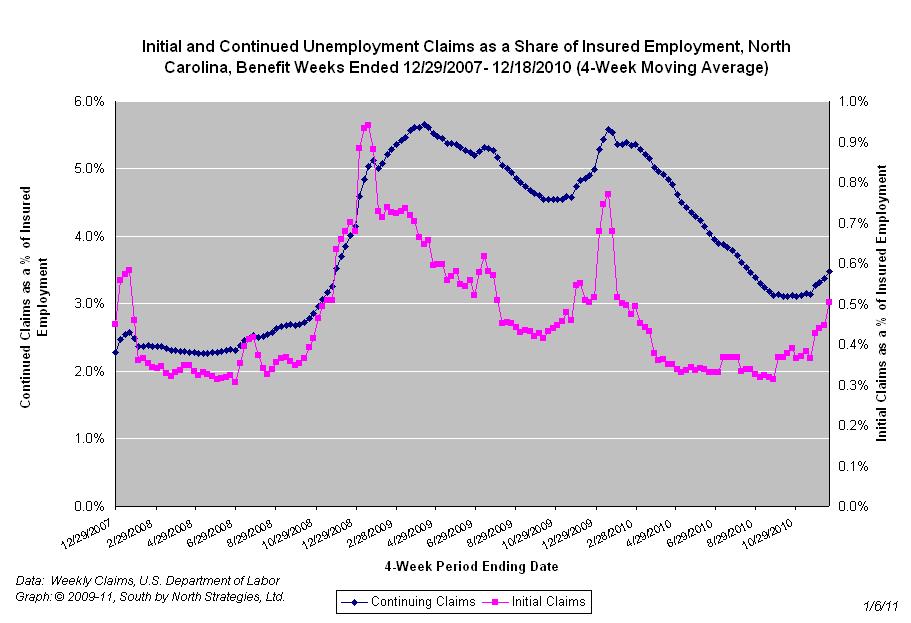
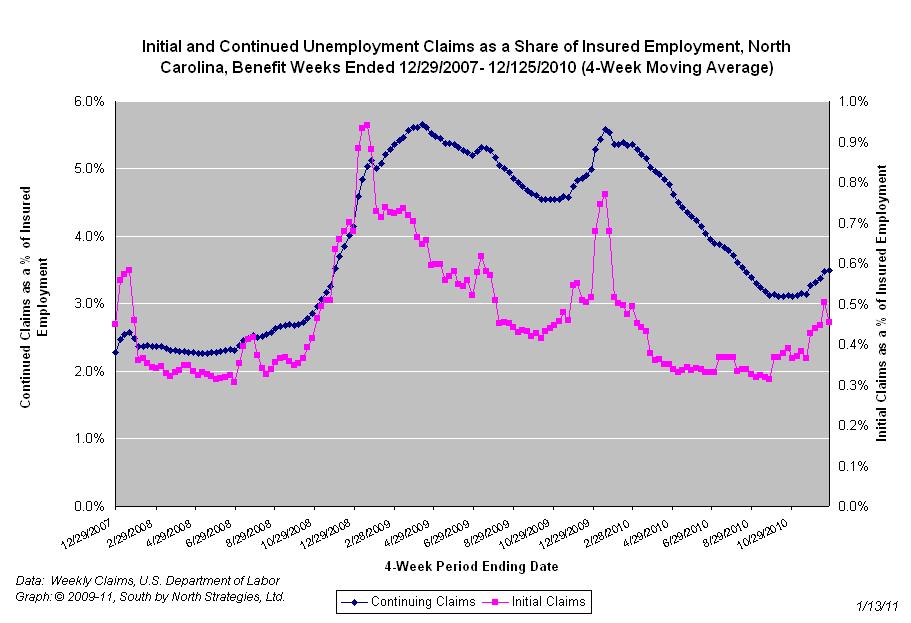
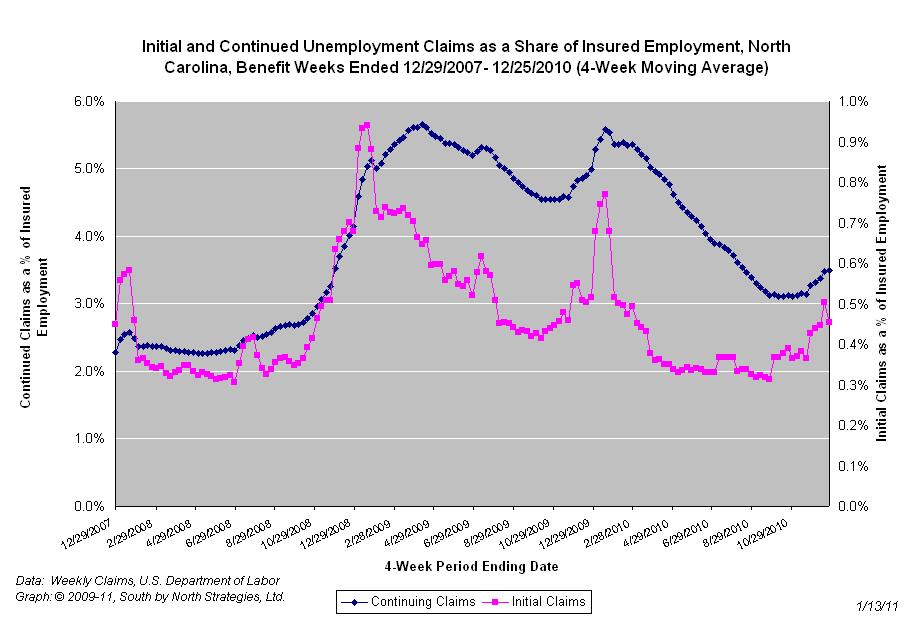
The graph (right) shows the changes in unemployment insurance claims (as a share of covered employment) in North Carolina since the recession’s start in December 2007.
Both new and continuing claims appear to have peaked for this cycle, and the four-week averages of new and continuing claims have fallen considerably. Yet continuing claims remain at an elevated level, which suggests that unemployed individuals are finding it difficult to find new positions.
Job Openings and Labor Turnover
From the Economic Policy Institute’s analysis of the December version of the Job Openings and Labor Turnover Survey (JOLTS) …
The total number of job openings in December was 3.1 million. The Current Population Survey shows that the total number of unemployed workers was 14.5 million. The ratio of unemployed workers to job openings was thus 4.7-to-1 in December, unchanged from the revised November ratio. Despite month-to-month fluctuations, the job seeker’s ratio has been generally improving since its peak of 6.3-to-1 in July 2009. However, at 4.7-to-1, the ratio is more than three times as high as its average ratio of 1.5-to-1 in 2007. The current 4.7-to-1 ratio means that for more than 3 out of 4 unemployed workers, there simply are no jobs.
Around The Dial – Feb. 9
Economic policy reports, blog postings, and media stories of interest:
- Robert Reich doesn’t see a virtuous business cycle.
- Economist’s View worries about state budget problems.
- Marshall Auerback explains why “half measures” don’t cut it.
- Dean Baker asks about “the real effect of Reaganomics.”
- Bob Herbert sees “a terrible divide” in America.
Easier Said Than Done
The Economist is not hopeful about the prospects of corporate tax reform.
Eric Toder of the Urban Institute says “the ten most costly provisions benefiting business investment account for about 92 percent” of revenue losses over the next five years. First on his list is the deferral of foreign-source income of American multinational firms. This is what allows a company like GE to pay an extremely low rate. And it just so happens that GE’s CEO is now the chairman of Mr Obama’s Council on Jobs and Competitiveness. As Mr Toder states, “the corporate leaders now advising the president are likely pushing him to move in the opposite direction, following our major trading partners, who exempt foreign-source income.” Go down the rest of Mr Toder’s list and you’ll find more cause for pessimism. The expenditure accounting for the second largest loss of revenue—the accelerated depreciation of machinery and equipment—has just been increased. The credit for research and development is unlikely to be cut, as are credits for low-income housing. The one area Mr Obama has specifically targeted—tax breaks for fossil fuels—is relatively small (and unpopular).
…
In some cases the existing credits are worthwhile. And taxing multinational corporations in a way that keeps them competitive and benefiting America is difficult, to say the least. But if the administration wants to substantially lower the corporate-tax rate, then it must take on its most expensive provisions. And if it wants to achieve reform, it must take on all those who benefit from the current system….
State Of Working America: 2011
The Economic Policy Institute (EPI) recently published the newest edition of The State of Working America, a regular compendium of data related to the labor market. Covered topics include jobs, wages, income, mobility, wealth, poverty, and health. Data also are broken out by such demographic factors as race and ethnicity, gender, age, education level, family type, immigration status and union membership.
Click on the graphic below to access the report.
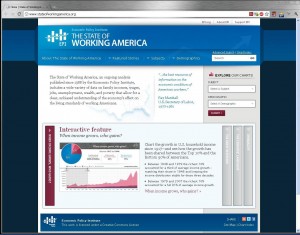
Starting this year, The State of Working America is being published electronically, not as a physical book. EPI also is publishing a series of related reports and analyses based on the underlying data. The first publication, Failure by Design, was released last month.
 Email Sign-Up
 RSS Feed