NC Unemployment Claims: Week of 1/8/11
For the benefit week ending on January 8th, 18,791 North Carolinians filed initial claims for state unemployment insurance benefits, and 140,849 individuals applied for state-funded continuing benefits. Compared to the prior week, there were fewer initial and continuing claims. These figures come from data released by the U.S. Department of Labor.
Averaging new and continuing claims over a four-week period — a process that helps adjust for seasonal fluctuations and better illustrates trends — shows that an average of 22,567 initial claims were filed over the previous four weeks, along with an average of 142,397 continuing claims. Compared to the previous four-week period, there were more initial and continuing claims.
 One year ago, the four-week average for initial claims stood at 29,198 and the four-week average of continuing claims equaled 213,188.
While the number of claims has dropped over the past year so has covered employment. Last week, covered employment totaled 3.7 million, down from 3.9 million a year ago.
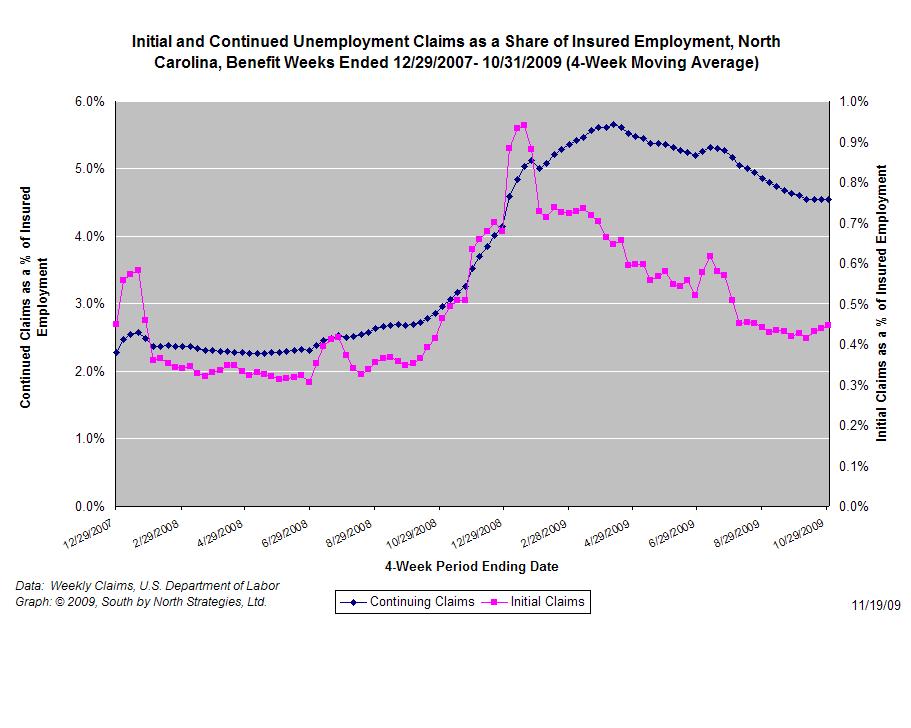
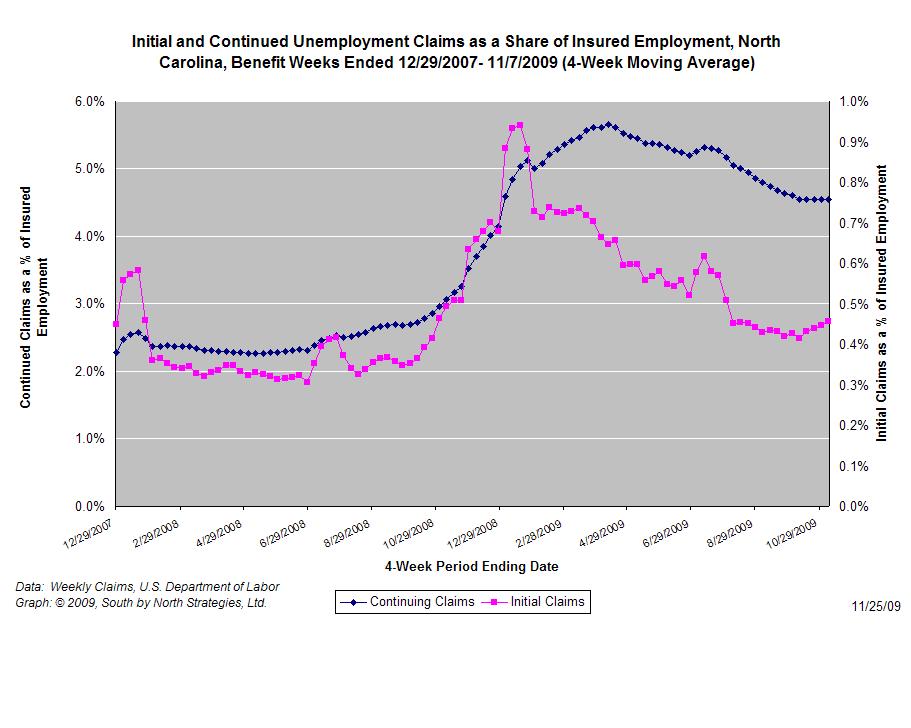
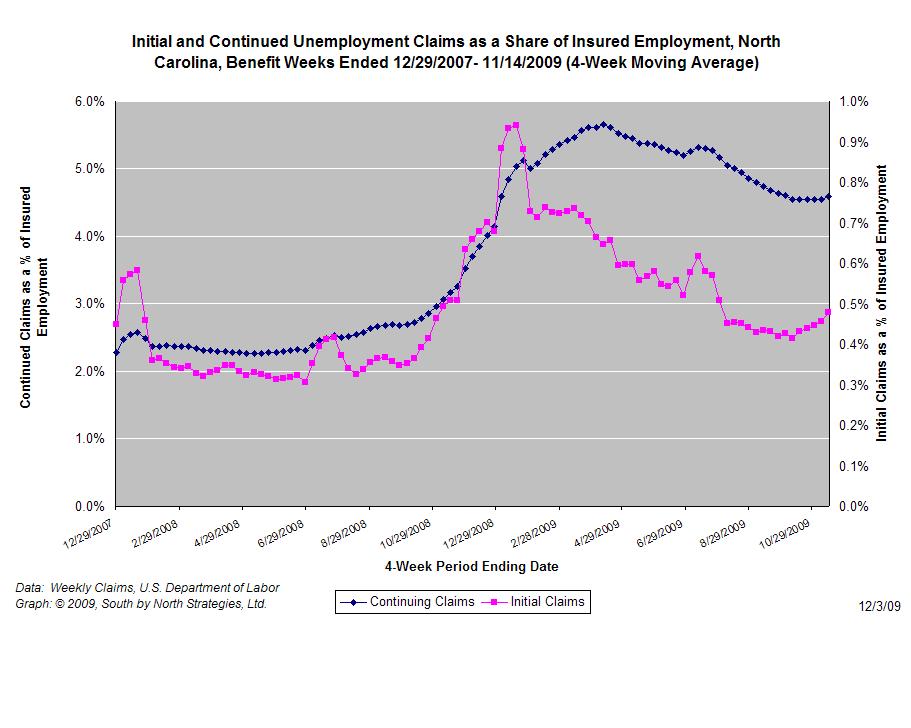
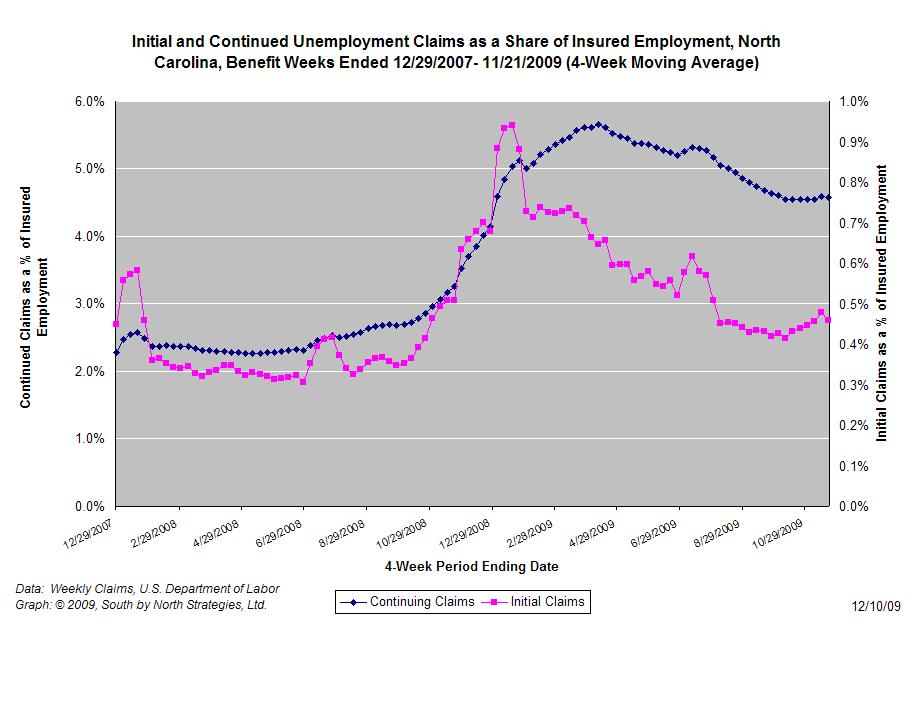
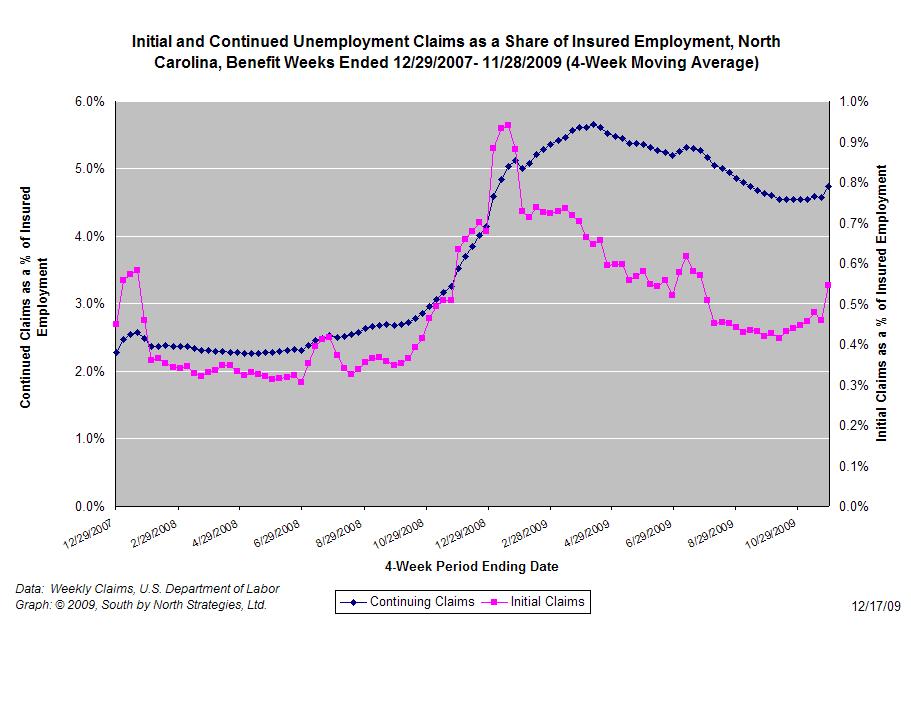
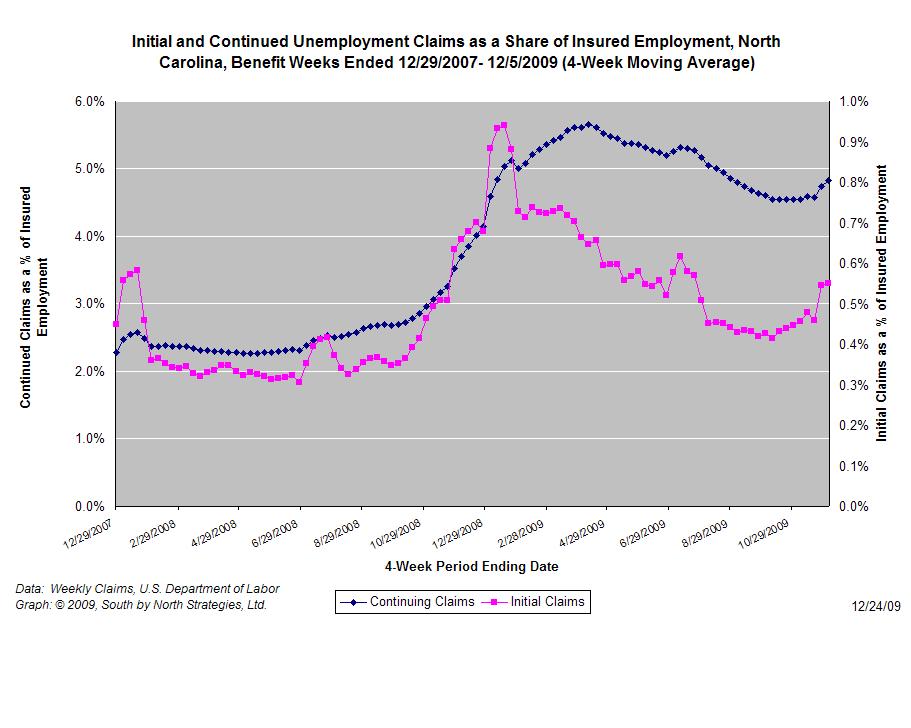
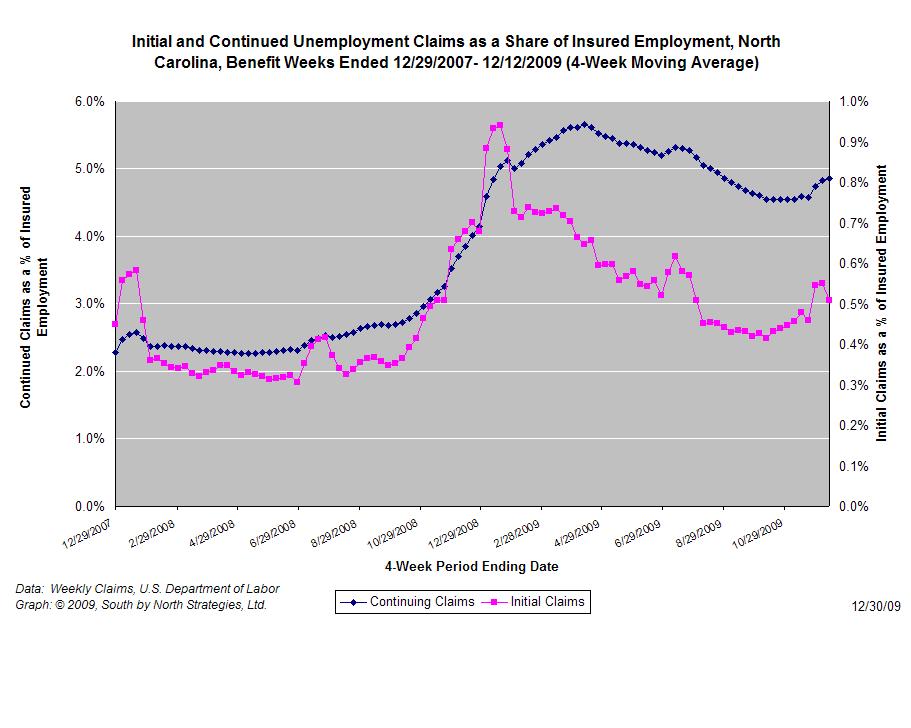
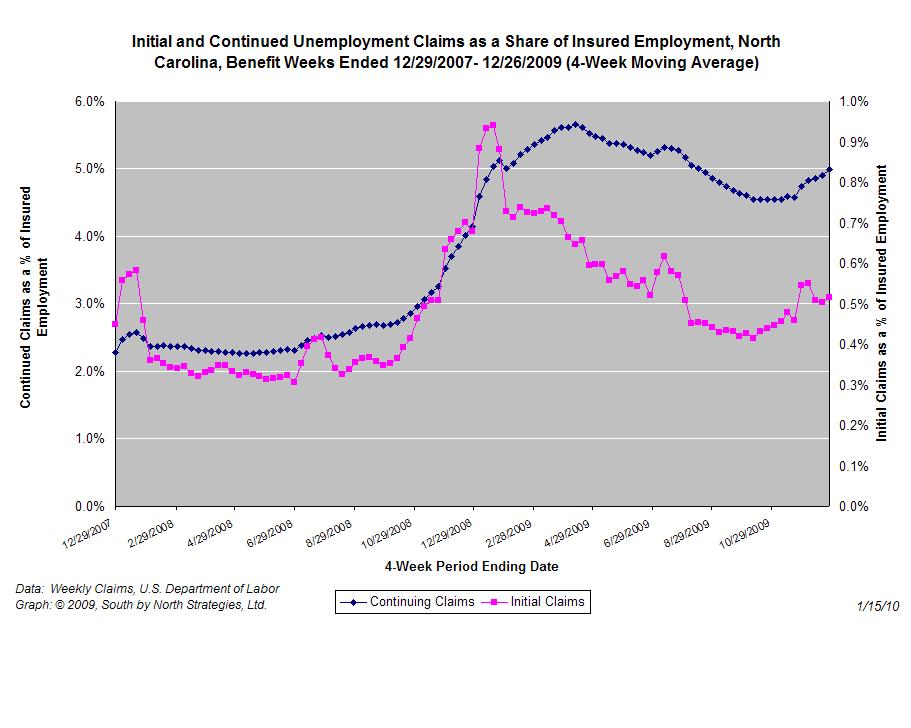
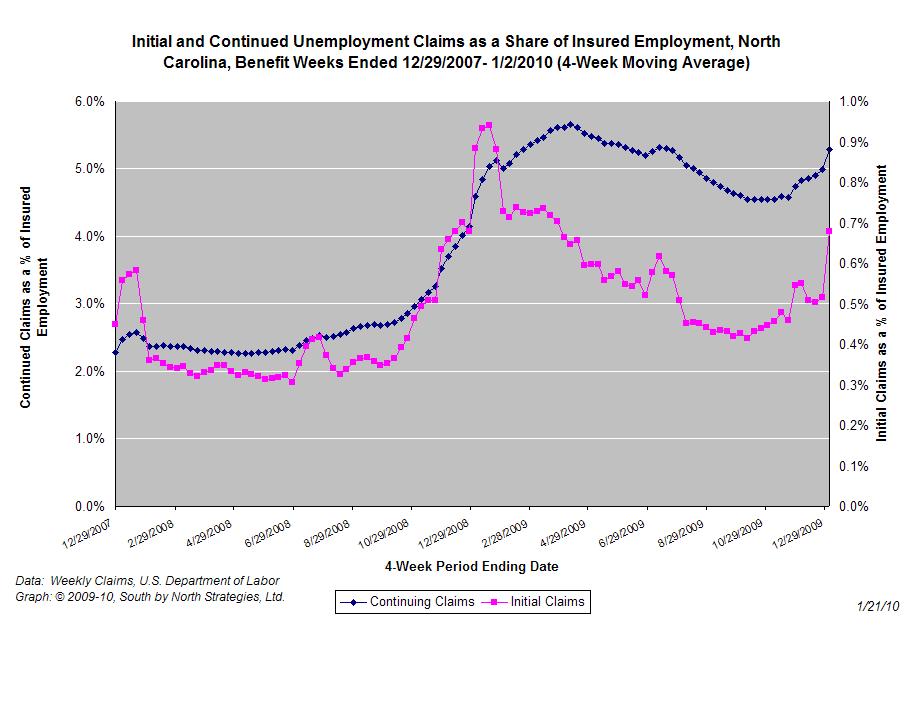
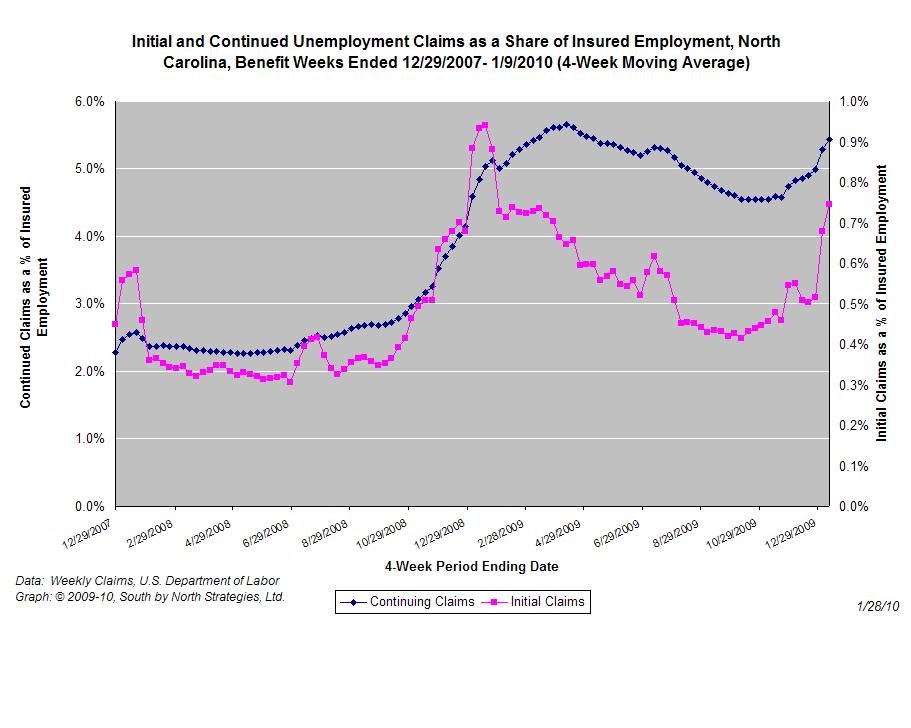
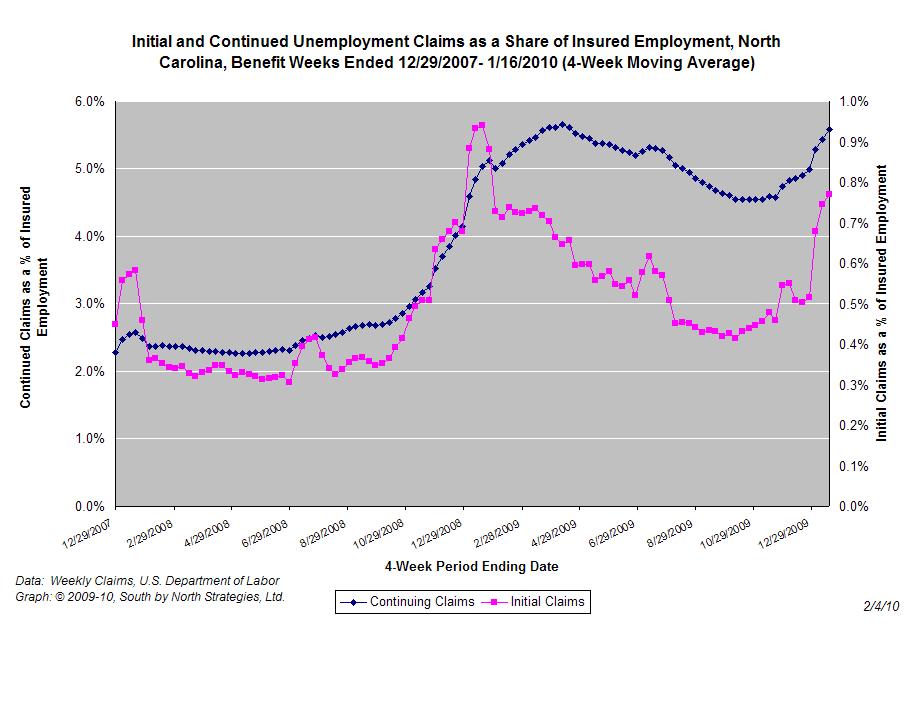
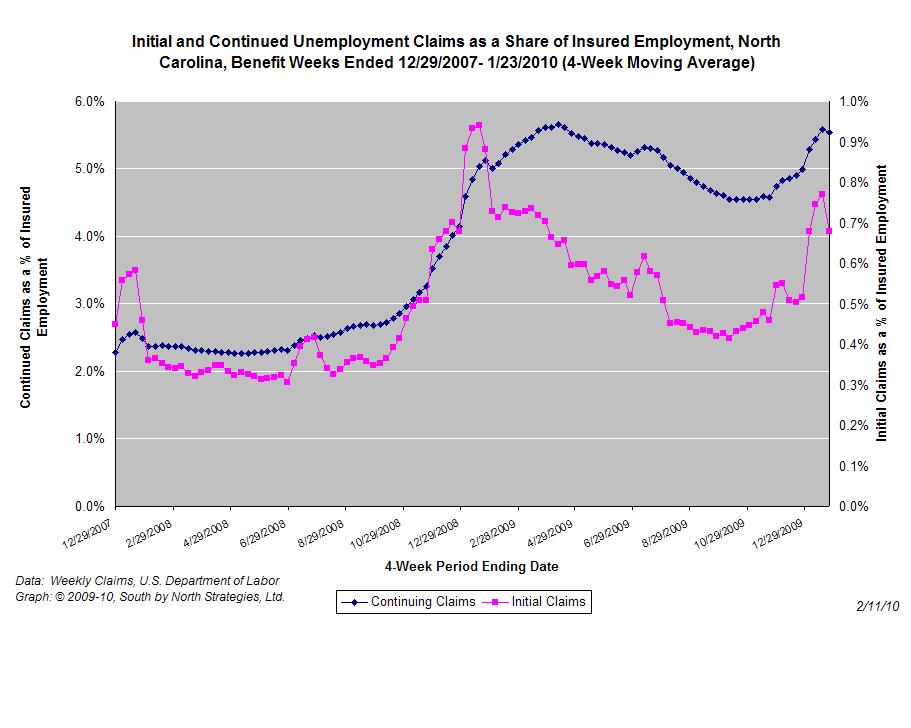
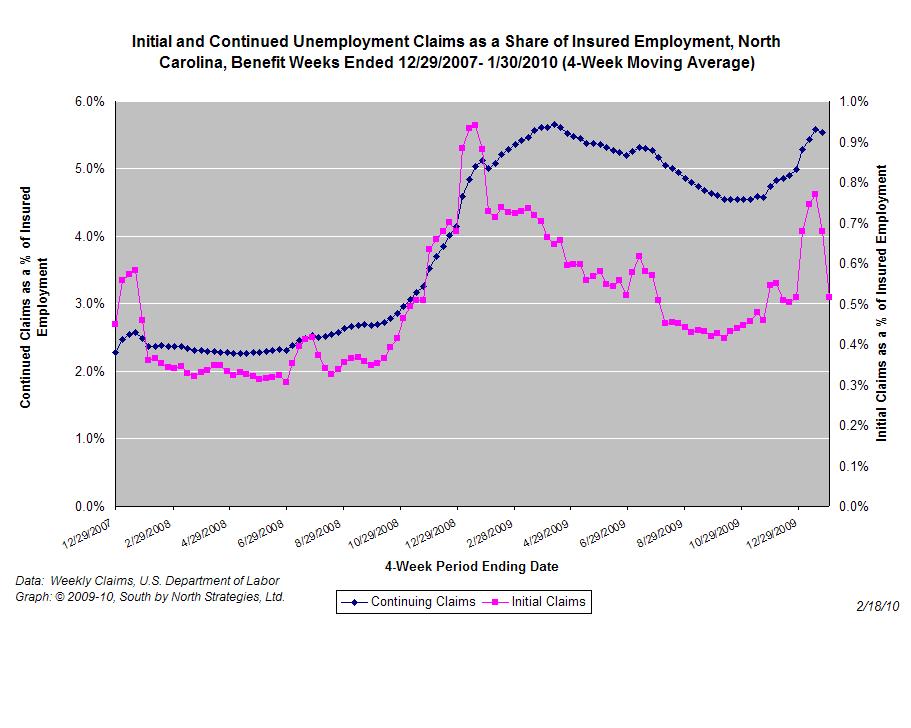
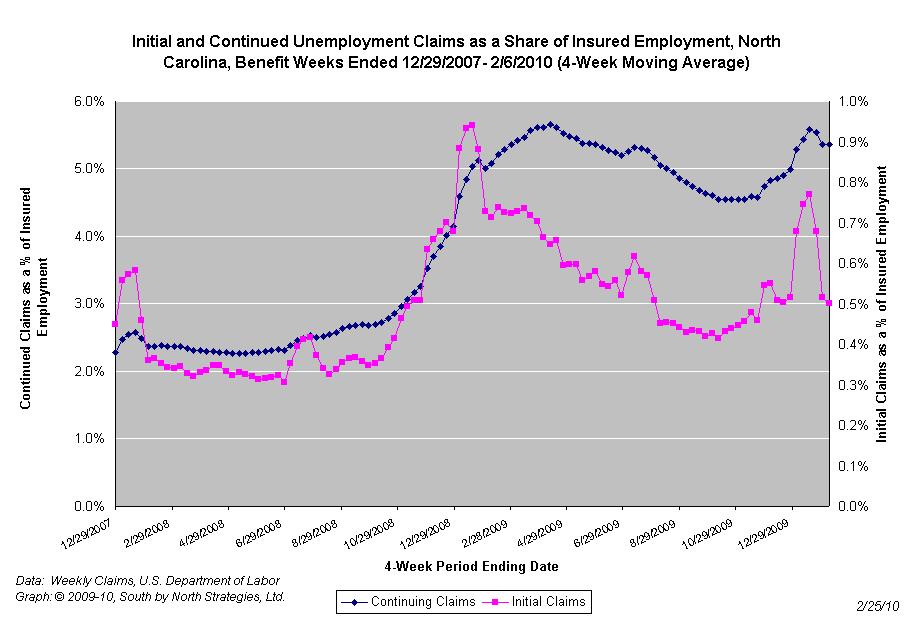
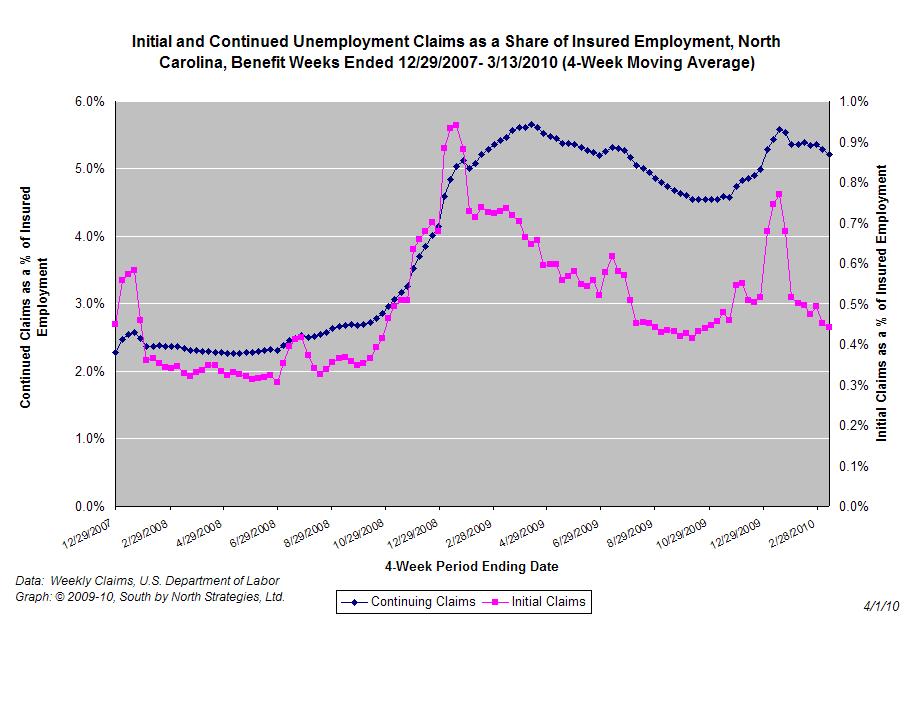
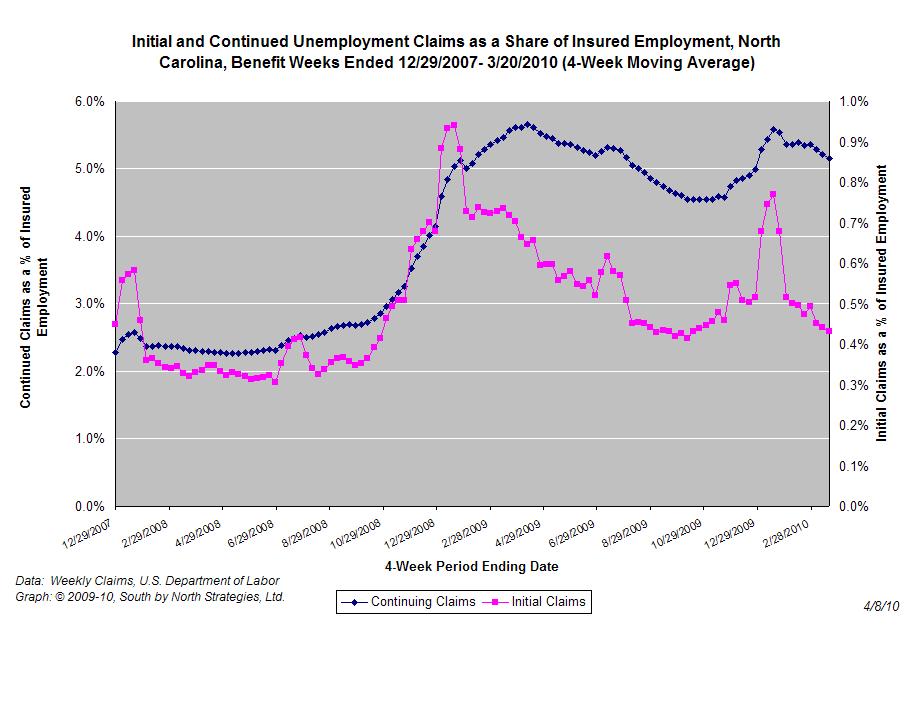
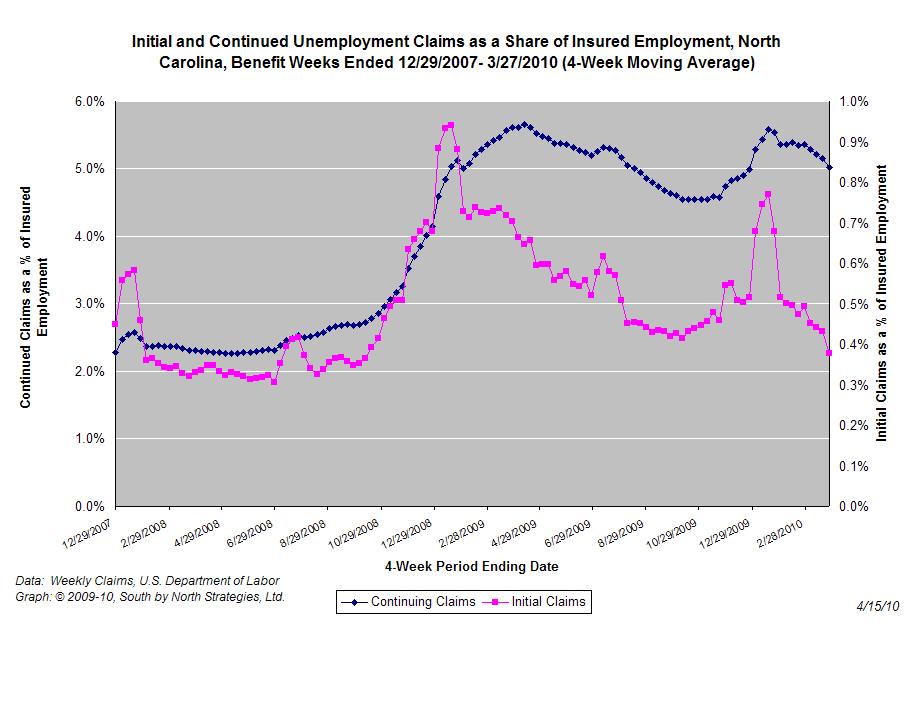
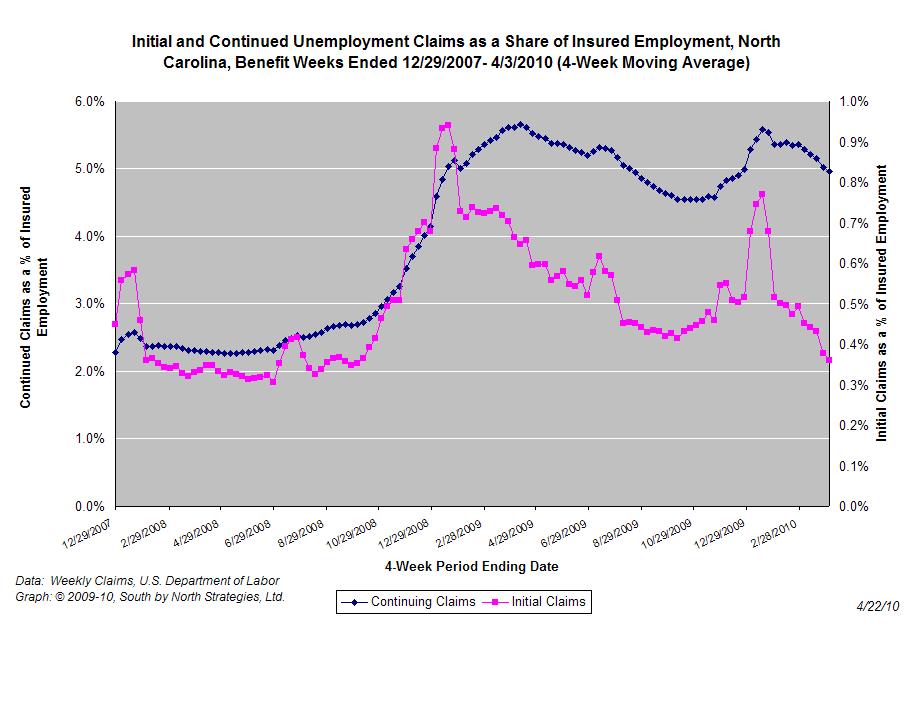
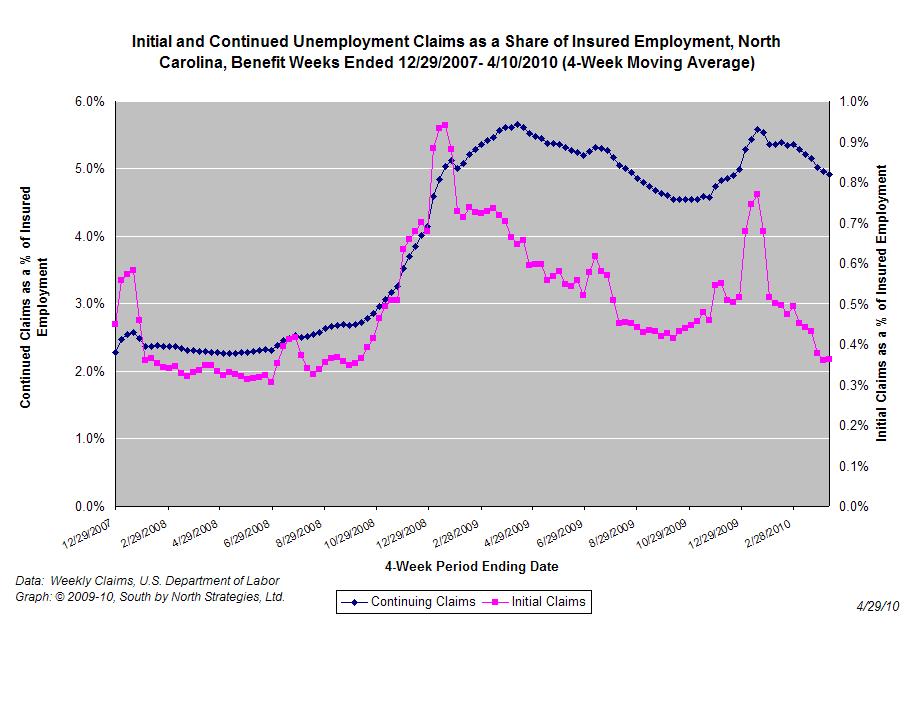
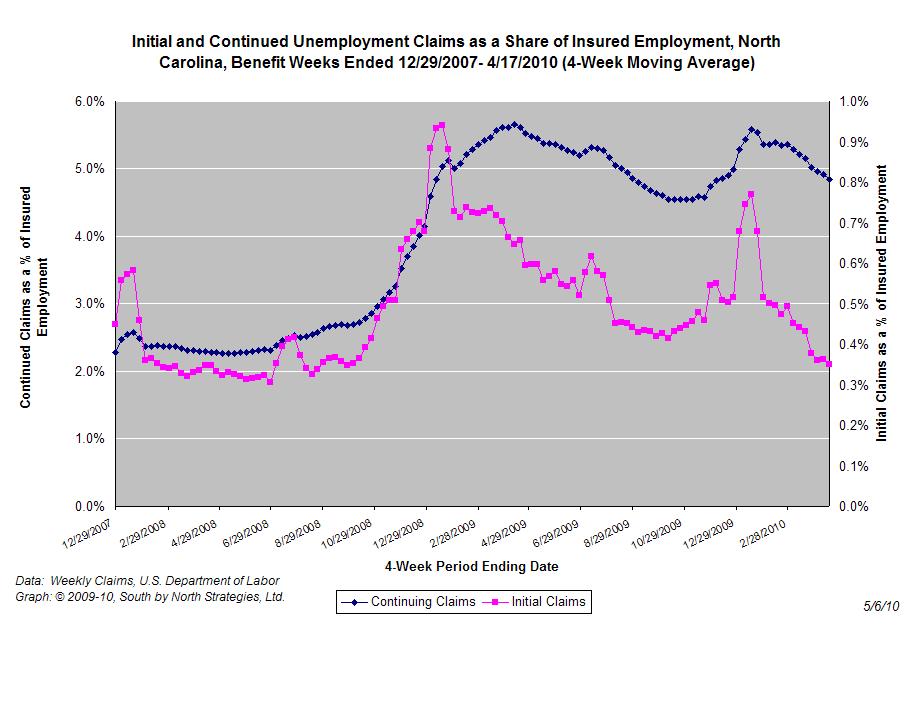
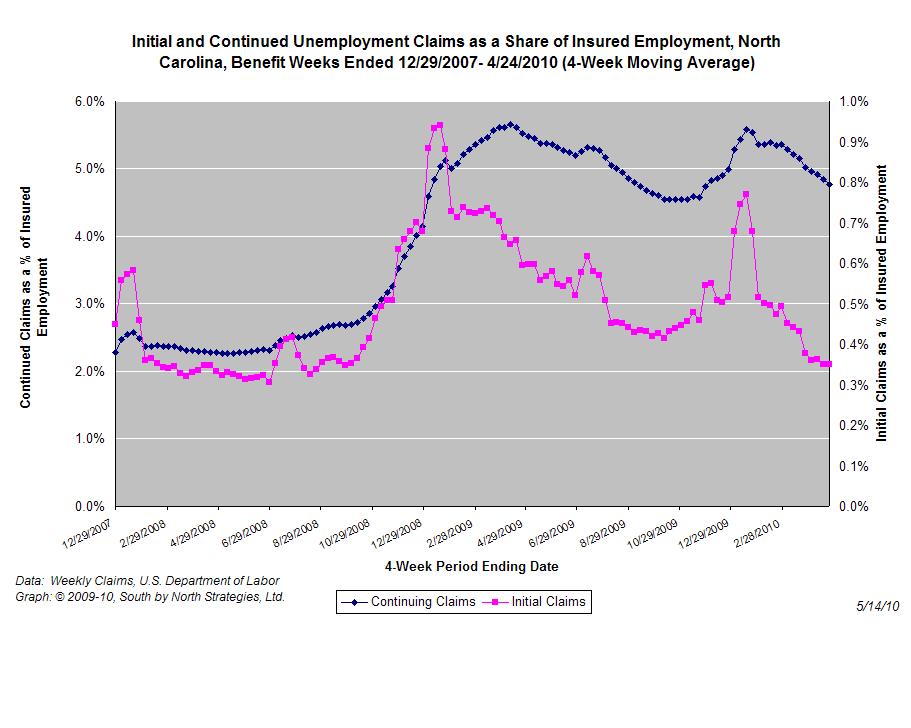
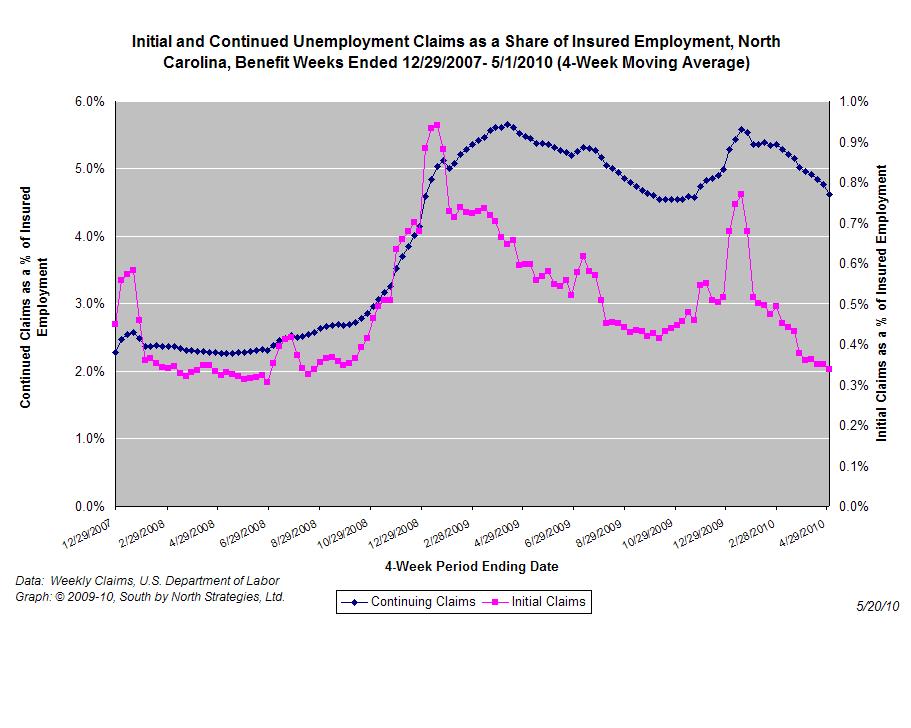
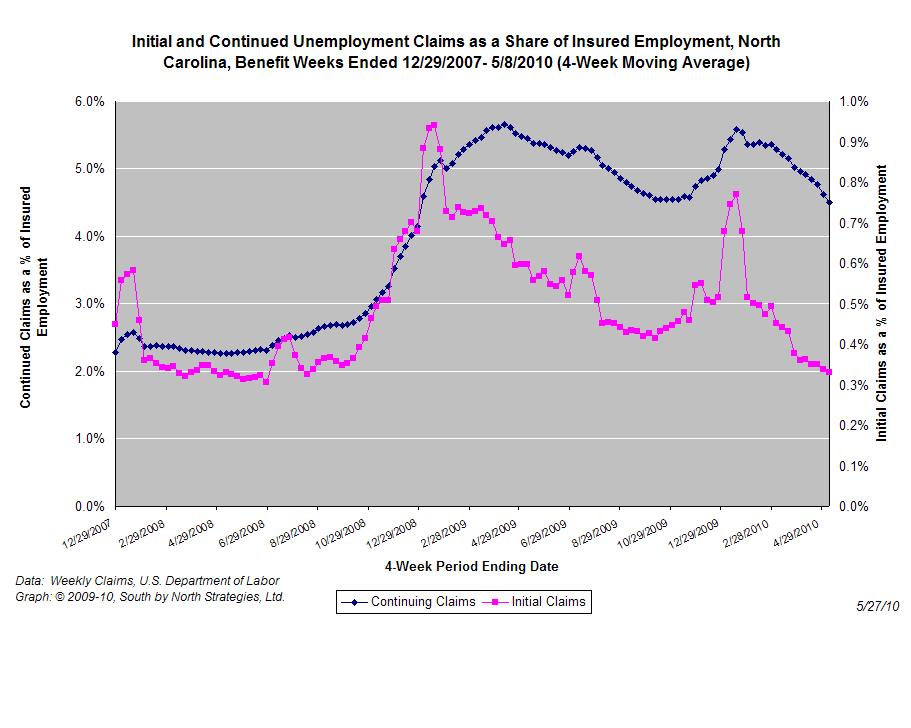
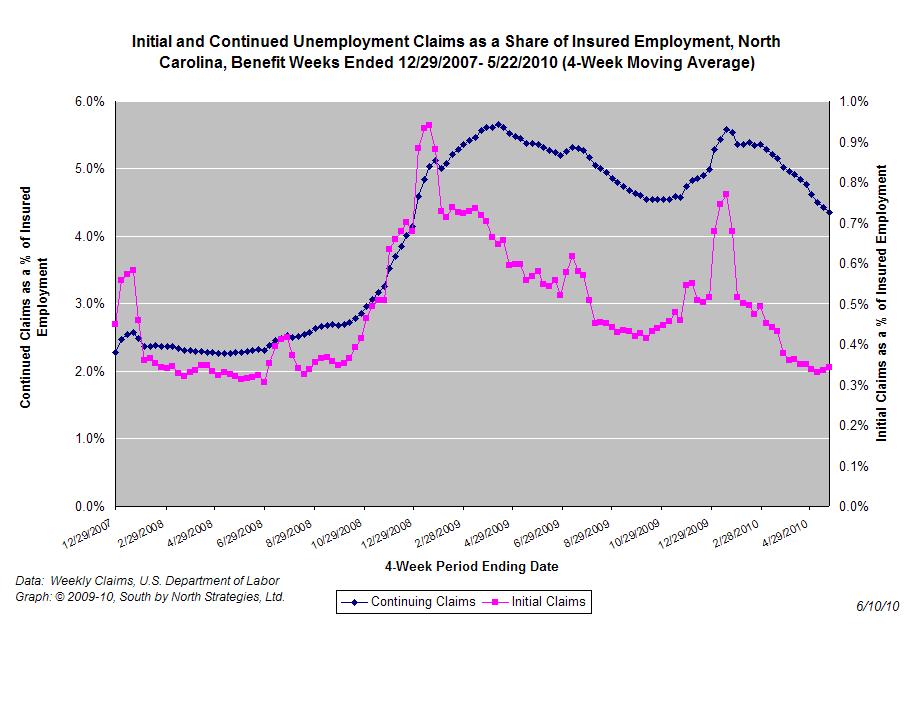
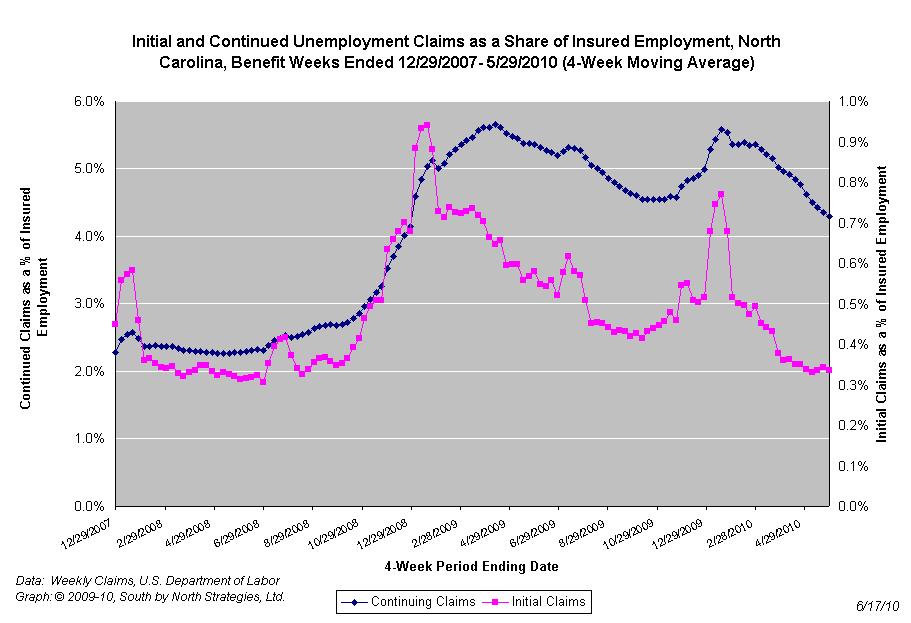
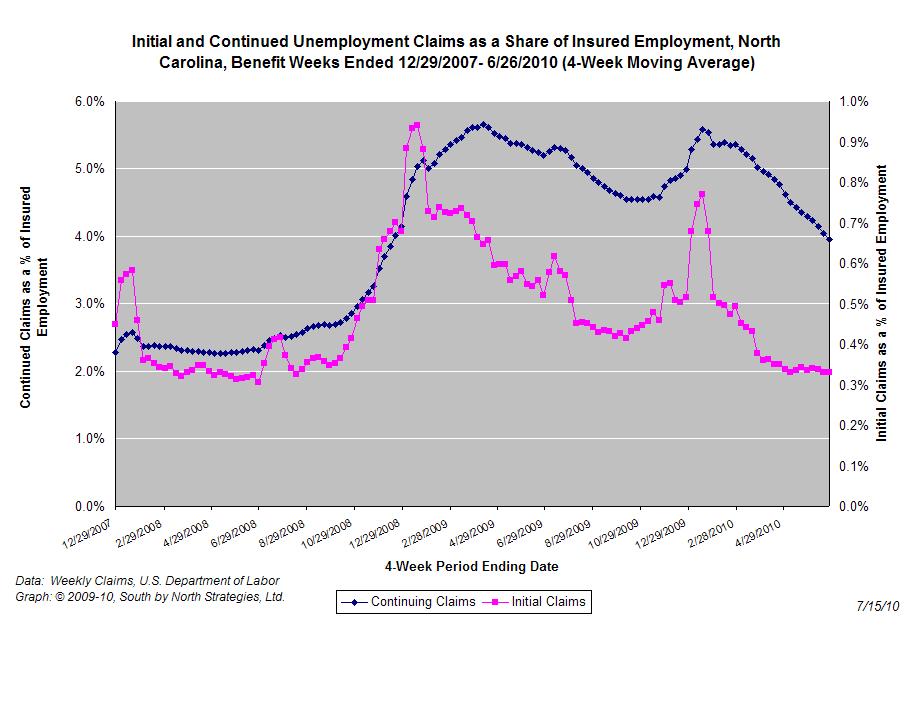
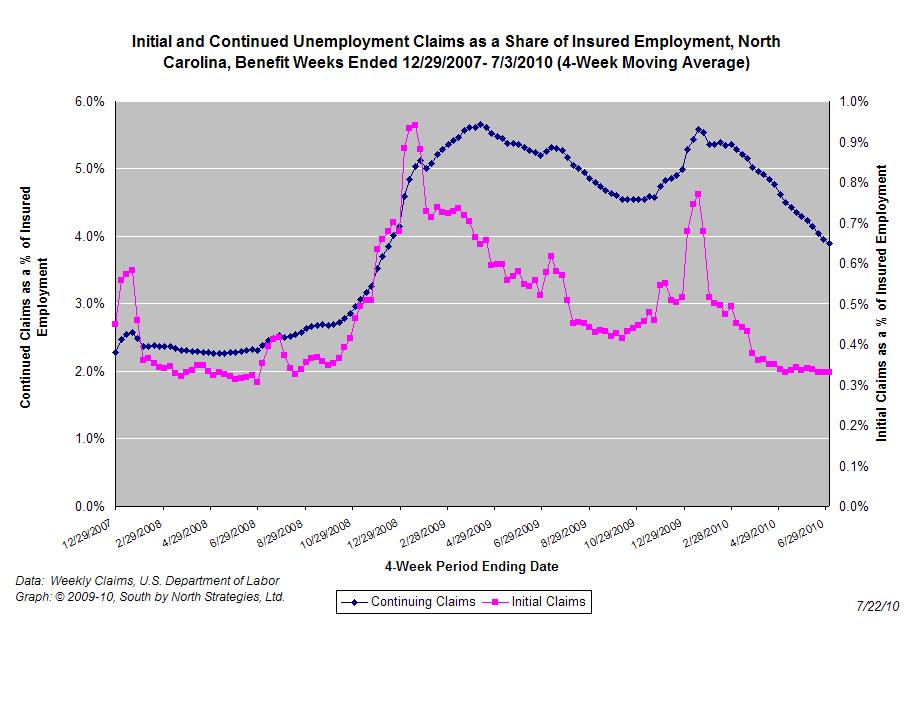
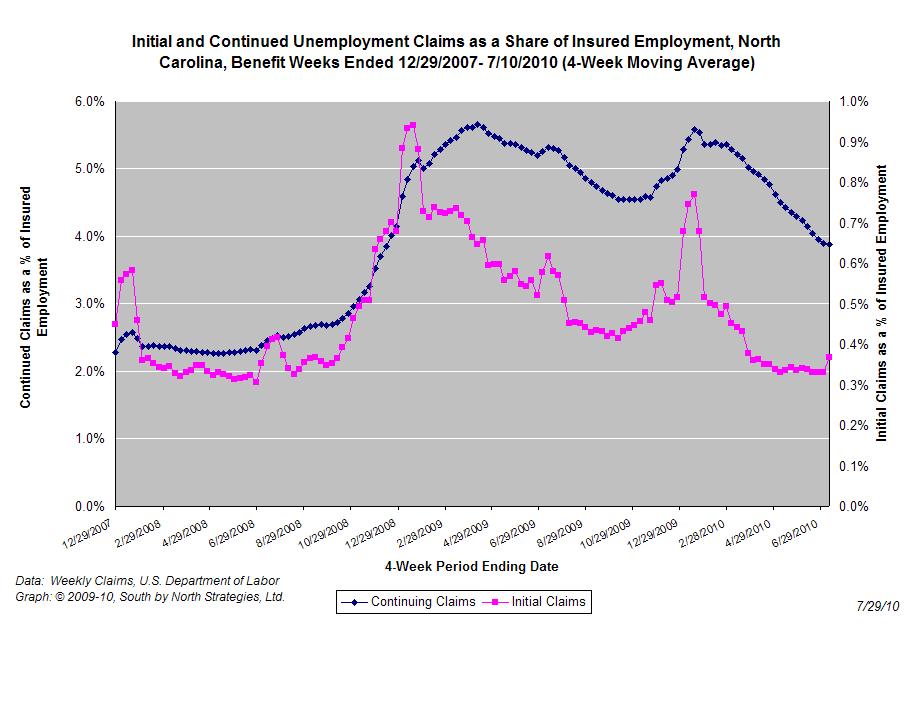
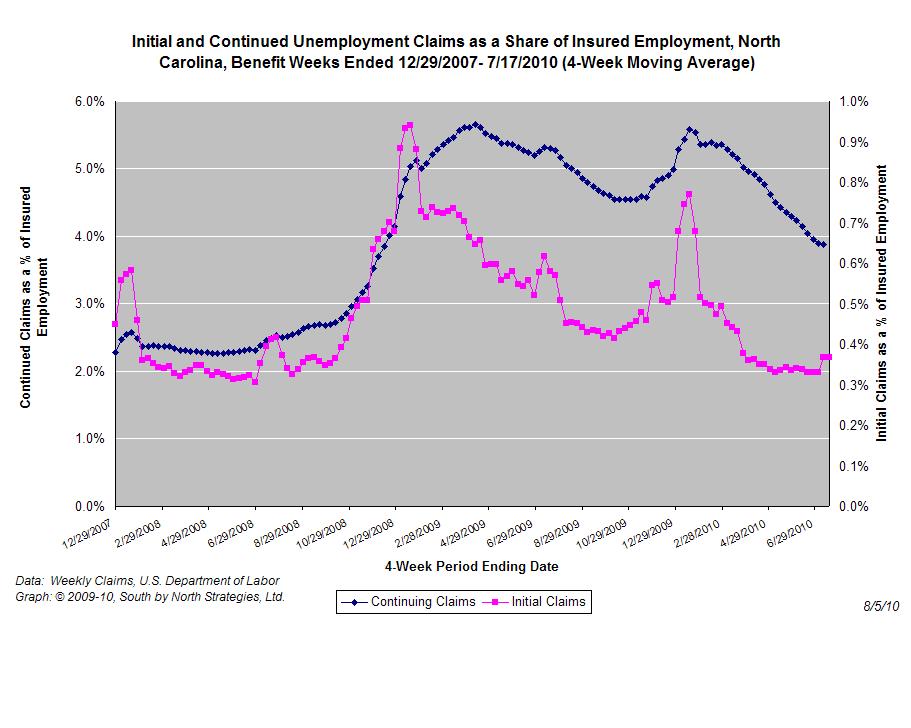
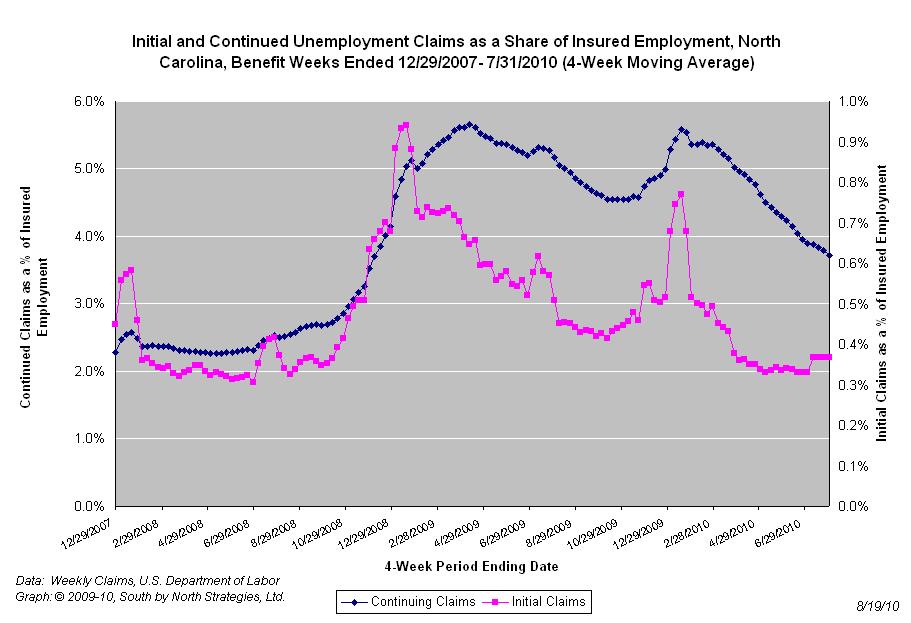
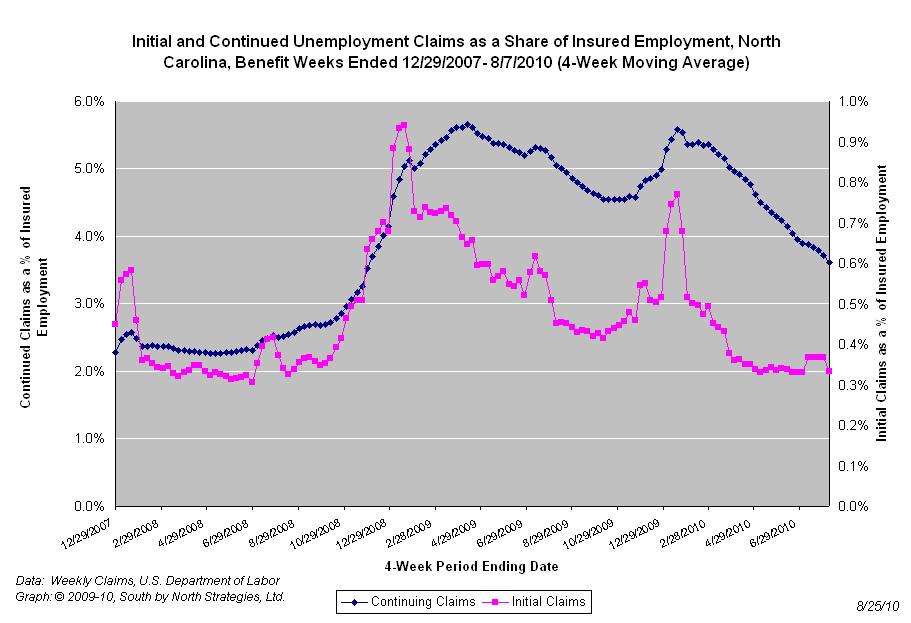
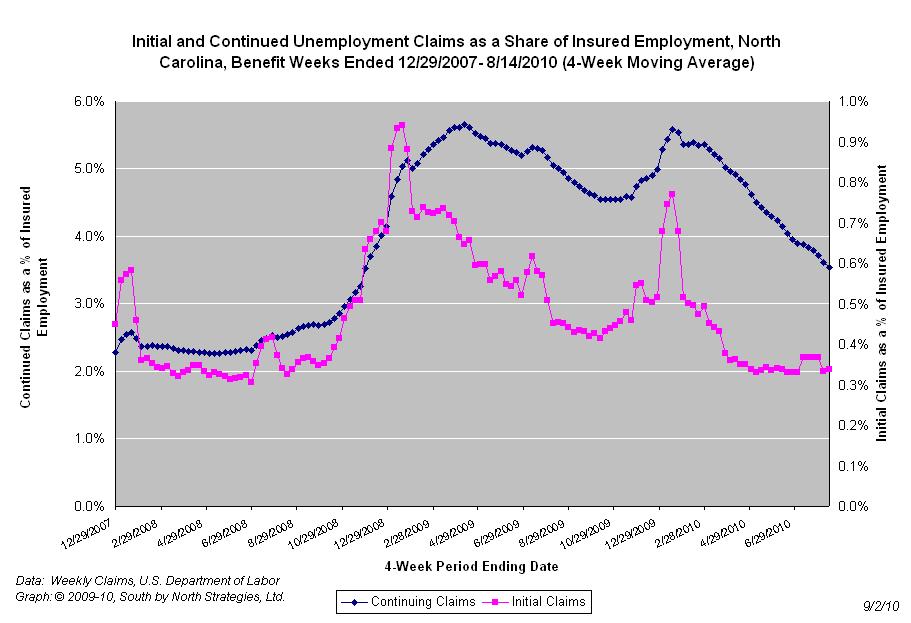
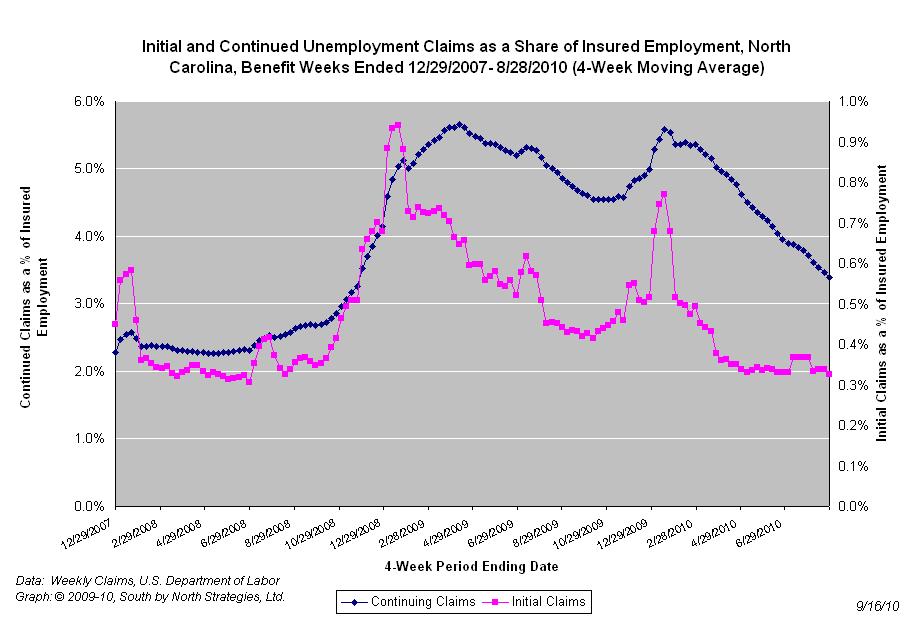
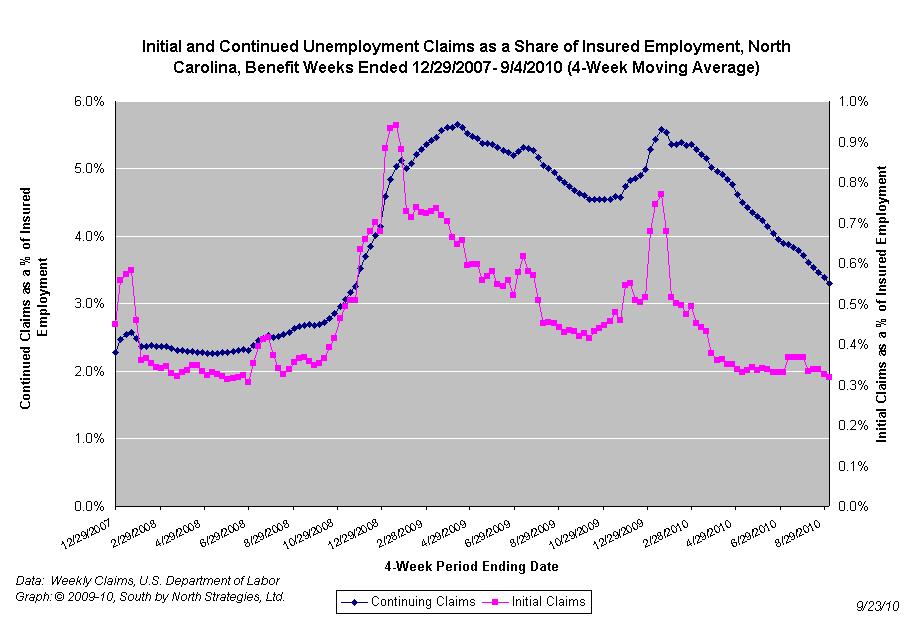
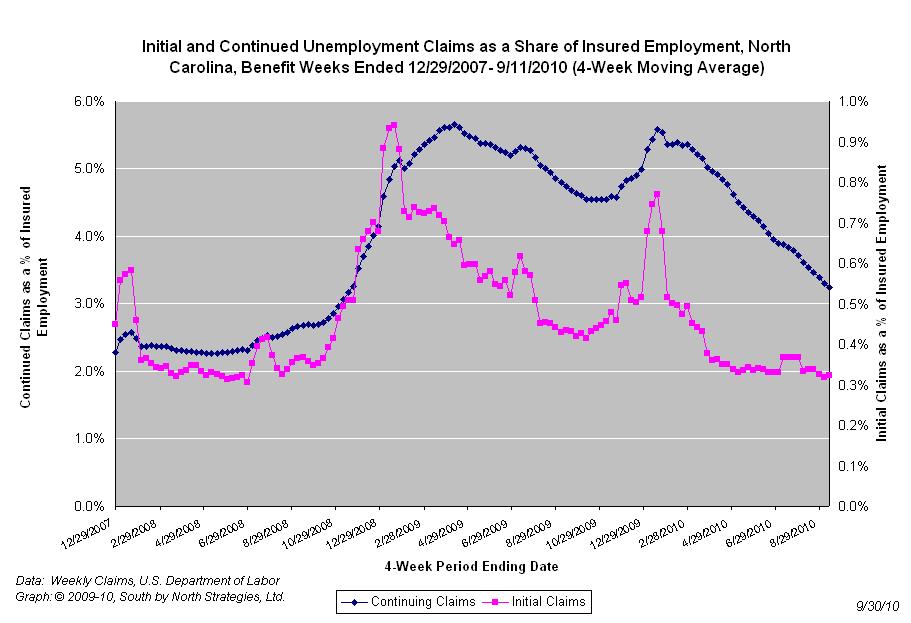
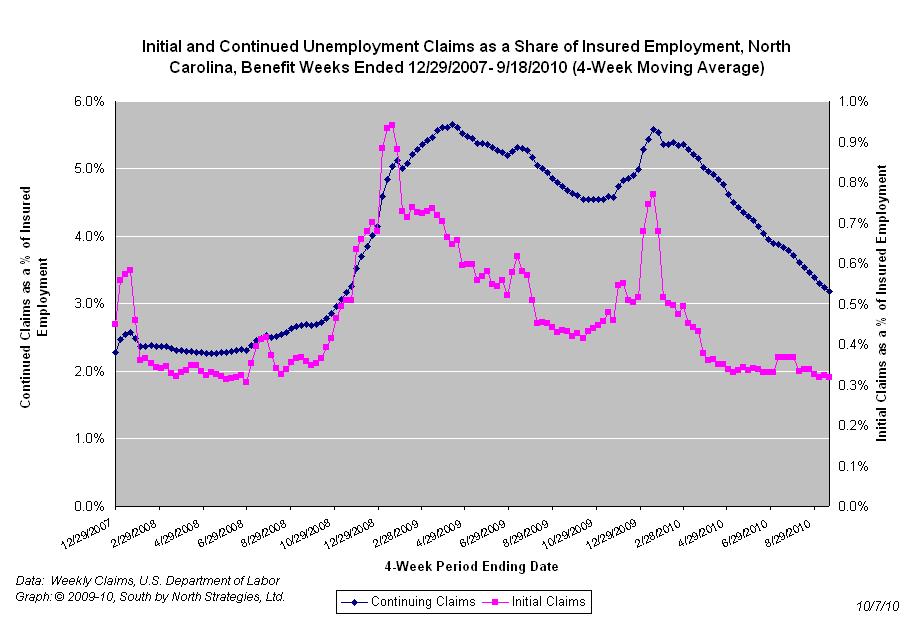
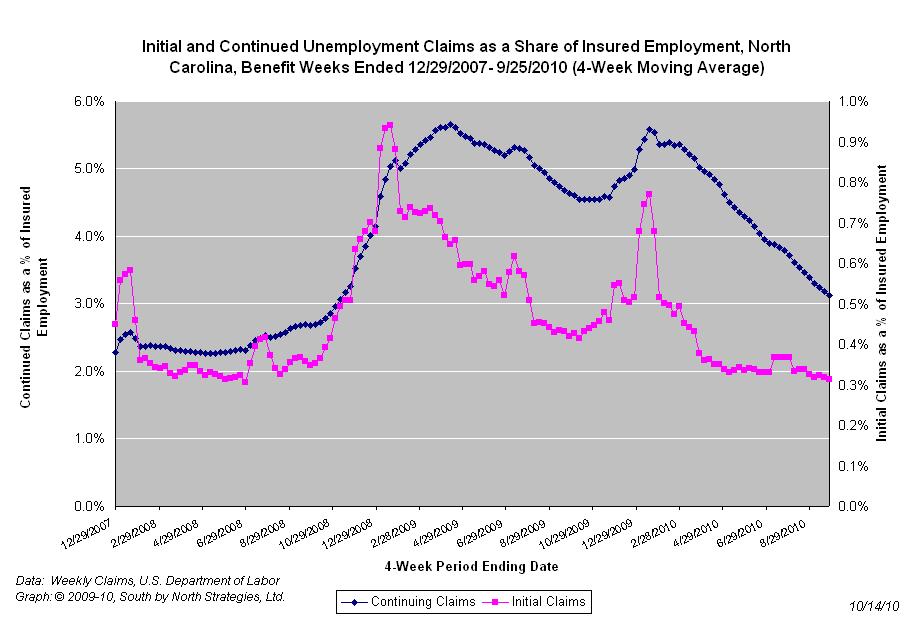
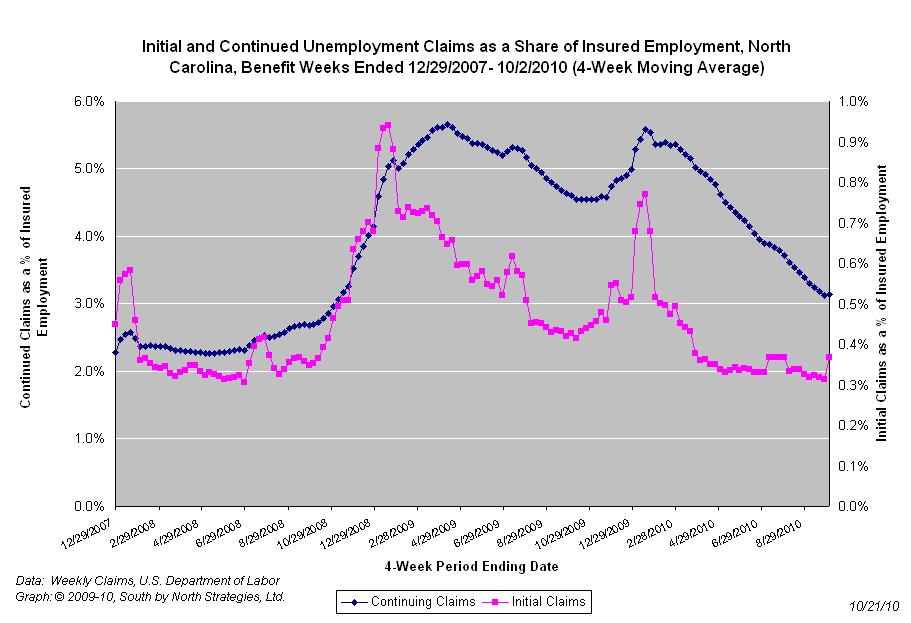
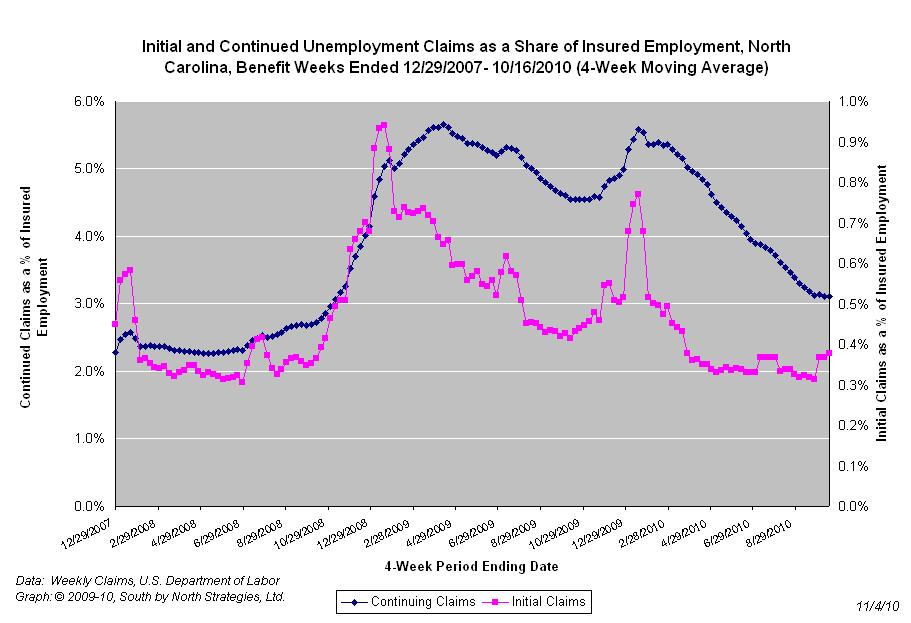
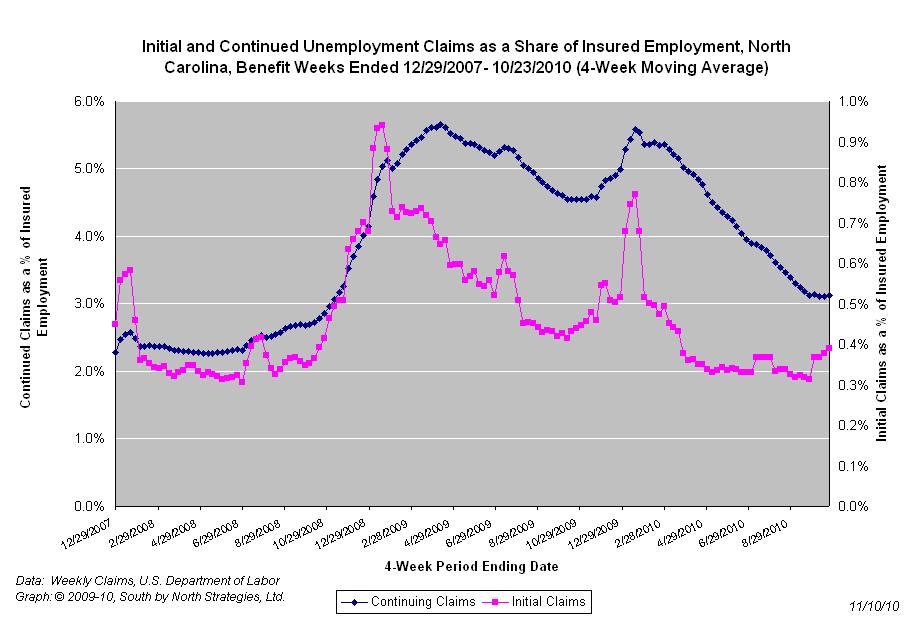
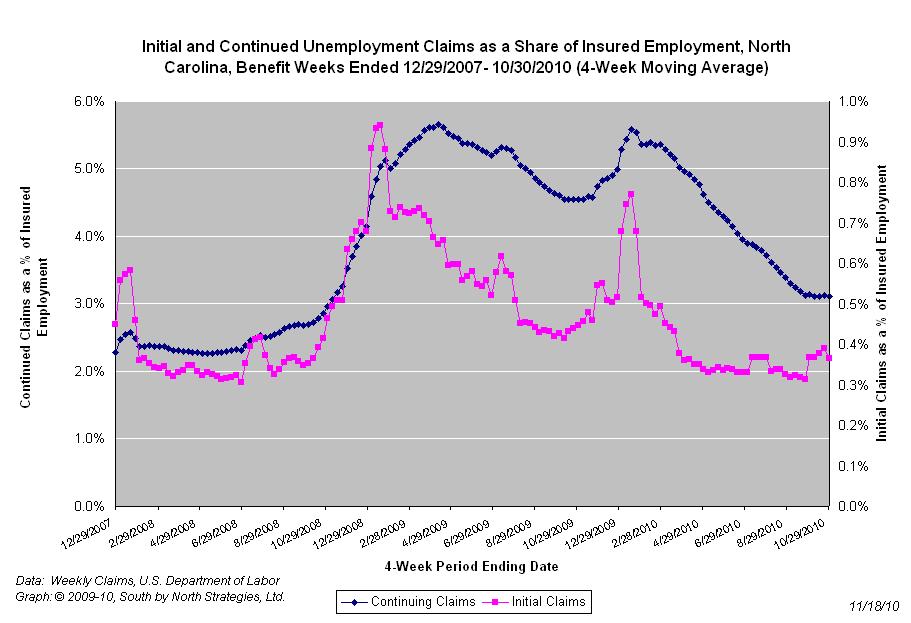
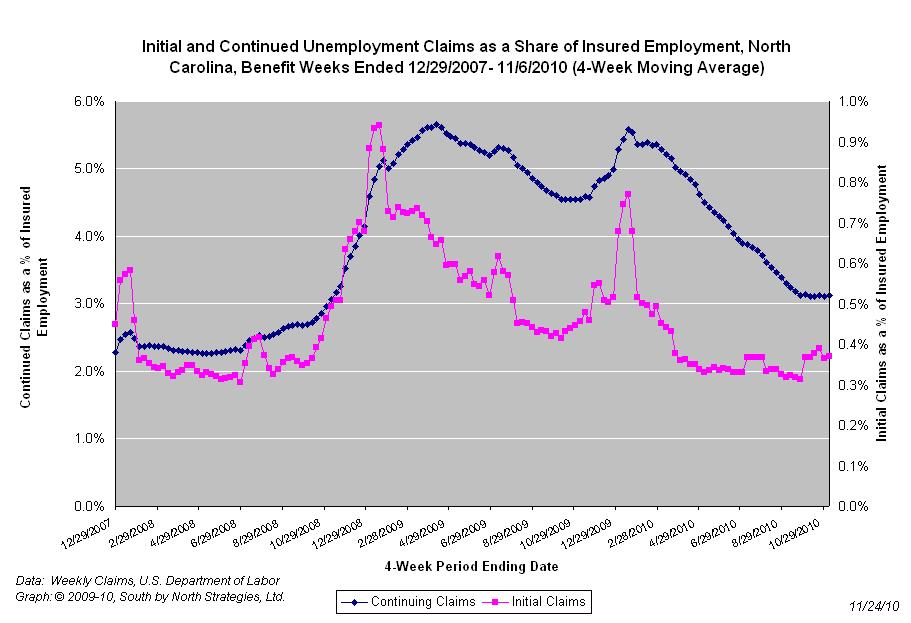
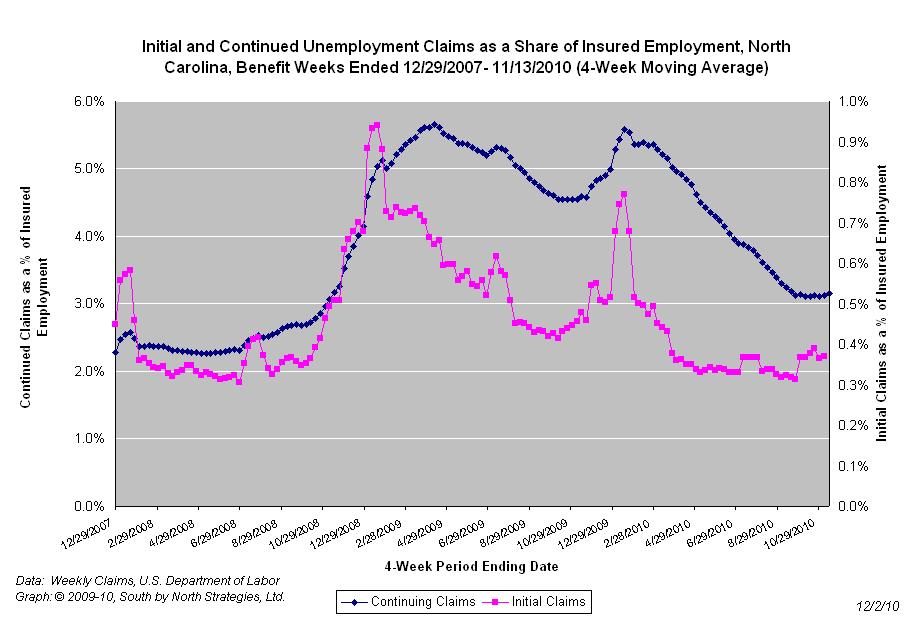
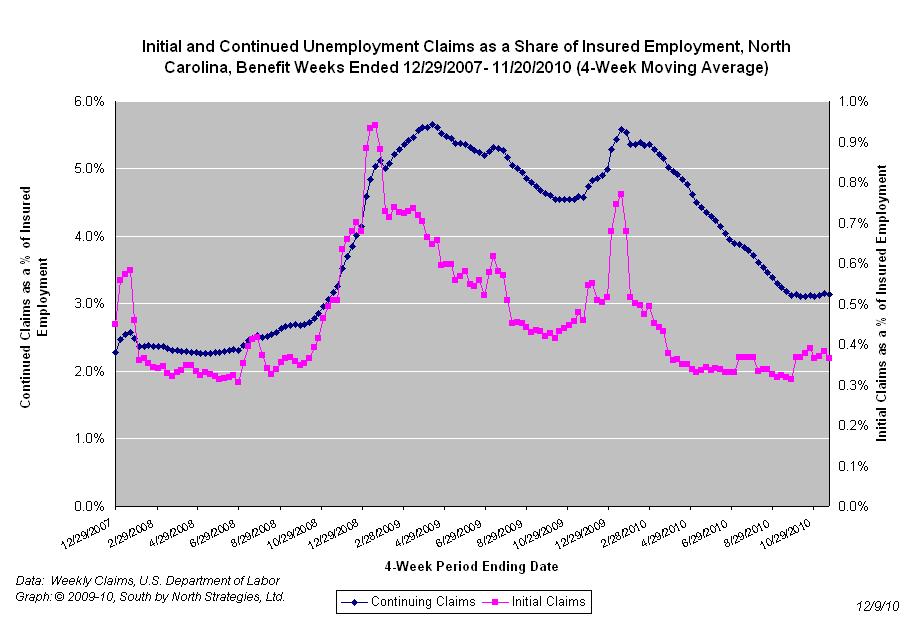
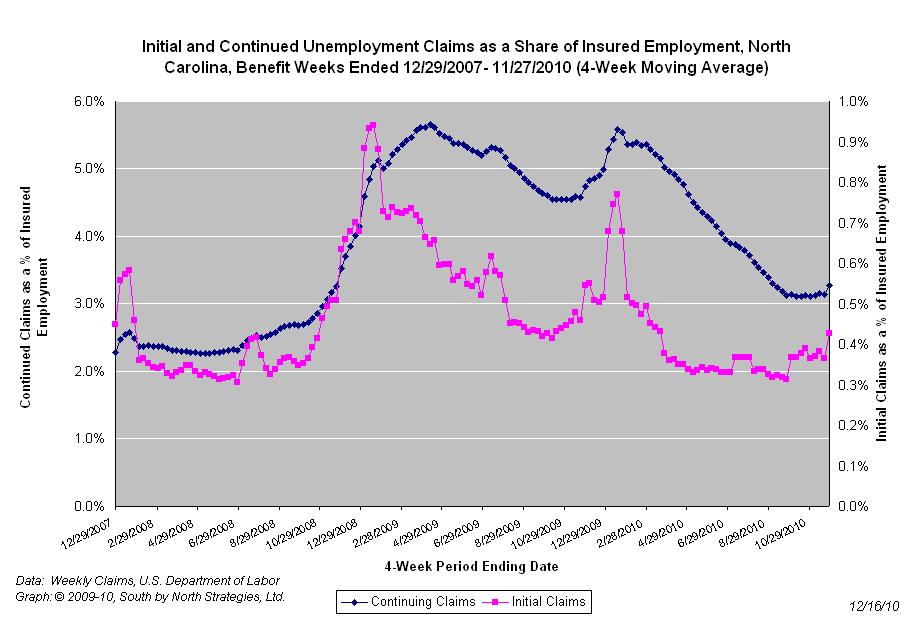
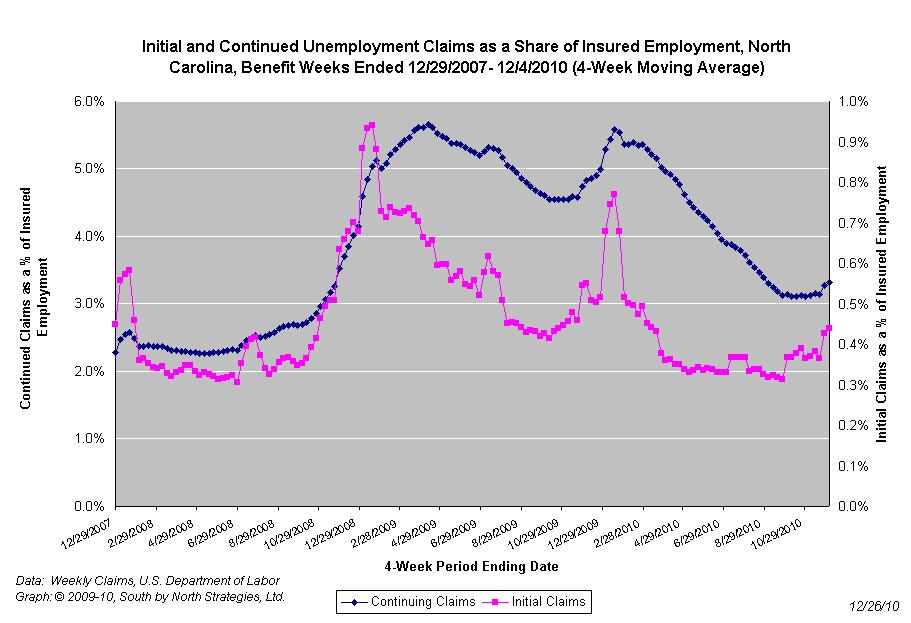
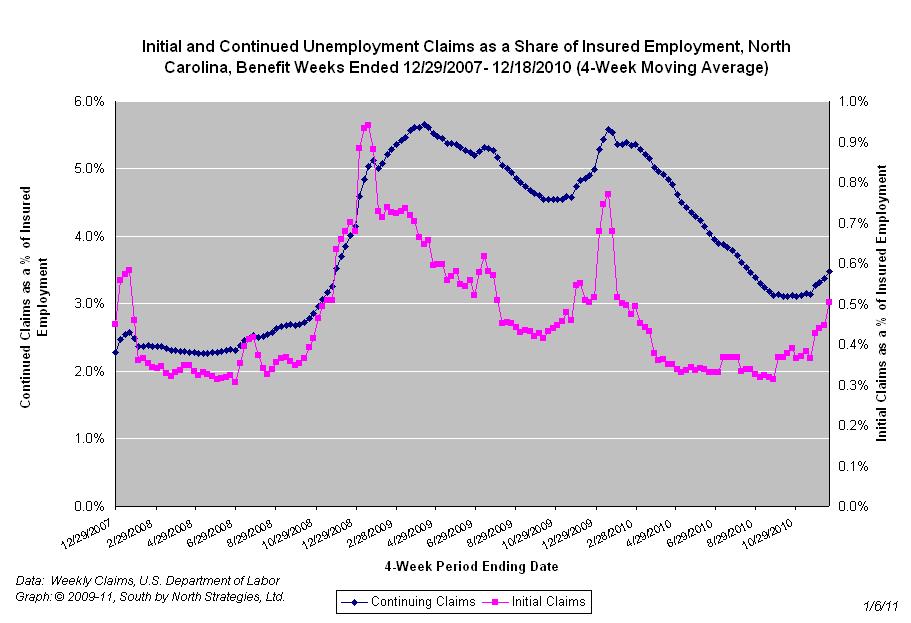
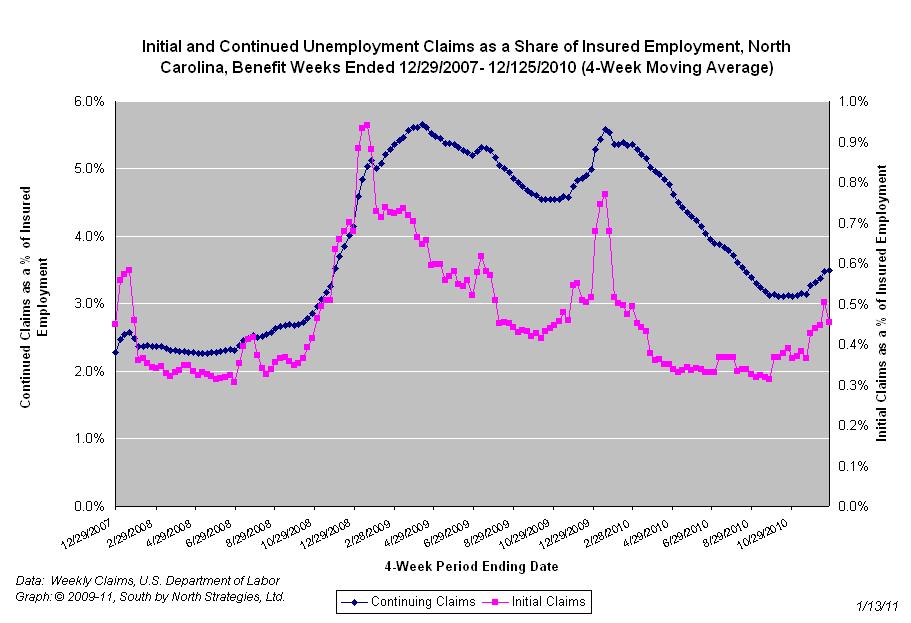
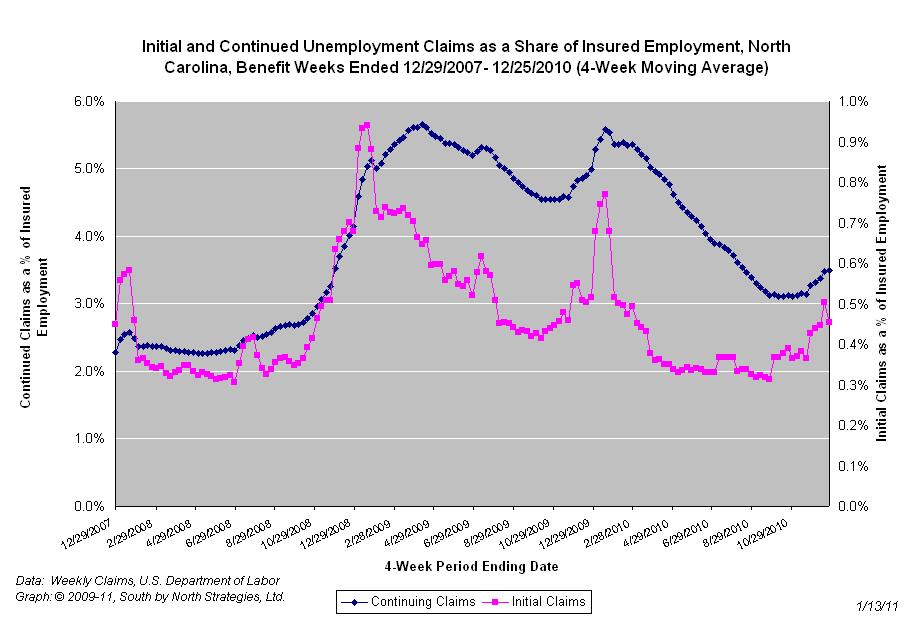
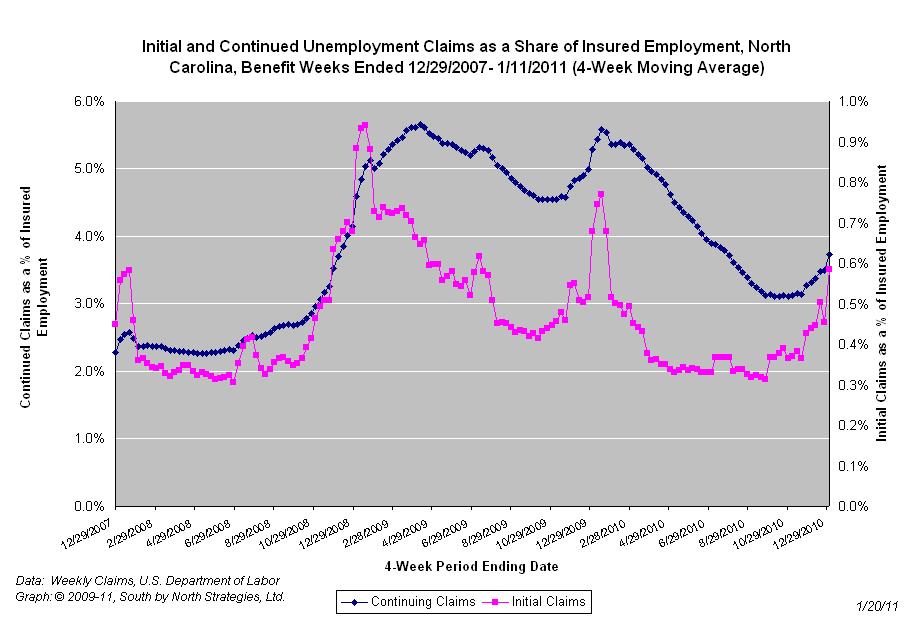
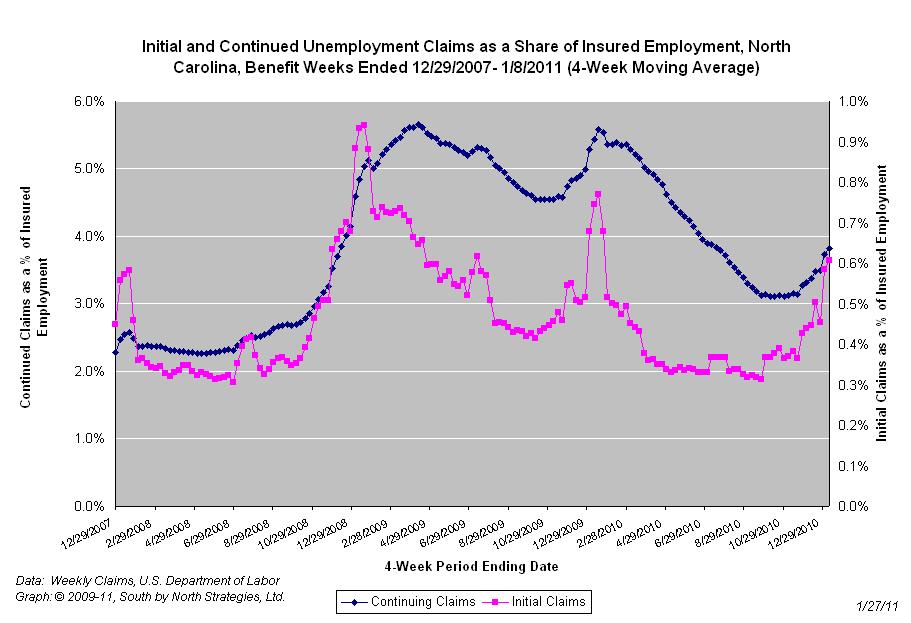
The graph (right) shows the changes in unemployment insurance claims (as a share of covered employment) in North Carolina since the recession’s start in December 2007.
Both new and continuing claims appear to have peaked for this cycle, and the four-week averages of new and continuing claims have fallen considerably. Yet continuing claims remain at an elevated level, which suggests that unemployed individuals are finding it difficult to find new positions. Also, the four-week average of new claims generally have been on the rise since the end of September.
SBN In The News
South by North Strategies’ analyses of the North Carolina economy have appeared in numerous recent media stories.
- The Asheville Citizen-Times: “Asheville are gas prices climb”
- The News & Record: “Triad has work to do to increase job stability”
- Charlotte Business Journal: “Charlotte sees big shift on NC incentives”
- NC Independent News: “North Carolina unemployment rate edges up”
- The Winston-Salem Journal: “State jobless rate rise to five-month high”
- The News & Observer: “Unemployment up despite jobs”
- Charlotte Observer: “Feeble job growth pushes up NC unemployment rate”
- The Durham Herald-Sun: “Unemployment up, jobs slow”
- The Asheville Citizen-Times: “NC’s December jobless rate edged up”
- Fort Mill Times: “NC’s December jobless rate edged up to 9.8 percent”
- MSN Money: “NC’s December jobless rate edged up”
- Statesville Record & Landmark: “NC’s quarterly jobs report mixed”
- Yes Weekly: “North Carolina’s lost year”
Around The Dial – Jan. 26
Economic policy reports, blog postings, and media stories of interest:
- The PBS NewsHour posts the text of the State of the Union address.
- The Social Security Administration models changes to the retirement age.
- Marshall Auerback asks if fiscal austerity kills economies.
- Rortybomb asks if we’ve really reached the end of the liberal project.
- Paul Krugman argues that low interest rate don’t subsidize banks.
- EPI wonders about the future of employer-sponsored health insurance.
Is Income Inequality Bad For Business?
Responding to a recent story in the business magazine Inc., Felix Salmon wonders if Norway’s world-leading level of small business entrepreneurship has something to do with the country’s low level of income inequality and how it might lower the costs of business failure.
The reason is that there’s much less income inequality in Norway. With a strong social safety net, the downside to starting a company and failing is small. As a result, entrepreneurship isn’t a lottery, so much as a lifestyle choice. If you succeed, you’ll get to run a large and successful corporation. But you probably won’t pay yourself a monster income.
..
Why not? Well, for one thing, you won’t need to pay yourself a monster income, since things like healthcare and college education — even through grad school, even outside the country — are covered by the state. Another part of the reason is that income, in Norway, is a matter of public record. And then there’s the fact that money which would otherwise be going to the top of the pyramid is instead going to the bottom, where it does much more good …
Salmon then discusses one topic missing from the American debate over small business creation.
Raising taxes on small businesses in and of itself won’t help the rate of small-business creation — but it’s actually unlikely to hurt it that much, either. (And interestingly, taxes paid by an employer in New York are actually higher than those paid in Norway.) What would help would be a much stronger social safety net, so that someone who starts a company doesn’t need to fear a life of poverty in the event that she fails. Encouraging small businesses necessarily means encouraging failure — but the cost of failure is very high, in the US. Instead, we spend far too much time worrying about tax rates on the successful.
Manufacturing Debt
Rortybomb explains how corporations like General Electric use their diminished manufacturing capacities to fund risky financial service activities.
GE has been at the forefront of blurring a “financial services”-centric model of business onto the remains of a hollowed out manufacturing base, one kept in a minimal state just strong enough to qualify for high credit scoring. Marcy Wheeler has written about how that manufacturing part of the company is driven by outsourcing. In his recent, excellent book Cornered, Barry Lynn talks about how GE’s manufacturing business model becomes focus on business lines with government buyers (defense) and with government regulators and industry standard setters that can be worked (health care). They use the ratings agencies to only look at those business lines when determining the ratings they get, and lever up in the shadow banking network off that. Success!
 Email Sign-Up
 RSS Feed