NC Unemployment Claims: Week of 10/23
For the benefit week ending on October 23rd, 12,972 North Carolinians filed initial claims for state unemployment insurance benefits, and 115,871 individuals applied for state-funded continuing benefits. Compared to the prior week, there were more initial and continuing claims. These figures come from data released by the U.S. Department of Labor.
Averaging new and continuing claims over a four-week period — a process that helps adjust for seasonal fluctuations and better illustrates trends — shows that an average of 14,514 initial claims were filed over the previous four weeks, along with an average of 116,752 continuing claims. Compared to the previous four-week period, there were more initial and continuing claims.
 One year ago, the four-week average for initial claims stood at 17,339 and the four-week average of continuing claims equaled 179,989.
While the number of claims has dropped over the past year, so has covered employment. Last week, covered employment totaled 3.7 million, down from 4 million a year ago.
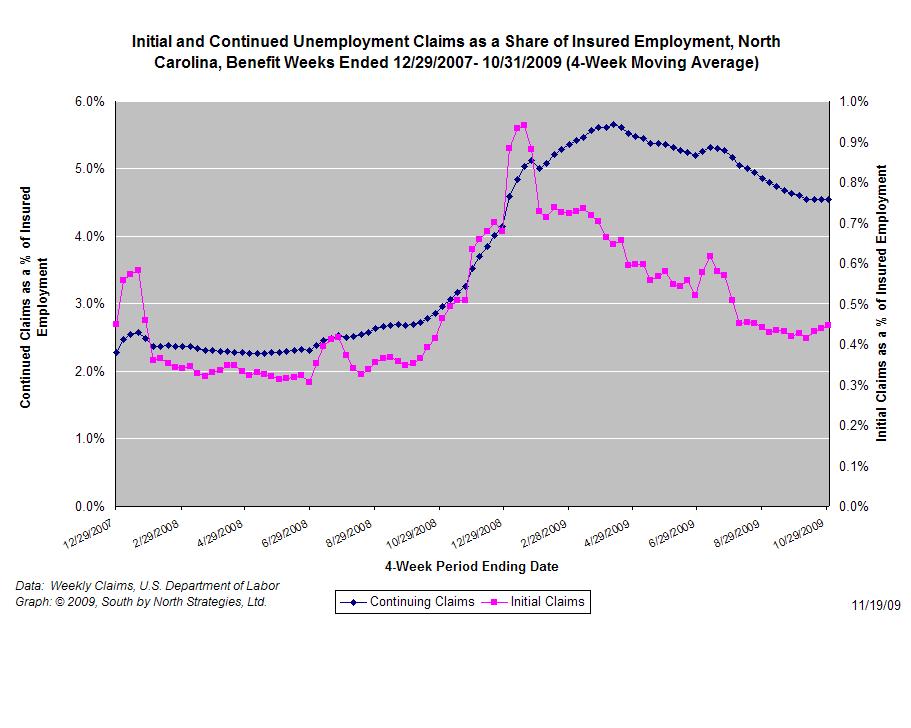
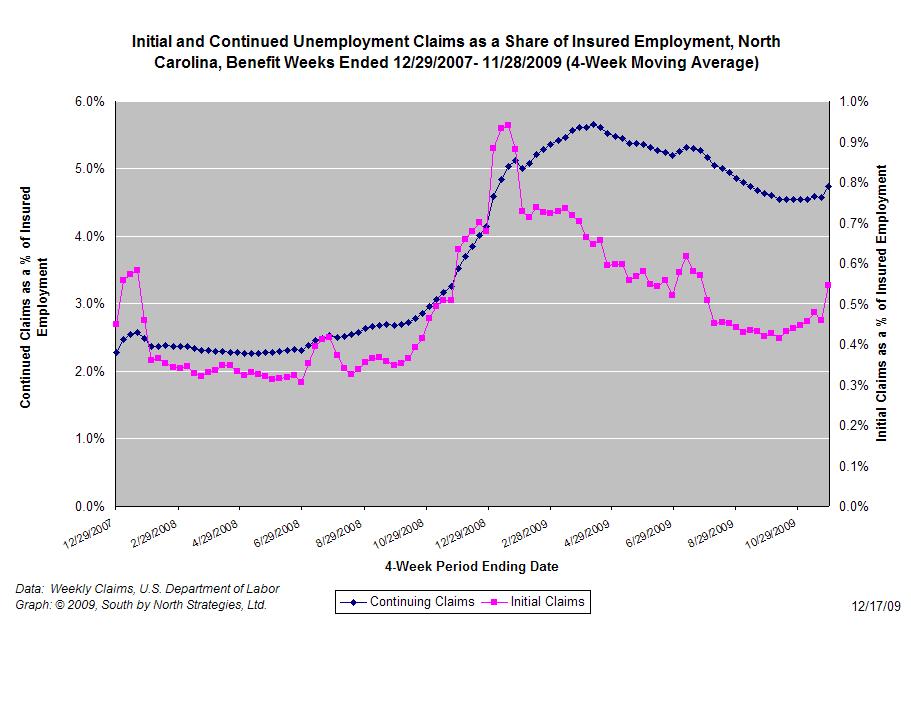
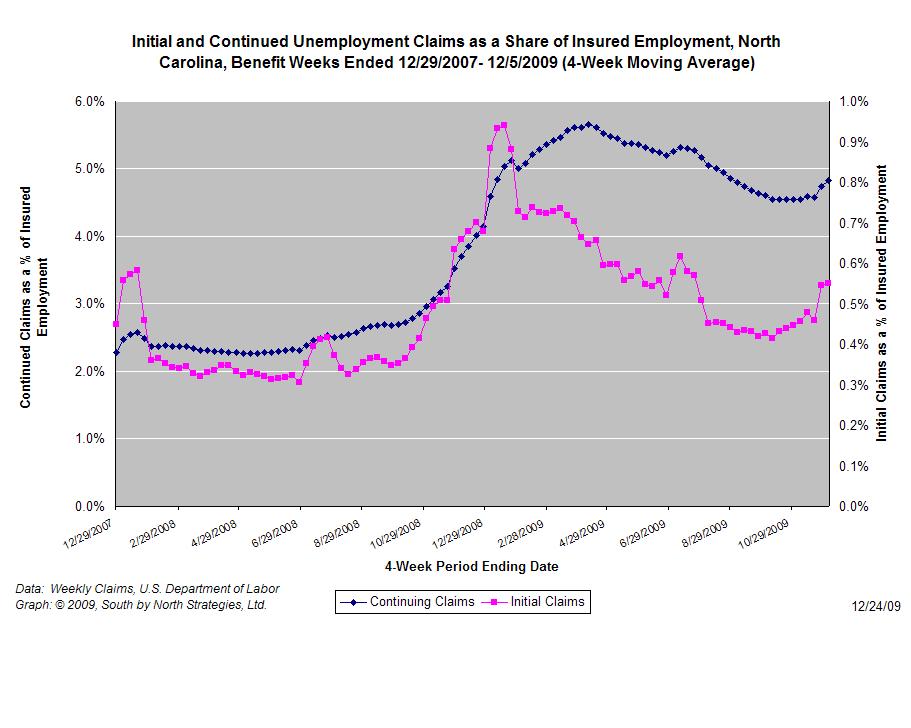
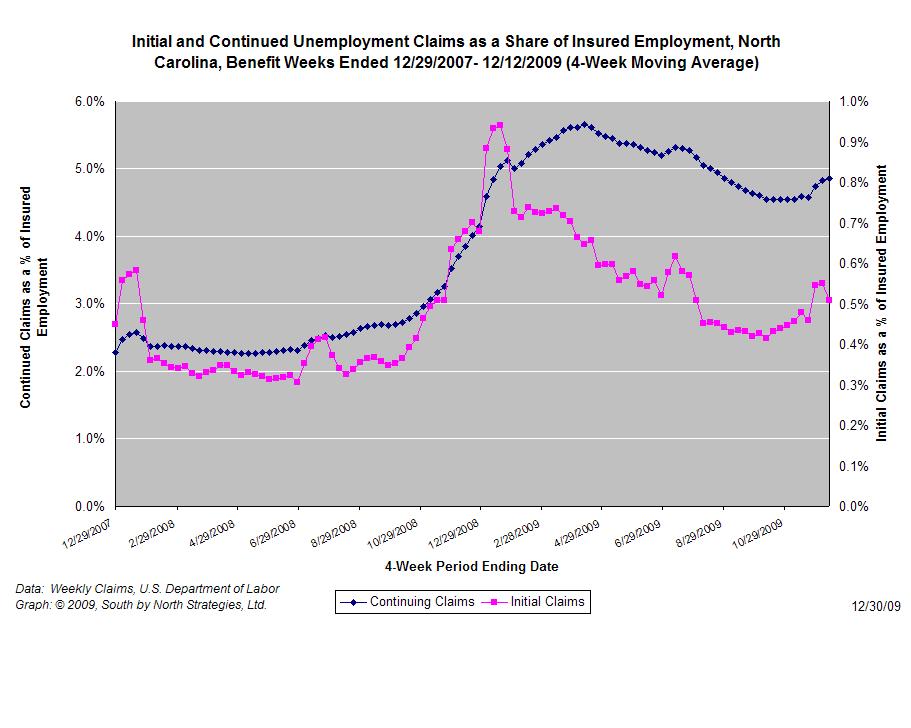
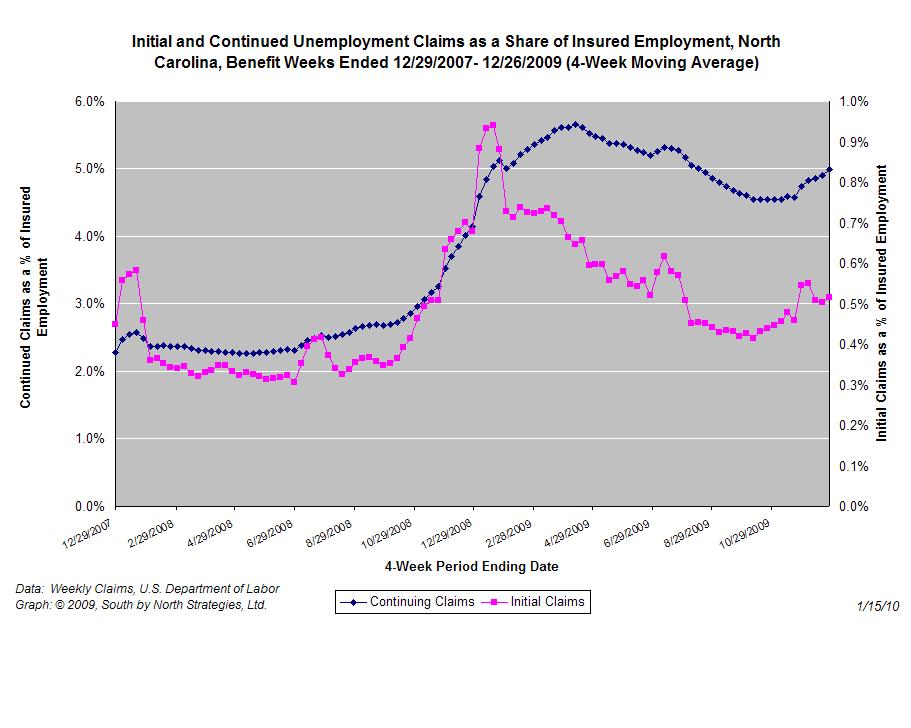
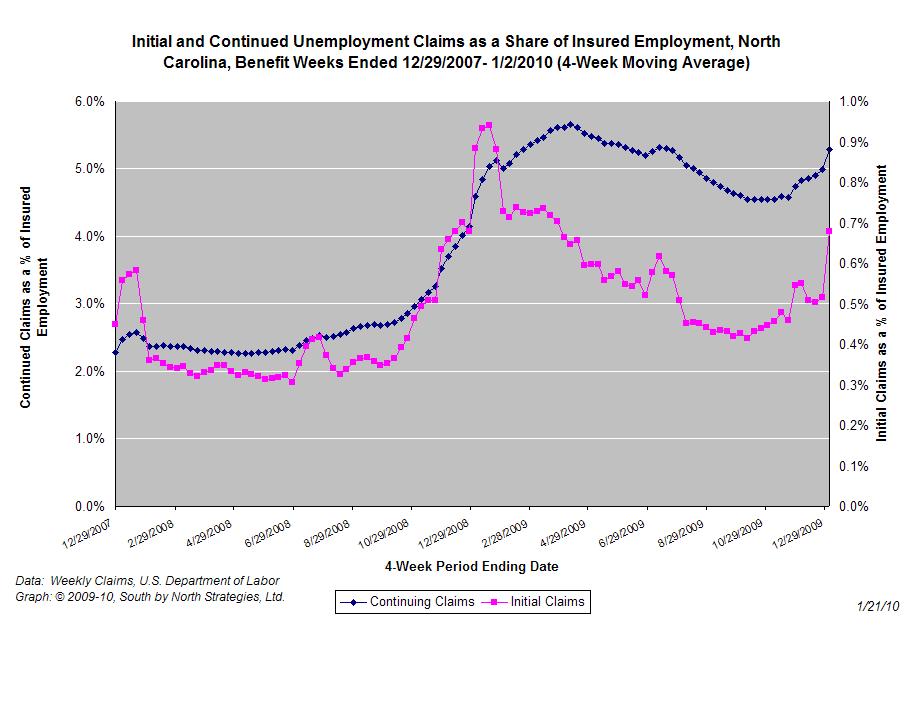
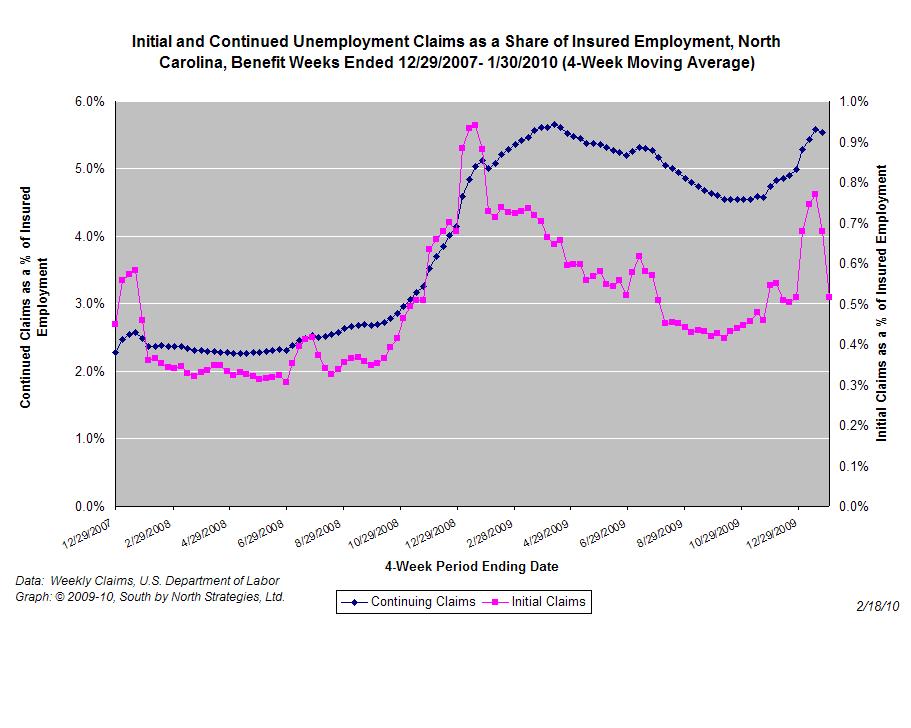
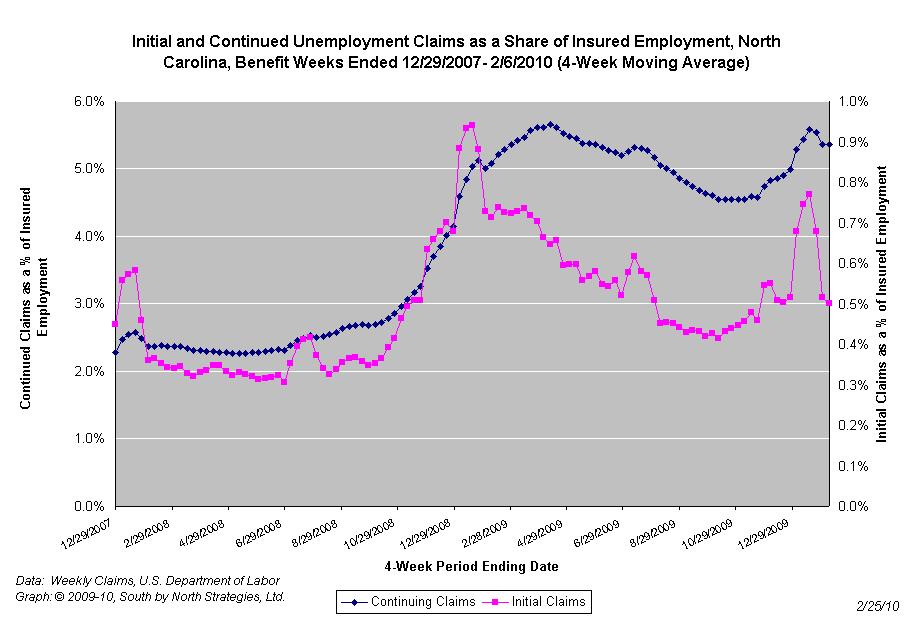
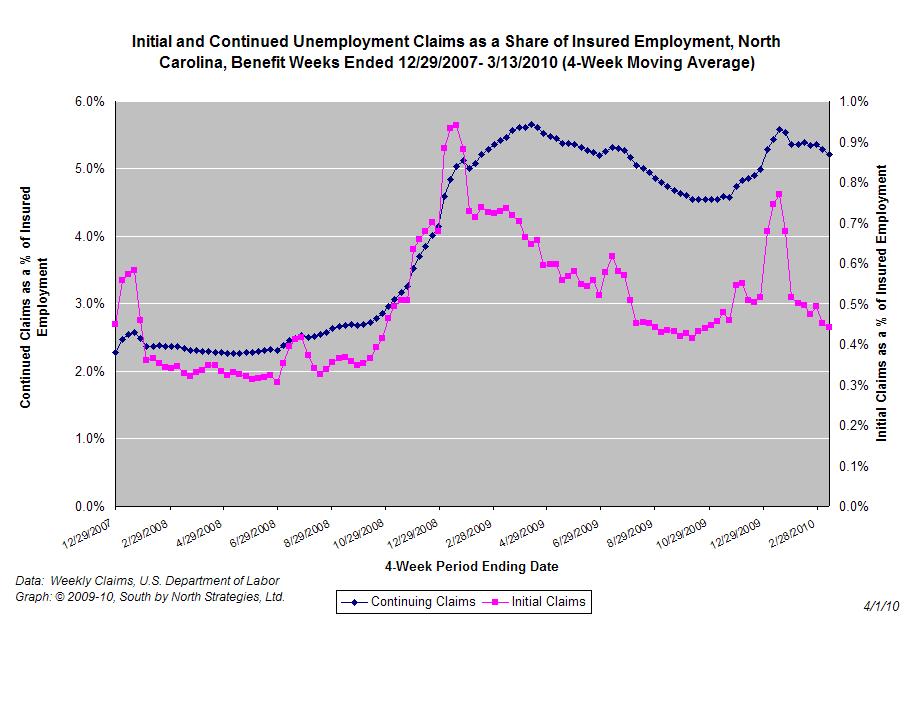
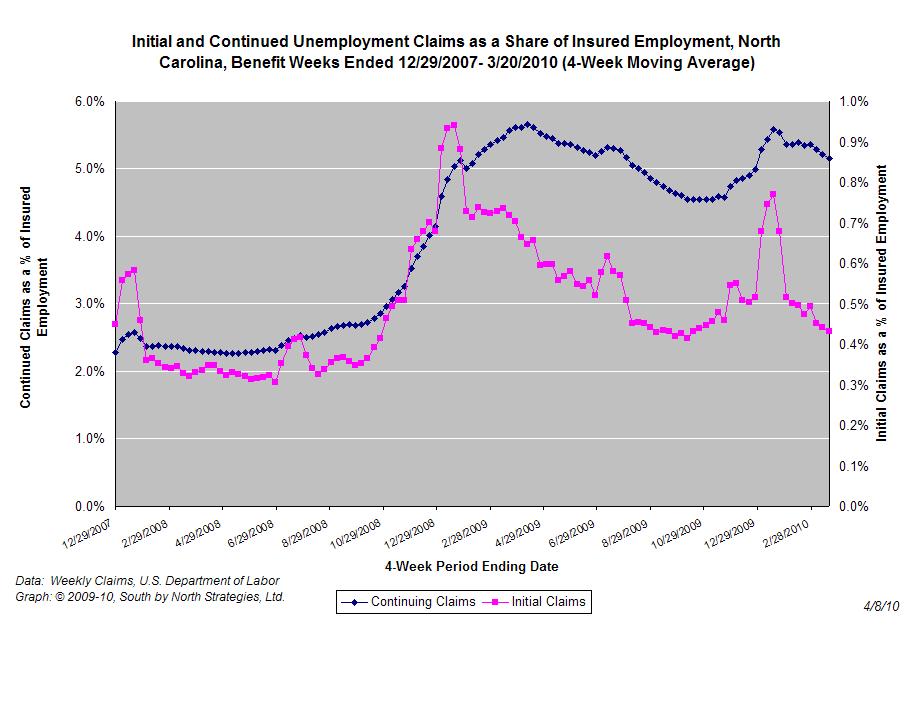
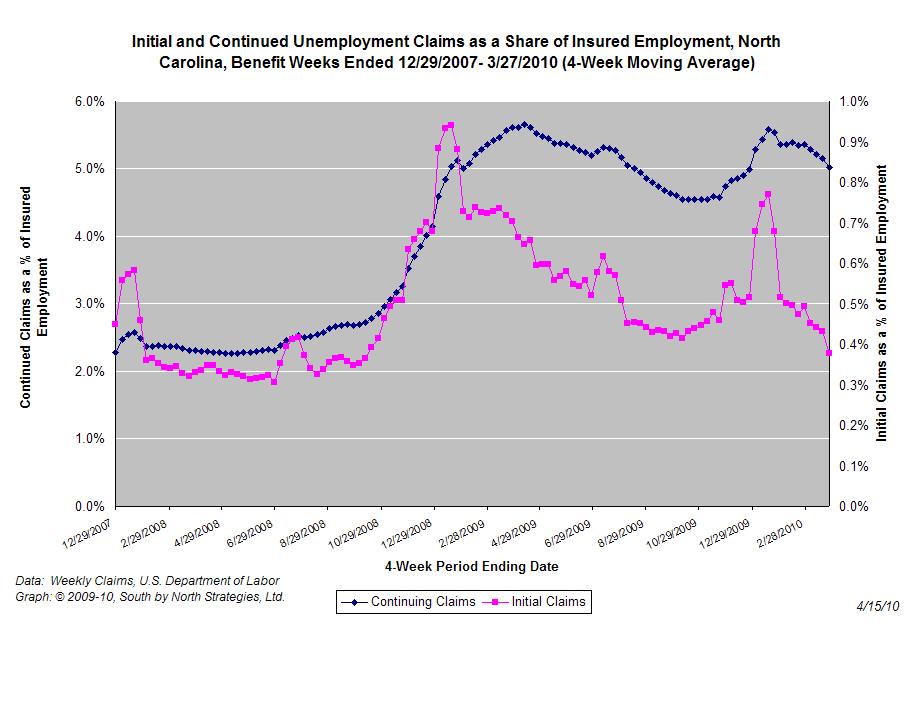
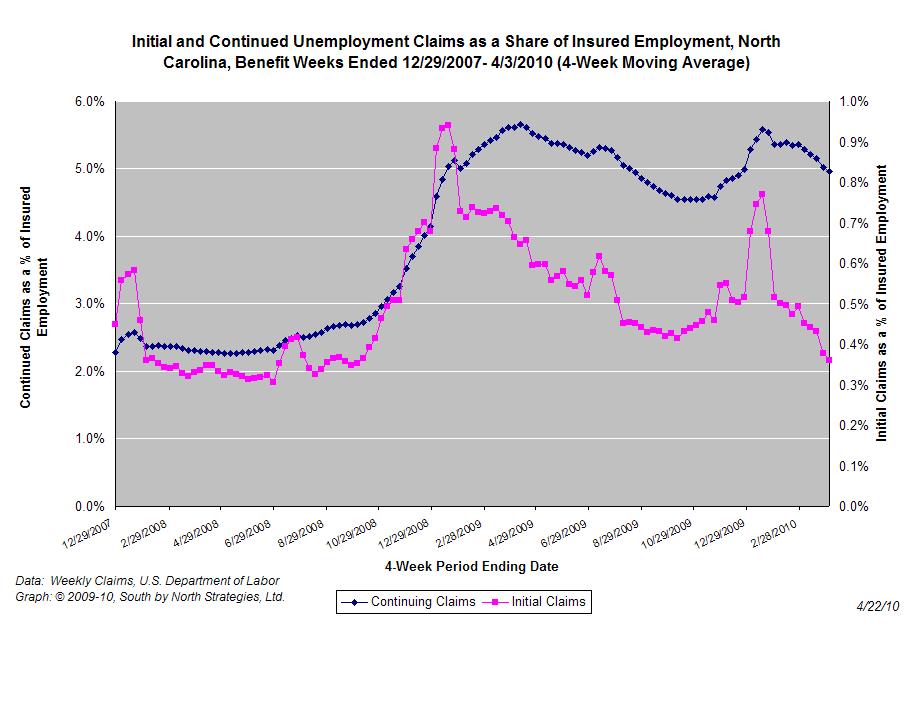
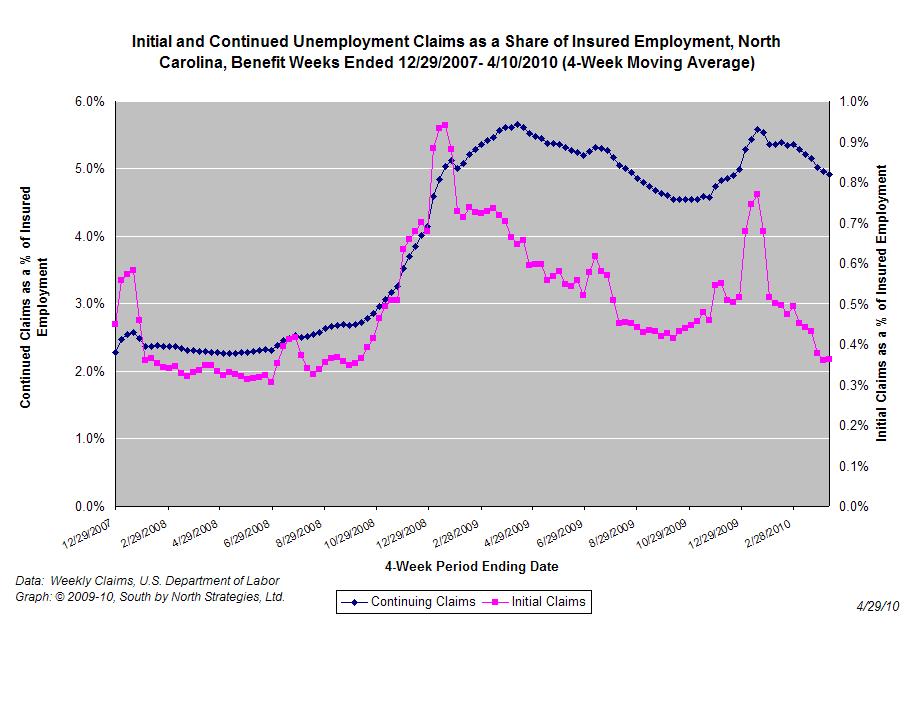
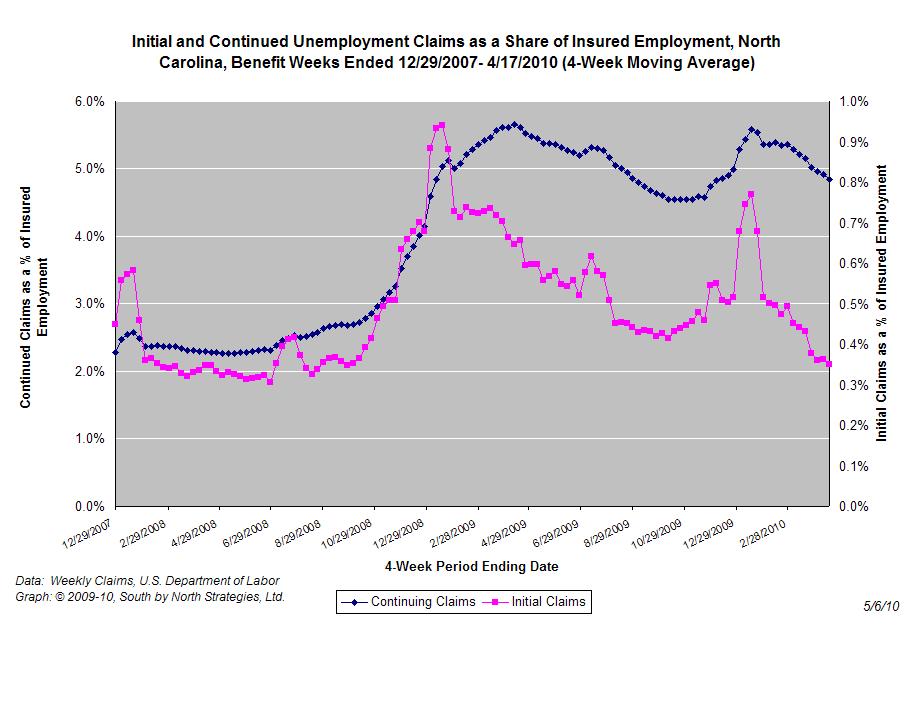
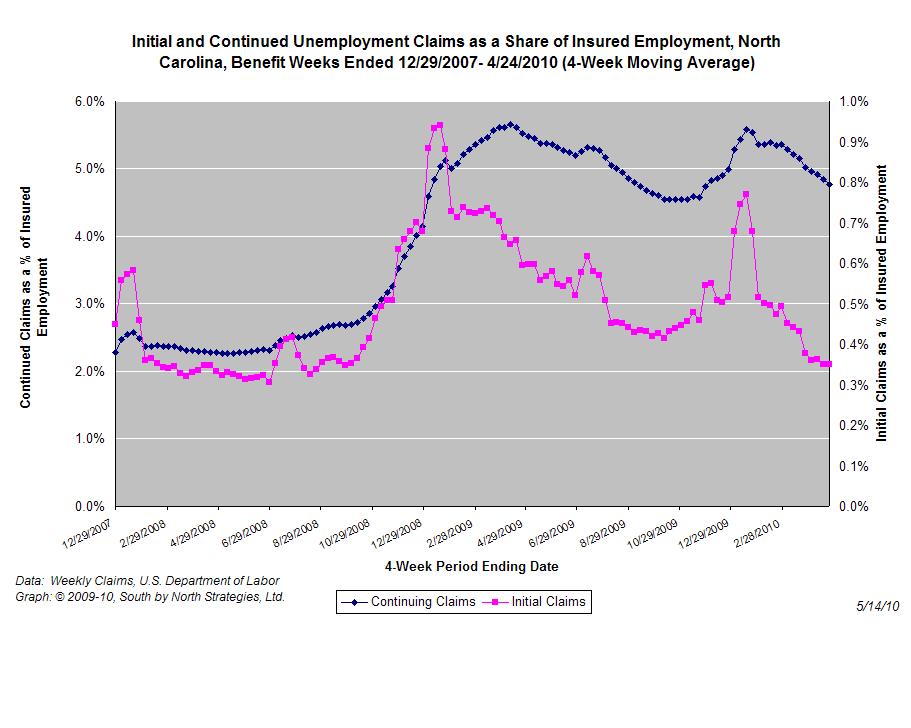
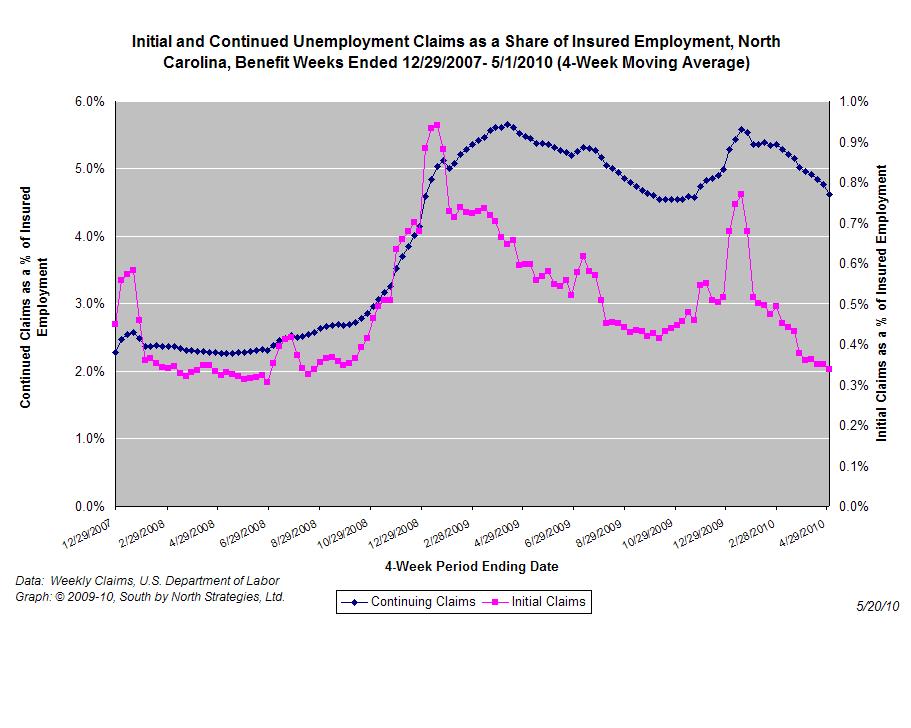
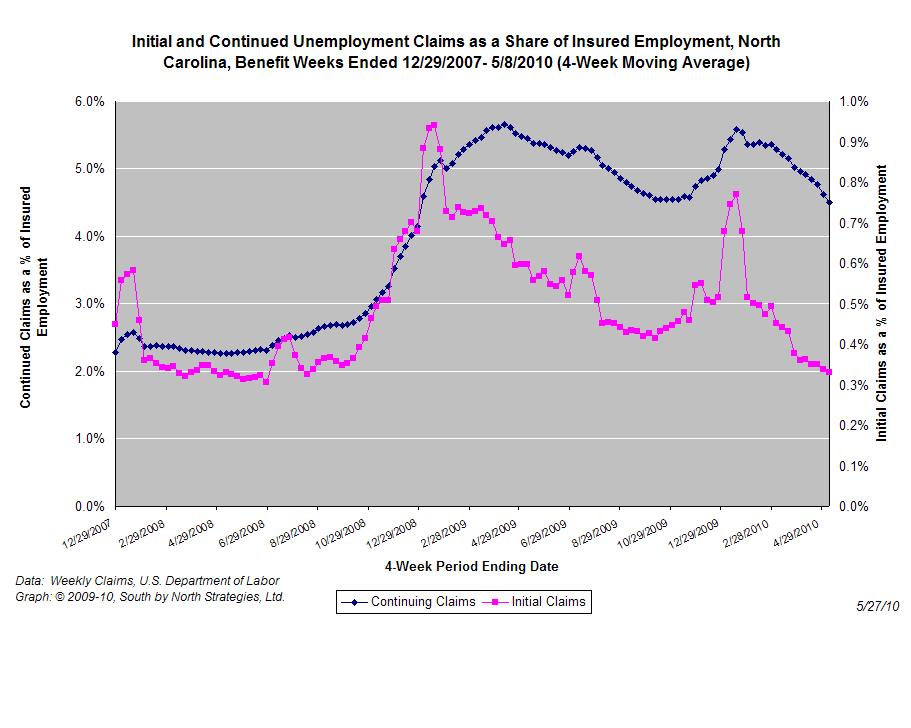
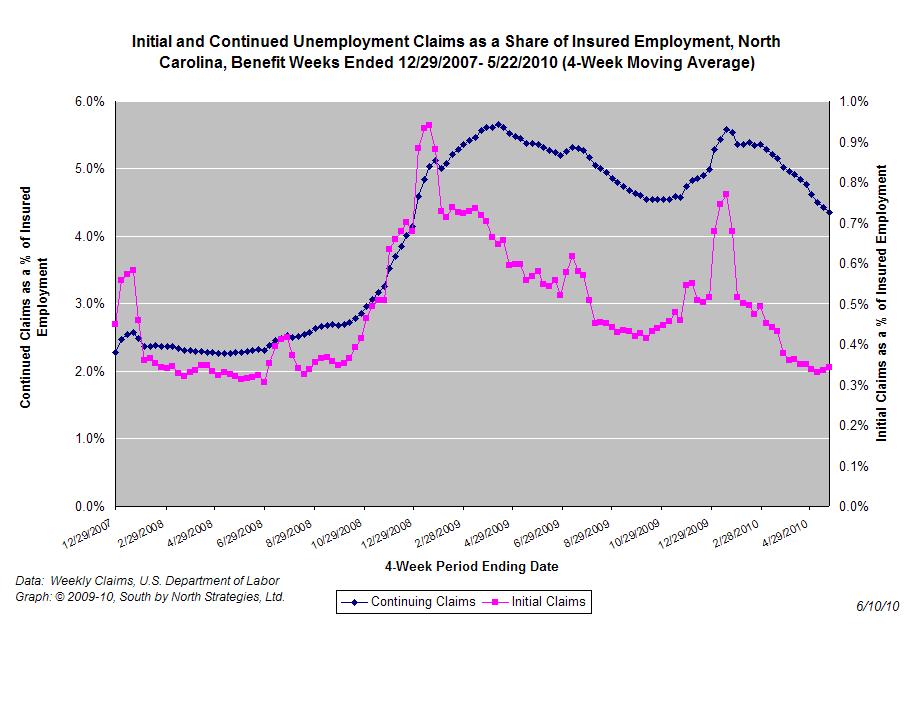
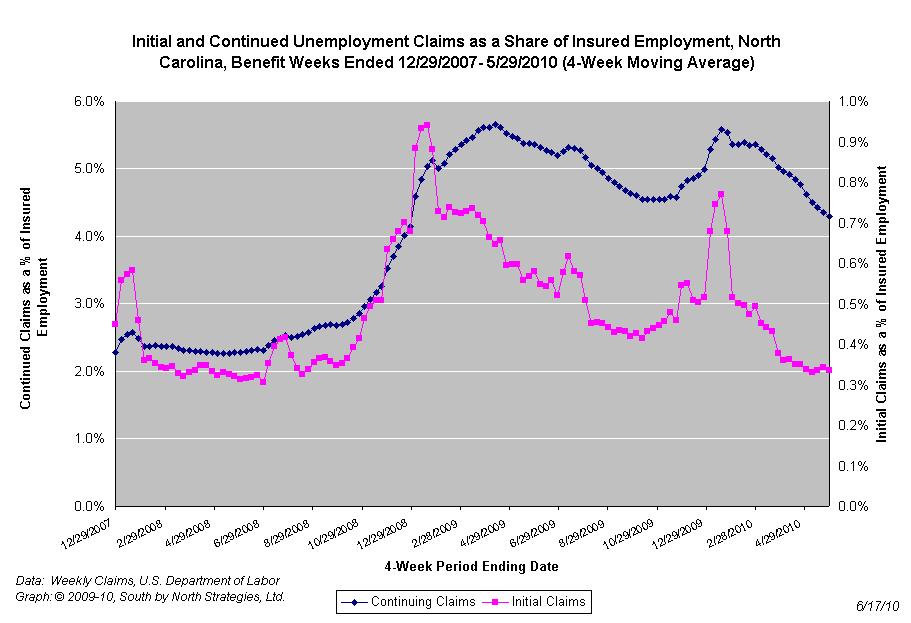
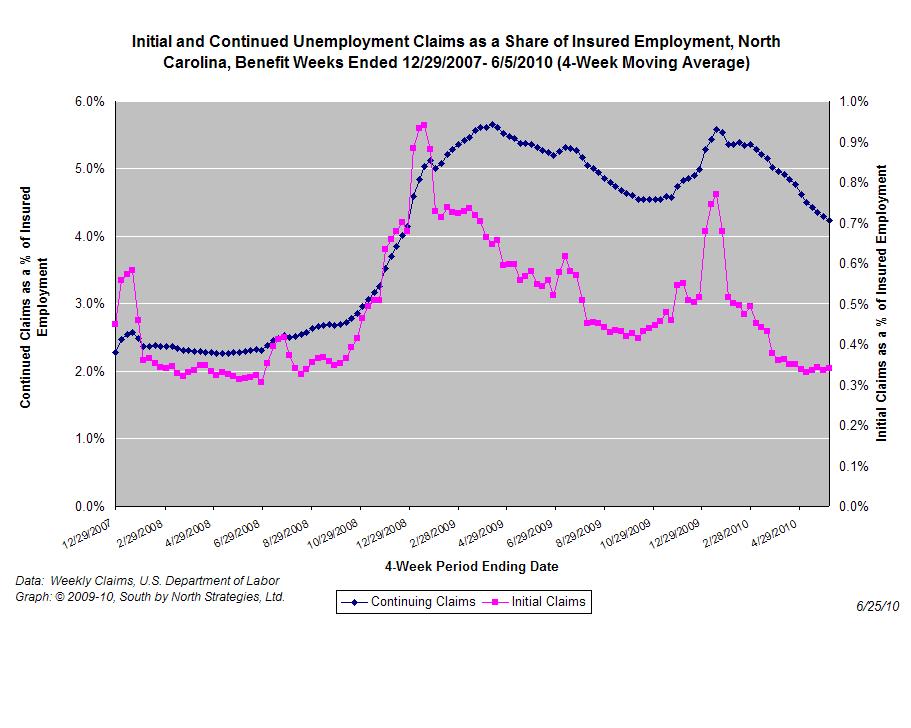
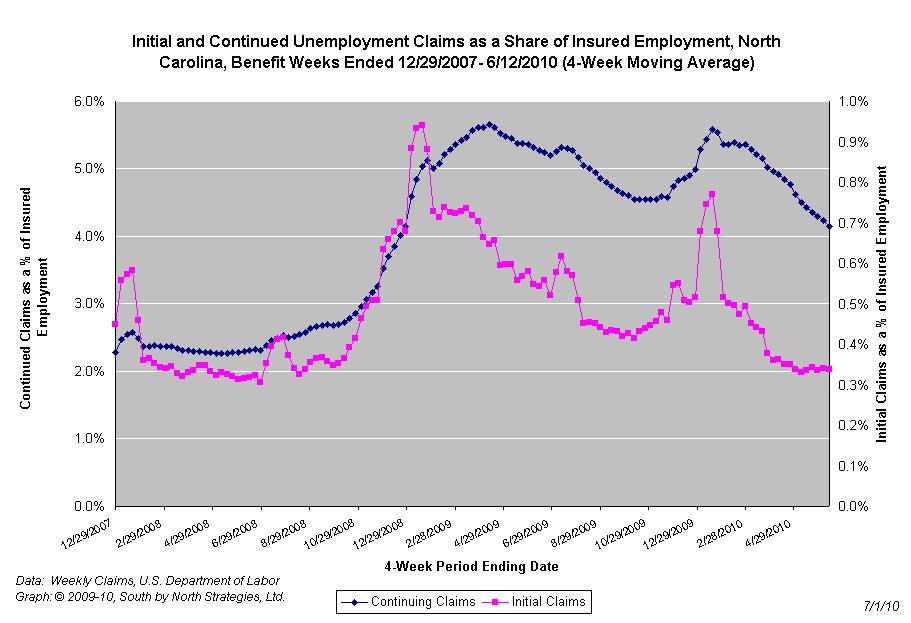
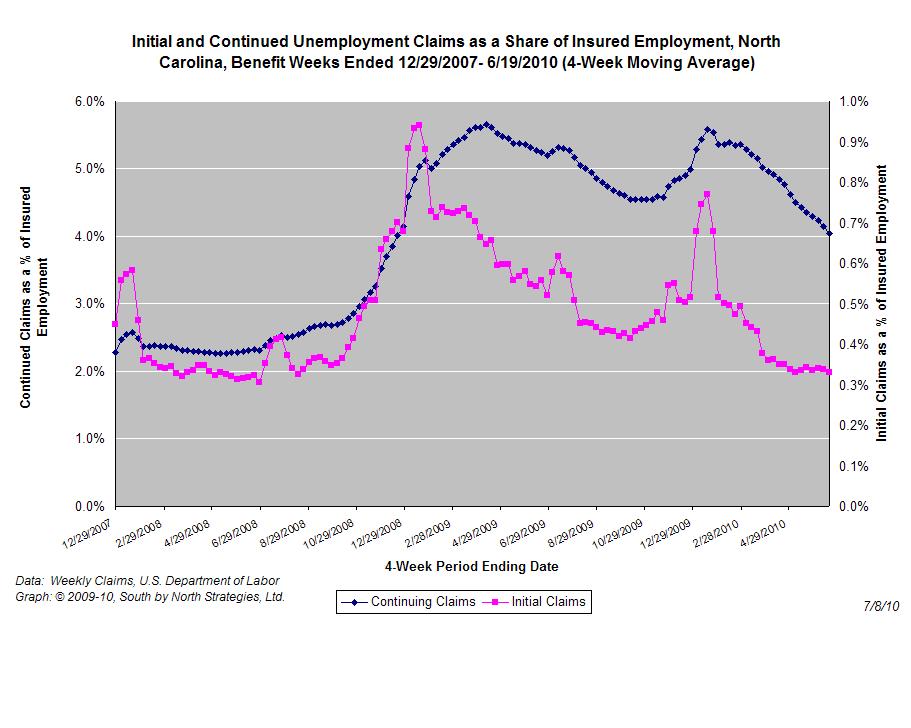
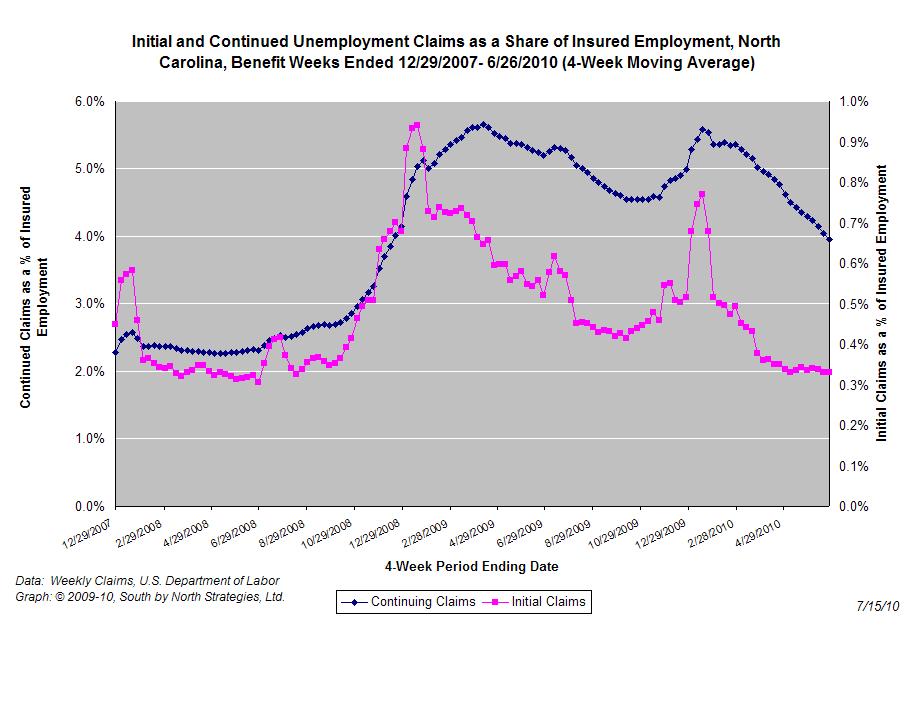
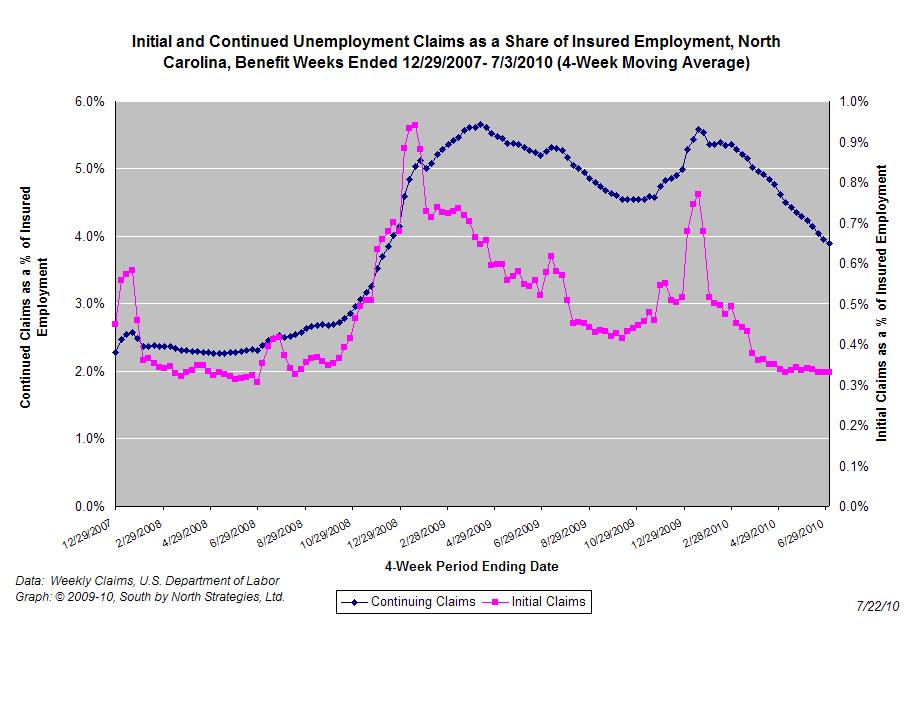
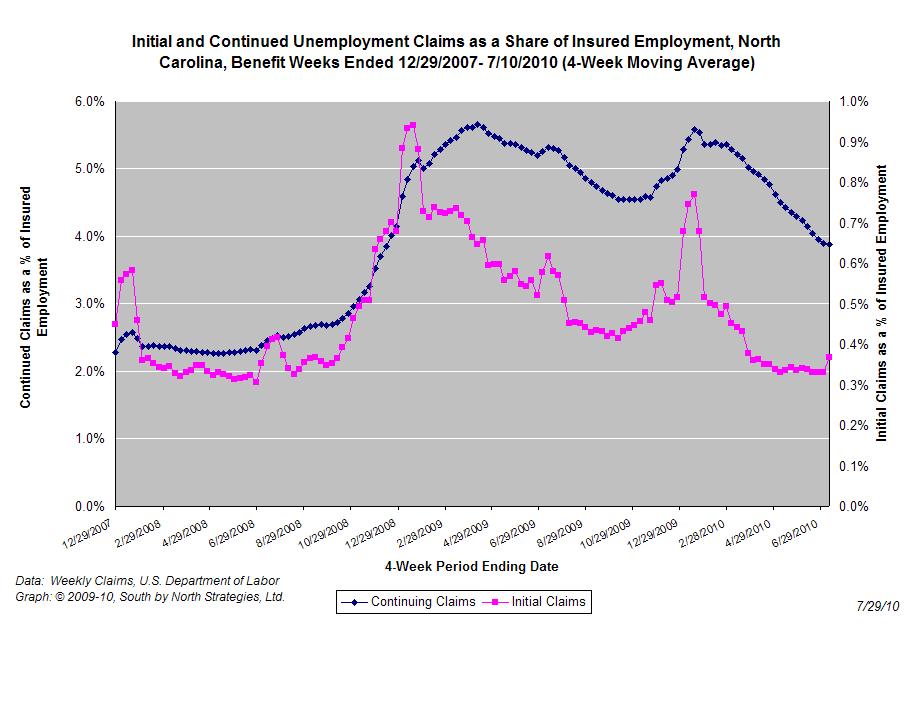
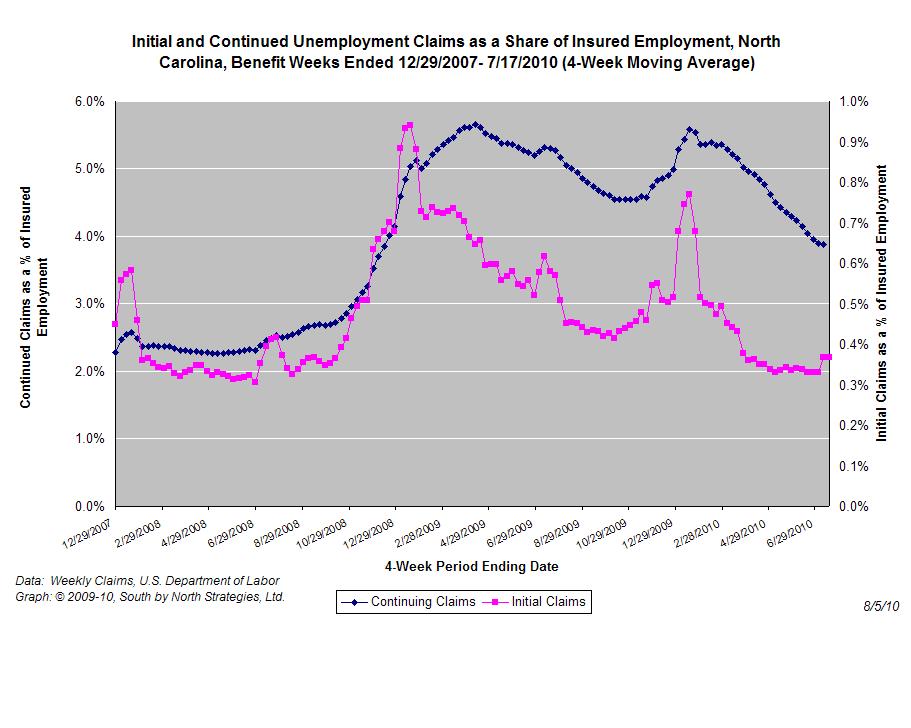
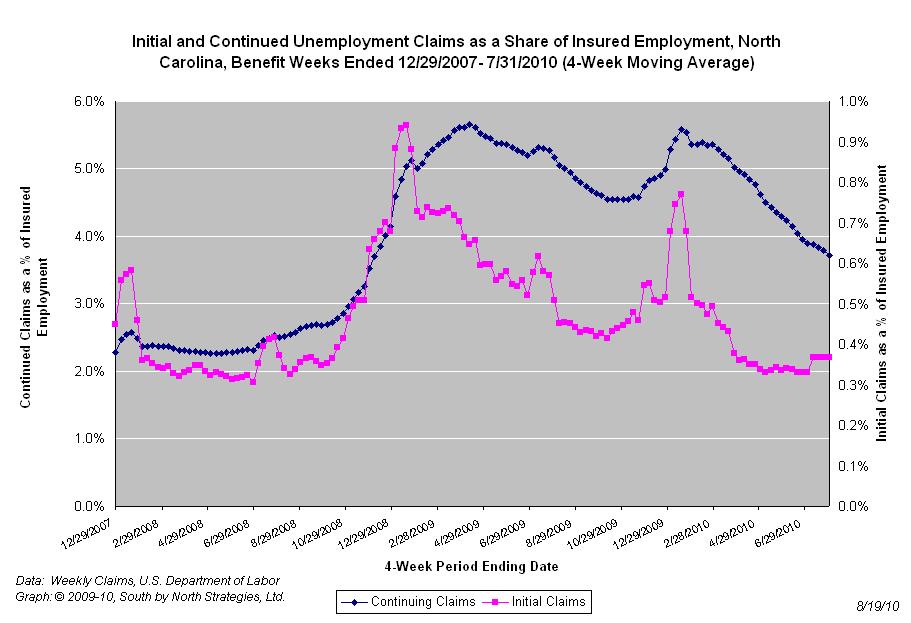
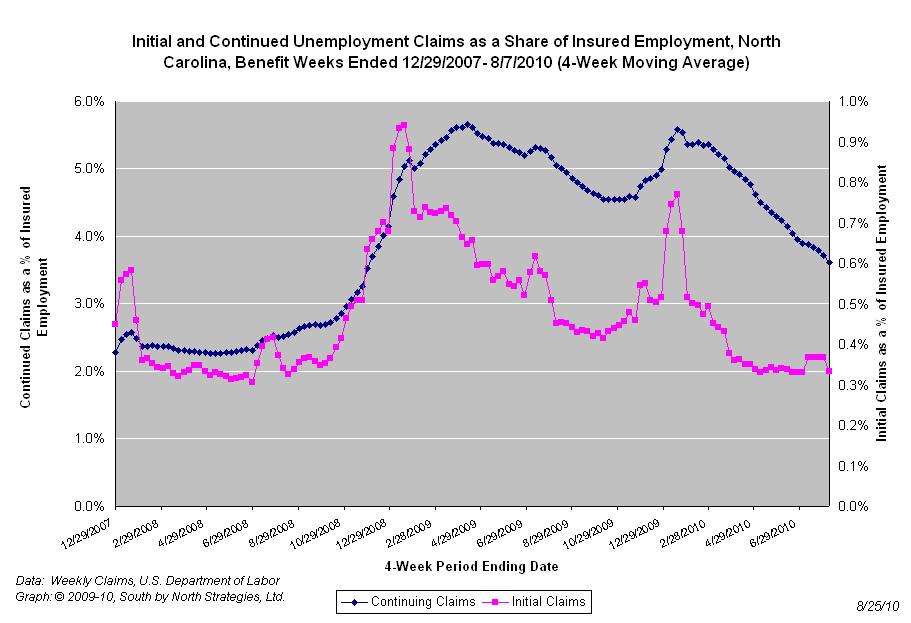
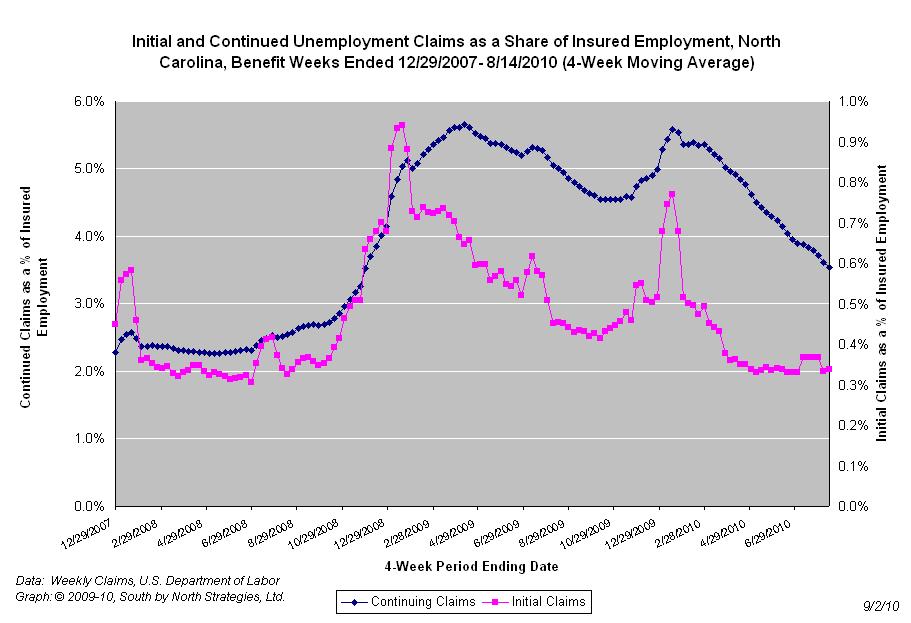
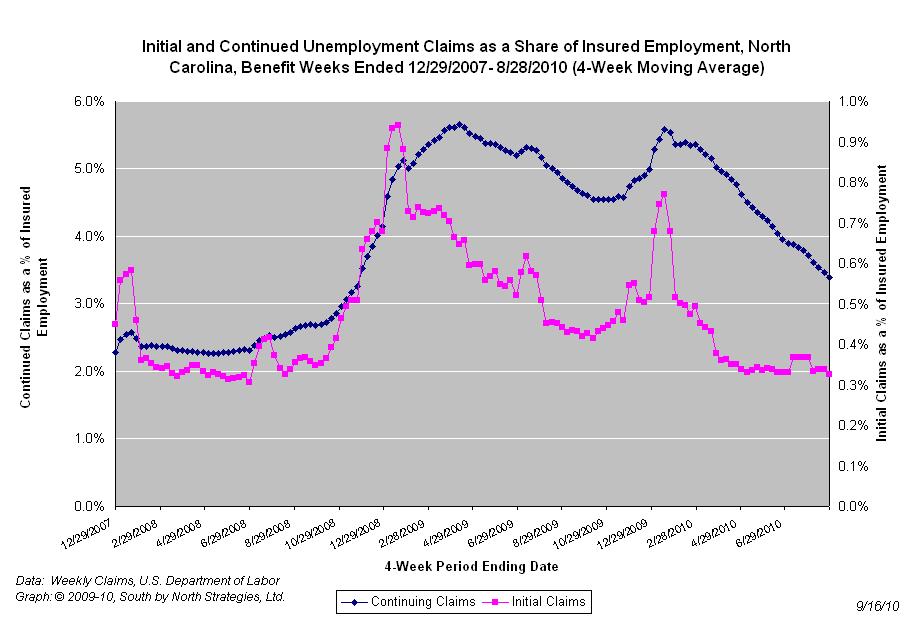
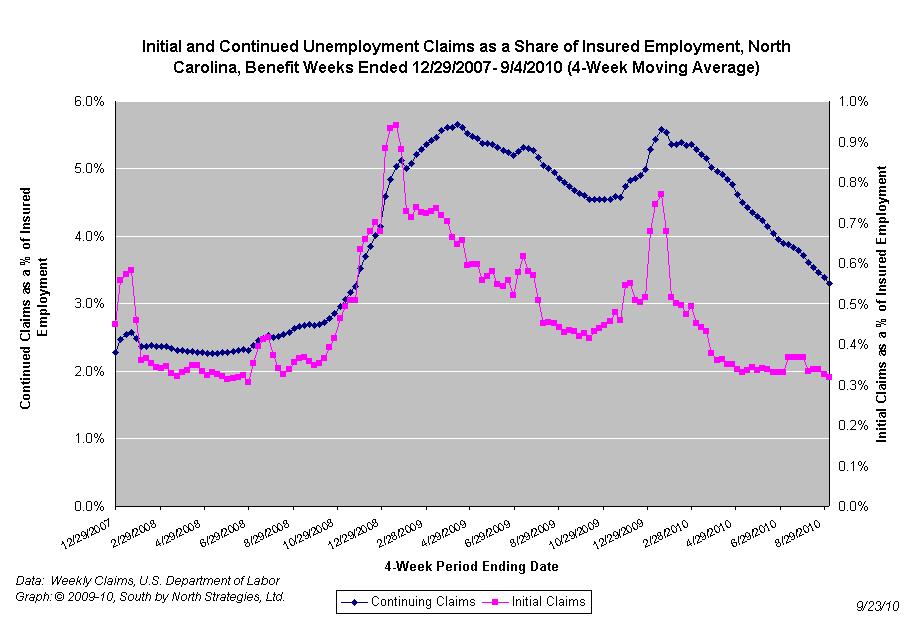
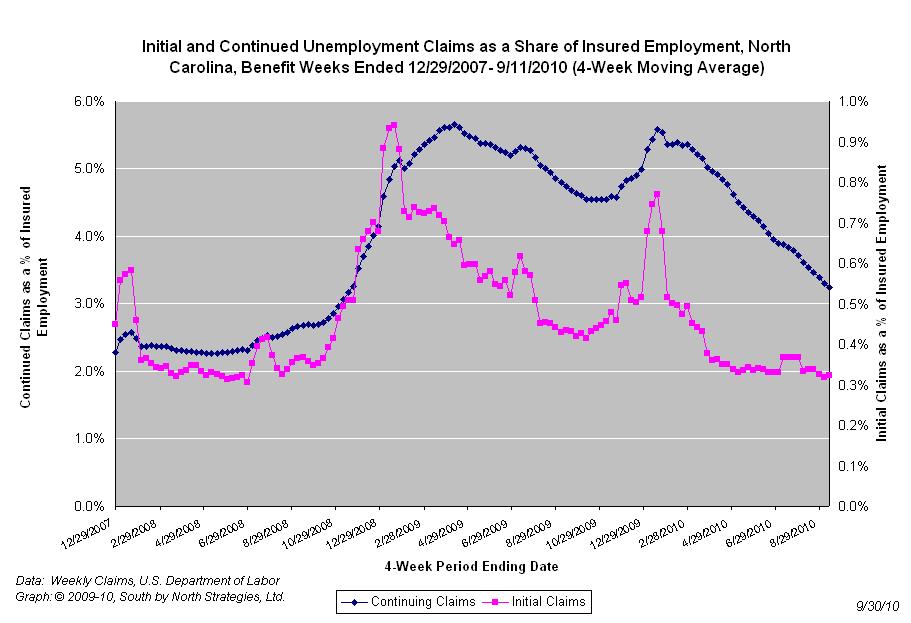
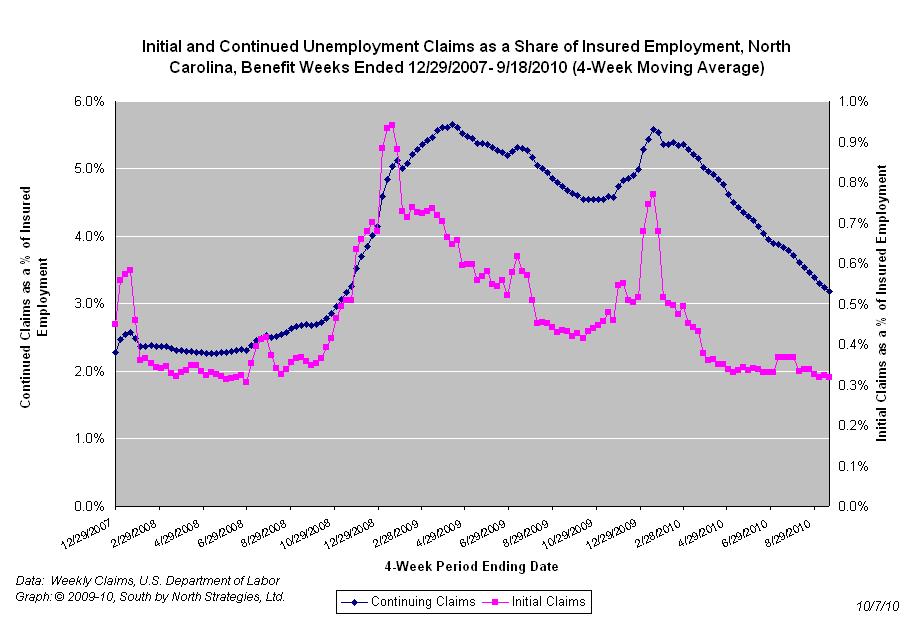
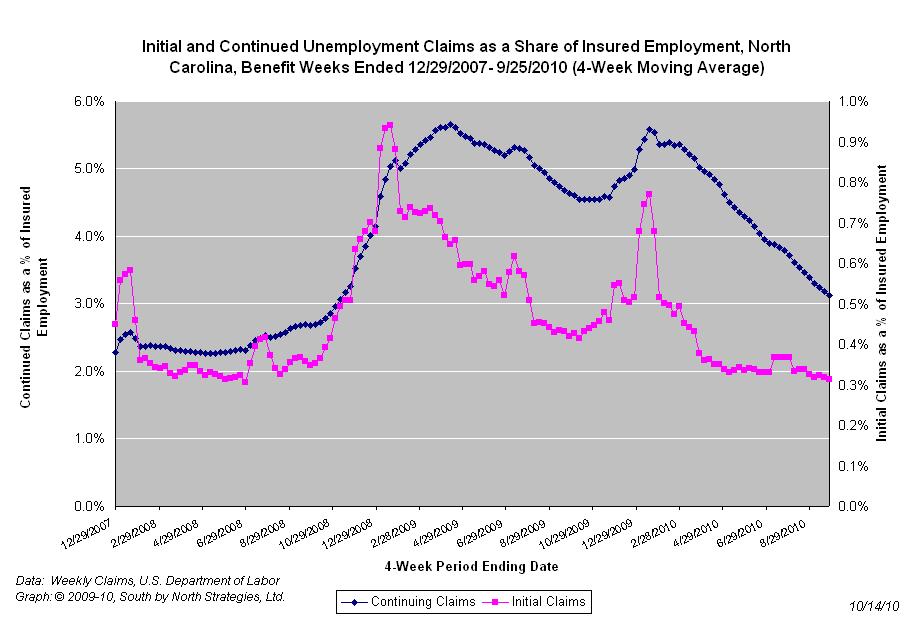
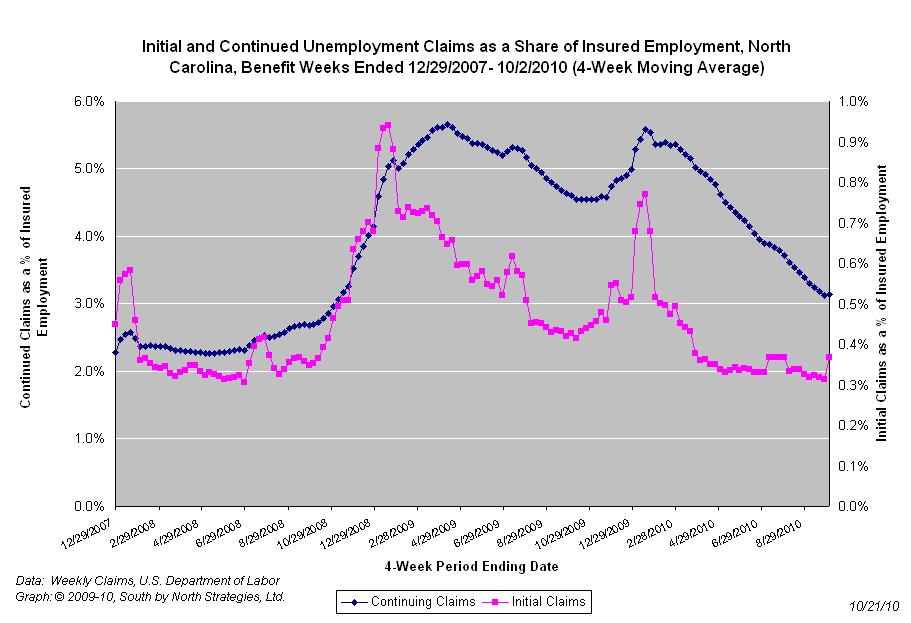
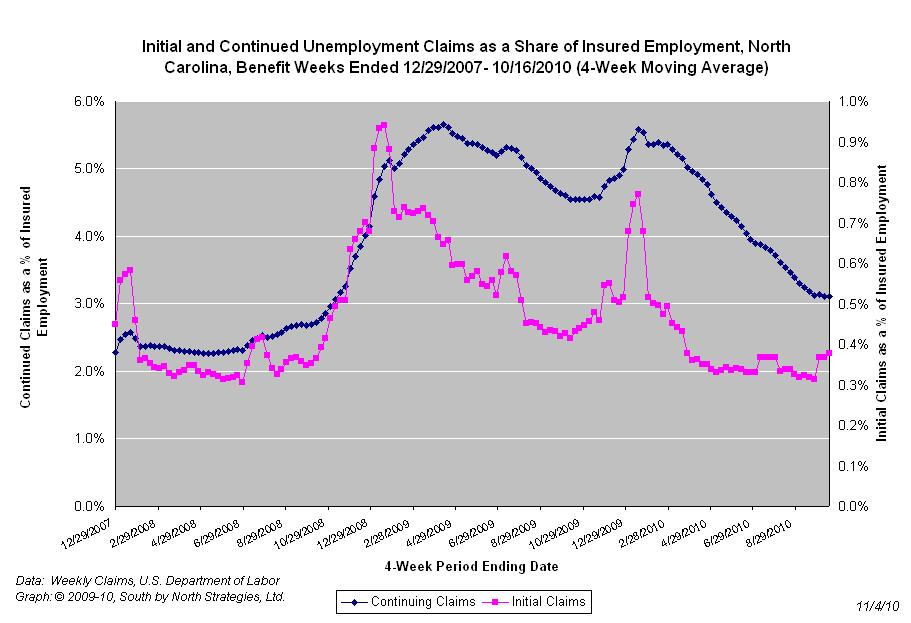
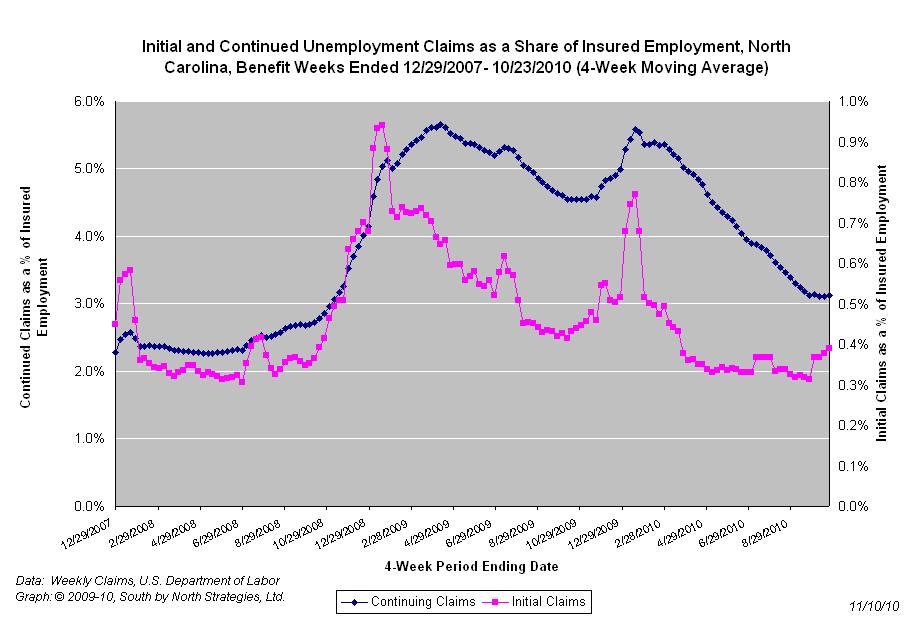
The graph (right) shows the changes in unemployment insurance claims (as a share of covered employment) in North Carolina since the recession’s start in December 2007.
Both new and continuing claims appear to have peaked for this business cycle, and the four-week averages of new and continuing claims have fallen considerably. Yet continuing claims remain at an elevated level, which suggests that unemployed individuals are finding it difficult to find new positions.
Also, little change has occurred within recent months. Since April 2010, the four-week average of initial claims consistently has ranged between 14,075 and 11,200.
Editor’s Note
Policy Points will not appear today in honor of the Veterans Day holiday. Normal posting will resume tomorrow.
Thank you for your interest in the blog!
Around The Dial – Nov. 10
Economic policy reports, blog postings, and media stories of interest:
- Mark Thoma considers the end of economic intervention.
- CBPP notes that ending expired programs can’t save money.
- Barry Eichengreen wonders if the US has “British disease.”
- Economix looks at the latest job openings data.
Cultivating Talent and Skills
The latest installment of the 2010 The State of The South Report, published by MDC, Inc. in Chapel Hill, considers how changes to state-level policies and programs related to postsecondary education can help young adults advance economically. From the report …
The bottom-line argument of this paper is: It is imperative that the South dramatically increase the number of its citizens who obtain a bachelor’s degree, an associate’s degree, a certification, or a job-ready credential. Just as it is urgent that the South attack the too-high drop out rate in high schools, so it is crucial that the region raise its completion rates in postsecondary education. In many places across the region, the pathways from high school to a good job have cracks here, barriers there, sometimes leading nowhere but to a dead end. Straightening and smoothing those pathways requires institutional transformation and policy reform across systems of education, from public schools to community colleges to universities.
It Was The Banks
James Galbraith of the University of Texas at Austin argues that the Obama Administration’s treatment of the nation’s largest banks is responsible for many of the administration’s problems.
Team Obama did none of these things. Instead they announced “stress tests,” plainly designed so as to obscure the banks’ true condition. They pressured the Federal Accounting Standards Board to permit the banks to ignore the market value of their toxic assets. Management stayed in place. They prosecuted no one. The Fed cut the cost of funds to zero. The President justified all this by repeating, many times, that the goal of policy was “to get credit flowing again.”
…
The banks threw a party. Reported profits soared, as did bonuses. With free funds, the banks could make money with no risk, by lending back to the Treasury. They could boom the stock market. They could make a mint on proprietary trading. Their losses on mortgages were concealed — until the fact came out that they’d so neglected basic mortgage paperwork, as to be unable to foreclose in many cases, without the help of forged documents and perjured affidavits.
…
But new loans? The big banks had given up on that. They no longer did real underwriting. And anyway, who could qualify? Businesses mostly had no investment plans. And homeowners were, to an increasing degree, upside-down on their mortgages and therefore unqualified to refinance.
 Email Sign-Up
 RSS Feed