The Future of The Auto Industry
A recent segment on the PBS NewsHour discussed the future of the American automotive industry and the larger issues facing the nation’s manufacturing sector.
Around The Dial – July 30
Economic policy reports, blog postings, and media stories of interest:
- Bob Herbert writes about household income insecurity.
- CBPP points out that the deficit commission’s math is off.
- Mark Zandi says there would be 8.5 million fewer jobs absent ARRA.
NC Unemployment Claims: Week of July 10
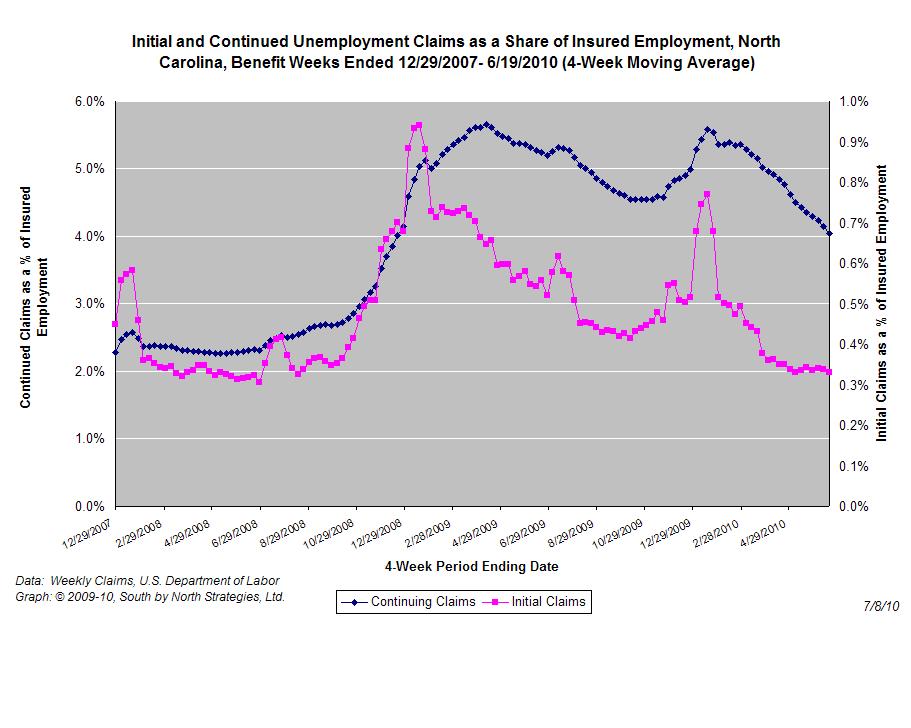
For the benefit week ending on July 10th, 18,120 North Carolinians filed initial claims for state unemployment insurance benefits, and 149,387 individuals applied for state-funded continuing benefits. Compared to the prior week, there were more initial and continuing claims. (Note that there normally is a rise in new claims in the middle of July.) These figures come from new data released by the U.S. Department of Labor.
Averaging new and continuing claims over a four-week period — a process that helps adjust for seasonal fluctuations and better illustrates trends — shows that an average of 13,963 initial claims were filed over the previous four weeks, along with an average of 147,373 continuing claims. Compared to the previous four-week period, there were more initial and fewer continuing claims.
 One year ago, the four-week average for initial claims stood at 24,743 and the four-week average of continuing claims equaled 213,690.
While the number of claims has dropped over the past year, so has covered employment. Last week, covered employment totaled 3.8 million, down from 4 million a year ago.
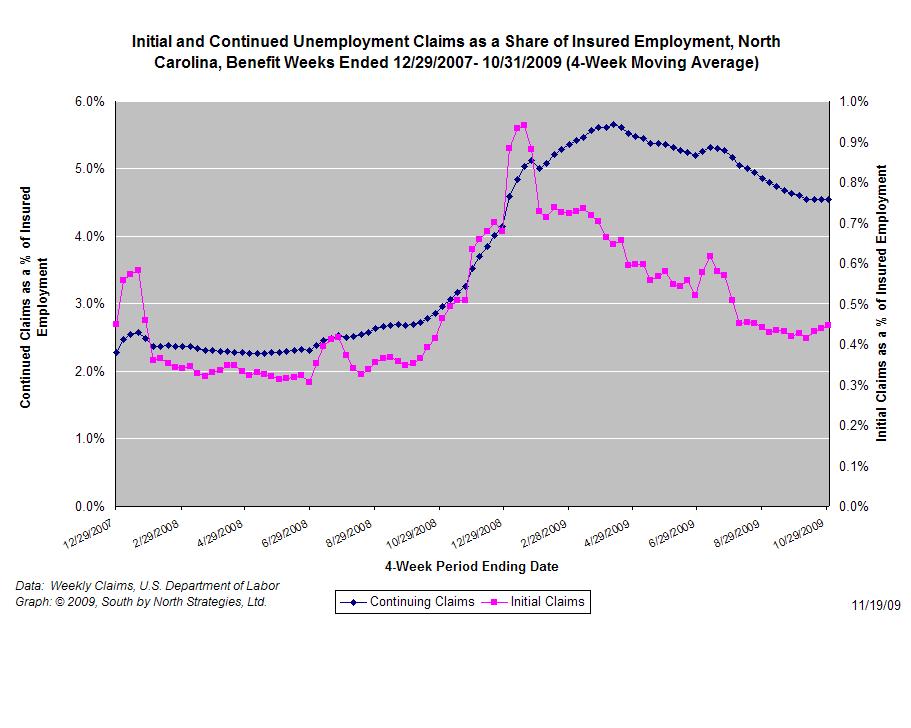
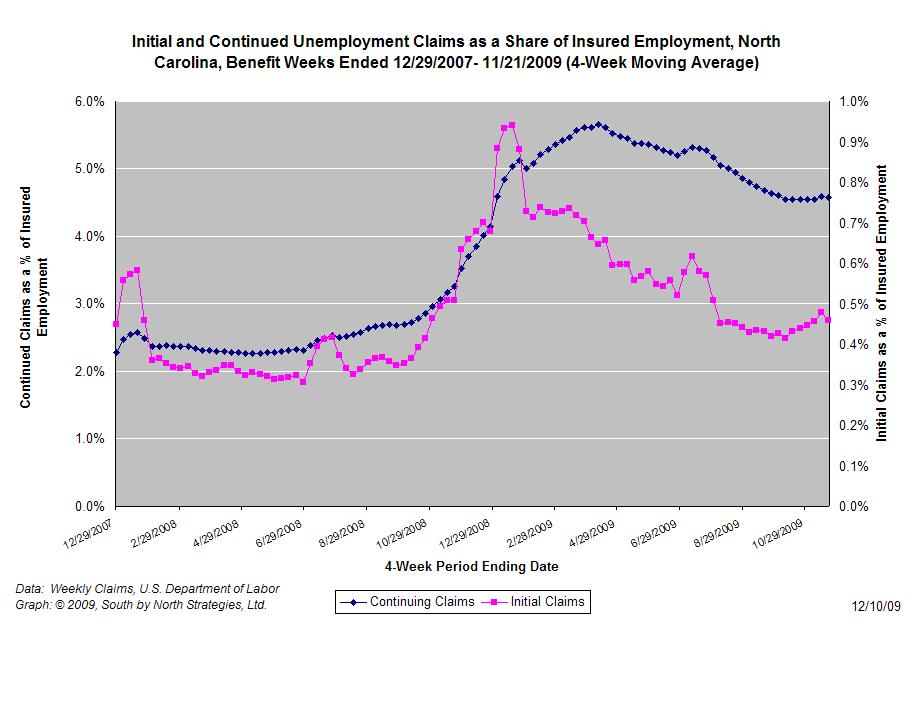
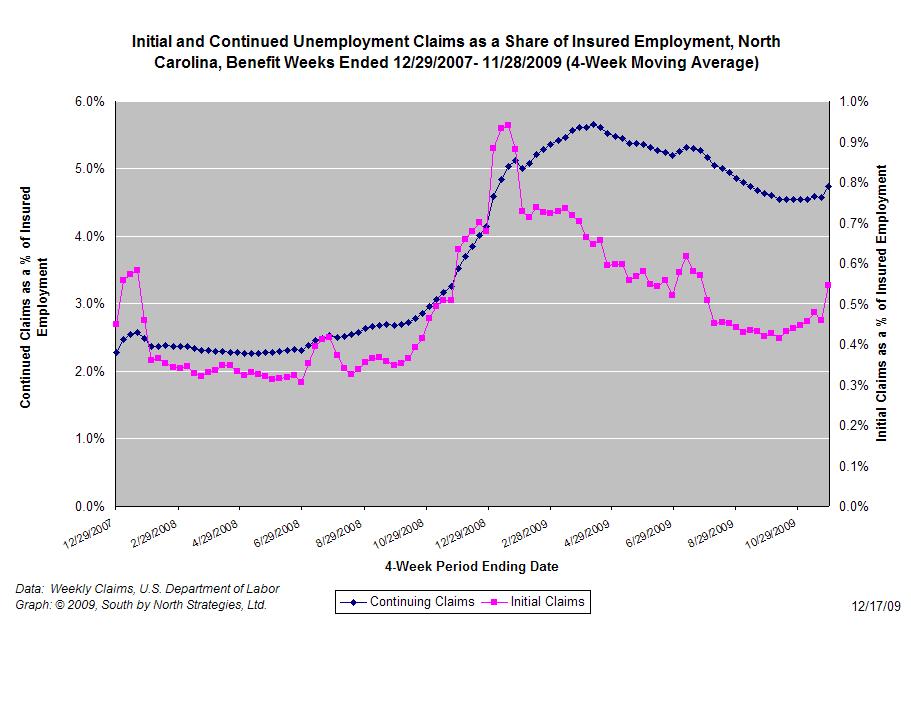
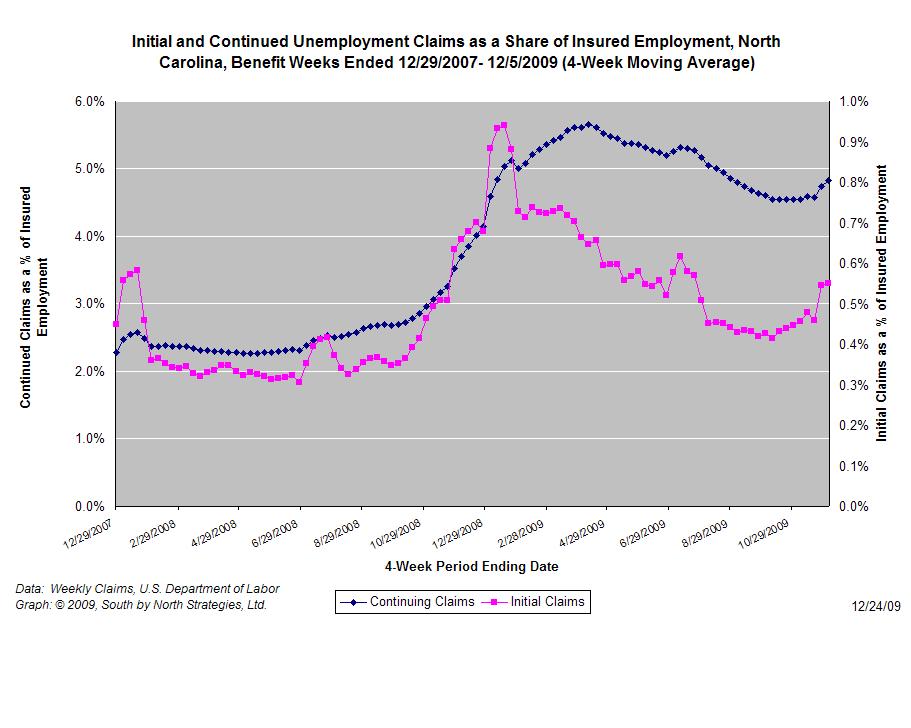
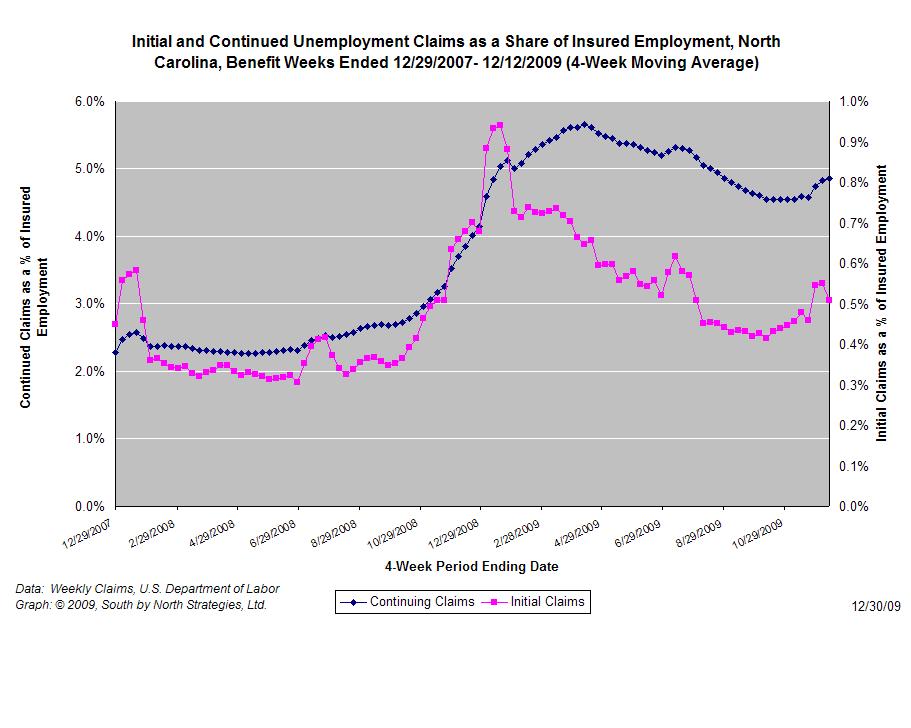
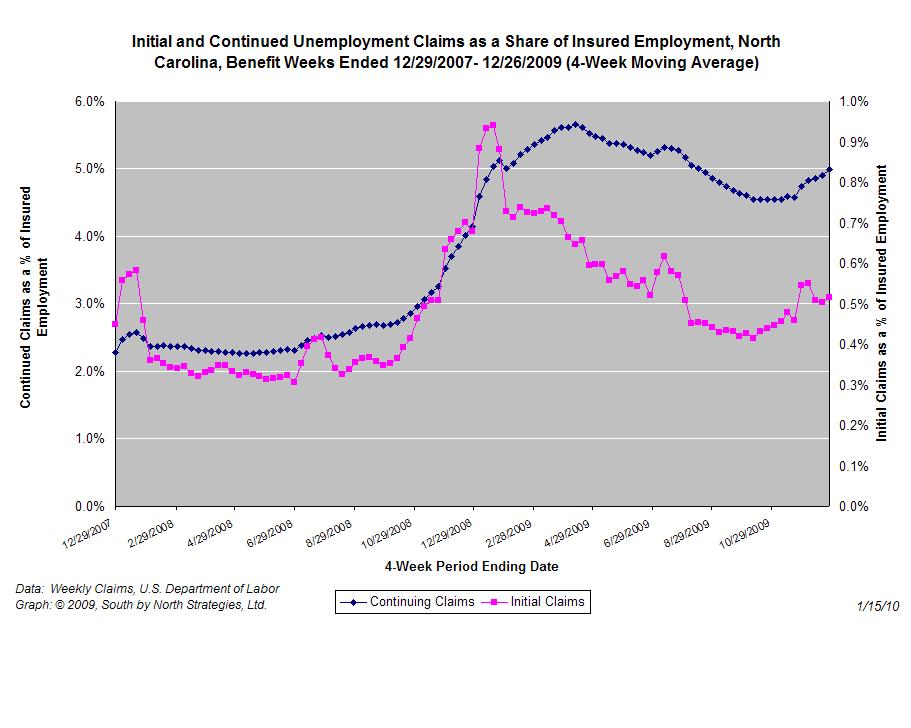
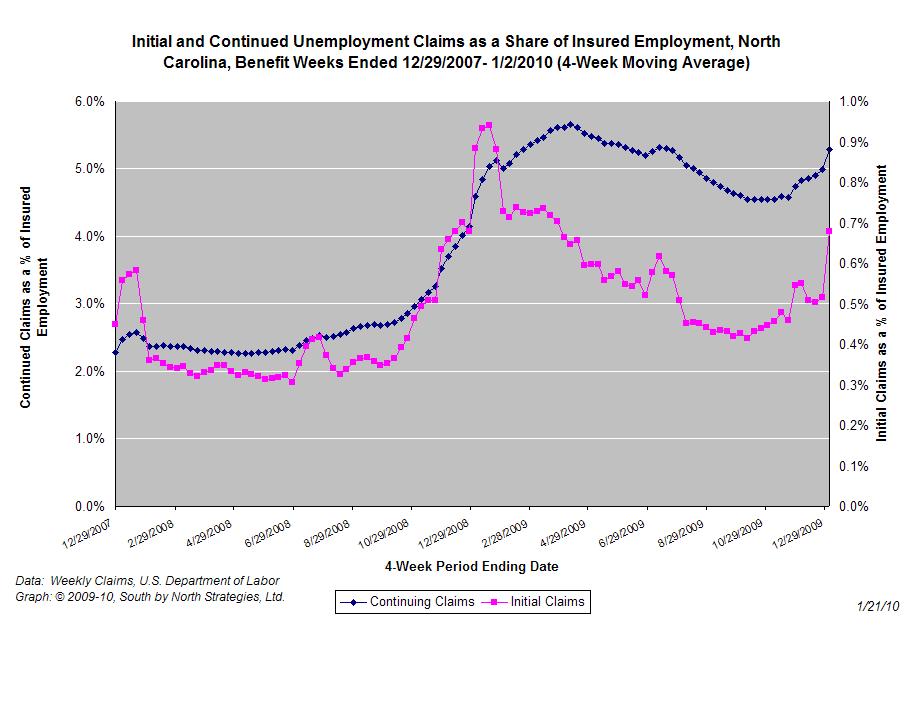
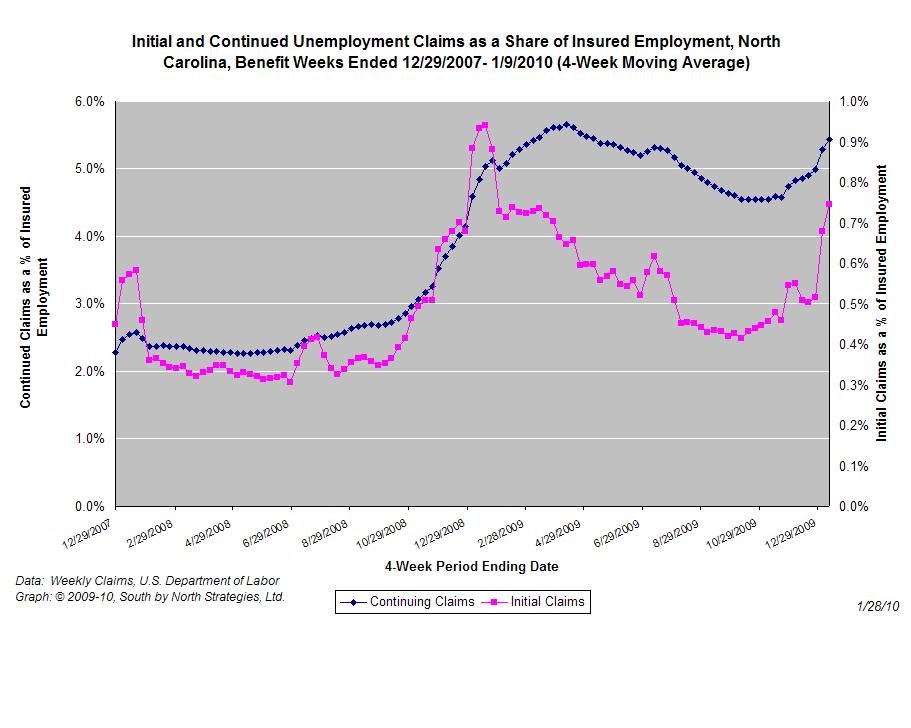
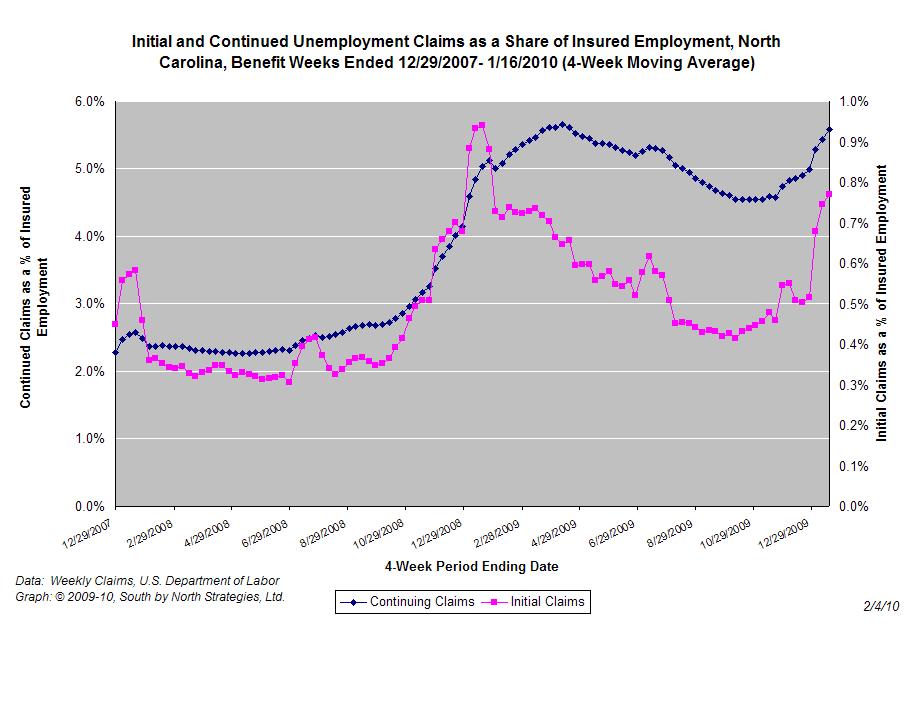
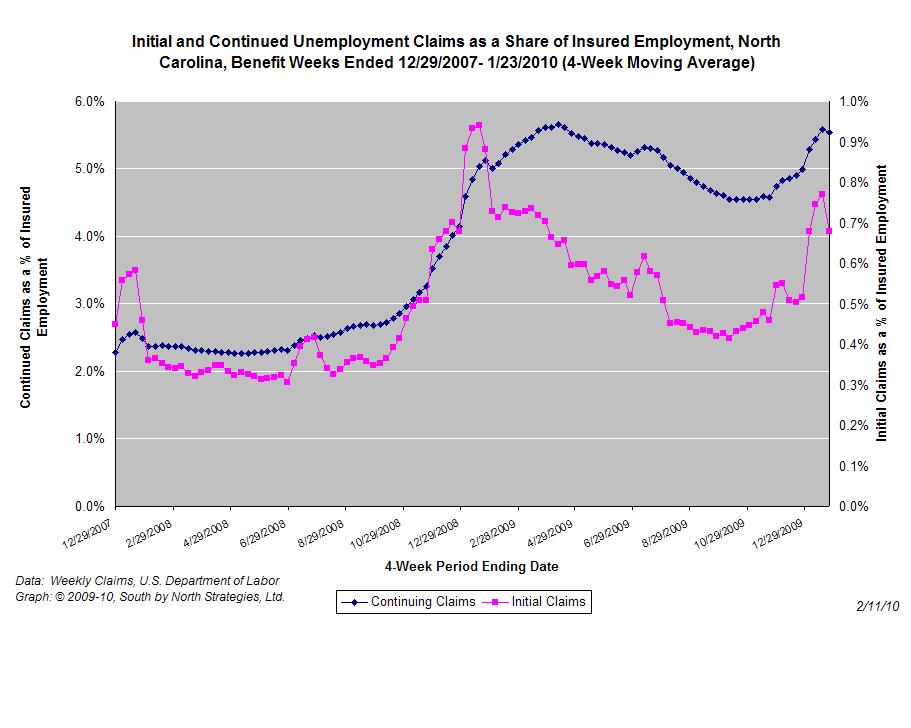
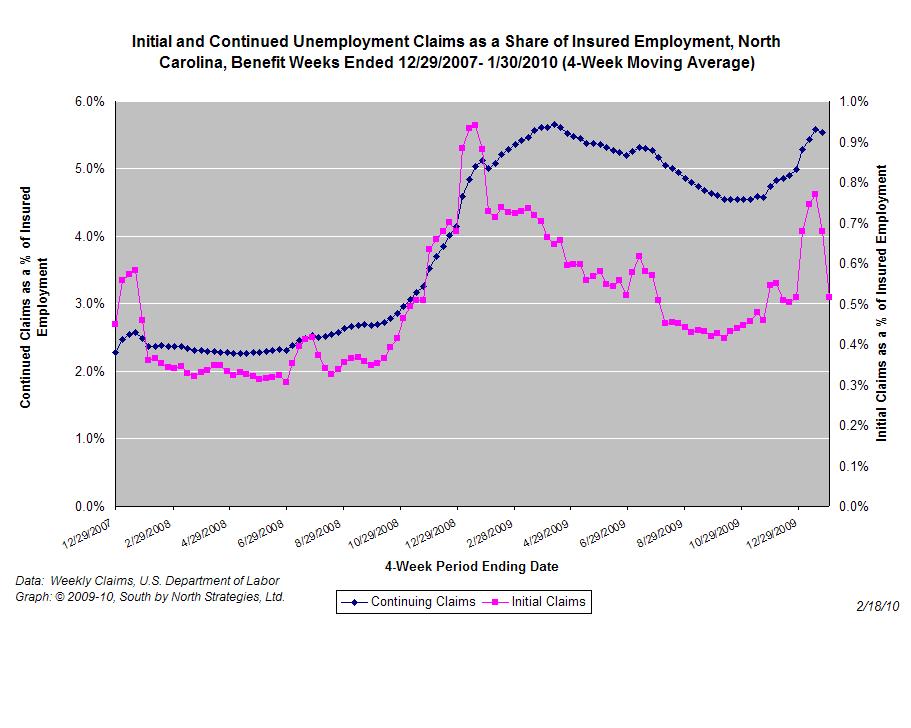
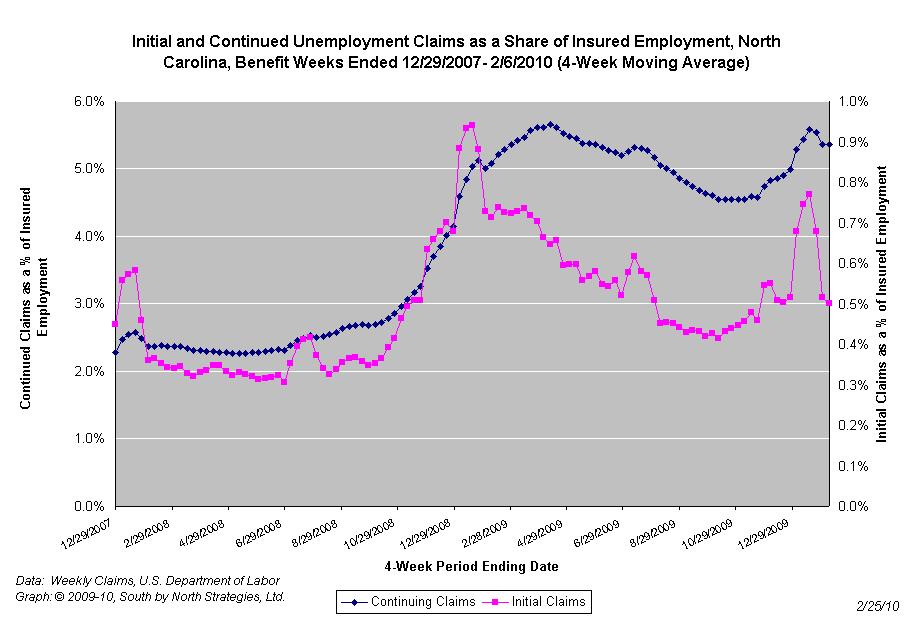
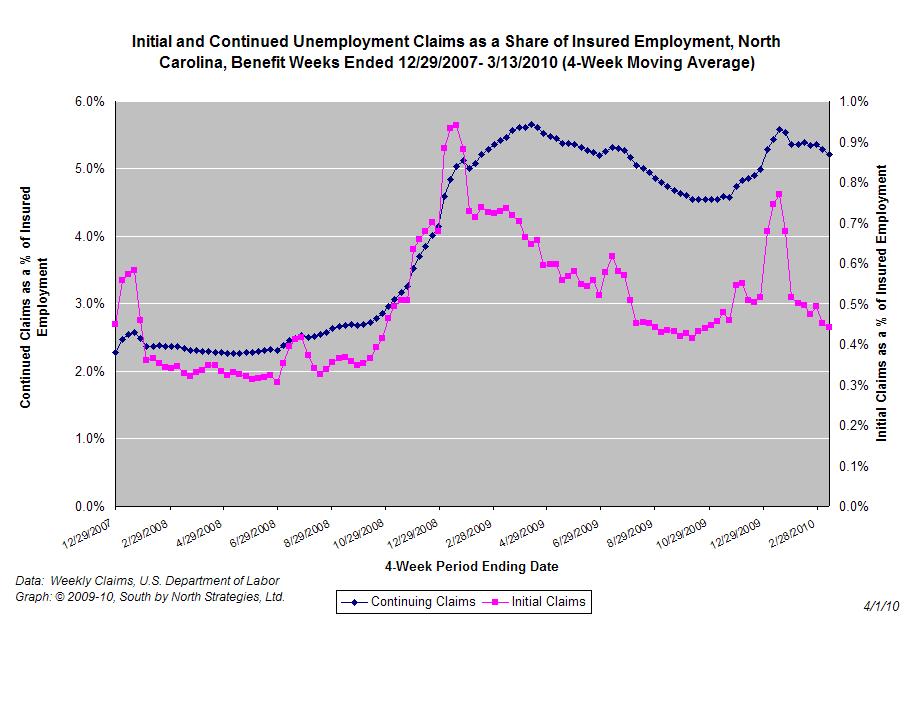
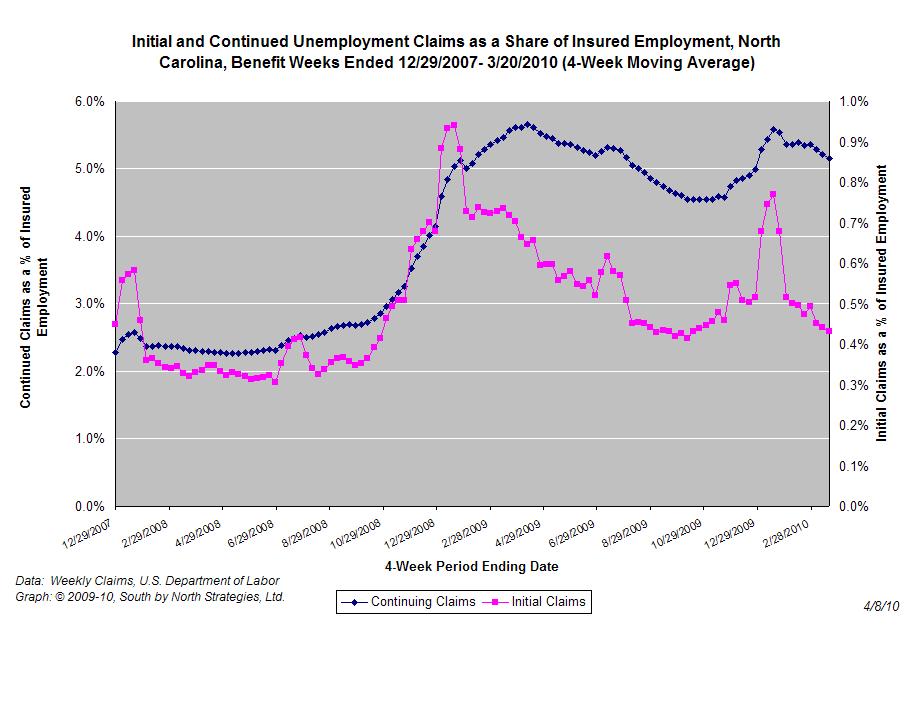
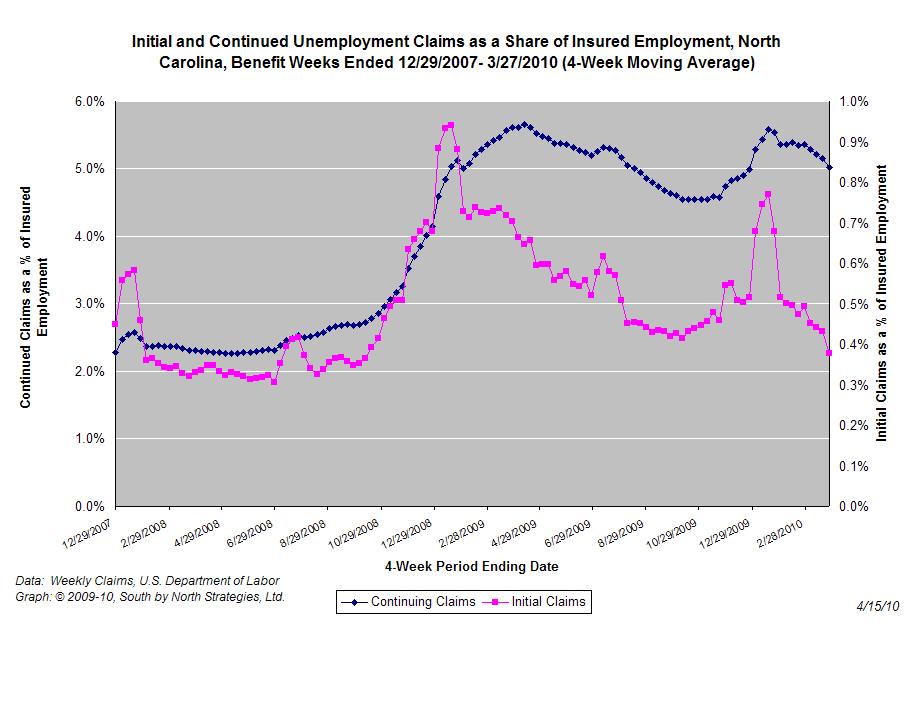
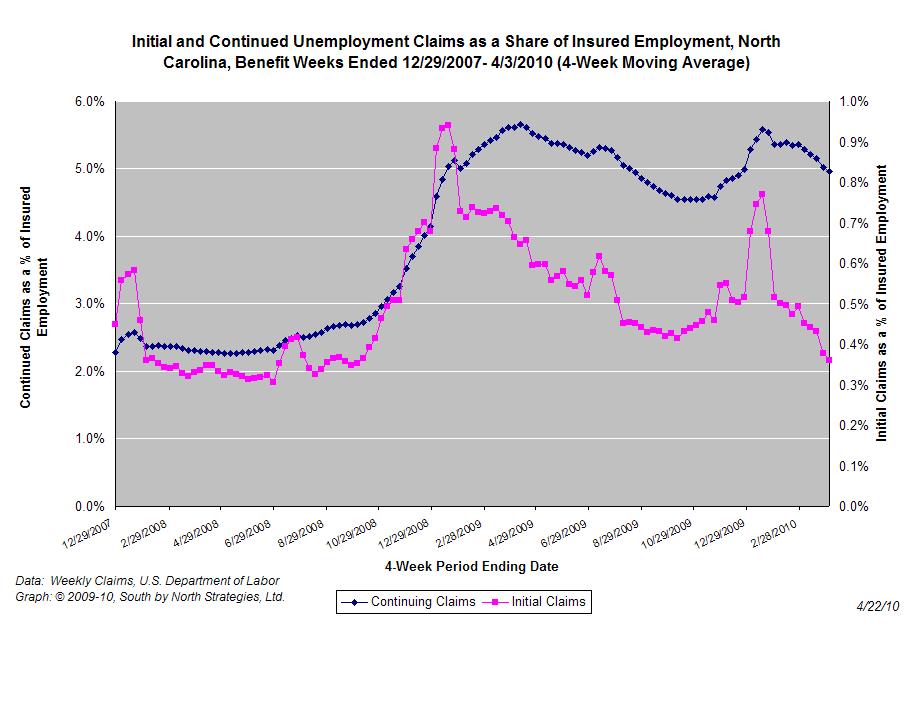
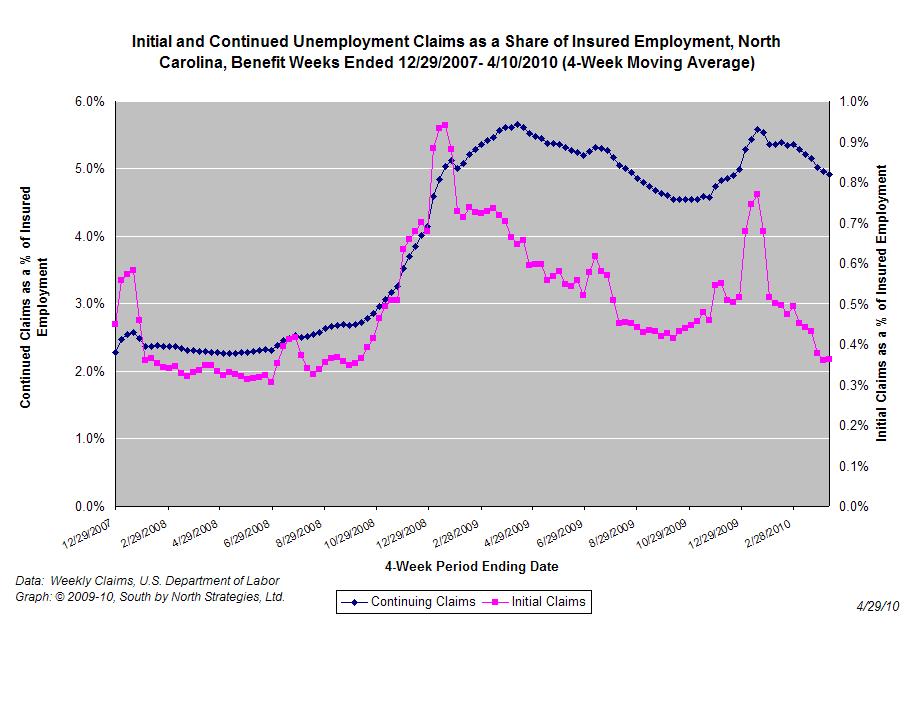
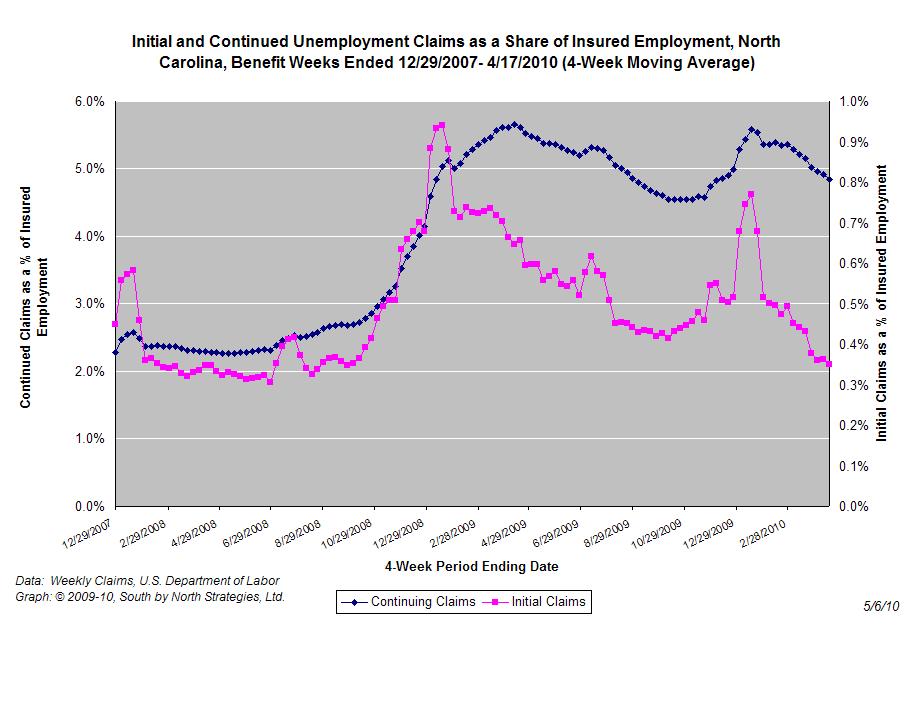
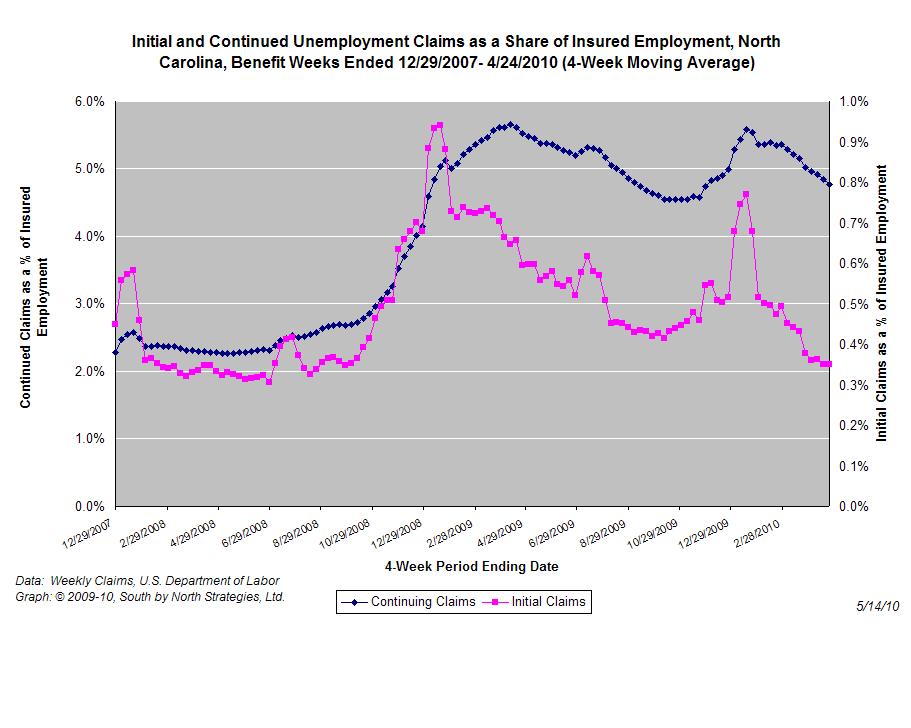
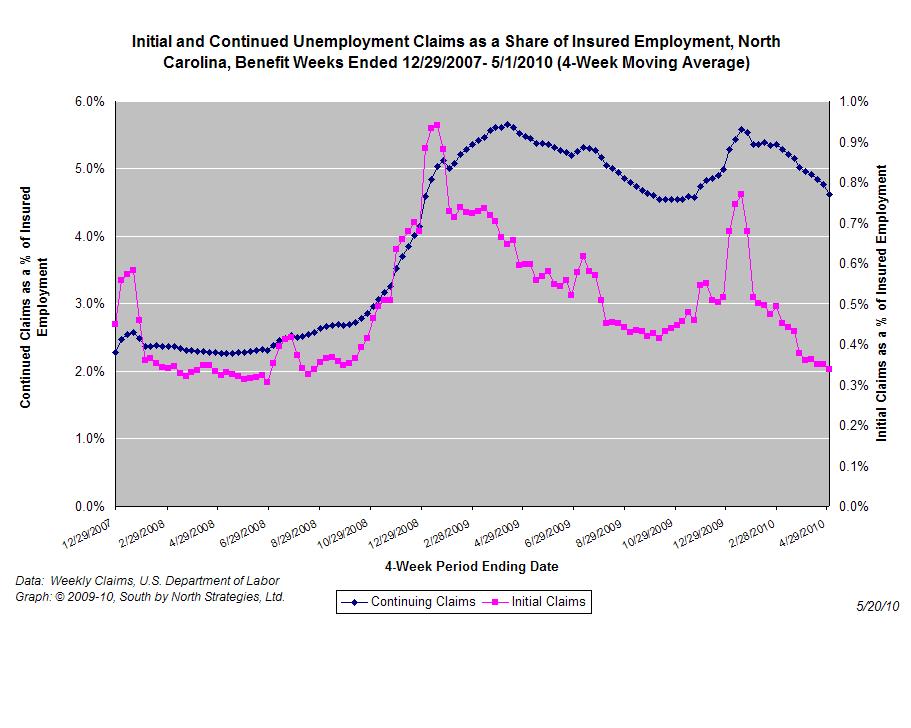
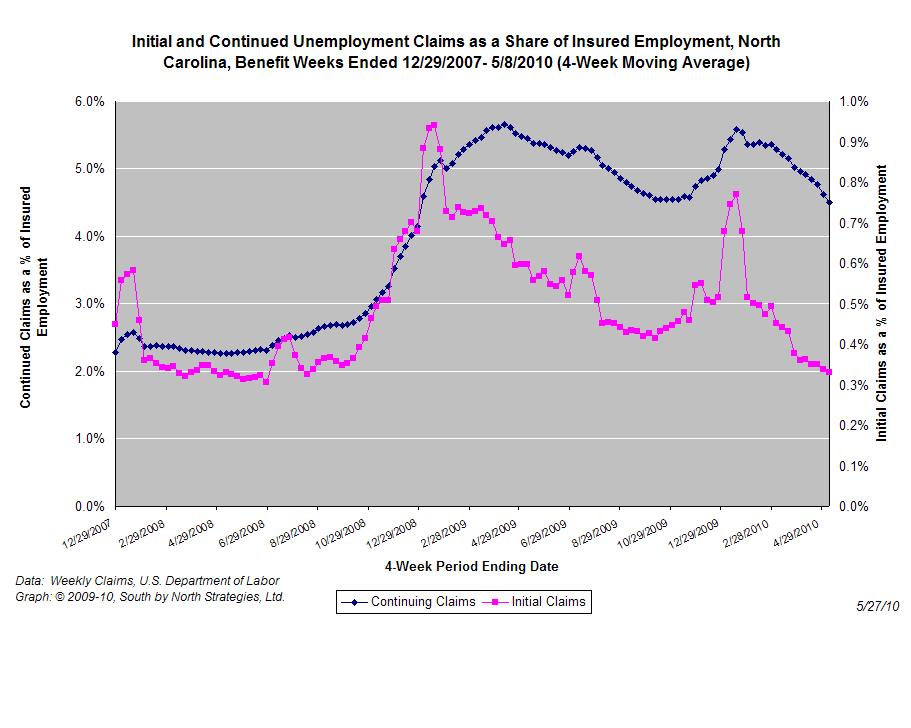
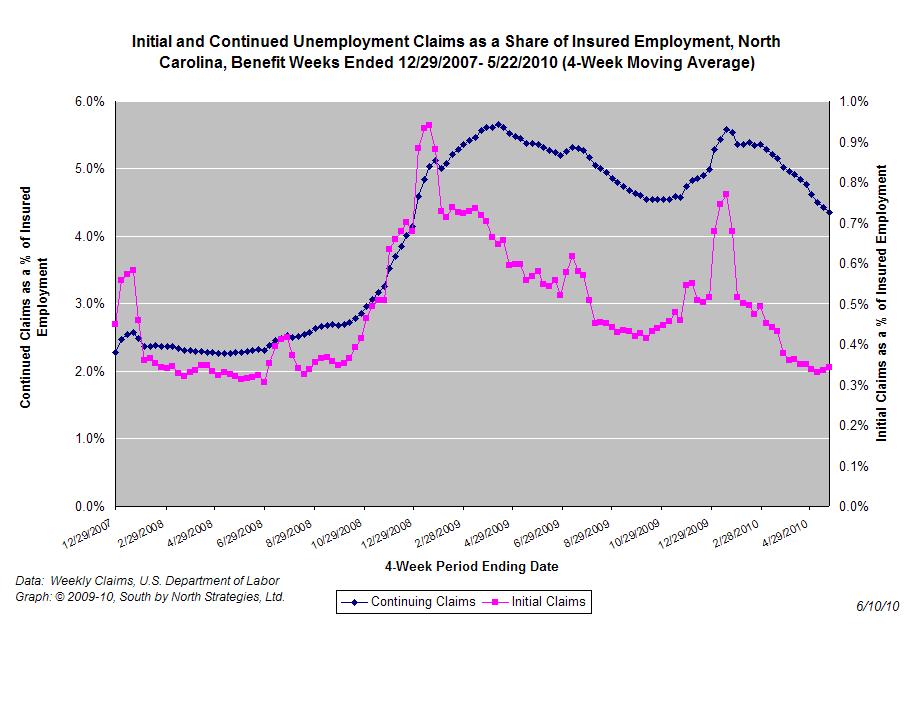
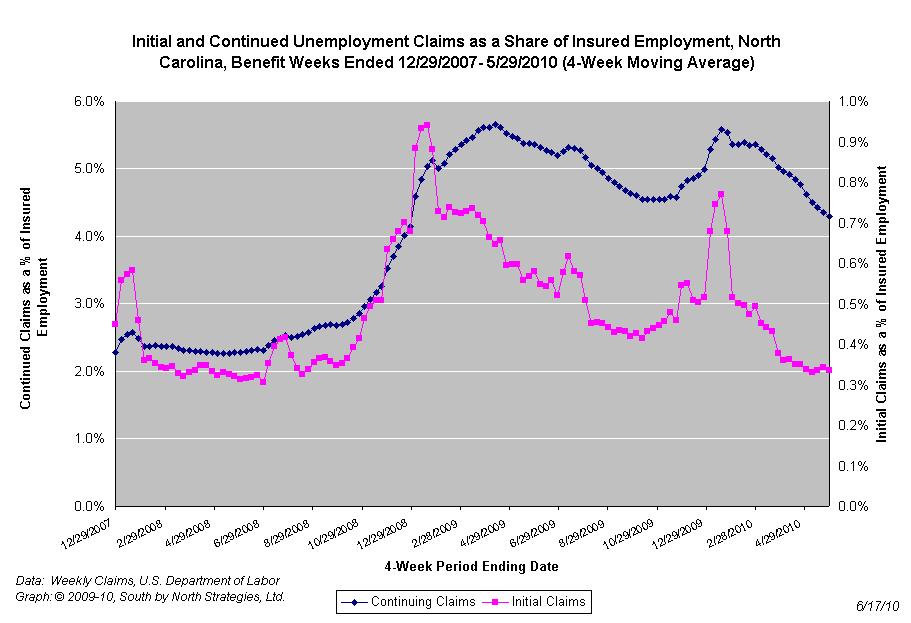
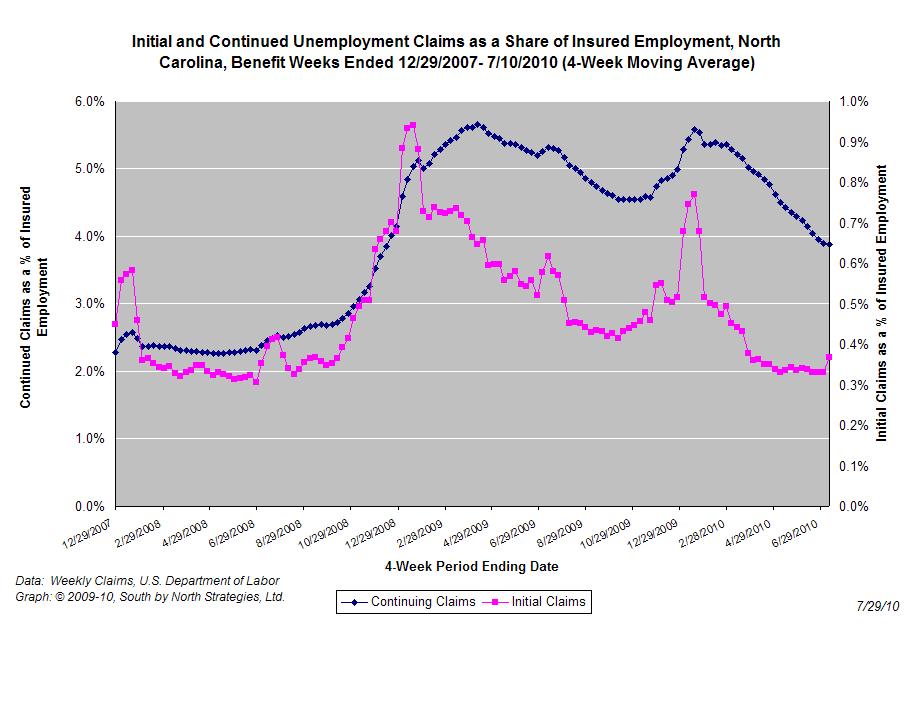
The graph (right) shows the changes in unemployment insurance claims (as a share of covered employment) in North Carolina since the recession’s start in December 2007.
Both new and continuing claims appear to have peaked for this business cycle, and the four-week averages of new and continuing claims have fallen considerably. Yet continuing claims remain at an elevated level, which suggests that unemployed individuals are finding it difficult to find new positions.
Also, little change has occurred within recent months. Since April 2010, the four-week average of initial claims has ranged consistently between 13,987 and 12,586.
Running Out Of Steam?
Martin Feldstein doesn’t like the odds of the American recovery running out of steam.
Recent US data have clearly raised the probability that the economy will run out of steam and decline during the next 12 months. The key reason for increased pessimism is that the government stimulus programs that raised spending since the summer of 2009 are now coming to an end. As they have wound down, spending has declined.
__
The government programs failed to provide the “pump-priming” role that was intended. They provided an early spark, but it looks like the spark did not catch. For example, a tax subsidy for car purchases caused GDP to rise in the third quarter of 2009, with more than two-thirds of the increase attributable to motor-vehicle production. But now that the subsidies have ended, the level of both sales and production has declined. A recent survey of consumers reported the lowest level of intended car buying in more than 40 years.
…
The second quarter benefited from a surge in home purchases, as individuals rushed to take advantage of the tax subsidy for home buyers that expired in April. But what will happen in the third quarter and beyond now that that program has ended?
Around The Dial – July 29
Economic policy reports, blog postings, and media stories of interest:
- Rortybomb considers Elizabeth Warren’s academic record.
- David Leonhardt looks at how state budget cuts offset the stimulus.
- The Wall Street Journal reports on the “Race to the Top” finalists.
- TaxVox likes, wants to improve the CLASS Act.
 Email Sign-Up
 RSS Feed