Around The Dial – May 14
Economic policy reports, blog postings, and media stories of interest:
- The New York Times reports on the long-term unemployed.
- CEPR analyzes the wages and benefits of state and local government workers.
- Economists debate the significance of the national debt.
- Triangle Business Journal notes the strengths of the regional economy.
Manufacturing Activity in The South Atlantic: April
From the Federal Reserve Bank of Richmond’s latest survey of manufacturing activity in the South Atlantic (District of Columbia, Maryland, North Carolina, South Carolina, Virginia and West Virginia):
Manufacturing activity in the central Atlantic region expanded for the third straight month, according to the Richmond Fed’s latest survey. All broad indicators — shipments, new orders and employment — landed in positive territory, with manufacturers noting their first increase in worker numbers since October 2009. Other indicators were also positive. Backlogs increased for the first time since August 2009 and capacity utilization hit an all-time high reading since the inception of the measure. Vendor lead-time grew at a considerably quicker rate — the highest reading since August 2004, indicating slower delivery times, and inventories increased at a somewhat quicker pace.
…
Looking ahead, manufacturers were more optimistic about their future prospects in April. Firms anticipated more rapid growth across the board, particularly for shipments, new orders, capacity utilization, and capital expenditures.
Understanding Financial Reform
The current issue of The American Prospect contains a special report discussing the issues that should be addressed as part of any comprehensive financial reform. The package features commentaries by such thought leaders as Elizabeth Warren, Simon Johnson, and Robert Kuttner.
In the introductory essay, Robert Johnson, the executive director of the Institute for New Economic Thinking, identifies nine fundamental issues that must be addressed in any meaningful reform:
- Derivatives reform
- Off-balance-sheet reform
- Rating-agency reform
- Restructuring of housing finance
- Separation of risky activities from the financial safety net
- Separation of activities that have inherent conflicts of interest within a firm
- Legal resolution powers for large failed institutions, with consistent cross-border standards
- Significant increase in resources and salaries for supervision, examination, and regulation
- Consumer financial protection.
Around The Dial – May 13
Economic policy reports, blog postings, and media stories of interest:
- Calculated Risk summarizes the latest trade data.
- Brad DeLong asks where the outrage about unemployment is; Free Exchange answers.
- James Galbraith says the danger posed by the deficit “is zero.”
- James Surowiecki wonders if finance is “too clever by half.”
NC Unemployment Claims: Week of 4/24
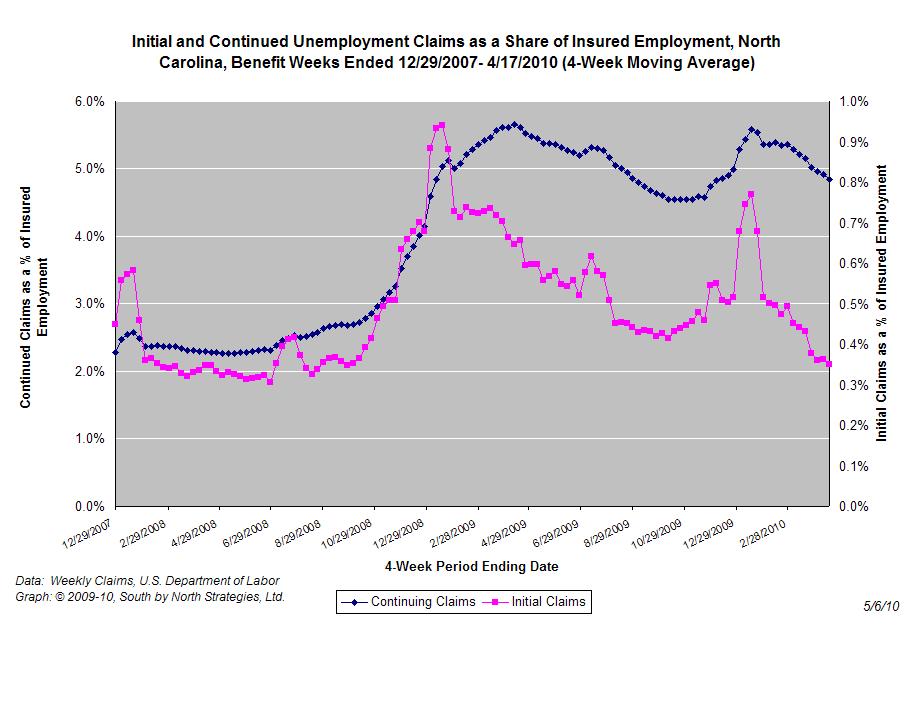
For the benefit week ending on April 24th, 12,140 North Carolinians filed initial claims for state unemployment insurance benefits, and 173,940 individuals applied for state-funded continuing benefits. Compared to the prior week, there were more initial and fewer continuing claims. These figures come from data released today by the U.S. Department of Labor.
Averaging new and continuing claims over a four-week period — a process that helps adjust for seasonal fluctuations and better illustrates trends — shows that an average of 13,417 initial claims were filed over the last four weeks, along with an average of 182,246 claims. Compared to the previous four-week period, both initial and continuing claims were lower.
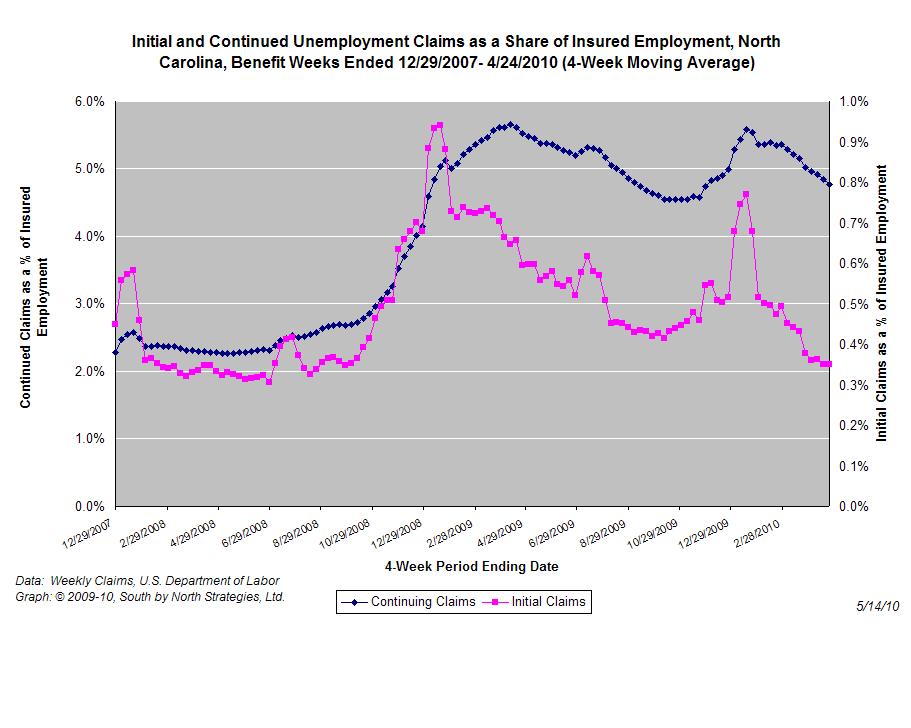 One year ago, the four-week average for initial claims stood at 23,959 and the four-week average of continuing claims equaled 222,675.
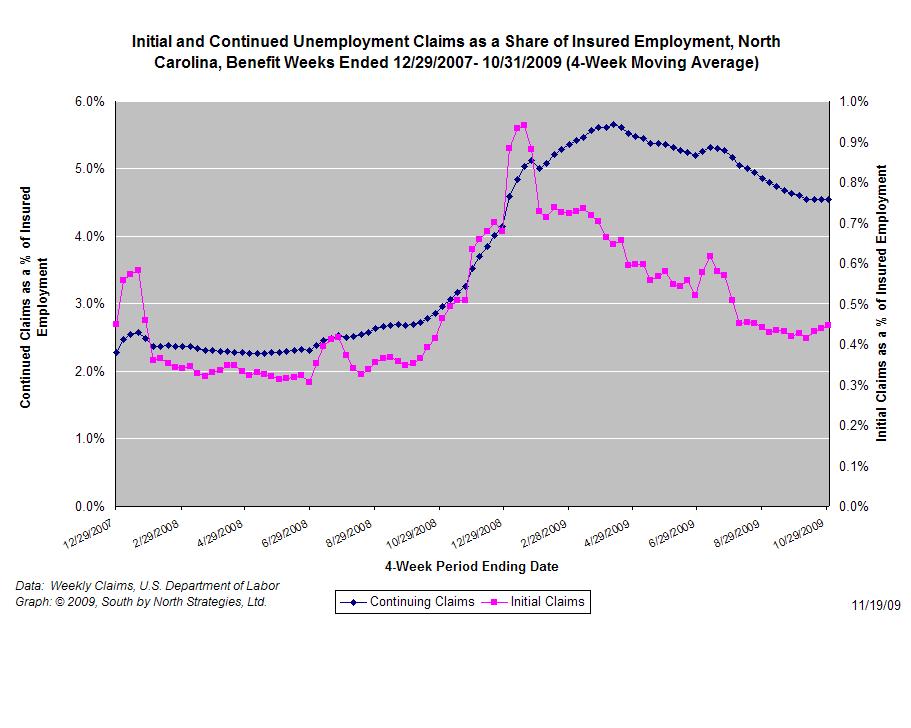
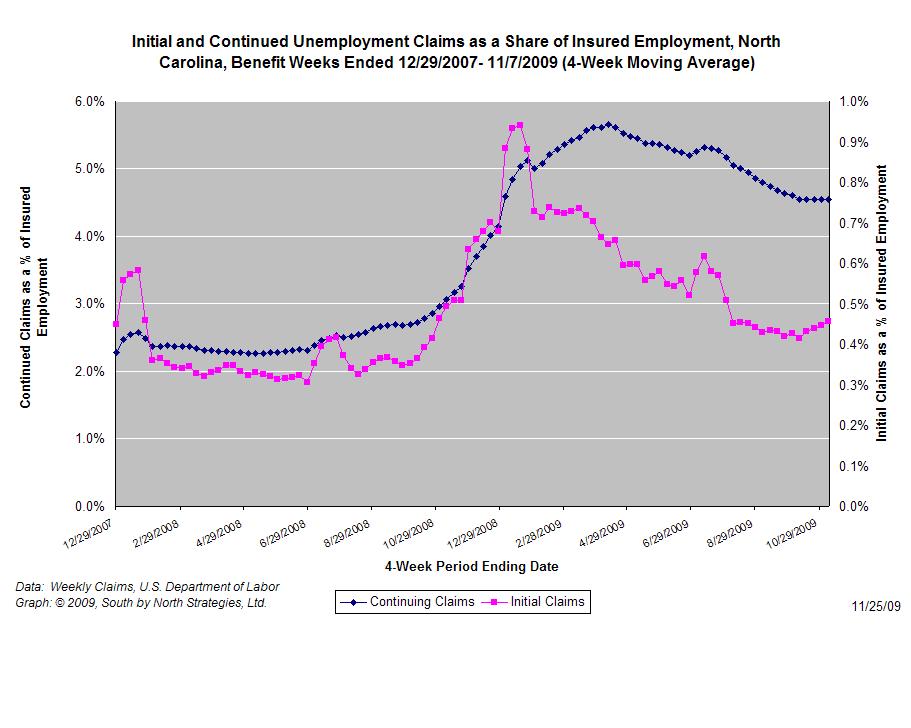
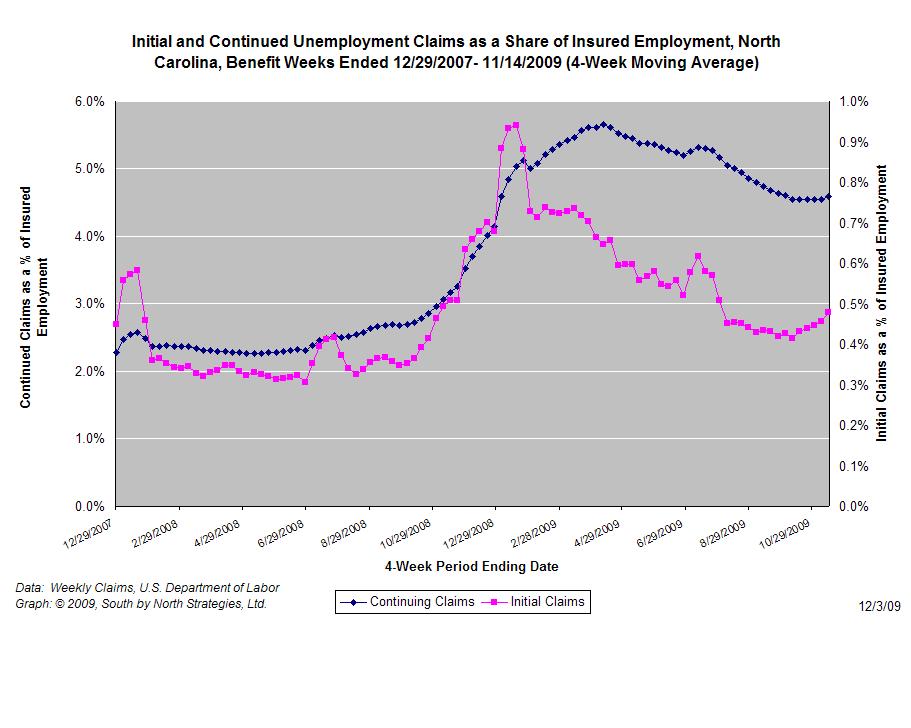
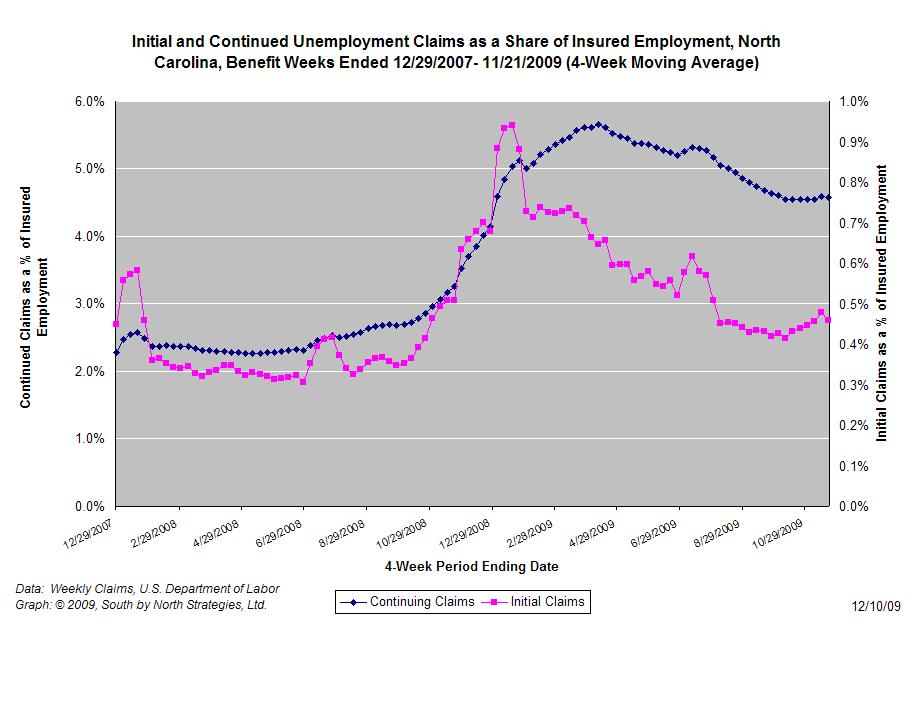
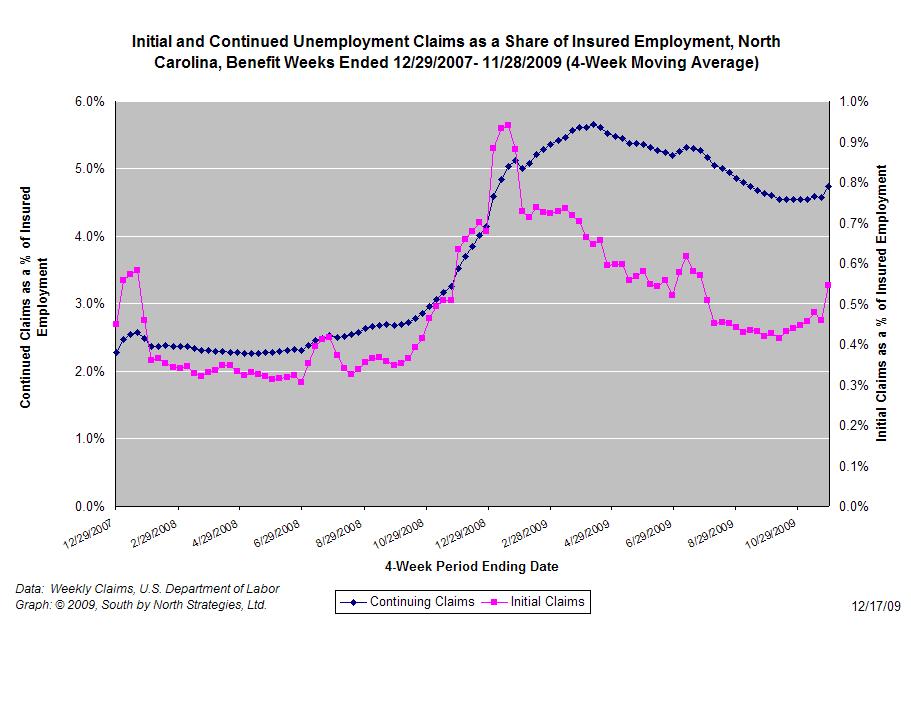
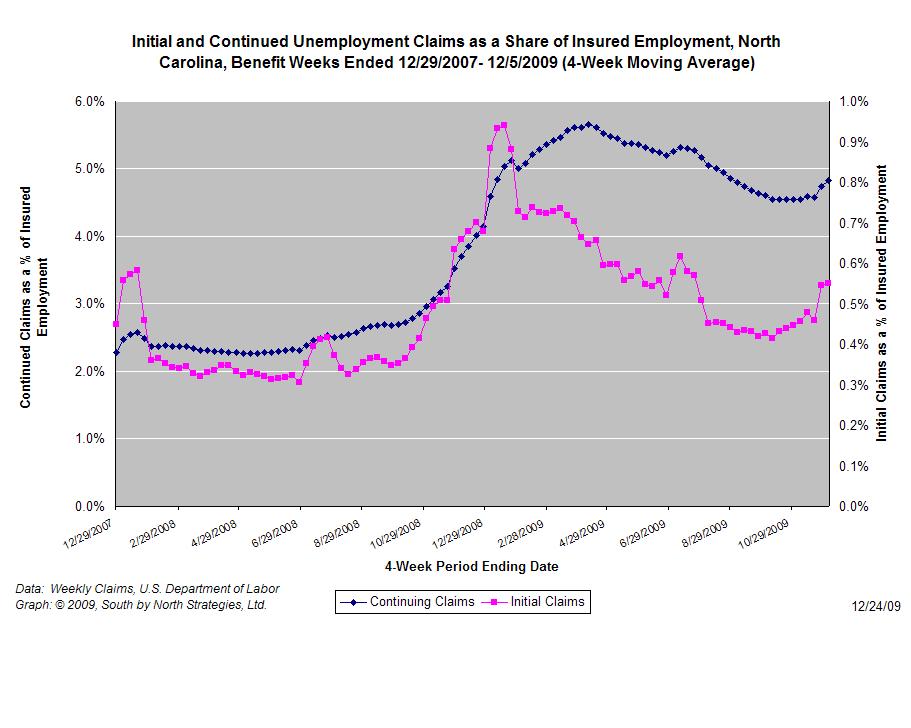
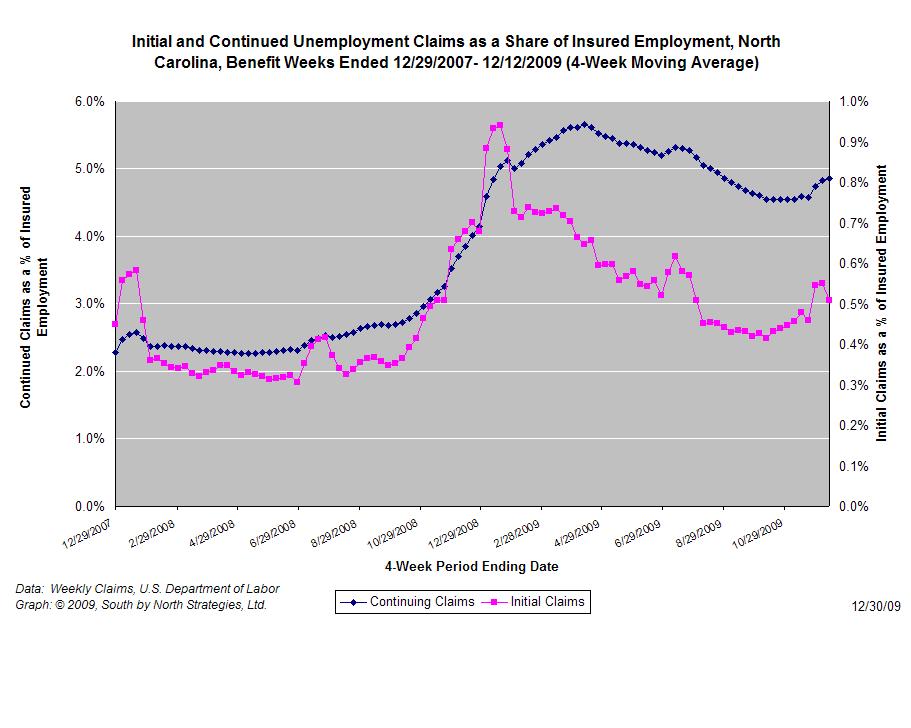
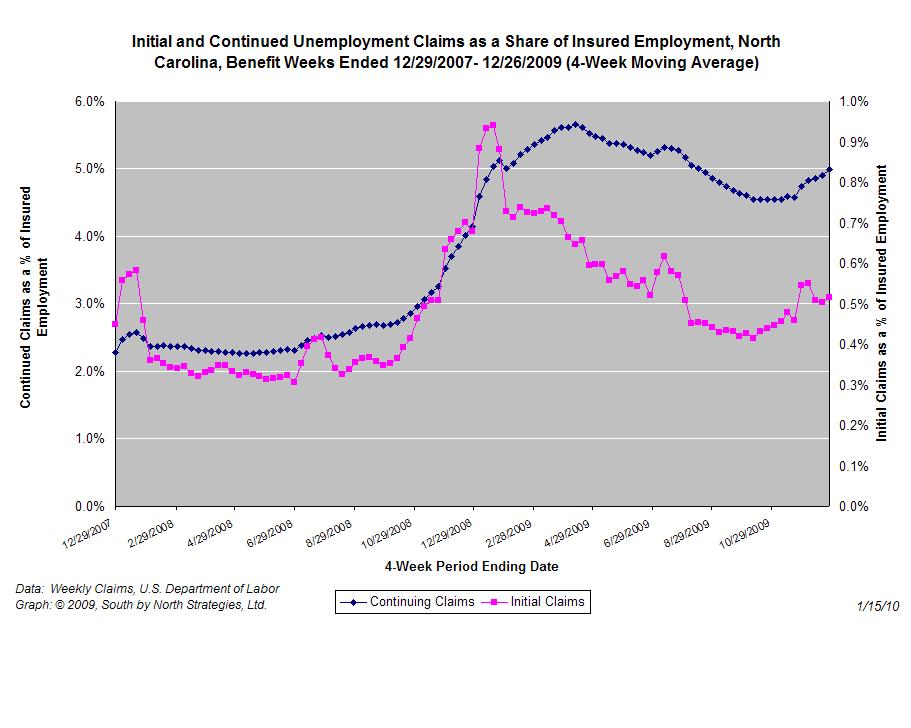
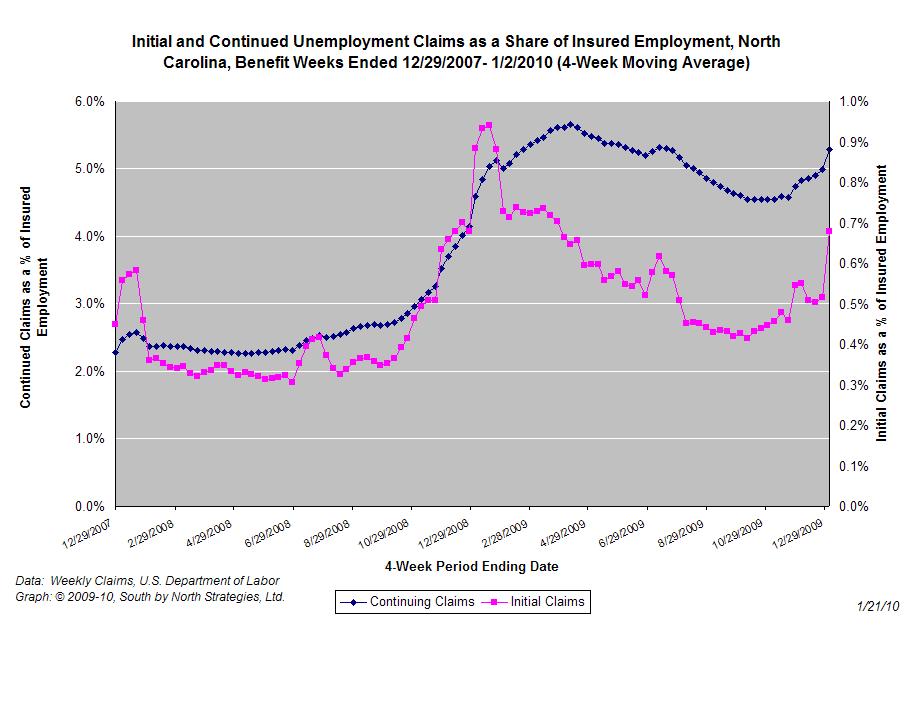
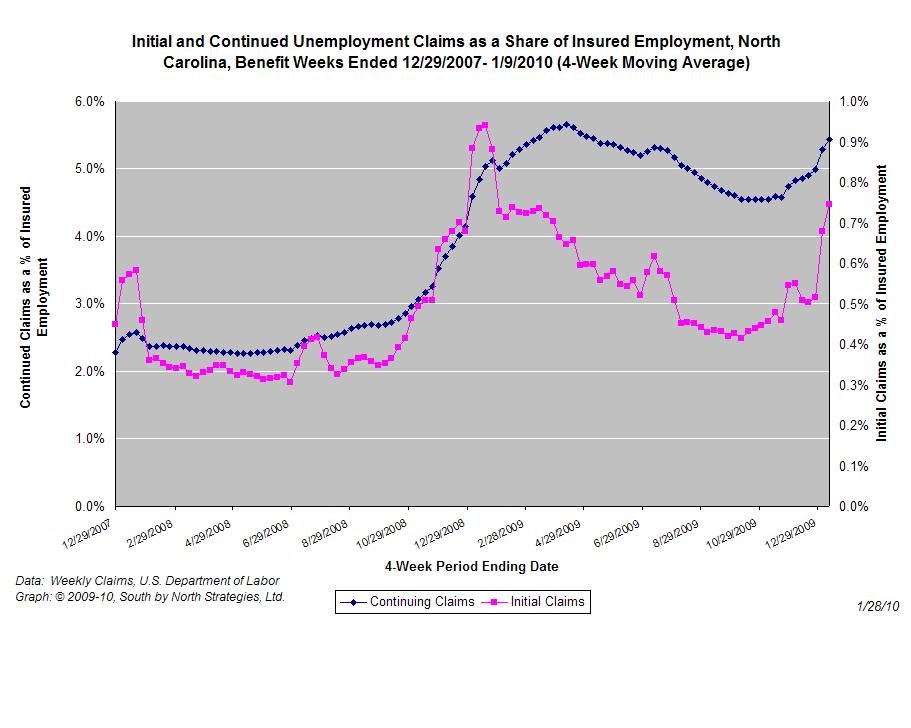
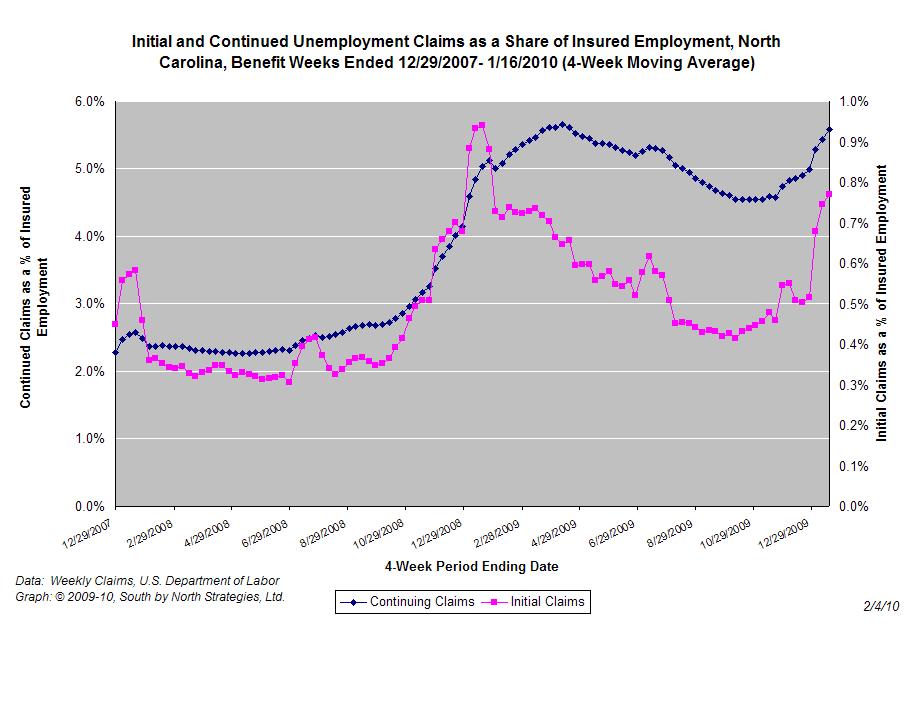
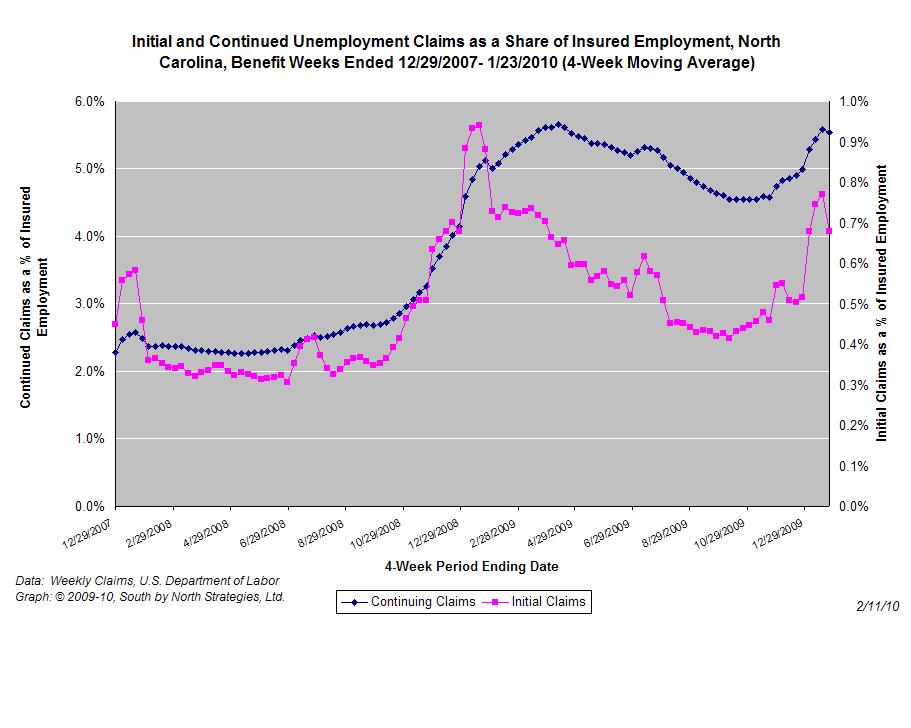
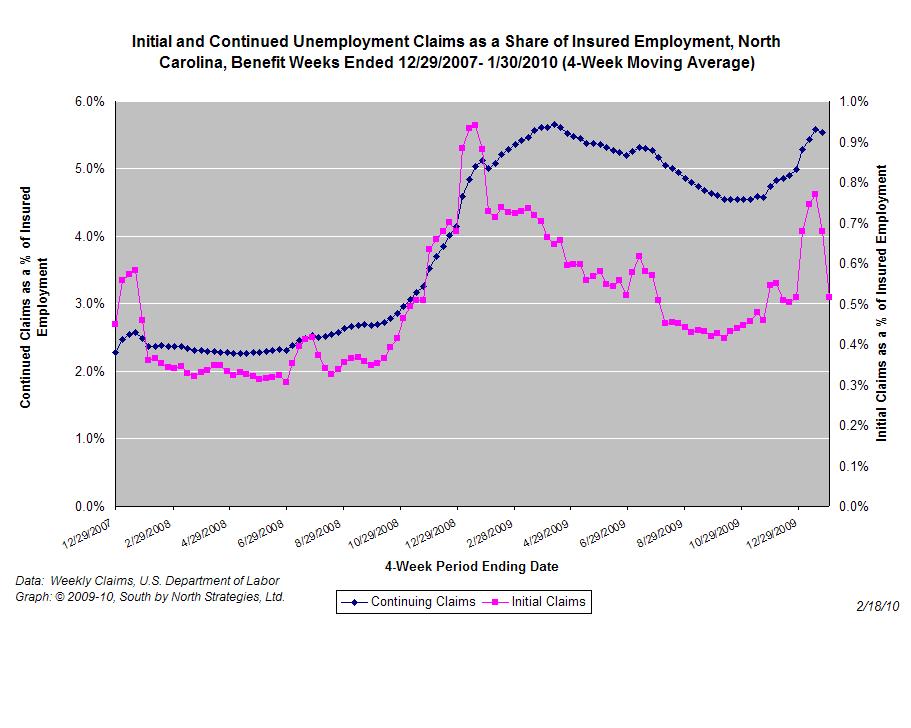
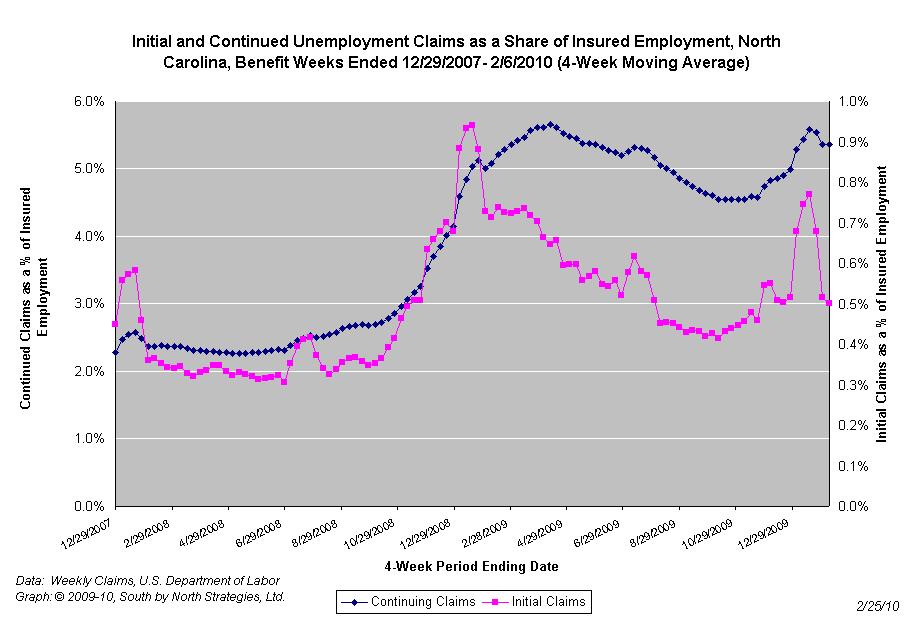
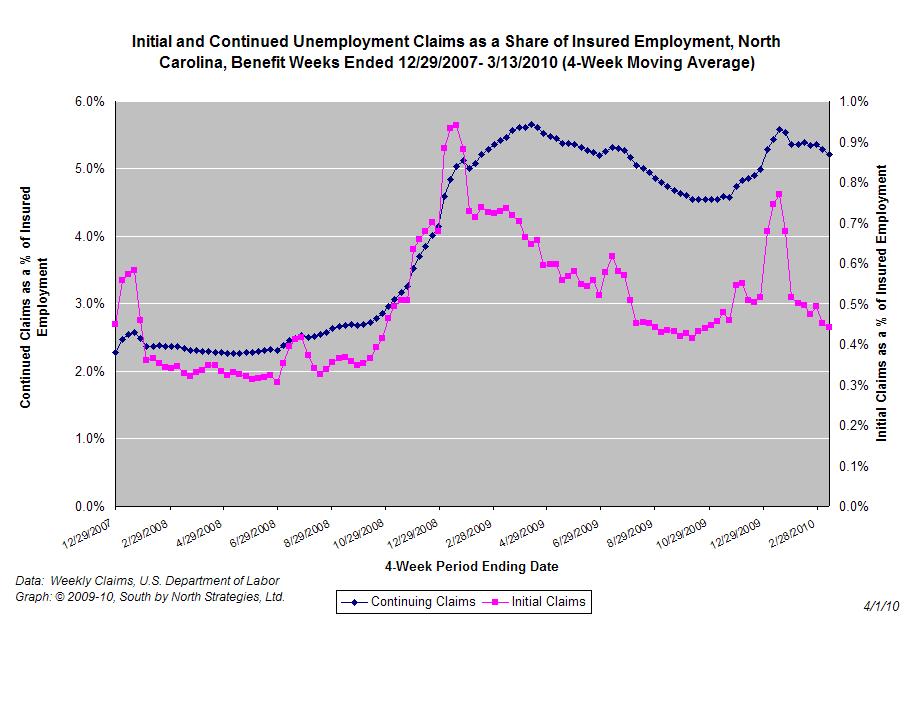
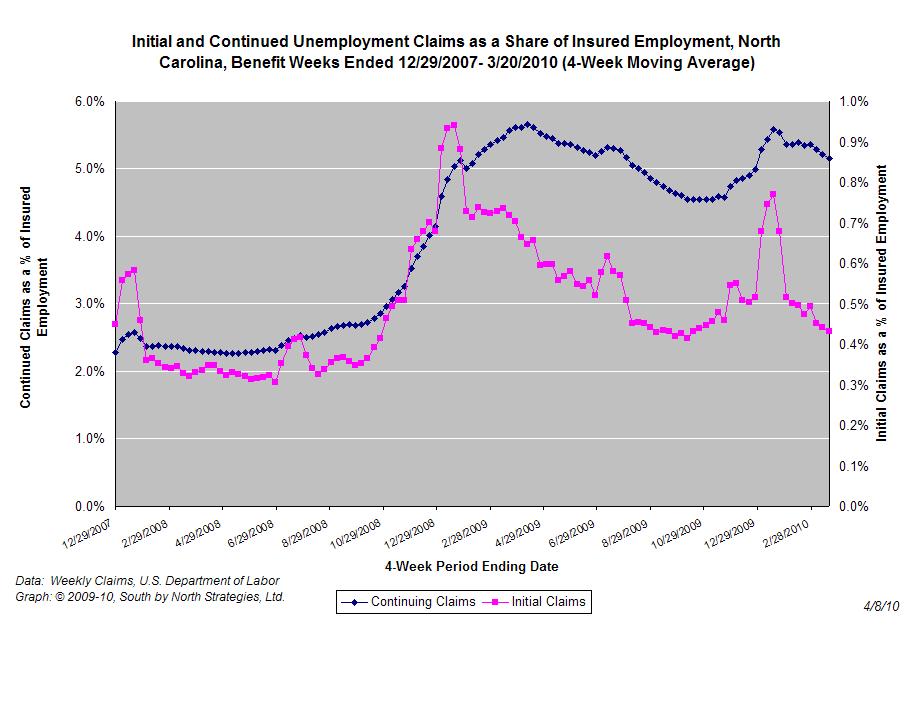
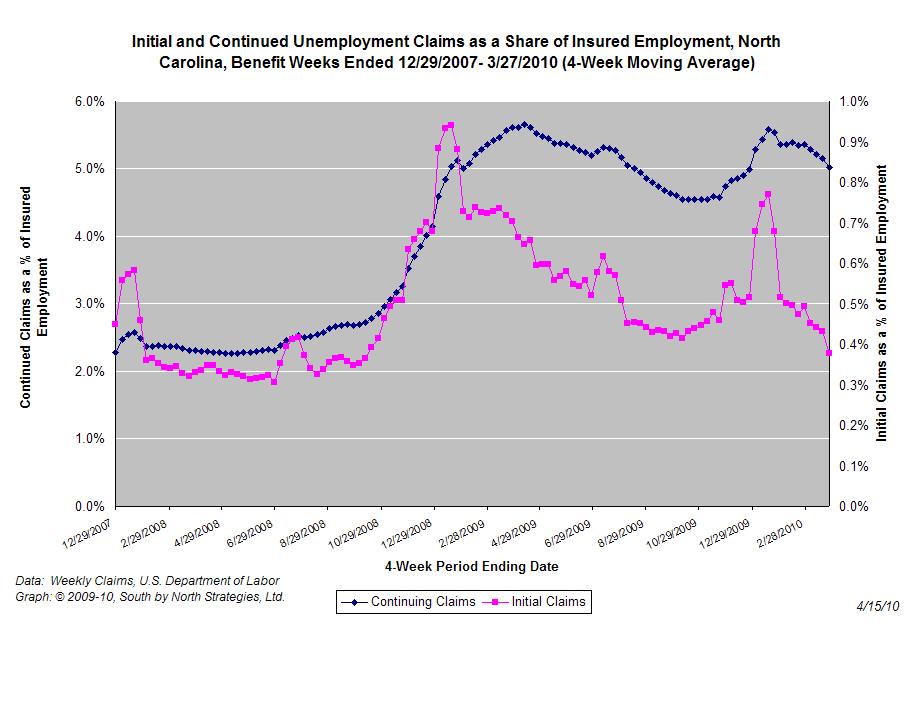
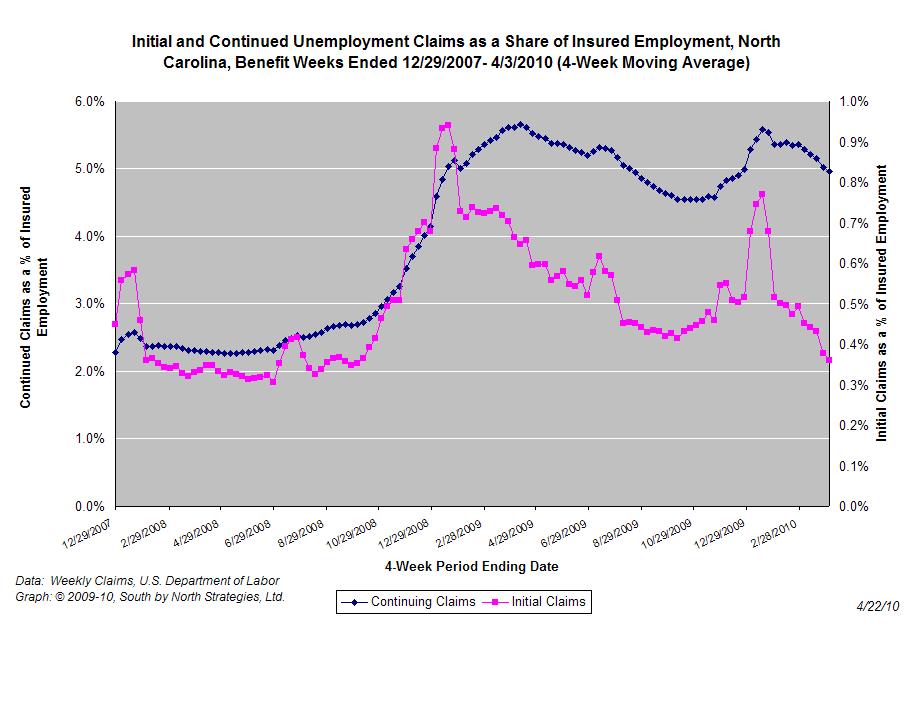
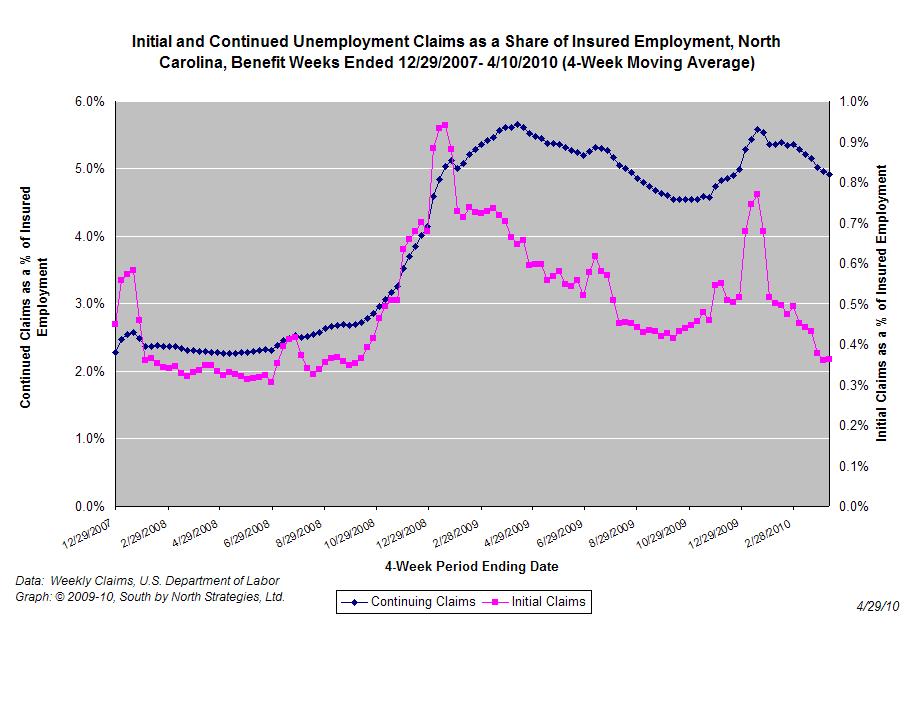
The graph (right) shows the changes in unemployment insurance claims (as a share of covered employment) in North Carolina since the recession’s start in December 2007.
Both new and continuing claims appear to have peaked for this business cycle, and the four-week average of new claims has fallen to a level last seen in August 2008. Yet continuing claims remain at an elevated level, which suggests that unemployed individuals are finding it extremely difficult to find new positions.
 Email Sign-Up
 RSS Feed