State Coincident Indicators: March
Economic conditions remained tepid across much of the nation in March, according to the newest State Coincident Indexes Report prepared by the Federal Reserve Bank of Philadelphia.
In March coincident indexes moved in a positive direction in 35 states and in a negative direction in ten states. No changes occurred in five states.
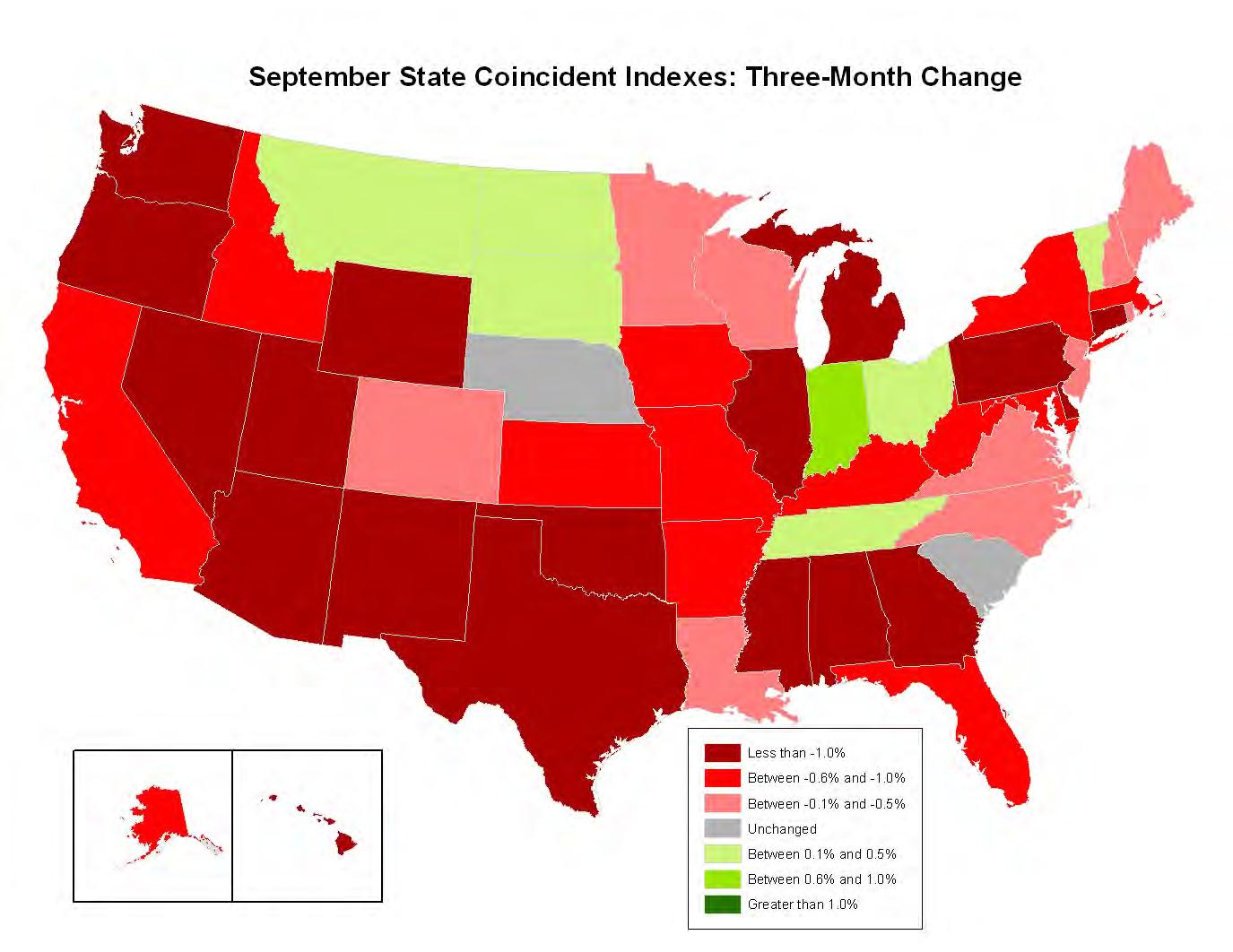
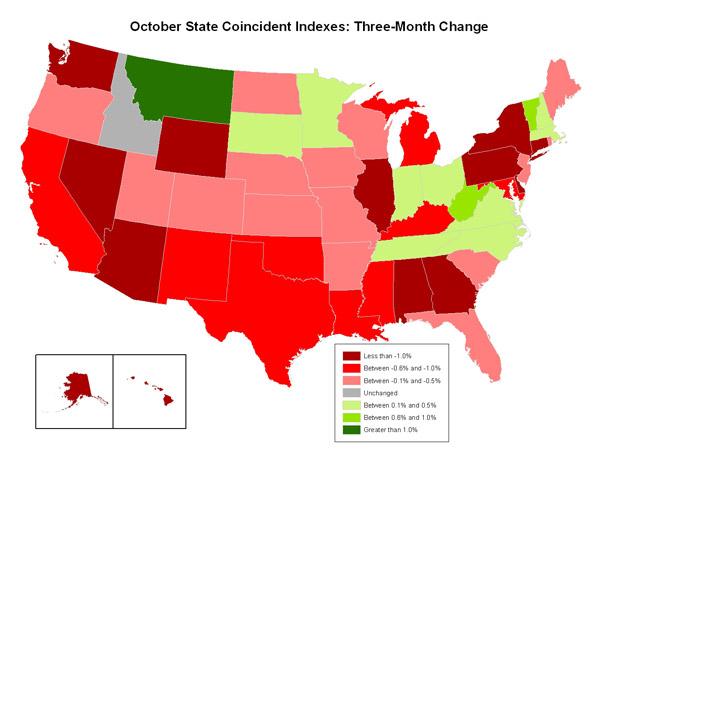
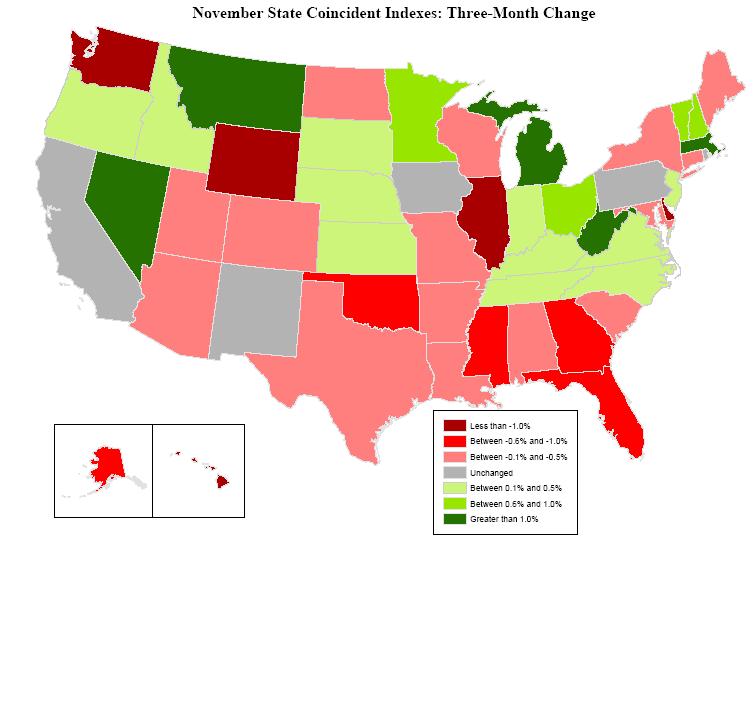
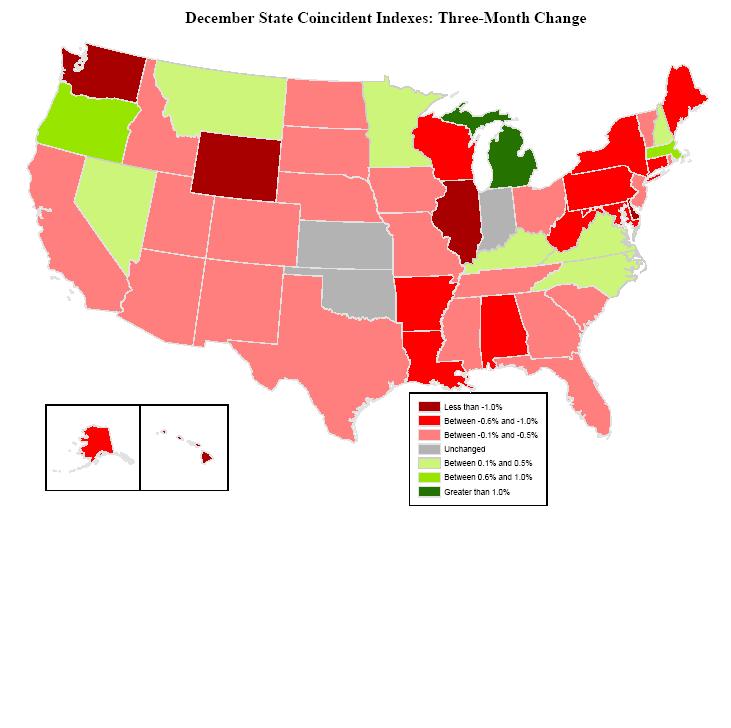
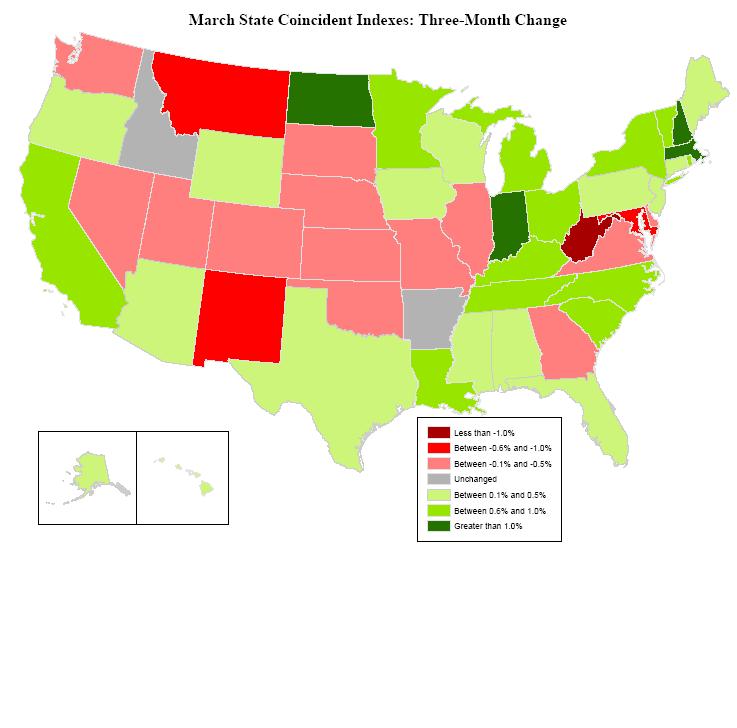 The map to the right, which is taken from the Reserve Bank’s survey, shows the three-month changes in coincident indicators by state. Positive numbers denote improvements in economic conditions, and negative numbers refer to declines.
Over the last three months, coincident indexes increased in 31 states, decreased in 17 states and held steady in two states.
During the same three-month period, North Carolina’s coincident index moved in a positive direction, suggesting some improvements in local economic conditions.
Around the Dial – April 22
Economic policy reports, blog postings, and media stories of interest:
- Economix explains Germany’s “Kurzarbeit” policy.
- Slate asks why the U.S. is sending “green jobs” to China.
- The Baseline Scenario writes a speech for President Obama.
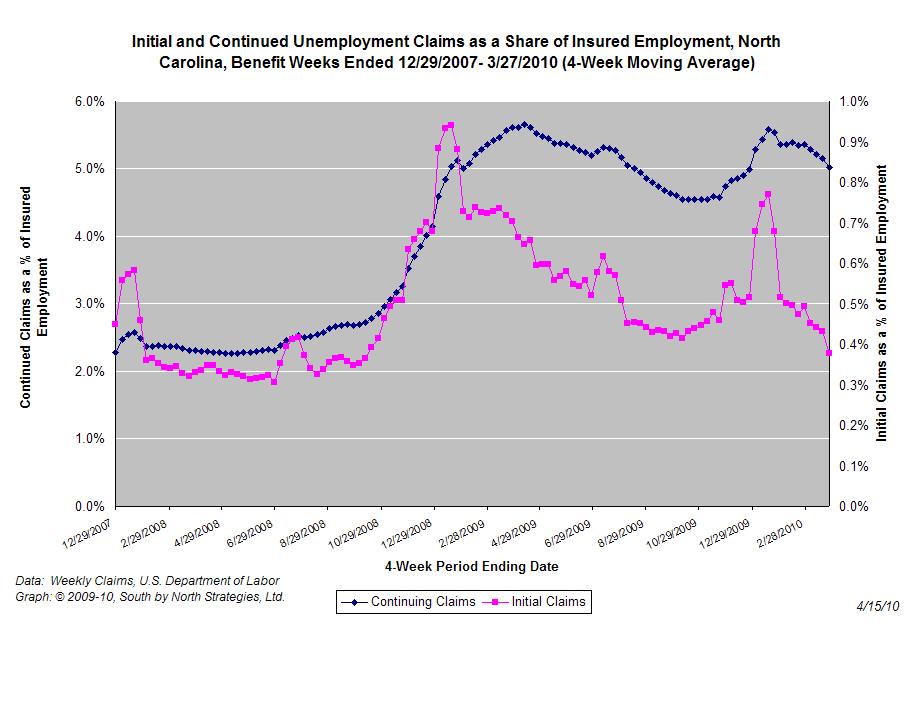
NC Unemployment Claims: Week of 4/3
For the benefit week ending on April 3rd, 14,745 North Carolinians filed initial claims for state unemployment insurance benefits, and 191,407 individuals applied for state-funded continuing benefits. Compared to the prior week, there were more initial and continuing claims. These figures come from data released today by the U.S. Department of Labor.
Averaging new and continuing claims over a four-week period — a process that helps adjust for seasonal fluctuations and better illustrates trends — shows that an average of 13,904 initial claims were filed over the last four weeks, along with an average of 191,875 claims. Compared to the previous four-week period, both initial and continuing claims were lower.
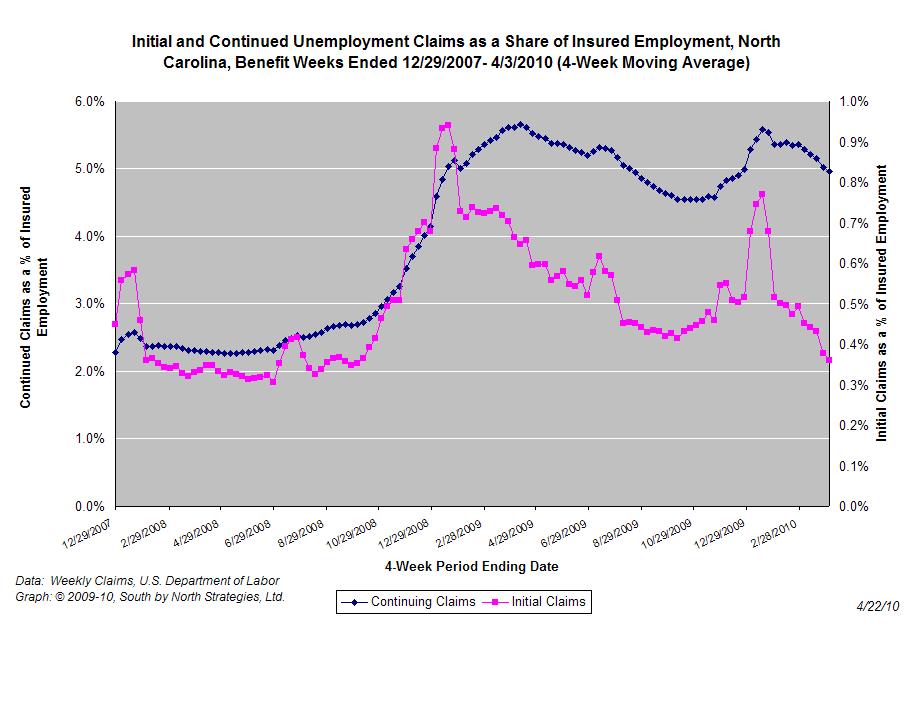 One year ago, the four-week average for initial claims stood at 26,730 and the four-week average of continuing claims equaled 226,592.
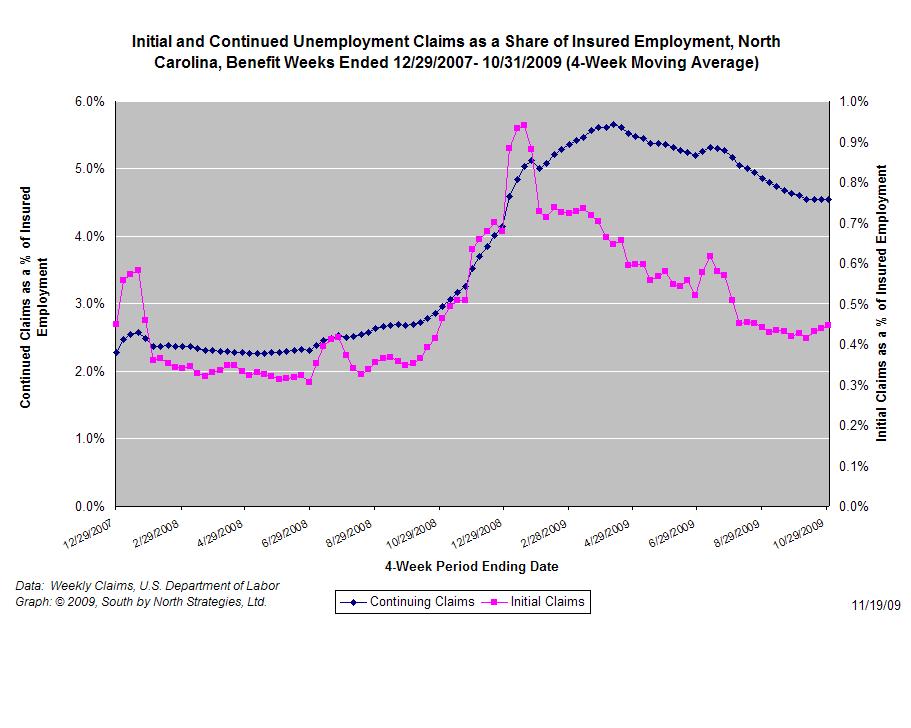
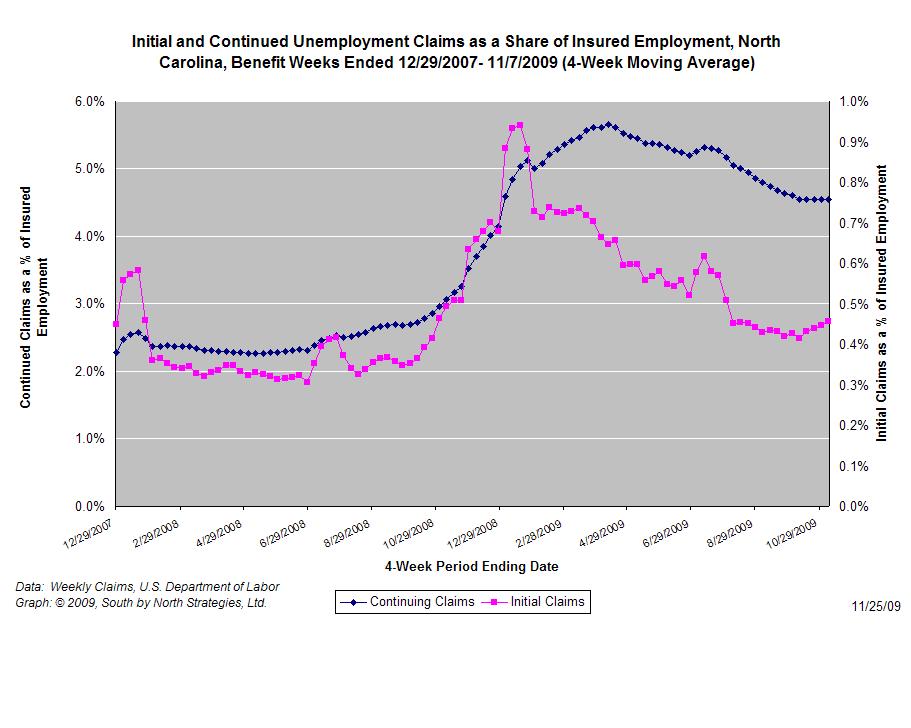
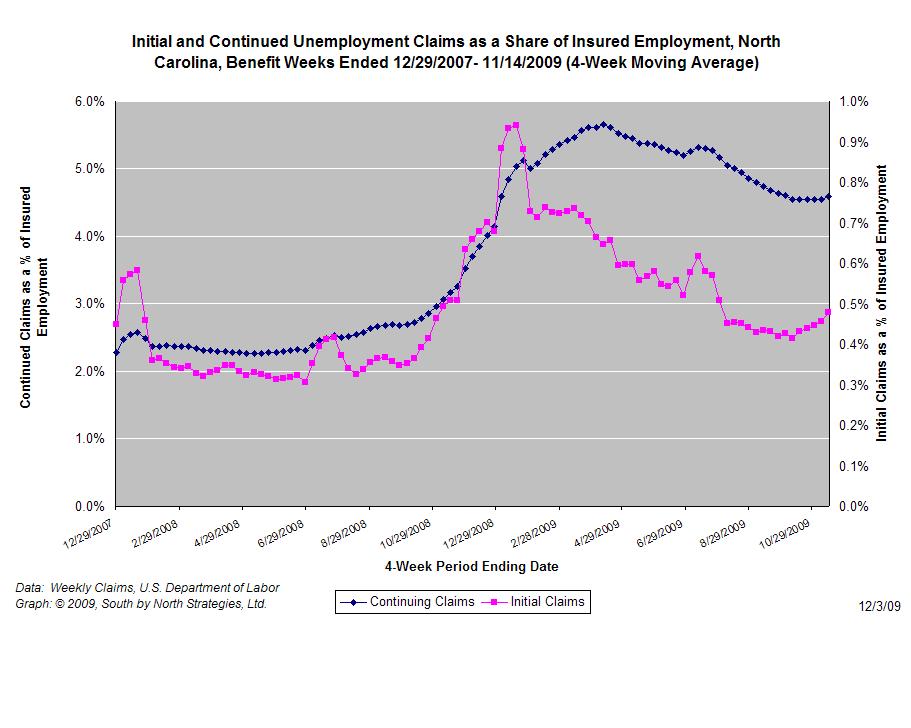
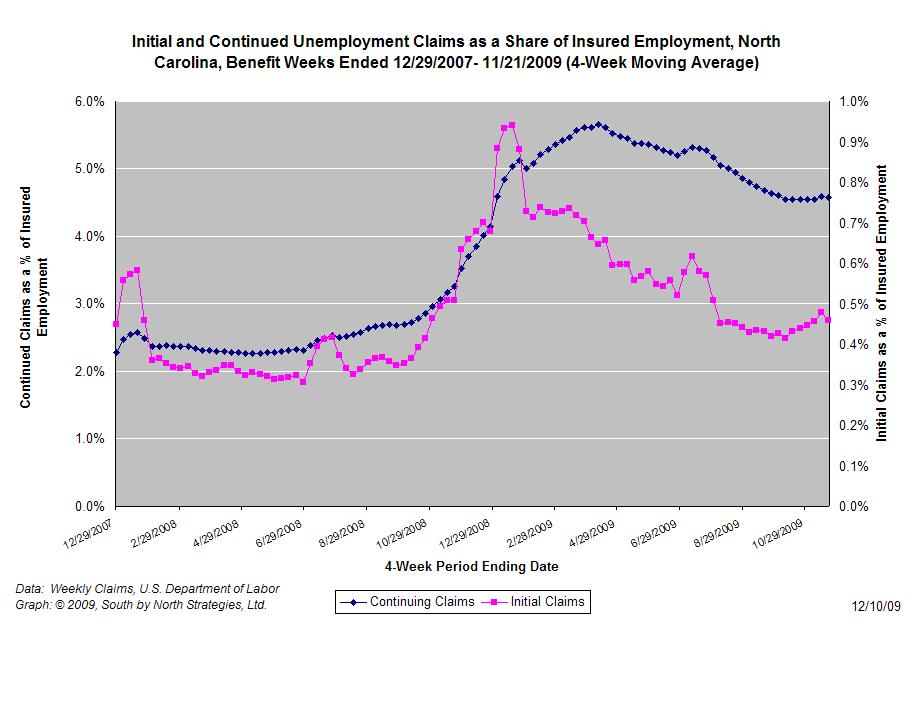
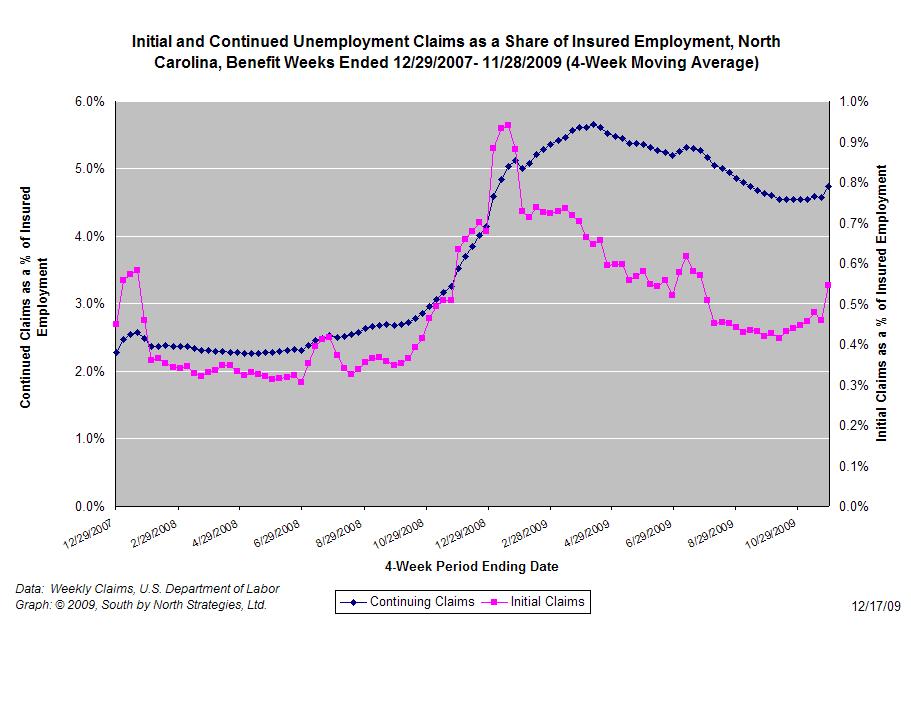
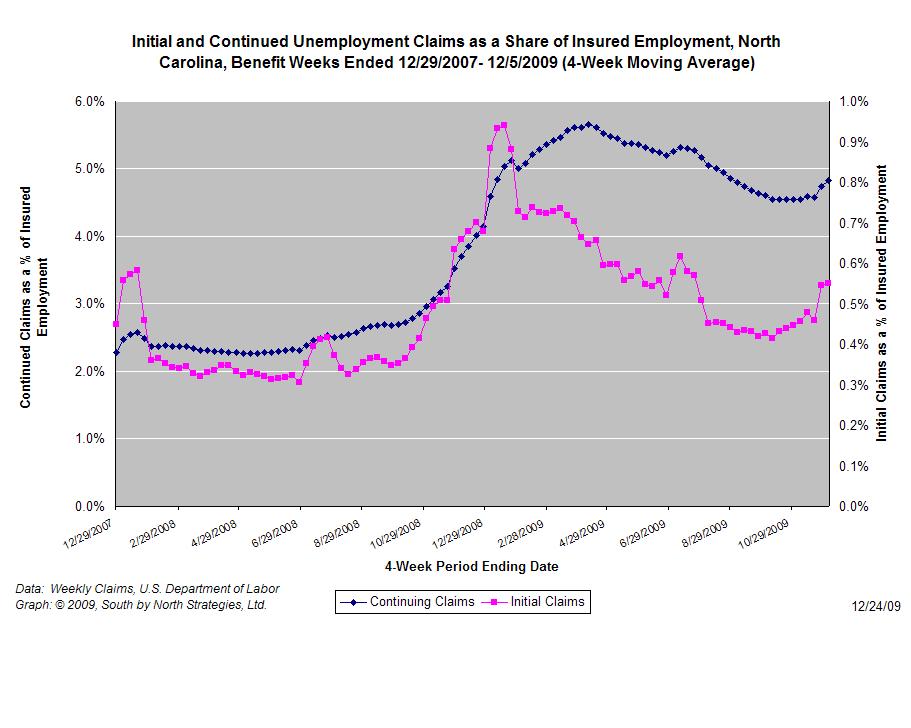
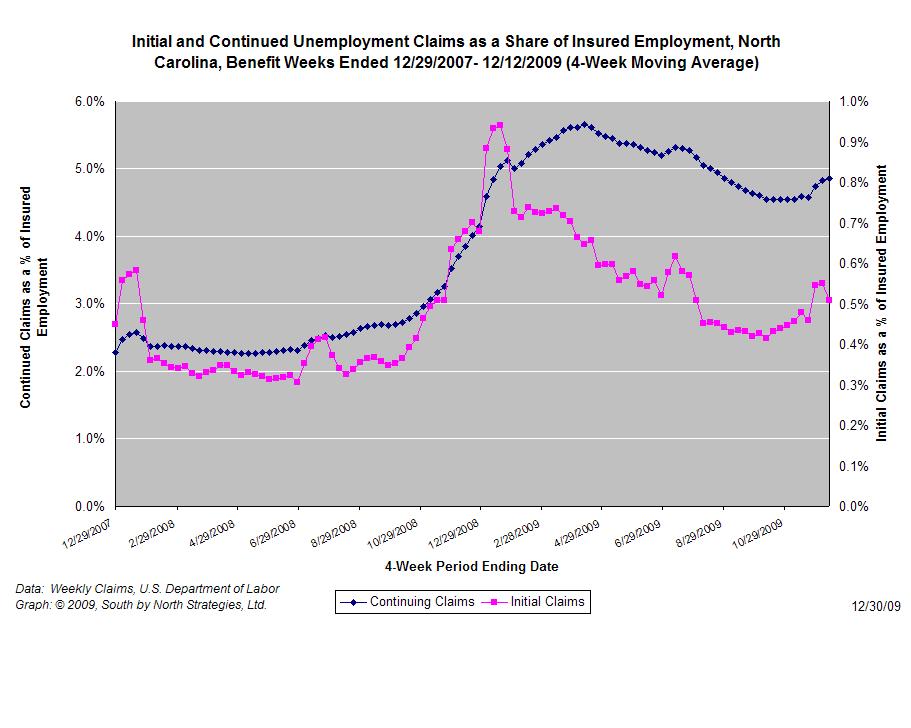
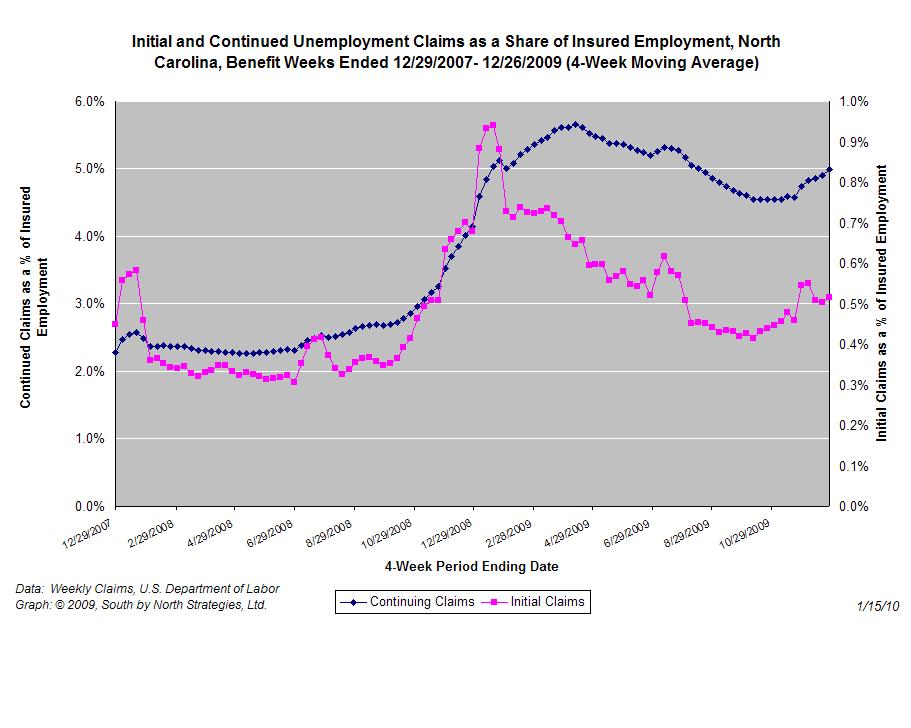
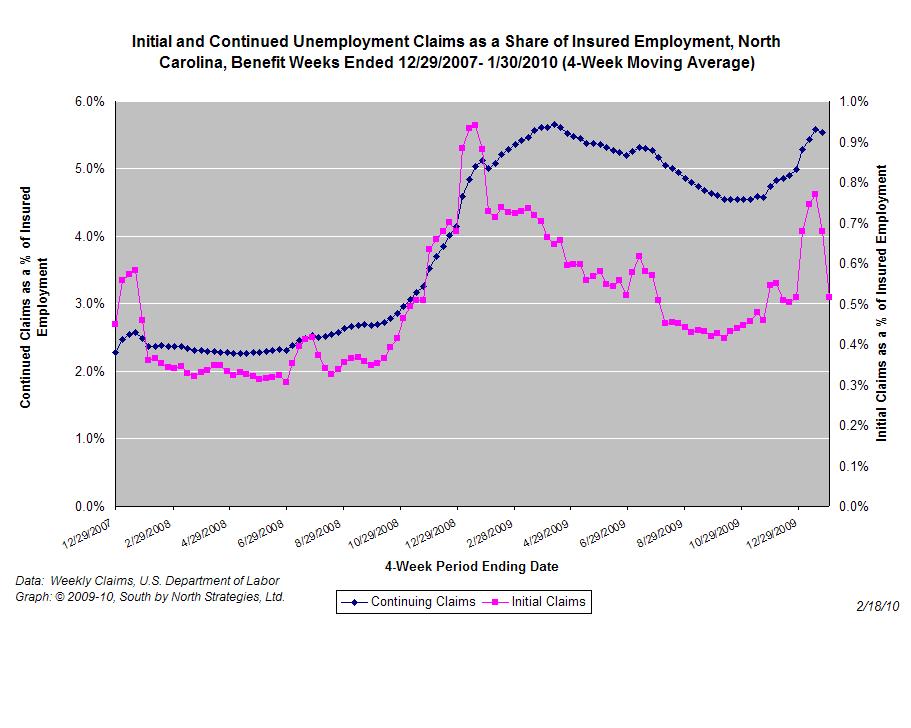
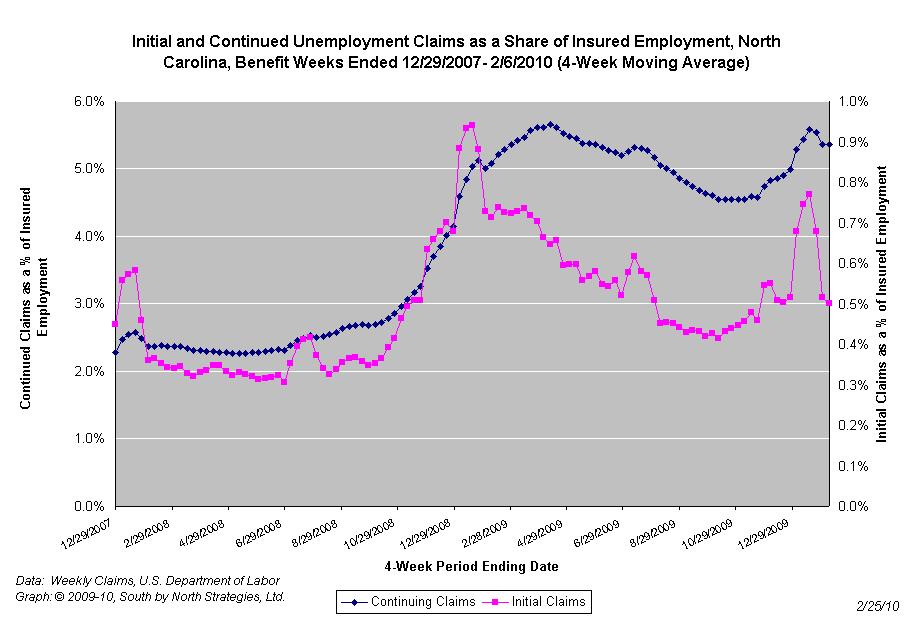
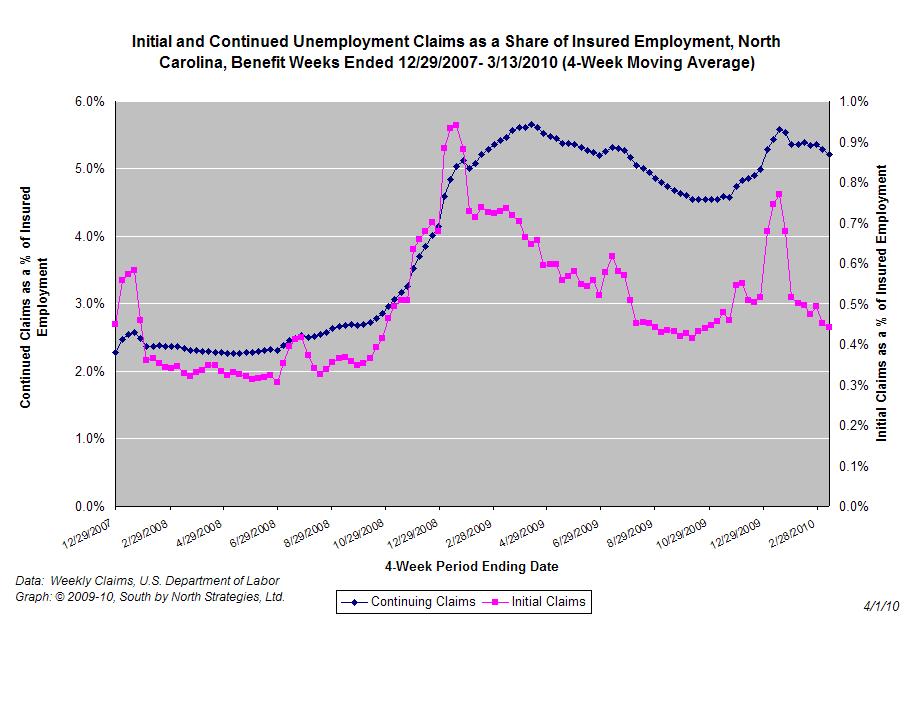
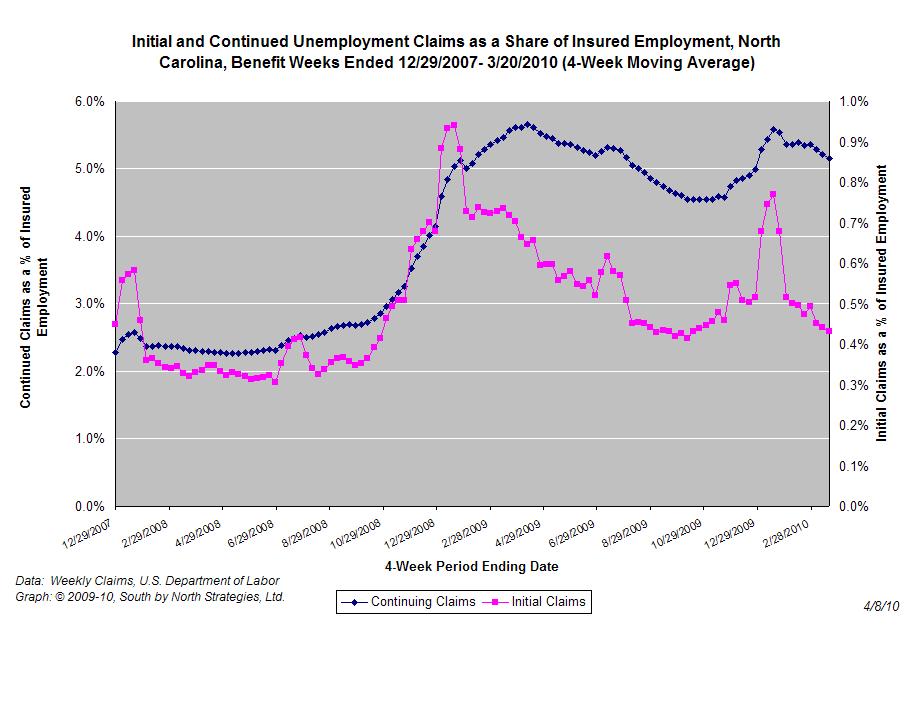
The graph (right) shows the changes in unemployment insurance claims (as a share of covered employment) in North Carolina since the recession’s start in December 2007.
Both new and continuing claims appear to have peaked for this business cycle, and the four-week average of new claims has fallen to a level last seen in September 2008. Yet continuing claims remain at an elevated level, which suggests that unemployed individuals are finding it extremely difficult to find new positions.
Manufacturing in the South Atlantic: March
From the Federal Reserve Bank of Richmond’s January survey of manufacturing activity in the South Atlantic (District of Columbia, Maryland, North Carolina, South Carolina, Virginia and West Virginia):
Manufacturing activity in the central Atlantic region advanced somewhat faster in March than a month earlier, according to the Richmond Fed’s latest survey. Looking at the main components of activity, shipments grew at a modest pace, while new orders were virtually unchanged and employment steadied. Other indicators were mixed. Backlogs of orders landed in negative territory and capacity utilization turned positive after being negative for the last three months. Vendor delivery times grew at a considerably quicker rate, while manufacturers reported somewhat slower growth in finished goods inventories.
…
Looking forward, manufacturers’ optimism remained in place in March. Firms looked for steady growth in shipments, new orders, backlogs and capacity utilization in the months ahead, while they expected employment to grow moderately and reverse its negative reading that was seen last month.
Around the Dial – April 21
Economic policy reports, blog postings, and media stories of interest:
- North Carolina’s community colleges have financial challenges.
- David Leonhardt looks at the rent vs. buying debate; Dean Baker tweaks the math; Free Exchange begs to differ.
- CBPP argues for states to expand Medicaid prior to 2014.
- The News & Record reports on a proposed incentive package for AmEx.
 Email Sign-Up
 RSS Feed