Who Are the Uninsured?
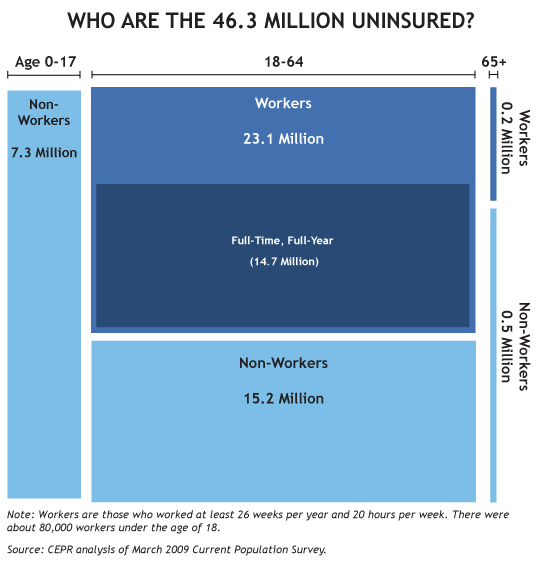
A new report from the Center for Economic and Policy Research looks at America’s 46.3 million uninsured individuals. As the graph shows, adults between ages 18 and 64 account for 82 percent of the uninsured. Of these uninsured adults, 60 percent work. Moreover, 64 percent of those who work yet are uninsured are employed on a full-time, year-round basis.
Around the Dial – April 8
Economic policy reports, blog postings, and media stories of interest:
- Economix tracks which states work the hardest.
- EPI assesses changes to the “No Child Left Behind Act.”
- The Brookings Institution looks at rising income volatility.
- The Baseline Scenario asks what role the IMF should play in Greece.
NC Unemployment Claims: Week of 3/20
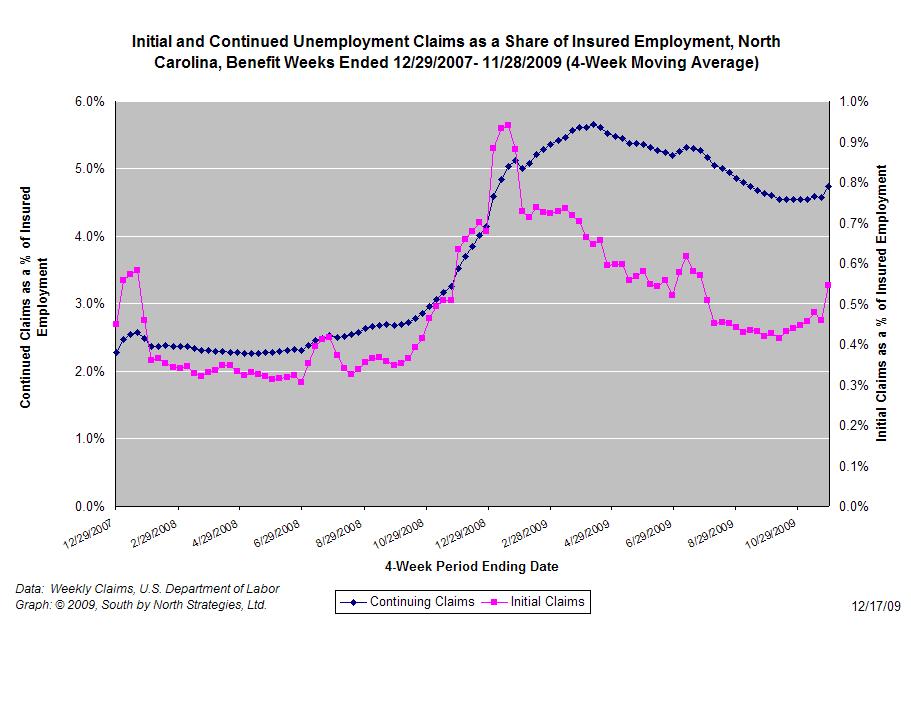
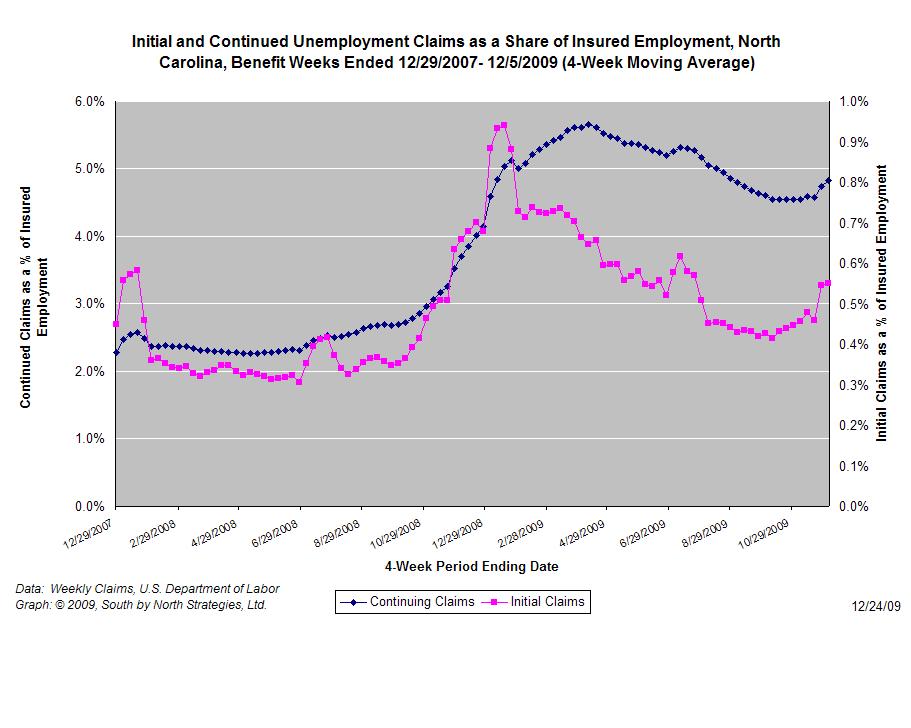
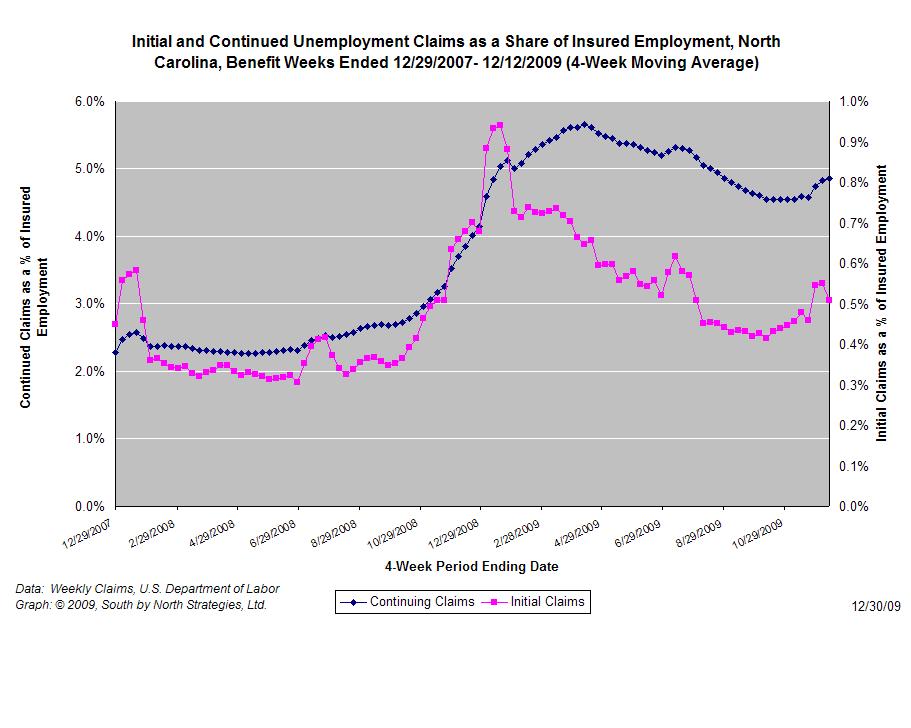
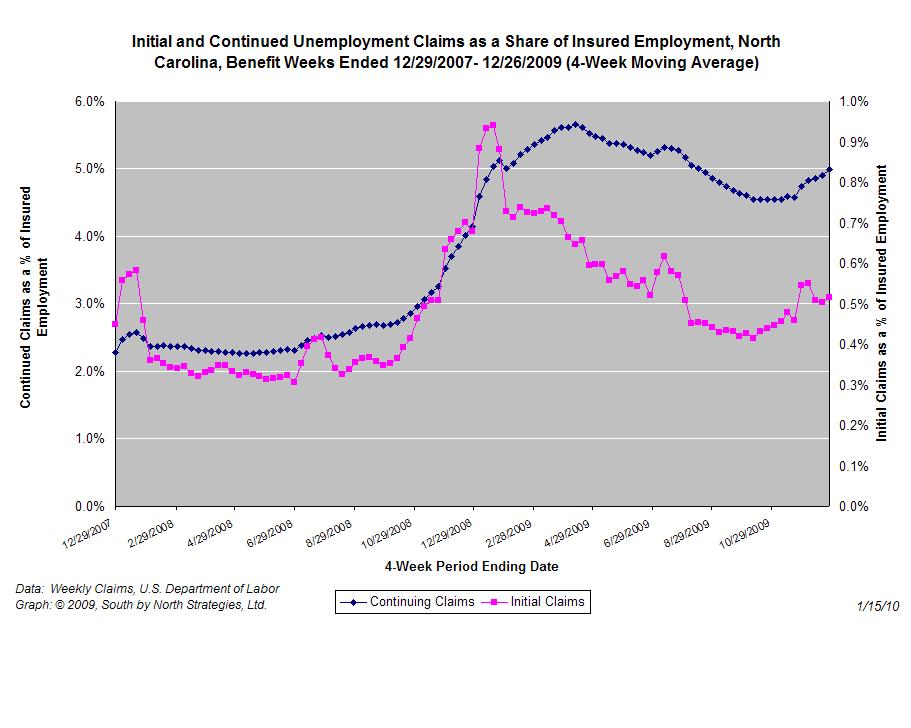
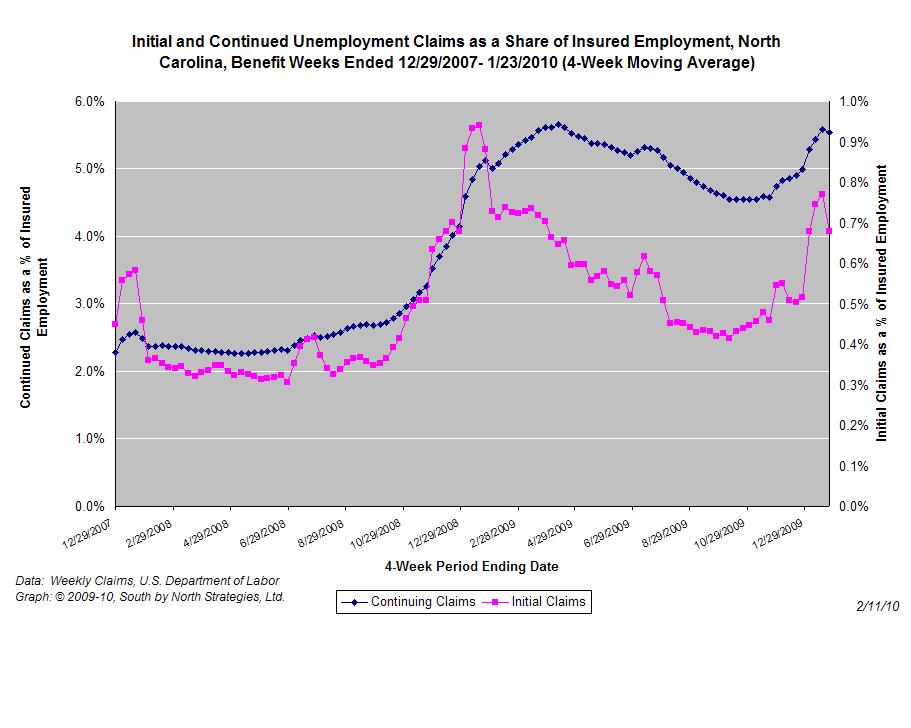
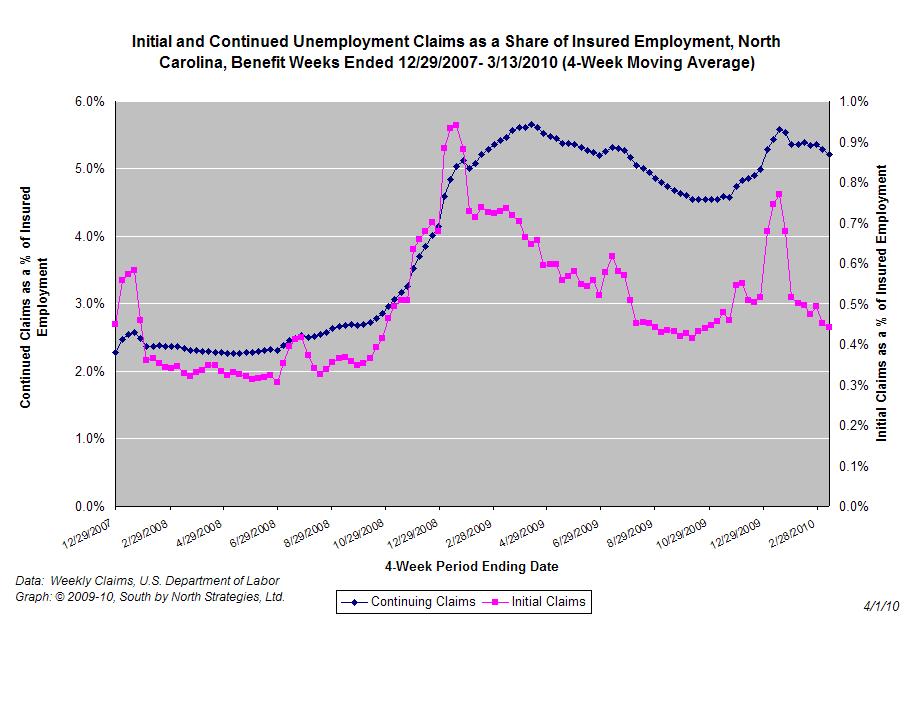
For the benefit week ending on March 20th, 14,162 North Carolinians filed initial claims for state unemployment insurance benefits, and 192,551 individuals applied for state-funded continuing benefits. Compared to the prior week, there were fewer initial and continuing claims. These figures come from data released today by the U.S. Department of Labor.
Averaging new and continuing claims over a four-week period — a process that helps adjust for seasonal fluctuations and better illustrates trends — shows that an average of 16,767 initial claims were filed over the last four weeks, along with an average of 199,953 claims. Compared to the previous four-week period, both initial and continuing claims were lower.
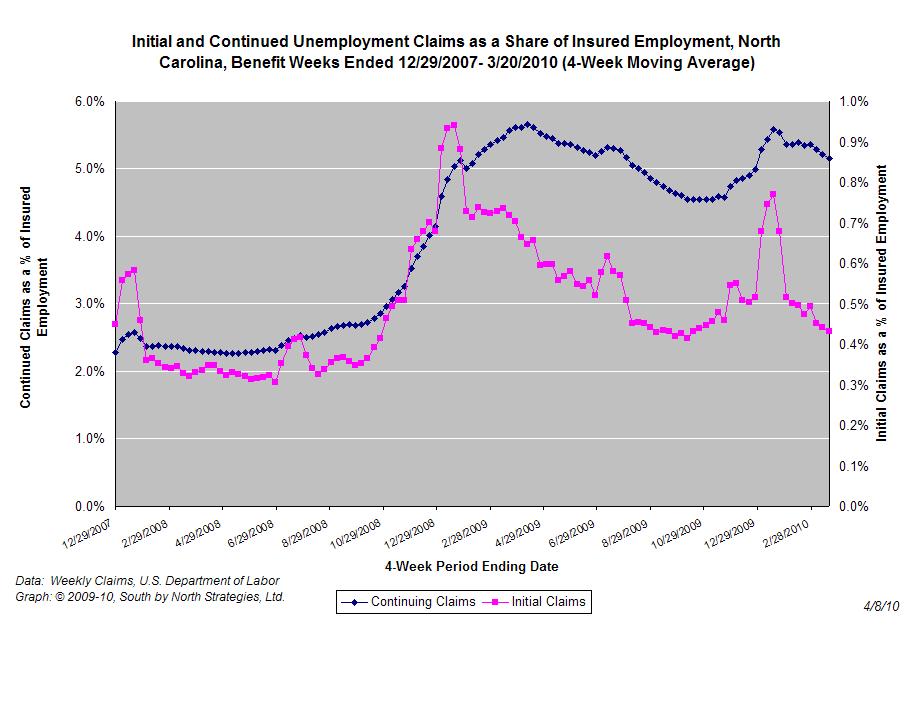 One year ago, the four-week average for initial claims stood at 29,011 and the four-week average of continuing claims equaled 224,783.
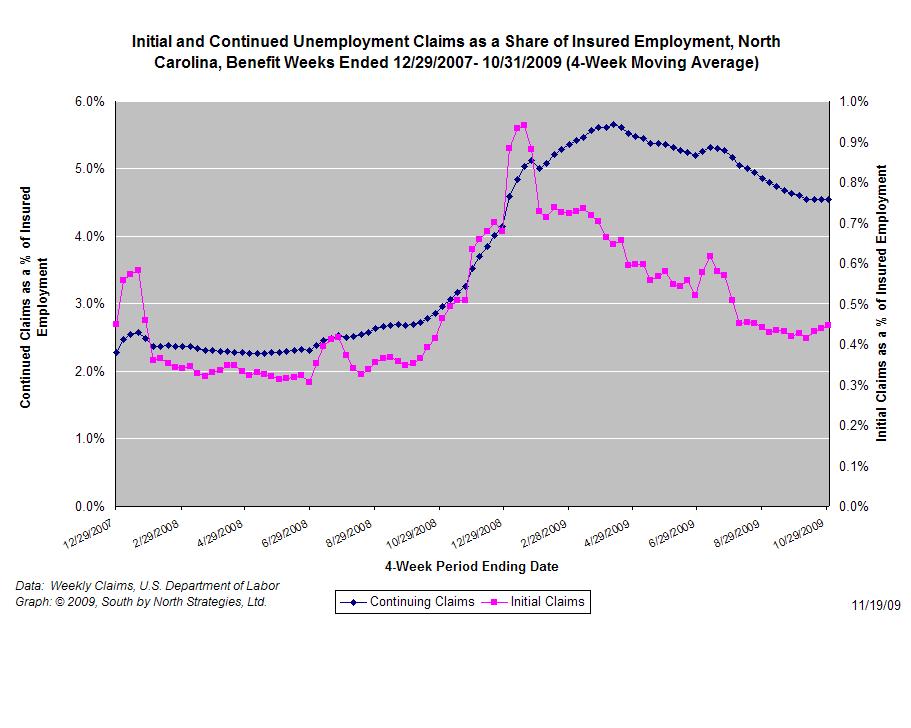
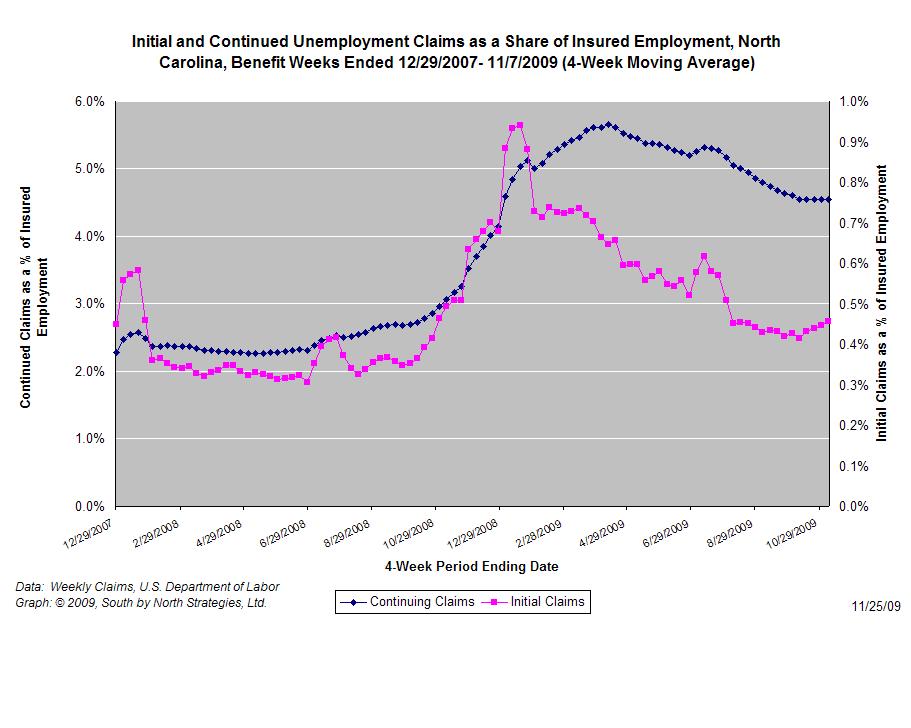
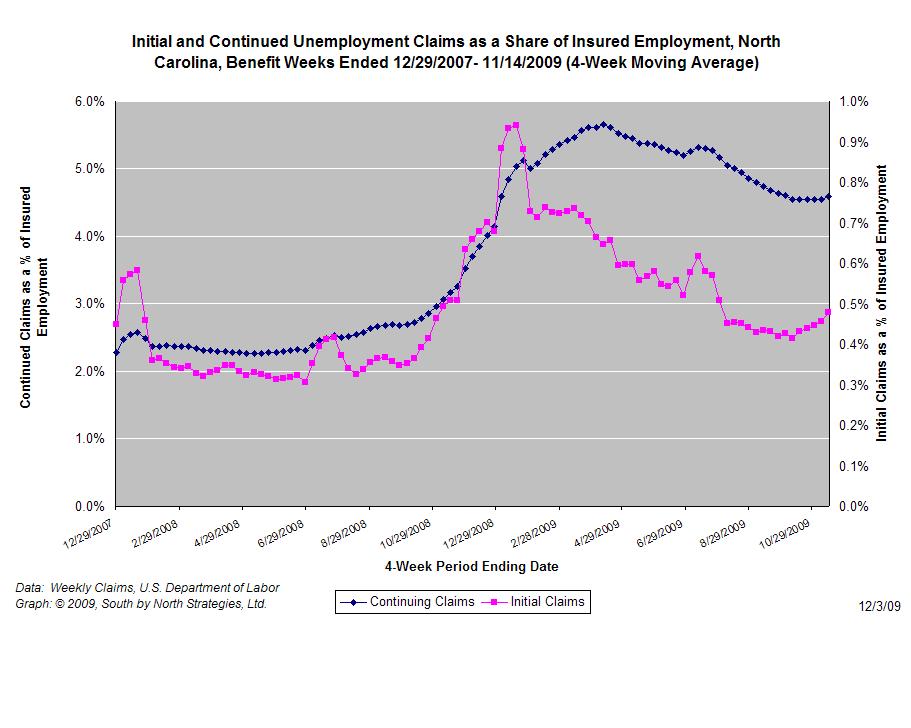
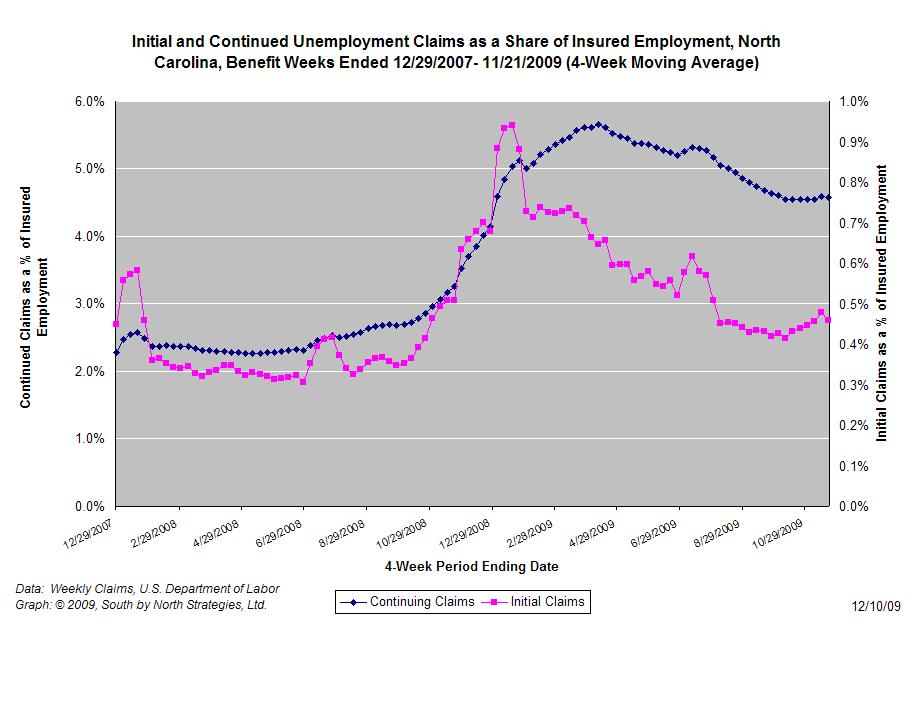
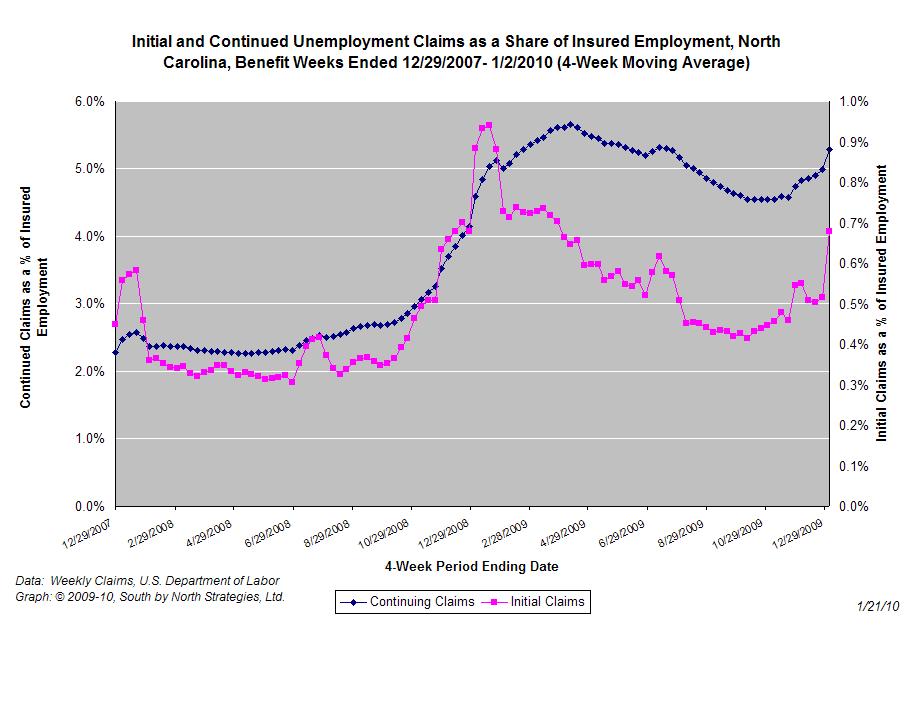
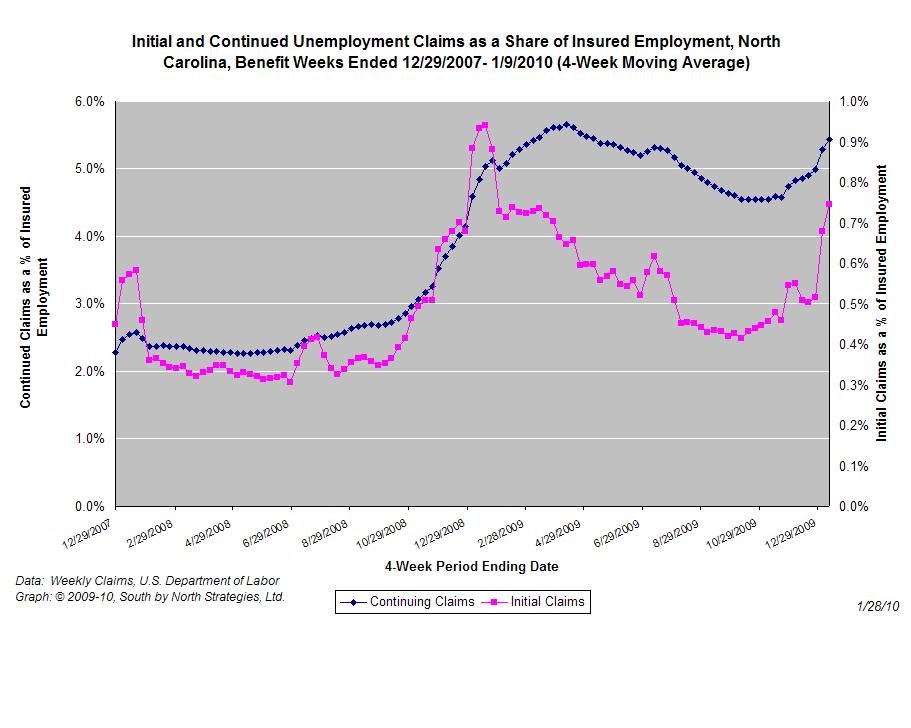
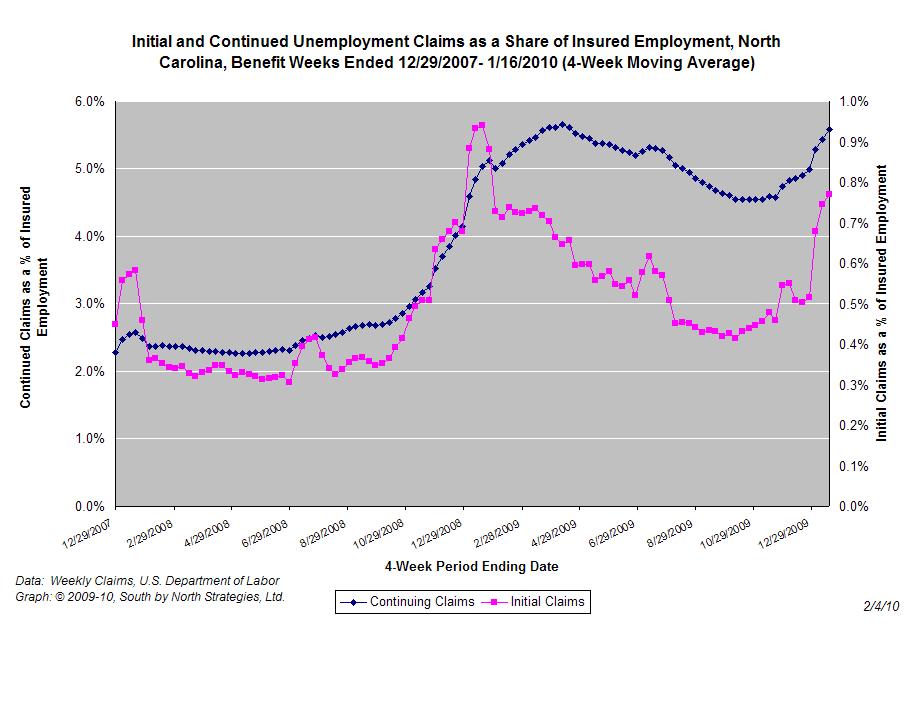
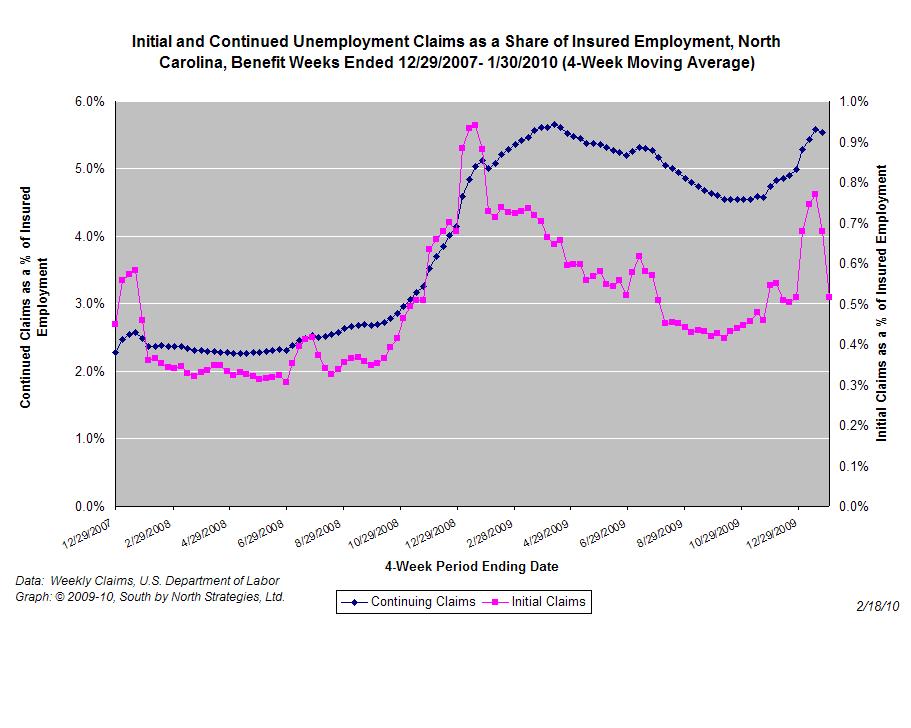
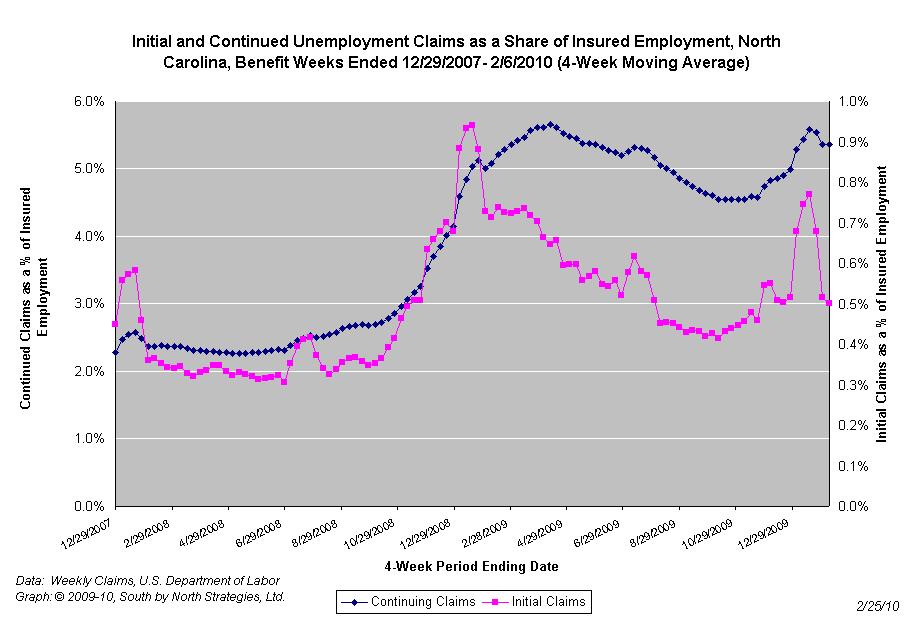
The graph (right) shows the changes in unemployment insurance claims (as a share of covered employment) in North Carolina since the recession’s start in December 2007.
Although new and continuing claims appear to have peaked for this business cycle, the claims levels remain elevated and point to a labor market that remains extremely weak. Especially troubling is the high level of continuing claims, which suggests that unemployed individuals are finding it extremely difficult to find new positions.
Cities, Investment Banks, and Taxpayers
Rolling Stone’s Matt Taibbi use his frustrating, profane, but engaging style to show how Birmingham, Ala. allowed itself to be “looted” by Wall Street.
The sewer bill, in fact, is what cost [Lisa] Pack and her co-workers their jobs. In 1996, the average monthly sewer bill for a family of four in Birmingham [Alabama] was only $14.71 — but that was before the county decided to build an elaborate new sewer system with the help of out-of-state financial wizards with names like Bear Stearns, Lehman Brothers, Goldman Sachs and JP Morgan Chase. The result was a monstrous pile of borrowed money that the county used to build, in essence, the world’s grandest toilet — “the Taj Mahal of sewer-treatment plants” is how one county worker put it. What happened here in Jefferson County would turn out to be the perfect metaphor for the peculiar alchemy of modern oligarchical capitalism: A mob of corrupt local officials and morally absent financiers got together to build a giant device that converted human shit into billions of dollars of profit for Wall Street — and misery for people like Lisa Pack.
Around the Dial – April 7
Economic policy reports, blog postings, and media stories of interest:
- Dean Baker and Kevin Hassett ask if work sharing could work.
- Robert Reich says to “break up the banks.”
- Edward Glaeser argues that home values won’t rise.
- Naked Capitalism analyzes trends in rent prices.
 Email Sign-Up
 RSS Feed