New Year, Same NC Job Market
CHAPEL HILL (March 10, 2011) – North Carolina’s labor market did not begin 2011 on a footing much different from the one on which it ended 2010. According to data released today by the Employment Security Commission, North Carolina gained 4,500 payroll positions in January, but that gain did little to close North Carolina’s large jobs gap. Furthermore, annual data revisions released today indicate that the jobs gap is even bigger than first thought.
“January delivered little in the way of meaningful job growth for North Carolina,” says John Quinterno, a principal with South by North Strategies, Ltd., a research firm specializing in economic and social policy. “Labor market conditions remained quite weak.”
Last month, North Carolina employers added 4,500 more payroll positions than they cut. Net gains occurred in both the private (+2,200) and public (+2,300) sectors. Among private industries, trade, transportation, and utilities netted the most positions (+11,300), followed by manufacturing (+1,400), and financial activities (+1,100). The gains were offset by declines in construction (-5,100), education and health services (-3,300), and professional and business services and leisure and hospitality services (both -1,000).
Alarmingly, a regular annual revision to Employment Security Commission data revealed that the state has lost even more jobs since 2007 than first thought. The original data showed that, through December 2010, North Carolina had lost, on net, 272,800 payroll positions, but after accounting for today’s revision, the actual net number of jobs lost across the state was 314,900. While job growth in January offset some that gap, North Carolina still has lost, on net, 310,400 positions—7.4 percent of its payroll employment base—since December 2007.
“North Carolina’s labor market is even worse off than previously thought,” notes Quinterno. “Meaningful job growth simply is not occurring, and in many ways, conditions actually have deteriorated. Not only has North Carolina lost more jobs than first estimated, but the recession also ran longer than initially believed. Job loss in North Carolina did not bottom out until December 2009 and since then, total payroll employment has grown by just 0.3 percent.”
Between January 2010 and January 2011, North Carolina gained 6,400 jobs (0.2 percent). Virtually all of the growth (+14,100 positions) occurred in the private sector, while the public sector shed 7,700 positions. In terms of individual industries, professional and business services grew the most in absolute and relative terms (+18,000, +3.8 percent). Construction shed the most jobs in absolute and relative terms (-13,900, -7.7 percent). In the public sector, net job loss resulted entirely from reductions at the state (-4,200) and local (-4,900) levels.
The household data for January, meanwhile, were mixed. Last month, the labor force grew by 0.1 percent as 3,341 more individuals found work or actively sought work. On the other hand, the total number of employed individuals fell, and the number of unemployed individuals rose to 440,622. These dynamics pushed the statewide unemployment rate to 9.9 percent. Furthermore, a variety of other data points suggest that joblessness and the attendant hardships are much more widespread than reflected in the official unemployment measure.
“The ongoing decline in the size of the labor force remains a worrisome trend,” observes Quinterno. “Compared to a year ago, there are 81,835 fewer people working or actively seeking work. In January, just 61.7 percent of the state’s available labor force was employed or seeking work.”
“The January employment offers little evidence that a recovery in the job market is underway in North Carolina,’ added Quinterno. “Compounding the problem is the fact that the annual data revisions showed the state’s job gap to be even larger than first thought. 2011 hardly is off to a good start.”
NC Unemployment Claims: Week of 2/19
For the benefit week ending on February 19th, 11,877 North Carolinians filed initial claims for state unemployment insurance benefits, and 128,733 individuals applied for state-funded continuing benefits. Compared to the prior week, there were fewer initial and continuing claims. These figures come from data released by the U.S. Department of Labor.
Averaging new and continuing claims over a four-week period — a process that helps adjust for seasonal fluctuations and better illustrates trends — shows that an average of 13,266 initial claims were filed over the previous four weeks, along with an average of 133,634 continuing claims. Compared to the previous four-week period, there were fewer initial and continuing claims.
One year ago, the four-week average for initial claims stood at 18,399 and the four-week average of continuing claims equaled 207,453.
While the number of claims has dropped over the past year so has covered employment. Last week, covered employment totaled 3.7 million, down from 3.9 million a year ago.
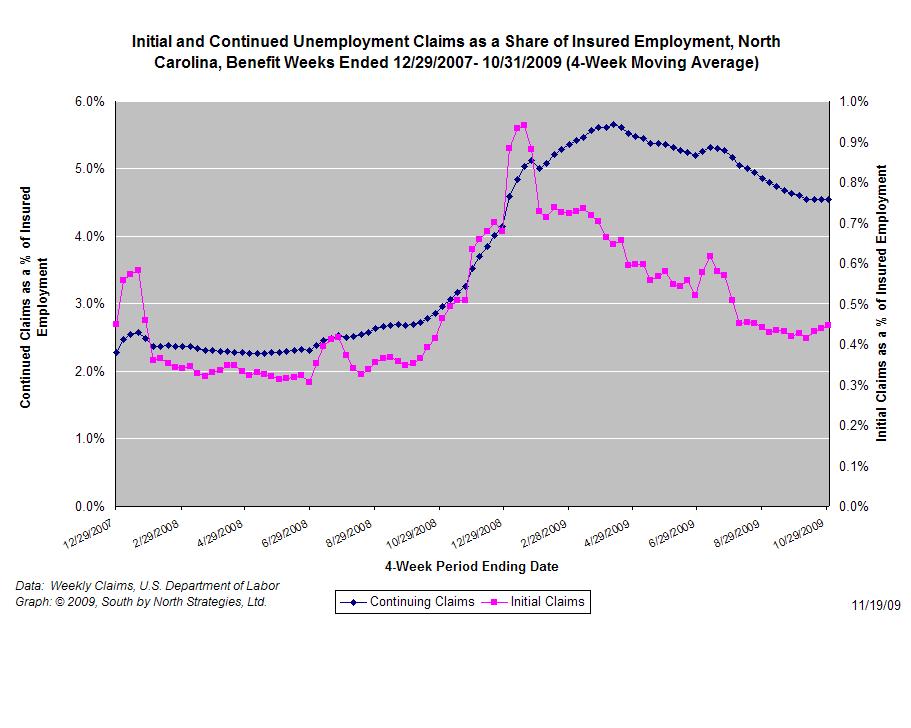
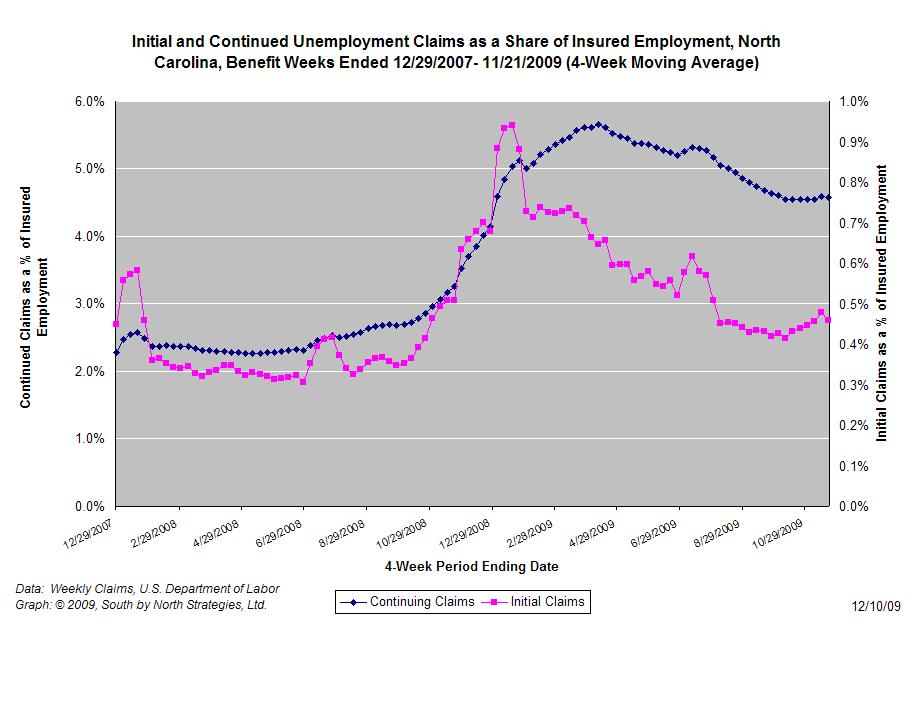
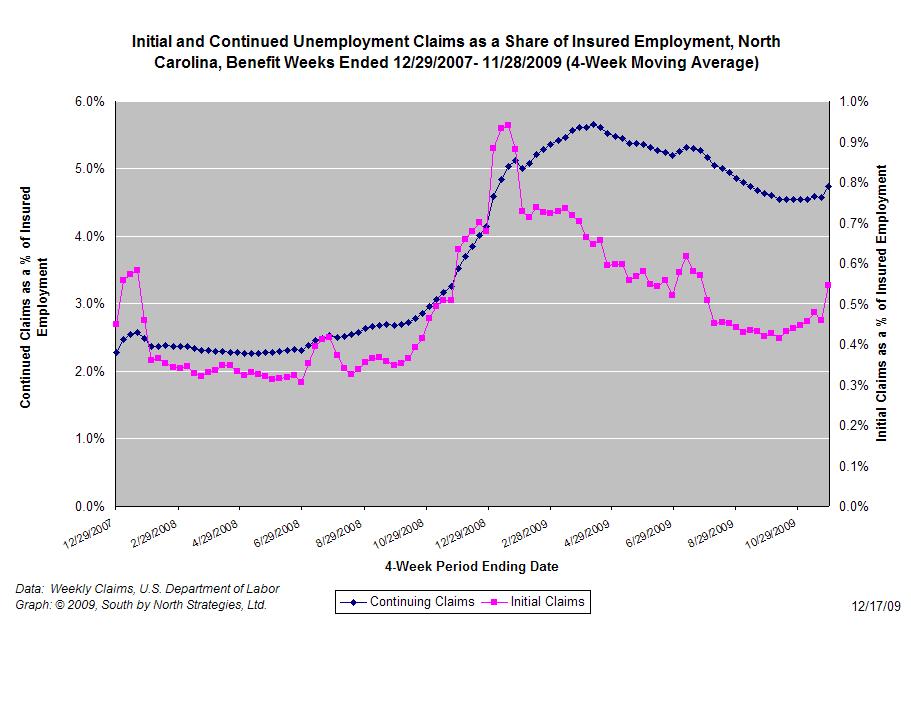
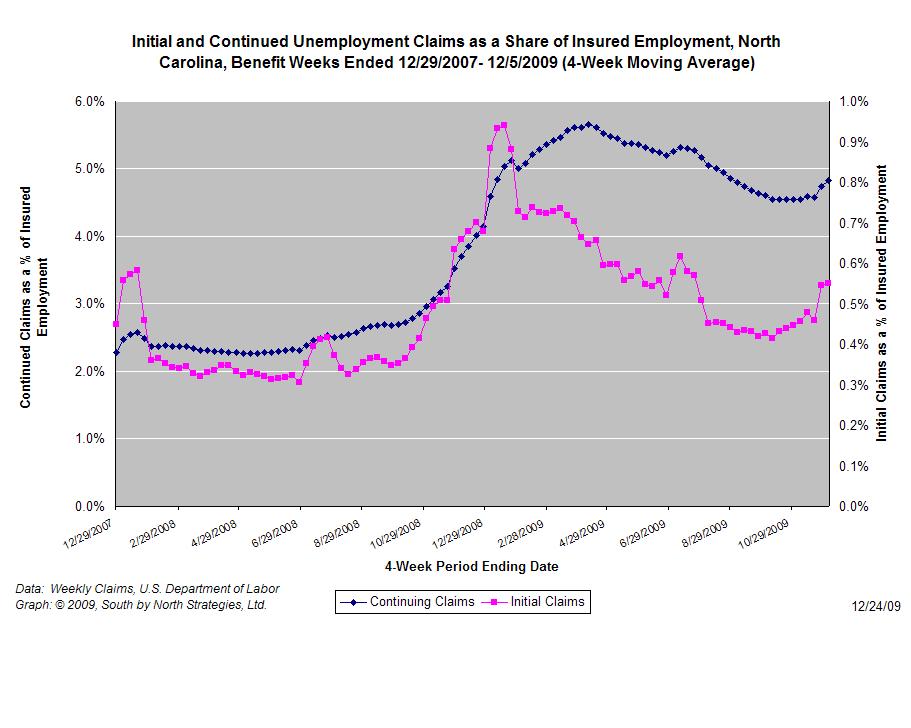
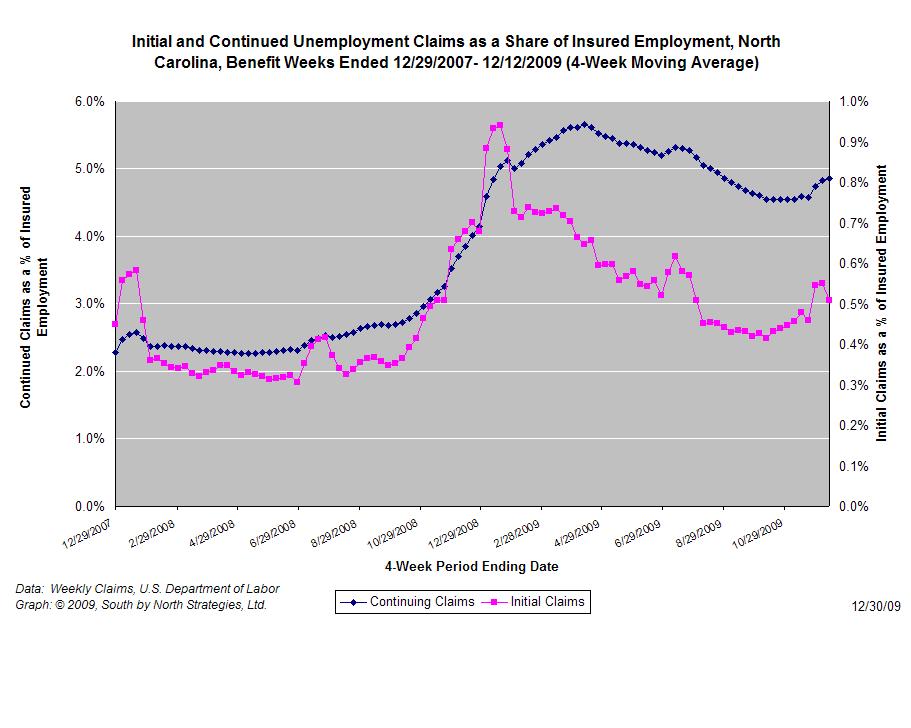
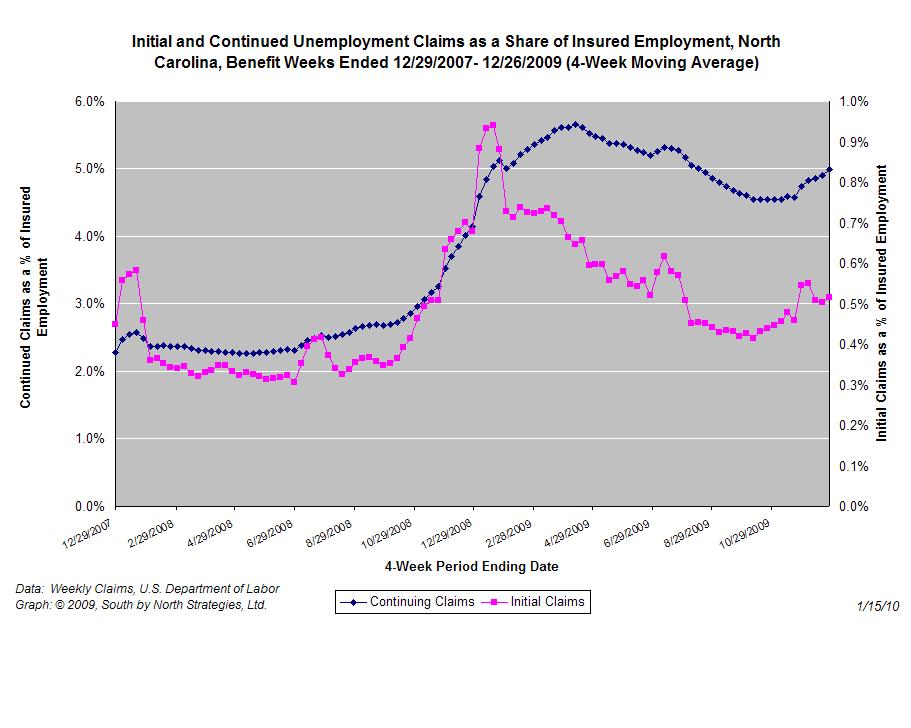
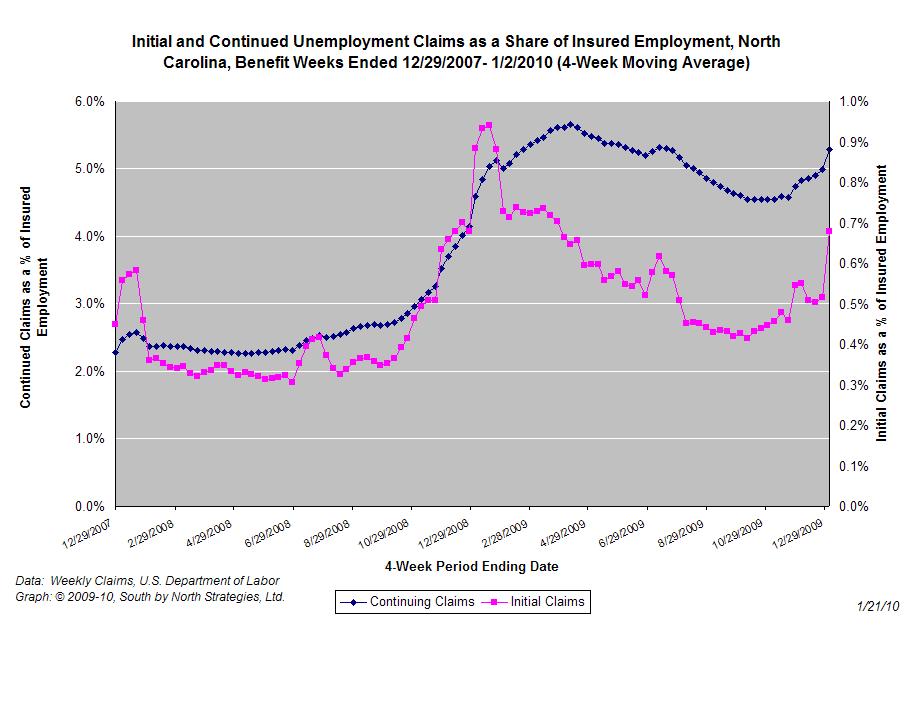
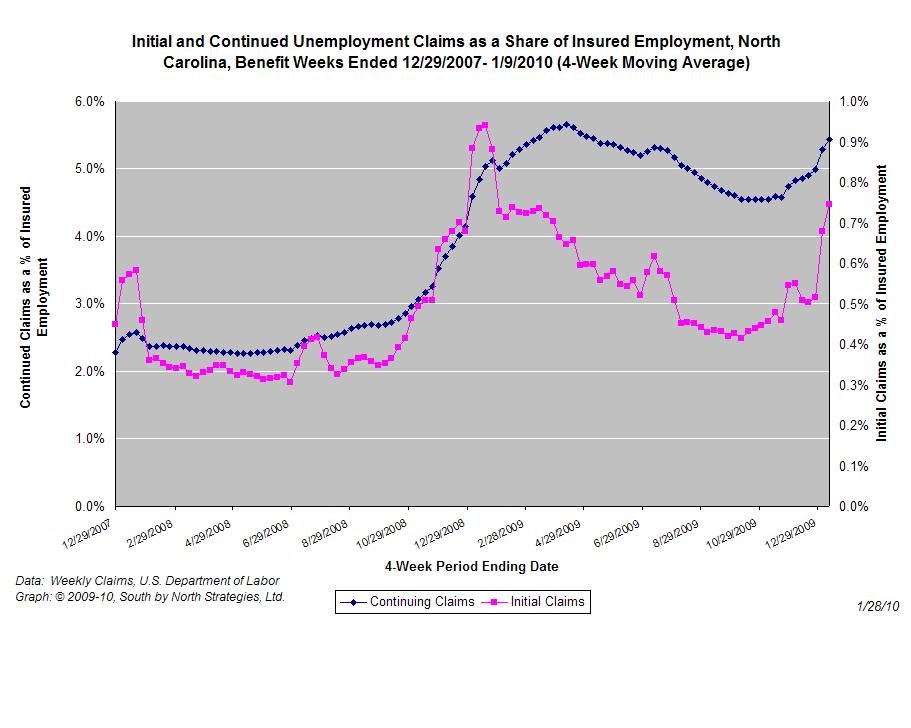
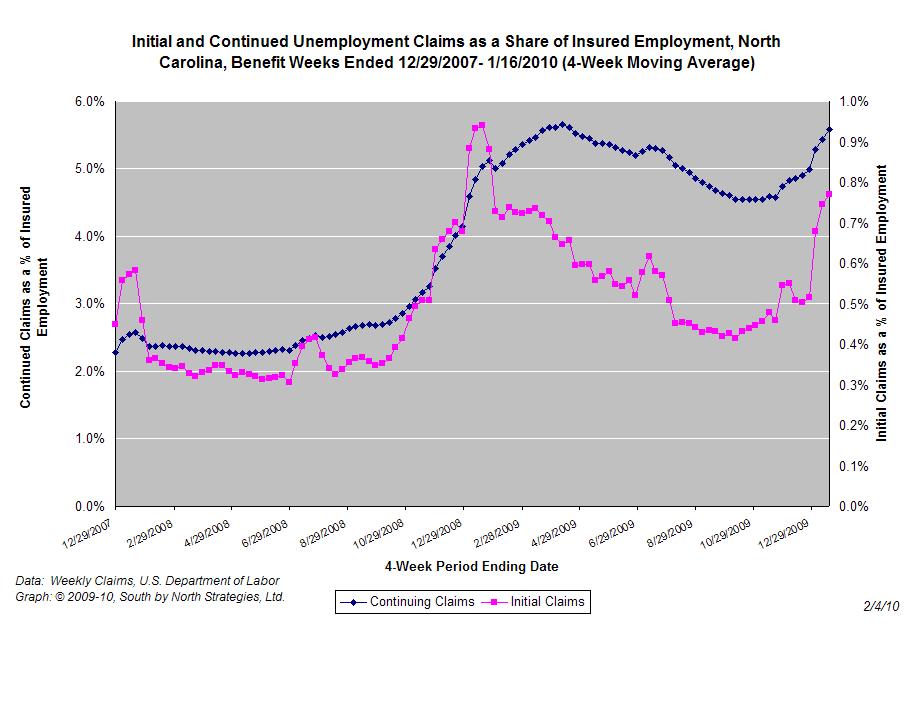
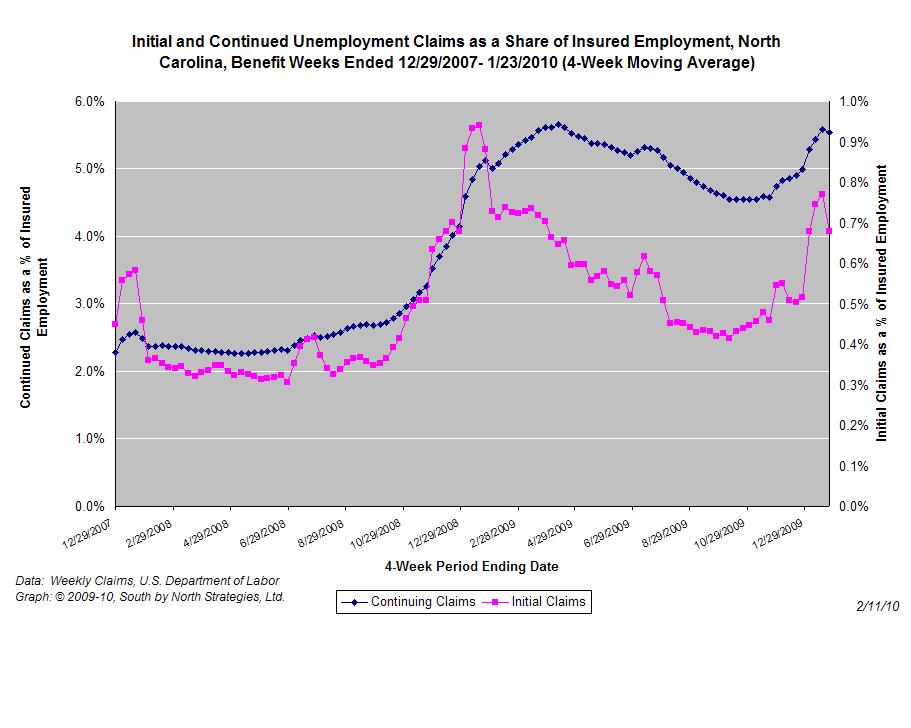
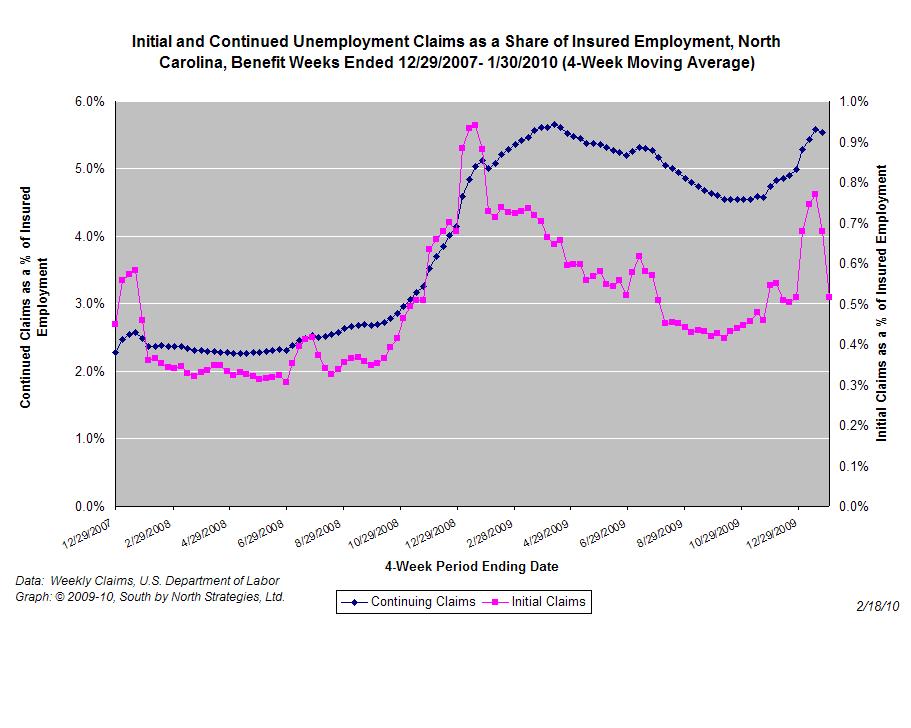
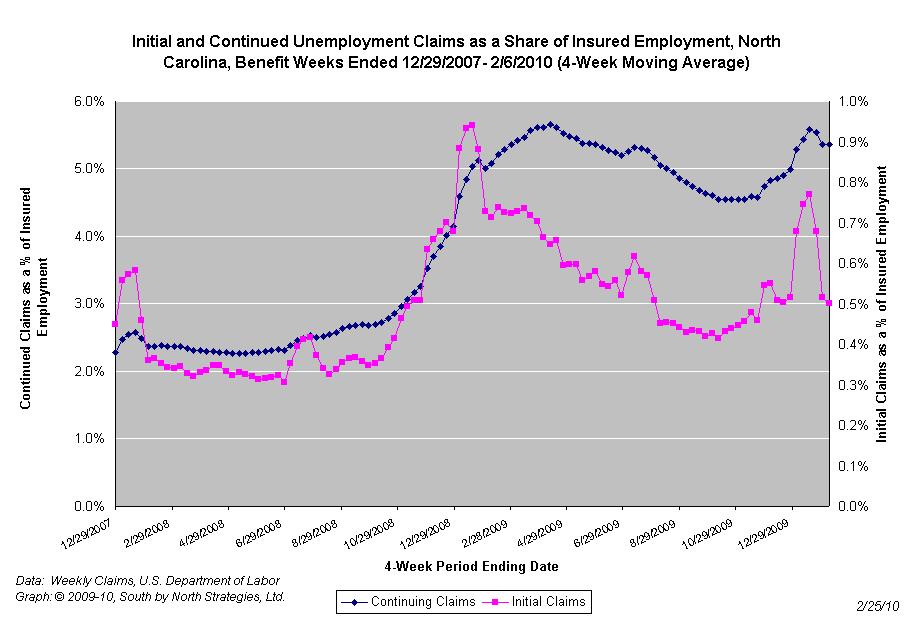
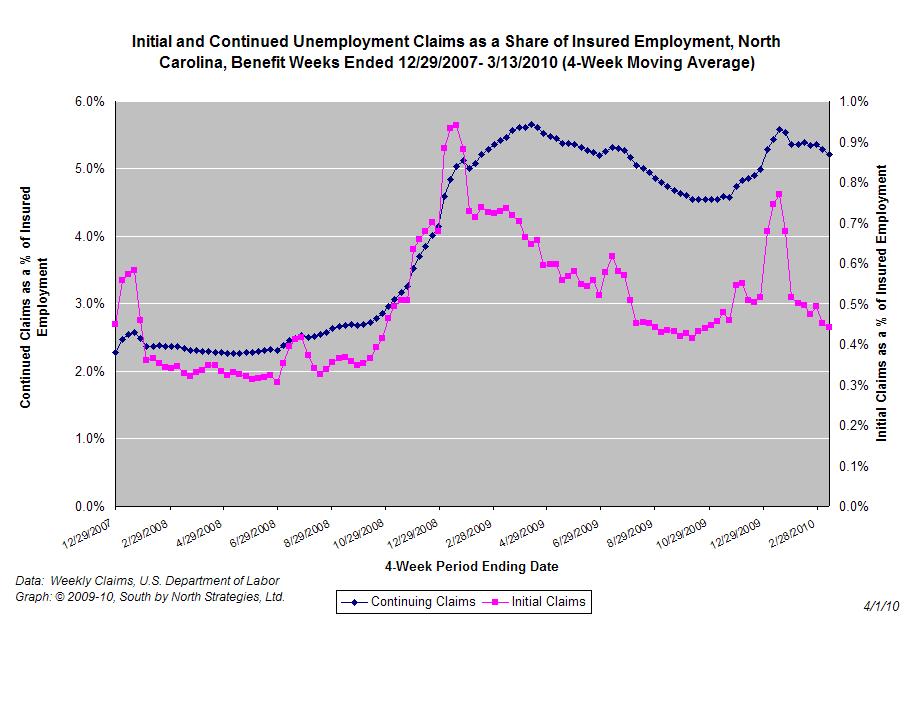
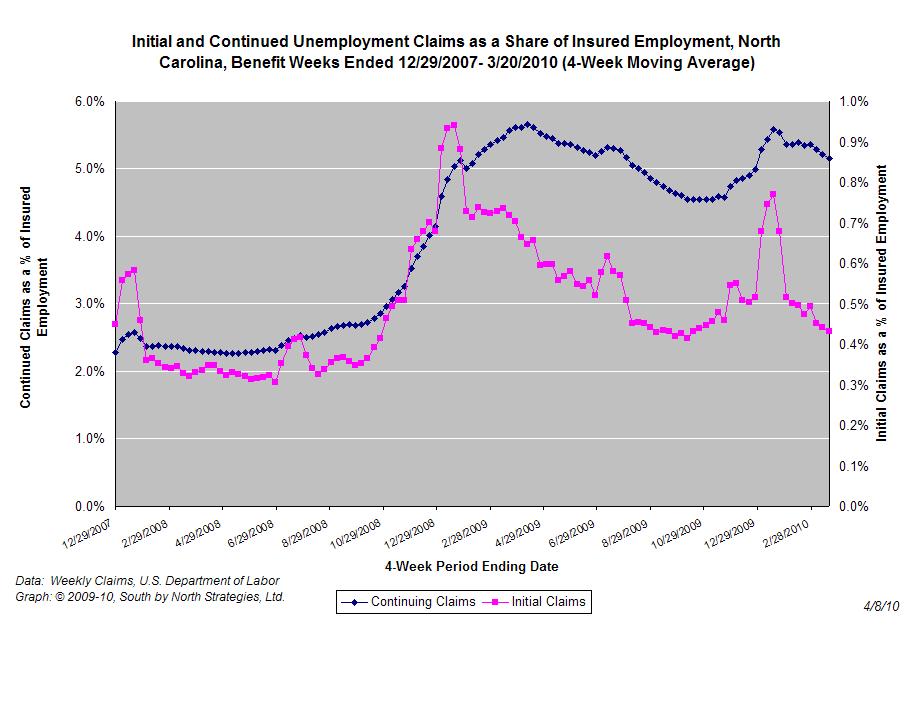
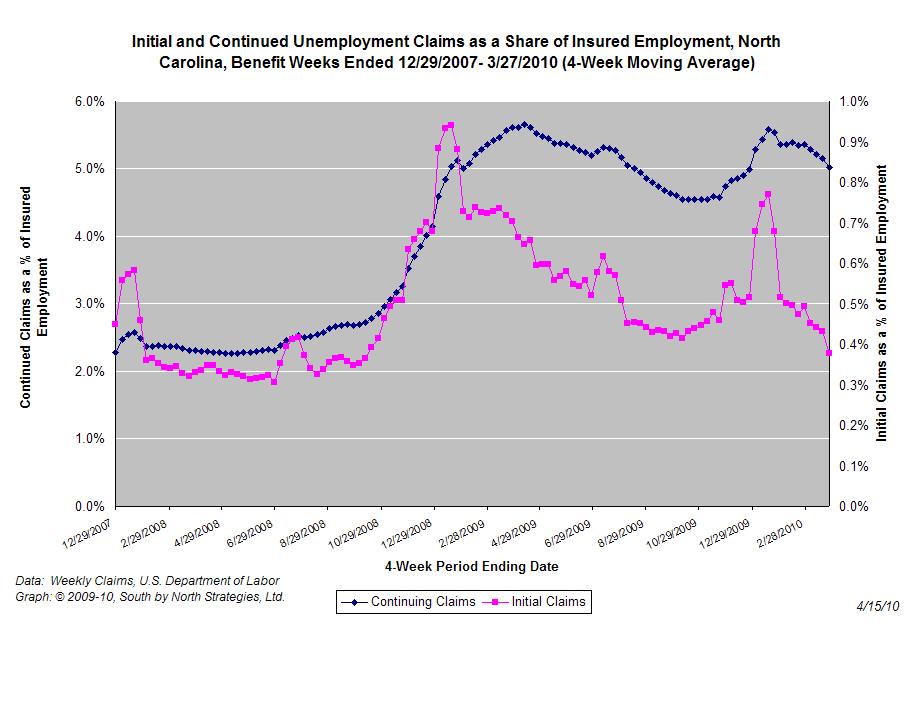
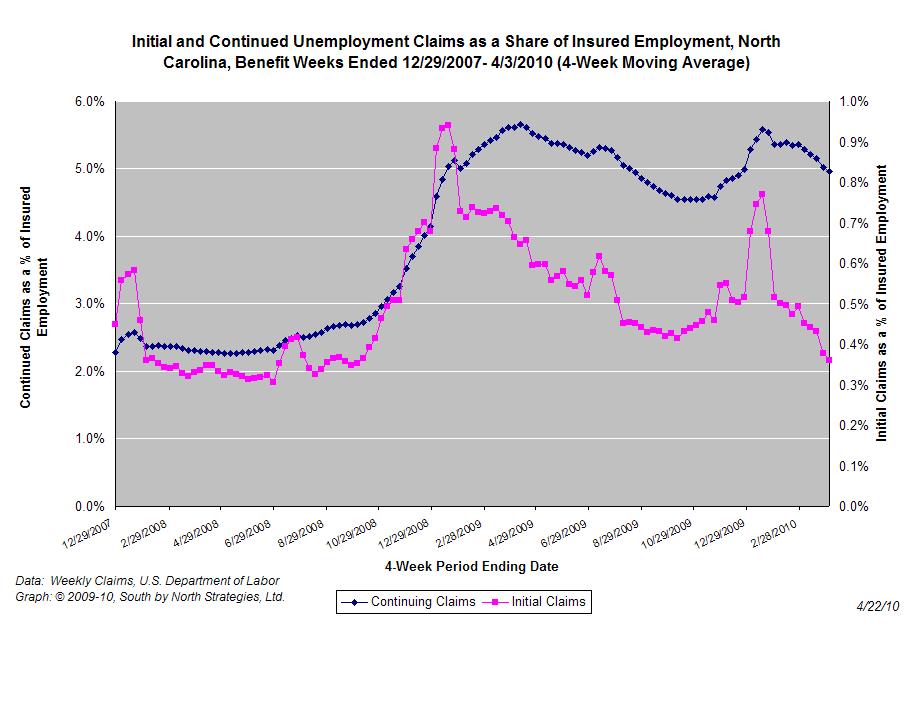
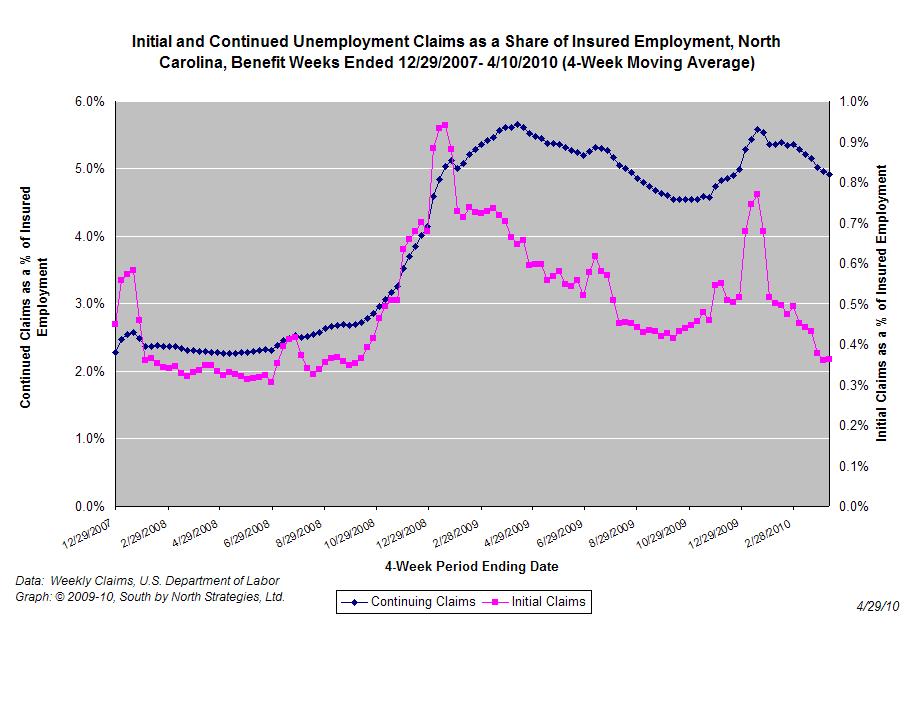
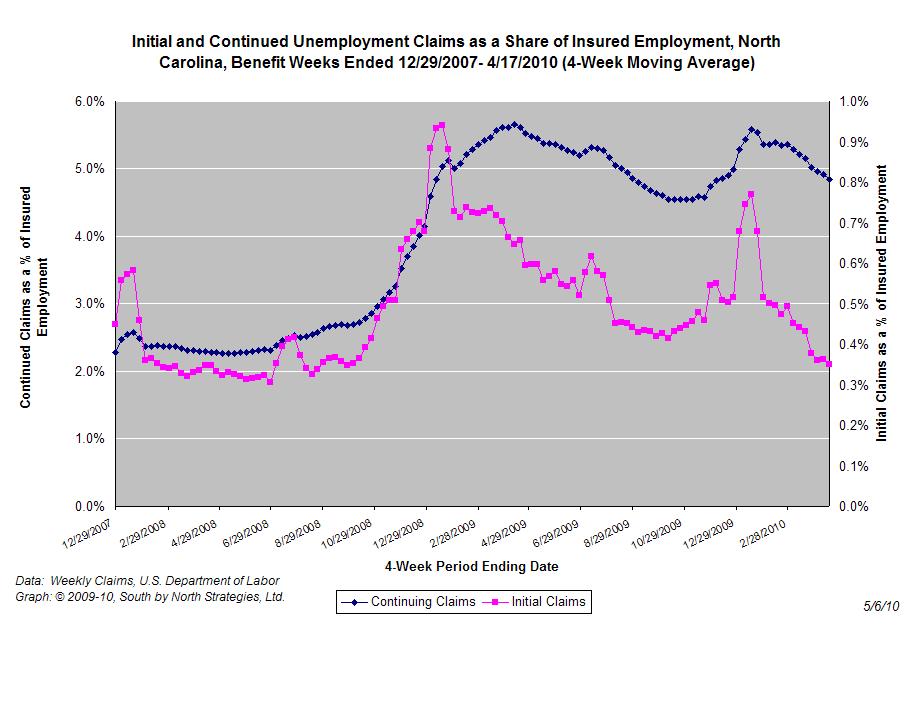
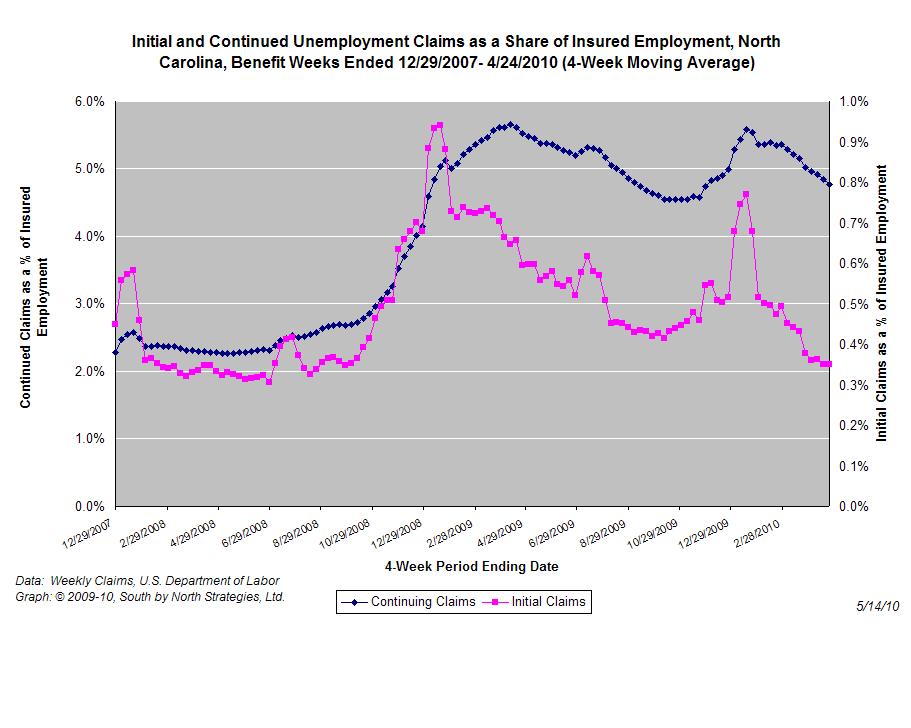
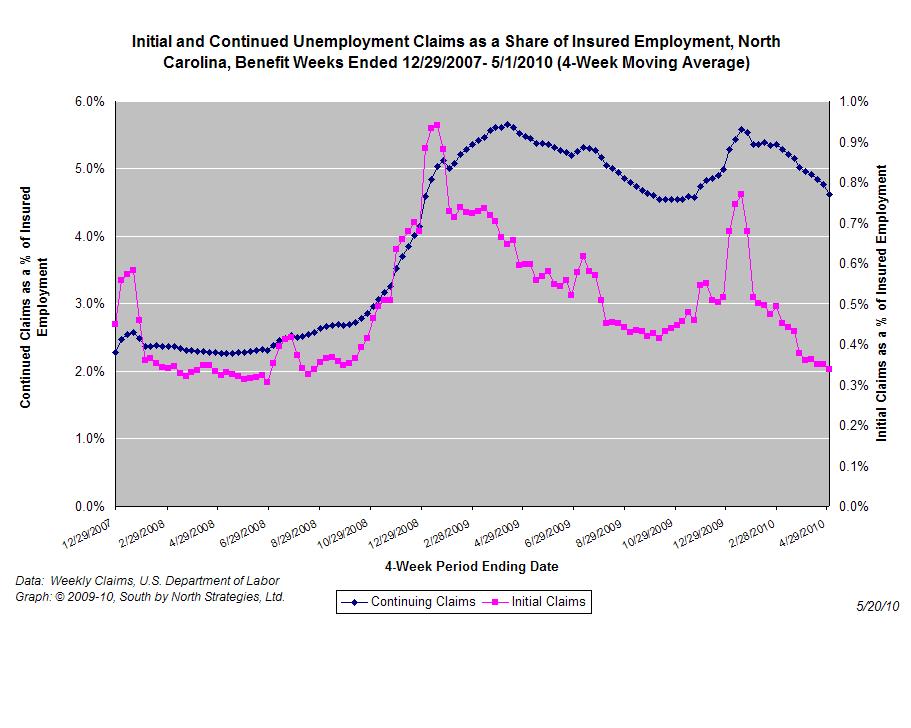
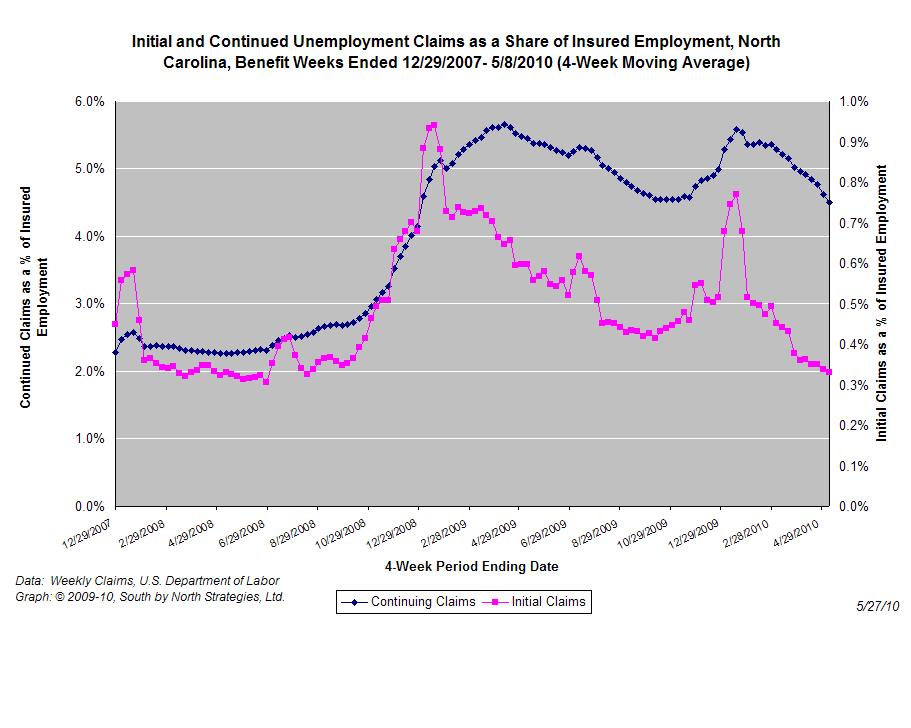
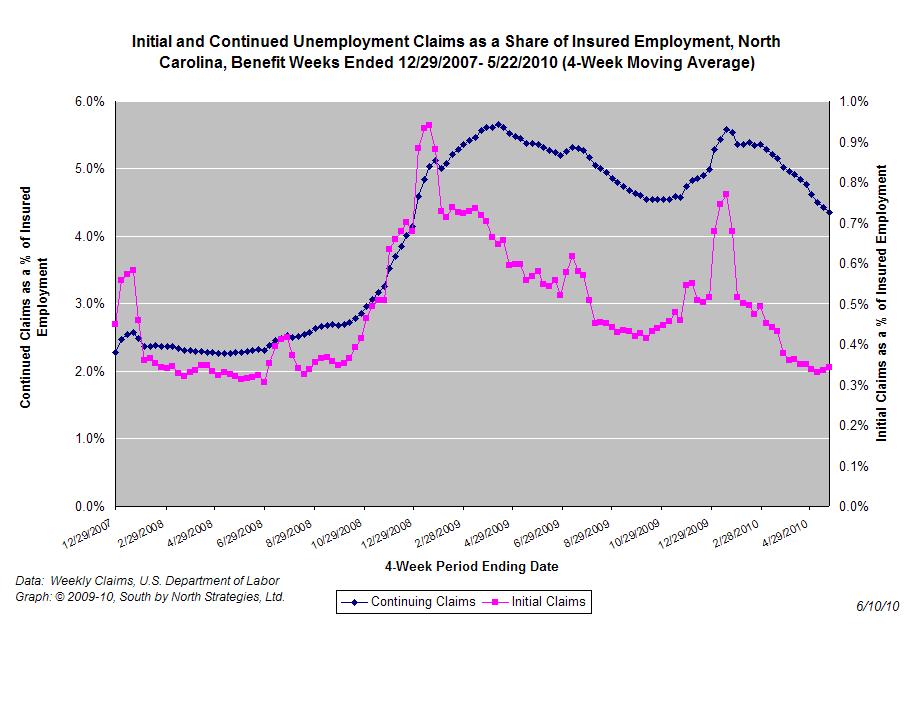
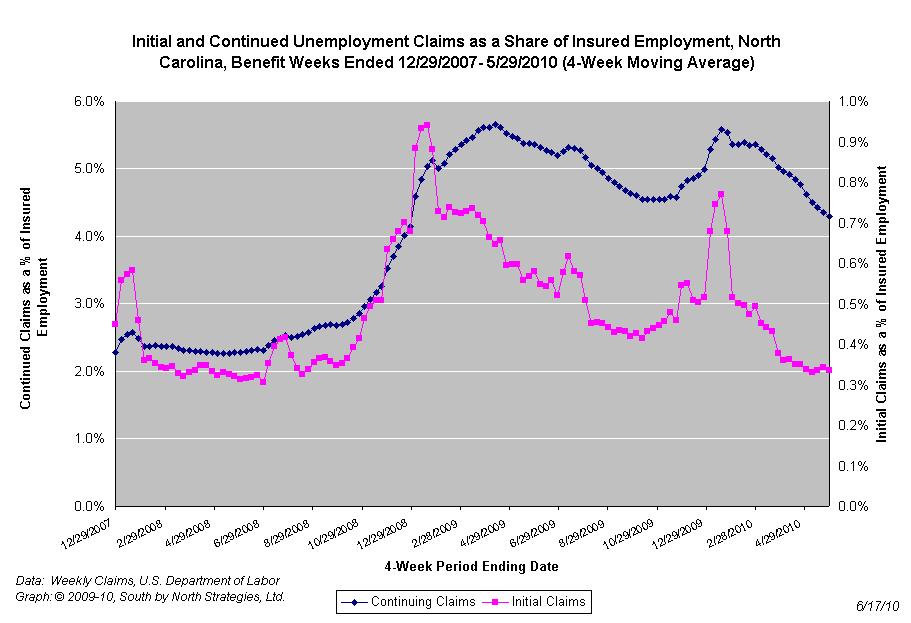
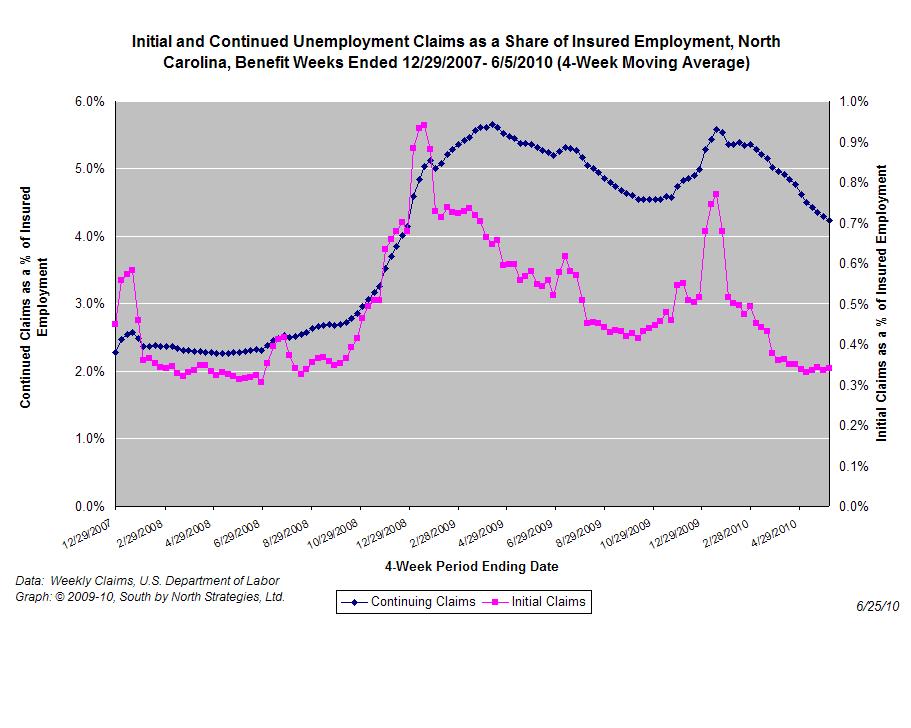
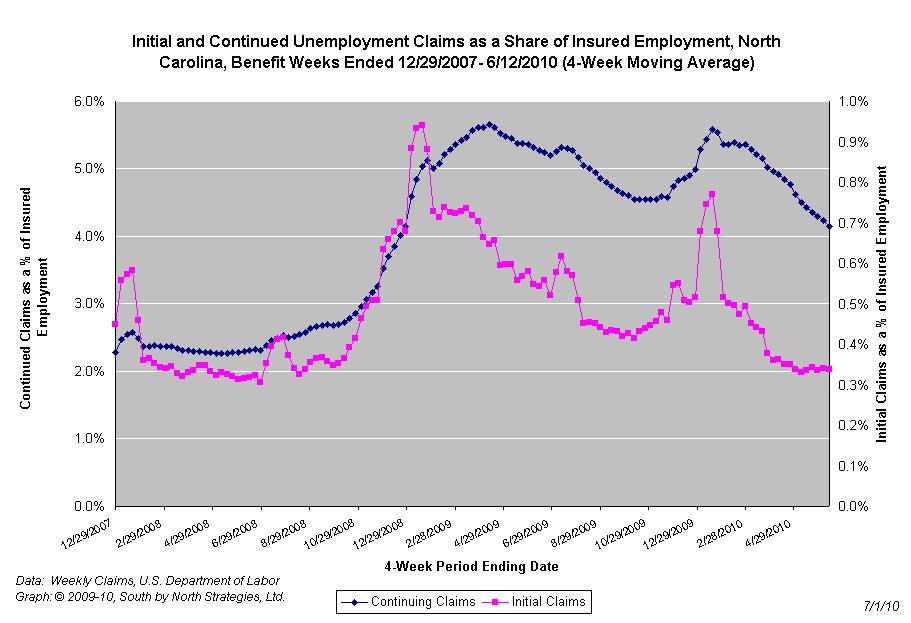
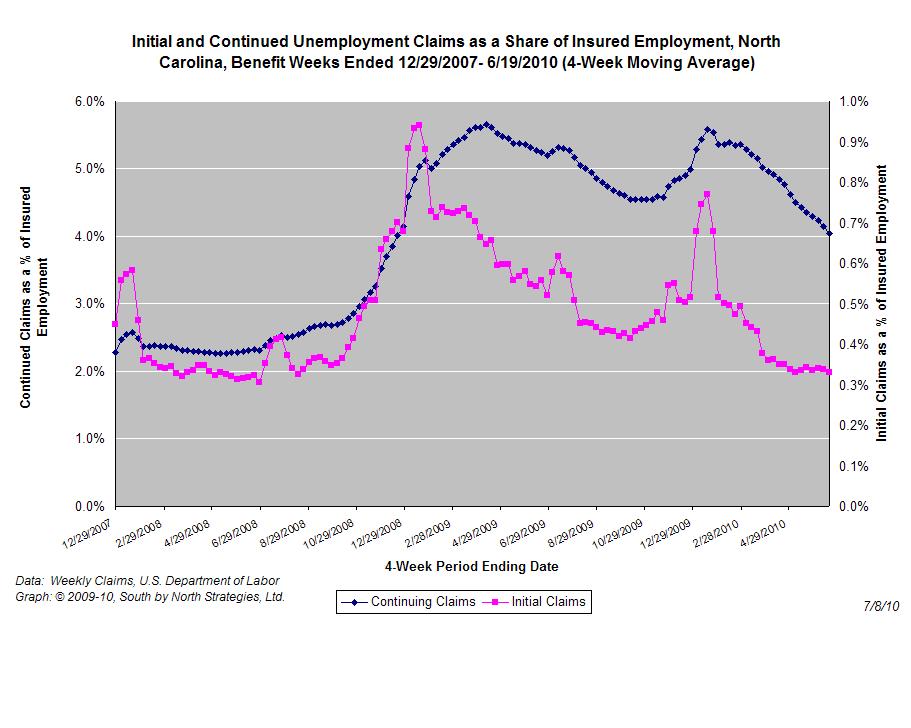
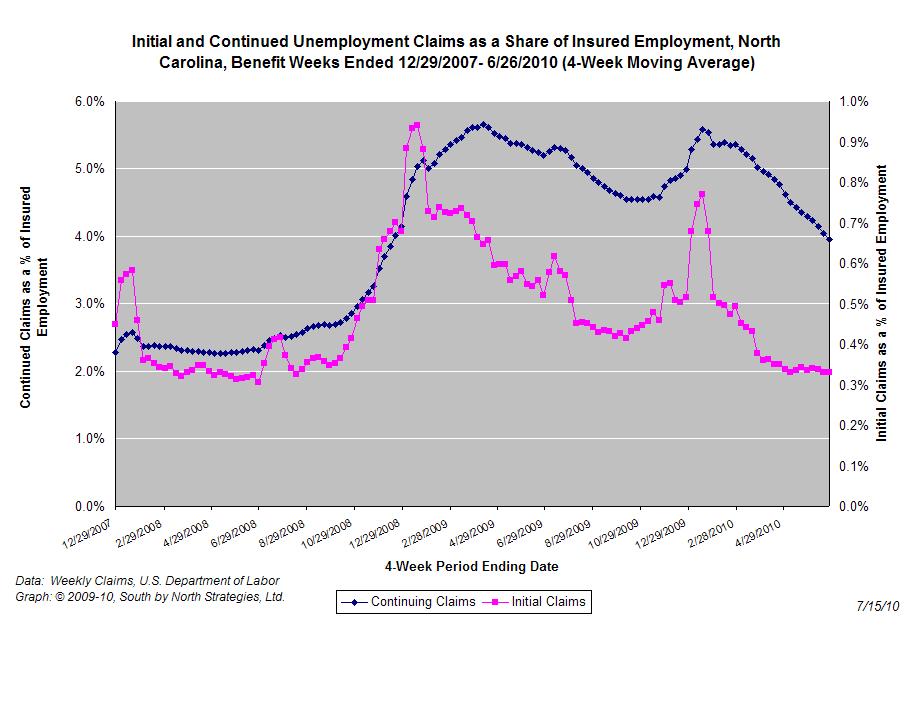
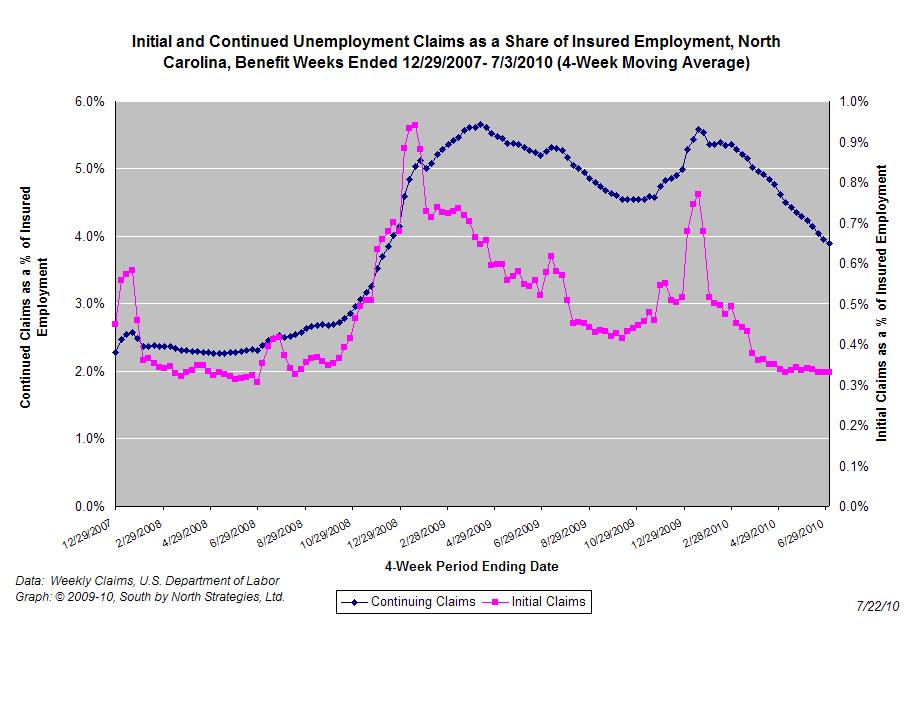
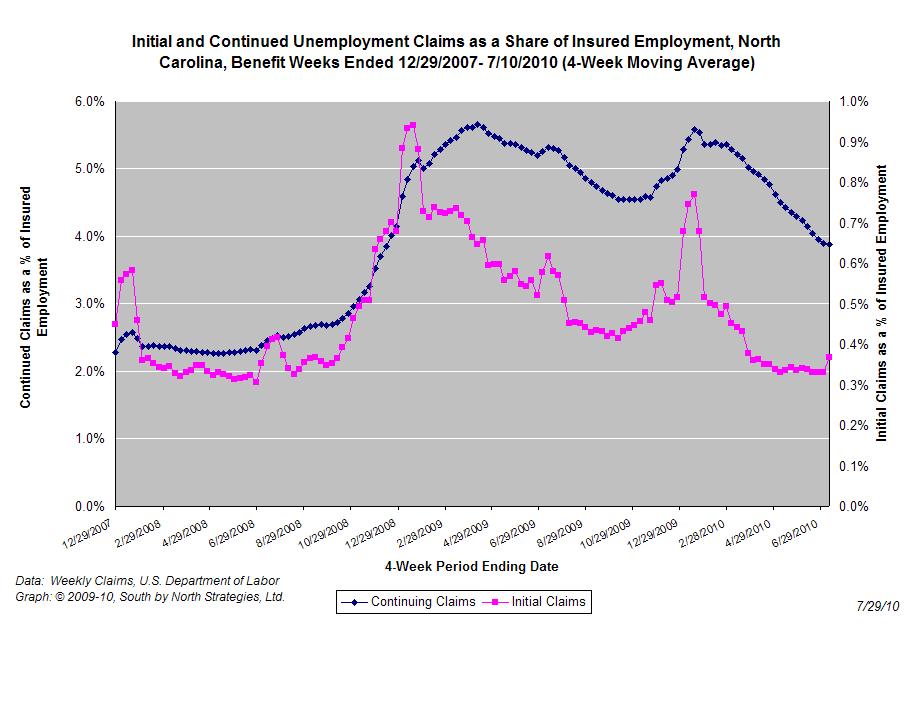
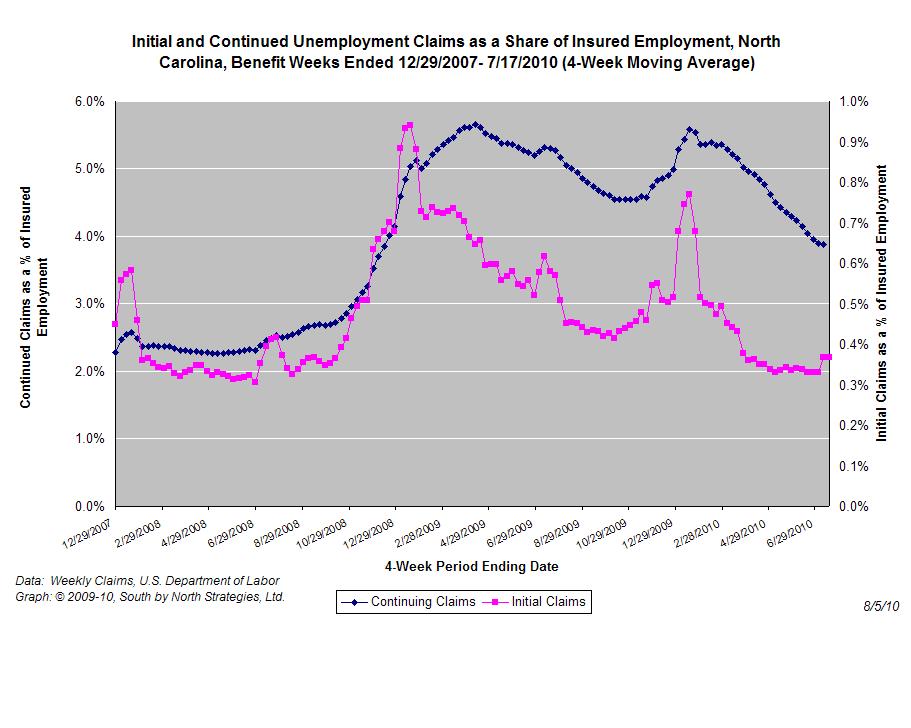
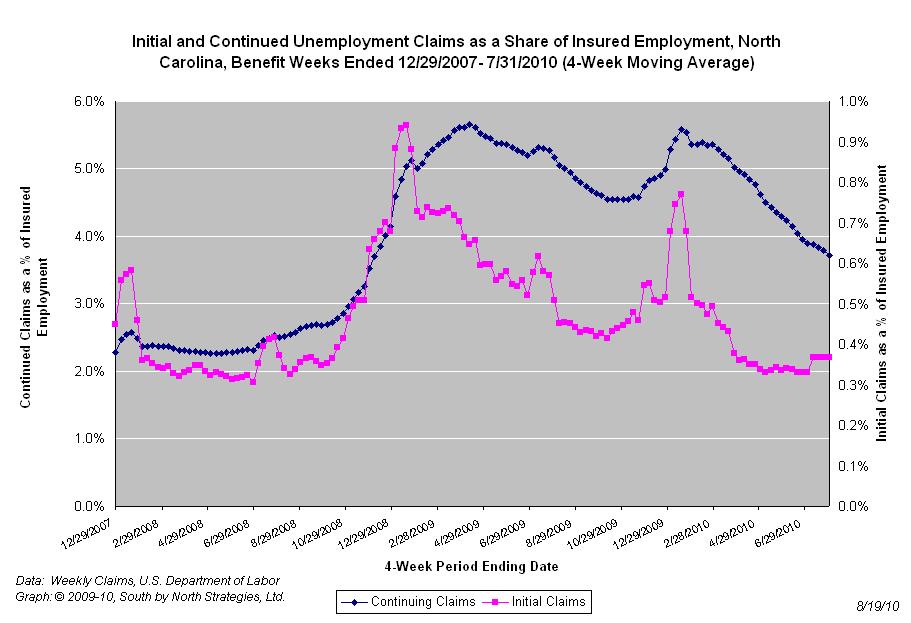
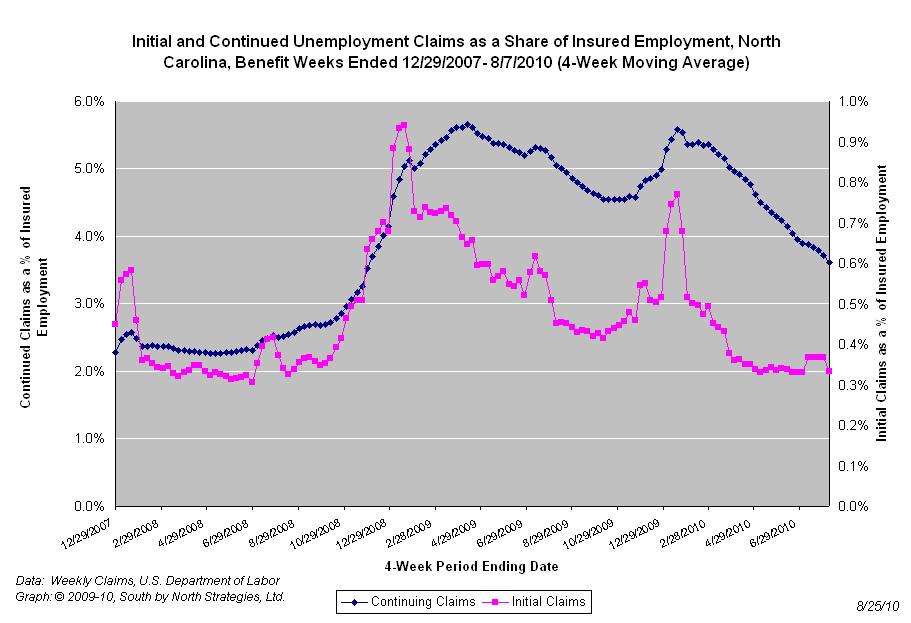
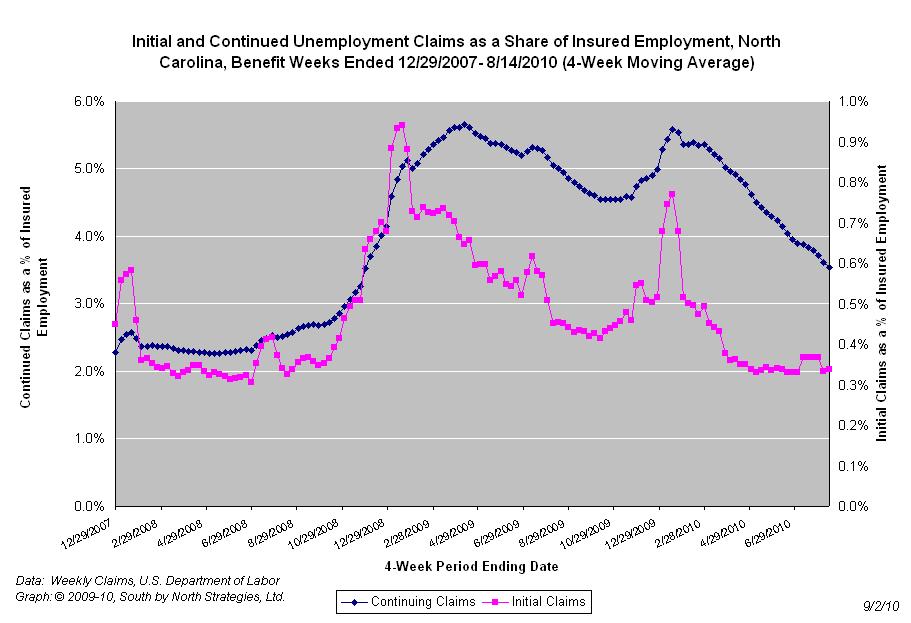
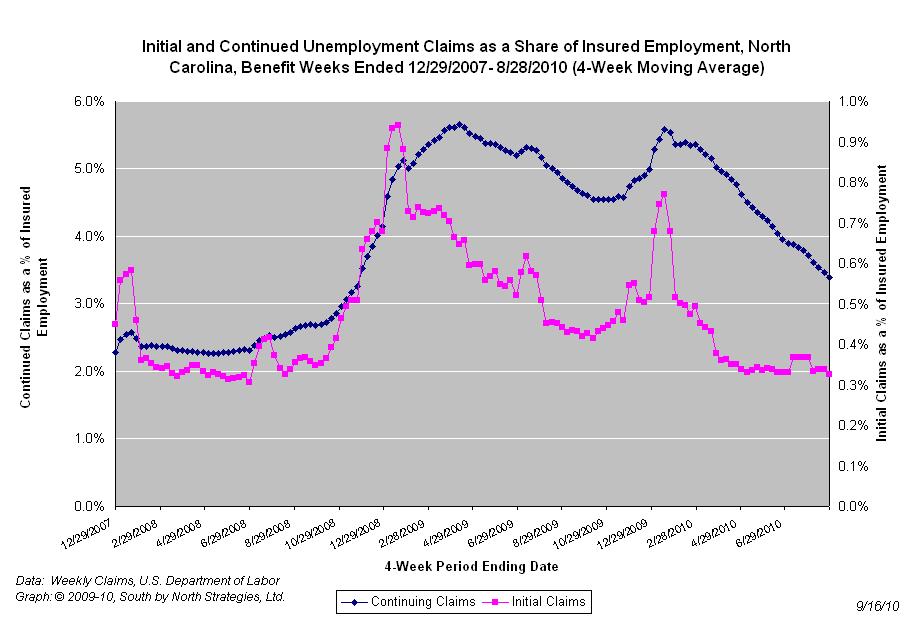
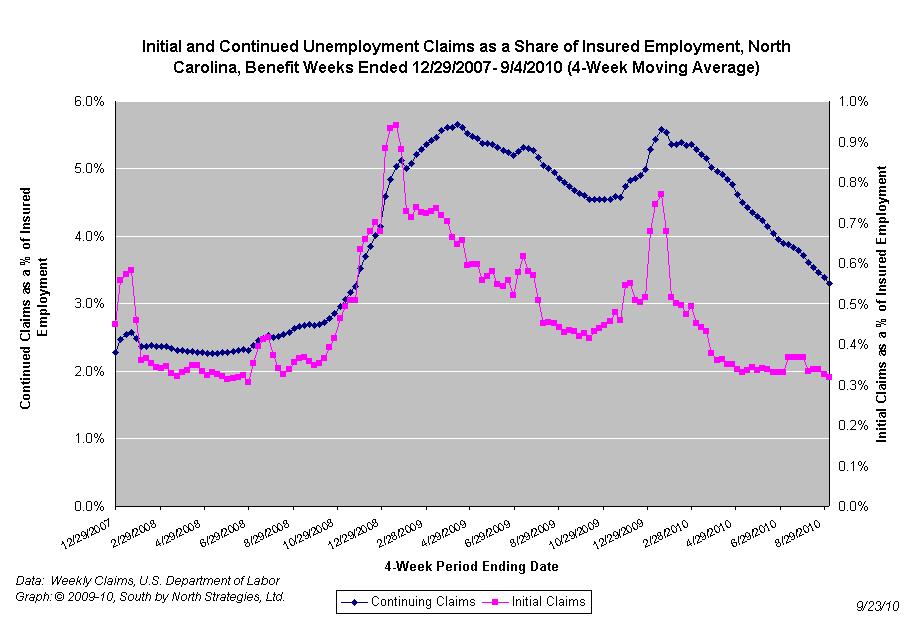
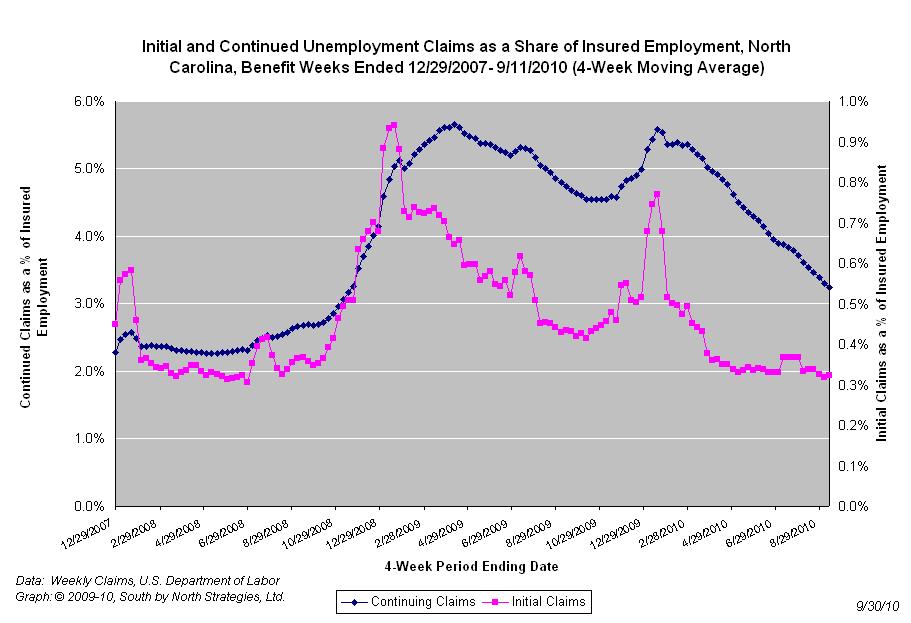
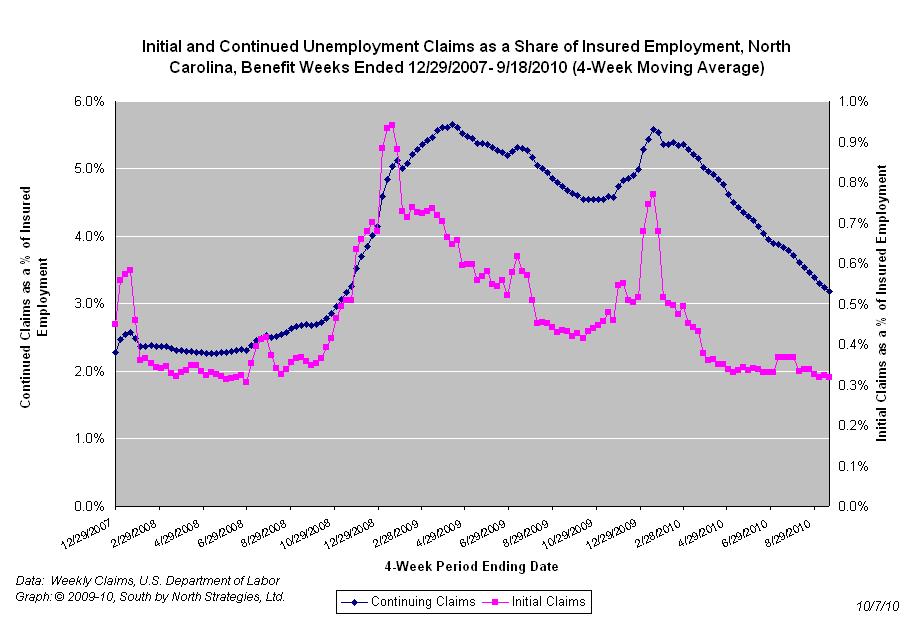
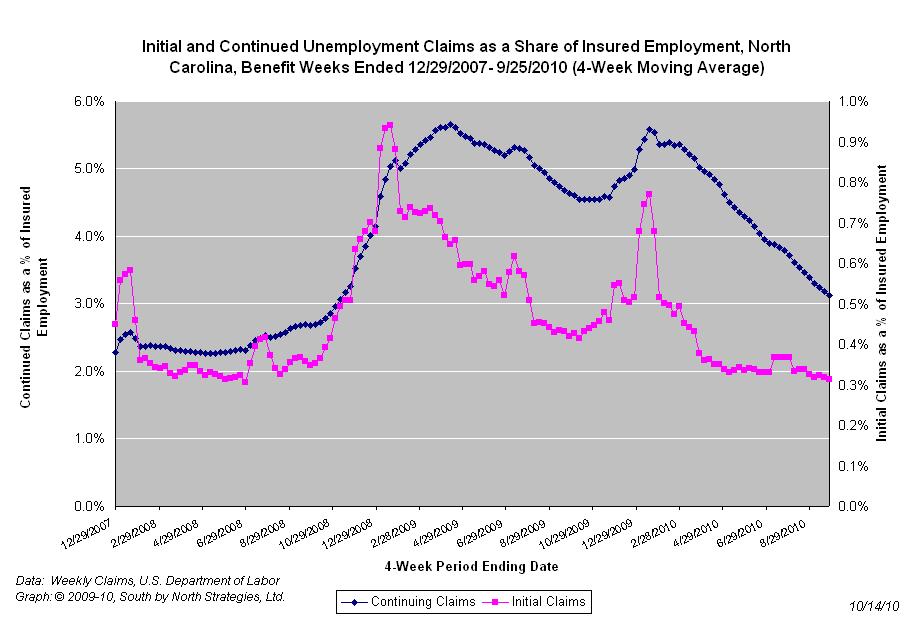
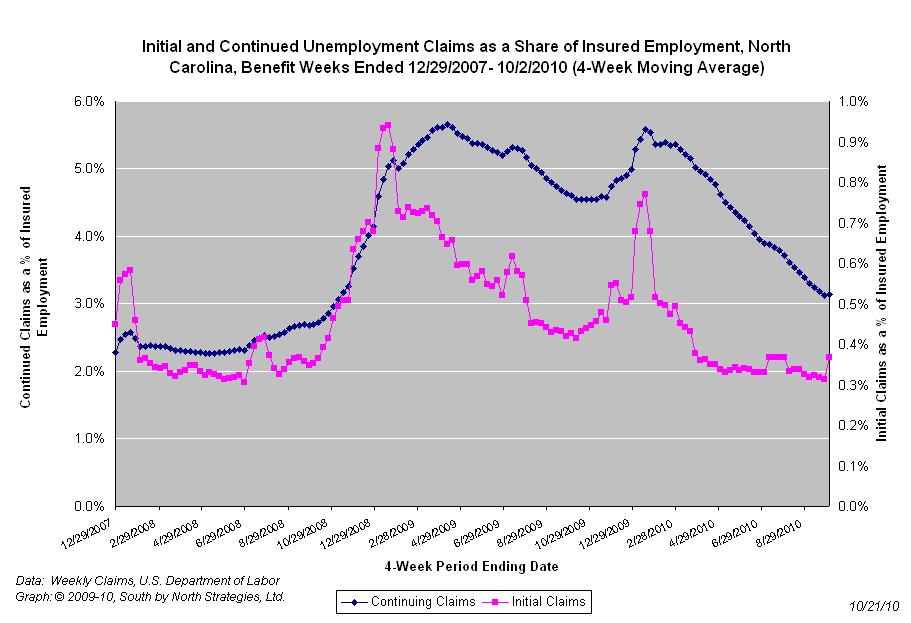
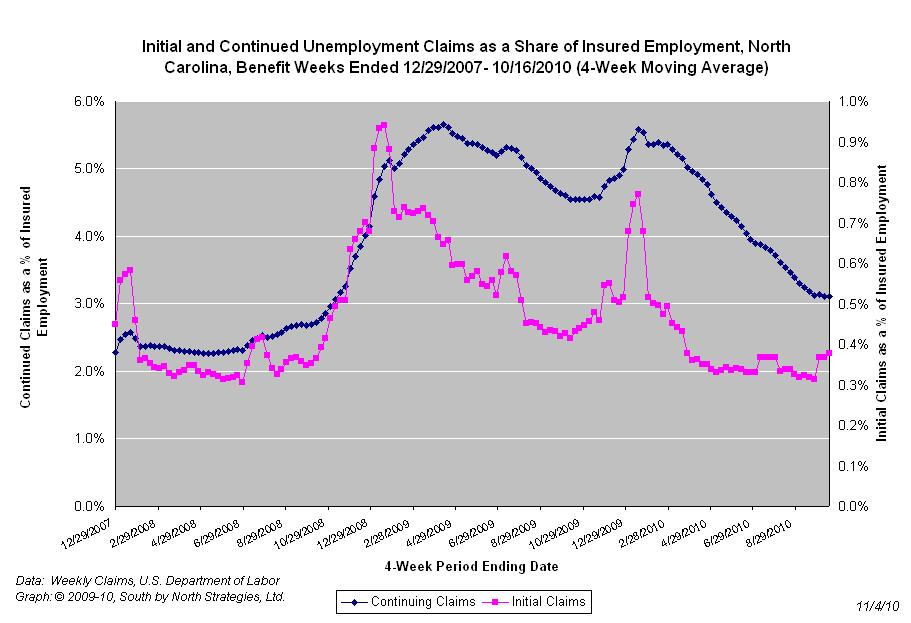
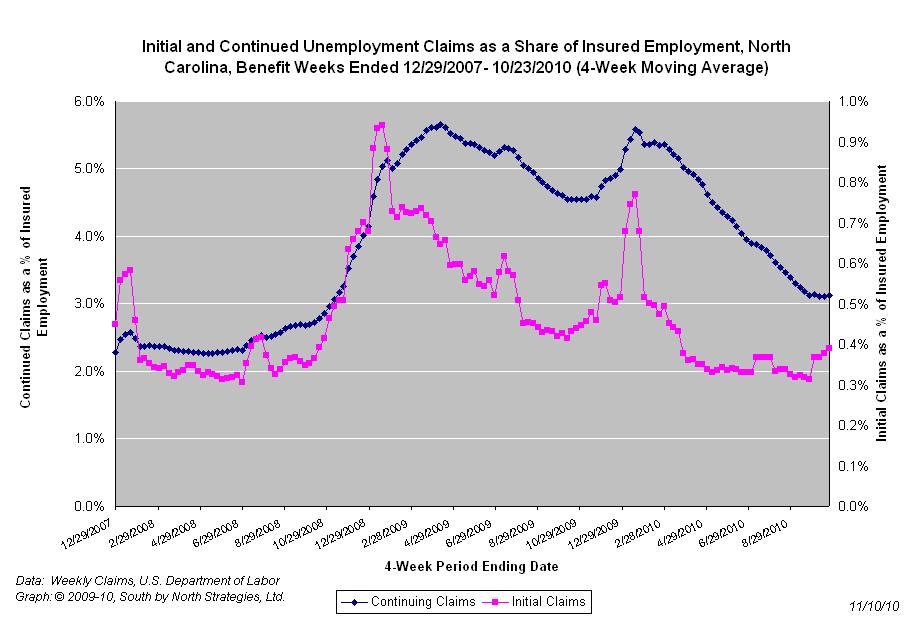
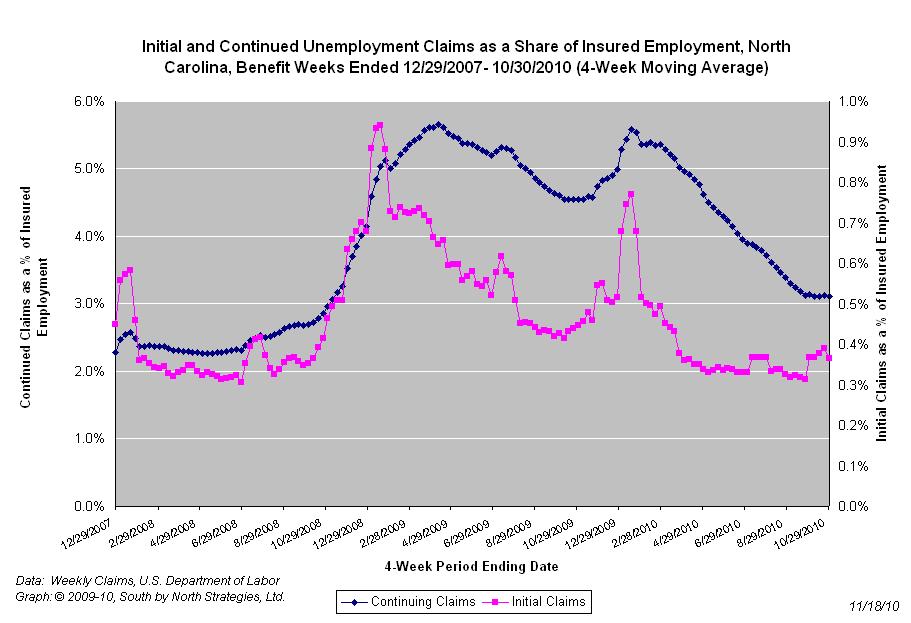
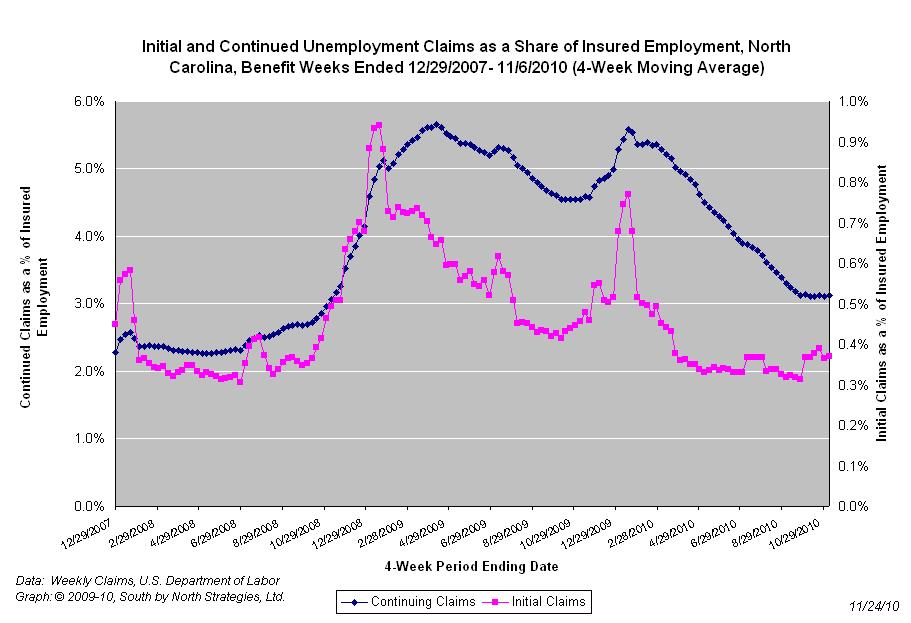
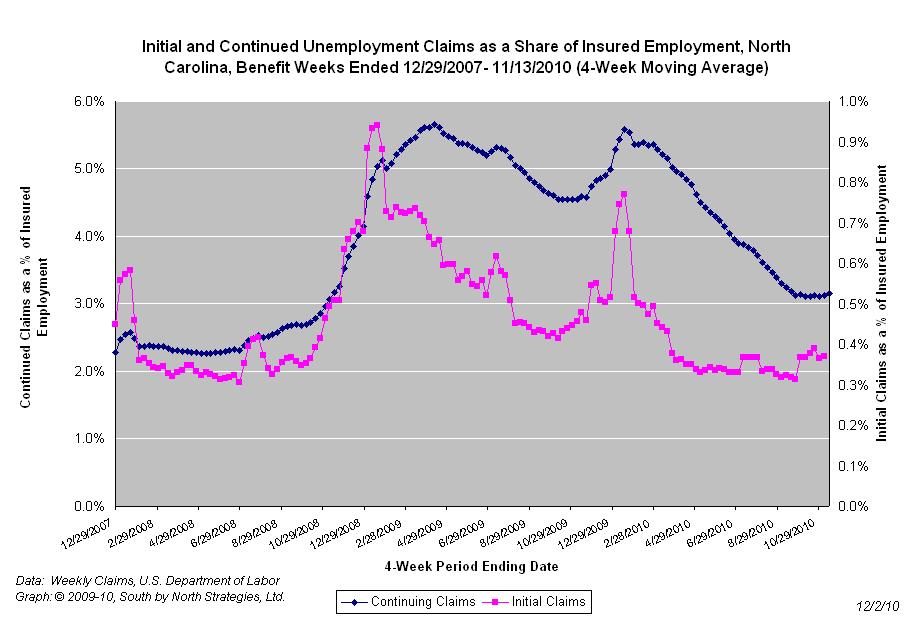
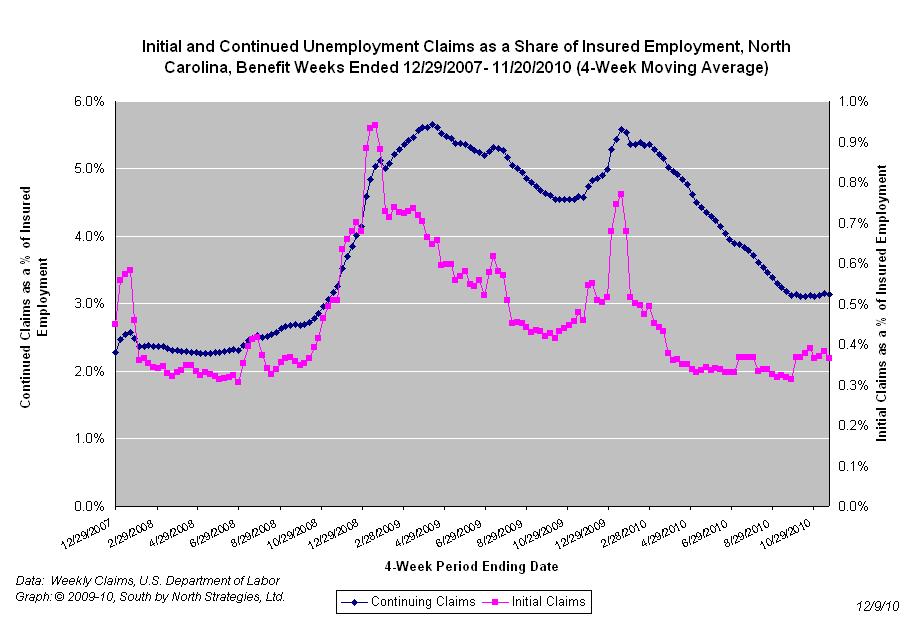
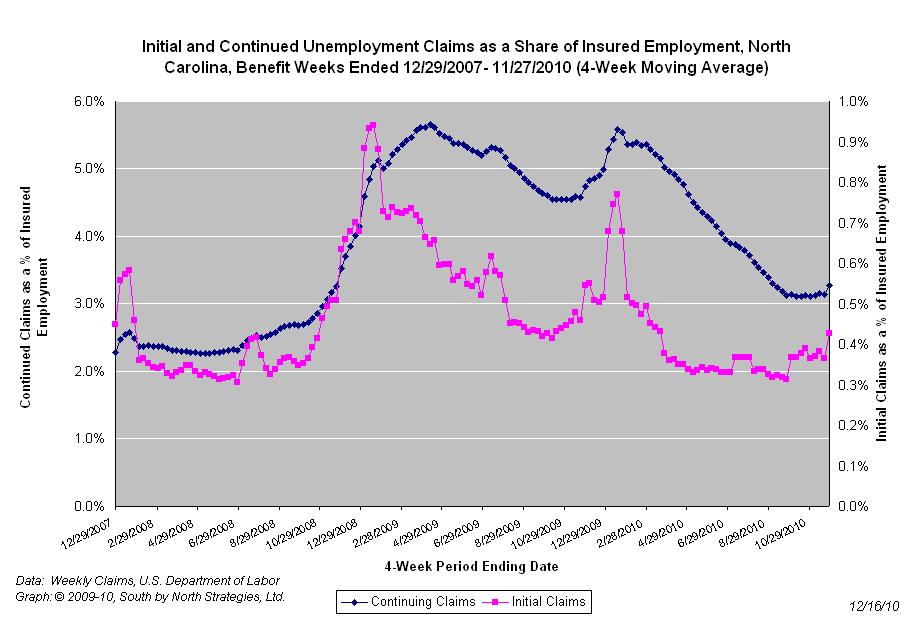
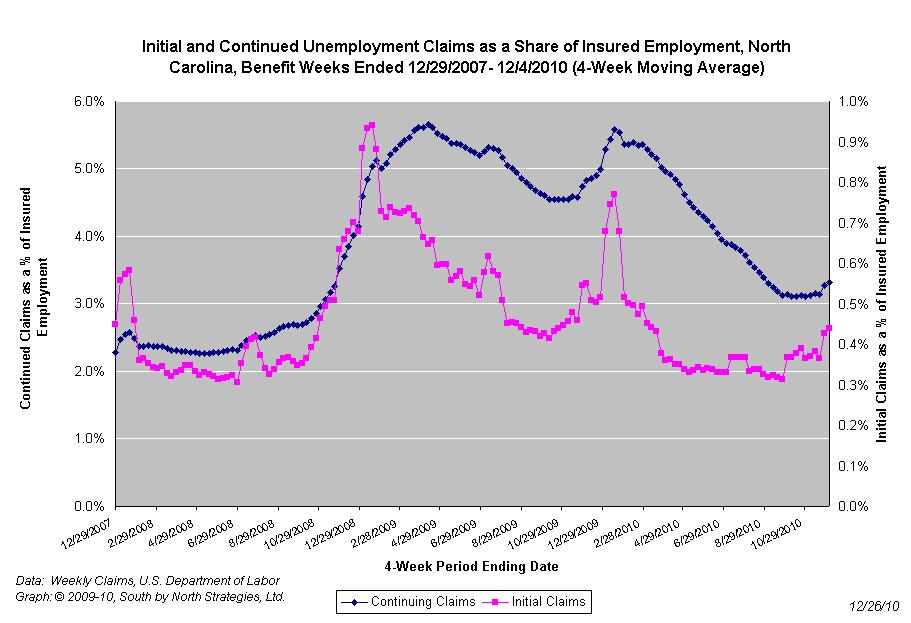
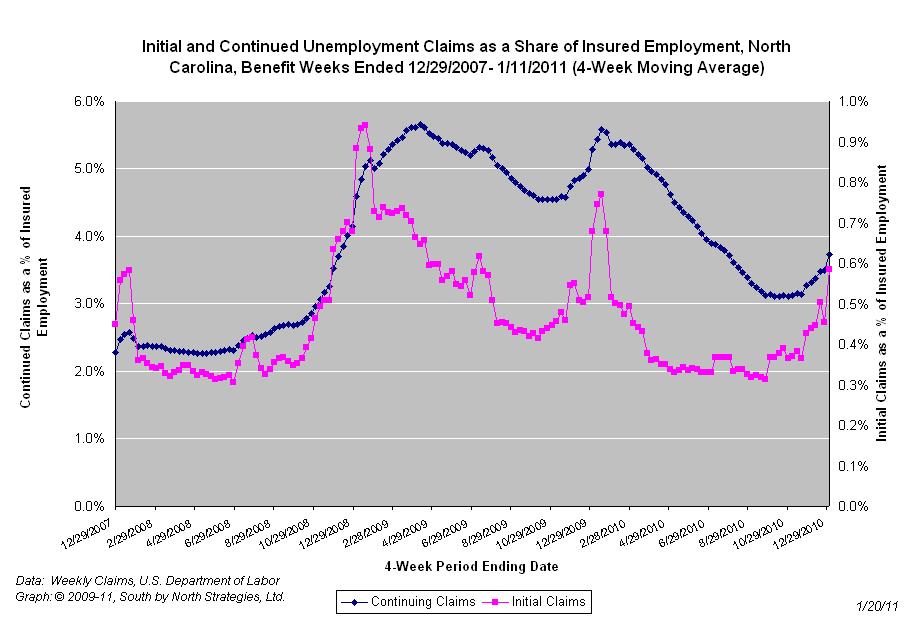
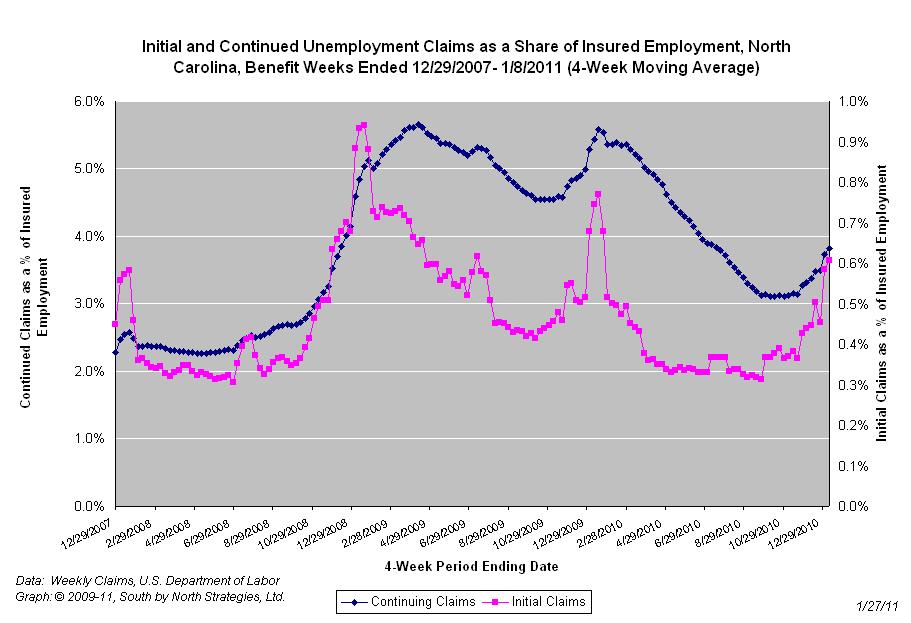
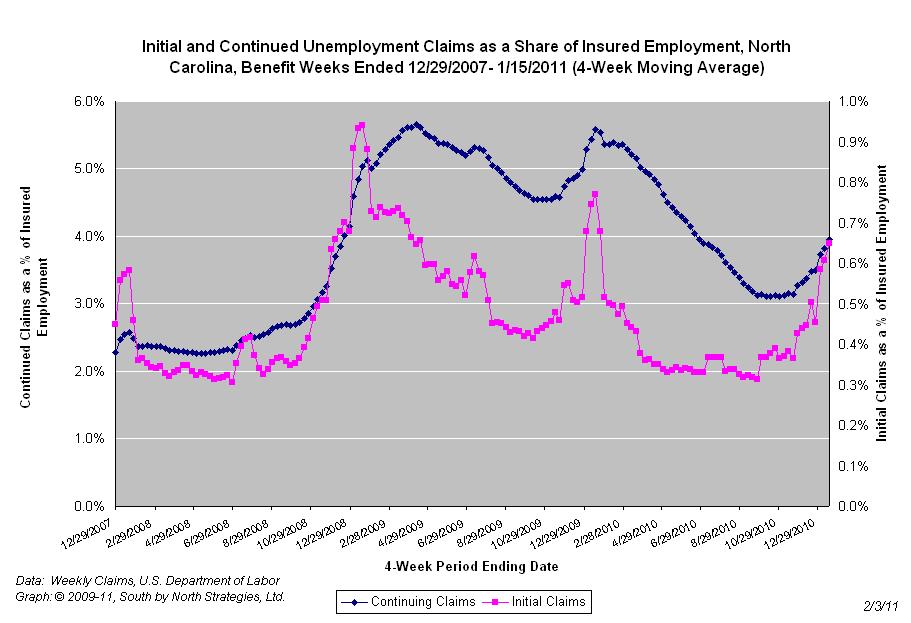
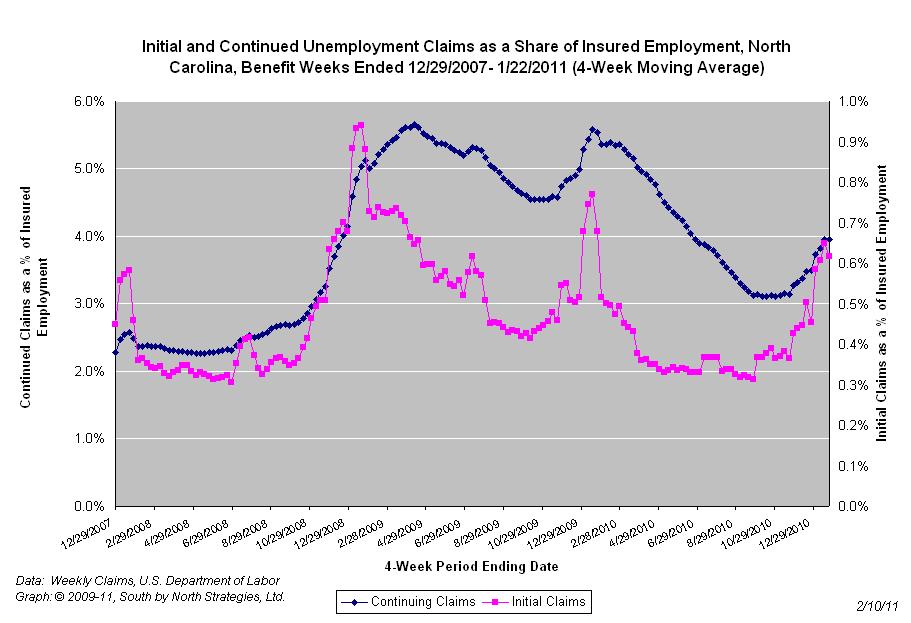
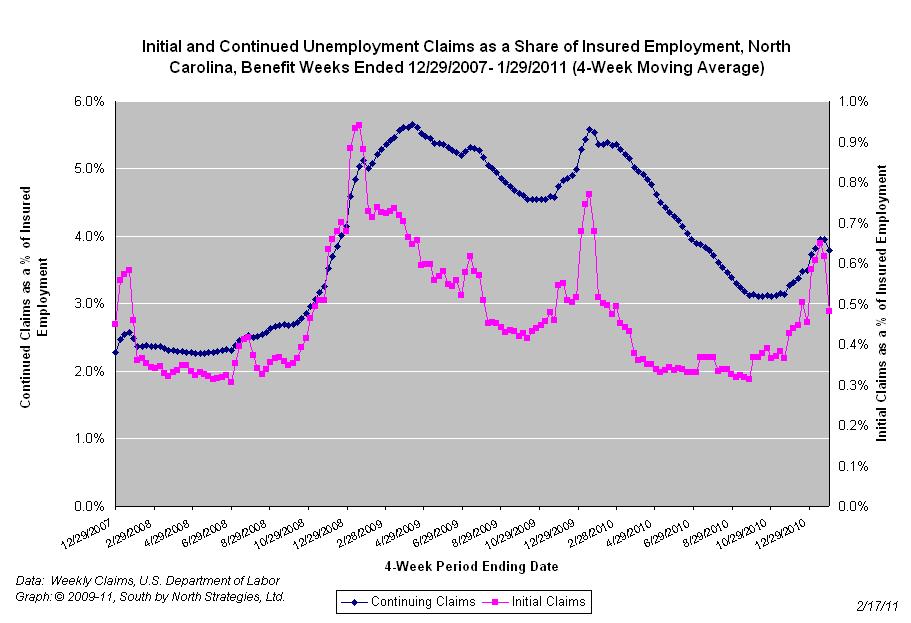
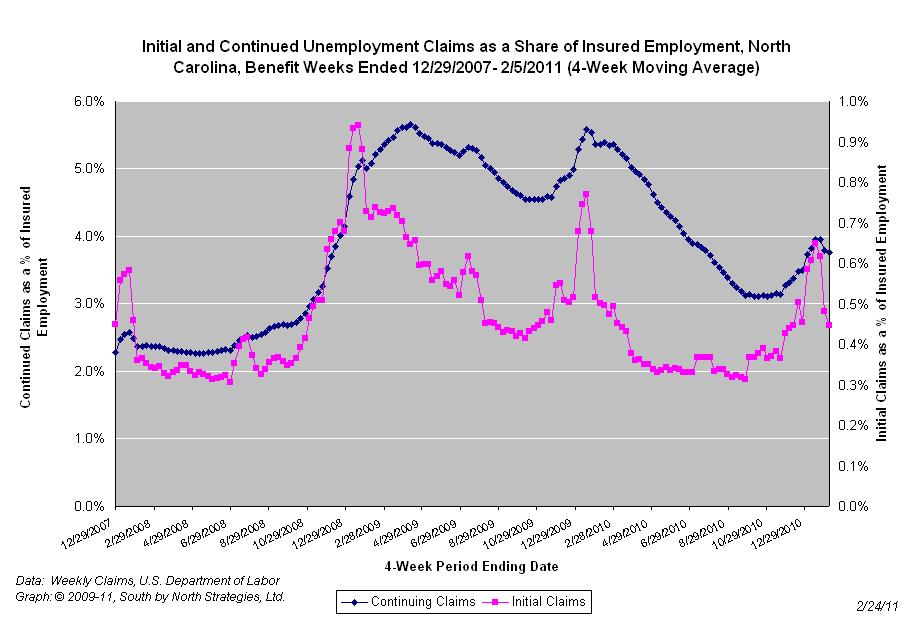
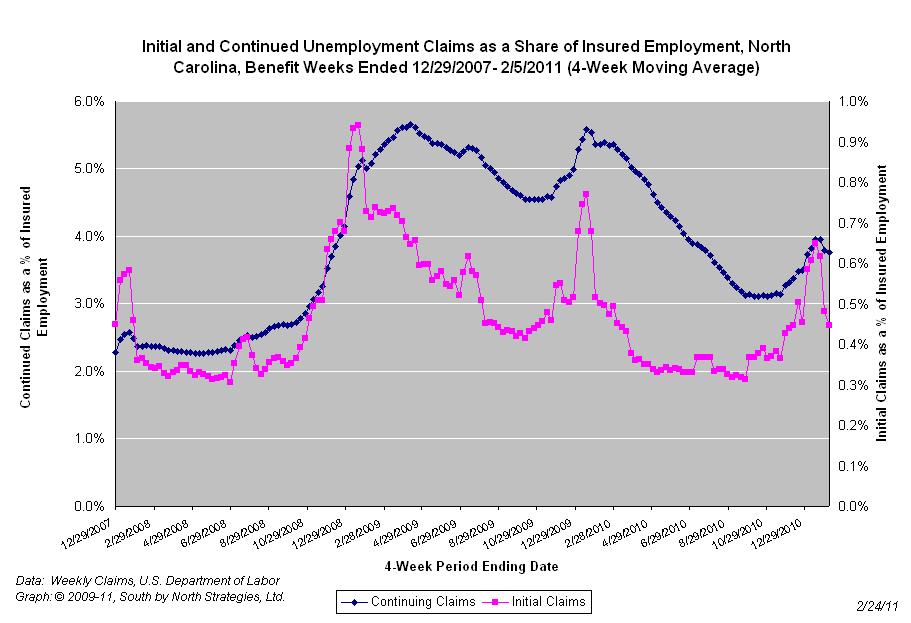
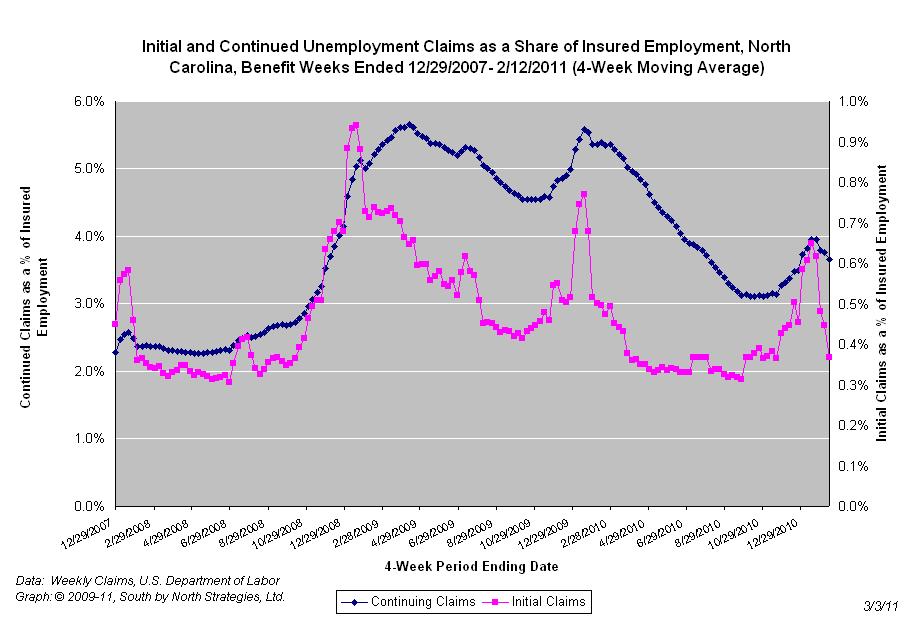
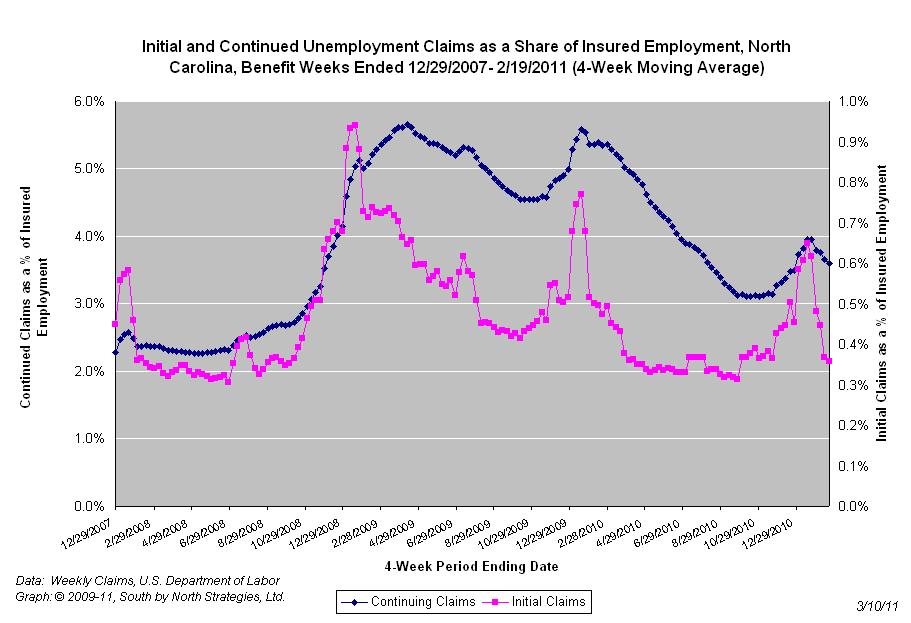 The graph (right) shows the changes in unemployment insurance claims (as a share of covered employment) in North Carolina since the recession’s start in December 2007.
Both new and continuing claims appear to have peaked for this cycle, and the four-week averages of new and continuing claims have fallen considerably. Yet continuing claims remain at an elevated level, which suggests that unemployed individuals are finding it difficult to find new positions.
Be Careful What You Wish For
Writing in The New Republic, Harold Pollock explains why state governors shouldn’t bash Medicaid.
Consider what would happen if Texas governor Rick Perry, who has mused about dropping Medicaid entirely, could do what he wanted. Talking about dropping Medicaid might attract attention for Perry’s new book. Actually doing so would be ludicrous, both as policy and politics. Most Texas Medicaid dollars go to the elderly and the disabled. Millions of middle-class Americans—in Texas and everyplace else—rely on Medicaid to protect them if they or a loved one requires costly medical services or long-term care. Few politicians would risk damaging services to these groups.
…
Medicaid’s rules and procedures are also encoded in the DNA of every state’s medical and social service systems. Withdrawing from the program would be an administrative nightmare that would likely deeply anger patients, not to mention the well-organized network of providers who provide Medicaid-funded services.
…
Moreover, the federal government picks up more than 60 percent of Texas’s Medicaid tab. I doubt Texas would turn down more than $15 billion annually from the federal government, just as I doubt it will forego additional federal funds which finance virtually the entire cost of expanded Medicaid under ACA. (Recent analysis indicates that Texas will also receive billions of dollars in new subsidies for individuals and for state services under the new health reform law.)
Around The Dial – March 9
Economic policy reports, blog postings, and media stories of interest:
- The CBO offers four budget observations.
- Economix asks about the secret of Seattle’s success.
- Naked Capitalism doesn’t like the mortgage settlement terms.
- Off the Charts discusses rising homelessness among children.
- Economist’s View reflects on the politics of economic intervention.
- The NY Review of Books considers federal budget politics.
North Carolina’s Earned Income Tax Credit
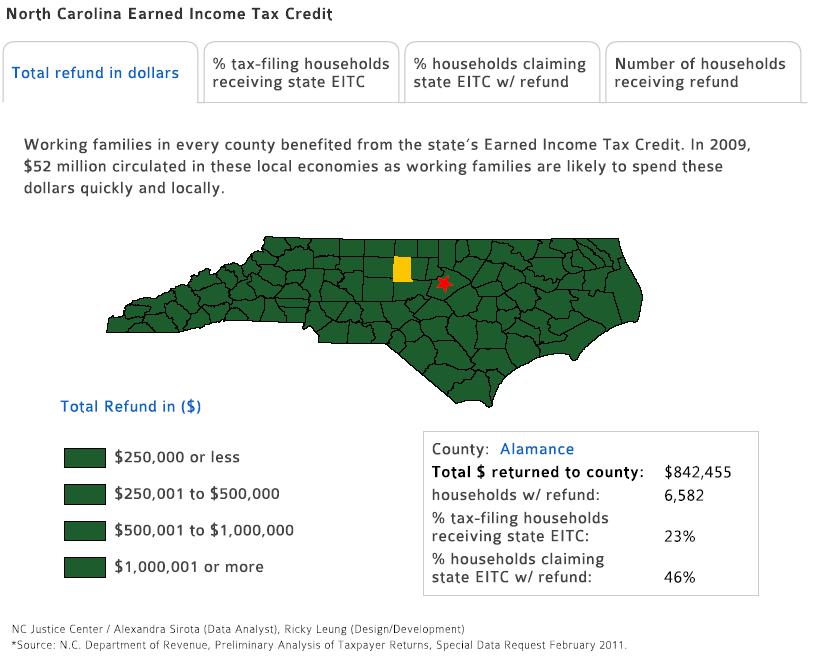
NC Policy Watch and the North Carolina Budget and Tax Center recently released an interactive calculator showing the county-by-county impacts of the state’s Earned Income Tax Credit, a refundable tax credit targeted at working families with relatively low incomes. Click on the image below to access the calculator.
 Email Sign-Up
 RSS Feed