Not What A Recovery Looks Like
CHAPEL HILL (November 19, 2010) – North Carolina recorded zero net job growth in October, according to data released today by the Employment Security Commission. At the same time, the state’s unemployment rate fell slightly, dipping to 9.6 percent. Unfortunately, this drop was attributable primarily to a decline in the size of the state’s labor force.
“There is little in the October employment report to celebrate,” says John Quinterno, a principal with South by North Strategies, Ltd., a research firm specializing in economic and social policy. “The lack of any net job growth is a worrisome development. By this point in a normal business cycle, job growth should be occurring at a brisk pace.”
Last month, employers added no more positions than they cut. A net loss of 2,100 public-sector positions was balanced by a net gain of 2,100 private-sector positions. Among private industries, education and health services added the most positions (+4,000), followed by trade, transportation, and utilities (+1,900), and professional and business services (+800). Those gains largely were offset by losses in leisure and hospitality services (-4,000), financial activities (-1,300), and information (-300).
Additionally, a revision to the September data lowered the net job growth first reported for the month. Instead of gaining 10,100 positions in September, North Carolina actually netted 9,800 positions. With that revision, North Carolina has shed, on net, 267,800 positions – 6.4 percent of its payroll employment base – since December 2007.
“North Carolina’s labor market is showing few signs of recovery,” notes Quinterno. “The gains recorded in early 2010 have disappeared. Since May, payroll employment in North Carolina has fallen by 27,100 positions. The economy clearly is proving unable to generate jobs without public policy supports like those provided through the federal recovery act.”
Since October 2009, North Carolina has gained 9,100 jobs (+0.2 percent). In terms of individual industries, professional and business services grew the most in absolute and relative terms (+18,500, +4 percent), while construction shed the most jobs in absolute and relative terms (-7,700, -4.3 percent).
The household data for October also were troubling. Last month, the labor force contracted by 0.3 percent as 12,152 individuals stopped working or seeking work. The number of employed individuals fell, as did the number of unemployed individuals. Owing largely to the contraction of the labor force, the unemployment rate fell from 9.7 percent to 9.6 percent. The reduction in the size of the labor force is disturbing and suggests that joblessness is much more widespread than reflected in official measures.
“Some 102,000 North Carolinians have left the labor force since May,” observes Quinterno. “That contraction is responsible for much of the recent decline in the unemployment rate and is a sign of an extremely unhealthy labor market. By the same point in time following the 1990-91 and 2001 recessions, the labor force was growing again.”
“The October employment report illustrates just how weak the labor market is,” explains Quinterno. “In the 13 months since the state’s labor market hit bottom, few meaningful improvements have occurred. Public policy supports provided a bounce in late 2009 and early 2010, but the economy is proving unable to create jobs without policy assistance. Little in the October report suggests that a labor market recovery is underway in North Carolina.”
Around The Dial – Nov. 18
Economic policy reports, blog postings, and media stories of interest:
- The CBO looks at unemployment insurance’s impact on families.
- Simon Johnson reminds us that “our tax system stinks.”
- Economist’s View looks at the newest price data.
- Naked Capitalism wraps up the Senate hearing on the foreclosure mess.
- CBPP finds state film subsidies to be a bad deal.
NC Unemployment Claims: Week of 10/30
For the benefit week ending on October 23rd, 12,972 North Carolinians filed initial claims for state unemployment insurance benefits, and 115,871 individuals applied for state-funded continuing benefits. Compared to the prior week, there were more initial and continuing claims. These figures come from data released by the U.S. Department of Labor.
Averaging new and continuing claims over a four-week period — a process that helps adjust for seasonal fluctuations and better illustrates trends — shows that an average of 14,514 initial claims were filed over the previous four weeks, along with an average of 116,752 continuing claims. Compared to the previous four-week period, there were more initial and continuing claims.
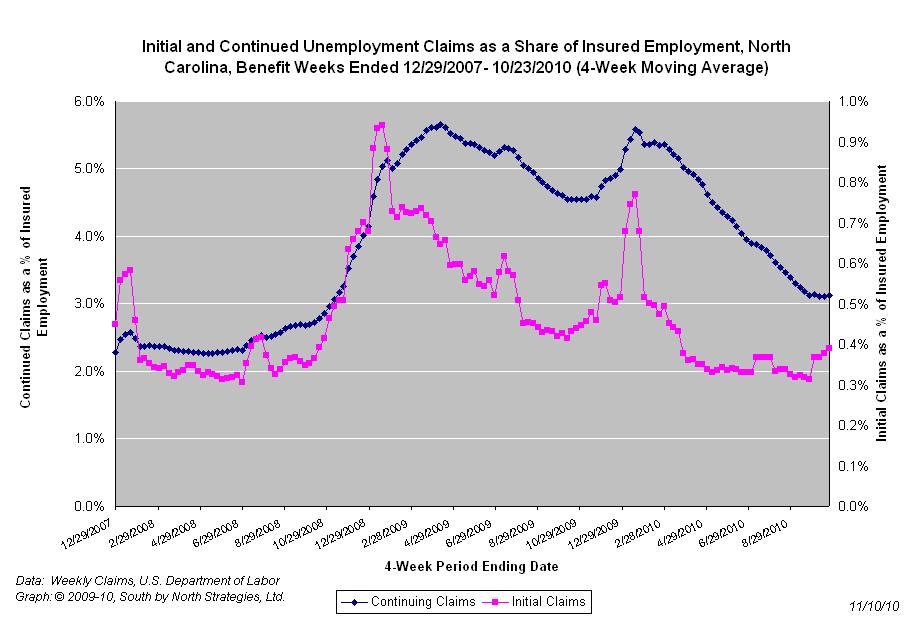 One year ago, the four-week average for initial claims stood at 17,339 and the four-week average of continuing claims equaled 179,989.
While the number of claims has dropped over the past year, so has covered employment. Last week, covered employment totaled 3.7 million, down from 4 million a year ago.
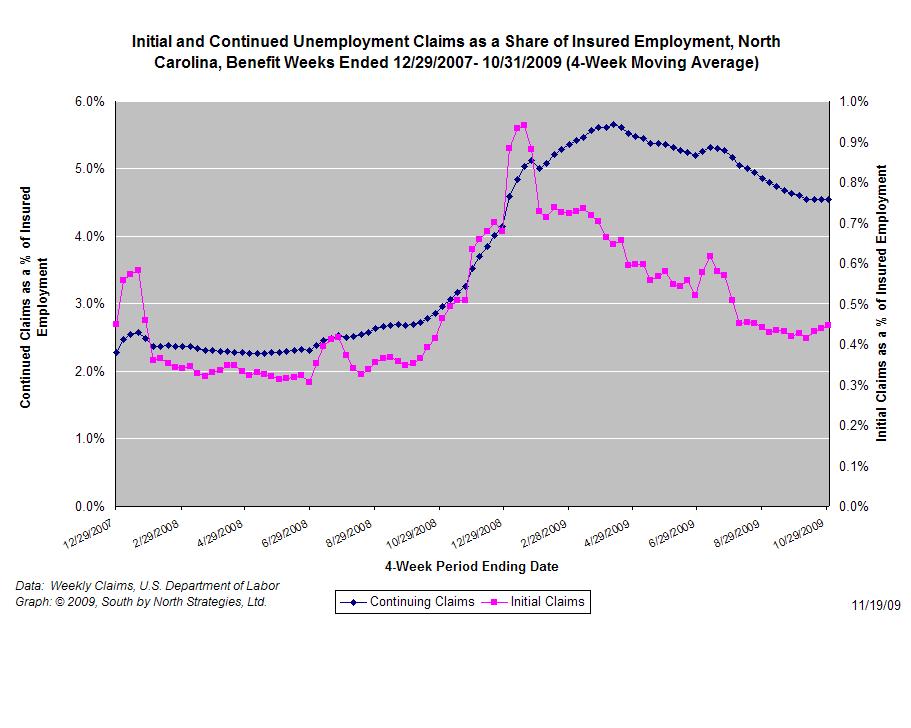
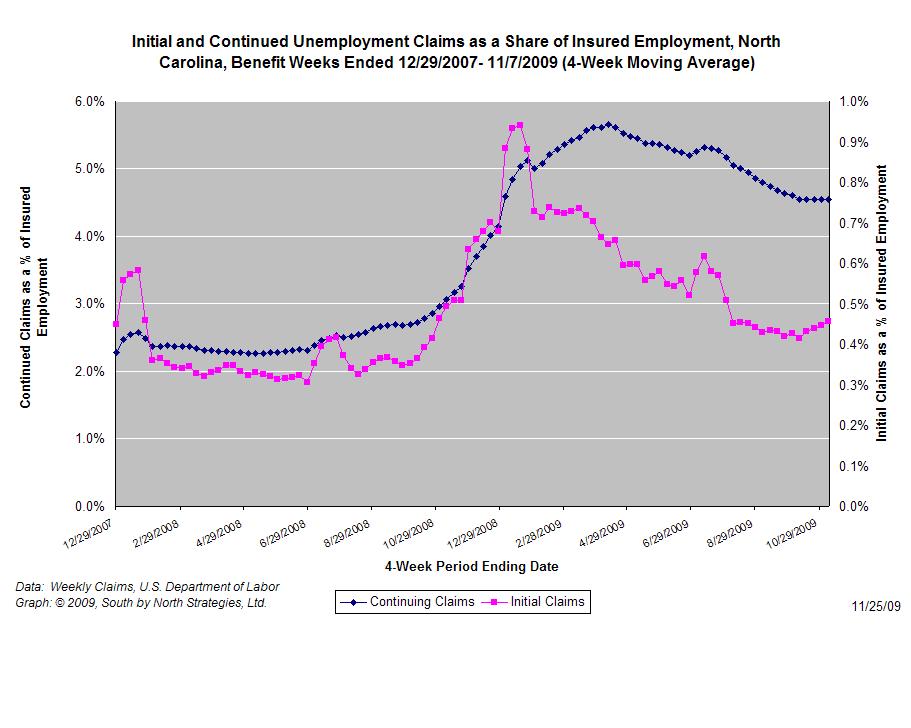
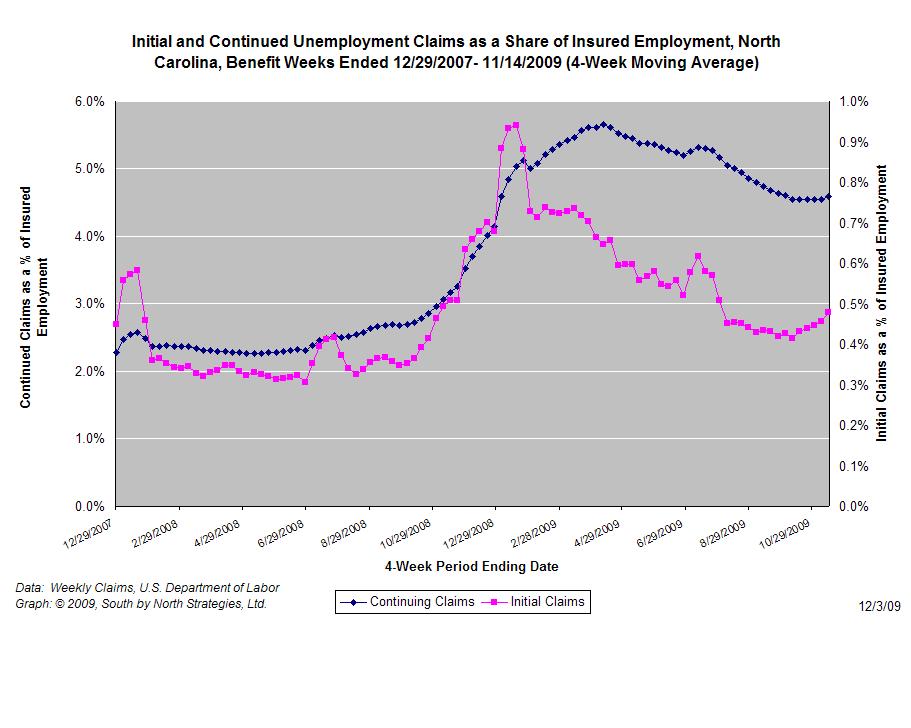
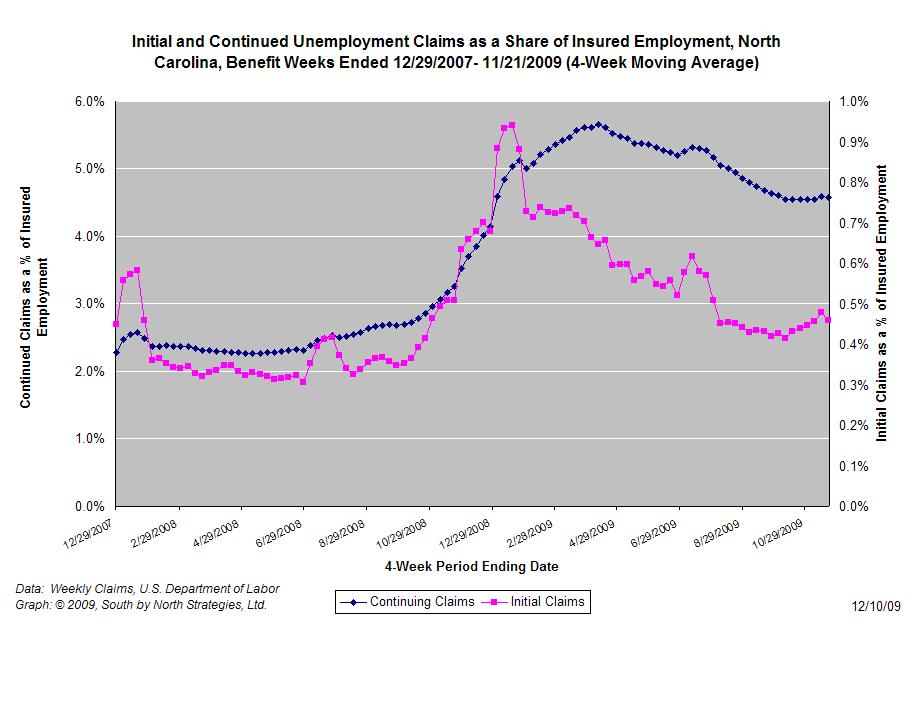
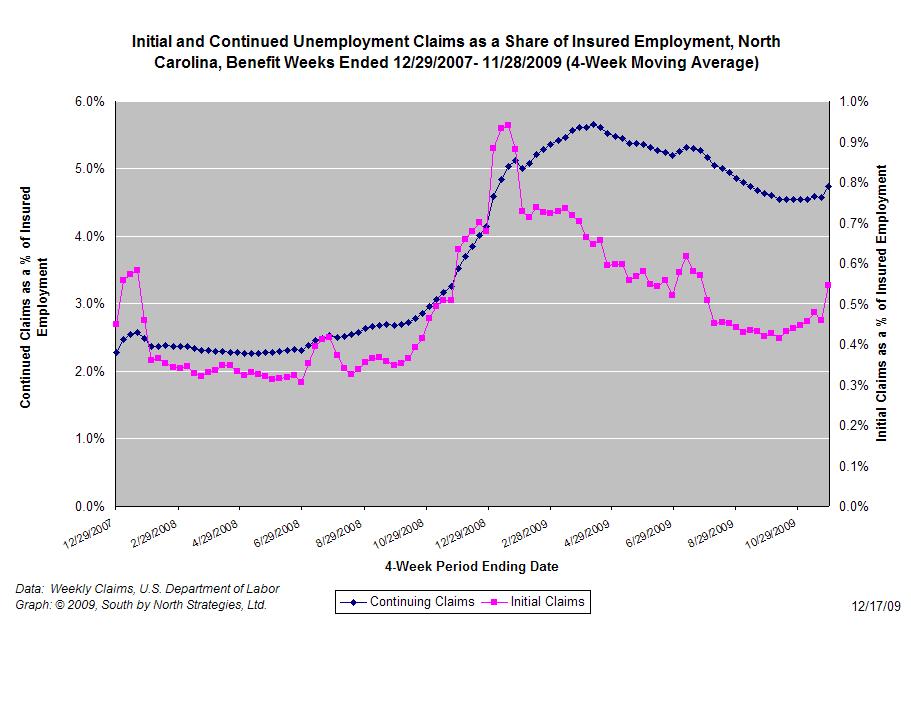
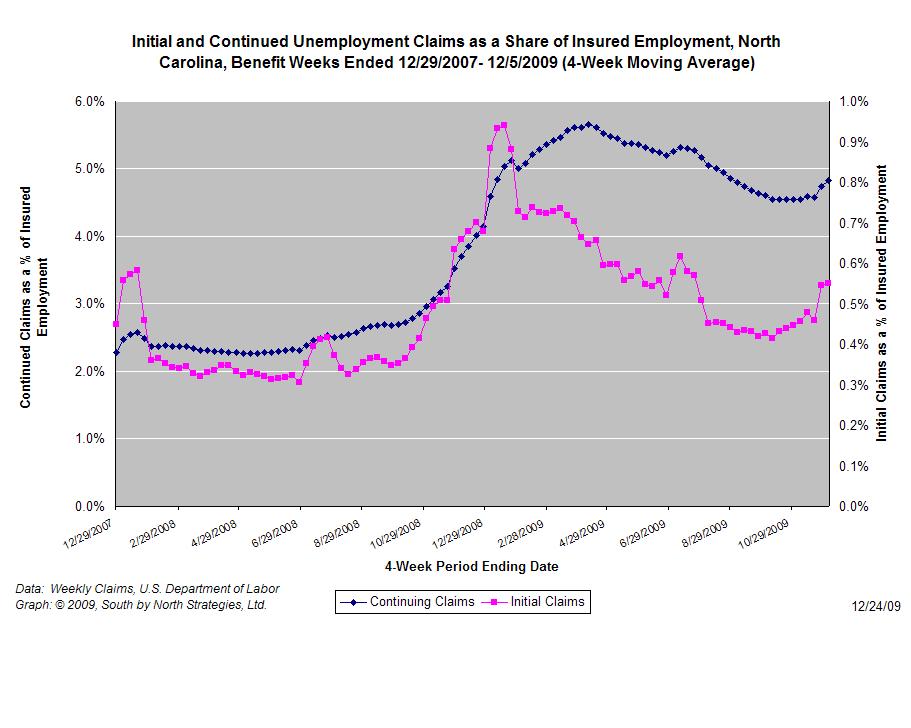
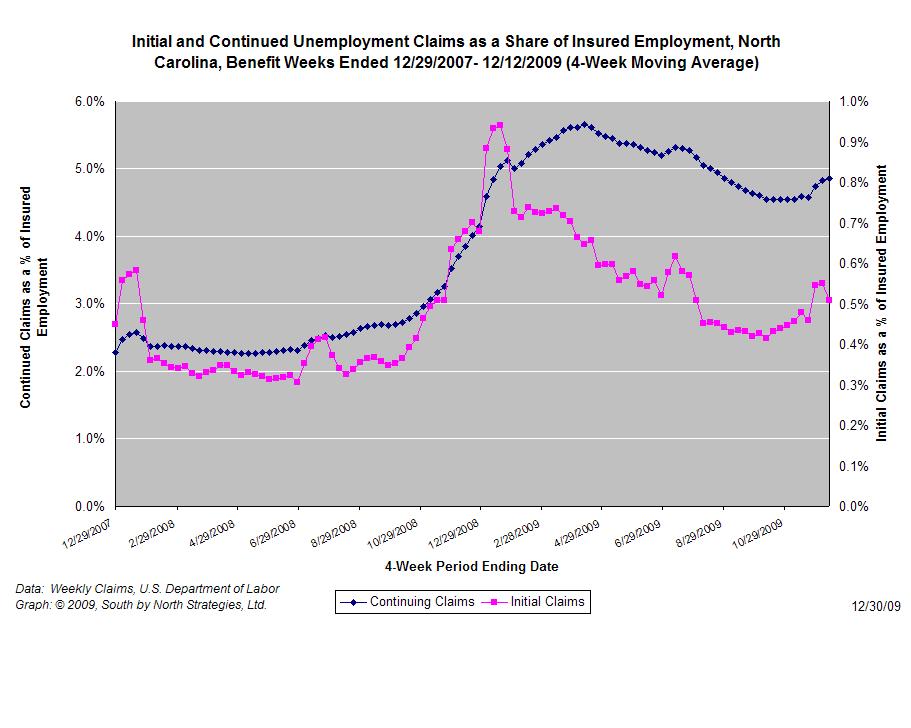
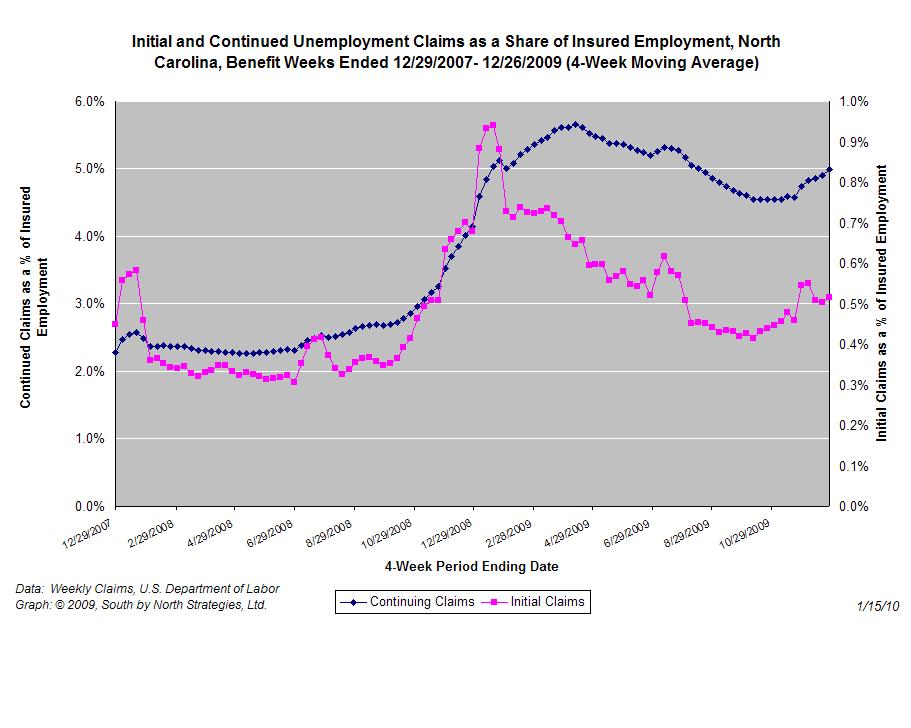
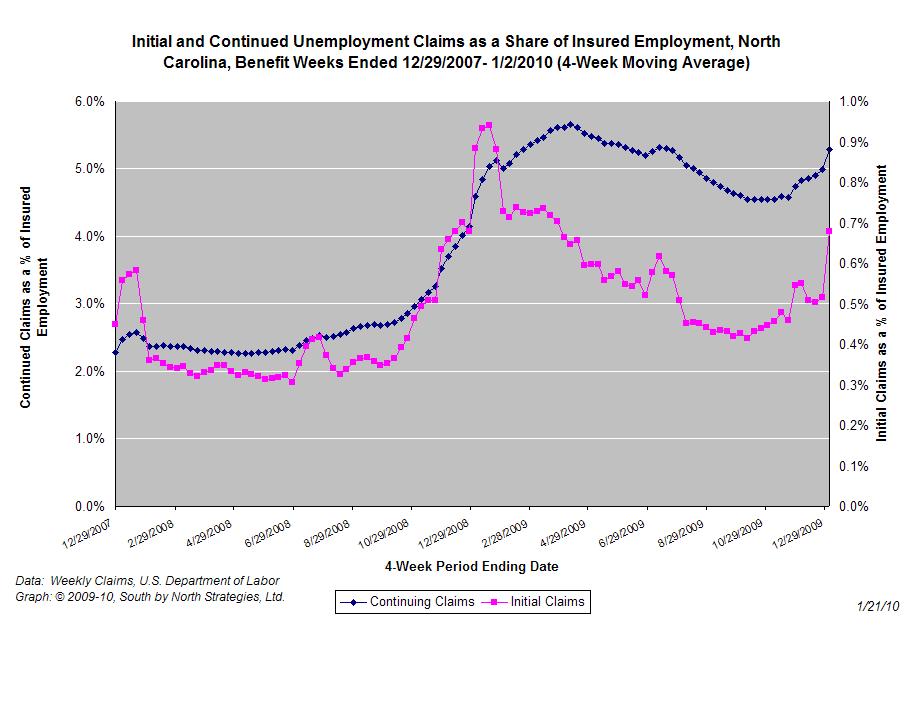
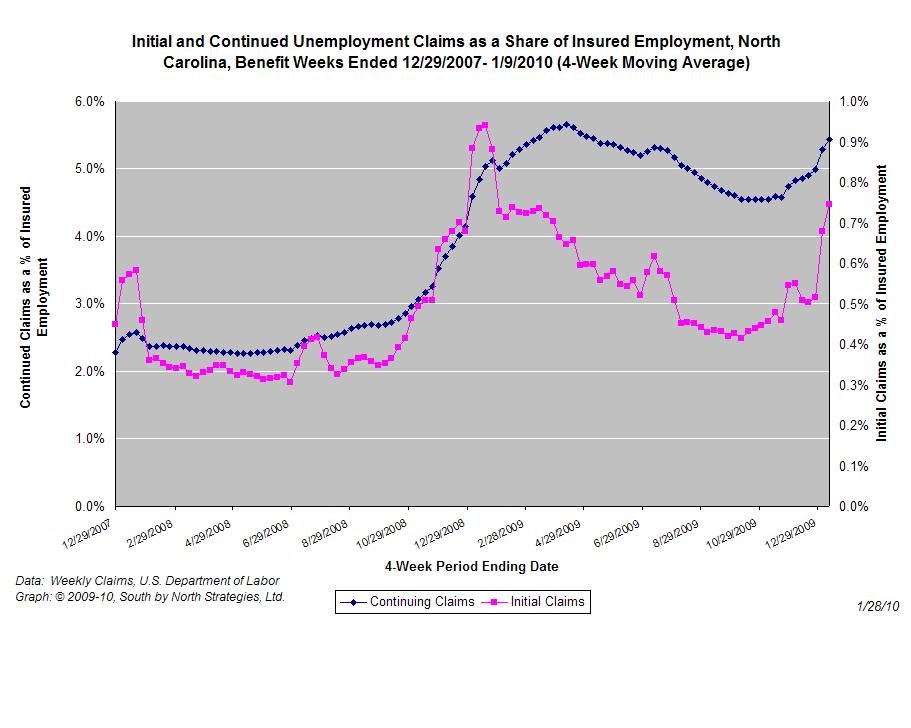
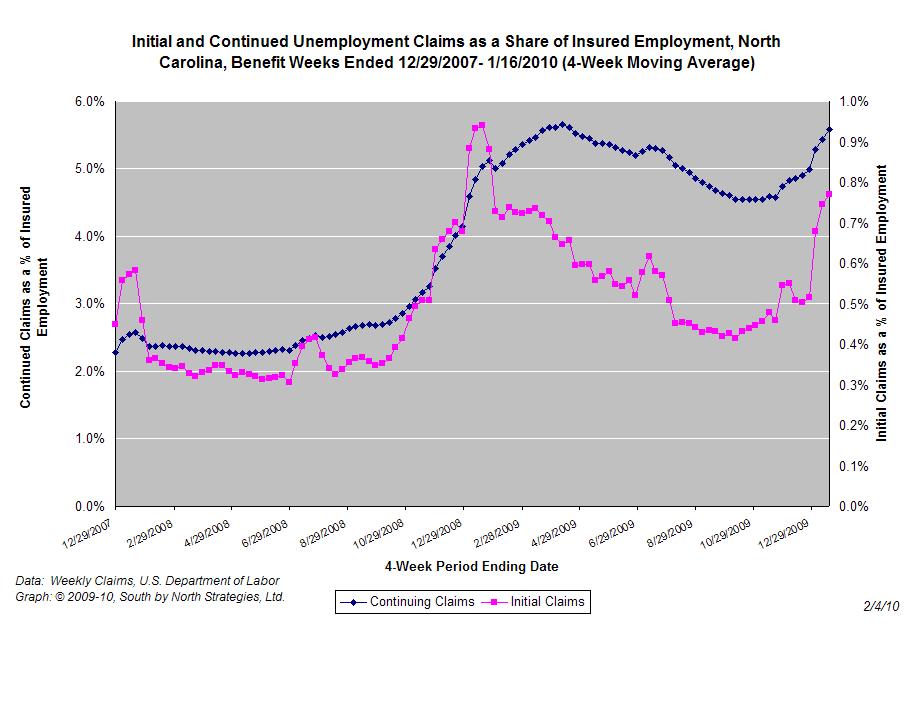
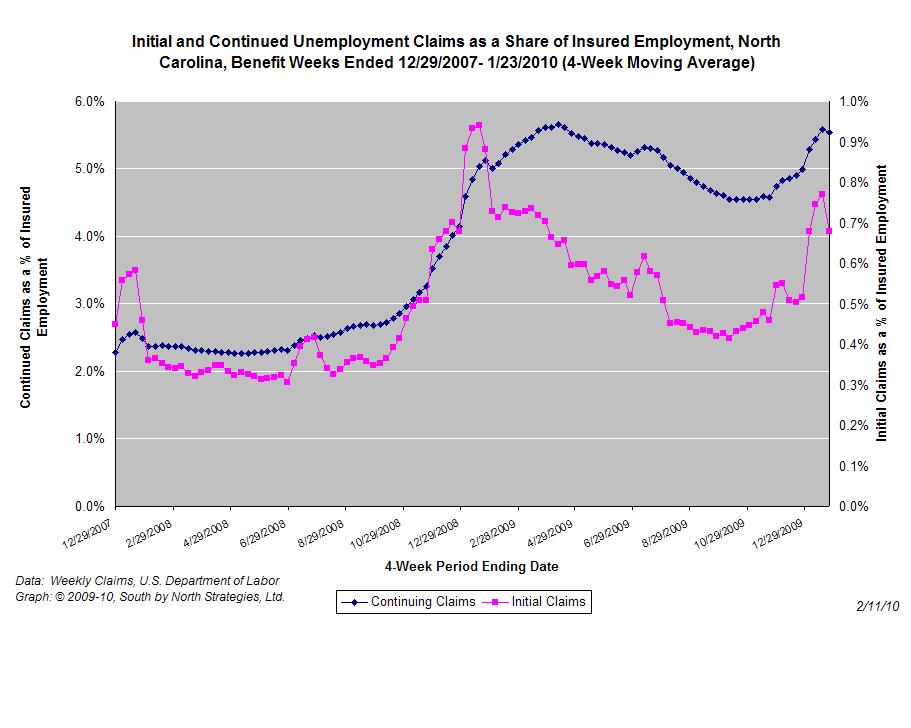
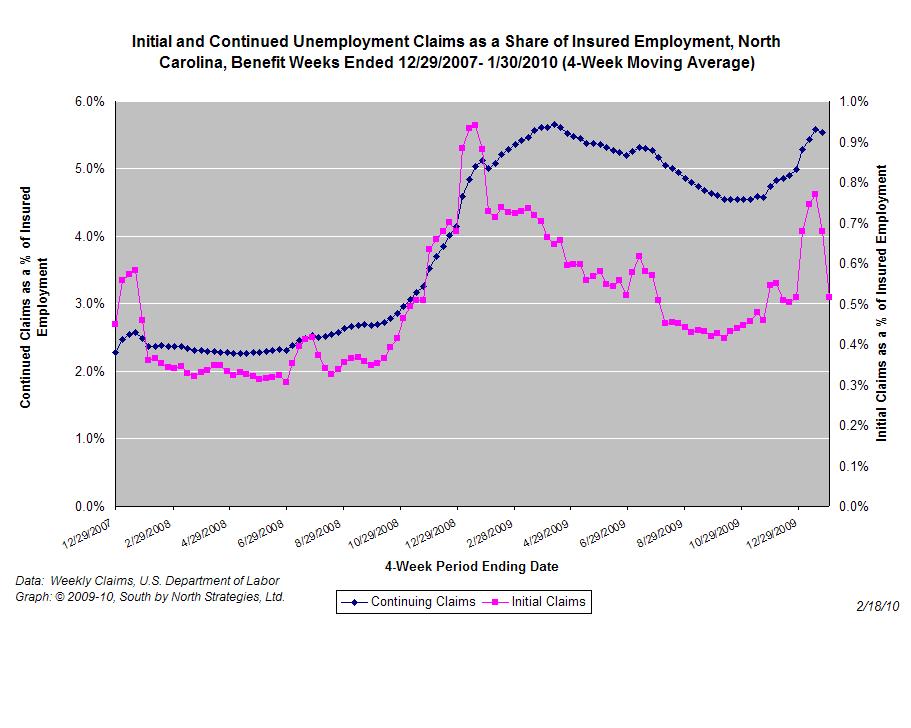
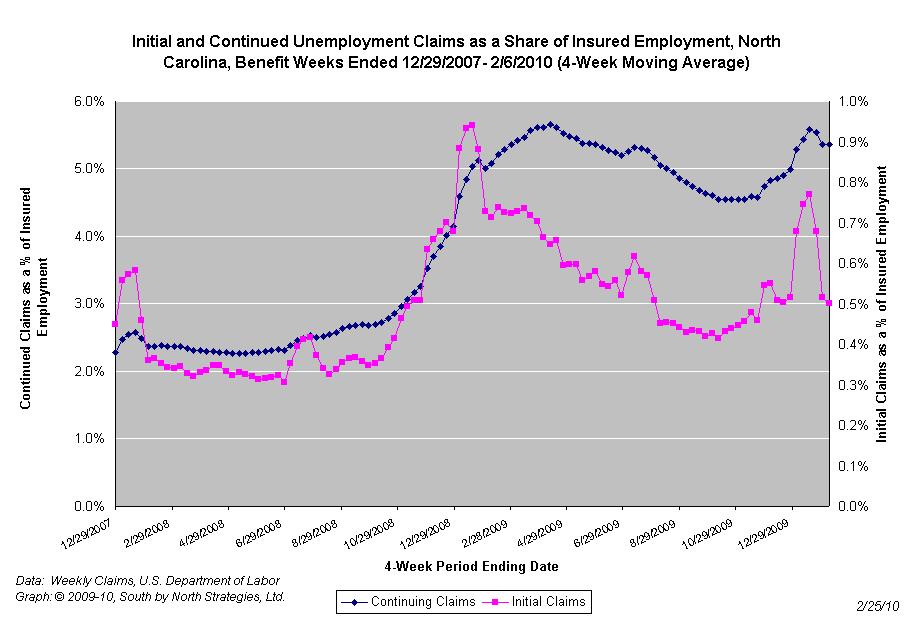
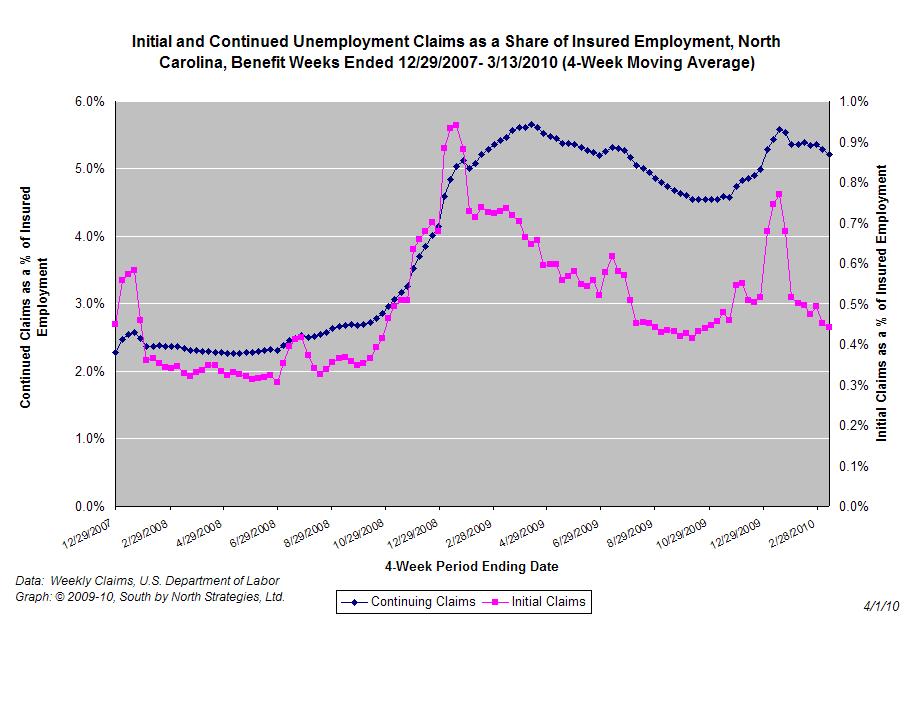
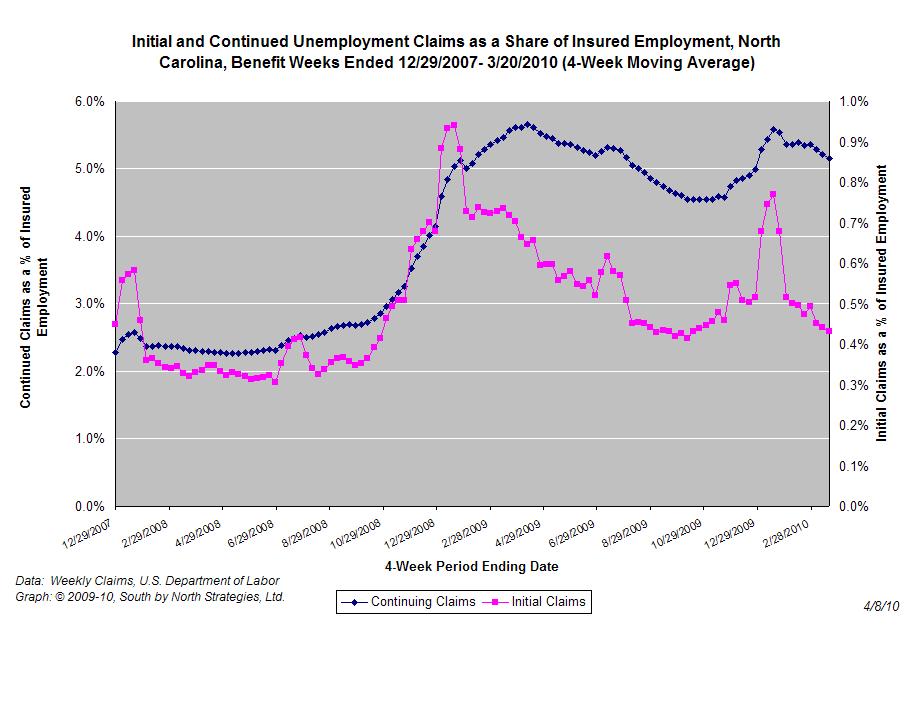
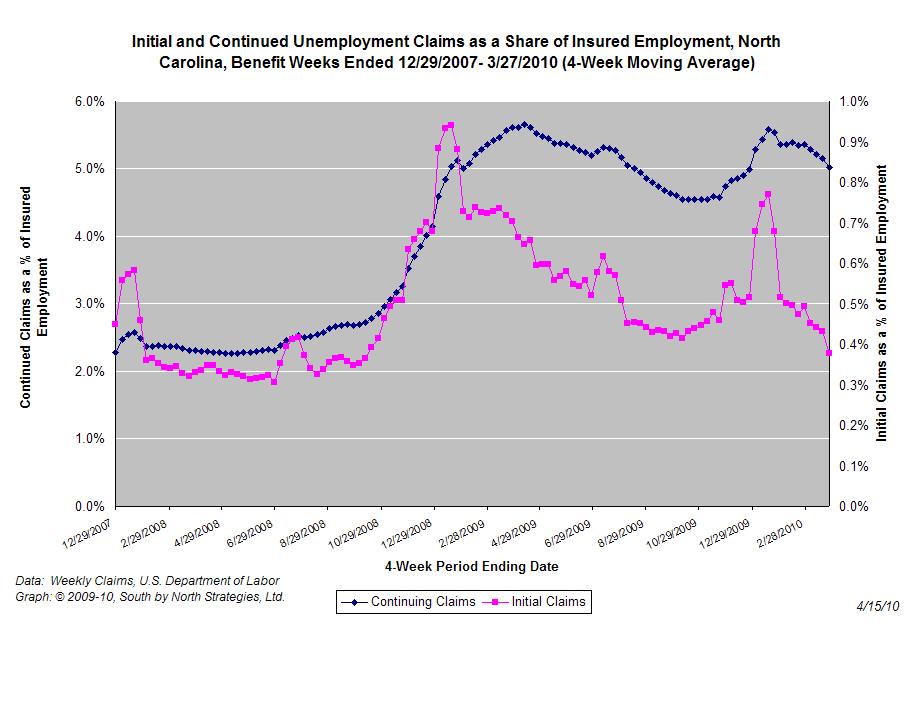
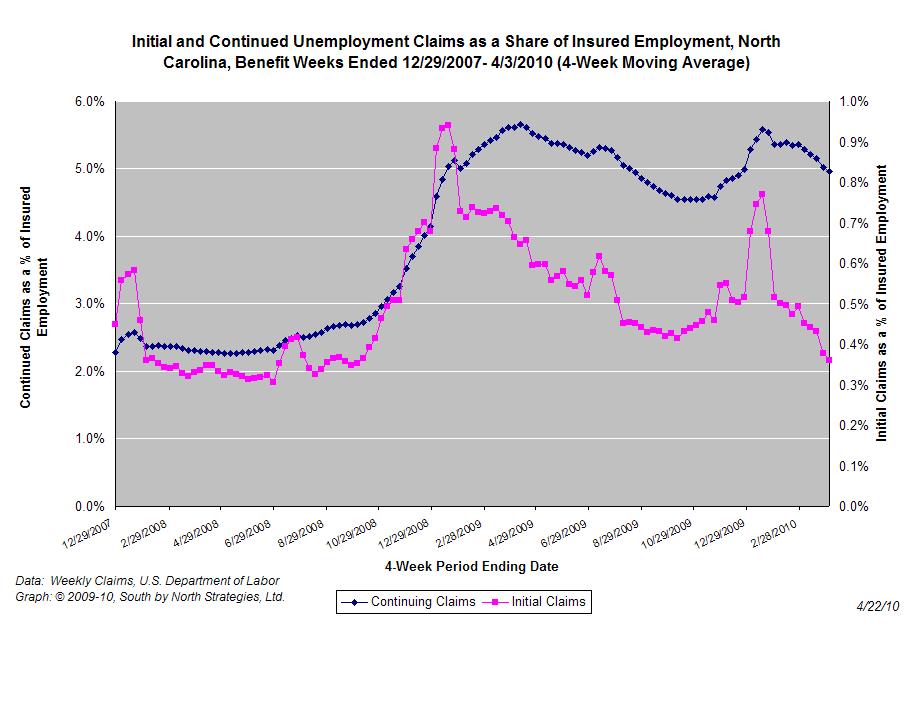
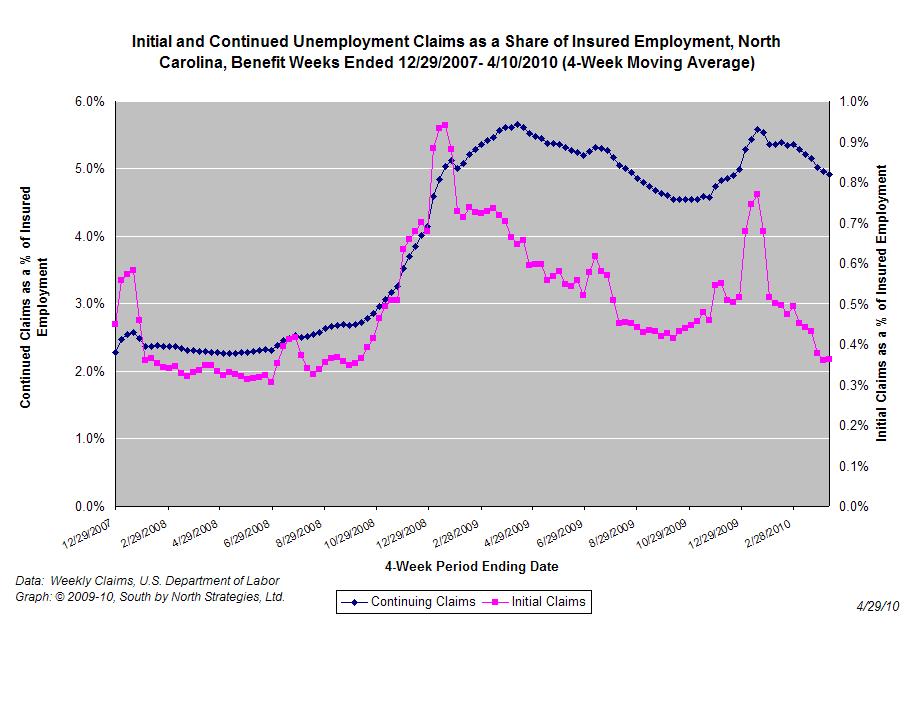
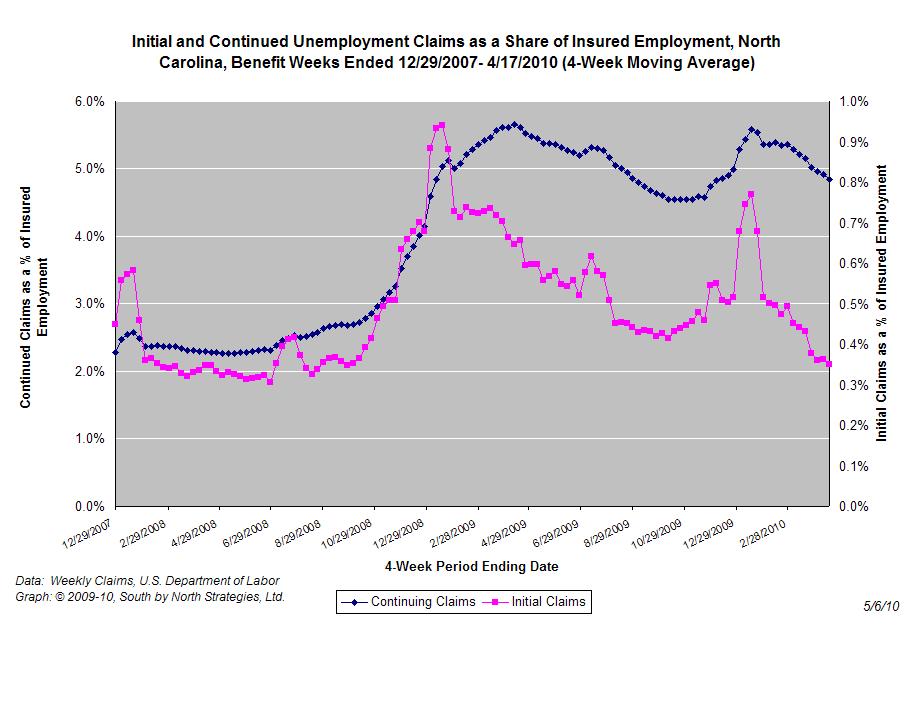
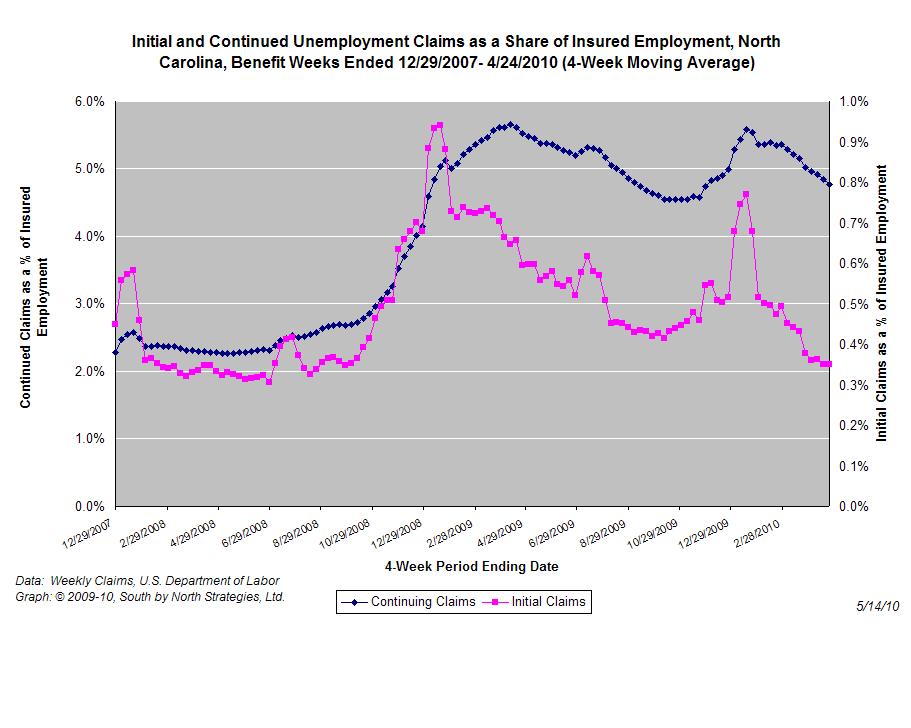
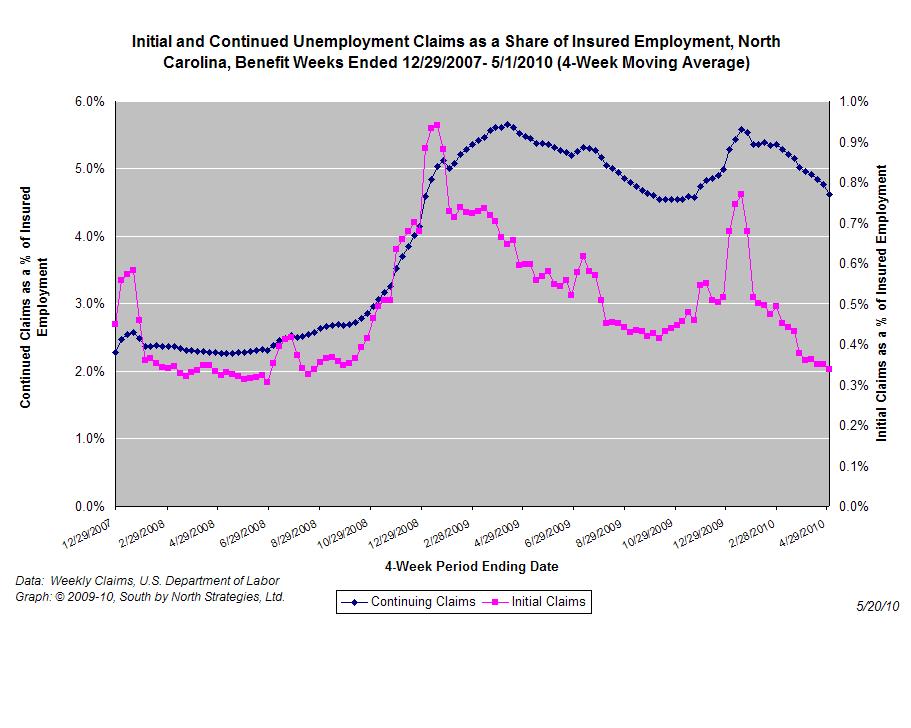
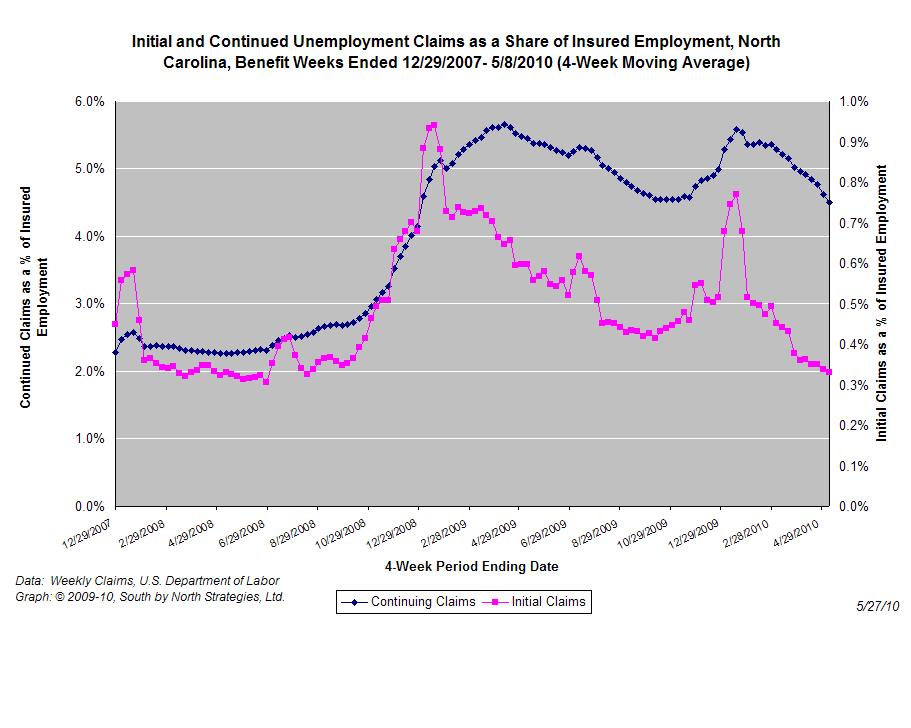
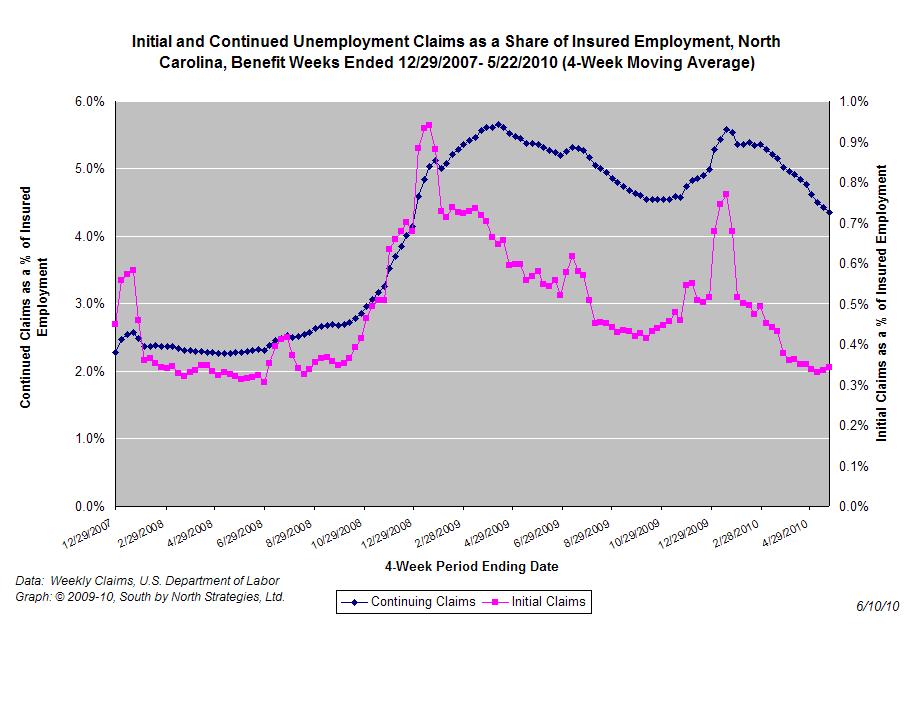
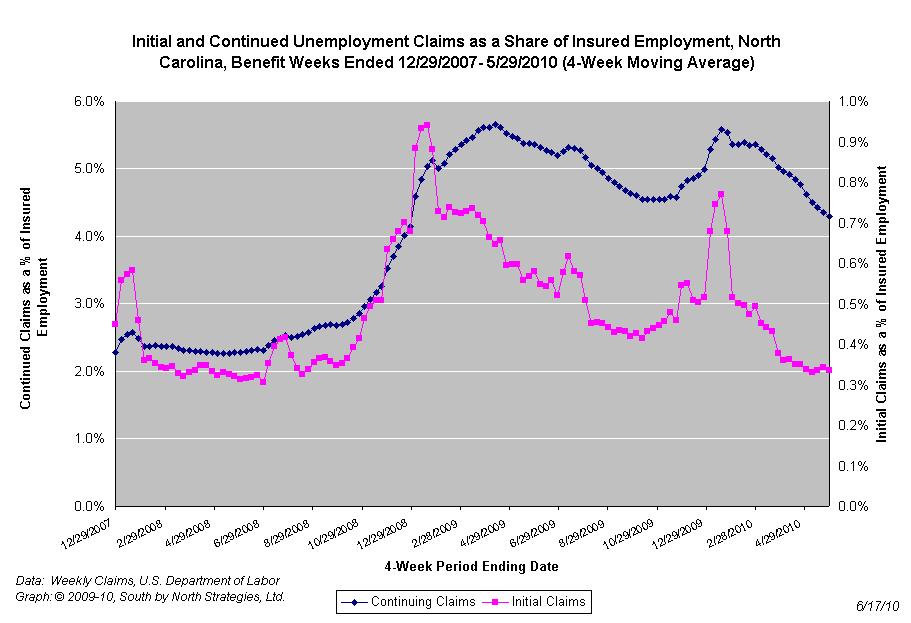
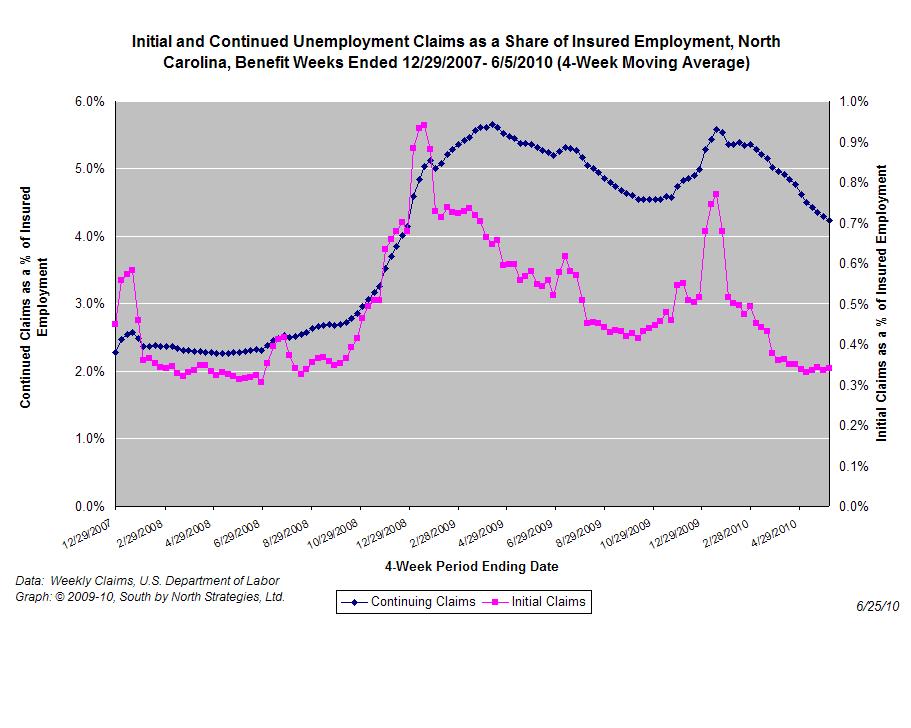
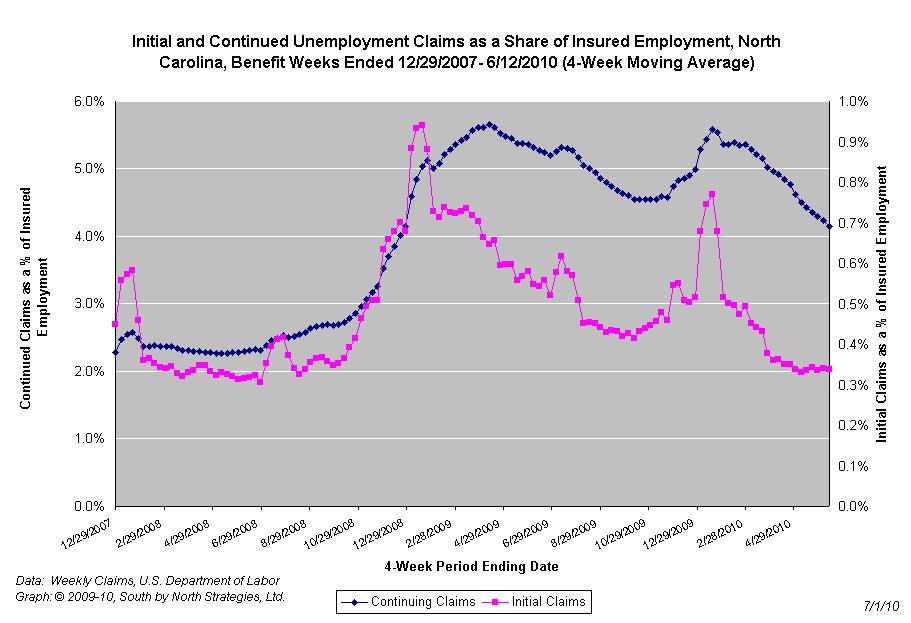
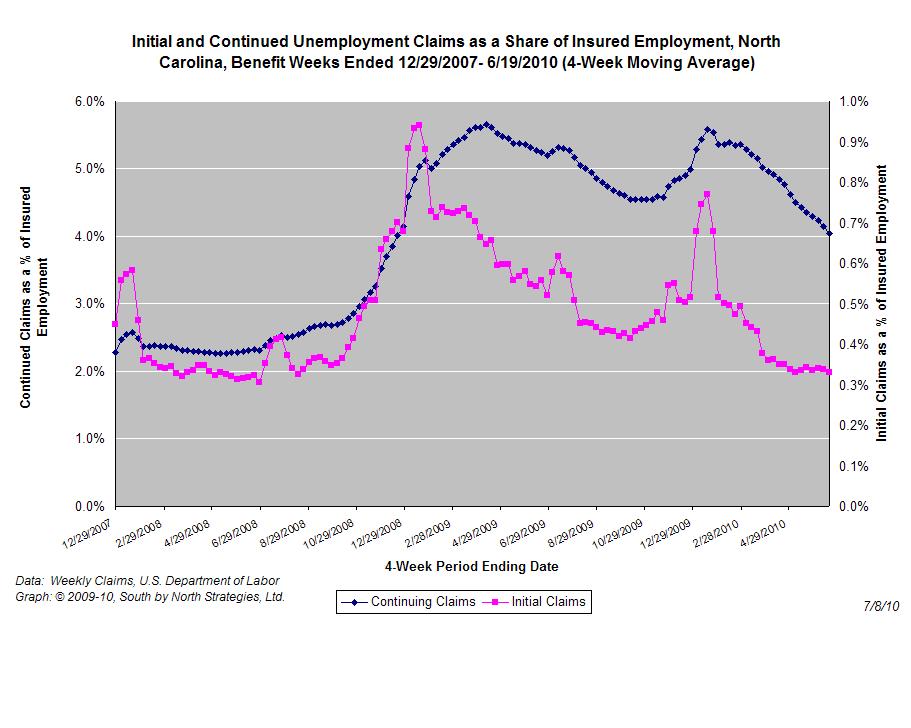
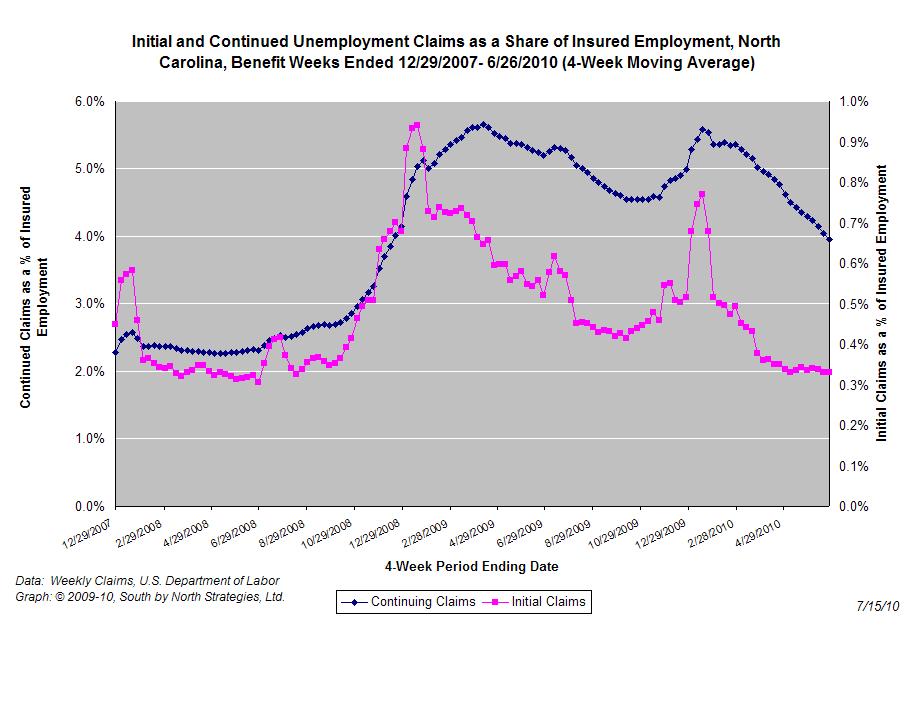
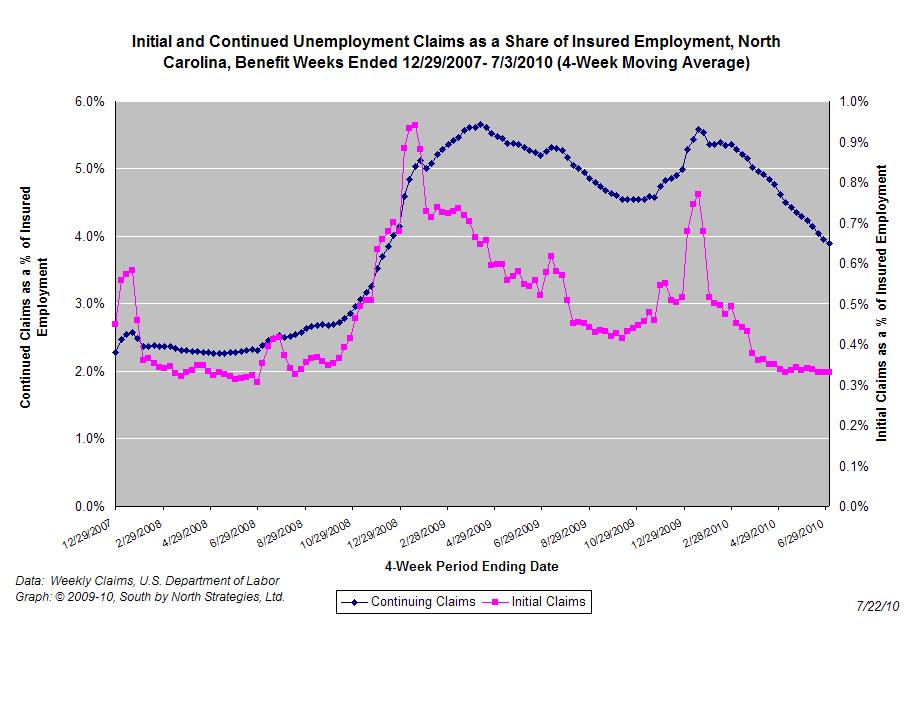
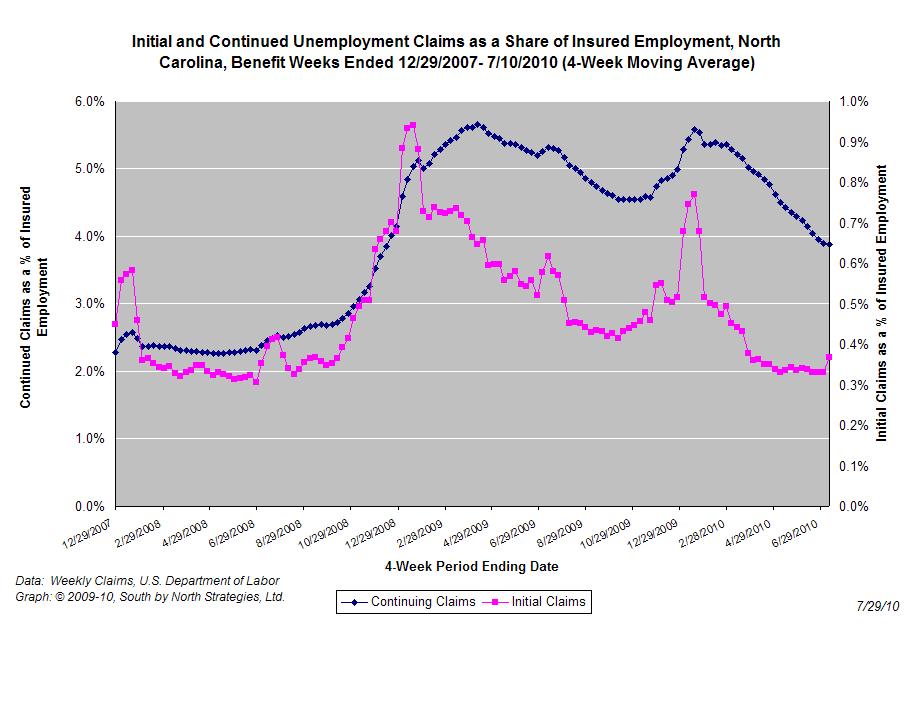
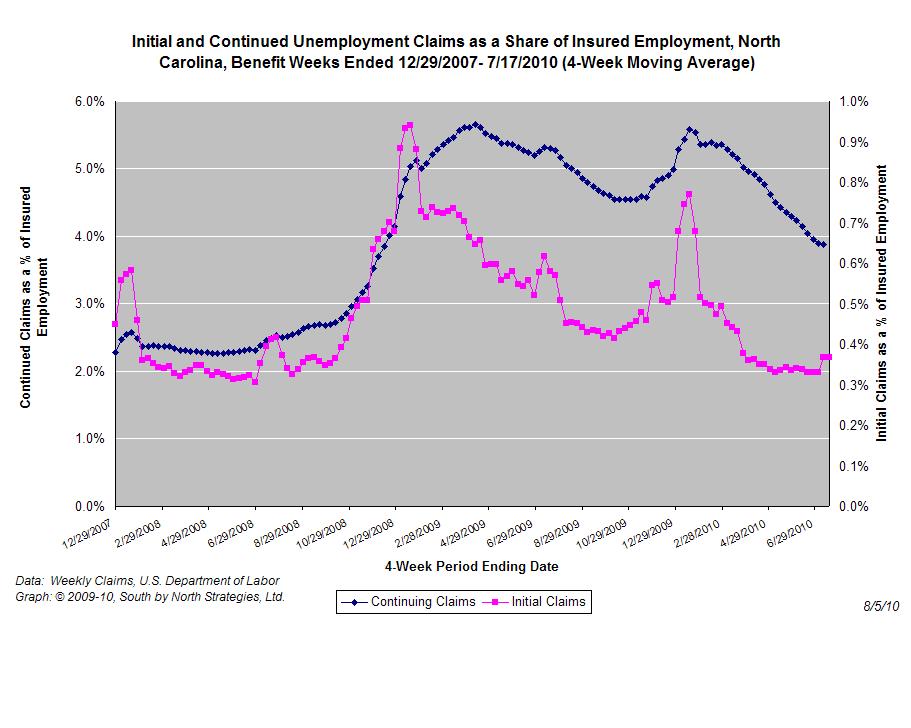
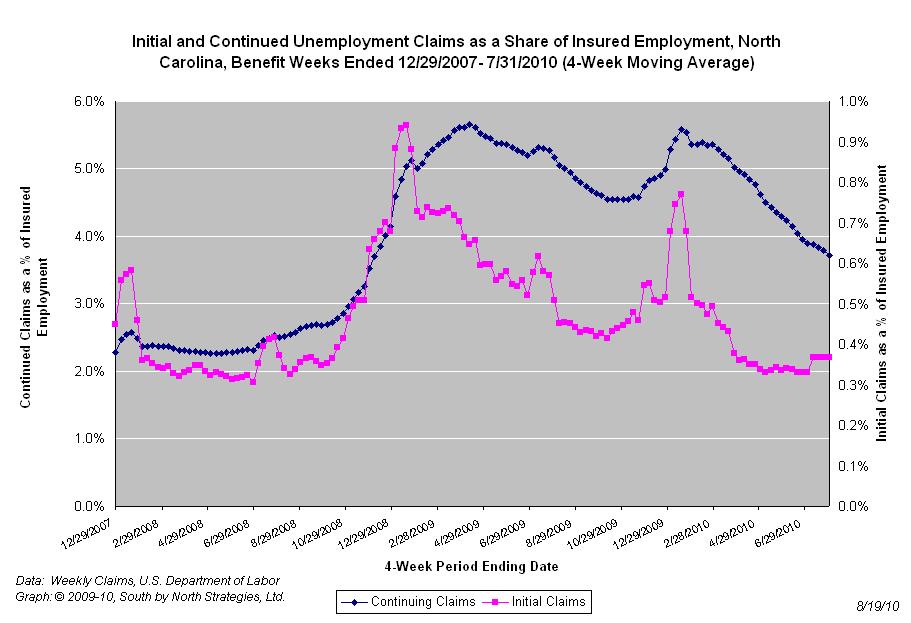
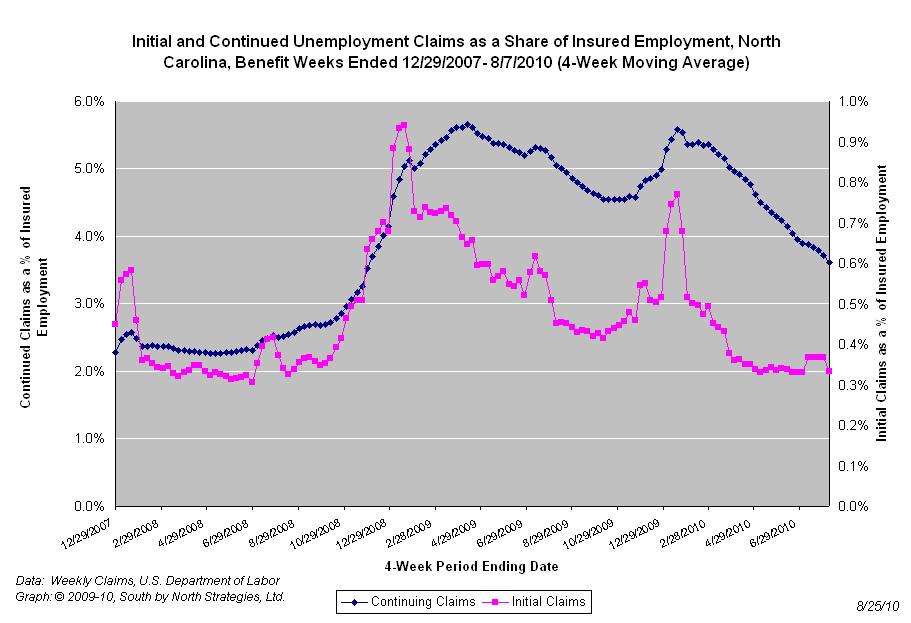
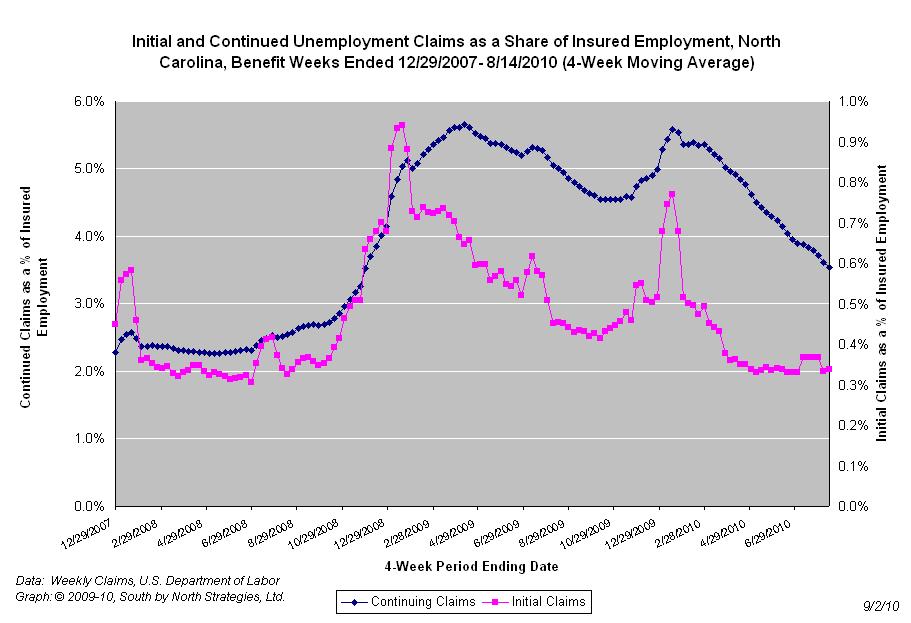
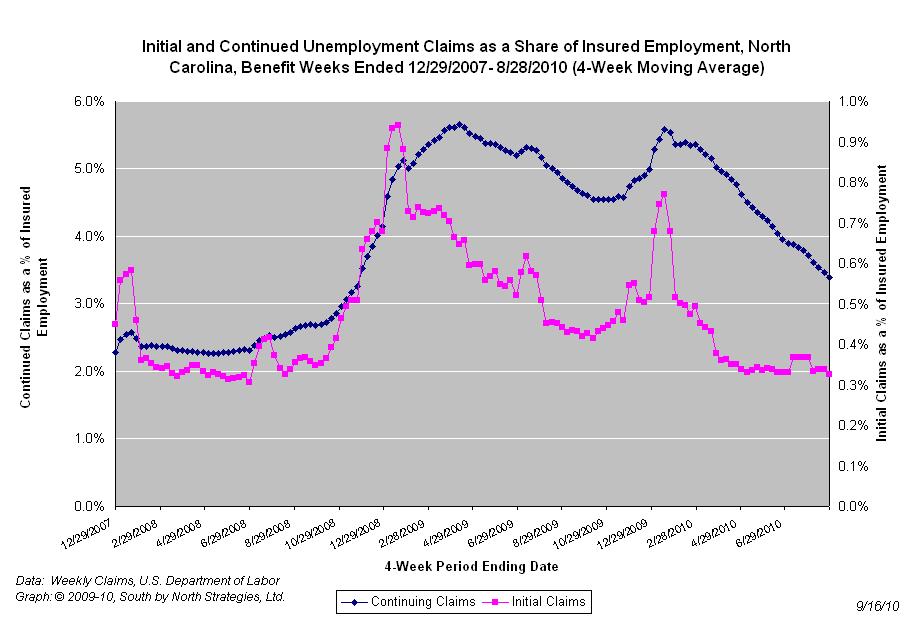
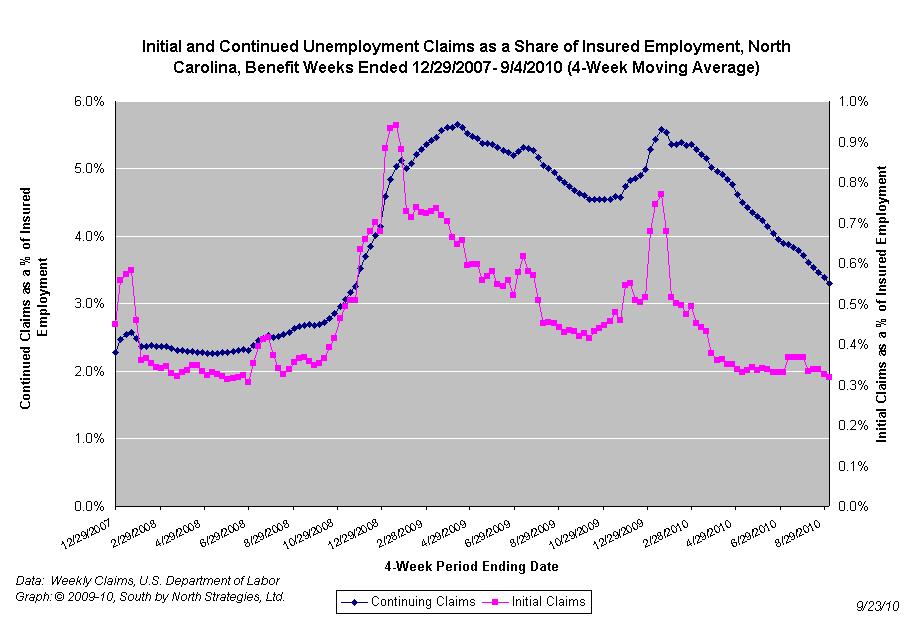
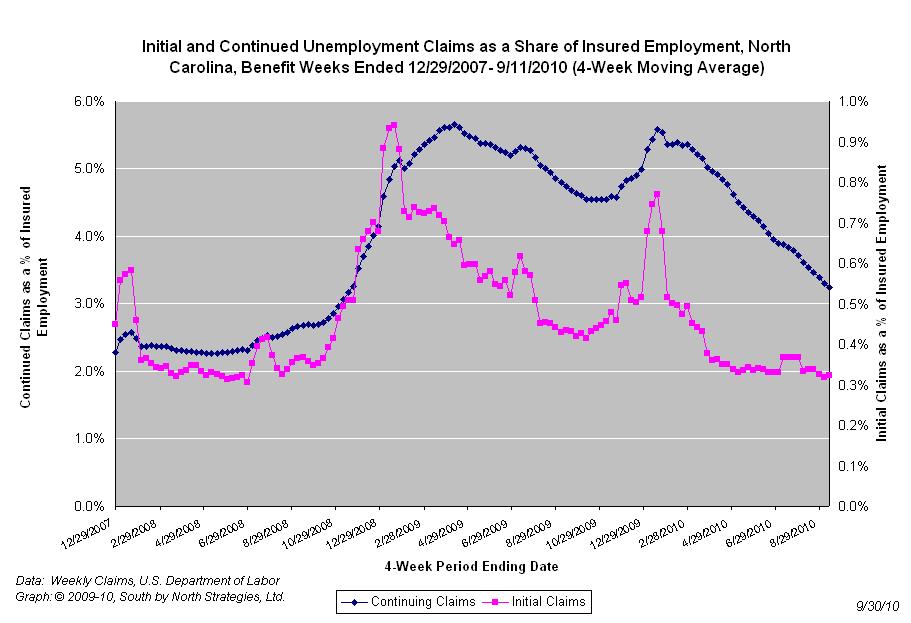
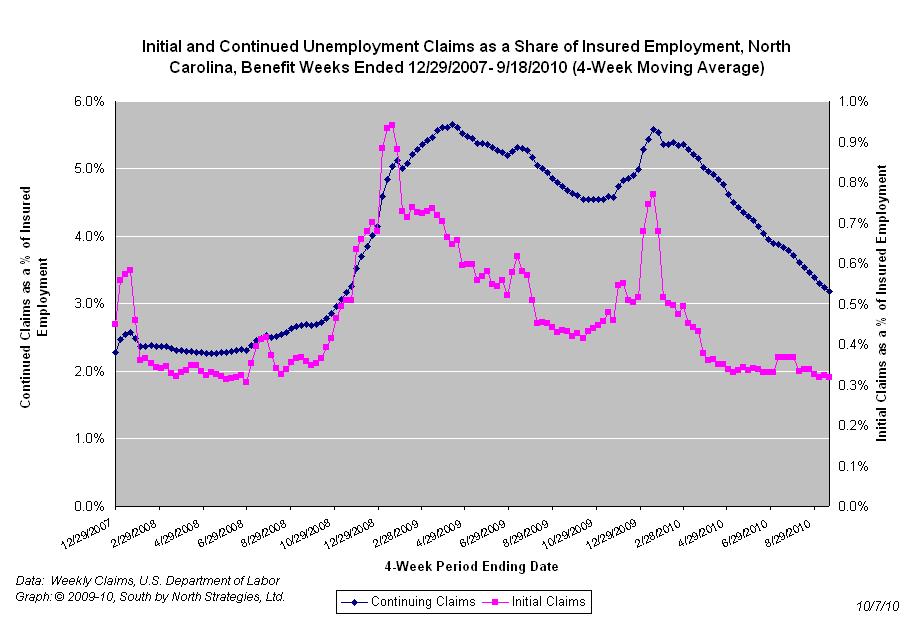
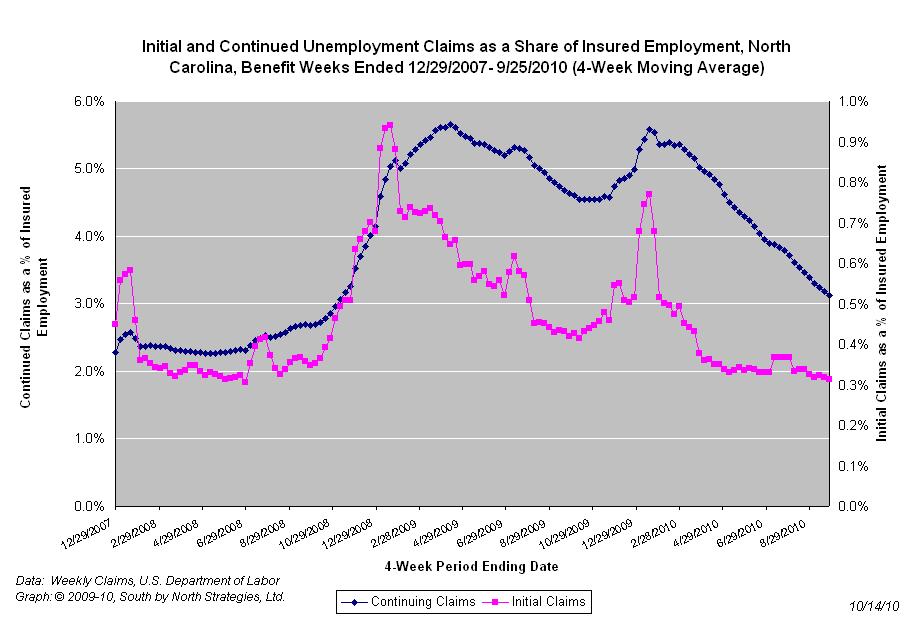
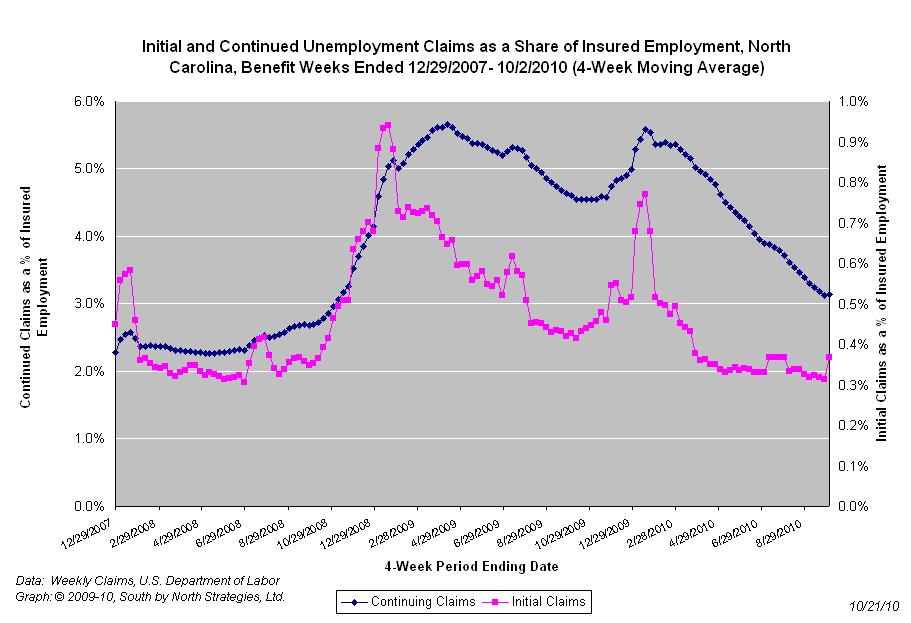
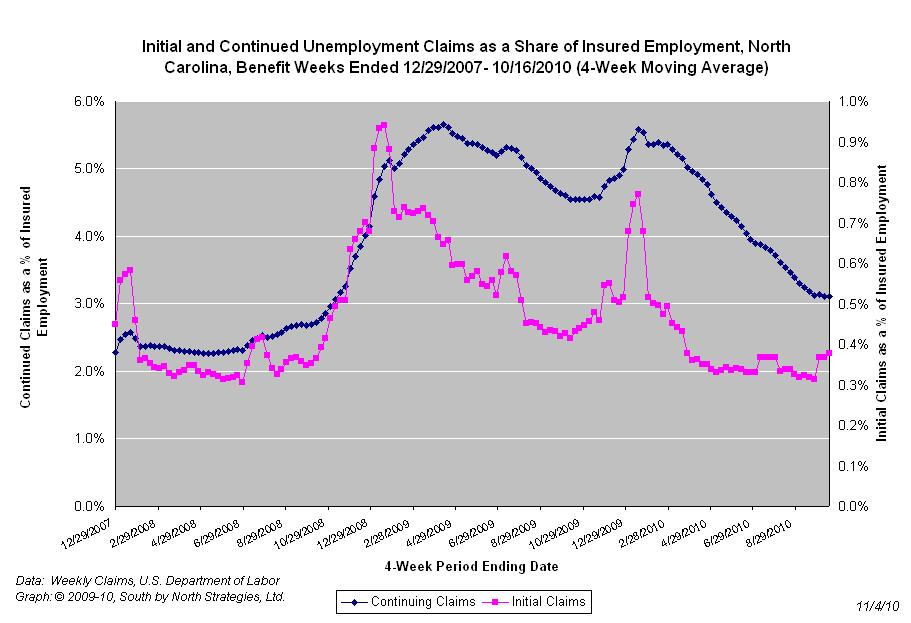
The graph (right) shows the changes in unemployment insurance claims (as a share of covered employment) in North Carolina since the recession’s start in December 2007.
Both new and continuing claims appear to have peaked for this business cycle, and the four-week averages of new and continuing claims have fallen considerably. Yet continuing claims remain at an elevated level, which suggests that unemployed individuals are finding it difficult to find new positions.
Also, little change has occurred within recent months. Since April 2010, the four-week average of initial claims consistently has ranged between 14,075 and 11,200.
Still Behind The Times
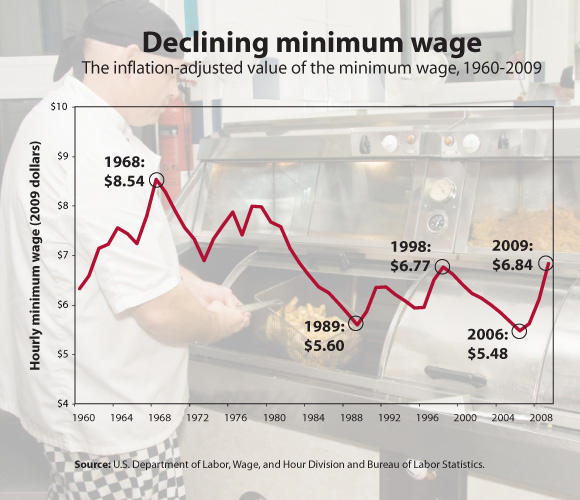
Even with the recent increase, the inflation-adjusted value of the minimum wage is still well below the 1968 level (via EPI).
Around The Dial – Nov. 17
Economic policy reports, blog postings, and media stories of interest:
- Calculated Risk looks at the latest data on industrial capacity utilization.
- Random Samplings looks at census data about family and living arrangements.
- CBPP considers the importance of the Food Stamp program during recessions.
- Free Exchange compares Germany’s recession to America’s.
- The Stash runs down more reactions to the Bowles-Simpson proposal.
 Email Sign-Up
 RSS Feed