Around The Dial – July 1
Economic policy reports, blog postings, and media stories of interest:
- Tapped looks at community college completion rates.
- Off the Charts notes the unhappy start to state fiscal years.
- Rortybomb traces “the short life of the bank tax.”
- Free Exchange breaks down the CBO’s deficit projections.
- James Galbraith is not a fan of the fiscal commission.
NC Unemployment Claims: Week of 6/12
For the benefit week ending on June 12th, 12,615 North Carolinians filed initial claims for state unemployment insurance benefits, and 152,018 individuals applied for state-funded continuing benefits. Compared to the prior week, there were fewer initial and continuing claims. These figures come from data released today by the U.S. Department of Labor.
Averaging new and continuing claims over a four-week period — a process that helps adjust for seasonal fluctuations and better illustrates trends — shows that an average of 12,903 initial claims were filed over the previous four weeks, along with an average of 158,317 continuing claims. Compared to the previous four-week period, there were fewer initial and continuing claims.
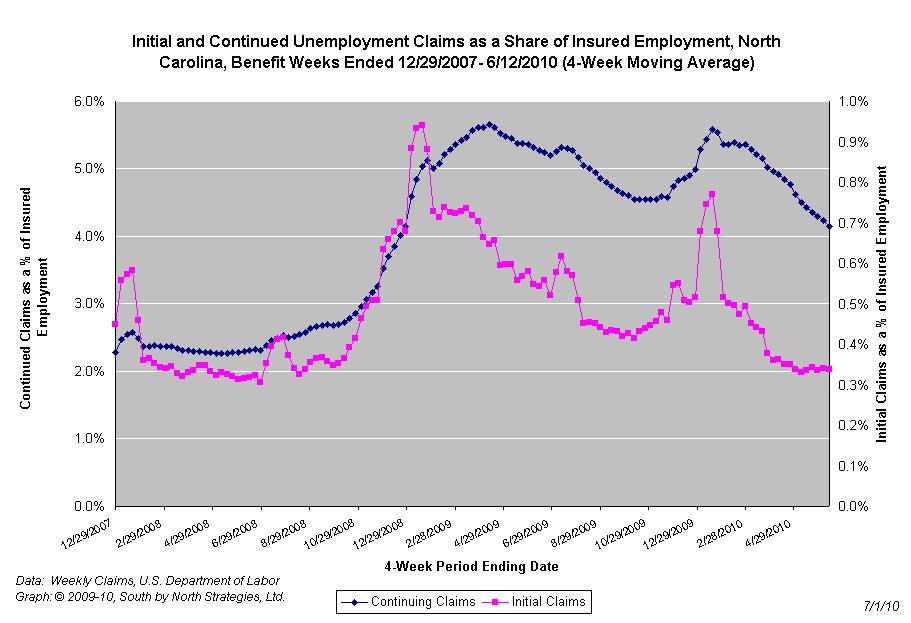 One year ago, the four-week average for initial claims stood at 21,836 and the four-week average of continuing claims equaled 212,209.
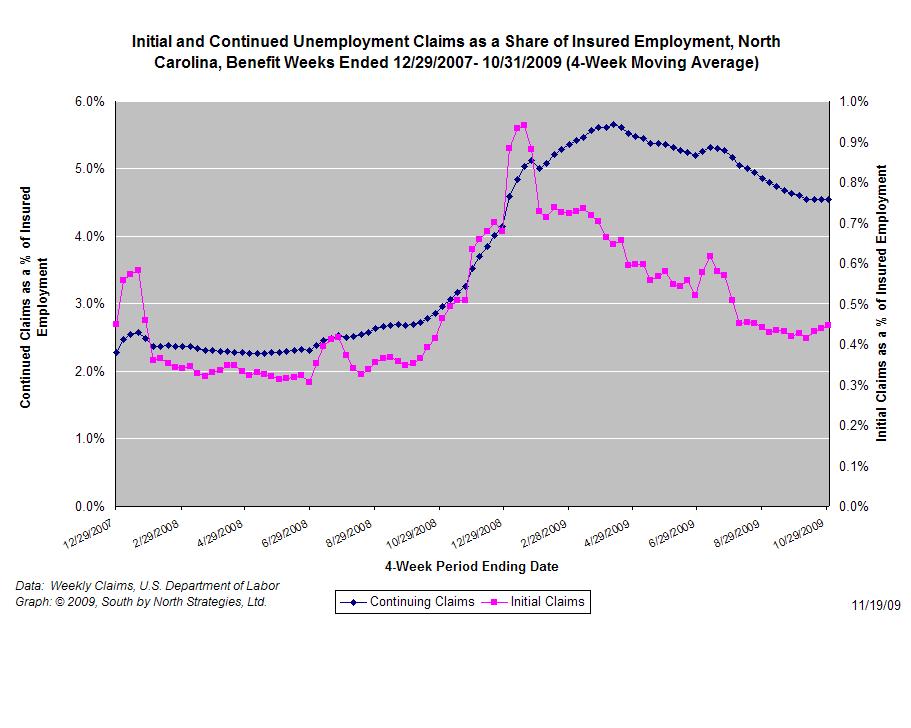
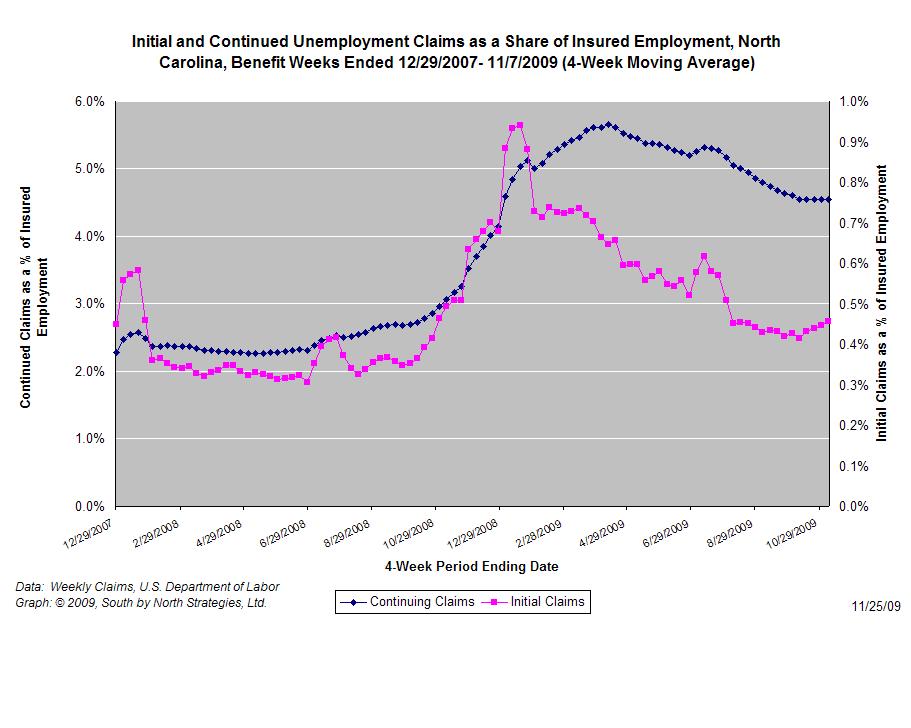
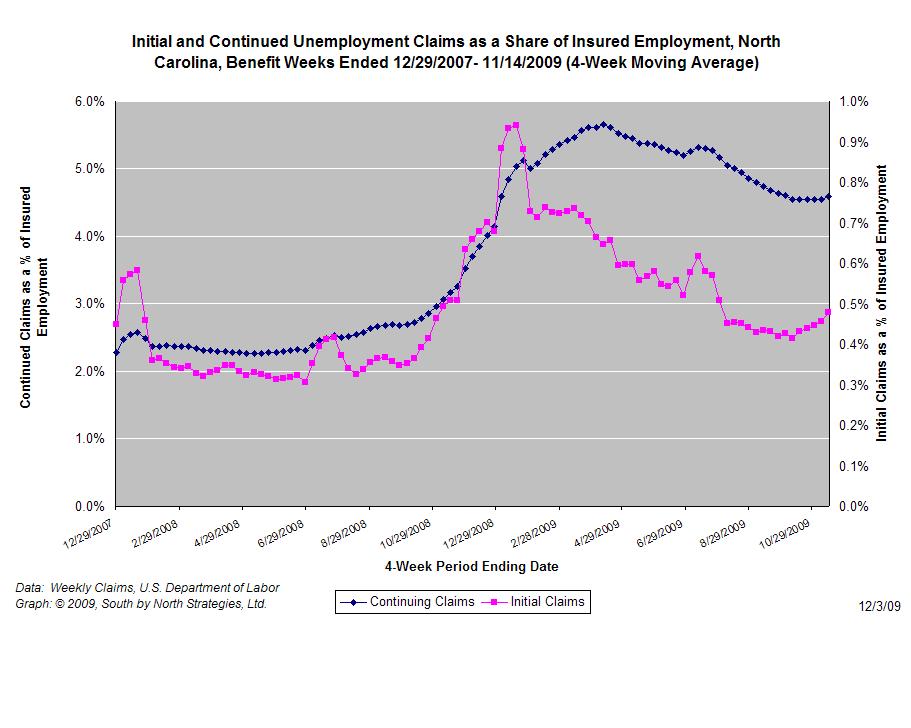
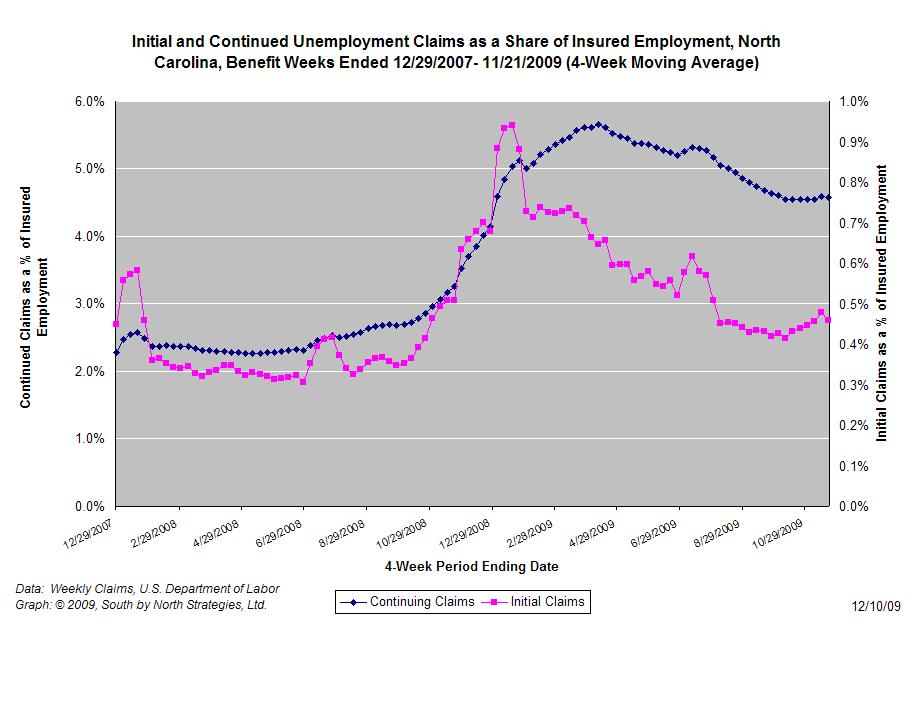
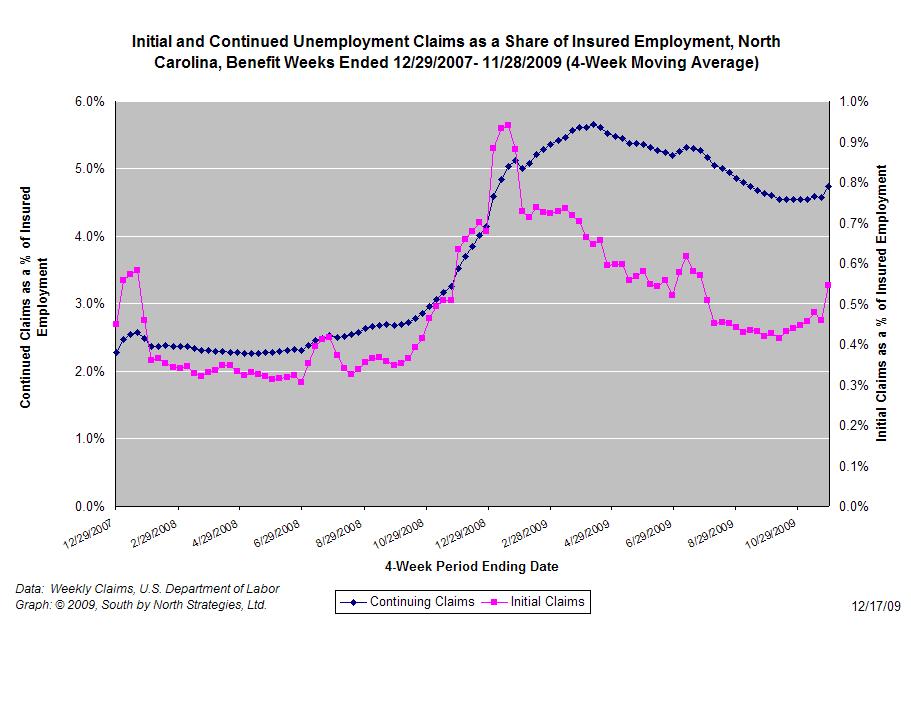
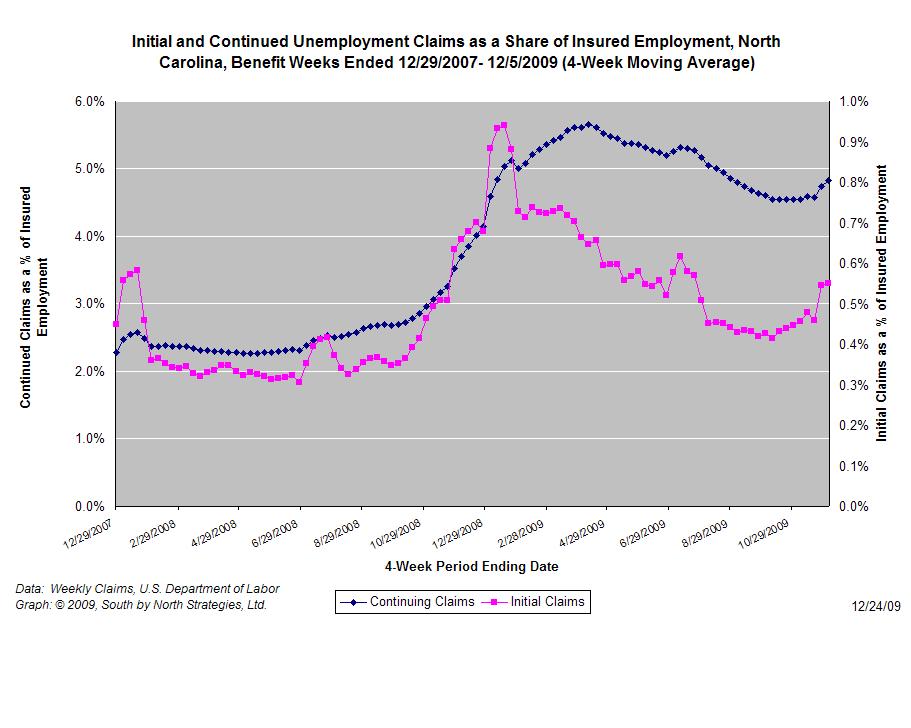
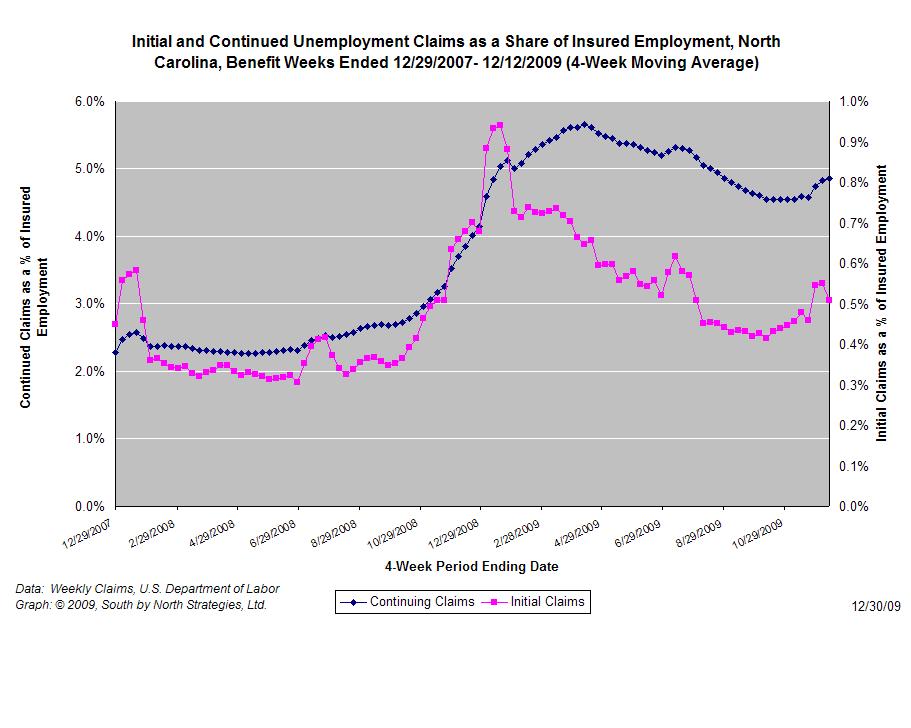
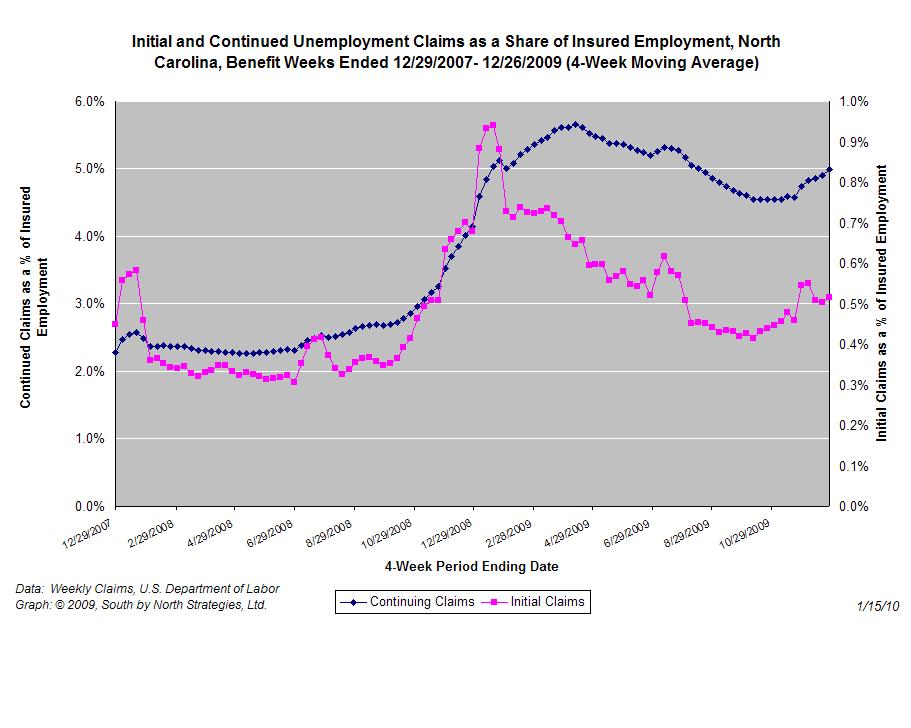
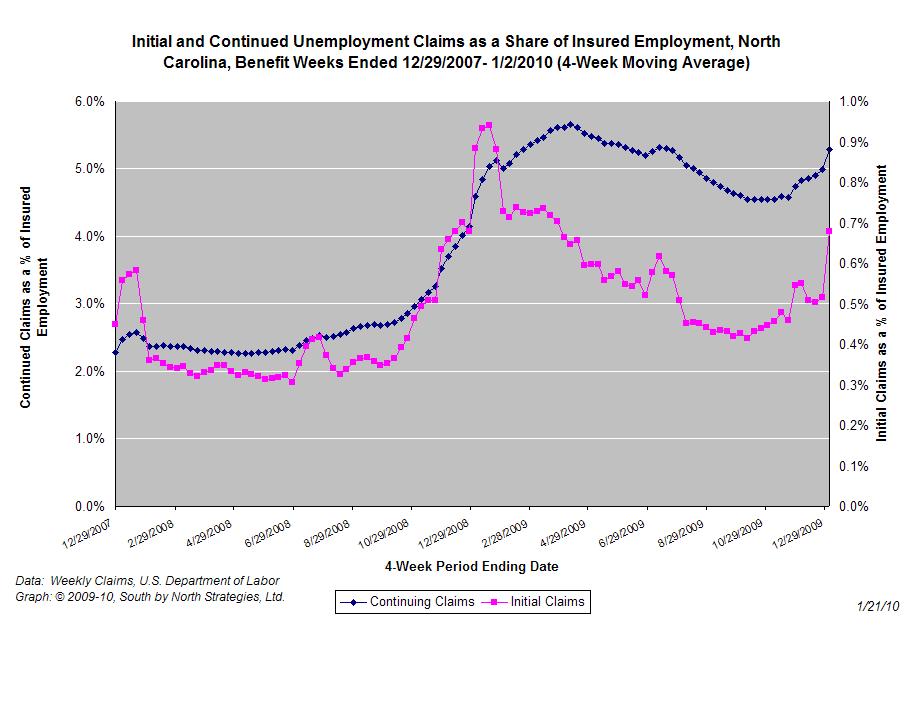
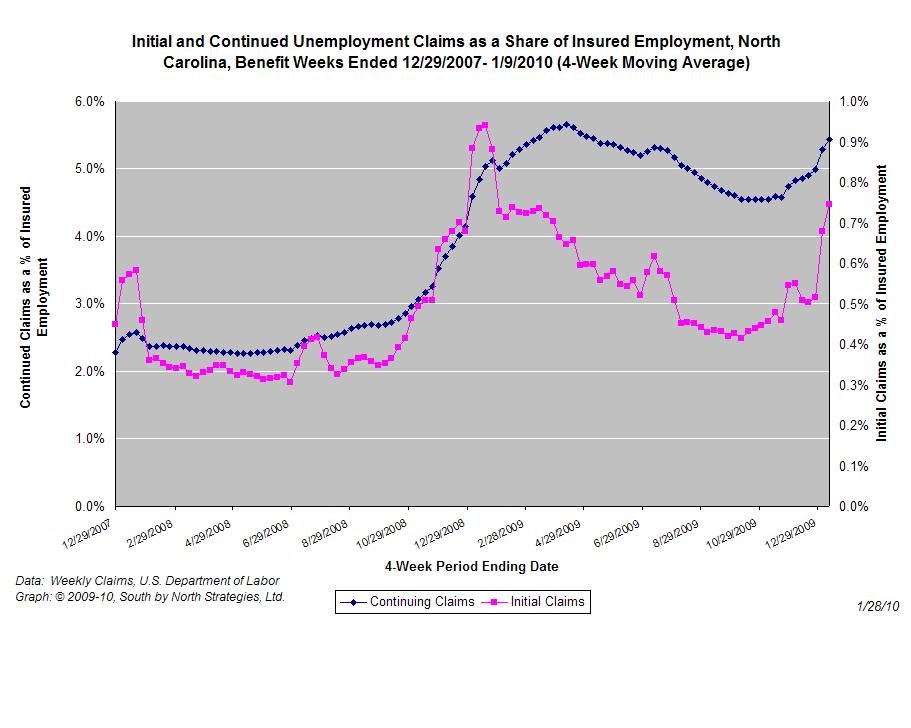
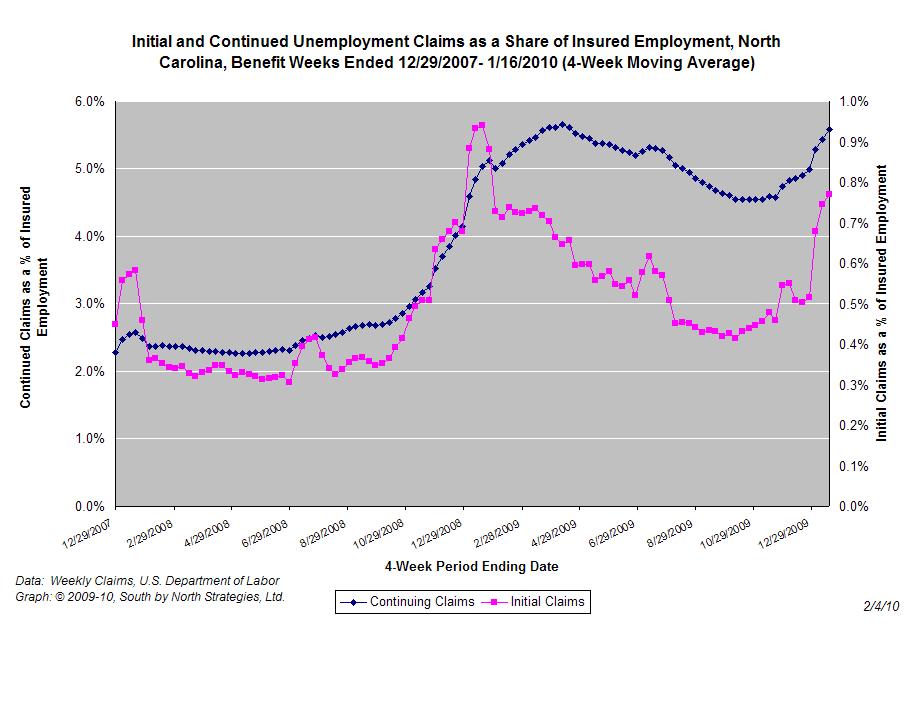
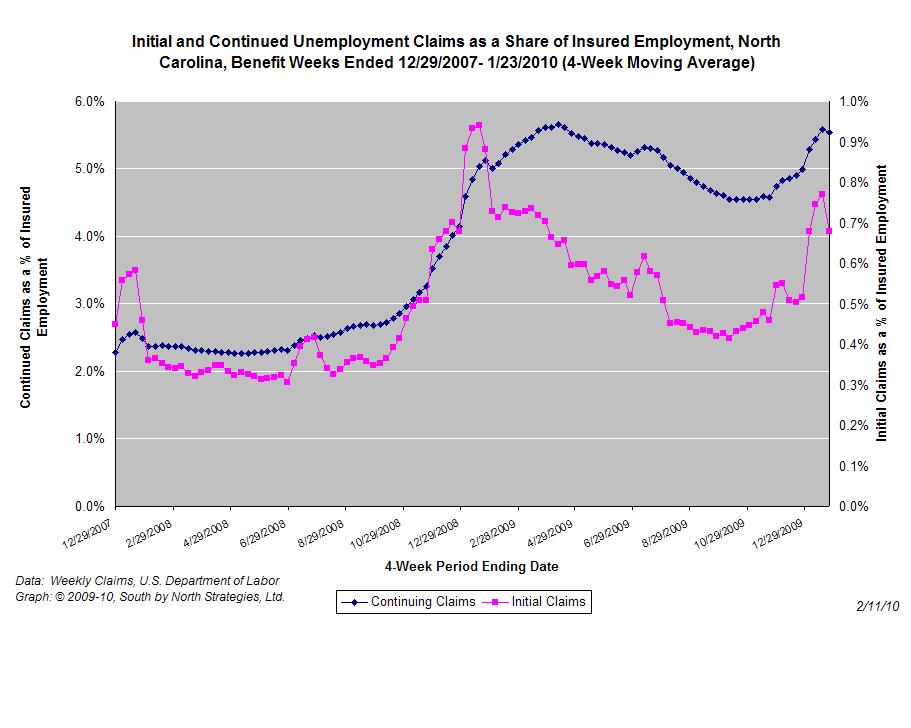
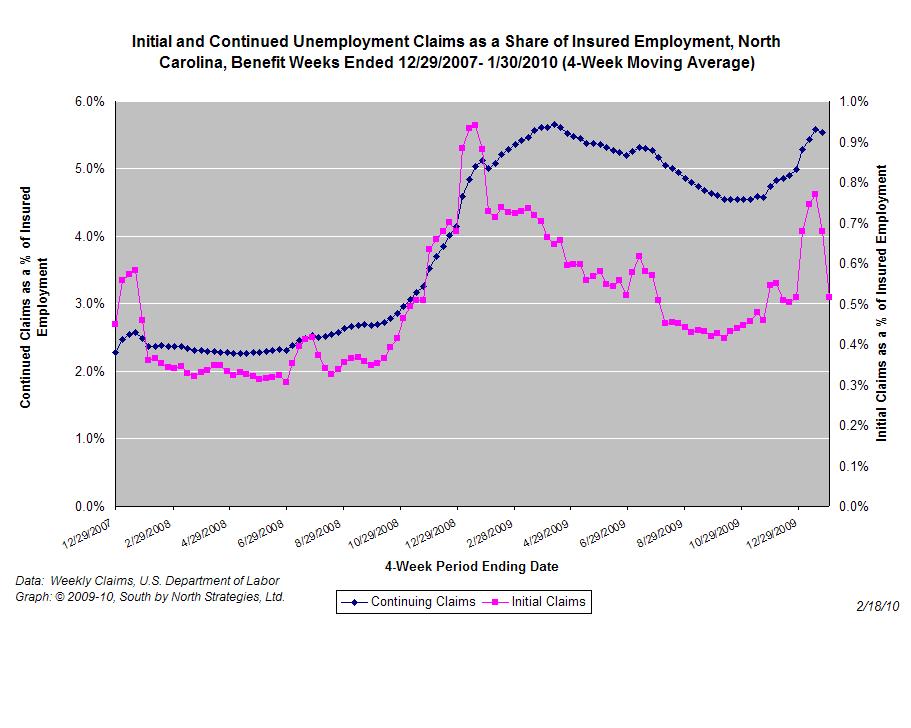
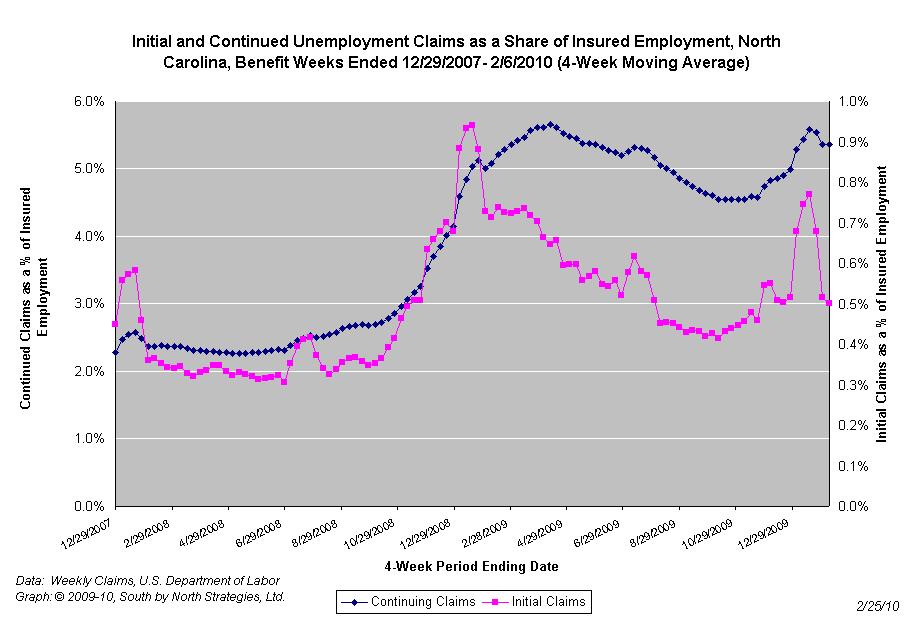
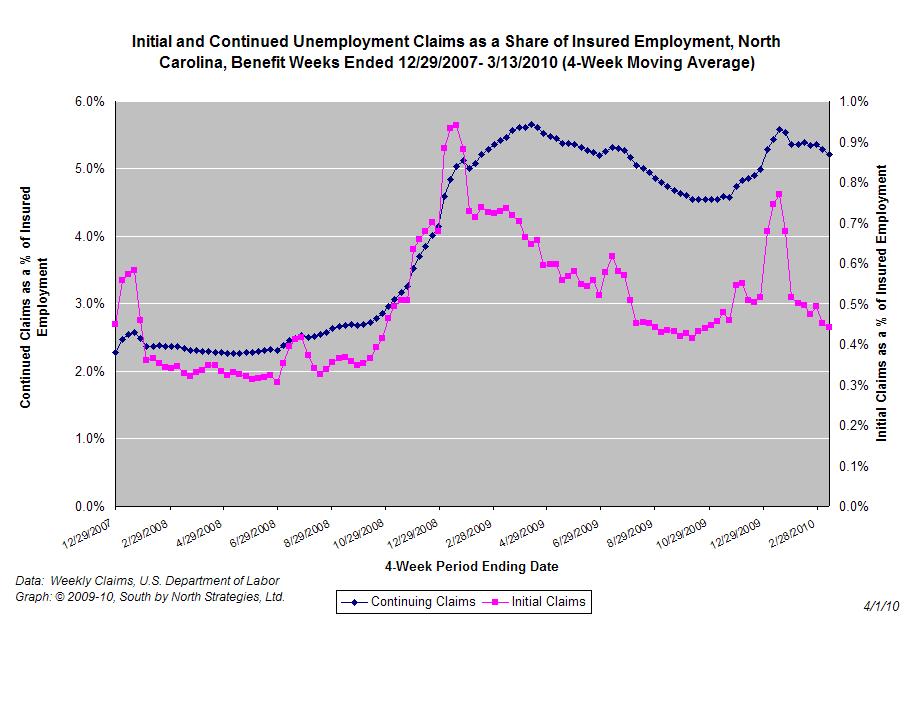
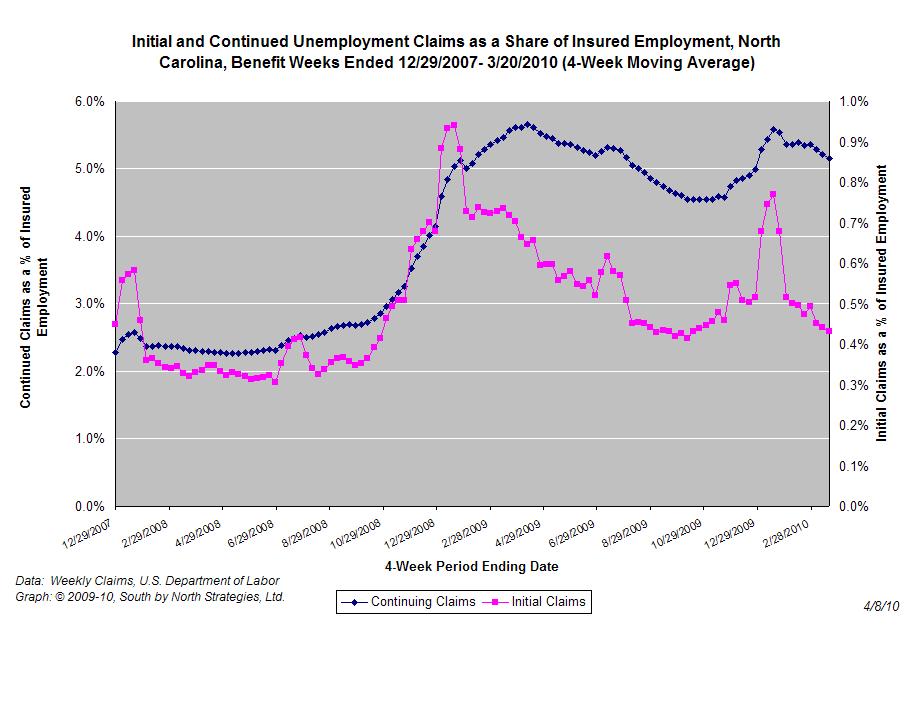
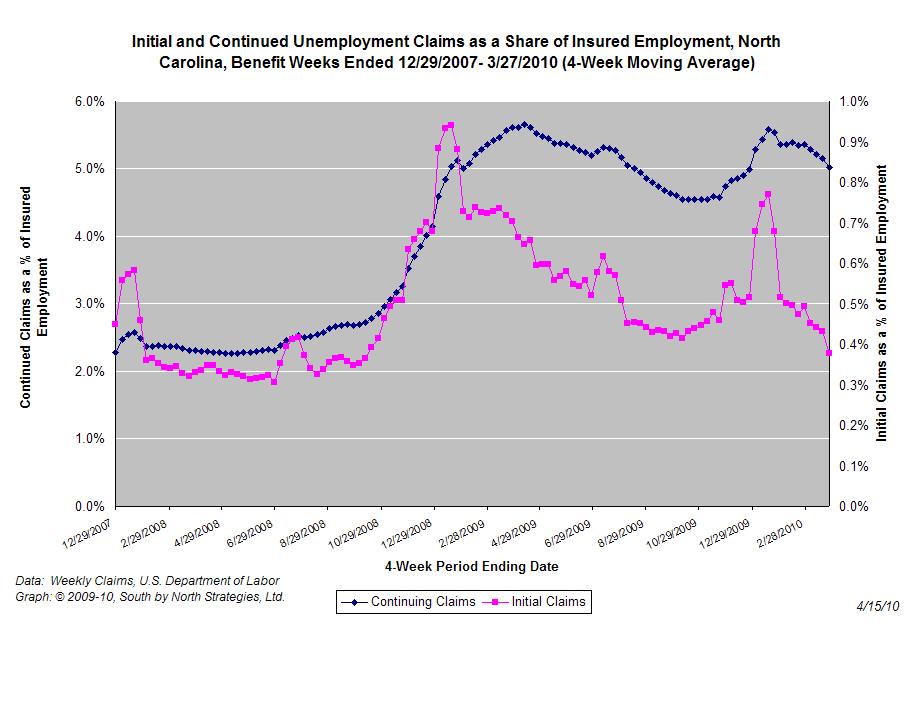
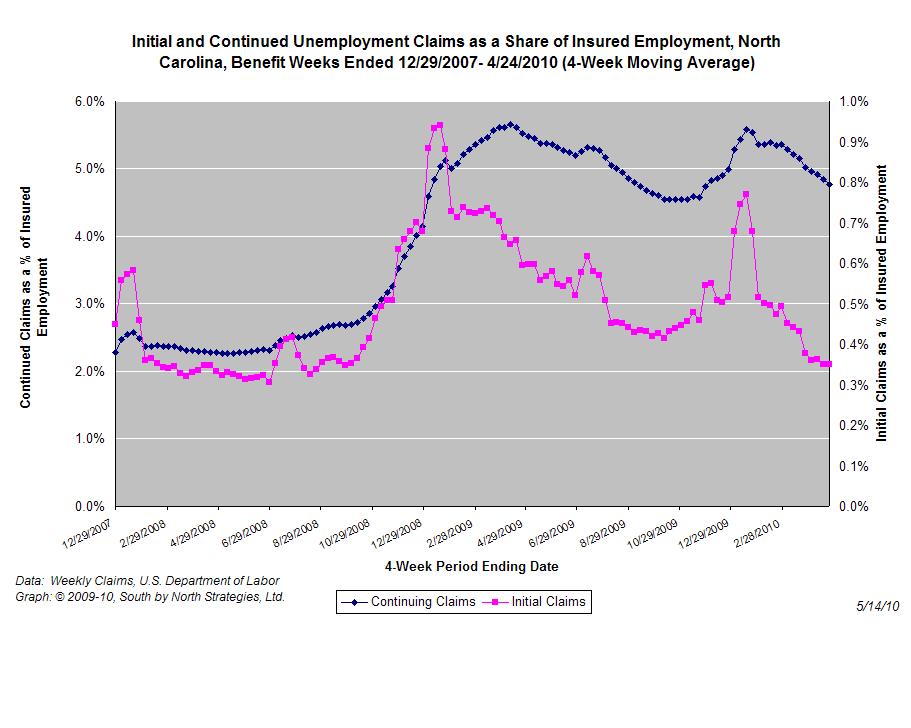
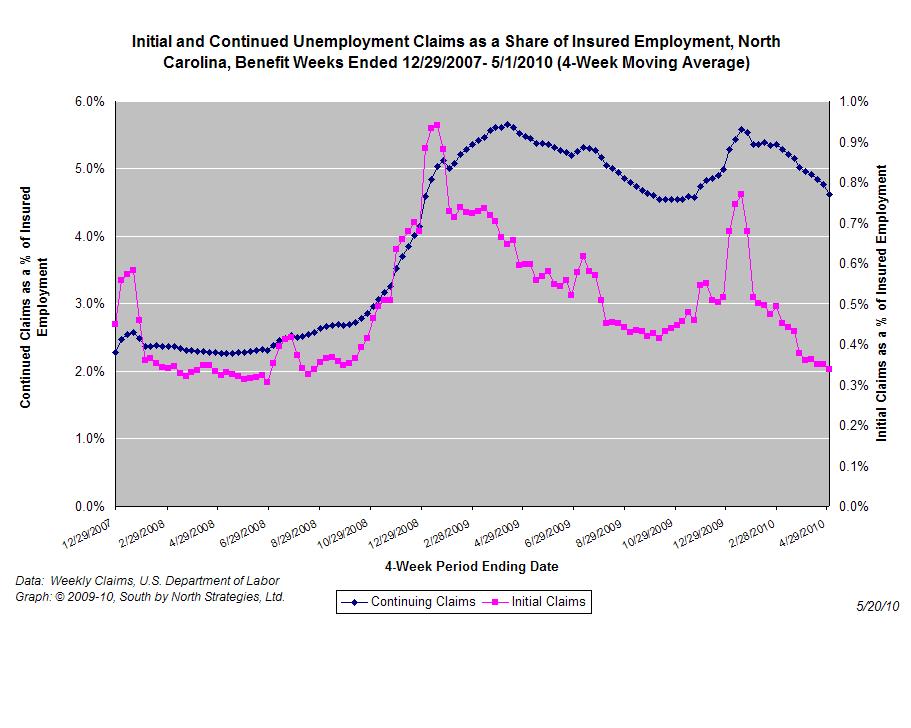
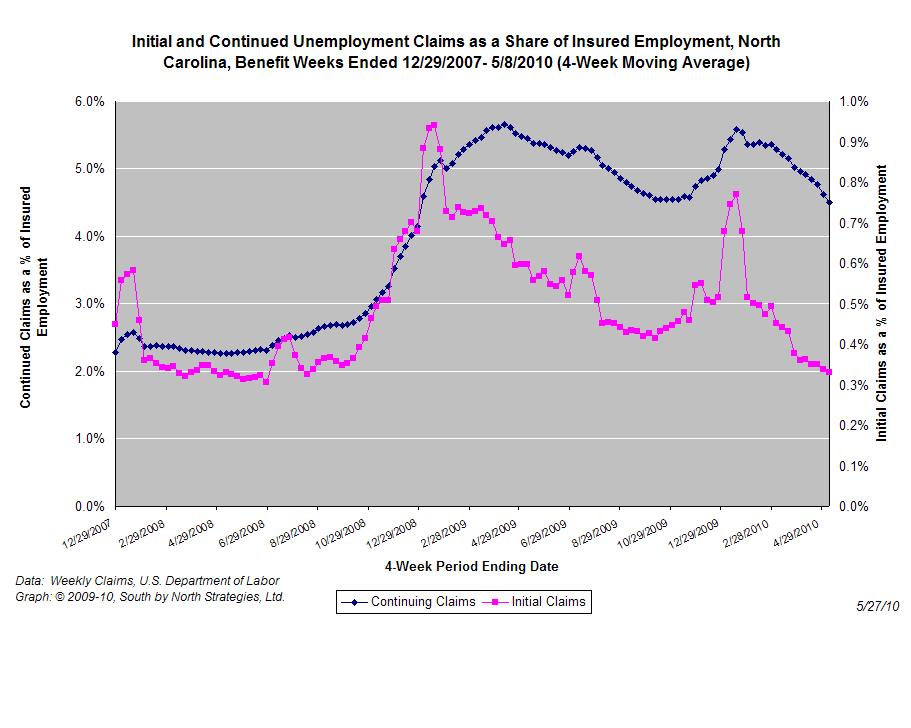
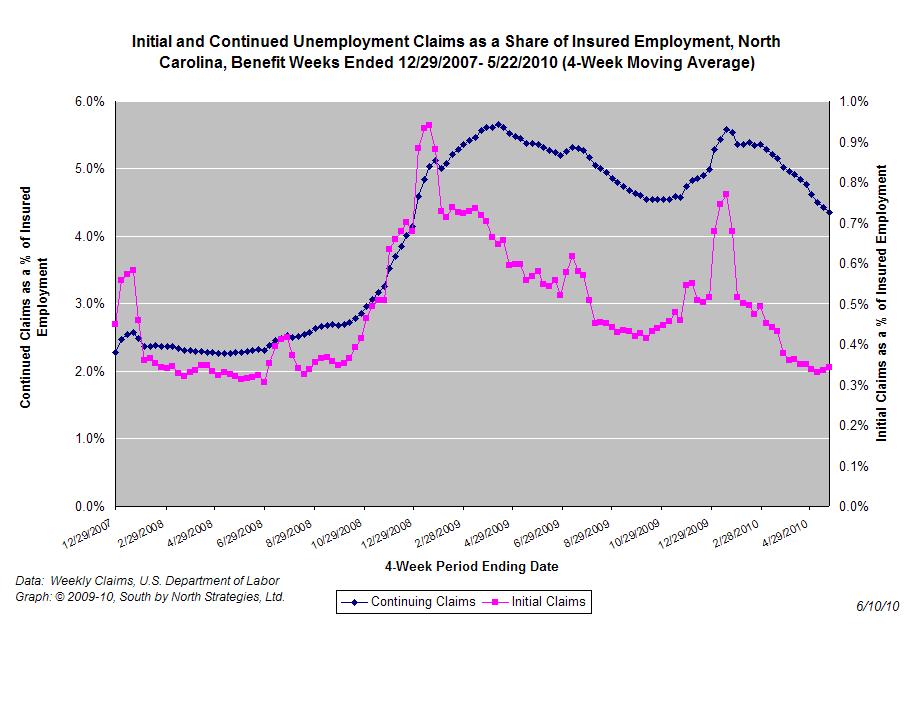
The graph (right) shows the changes in unemployment insurance claims (as a share of covered employment) in North Carolina since the recession’s start in December 2007.
Both new and continuing claims appear to have peaked for this business cycle, and the four-week average of new claims has fallen considerably. Yet continuing claims remain at an elevated level, which suggests that unemployed individuals are finding it difficult to find new positions.
Playing With The Federal Debt
The Center for Economic and Policy Research (CEPR) has published an interactive calculator that allows users to see how various policy measures would increase or decrease the total national debt, measured as a share of gross domestic product (GDP), outstanding in 2020.
Unlike similar calculators, which often present cutting Medicare benefits or raising the Social Security retirement age as the only options, CEPR’s calculator offers a broader menu of spending and revenue policies. The calculator also contains explanations of policy proposals and provides context for judging various ratios of debt to GDP.
This calculator is an excellent, fun tool for better understanding the policy arguments about the national debt.
Around The Dial – June 30
Economic policy reports, blog postings, and media stories of interest:
- Naked Capitalism asks if the shadow banking system has been fixed.
- Jared Bernstein writes that deficit reduction is “not the enemy of jobs.”
- The New York Times reports on fiscal austerity in Ireland.
- The Atlanta Fed compares increasing hours worked to increasing hiring.
- David Leonhardt says betting on the private sector to lead a recovery is risky.
Midyear Job Market Review Released
CHAPEL HILL (June 30, 2010) – North Carolina’s job market limped through the first half of 2010. While not shedding jobs at the frantic pace of 2008-09, North Carolina’s job market recorded little progress during the first part of the calendar year. Furthermore, considerable evidence suggests that more difficulties are in store for 2010’s second half.
These findings come from a midyear review of the North Carolina job market released today by South by North Strategies, Ltd., a research firm specializing in economic and social policy. Available on Policy Points, the firm’s blog, the review summarizes major developments to date.
“Although North Carolina netted jobs during the first half of 2010, the growth was insufficient to reverse the serious damage inflicted by the recession,” says John Quinterno, a principal with South by North Strategies, Ltd. “Much of the growth was attributable to temporary developments caused by public policies, but the underlying trends remain concerning.”
The review notes that the second half of 2010 may be a difficult time for the state’s labor market. Many of the policy supports that helped during the first half of the year are unwinding, and it is unclear what will take their place in supporting demand. And the employment and spending reductions that will result from state budget cuts only will compound the difficulties.
The review is particularly concerned about the problem of long-term unemployment.
“If the worsening pattern of long-term unemployment is not reversed soon, many individuals will become effectively unemployable due to the deterioration of their skills, stiff competition, and negative stereotyping on the part of employers,” warns Quinterno. “At that point a serious cyclical employment problem will become an intractable structural one.”
The full review is available at http://www.sbnstrategies.com/?p=3210
 Email Sign-Up
 RSS Feed