At Least The Census Bureau Is Hiring
CHAPEL HILL (June 4, 2010) – The national employment report for May is an unimpressive one. Last month, employers added 431,000 more payroll positions than they eliminated. Almost all of the gain, however, was attributable to the hiring of temporary workers by the U.S. Census Bureau.
“The May payroll report is much less impressive than it first seems,” said John Quinterno, a principal at South by North Strategies, Ltd., a research firm specializing in economic and social policy. “Almost all job growth was due to temporary hiring by the U.S. Census Bureau. When census hiring is excluded, the nation netted just 20,000 positions in May.”
In May, the nation’s employers added 431,000 more payroll positions than they cut. Gains occurred primarily in the public sector due to the hiring of 411,000 temporary census workers by the federal government. The rest of the economy netted just 20,000 positions. The largest private-sector gains occurred in manufacturing (+29,000) and in professional and business services (+22,000), primarily in the temporary help services sub-industry. Construction payrolls fell by 35,000 positions, which erased many of the industry’s recent gains. All other major industry groups recorded little or no change.
“The May employment report is an uninspiring one that highlights just how dependent the economy is upon policy supports and government action,” noted Quinterno. “If not for temporary census hiring, the numbers would be much worse.”
Weak job prospects also are reflected in the May household survey. Last month, 15 million Americans – 9.7 percent of the labor force – were jobless and actively seeking work. Proportionally more adult male workers were unemployed than female ones (9.8 percent vs. 8.1 percent). Similarly, unemployment rates were higher among Black (15.5 percent) and Hispanic workers (12.4 percent) than among White ones (8.8 percent). The unemployment rate among teenagers was 26.4 percent.
Furthermore, newly available data show that 7.8 percent of all veterans were unemployed in May; the rate among veterans who had served since September 2001 was 10.6 percent.
“In developments inconsistent with recovery, 322,000 individuals left the labor force in May, and the share of the adult population engaged in economically productive activities fell,” added Quinterno. “Compared to a year ago, the labor force is smaller, fewer people are employed, and more people are unemployed.”
Jobs remained hard to find in May. Last month, 46 percent of all unemployed workers had been jobless for at least six months. Many other individuals simply stopped looking, and counting those individuals and those working part-time on an involuntary basis brings the underemployment rate to 16.6 percent.
“Strip away census hiring, and the May employment report is weak,” observed Quinterno. “The economy remains dependent on public supports, and it is unclear if it will be able to stand on its own as those supports fall away over the summer.”
May National Employment Report
The national employment report for May is an unimpressive one. Last month, employers added 431,000 more payroll positions than they eliminated. Almost all of the gain, however, was attributable to the hiring of temporary workers by the U.S. Census Bureau.
In May, the nation’s employers added 431,000 more payroll positions than they cut. Gains occurred primarily in the public sector due to the hiring of 411,000 temporary census workers by the federal government. The rest of the economy netted just 20,000 positions. The largest private-sector gains occurred in manufacturing (+29,000) and in professional and business services (+22,000), primarily in the temporary help services sub-industry. Construction payrolls fell by 35,000 positions, which erased many of the industry’s recent gains. All other major industry groups recorded little or no change.
Jobs remained hard to find in May. Last month, 46 percent of all unemployed workers had been jobless for at least six months. Many other individuals simply stopped looking, and counting those individuals and those working part-time on an involuntary basis brings the underemployment rate to 16.6 percent.
Click here to read South by North Strategies’ full analysis of the May report.
Is The Middle of The Job Market Disappearing?
In a memorandum prepared for the Center for American Progress, Harry Holzer of Georgetown University unpacks the arguments over whether or not the United States is developing a polarized labor market. Writes Holzer of the evidence:
In sum, the notion that we are developing an “hourglass economy” with large top and bottom layers but a vastly shrinking middle, while not without basis, has been overblown. Accordingly, there remains a strong need for more workers with better cognitive and analytical skills and with four-year college degrees, as Autor emphasizes. But the kinds of postsecondary education and training below the level of a four-year bachelor’s degree that still provide satisfactory preparation for many well-paying middle-skill jobs should be supported as well. And other policies to encourage higher job quality, as well as opportunities for workers to develop skills and progress on the job within a range of sectors, can be helpful too.
Around The Dial – June 3
Economic policy reports, blog postings, and media stories of interest:
- Economic Principals isn’t in “thrall to the billionaire boys club.”
- Steve Pearlstein of The Washington Post points out Blue Dog hypocrisy.
- UNC-Charlotte analyzes the North Carolina economy.
- CBPP argues that it’s too soon to end temporary unemployment benefits.
- Felix Salmon thinks credit card regulations should apply to small business cards.
NC Unemployment Claims: Week of 5/15
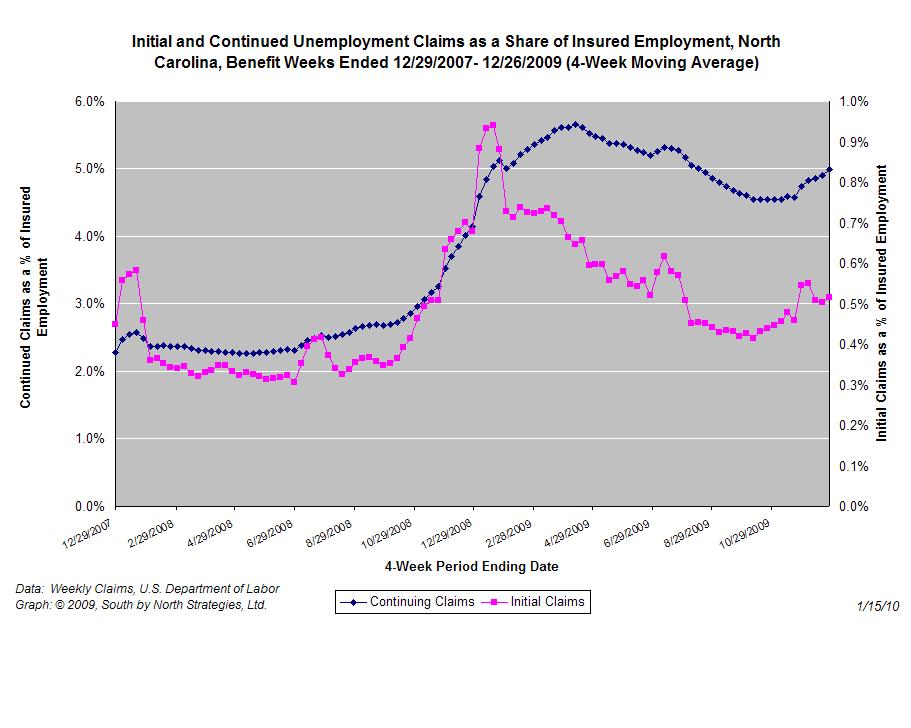
For the benefit week ending on May 15th, 12,900 North Carolinians filed initial claims for state unemployment insurance benefits, and 165,281 individuals applied for state-funded continuing benefits. Compared to the prior week, there were fewer initial and continuing claims. These figures come from data released today by the U.S. Department of Labor.
Averaging new and continuing claims over a four-week period — a process that helps adjust for seasonal fluctuations and better illustrates trends — shows that an average of 12,804 initial claims were filed over the previous four weeks, along with an average of 168,830 continuing claims. Compared to the previous four-week period, initial claims were higher and continuing claims were lower.
 One year ago, the four-week average for initial claims stood at 22,430 and the four-week average of continuing claims equaled 216,556.
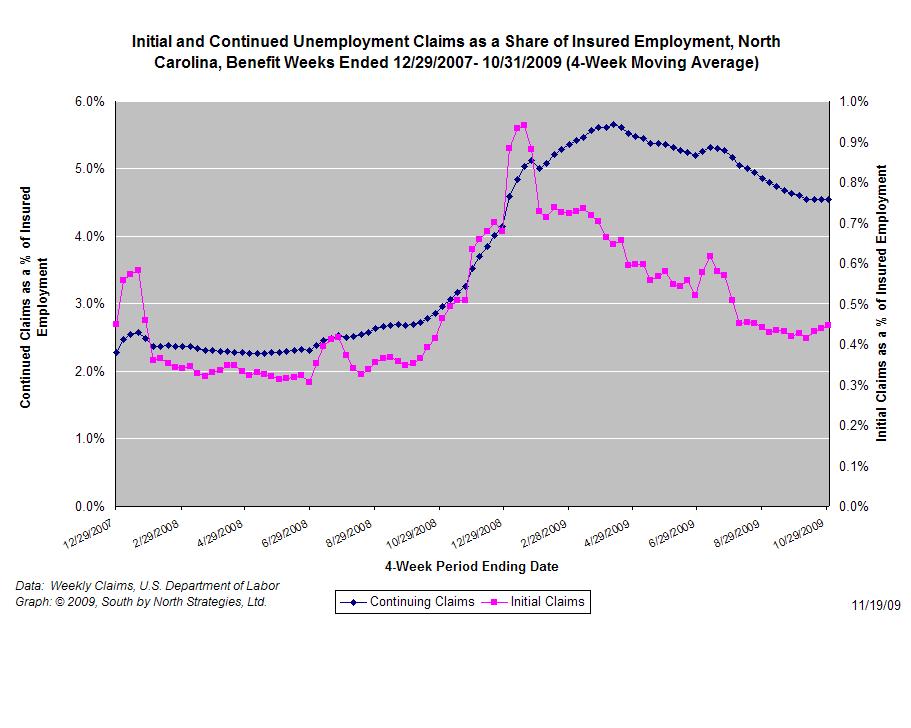
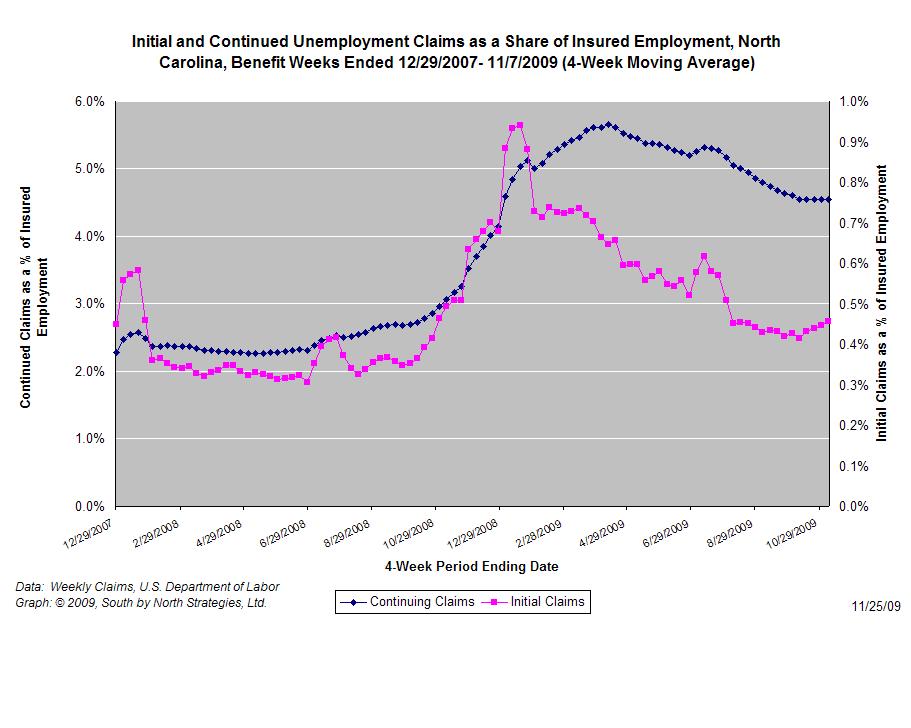
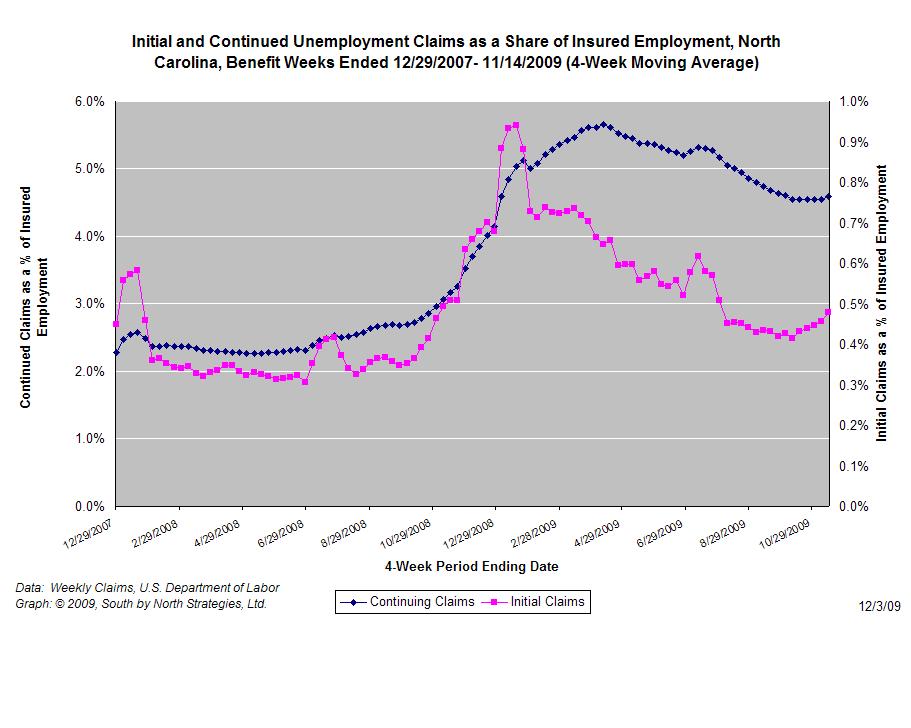
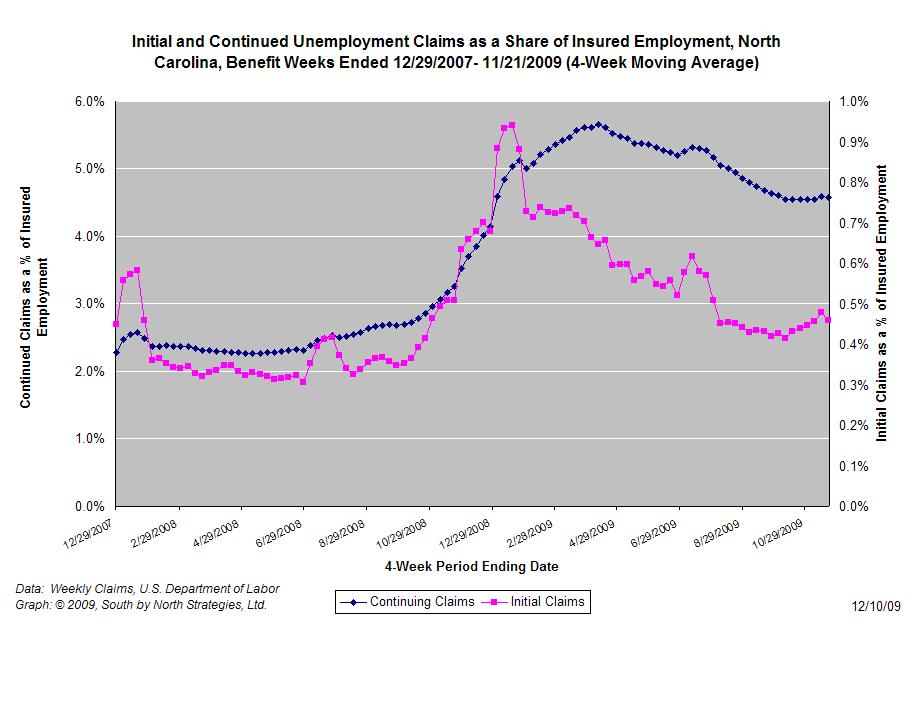
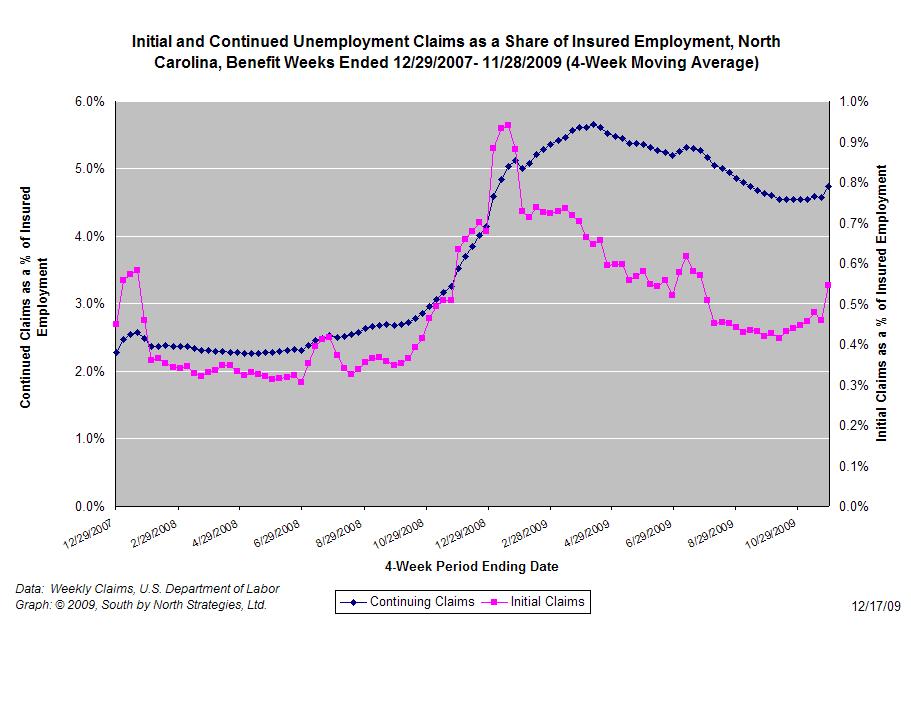
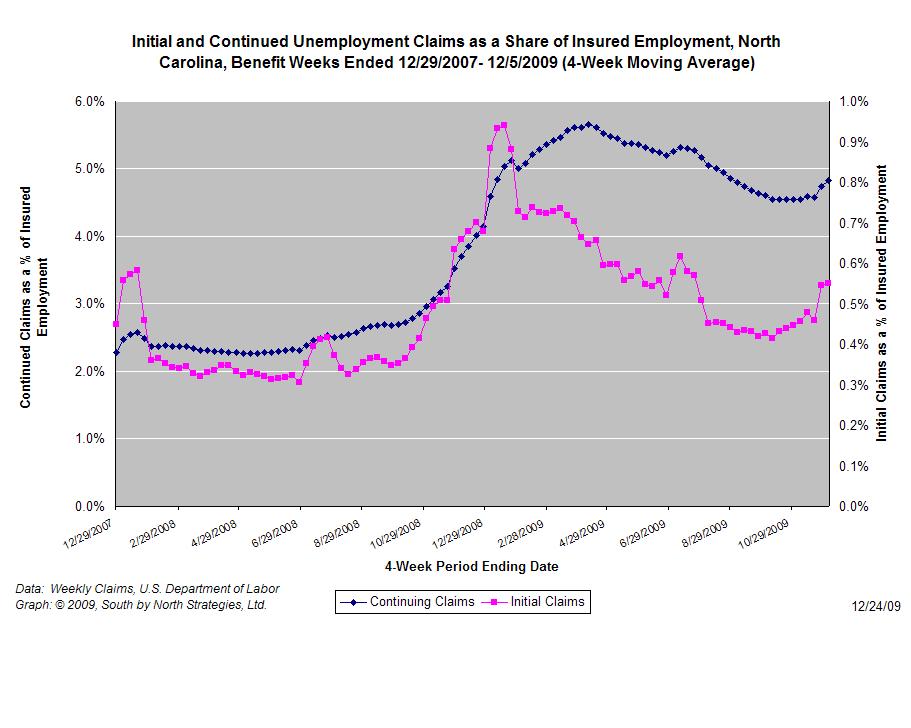
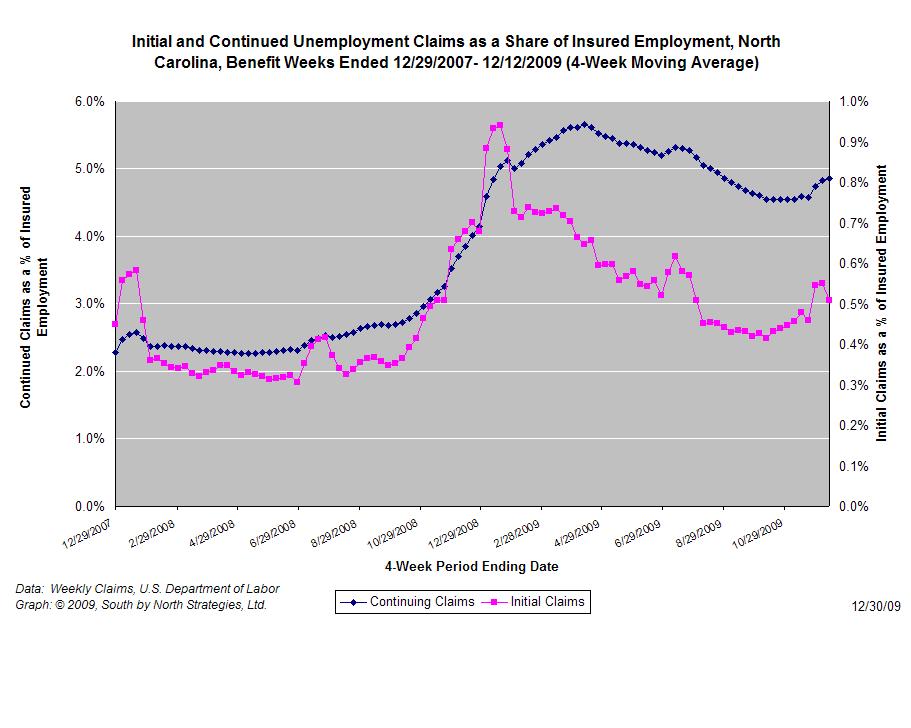
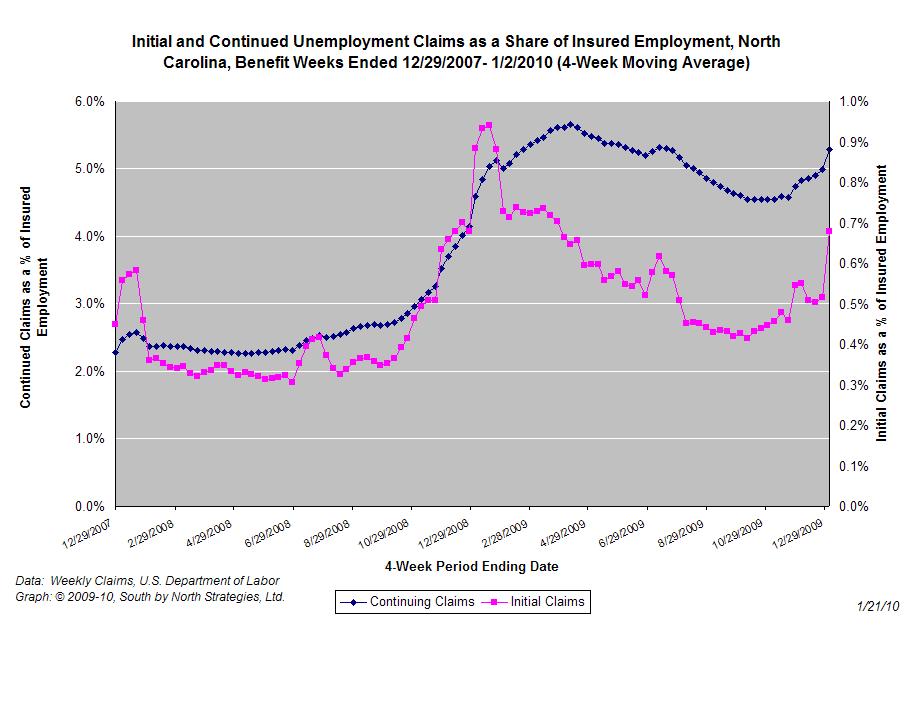
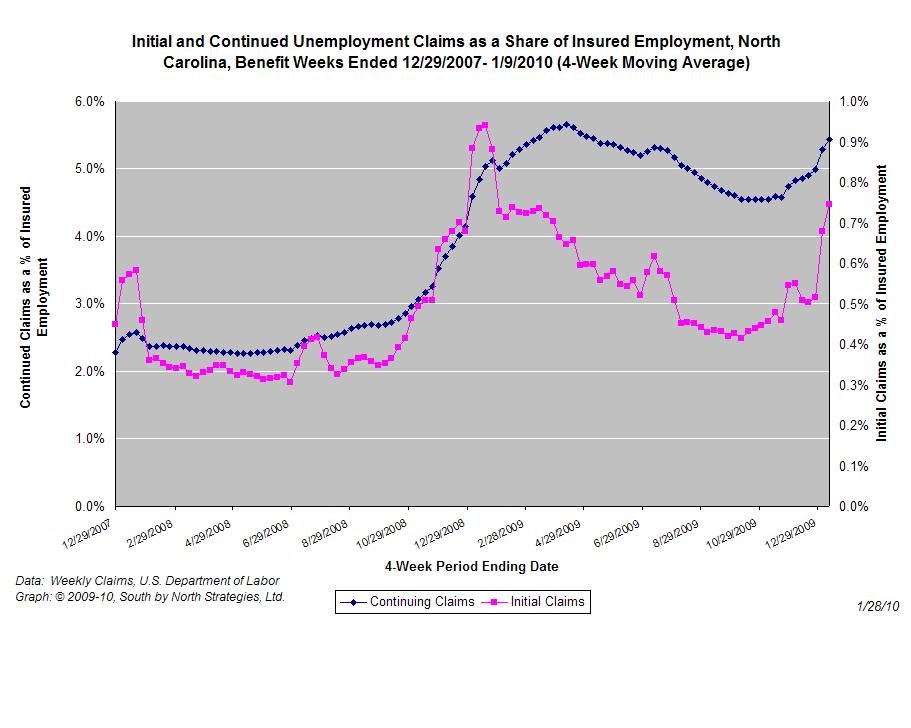
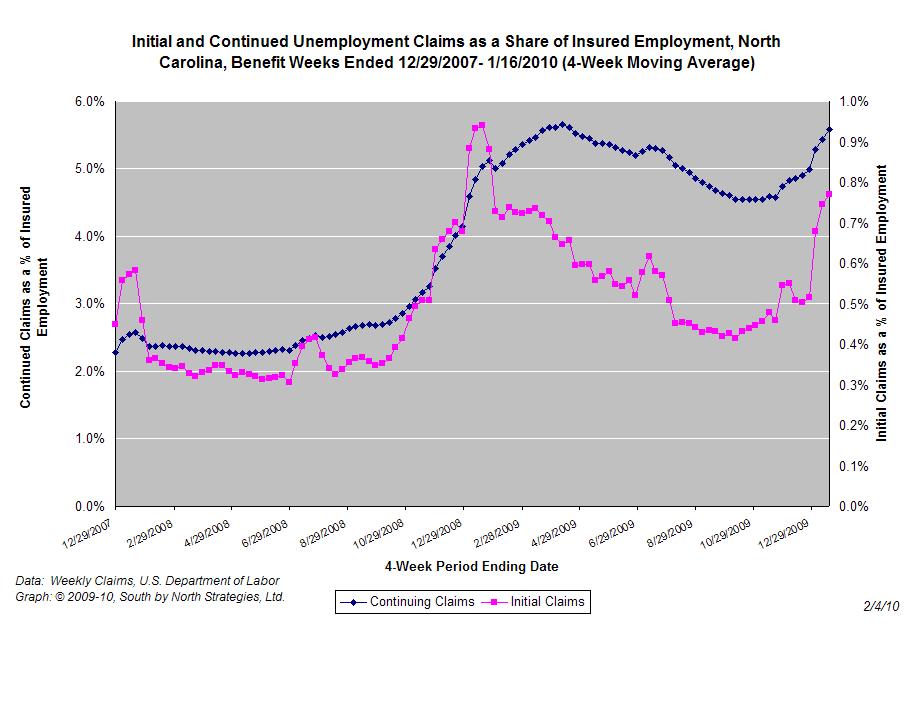
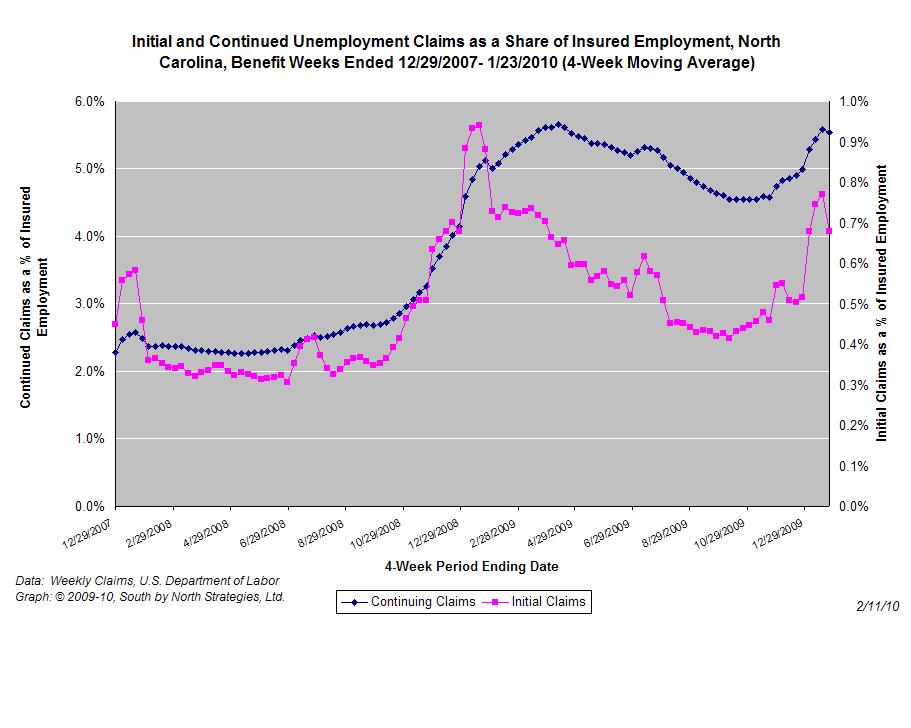
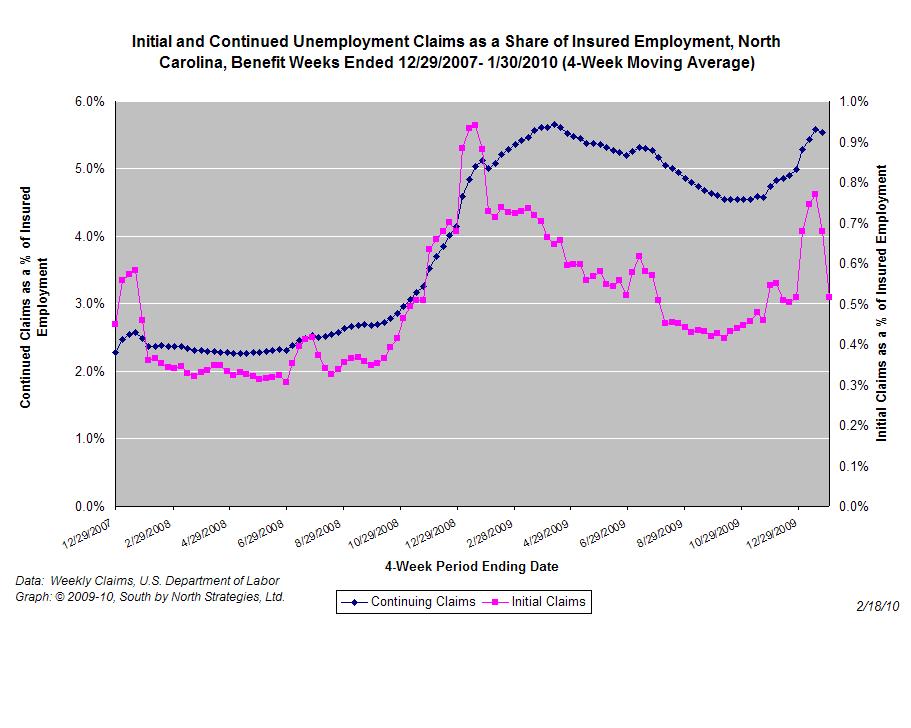
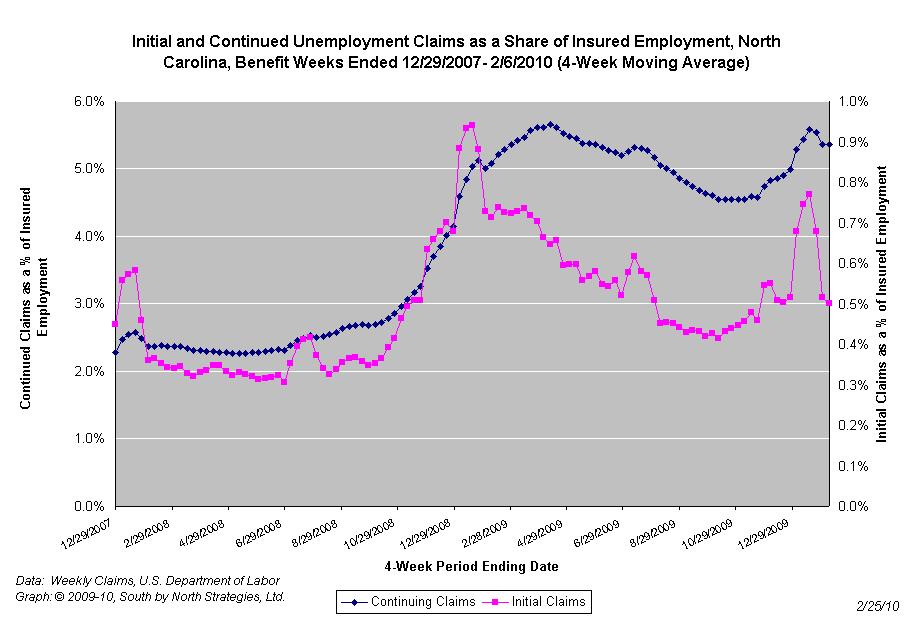
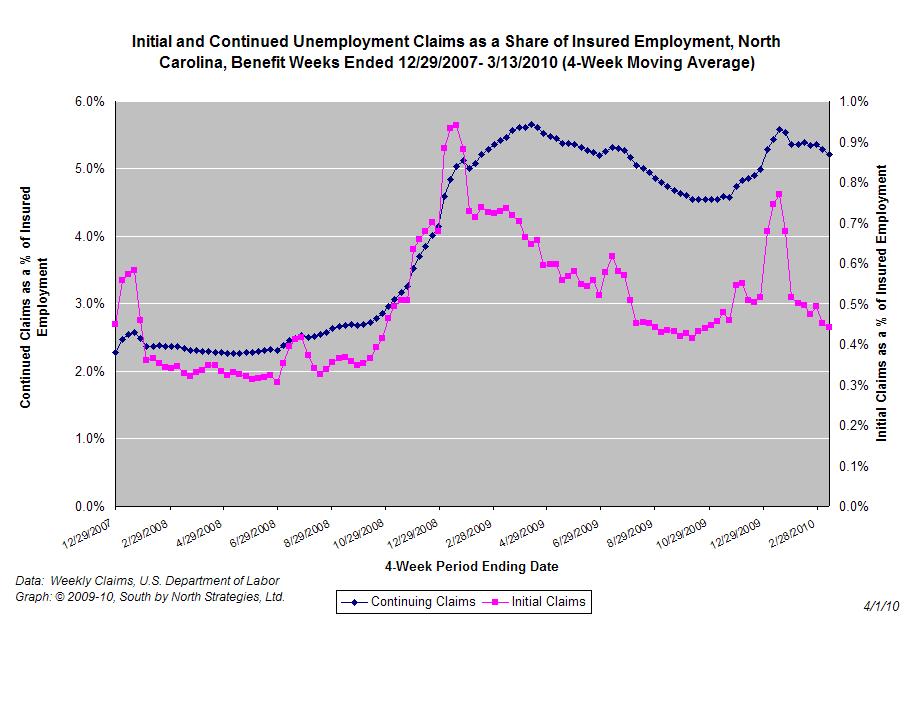
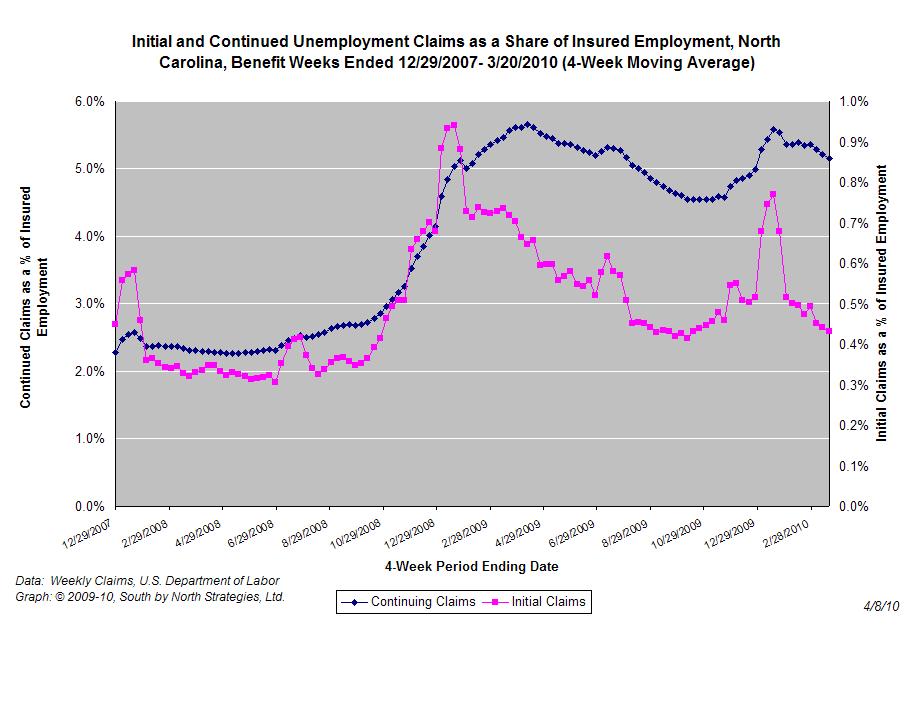
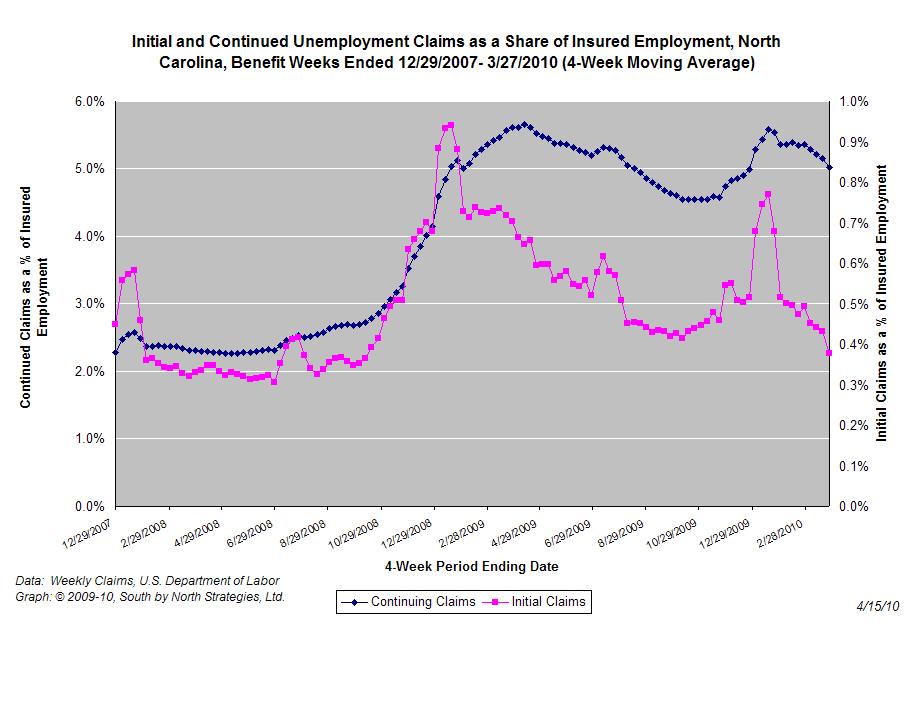
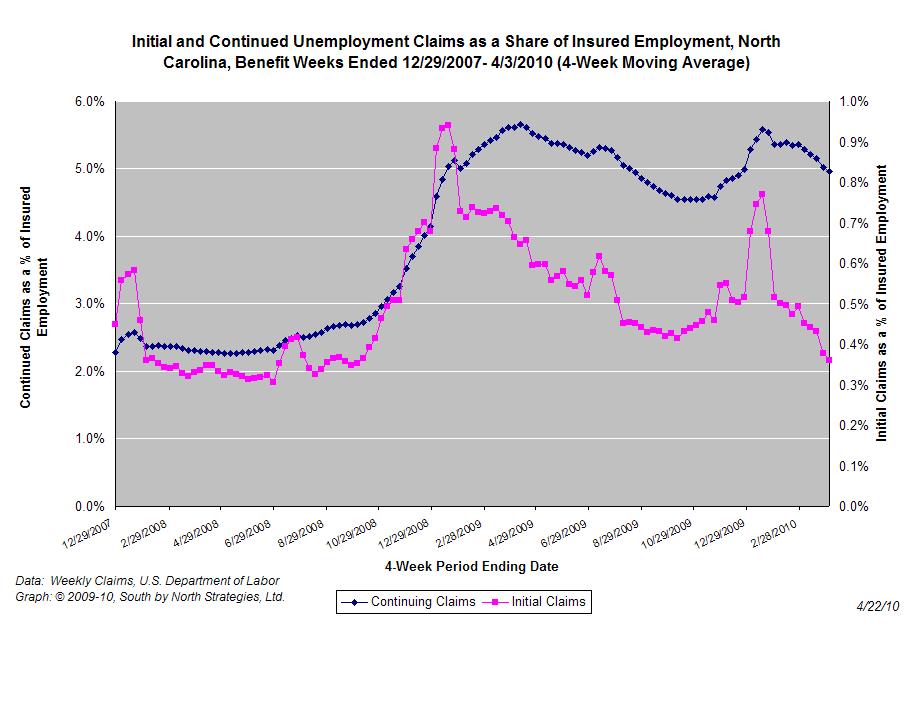
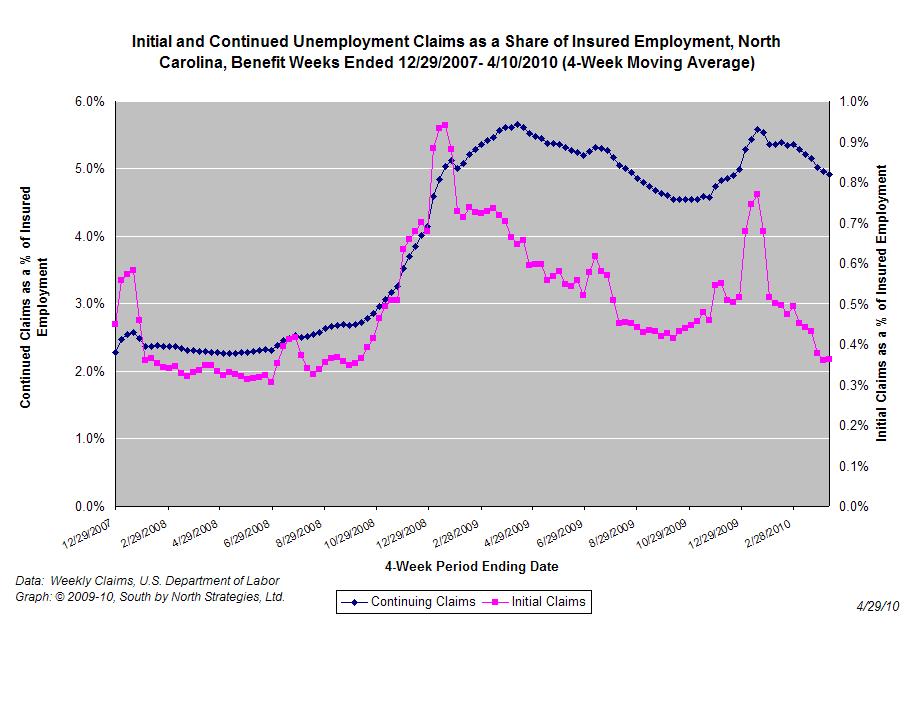
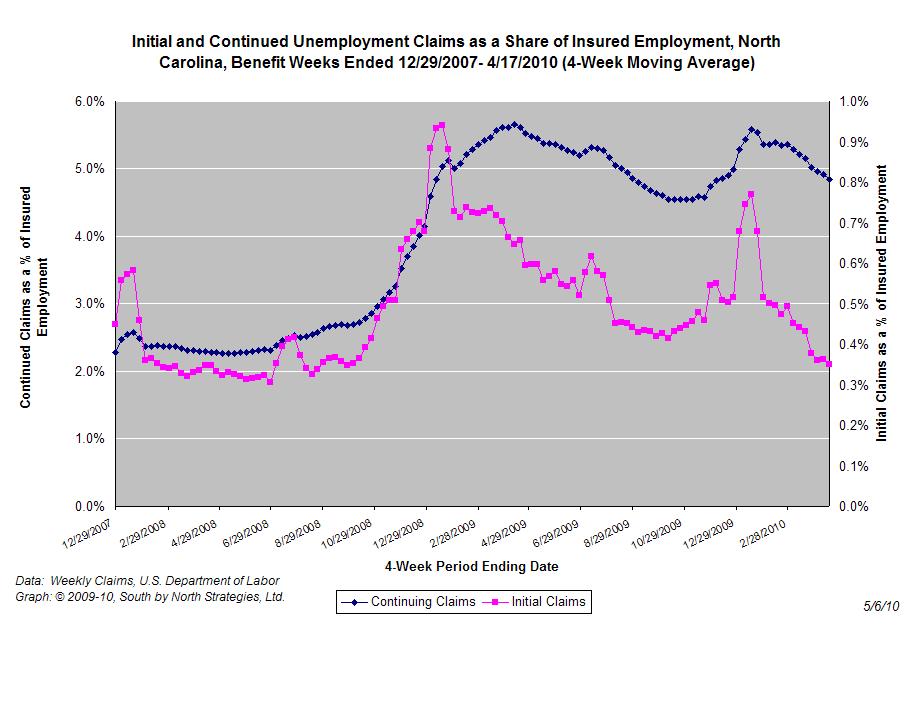
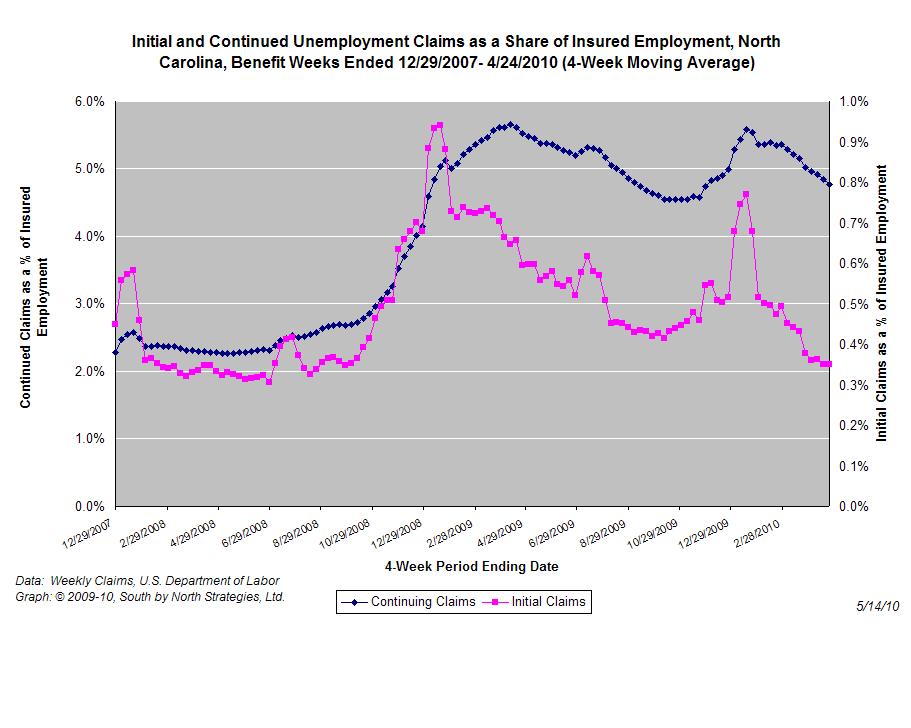
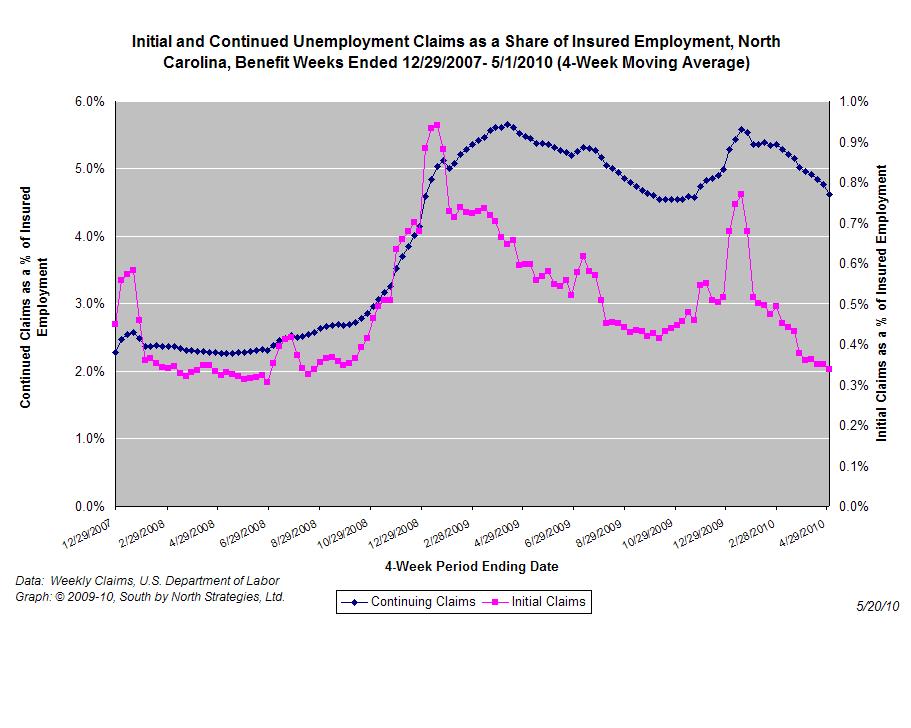
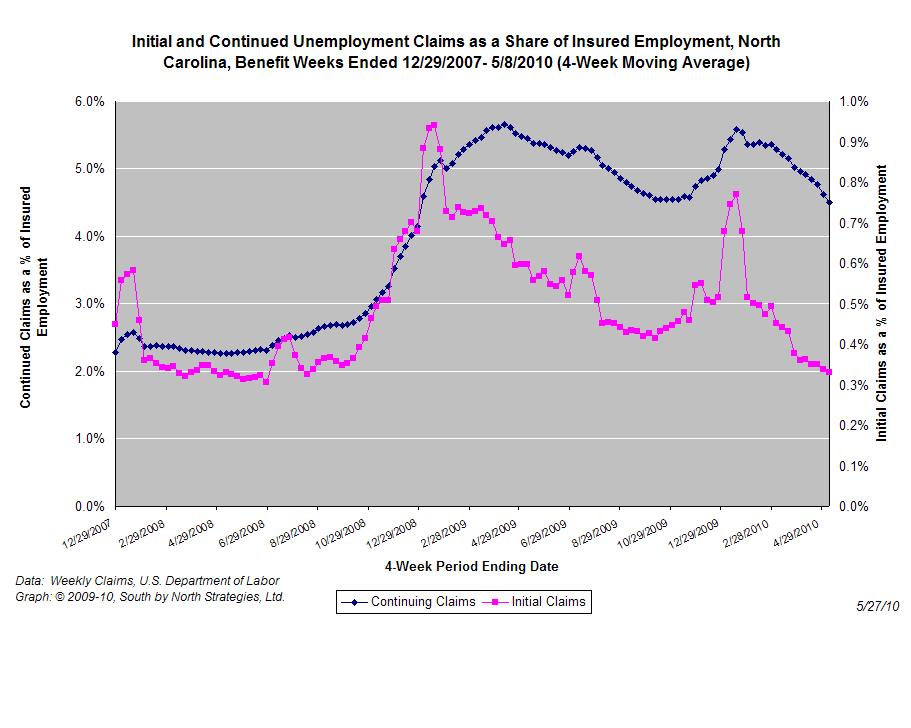
The graph (right) shows the changes in unemployment insurance claims (as a share of covered employment) in North Carolina since the recession’s start in December 2007.
Both new and continuing claims appear to have peaked for this business cycle, and the four-week average of new claims has fallen to a level last seen in June 2008. Yet continuing claims remain at an elevated level, which suggests that unemployed individuals are finding it extremely difficult to find new positions.
 Email Sign-Up
 RSS Feed